
Filmography Worship: Ranking Every Bernardo Bertolucci Film
Written by Andreas Babiolakis
Filmography Worship is a series where we review every single feature of filmmakers that have made our Wall of Directors
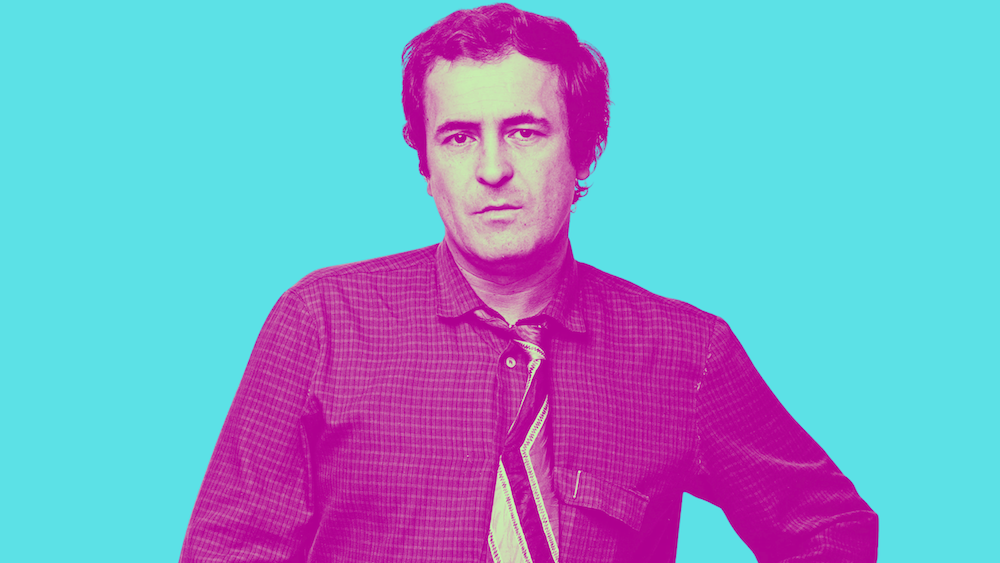
One of the great success stories of Italian cinema is Bernardo Bertolucci's ability to connect to a worldwide audience with reasonably challenging and provocative works. A master of political arthouse filmmaking, Bertolucci was able to maintain a steady output of films and popularity while never wavering from the taboo, philosophical, historically-meticulous works that defined his career. Every Bertolucci film was drenched in the contexts of the worlds he would build — based on the blueprints of captured history. Fixated on the political climates of all of the settings in which his films are established, Bertolucci used cinema as a vessel to spur discourse, pose questions, and analyze what drives us as human beings. Even with this amount of analysis, Bertolucci never forgot to find the beautiful side of being alive; he would often work with visionaries like cinematographer Vittorio Storaro and composer Ennio Morricone to sculpt the finer details of his filmic moral and theoretical compasses.
He was the son of Attilio Bertolucci: a writer known for both his poetry and film criticism. He inspired son Bernardo to want to become a poet as well, and he initially studied writing. However, his career would take a different direction rather quickly. Attilio had assisted filmmaker Pier Paolo Pasolini with publishing the latter's debut novel. To return the favour, Pasolini took Bernardo Bertolucci under his wing; Bertolucci would work on Accattone as a first assistant. He was invigorated, leaving university to craft his debut film — one based on a story by Pasolini — in his early twenties: La commare secca. Bertolucci would also help co-write Once Upon a Time in the West by Sergio Leone. It is safe to say that he found the right mentors from early on. Meanwhile, his brother, Giuseppe Bertolucci, would also become a filmmaker in his own right; the Bertolucci household was thriving with artistic passion. From his influential upbringing and some strong early connections, Bernardo Bertolucci was destined to make motion pictures. He maintained his father's connection with prose, Pasolini's tendencies to push audiences, and his academic findings throughout his filmography.
While not fully committing to it, Bertolucci seemed to have been encouraged by the rise of the New Hollywood movement in a similar way to, say, Francis Ford Coppola (the latter was far more connected to it than Bertolucci was). However, Bertolucci's seventies period was certainly indebted to the New Hollywood moves, casting Marlon Brando after his Godfather renaissance begun in Last Tango in Paris and working with Robert De Niro in 1900. He would occasionally make films that tried to bridge his signature style with traditional Hollywood, and some efforts — like The Last Emperor — succeeded triumphantly (that film went on to win Best Picture at the Academy Awards, and — to me — remains one of the most interesting winners of that accolade in the history of the ceremony). Bertolucci remained prolific until the end of his life, passing away from lung cancer at the age of seventy-seven in 2018 (his final film was 2012's Me and You).
Considering that Bertolucci's films often asked audiences to revisit moments in time with new perspectives, I cannot proceed with analyzing his career without addressing his biggest blemish: the now-notorious "butter" sequence in Last Tango in Paris, where neither he or Brando let actor Maria Schneider know about the particulates of a highly controversial scene involving her character being sexually assaulted. Bertolucci and Brando left Schneider in the dark as a means of getting an "authentic" reaction from her when Brando's character used butter as a means of lubrication. Bertolucci was no stranger to problematic content — from highly graphic sexual sequences of a questionable nature, to animal cruelty — and I would argue that those choices are also concerning and should not be overlooked. However, the Schneider incident — one that traumatized her for life — is an important lesson where artistic choices go too far and tarnish the integrity of the artist, not embolden it. As much as I love a number of Bertolucci's films, I cannot forget moments like this; the sanity and wellbeing of another's life should not be compromised for a motion picture or any form of entertainment and art — I don't care how much I love film, I stand by this.
When Bertolucci was making better forms of daring choices, however, he wound up being one of the great directors of his time: someone who knew how to explore the brilliance of civilization while also scrutinizing its monstrosities and hypocrisies. His bold style would sometimes work better in some films than others, and you will find in the ranking below that not every Bertolucci film was a slam dunk; however, I will say that even with his weaker efforts that I did not find myself regretting watching any of his films. Even his worst films have an intriguing through line, a fascinating ideology, or sublime artistry. Sure, you can pinpoint when Bertolucci got carried away with his mission to provoke or push buttons, but you can also note when he figured out how to be challenging without antagonizing as well. Let us journey through the motion pictures of one of cinema's most robust minds. Here are the works of Bernardo Bertolucci ranked from worst to best.
16. The Sheltering Sky
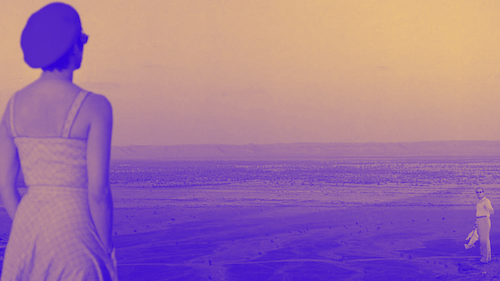
There aren't many bigger wastes in film than something that looks exquisite but is completely unaffecting: like a kiss on the cheek from someone who doesn't truly love you. You want to reciprocate, but you know that gesture meant nothing and there is only air between you. Bertolucci's The Sheltering Sky is meant to heal a soured relationship between two Americans traveling to Algeria, but I feel nothing in this film — no matter how hard Bertolucci tries to sell me on the idea of repairing broken hearts, exploring northern Africa through his cinematic itinerary, or the concept of fate in a film that feels destined to bore you. Other Bertolucci films may make me feel like I am floating in air; The Sheltering Sky makes me feel like I am trapped in Jello and incapable of escaping. Destination films are never meant to feel like a chore.
15. La Luna
I do not mind when directors make controversial, thematic risks in their films if they have a point to make. By the seventies, Bertolucci was working on some of his most brazen works like 1900 and Last Tango in Paris. Then, there is La Luna, which I want to like more than I do. This relationship between a broken mother and her heroin-addicted son (and, when I say relationship, I mean more than platonic or maternal — of course, Bertolucci includes an incestuous angle, here) has an important message pertaining to devotion and complicated family dynamics within an Oedipal lens. However, this is also a film where I feel like Bertolucci was just doing whatever he felt like, which is almost always a recipe for disaster when you do not care about form or meaning outside of surface-level philosophies. If you provoke within your well-crafted art, that is fine by me. If you aim to provoke first and foremost, you may get La Luna.

14. Me and You
Bertolucci's swansong, Me and You, feels like the right note to end on in a thematic sense. If his works were almost entirely contingent with taking you to unfamiliar places geographically, politically, spiritually, and historically, here is a film about suffocating angst and the self-destruction of depression. As we follow (or, rather, stay with) a teenager who lies about going on a ski trip (only to hide in a basement during this "vacation"), we see Bertolucci exploring the pitfalls of one's own mind. I feel like some different choices could have made this one a stronger watch — like not making the main character difficult to identify with (sure, depression can lead to you pushing others away, but a story should make you feel connected to even the darkest souls, not held back at arm's length). There is much to say here, but I just don't think Me and You accomplishes what it sets out to do.
13. Little Buddha
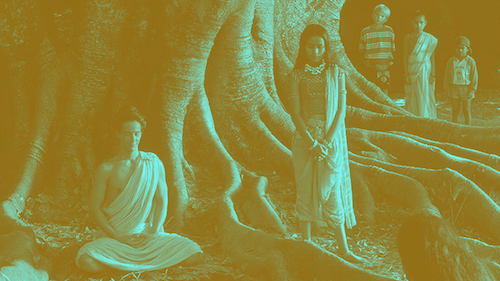
When I first watched Little Buddha, I remember feeling relatively moved by it. It felt like a spiritual successor to The Last Emperor — from the observation of youths in the grand scheme of historical and political shifts and divides, to the artisanal aesthetics. However, in the time since I have seen Little Buddha, I have retained very little admiration for it. Those things I liked about it only reminded me of why I love The Last Emperor: a film that has stayed with me my entire life. With Little Buddha, it only took a day or two before I could reflect on the questionable casting choices (particularly Keanu Reeves), the narrative meandering, and the hollowness that great visuals and music could only distract you from for so long. This is what it looks like when you try to replicate a success from the past but left the soul that made it magical behind.

12. Partner
If Bertolucci was transfixed by the ideologies that separate us, in a film like Partner, he is explicitly exploring how these different opinions and upbringings separate versions of our own selves. Bertolucci adapts Fyodor Dostoevsky's The Double into a political allegory involving the use of one's other self for ulterior motives. This is a strange one because — as you can see — Bertolucci either nailed what he was going for, or he floundered with his visions quite a bit. For me, Partner is somewhere in the middle: a decent but short-sighted look at paranoia. It is a fable that gets a little lost with how it wants to convey the idea of differing outcomes relating to one's past and present, but I do applaud Bertolucci for what he had in mind (more than what he was able to deliver). He would refine the concept of personal trajectory in films like 1900; at least this is an honest attempt.
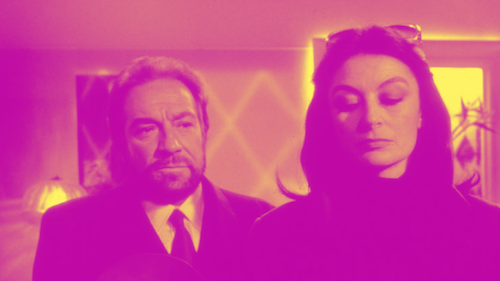
11. Tragedy of a Ridiculous Man
Tragedy of a Ridiculous Man is great on paper: it is one of those examples of Italian cinema that satirized or hyperbolized the issues with class systems and economic flow in society (like, say, The Working Class Goes to Heaven). We see the owner of a cheese factory with the ultimate dilemma: does he pay ransom for his kidnapped son, or should he put that money into his business to see it prosper? However, not much gets me looking at my watch like a satire that is equal parts unfunny and obvious with its commentary. Bertolucci seemingly just tossed his first options for jokes and plot ideas into Tragedy of a Ridiculous Man, resulting in a misfire with what could have been a solid dark comedy; it is obvious by now that Bertolucci has made far better films about people in major, life-altering predicaments.
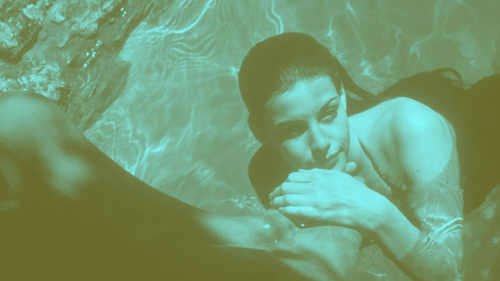
10. Stealing Beauty
Stealing Beauty feels like a sister film to Last Tango in Paris, as we watch broken people travel to new places in hopes of healing in both films. Here, a nineteen-year-old goes to Tuscany after her mother dies by suicide, and you feel the Italian countryside open up like it came from a storybook: you, too, feel transported and happily lost. However, Stealing Beauty begins to feel like the cinematic equivalent of you staring at your feet in the middle of a party you were once looking forward to but now no longer have interest in (as you now have to wait for your friend who is keen on staying the whole time); now, what? If Stealing Beauty is meant to help someone find a spark in their life, the film needs to possess that same spark. You can only look at lush landscapes and architecture for so long before you need more.

9. Besieged
We have reached the Bertolucci films I liked well enough to consider good (it's about time — we have reached the top ten, after all). Besieged may work as well as it does because Bertolucci held himself back with a comfortably humble ninety-minute runtime (when this could have easily been bloated to two hours or more, as was customary with romantic dramas in the nineties). Shandurai is a migrant from an unknown part of Africa who is exiled in Rome — working as a housemaid to attempt to try and get back home to free her husband from prison. However, her ticket to justice and freedom is a man of wealth (the very man who has hired her to clean his house); this forms a difficult love triangle that challenges what such a literary trope means when it comes to complicated cultural and political norms (like, say, Jane Campion's The Piano). I found Besieged to be stirring and aching enough that the dilemma Shandurai finds herself in feels honest and effective.
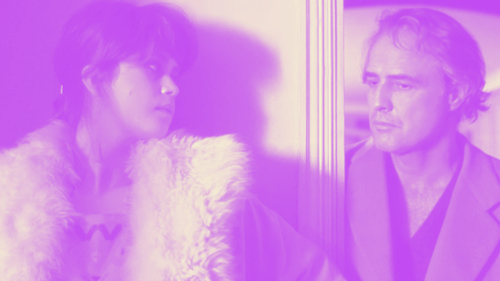
8. Last Tango in Paris
It is highly difficult to discuss a film like Last Tango in Paris without highlighting Bertolucci's vices (hence my explanation in the introductory paragraphs); here, I will try to focus on the film on its own. This is a fairly stunning look at crippling dread in the form of obsession: one full of empty spaces, gutted scenes, and vulnerable performances — all in the name of the various iterations of self-deprivation and hatred. We are holed up with a widower who has fled to Paris to grieve and heal (only for this protagonist to act on his worst urges and darkest demons); instead of Bertolucci exploring the streets and businesses of Paris, he examines the claustrophobia of loneliness and depression when that damnation has followed you to the other side of the world. In short, I think Last Tango in Paris is an excellent and haunting film. Of course, my appreciation for the film subjectively has been forever tarnished by the realization that Bertolucci and Brando learned very little about the film's themes on how others can be hurt by our own vices, especially when their joint abuse is still present in the film (this makes it hard to separate the artist from the art, after all). I have based my placement of this film on how I feel about it objectively, but I do not fault anyone who refuses to revisit or watch Last Tango in Paris at all — because no art is worth the assault of another.
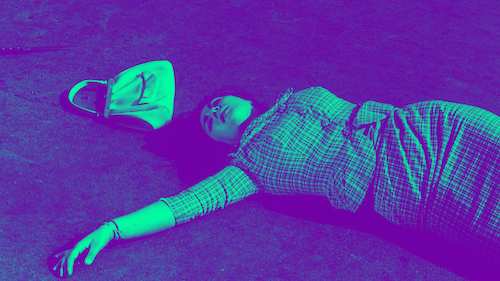
7. La commare secca
A film like La commare secca makes for a powerful debut; to recall that Bertolucci was only in his early twenties when he made this is another story. Sure, he may have had the assistance of Pier Paolo Pasolini (in his prime, no less) to strengthen this tragic thriller (his thumbprints are all over this film; then again, so are Bertolucci's). However, the fact that La commare secca doesn't feel like it is trying too hard to upset or move its audience (when, as you have seen in some of the films above, Bertolucci has fallen victim to such tactics) proves that he could have proper restraint and control even in his earliest days (maybe Bertolucci wasn't comfortable enough with going the extra mile to provoke his audiences, but even he could have learned a thing or two from the shocking and fascinating La commare secca). When we revisit a horrifying crime from multiple perspectives, we get Bertolucci's young-yet-mature observation of Rome as a rich yet imperfect city: one that boasts both promise and corruption.
6. The Spider's Stratagem
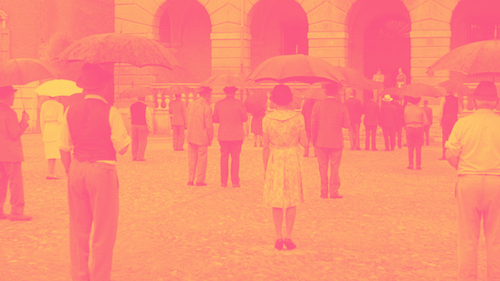
Karma in crime films can certainly be a bitch. Then again, fate — even the fate of innocent people — can operate just as nefariously. In Bertolucci's The Spider's Stratagem, history repeats itself in more ways than one. As a grieving son retraces his antifascist father's steps in an effort to better understand him, The Spider's Stratagem uses mystery and melodrama to conjure up a flurry of revelations and mindsets within a conflicted town. Bertolucci uses discovery to implicate what one's political allegiance can be comprised of — with the hypothesis that it takes living like a loved one in order to finally understand their philosophies. However, Burtolucci does not get whimsical with this study but, rather, he explores the dangerous side of sociopolitical beliefs in the name of unearthing provenance; as a result, The Spider's Stratagem is borderline Hitchcockian in its existentialism and mystique.
5. The Dreamers
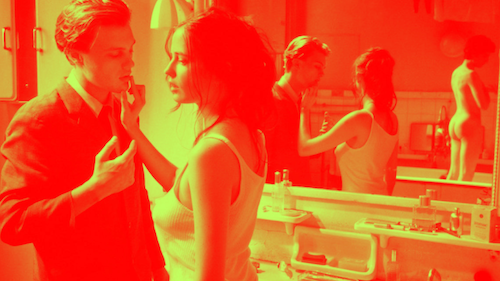
When Bertolucci's penultimate film, The Dreamers, first dropped, its lukewarm reception was indicative of a world that maybe considered this film too erotic or invested in the sexual exploration of its characters more than anything else. I'd like to think that the true substance of the film has been unearthed over time. This homage to French New Wave eroticism sees our characters — a new age love triangle — exploring society and themselves via the four walls of intimacy (more than on the streets of Paris). There is far more going on than just bodily discovery as well — including cultural amalgamations, political correspondence, and the pondering of one's own existence. The fact that Bertolucci accomplishes so much within this intimate, personal space is what The Dreamers should be remembered for: not the taboo. Released at a time when a second French New Wave movement couldn't have hurt, Bertolucci's The Dreamers resonates as a hope for a cinematic future via the revisitation of a culture from yesteryear.
4. 1900
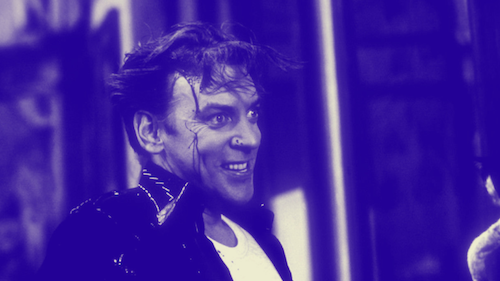
One of my greatest worries as a devoted cinephile is whether or not watching 1900 and its five-and-a-half hour runtime would have been worthwhile (I am a sucker for lengthy films, but the film's split response left me feeling a little apprehensive). Of course, I wouldn't omit any of Bertolucci's feature films in such an article if I can help it, so it was inevitable that I would finally watch this gigantic epic. I am of the party that finds 1900 brilliant. What feels indebted to the gambles and stylings of the New Hollywood movement, 1900 is a languid-yet-pulverizing look at class struggles over the course of numerous decades at the turn of the twentieth century in Italy (to me, a film like 1900 walked so that Brady Corbet's The Brutalist could run). What could come off as effrontery is instead a touching and monumental look at two children who drift apart ideologically due to the fracture of their society — and the world — at the hands of political discourse and the rise of fascism. On first watch, I felt like 1900 was epic only in scale but not in tone; once all of its separate ideas come together, you feel the weight of everything that came before this convergence (while, ironically, we are witnessing multiple instances of fallout and divergence). Like understanding the size and speed of life only once you hit a certain age, 1900's greatest power is how much its brilliance hits you only once you are done watching the film — ensuring that any rewatch is more riveting than the last.
3. Before the Revolution
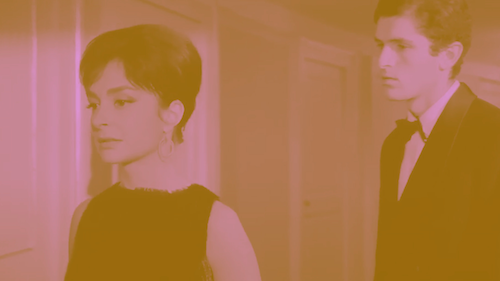
Bertolucci was only twenty-three when he directed his first masterwork (which was also his second feature film overall): Before the Revolution. This bleak coming-of-age film feels like the auteur's take on the Italian neorealist works that came before him, but, even so, Bertolucci knew how to take these concepts and run away with his renditions of revolution and rebellion (politically and artistically). What poses as a far-stronger take on Oedipusian conflict than his latter film La Lune, Before the Revolution uses a politically-ambitious student and his various tribulations from his life (from the suicide of his friend, to a problematic relationship at the hands of grief) to piece together a strange world that lies ahead of the then-new generation. Bertolucci's film embraces rebellion in the form of near-satirical melodrama and the shattering of tradition in Before the Revolution: a film of discovery swirling with doubts, regrets, and uncertainty (such is life).
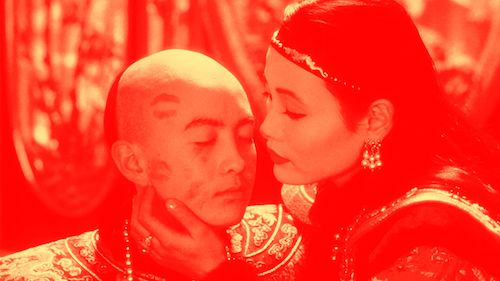
2. The Last Emperor
To this day, The Last Emperor seems to divide audiences. There are those who think it is too conventional to appeal to arthouse audiences, as well as those who find it too out-there to be worthwhile to win Best Picture at the Academy Awards. Then, there is the crowd that stands by this film through and through; I am clearly of the latter pool. This extraordinary fusion of arthouse and mainstream cinema creates a magnificent epic that gave us something fresh and invigorating during the decade that was the most rife with kitschy and twee biopics (outside of this current decade, maybe). We look at Pu Yi's life at its end and throughout his entire existence simultaneously; this is a legacy that was forced upon him as the title last emperor of the Forbidden City in Beijing, China (he was only a toddler when he was appointed this impossible responsibility: a grim allegory for many youths of today). It would be one thing to simply cover Pu Yi's time as emperor, but the fact that Bertolucci goes further — throughout various awakenings and events in Pu Yi's life — is a testament to how invested Bertolucci is with the evolutions of China and Pu Yi; seeing Bertolucci encapsulate each era with such aesthetic ferocity is an immeasurable treat. I will not only defend The Last Emperor, I will always declare it a crucial film in my lifetime that I could not imagine never viewing again.
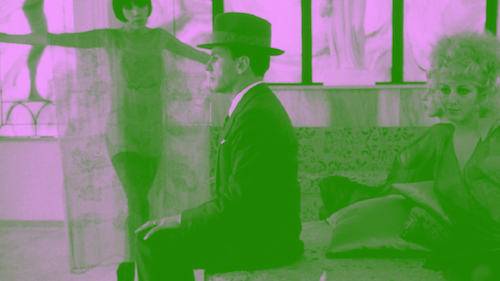
1. The Conformist
It would take a lot to best The Last Emperor in a filmography. As I have said, Bertolucci's misses are quite obvious, but so are his highs; when he succeeded, he did so in ways that feel miraculous. Enter The Conformist: one of the greatest films I have seen in my entire life, and one that only improves with time and revisits. This has to be one of the most expertly well made films in history (especially the cinematography by Vittorio Storaro, which is easily some of his finest work, which is saying a lot given his portfolio). The film looking nice and being superbly crafted would be one thing, but it is the compelling story of betrayal and flip-flop ideology that is not only exhilarating but is forever essential viewing. We follow the disciple of a fascist government who is told to go against his former mentor: a progressive professor. While most stories would focus on how educators have paved the way for the youth of today (or, at least, they attempt to), The Conformist is a far more truthful and vicious look at intellectual corruption to the point of calamity and deception.
The act of following through would show the betrayal from our protagonist towards his teacher, his society, and himself. The act of political conformance is a disgrace to the many who fought for their rights and freedoms; you can see such blindsides happening even today, unfortunately. Bertolucci captures this travesty so gloriously: in a film that makes it feel good to be alive (but what a hideous life one leads — in a way, he is spitting in the face of existence as well). The breathtaking architecture, artistic design, photography, and lighting of this film make our world such a marvelous place to explore and live within; Bertolucci's dichotomy (with the hatred that festers within the beauty) helps us feel the political paradoxes of being a part of a divided society. I cannot express the feeling I have watching this film, outside of trying to compare it to a wide spectrum: one that makes me feel a rush (of exaltation, of the passage of time, from the pulp from a fucking fantastic political neo-noir) and a crushing dead weight that keeps me frozen (the gravity of guilt, the shocking turns of this film, and the realization that such dangers will always permeate in civilization). With all of the above in context, The Conformist is one of the ultimate cinematic portrayals of a life being squandered. We understand that we have one shot at this thing (as a species, a society, and an individual), and it is a complete waste to conform to the detriment of all just because it is less threatening. Bernardo Bertolucci's masterpiece is the very crux of his style: a film that is intellectually nuanced and dense, yet mind-bogglingly artistic at the same time. This is the tug-of-war between expression and censorship in a motion picture that has forever changed my life.


Andreas Babiolakis has a Masters degree in Film and Photography Preservation and Collections Management from Toronto Metropolitan University, as well as a Bachelors degree in Cinema Studies from York University. His favourite times of year are the Criterion Collection flash sales and the annual Toronto International Film Festival.