
Filmography Worship: Ranking Every Hou Hsiao-hsien Film
Written by Andreas Babiolakis
Filmography Worship is a series where we review every single feature of filmmakers that have made our Wall of Directors

The Taiwanese New Wave movement is kind of like that amazing hangout spot that only the vets know about. While New Hollywood, French New Wave, and the like are Film School 101 subjects, you discover something a bit more particular like what the great Taiwanese auteurs created when you dig through the history of cinema even further. Of the giants of this movement — from Edward Yang, who had much more brilliance to offer before he passed away, to some deep cuts like Chang Yi or Wang Toon — the most prevalent name to come from it is Hou Hsiao-hsien. With four decades of some of the biggest titles to come from this wave (and then some), Hou is undeniably an arthouse legend; like the Taiwan New Wave movement, Hou's work is known mainly within the circles of cinephilia but not nearly as much outside of these communities. I hope to change that for at least some of you today.
He is a darling of major film festivals like Venice (A City of Sadness won the Golden Lion) and Cannes (which rewarded him Best Director for The Assassin), and a chameleon who has taken on films of different topics and genres; the majority of his films possess his slow-cinema style and his finely-crafted images that are exquisite to see on the biggest screen possible. His films feel frozen in time: as though we are living in encapsulated moments and not reality. While Hou had far more conventional films at first, he would transition to art cinema when he made The Boys from Fenkuei; he would only refine his vision further throughout his career. Hou would sadly retire prematurely from directing once he was diagnosed with Alzheimer's disease; even though we have nearly twenty feature films to cherish, I believe he only got better with age and still had more stories in him to tell. For now, we have a filmography comprised mostly of glacial, spellbinding hits. I will not be including joint efforts he made with other directors; I am focusing strictly on his solo directorial releases. Here are the films of Hou Hsiao-hsien ranked from worst to best.
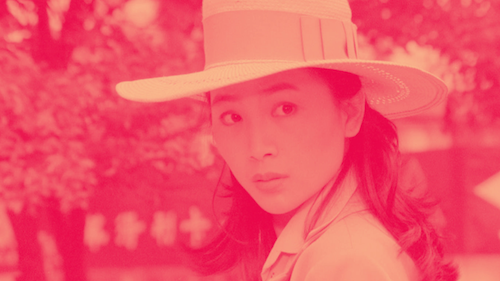
18. Cute Girl
Hou's weakest film is not a bad effort, but it's just a typical one — a crying shame when it comes to the filmography of one of cinema's most unique minds. This rom-com love triangle is very much a by-the-numbers affair; those long shots and brooding moments simply do not exist here. Even when you don't compare Cute Girl to any of Hou's art films, it is simply a fine affair: a woman who goes through the hard effort of learning French to better enjoy her Parisian vacation with her fiancée, only for her to fall in love with a blue-collared, lower class man instead. You may feel a bit fuzzy while watching this one, but it is also completely unmemorable and serviceable as well. You can leave Cute Girl for last (unless you are going through Hou's films chronologically; you'll have to start with this debut, then).
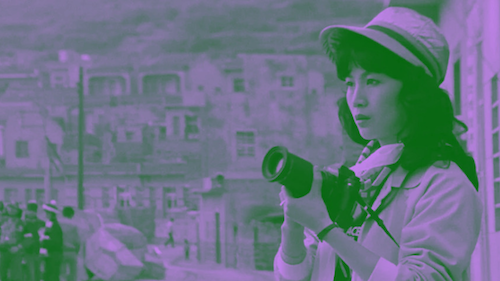
17. Cheerful Wind
If Cute Girl isn't your jam, then Hou's sophomore effort, Cheerful Wind (also known as Play While You Play) won't be either. Another sappy and saccharine romantic comedy, Cheerful Wind is slightly better thanks to a slightly stronger sense of narrative fine-tuning here (that feels like Charlie Chaplin's City Lights mixed with the constraints of a love triangle). A photographer is stuck between her boyfriend and a blind man she comes across — whose sight she is hoping to help bring back via an extensive operation. You can tell that Hou is veering into the unknown a little bit, but he is still tethered to the ways of convention far too much for a film like Cheerful Wind to take flight; it's decent but hardly remarkable.
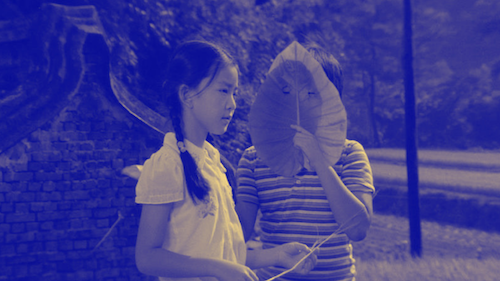
16. The Green, Green Grass of Home
By his third film, Hou had started getting better — he still had a ways to go before fully discovering what he was capable of. Another romance (of sorts), The Green, Green Grass of Home sees two substitute teachers falling in love. However, there is a bit more to the story this time around, with the male teacher's classroom experiences and adjustments to life outside of Taipei being brought to the forefront. While Hou has made far more intricate and symbolic efforts, you can see the auteur's gears turning a little bit with an early film like The Green, Green Grass of Home. He's trying to find a way to turn a story's setting into a character, with the surroundings of a protagonist becoming an integral part of their existence (and, thus, the film's milieu). Hou wasn't quite at his final form yet with this one, but we can at least see how this was made by the same person who directed, say, A City of Sadness.

15. Flight of the Red Balloon
The only non-Taiwanese feature film Hou ever made is Flight of the Red Balloon: a feature-film recreation (of sorts) of Albert Lamorisse's landmark short film, The Red Balloon (this would also be Hou's penultimate release). Instead of having a carbon-copy adaptation of Lamorisse's classic, Hou aims to shrink the size of Paris (and also the world) via the unique shared experience of a mysterious red balloon that floats in-and-out of multiple lives. Hou's version is far less magical than what you'd expect from The Red Balloon; instead, he has an introspective, almost existential, look at whimsy. It's certainly an unorthodox film by Hou's standards, but an interesting experiment for his biggest fans; how does Hou view the concept of childhood and the flight of fancy in the later years of his life?
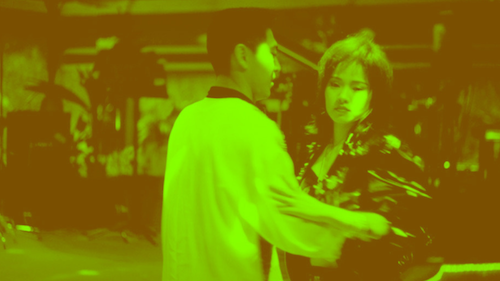
14. Good Men, Good Women
We have fourteen films to go, and I would recommend the whole lot of them, should you be interested. The lowest of this pile of good-to-excellent films is (no pun intended) Good men, Good Women: perhaps his most meta affair. What can come across as a vast depiction of political discourse in mainland China during the Korean War becomes an assessment of art within hardship via the blips of an actor (performed by the film's lead — Annie Yi — partaking in a film-within-a-film). I think Good Men, Good Women is a teensy bit unfocused compared to the bulk of Hou's career, but otherwise this is a solid and imaginative effort by a director who was clearly thinking about the internal monologues of conflicted citizens.
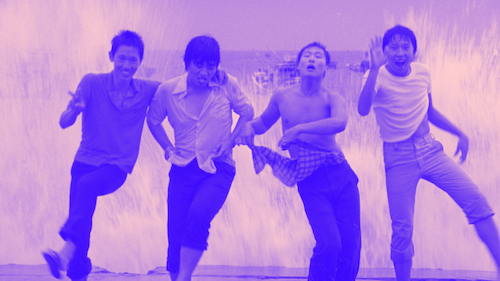
13. The Boys from Fengkuei
The moment Hou decided to turn to art cinema was with The Boys from Fengkuei: a coming-of-age reflection on the real world after our salad days. Following a group of friends who are looking ahead to the future after graduating from school, The Boys from Fengkuei ruminates on the misperceptions teenagers have with what being an adult is all about: they look ahead and, when it is too late, are left wondering where their days of innocence and play have gone. This felt like a transition for Hou as well: from cheeky, fluffier films into something far more serious and tangible. Hou would slow down his films even more, but The Boys from Fengkuei was the first time that he took a look around and questioned life far more than his comedies ever did: the substance comes from the details, not the surfaces of narratives.
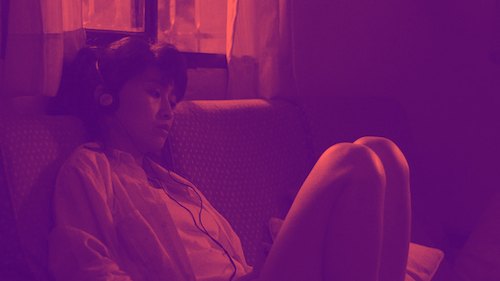
12. Daughter of the Nile
Responsibility can be a damning thing. In Daughter of the Nile, a young woman is caught in the middle of a shattered, traumatized family — from a hardworking, yet absent, father who is trying to pick up the pieces after his wife and their son have tragically died, to younger siblings who are acting their grief out in the form of criminal actions. Hoping to keep her family (and, thus, herself) together, our protagonist is stalled at one crossroad after another, in Hou's heavy observation. Too many directors focus on the misdeeds, arguments, or more showy actions of disaster; Hou knows the weight that the silence of disappointment, dread, anxiety, or guilt can possess and implements it boldly in Daughter of the Nile.
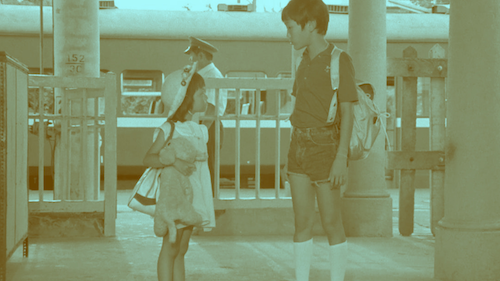
11. A Summer at Grandpa's
Hou was still thinking about the coming-of-age genre after he made The Boys from Fengkuei, seeing as A Summer at Grandpa's feels like an even-more mature take on what the former was hoping to achieve. Focusing on parts of his own life, Hou showcases a pair of siblings who are staying with their grandparents while their mother is considerably ill and incapacitated at the hospital. Our younger years are formative, and A Summer at Grandpa's looks to find warmth amidst sadness, catharsis to take us home, and purpose within the huge city. Hou's nostalgic and bittersweet film served as a major inspiration for Hayao Miyazaki's My Neighbor Totoro (the comparison feels obvious now, does it not); while Miyazaki frequently tried to detail the complexities of the world through imaginative and youthful eyes, this rarer occasion for Hou is just as sincere.
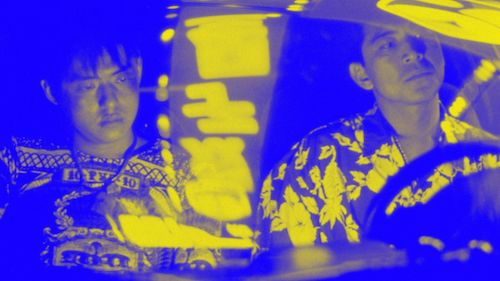
10. Goodbye South, Goodbye
Hou's answer to the Taiwanese New Wave crime film is Goodbye South, Goodbye: a semi-meditative look at the art of passing time with a guilty conscience. Hou paints a picture of a corrupt Pingxi District via a get-rich-quick plot that is torn down by comeuppance. A hugely anti-capitalist fable told by a man who tested the waters of marketability before forever shunning convention and greed, Goodbye South, Goodbye is such a different take on nerve-wracking cinema because this is not a film that operates with the fast paces of racing hearts and choppy editing; instead, it focuses on the stillness of uncertainty and the limbo of regret. Films like these re-contextualize crime cinema for good: evil does not exist in simply one or two forms. Hou's version is equal parts cynical and poetic.
9. Dust in the Wind
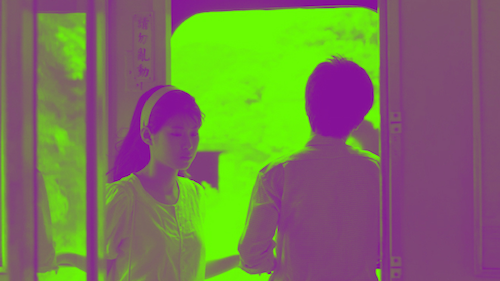
Sure, Hou was still directing love stories in the eighties after he found his foray into art cinema. However, he learned how to depict romance in a far stronger way than, say, Cute Girl by the time he released Dust in the Wind. One of his three collaborations with writer Wu Nien-jen (an integral member of the Taiwanese New Wave movement), Dust in the Wind is a superb film about a relationship that gets tested by a new life in Taipei; how are you supposed to spend the rest of your life with someone if life is what gets in the way of you two? A film with a lust for existence and a sadness surrounding the speed and complexity in which we live, Dust in the Wind is the kind of motion picture that leaves you feeling winded after watching it: as if time is cruel to all of us, and to withstand its impact and rapidness is an impossible balancing act that few of us figure out (Hou tried time and time again to at least capture this on film; he usually succeeded).
8. Three Times
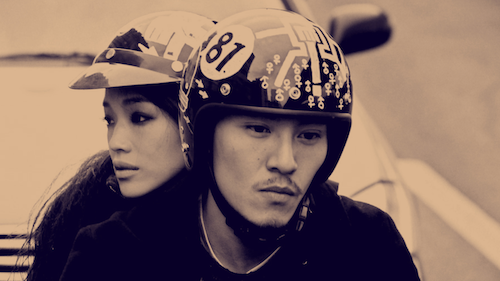
Decades after Hou only specialized in romance films and worked on an anthology (The Sandwich Man with Wan Jen and Tseng chuang-hsiang), he returned to the kinds of stories he kicked off his career with. His wisdom and maturity led this retrospection to Three Times: a magnificent triptych of romance throughout history in Taiwan. Set in 1911, 1966, and 2005 — with the same primary actors appearing in each of the vignettes — Three Times finds the unification of love within a nation that is permanently shifting ideologies and governance; with the same players being seen throughout, Hou depicts emotions as a constant force that propel us when the worlds around us are no longer the same. Hou also dives into the difficulties of falling in love, including the hardships that come after that connection is broken (and the numerous ways a heart can shatter). Hou separates his three films stylistically (down to even mimicking the silent film era with gorgeous intertitle descriptions for the story set in 1911, A Time for Freedom), allowing each moment to take your breath away.
7. Flowers of Shanghai
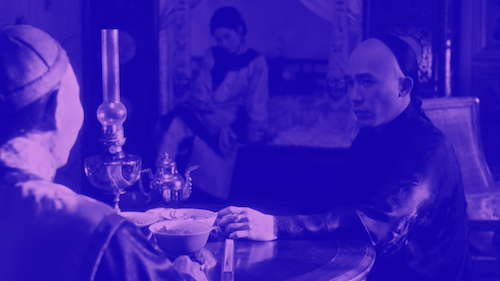
Hou’s final film of the twentieth-century, Flowers of Shanghai, might be his most popular release when it’s all said and done. I can see where the appreciation for this title stems from; although I have placed it lower than six other films, Flowers of Shanghai is undeniably stunning. The film focuses on the prostitutes of the Shanghai flower houses (or, essentially, brothels) at the end of the 1800s. At the center of this cinematic look at romantic existentialism is Master Wang, played tremendously (as always) by Tony Leung, whose broken stare conjures up countless emotions without ever uttering a word. In a way, Flowers of Shanghai feels like Hou’s most spiritual film: it is a mission to find purpose and reciprocation, all on top of a stunning backdrop of China from yesteryear. This is as alluring as cinema gets, and Hou uses this opportunity to get you to feel every emotion under the sun while he has you in the palm of his hand.
6. A Time to Live, A Time to Die
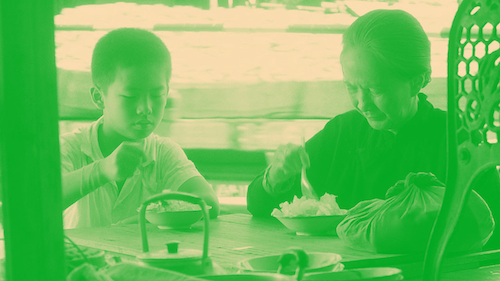
Hou’s first masterwork arrived after a couple of experiments within the coming-of-age drama. Hou wanted to capture the feeling of reaching adulthood in The Boys from Fengkuei, while bridging youth and one’s golden years in A Summer at Grandpa’s. Then, there was A Time to Live, a Time to Die where Hou gave up a piece of himself to dip into his own life to tell transitional moments of his younger years. Hou narrates this film as if we are strolling through his memories and are listening to his words amidst a deep conversation. He revisits the deaths of various people in his family (his parents and grandmother) while our protagonist grows and is meant to see the road of life ahead; how can we be inspired to keep going when death is all around us? This tango between spark and withering away is one of Hou’s most saddening works, since you know the impact of these moments in Hou’s life — and his attempts to find reasons to live when existence gets trickier and trickier.
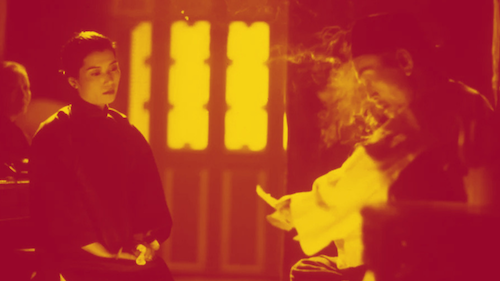
5. The Puppetmaster
Hou’s biographical picture, The Puppetmaster, is a sweeping epic about the life of puppeteer Li Tian-lu. I view it as an allegory of how film can be used for nefarious reasons (as could all forms of art), seeing as much of the motion picture is devoted to Li being hounded to turn his craft into forms of propaganda during World War II. Hou rebels against political, skewed cinema with this splendidly produced film: one that utilizes Li’s expertise in puppetry to pin point moments of his upbringing (and insist where his inspirations stemmed from). Then, there is the major twist of them all: Li himself to detail these experiences while we watch the film (similarly to how Hou speaks A Time to Live, a Time to Die into existence). Li passes on his story to the next generation, and The Puppetmaster is Hou handing us this recount. Legacies and lore will never die as long as we have honest storytellers to share these tales. The Puppetmaster is a near-metaphysical take on the endlessness of legacies through different generations and media.
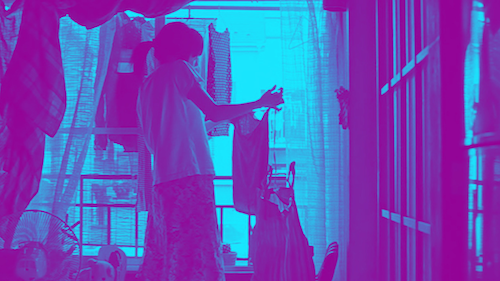
4. Café Lumière
One of the experts of static shots and realistic pacing is Japanese icon Yasujirō Ozu, and Hou honoured the late filmmaker with Café Lumière: a cinematic connection between Hou’s homeland of Taiwan and Ozu’s Japan. The film is loosely inspired by Ozu’s masterwork, Tokyo Story, and that film’s themes of familial discovery and Ozu’s fixation with domestic-architectural design. Café Lumière has a bit more going on for it as well, seeing as it is simultaneously an homage to composer Jiang Wen-Ye: a primary focal point of the film. As our journalistic protagonist wishes to learn more about Jiang, the film utilizes the late musician’s music to breathe life into our findings. The fact that members of Jiang’s family show up in the film to represent themselves shows how closely Hou held Ozu’s sentiments on the importance of family close to his heart; this also paints Café Lumière as a film that is driven by integrity. The connection between the present and history is found in Hou’s title location: an eatery whose walls Hou has gotten to talk.
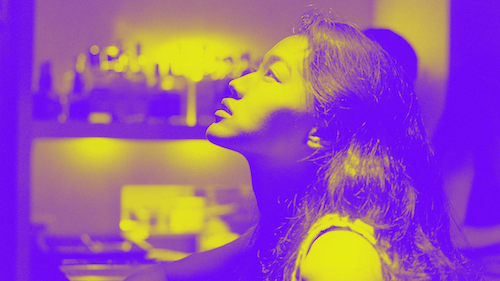
3. Millennium Mambo
Hou’s first film of the 2000s is appropriately titled Millennium Mambo; to me, this film always read like his answer to the films of Wong Kar-wai, given the Hong Kong auteur’s obsession with rich colours, nostalgic sensibilities, and narratives driven by vibes over anything else. We are listening to our lead character — a hostess — detail her regrets in hindsight; Hou places us in the then-future of 2011 to hearken the turn of the century and what was falsely promised about the new age. We see Vicky lose grasp of her youth, only for narrator Vicky to confirm; we have Hou’s patient and spacious direction to plant seedlings of details all over Vicky’s memories for us to ascertain the information she has forgotten to include. Time is a human-made construct, and the concept of a new year, decade, century, or millennium is one we have inflicted upon ourselves. However, Hou also understands time as an indescribable sensation that we feel despite the mathematics and labels: in Millennium Mambo, we shuffle through the moments that were meant to count and detail the future ahead — yet, here they are in the rear view mirror gripping onto the times Vicky seems to never want to let go of. Did society change as much as we would have liked, or in the ways what we wish it would have over the years? No? Did we change?
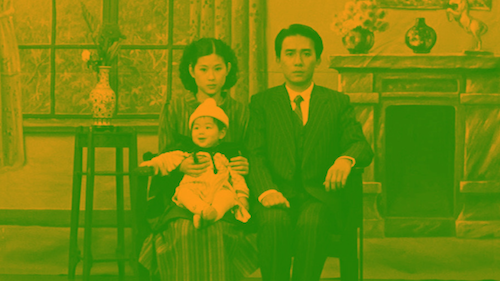
2. A City of Sadness
As political as Hou ever got, A City of Sadness is a bittersweet (with some extra emphasis on the “bitter”) look at Taiwan. Hou spotlights the harrowing times of the White Terror decades that plagued the Taiwanese immigrants from mainland China in the forties — under the Kuomintang government. The White Terror lasted decades — until 1987, merely two years before Hou’s A City of Sadness was released. What a fucking disgrace. Hou focuses on the February 28 Incident of 1947 with the same stillness that he would film a resting pond with, allowing us to feel the severity of such a slaughter at the hands of a corrupt and hateful government. In a way, Hou’s direction feels fittingly paradoxical: here is a motion picture of such tragedy that is filmed as if it were a time capsule in a family’s life; in a way, that is certainly the case. To see A City of Sadness produced in such a way is the biggest eye-opener of them all. In a way, we are seeing the tale of one primary family and their struggles. We also understand that this is just one example of a plethora of cases. We then notice the intended disconnection between these people and the world around them as they are left defenseless and unable to save themselves from the massacre. Hou makes all of these voices heard by us, and a nation’s darkest hours wind up being the benchmark film of the Taiwanese New Wave movement; knowing that these were the very people the KMT did not want to represent Taiwan, this sends chills up my spine and places tears in my eyes.
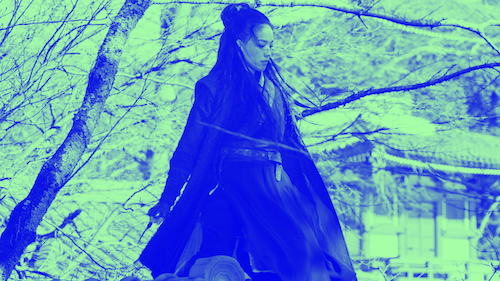
1. The Assassin
Part of me feels blasphemous for placing any film over A City of Sadness on a list like this. I went back-and-forth with this decision quite a few times before accepting that this was the pick that was the most true to me. A City of Sadness feels like Hou’s masterpiece as a storyteller, especially with his connection to Taiwan. Then, there is The Assassin: Hou’s most memorable film experience to me, and one of the great cinematic subversions of the new millennium. While I understand the polarizing reception that this film has received since its release, I find only beauty and magnificence in this film where others may see a slog. One of the most inventive takes on the wuxia genre, The Assassin forgoes much of its action for the breathiness and spirituality that these action films are known for. Each strike counts far more now; if you blink, you may miss it as well. If wuxia is meant to make characters feel like mythological beings, The Assassin’s stoic nature, tempestuous atmosphere, and gelid pacing make these protagonists feel like Gods.
Hou handles the revenge narrative with subdued-yet-booming resentment that you feel in spades in each and every single shot. This quest of provenance — an established assassin is ordered to return back to where she was born to kill a powerful man — is far more calculated than it leads on; it is the film’s low heart rate, crawling pace, and steady pans that make you feel like the central figure going in for the kill after stalking its prey. When Hou presents us with the immense images of nature (especially that wide shot of the mountain range that is kissed by the heavens above), we garner an appreciation for life and an understanding of how precious it is. If Hou’s film A Time to Live, a Time to Die is his strongest observation of how life and death work in tandem, then a film like The Assassin puts this philosophy to the test within a genre where many are expected to die. In a film about assassinations and political strife in eighth-century China, we are conditioned to wanting bodies to hit the floor. The Assassin makes us wonder why that is. It deprives us of that lust for blood. The very reason you may hate The Assassin is why I adore it.
The Assassin felt like a return to form for Hou when it was first released. To have it confirmed that this is his swansong after all that is soul shattering to me; this is clearly a man who was still more than capable of making motion pictures. The maturity that is present here reminds me of Akira Kurosawa’s Ran, or Martin Scorsese’s Silence: these are stories of evil and the disasters of humanity that could only be told by filmmakers who have lived long enough to understand the extents of tragedy. It isn’t present in the upfront spillage of blood or the most gruesome depictions of carnage. It can be present in a still, minutes-long shot of a broken person who has nothing left after their crime. If the wuxia genre is invested in finding the spirituality and fantasy-like magic of the darkest capabilities of human beings, The Assassin places us in the mind of such a being to best understand the bone-crushing gravity of regret and sin. We stare out into the nature around us and wonder what this was all for. Is this a life that was best lived?
A film like A City of Sadness is one where I know exactly how I feel about it once it is complete because of how blatantly strong it is as a motion picture. I give The Assassin the slight edge because I am still hypothesizing and marinating on it to this day — as if I cannot get it out of my mind. I am forever trying to figure out the extent of what Hou Hsiao-hsien was showing with this film that begs for you to keep digging deeper and deeper for the answers he refuses to simply hand out. It is an endlessly rewarding, humbling, spellbinding, and enlightening experience for me, and for that reason I have placed it first.


Andreas Babiolakis has a Masters degree in Film and Photography Preservation and Collections Management from Toronto Metropolitan University, as well as a Bachelors degree in Cinema Studies from York University. His favourite times of year are the Criterion Collection flash sales and the annual Toronto International Film Festival.