
Filmography Worship: Ranking Every Kinuyo Tanaka Film
Written by Andreas Babiolakis
Filmography Worship is a series where we review every single feature of filmmakers who have made our Wall of Directors (and other greats)

If you are a fan of the Golden Age of Japanese cinema, you likely know the name Kinuyo Tanaka. The legendary actor has hundreds of credits to her name and has worked with some of the behemoths of film like Yasujirō Ozu, Kenji Mizoguchi, and Akira Kurosawa, amongst many others. However, when I ask today if you have seen any of Tanaka’s films, I do not mean the works that she starred in: I mean the ones she directed. Tanaka defied many odds at the time — from being an actor who turned to filmmaking (which wasn’t nearly as common then as it is now), to being only the second Japanese woman to make motion pictures after Tazuko Sakane — and that is an achievement in and of itself. She only made six feature films, but each of them were either created with the wisdom she earned while on the sets of the greatest Japanese masters of the time, or she worked with said icons outright (Ozu helped co-write The Moon Has Risen, for instance). It’s one thing that she made these six films: it’s another that they are all magnificent.
Tanaka only directed films for around ten years, but she acted right until the end of her life, passing away at sixty-seven years old from a fatal brain tumour. Her legacy has been a quiet one that is waiting to boom, and the signs are all there. Firstly, all six films were shown in remastered states at the 2021 Cannes Film Festival as a part of its classics series. The Criterion Collection has recently announced an Eclipse boxset of all of Tanaka’s films — available on Blu-ray. Should you dive into a filmography that is itching to become beloved decades after it concluded, you will find visually astonishing tales of femininity, crafted by a daring woman who refused to back down when naysayers — including, sadly, Mizoguchi — refused to support or encourage her. It is one thing to honour a director everyone knows inside and out, but it’s another to have the opportunity to celebrate the works of one of the most underrated filmmakers of all time: one who will have her day in the near future (if only she received her flowers as a director during her lifetime). Here are the films of Kinuyo Tanaka ranked from worst to best.
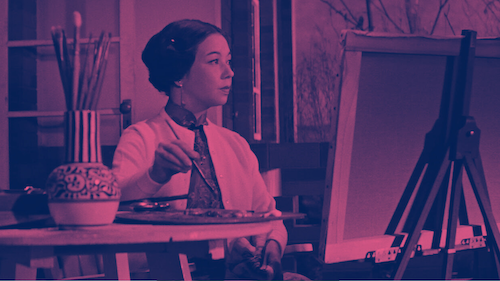
6. The Wandering Princess
Even though I have placed The Wandering Princess last, I still consider this a decent effort by a director with much to say. Tanaka’s first film shot in colour, I cannot help but feel like a bit of her direction here is held back by her desire to see what she can achieve in this new territory; The Wandering Princess just doesn’t flow or feel as lively as the rest of her films (including Love Under the Crucifix: the only other colour film Tanaka ever made). On its surface, The Wandering Princess is a romantic drama with a relationship between the daughter of wealthy parents and the brother of an emperor; the story is based on the memoir of noblewoman Hiro Saga. Tanaka tries to create both a love letter and a political analysis of Japan during tumultuous times while also balancing the central storyline to boot. The Wandering Princess is still a visually pretty film, and Tanaka’s efforts to do maybe a little too much result in a bit of a tonally confused picture (a film of hits and misses, if you will), but it does yield rather effective results when it does work.
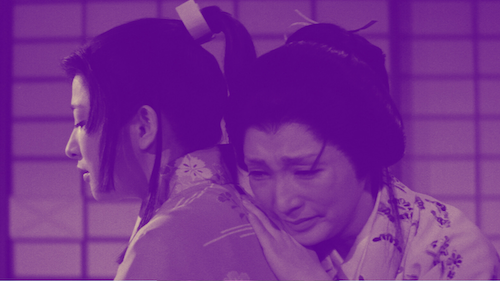
5. Love Under the Crucifix
Tanaka’s final film (and her second to be shot in colour), Love Under the Crucifix, is a jidaigeki about the moment in sixteenth century Japan when the Shogunate banned Christianity. Tanaka’s swansong boasts a forbidden romance during a time of extreme scrutiny and torment, shot with a focus on the many hypocrisies found within dark political times like these (and then some). Despite being placed low on this list, I think there is a lot of stunning choreography and sublime compositions in Love Under the Crucifix, all behind two key lead performances by Ineko Arima and Tatsuya Nakadai. I just find the film slightly stunted narratively, but I wonder if — had Tanaka had more support — these concerns could have been ironed out. Even so, Love Under the Crucifix is a hefty drama crafted by a director who was tired of being told how to behave in an industry that professes freedom of expression (when, in reality, it can be quite stifling to many walks of life and what they want to say or create).
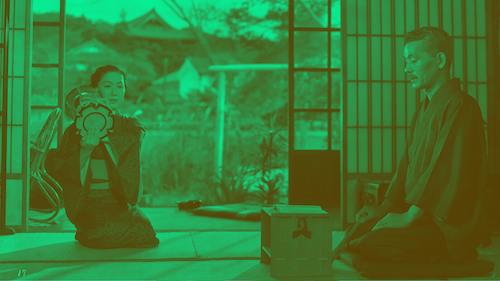
4. The Moon Has Risen
From this point on, every Tanaka film is a winner. The Moon Has Risen was written by Ryosuke Saito and Yasujirō Ozu; the latter’s fingerprint is all over this film and its familial dynamics. A frequent theme in Ozu’s films is a daughter being told she must marry and start a family of their own. When Ozu explores this concept, it’s usually as a means of challenging what a family can be. However, Tanaka recontextualizes this notion from a feminine angle: where do these women feel they stand in society, and what does marriage mean for them as individuals — not just as spouses? Tanaka maintains Ozu’s organic whimsy in The Moon Has Risen while creating her own aesthetic that feels quite different from the static, stoic images Ozu is known for; Tanaka opts for something more like a poetic wonderland, or a living diorama.
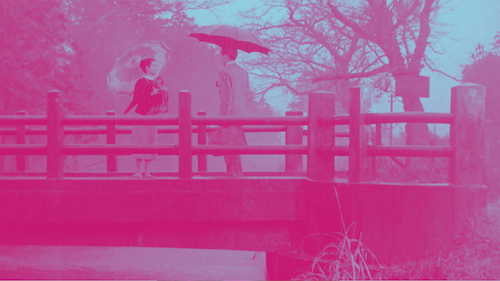
3. Love Letter
Tanaka’s debut film, Love Letter, is one hell of a way to kick off a film career. What could have been a test run with a quaint and simplistic story is instead a passionate allegory about the state of Tanaka’s motherland ever since World War II subsided: has it fully healed yet? Love Letter is appropriately named seeing as it features a man whose occupation is to write romantic sentiments for other people — in case they cannot find the words for their loved one. Tanaka tries to do the same through her film: she puts a description on the difficult, ambiguous milieu of post-war Japan, all while recognizing the onus of a filmmaker to help audiences piece together their thoughts and feelings. The beauty is that Love Letter does not settle for abstractness or interpretation: Tanaka captures a sound drama that will move you as much as its aesthetic richness will dazzle you.
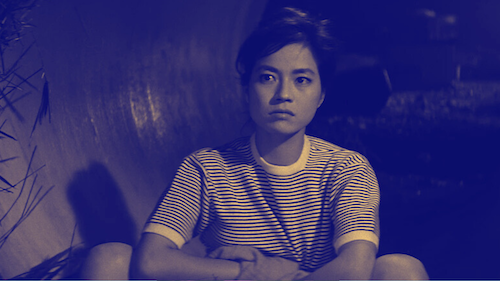
2. Girls of the Night
Girls of the Night blends together two of Tanaka’s key concepts into one exquisite narrative: the film works in Tanaka’s concern with post-war Japan and the mistreatment of women in this striking commentary on societal misogyny. We have an environment that has made it hard for women to live independent lives, have proper rights, and have freedom of speech. Many women have had to turn to prostitution in order to survive. Then comes the crux of Girls of the Night’s premise: the passing of the Prostitution Law in Japan. Much of the film is spent on the efforts to rehabilitate, but Tanaka’s response to hard-hitting cinematic movements like Italian neorealism is easily her darkest feature with very little optimism. What she substitutes positivity with is honesty and bravery during a time when films could still fall prey to artificiality: Girls of the Night is a powerful film made by someone who felt as though they had nothing to lose.
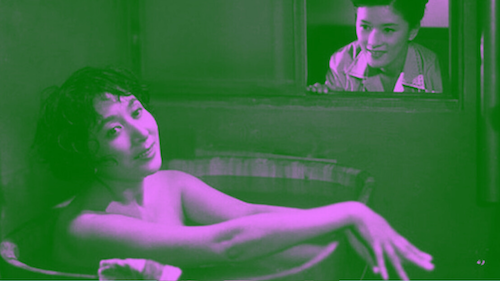
1. Forever a Woman
If Girls of the Night was unafraid of how it depicted the lives of many (during a time where films were afraid to portray such candidness), then Forever a Woman is a motion picture that is well ahead of its time because of how directly Tanaka stares in the eyes of death. Forever a Woman — also known as The Eternal Breasts — features Fumiko: a wife and mother who feels stuck in life, especially when she learns that time is running out once she is diagnosed with breast cancer. Inspired by the life of poet Fumiko Nakajō, Forever a Woman aims to liberate a person who is searching for what her purpose is while she is alive (and what will transpire once she is gone). The concept of legacy is questioned in the form of Fumiko’s children she will leave behind, the project of a journalist who wants to get to know her (in more ways than one), and Fumiko’s own thoughts about her circumstances. Is there more than all of this? Was there ever? Should Fumiko feel fulfilled with what she has? If not, why?
Forever a Woman is as meticulous as such a drama could be for the fifties, to the point that it exhibits the multitudes of what could be considered an ordinary, tragic life into something marvelous and glistening. Tanaka uses the silver screen to find the gold within the soul of a life that is soon to depart — so much so that the final images are crushed by the weight of what came before (and the void that will precede the words “The End”). In the grand discussion of underrated films that are begging to be discovered and cherished, Tanaka’s Forever a Woman feels like a leading candidate. It’s not as if this film is virtually unknown outside of my awareness of it, but knowing that most people have never crossed paths with something as gorgeously heartbreaking as Forever a Woman is a travesty to me.
I have learned in my many years as a film critic that the one key blessing that can be misinterpreted as a curse is that it is virtually impossible to see every masterful film ever made. I initially thought this was because of a lack of time or commitment that many of us have, but the fortune of watching films and reviewing them has informed me that this is not the case. The main reason why is because there will always be a stone that is unturned and waiting for a cinephile to stumble upon it: a motion picture that didn’t have the fortune of fame or budget in order to make its rounds, but is excellent without all of those frills. In the day and age of the internet, we now have access to most of the films ever made that are not considered lost; Forever a Woman is a stone waiting for you to turn it over. You will see what I mean when I ask: “how could a film this emotionally gripping and drenched in bittersweet poetry almost completely unknown?” A film this beauteous and lachrymose won’t be hidden forever; I hope I have done my part to introduce you to Forever a Woman and the untapped legacy of the exceptional Kinuyo Tanaka.


Andreas Babiolakis has a Masters degree in Film and Photography Preservation and Collections Management from Toronto Metropolitan University, as well as a Bachelors degree in Cinema Studies from York University. His favourite times of year are the Criterion Collection flash sales and the annual Toronto International Film Festival.