
Filmography Worship: Ranking Every Chantal Akerman Film
Written by Andreas Babiolakis
Filmography Worship is a series where we review every single feature of filmmakers that have made our Wall of Directors
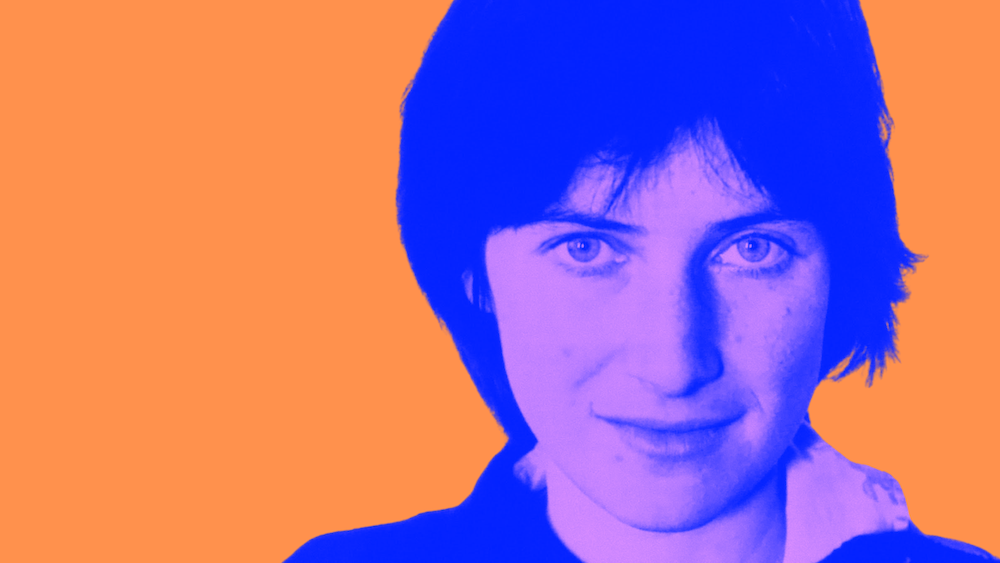
Chantal Anne Akerman was a Belgian-French filmmaker whose works are some of the most vulnerable, confrontational, and upfront in all of cinematic history. Known for her real time sequences, lengthy static shots, and minimalist direction, Akerman turned the screen into an art gallery, a prison, a viewfinder, a memory bank, or a series of postcards (whatever she deemed appropriate at any given time). Her films usually don't shy away from their subject matters via cuts, obscured camera angles, or any other obstruction. When Hollywood and the majority of the world was trying to explore dynamic and bombastic filmmaking, Akerman found power in having the fewest amount of distractions possible. Much of this upfront artistry stems from Akerman's difficulties in her life. The daughter of Holocaust survivors (including her mother, Natalia, who Akerman was extremely close with), Akerman hungered to tell stories as catharsis. She took a quick likening to experimental and avant-garde films, being heavily influenced by Jean-Luc Godard's Pierrot le fou. She funded her first short film, Saute ma ville, via trading shares on a stock exchange. After the success of this short at the International Short Film Festival Oberhausen in 1971, she moved to New York and became transfixed by the films of some of the great experimental artists of that time, including Canada's Michael Snow and pop art icon Andy Warhol.
Akerman used the avant-garde lens to depict the lives of everyday people, feminist talking points (perhaps in response to her relationship with her mother and what she observed in her life), sexuality in a way that felt real and not pornographic, and many other transformative experiences. Her films make you feel the passage of time via two constants: extreme speed, and the most glacial pace cinematically possible. These opposing forces create a limbo where we are under Akerman's spell for any amount of time, be it ten minutes or almost four hours. She explored such candidness via her narrative and documentary films that almost feel one and the same: like endless portraits. Akerman sadly suffered from depression her entire life which was also frequently explored in her works (either through the documentaries that are literally about herself or her own life, or through the characters she would create). With her films, these issues were addressed head-on. If you struggled similarly, you would feel seen.
Tragically, after Akerman's mom passed away, and Akerman directed a tribute to Natalia (No Home Movie), Akerman committed suicide. Akerman's works have only been growing in stature, but they weren't nearly as big as they are now when she passed away; if only she could see how celebrated and adored she is as one of the experimental greats (to the point that Sight and Sound crowned a certain film of hers the greatest of all time, despite being one of the most challenging films to watch; more on that later on in this list). Having gone through all available features and shorts, I am pleased to say that I don't think Akerman has a single bad film; perhaps a few mediocre or decent titles that I wouldn't recommend you start with, but nothing she released ever felt painful to me. Some artists choose to leave you guessing and hypothesizing what their works mean. Some, like Akerman, expose themselves so greatly that there is no guesswork: there is only connectivity. Akerman's films about the sprint and crawl of time have thus stood the test of time and then some; in the day and age of lightning-fast results and dopamine fixes, her films remind us of what it means to be in the moment — where settings become fixtures of your life, background noise are the garnishes, and both pauses and silence are main characters. Her impact on experimental cinema will never be forgotten. Here are the works of Chantal Akerman ranked from worst to best.
38. Hanging Out Yonkers
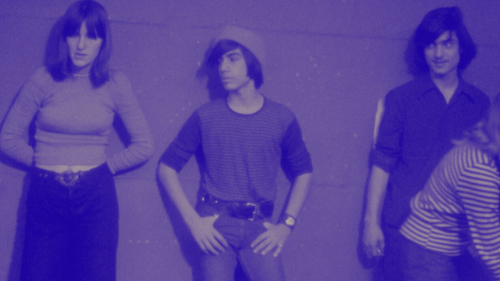
The reason why Hanging Out Yonkers is last is because the film isn't even finished. What was meant to be a documentary on New Yorkers being reintegrated into society after criminal charges is instead a half hour of scrapped, silent footage. It feels wrong to include this at all given the fact that it barely even exists, but I do have it here simply because there are enough discussions online about Hanging Out Yonkers that omitting it feels wrong too. You can tell that Akerman meant well with this depiction of the welfare system, and I wonder what the end result could have been. All that we have are scraps that are well shot and feel intriguing, but we have literally no proper information to go off of otherwise.
37. Demain on déménage
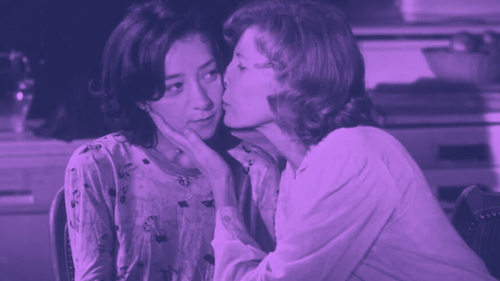
The weakest complete film by Akerman is one of her attempts at making commercial cinema in the form of Demain on déménage. This fluffy look at modern romance and craving is a teensy bit more involved and interesting than the average comedy of such a nature, but Akerman's film is still wobbly and — the biggest shame by Akerman's standards — typical enough to feel like a missed opportunity.
36. Un divan à New York
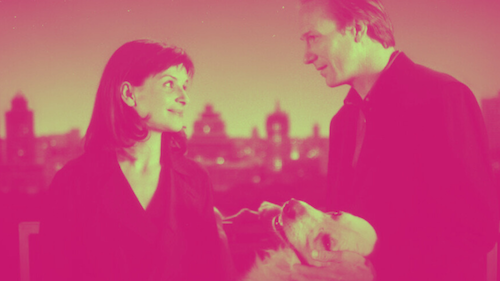
Another example of Akerman working within the confines of mainstream cinema, Akerman's Un divan à New York is a rare example of this director working with an American gaze. This rom-com starring Juliette Binoche and William Hurt feels like it is a case of a film being lost in translation; despite the talent at the centre here, this is a film that still feels uncomfortable, like it is trying to be something it is not. I cannot fault Akerman for trying new stuff at this stage in her career.
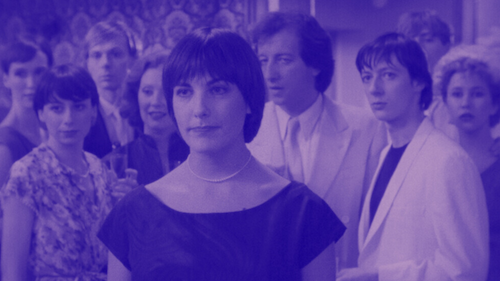
35. Hôtel des Acacias
Almost like Akerman's answer to Grand Hotel, Hôtel des Acacias features all walks of life entering at the titular establishment. This forty-minute, slice-of-life study is one of the many Akerman films to make you feel like a fly on the wall, but it doesn't quite get the results of her other studies mainly because I think the hypothesis is more fascinating than the findings here.
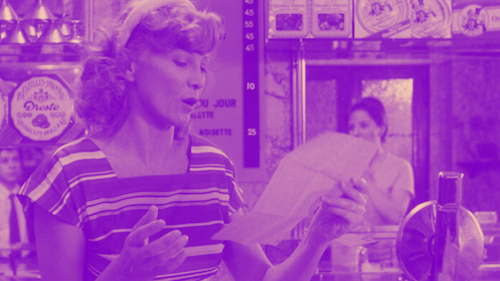
34. Les Années 80
A making-of documentary regarding one of Akerman's finer "conventional" efforts (Golden Eighties), Les Années 80 doesn't really place you in the shoes of the filmmaking process. If anything, Akerman's documentary feels more like a bonus than a stand-alone achievement (making-of documentaries can certainly hold their own weight — see a film like Burden of Dreams). However, this is a nice add-on should you really like Golden Eighties (even though it feels antithetical to Akerman's style).
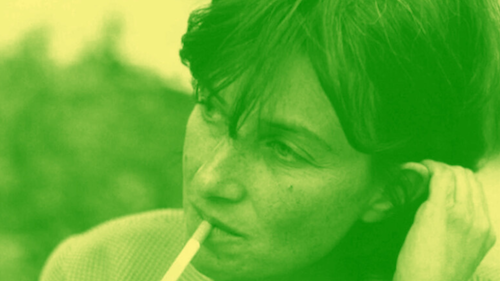
33. Lettre d'un cinéaste
At only eight minutes long, there isn't much to take away from this discussion Akerman holds with herself. While in drag — mustache and all — Akerman asks herself what the point of cinema is. You might be surprised as to what her answer is, especially given how serious many of her projects are; I'd chalk this up to being more of a nice trinket for Akerman fans to watch and be chuffed by, seeing as this short might mean nothing to newcomers. It's a cute anecdote and not much more.
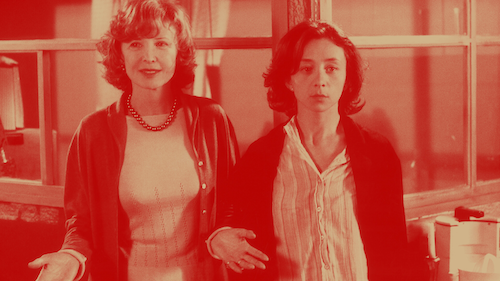
32. Le marteau
Meant to be a commissioned homage to artist Jean-Luc Vilmouth, Le marteau is actually kind of a fascinating short on creativity and aesthetic that will leave you thinking about what you have just seen (what is the purpose of the musical chairs segment, and the allegory of the central hammer). The main issue is that this is only four minutes long, and it is brief enough to not resonate quite as well as it easily could and should.
31. Trois strophes sur le nom de Sacher
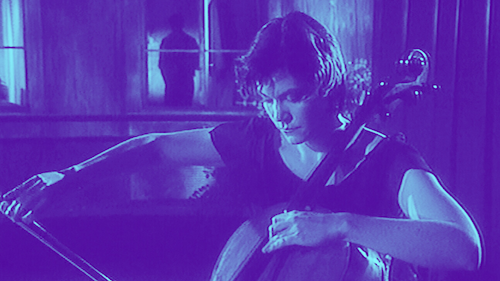
Akerman had an affinity for classical music, and some of her filmic responses were stronger than others. The lowest such effort — which I consider a bit of a turning point on this list (everything from this point on is quite good) — is this rehearsal by Sonia Wieder-Atherton in what appears to be her apartment; her private practice turns into a mesmerizing concert exposition thanks to her skillful playing and Akerman's patient eye. Akerman would make even better music-based films than this one, but this is still worth watching should the subject pique your interest.
30. De l'autre côté
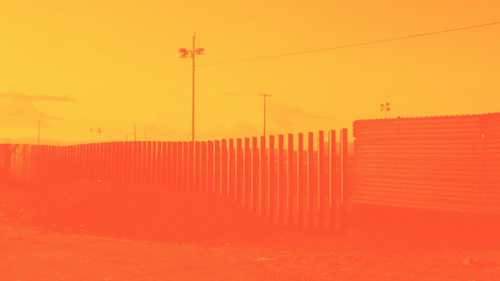
A documentary about Mexicans illegally crossing into the United States, De l'autre côté features Akerman's signature static shots that are meant to encourage you to marinate on the extent and permanence of such a situation. I think Akerman's approach works better for other subjects, but this is still an effective contemplation on belonging and identity; this is something that could have been condensed into a shorter film, mind you.
29. Le déménagement
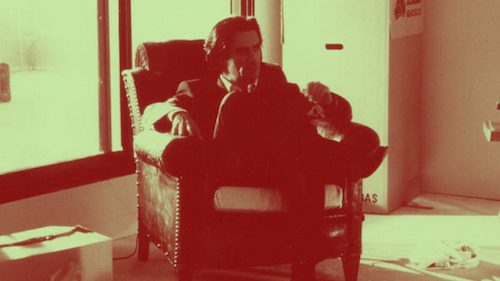
Usually, Akerman's solitary and static shots implore you to dive in and explore them for yourselves. In the case of the short film Le déménagement, we listen to a man who has recently moved and is not finding any comfort or solace in his new home. He speaks to us directly in search of belonging, Even so, Akerman's short doesn't feel like it is telling us how to feel; the protagonist is just ruminating out loud, and we are not left there to parse his thoughts together; if anything, we can feel heard, as if the film is our own inner speech coming to fruition. We all belong in our lack of belonging.
28. Chantal Akerman par Chantal Akerman
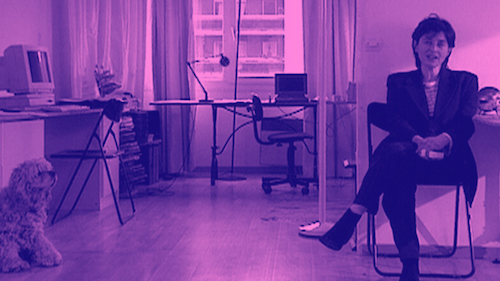
There are two types of self reflections in cinema: the act of telling us why you made these motion pictures, and the act of letting the films speak for themselves. Akerman does both in this autobiographical documentary special. The first half shows us her personality and character — one, of which, is far more comedic and lively than you'd expect from her heavy and serious classics. The second is a compilation of various shots of her films up to that point, as if all of these lost souls exist on the same empty plane together (and, due to the first half of this documentary, the same reality as Akerman herself). It is always nice to see what Akerman was like as a person versus as an artist, and this is a short introduction to both.
27. Les trois dernières sonates de Franz Schubert
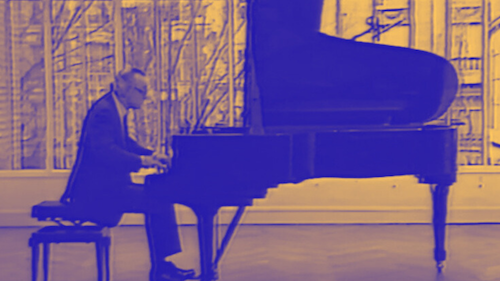
Another one of Akerman's devotions to classical music, this fifty-minute documentary focuses on — as the title states — three of Franz Schubert's final sonatas. Pianist Alfred Brendel speaks Schubert's brilliance into contemporary existence before performing this trilogy of swansongs, creating a sublime dichotomy between the artist and their craft. Akerman captures both sides effectively well in a documentary of two natures (the academic, and the performance-based).

26. Nuit et jour
Akerman puts a spin on what a love triangle can look like with Nuit et jour: a day about clicking relationships. Featuring two taxi driving men who specialize either in day or night shifts, our protagonist lady, Julie, sees two different sides of the world — and, in return, herself — through this pair of boyfriends. We are subsumed by our environments — our settings, our relationships, and our times of day. Nuit et jour is a pretty study on the factors that affect our identities.
25. Mallet-Stevens
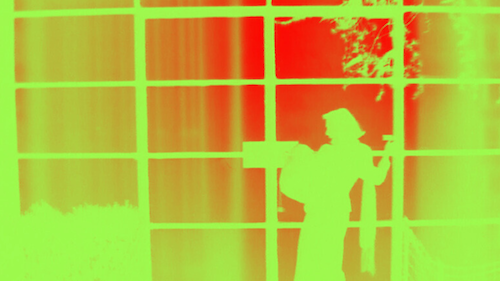
Architect Robert Mallet-Stevens designed a street of cubist houses that Akerman captures decades later in her appropriately titled Mallet-Stevens. The end result is something esoteric: a look at the longstanding legacy of these structures, as well as the nightlife of those who inhabit them (many of them are detailed as shadows, as if they are illuminations within a cave, or the spirits and memories caught within those four walls). Akerman's film doesn't fish for much to say, but — in return — it speaks volumes of provenance, the now, and a mystery surrounding what — or who — is to come.
24. Là-bas
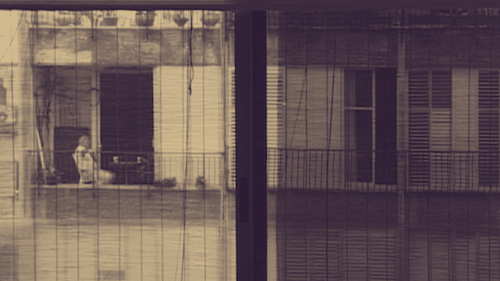
Many of Akerman's documentaries feel like cinematic diary entries, and one key example is Là-bas: her inner thoughts during her temporary reprieve in Tel Aviv. Akerman mainly contains herself within this apartment while restraining herself from leaving for most reasons, resulting in the embrace of self and her path up to this point of her life. This month results in an exercise in isolation and — as a result — complete confrontation. Her stoic film encompasses the same surroundings as her and becomes one with her reservations and hypotheticals.

23. Golden Eighties
Many experimental directors might struggle to find their footing within conventional filmmaking (and vice versa), but Akerman has a terrific go at such a concept with Golden Eighties: a light musical that proves that Akerman could play ball whenever she saw fit (she just felt like making her signature style of avant-garde pictures). This romantic comedy not only adheres to the rules of the game, it also subverts them enough to show that Akerman has not surrendered to pedestrian means. Golden Eighties is as aware of blind faith, consumerism, and cinematic delusion to the point of being able to hint and comment on them while exhibiting them; Akerman was never above fun cinema, so Golden Eighties never feels holier-than-thou or hypocritical. Due to her wisdom, Golden Eighties feels a bit more elevated than your standard fare, but those who adore such motion pictures may gravitate towards this one more than Akerman's arthouse classics.
22. La captive
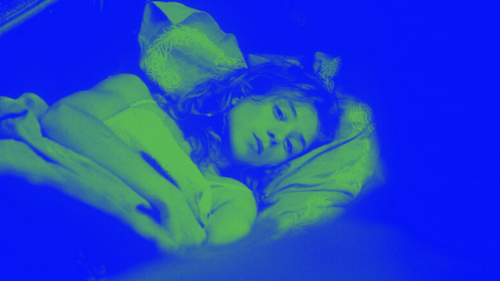
After a handful of lacklustre comedies, Akerman returned to her key style of long-form, artistic filmmaking with La captive: her interpretation of author Marcel Proust's La Prissonniere. Even so, this is hardly the Akerman of old: this is twenty-first century Akerman with a focus on then-modern approaches to art cinema (down to the use of music that her earliest works would have forgone). Akerman captures Proust's existential quandaries in this damning drama about lost people who feel even lonelier and confused when they are in love: the central couple could not make each room feel emptier. Proust and Akerman shared a similar affliction for the blessing and curse that is the never-ending cycle of time and how we all surrender to it.

21. Le 15/8
Almost like a precursor to Jeanne Dielman (although not nearly as ambitious, challenging, or long), Le 15/8 plants us in an apartment with a young woman for forty minutes. Despite being separated by a camera, screen, and the passage of time, Akerman allows us to occupy this same space — between subject and spectator — in this experimental documentary film. While Akerman would often focus on her own journalistic daydreams, she instead allows her subject to turn an average day in her life into a cinematic spectacle: the filmic capturing of all of the floating thoughts that make up this individual; in less than an hour, Akerman turns an average civilian into an arthouse triumph.
20. No Home Movie
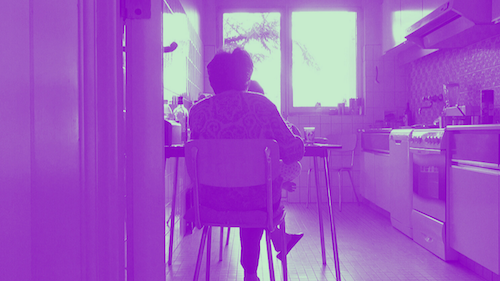
Akerman's final film before her tragic passing, No Home Movie depicts the life of one before and after a loved one dies. In this case, it's her mother, Natalia, whom she converses with via internet video calls (even so, she still feels far away from her). Representing Natalia Akerman's passing is the second half of the film: quiet shots of a desert — essentially the void within life once Natalia died (Chantal could not have felt even further away at this point). This film is already heartbreaking with its no-nonsense look at the punishing sensations of the grieving process, but knowing that Akerman would take her own life shortly afterwards makes this swansong especially devastating; that emptiness of the desert speaks far too loudly, now.
19. Avec Sonia Wieder-Atherton
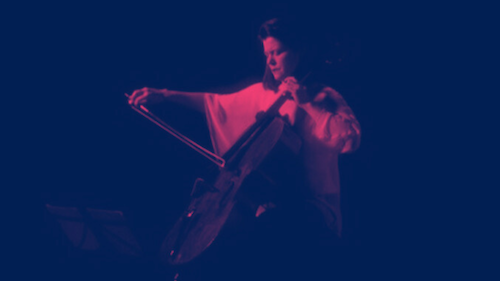
A television special about cellist Sonia Wieder-Atherton, Akerman's documentary featurette takes a similar approach to her other music-based films, but instead of trying to unearth the personal details of a composer of yesteryear, Akerman focuses on a master in the present. We learn about Wiedar-Atherton and her passion for classical music before hearing her get to work with a spellbinding performance. Here, genius feels palatable: as if we are temporarily on the same plane as someone who feels too skilled to even be possible should Akerman have flipped the film's halves around. Akerman unites the artist and their art in this profound tribute.
18. Histoires d'Amérique
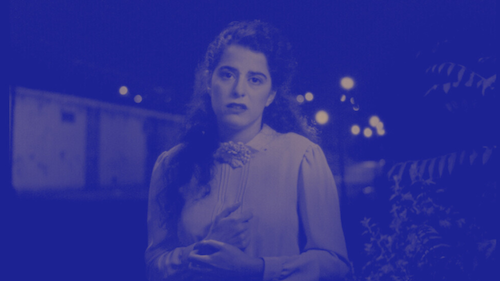
A far stronger blend of French and American filmmaking than Un divan a New York, Akerman's Histoires d'Amérique plunges us into the heart of New York City amidst a community of Jewish immigrants to break that blasted fourth wall and share their stories with us. Most of these tales are punctuated by comedic anecdotes or realizations, as if we are legitimately having a conversation (as opposed to being barked at by those we cannot respond to), and Akerman's portfolio of these discussions makes for a pleasantly inquisitive evening — it's quite something to hear all of these inner thoughts float out like lanterns into the night sky.
17. Toute une nuit
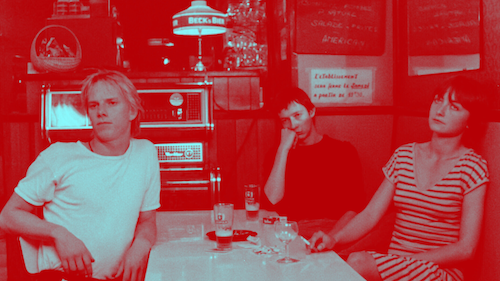
If Akerman is often transfixed by the nothingness that surrounds us, a film like Toute une nuit is her attempt at going against that expectation. Instead, she follows dozens of stories and only features the most "definitive" moment of each story for us to nibble on. This could be a statement on cinema's addiction to melodrama and turning points in stories to seem exciting (so, in return, we only get turning points). Additionally, the end result feels like a parade of vignettes of short stories that shouldn't work given their confinements, and yet they do. Like we are eavesdropping on all of these Brussels inhabitants, Toute une nuit is a take on the ideology that we are all the main characters of our own stories — all protagonists are united in this string of climaxes.
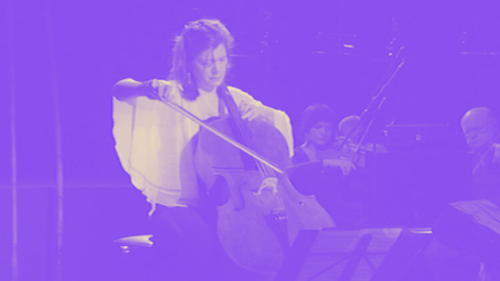
16. À l'Est avec Sonia Wieder-Atherton
The second film Akerman made with cellist Sonia Wieder-Atherton (and the greatest music-based film Akerman directed), this documentary feature follows the musician and her efforts to capture a suite of classical folk songs from eastern Europe. Here, we see the skilled musician truly come into her own and show how her mind operates while undertaking such a major project; Akerman watches idly and allows Wieder-Atherton's brilliance to shine and dominate the screen. Sometimes, there is no need to explain or describe the artistry at hand: to watch mastery is to witness enough to know its worth.
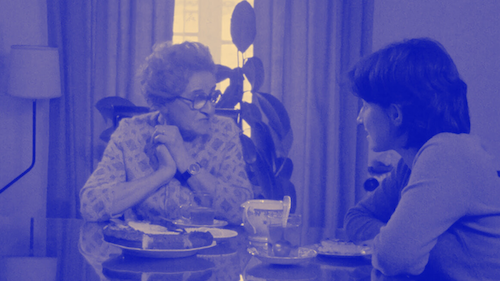
15. Dis-moi
Akerman was always connected to her Jewish heritage and her mother, Natalia: a survivor of the Holocaust. In Dis-moi, she turns the camera on her mom and other survivors to hear their experiences with such despair and perseverance within these atrocious conditions. Released far enough after World War II that there was a concerned effort to never let such monstrosities ever be forgotten, Akerman puts faces to these unspeakable moments in history; the power of Dis-moi is how effective it will always be at reminding us both how magnificent and horrific people can be.
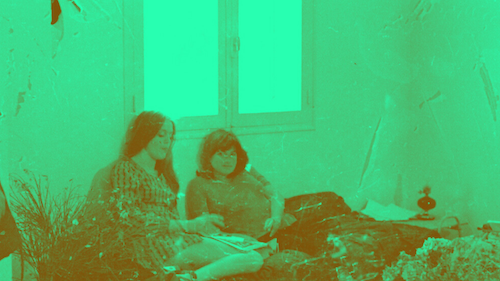
14. L’enfant aimé ou Je joue à être une femme mariée
Akerman's short yet heavy documentary, L’enfant aimé ou Je joue à être une femme mariée, places us with Akerman's friend — a lonely mother. Much of the film is defined by the silence, unrest, and confinement of her friend's reality: a domesticated hell that is difficult for us to bear for forty minutes (meanwhile, this is her entire reality). An uneasy look at the curse of mundanity within the imbalances of a patriarchal society, Akerman's documentary walked so a certain, similar film (Jeanne Dielman) could run; it took this crushing realization to be able to bring such a masterful avant-garde classic to fruition.

13. Sud
You know that cacophonous silence that permeates through the air after a tragedy has taken place? Akerman was able to bottle that in her eerie, shattering documentary Sud: a reflection on the ghostly self-destruction of the town of Jasper, Texas, after a shocking crime took place there. The existentially weighted dread is cut into pieces with interviews to break the silence; the words of the locals only adds to the desolation of it all. Many crime-based documentaries only succeed in providing surface-level recounts and opinions without being able to showcase what being enveloped by such a story feels like. Akerman's Sud makes us feel like this event has happened to us or someone we know (and that is likely the very point Akerman wanted to make, in order for us to understand the severity of the crime without the exploitation of the deceased like many true crime depictions are guilty of).

12. La folie Almayer
The last narrative film Akerman ever made is La folie Almayer. On paper, this is simply a merchant's quest to find hidden treasure to better the life of him and his daughter: his desire turns into crippling greed. However, Akerman has a far greater vision for this story told via arresting arthouse images — like the radioing-in of hallucinations from another dimension. Akerman turns the delusions and drive of one into the fantasies and spectacles for us viewers to be pulled in by; suddenly, we may understand this fixation. I feel like a film this far into Akerman's career is bound to be slept on, but take my word for it: La folie Almayer is a critically underrated contemporary arthouse film that will be worth your time.
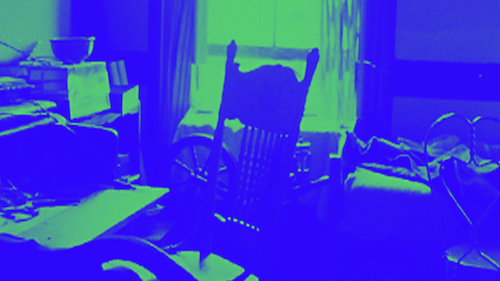
11. La Chambre
Inspired by the works of Michael Snow, Akerman responded with La chambre. Despite being far shorter than Wavelengths, this Wavelengths-esque film is just as challenging (even at eleven minutes in length). What might be a pretentious chore for some reads as a breathtaking avant-garde exploration of a bedroom and what it houses (from nothing to Akerman's being, framed as if it were simply a decoration within this domicile). Akerman creates spatial awareness that consumes us with La Chambre and helps us recontextualize what setting within a film can be; instead of it being a backdrop for characters to stomp across, it becomes a vestibule for us as well. These objects surrounding us almost feel tangible; alas, they will disappear once that reel runs out of film and that proverbial door closes on us (and Akerman shuts her eyes to sleep, closing us out of her subconscious and, subsequently, her reality).
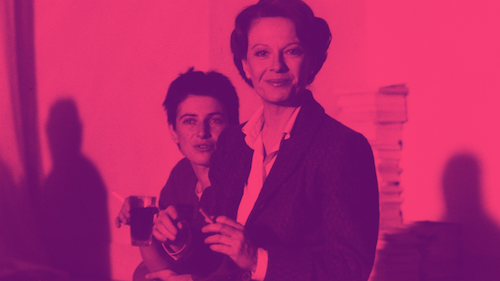
10. Letters Home
If there was someone who mirrored the life and works of author Sylvia Plath, as tragic as it may seem, it would be Akerman. Both detailed the mental health battlefields of the female experience in male-dominated societies, and both laid out their personal struggles for the world to see. It only makes sense, then, that Akerman channeled Plath with Letters Home. Plath also had a strong relationship with her mother, and Akerman casts French icon Delphine Seyrig (and her niece, Coralie) to play the parts of Aurelia and Sylvia Plath, respectively. They share the Plath letters directly to us, creating an open forum between a literary icon and the world: a private conversation being made into compelling cinematic monologues. Akerman's empathy allows Letters Home to hit you right in the centre of your heart.
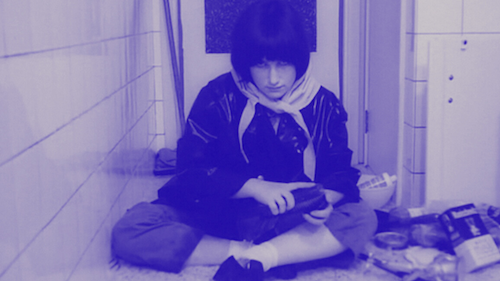
9. Saute ma Ville
Akerman's debut film, the short Saute ma Ville, was already driven by the kinds of storytelling that the auteur wanted to explore. Akerman films herself as a self-destructive recluse; in a way, this is a character that she is bringing to life, but this is also clearly the inner conflict that Akerman was hoping to expunge via a film this aware of society's impact on the mental health of women. This is a film that feels like domesticated anarchy: a call-to-action to break out of expected, misogynistic norms while still feeling confined; a kitchen turns into a padded cell, in a way. Akerman was also inspired by Jean-Luc Godard and the French New Wave icon's propensity to break the mold of the cinematic language; it was clear that she had already figured out how she would do the same.
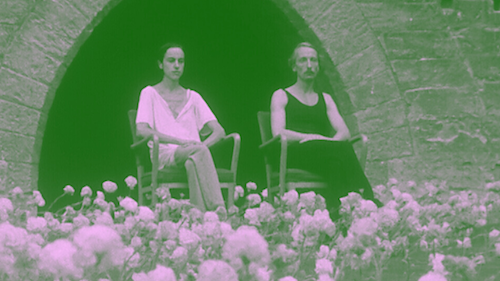
8. Un jour Pina à demandé
Akerman documented music in her films a handful of times, but Un jour Pina à demandé was the sole time she tackled the concept of dance, focusing on the legendary choreographer Pina Bausch. Both artists have an affinity for taking the repetition of monotony within the human experience and turning it into a hypnotic cycle of time; needless to say, Akerman speaks Bausch's language. Capturing Bausch's company while performing and during their preparation, Akerman finds rhythm within practice, melody within everyday occurrences, and method in expression. A highly underrated take on Bausch that would pair up nicely with Wim Wenders' far-more popular Pina as a double feature.
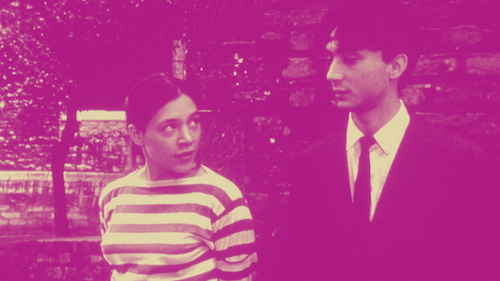
7. Portrait d’une jeune fille de la fin des années 60 à Bruxelles
Roughly two decades after Jeanne Dielman, Akerman would return to the concept of life in Brussels with this very loose sister film. Akerman looks at herself in this television film that anachronistically depicts her youth in the sixties via a very nineties lens (down to a number of intentional historical errors); Akerman's past and present collide in this observation of the shifts in society, feminism, and within Akerman herself. Unlike Jeanne Dielman, Akerman's representation in the form of Michele is out and about, able to talk freely about her philosophies, and then some; then there is the devastation that Portrait d’une jeune fille de la fin des années 60 à Bruxelles brings, because there is much work to do in society; with how feminism is represented and received; within Akerman herself and her inner demons.
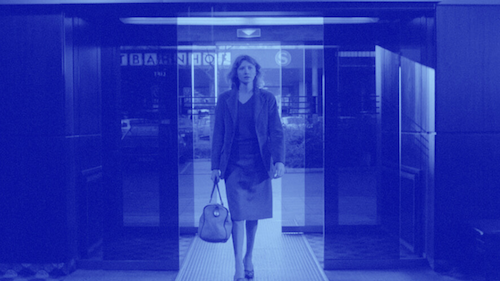
6. Les rendez-vous d'Anna
I wouldn't say that Akerman was ever treated as an untouchable icon during her lifetime, but it was clear that she felt some sort of fame when she made Les rendez-vous d'Anna. The concept is quite simple: Anna is a filmmaker who is now being embraced — and sought after — by many people; loved ones; former acquaintances; the random public. Despite all of this, she has never felt so alone in her life. A portion of the film is spent with Anna going through her voice messages when arriving home; Akerman turns an answering machine into a barrage of one-sided conversations that hound Anna to the point that she feels less important than she did before reaching any level of recognition. Akerman was never really a celebrity — so to speak — but she certainly felt the same pressure and self-loathing that anyone with any form of stature in the arts experiences. This isn't what she made films for. She made films to help others feel seen; by Les rendez-vous d'Anna, she was not feeling seen herself.
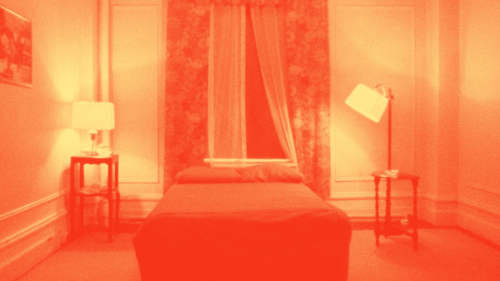
5. Hotel Monterey
Akerman's first documentary challenged the notion as to what that could even be. Hotel Monterey simply shoots the empty quarters of a New York hotel, and the lonely inhabitants who reside there. Akerman transports here, making us feel like we have stumbled upon this neglected space in the city and are left to our own devices. The eeriness and isolation almost make Hotel Monterey a hallucinogenic experience to the point that you may imagine seeing movement or life where there simply isn't any. This is more than the mere documentation of an unloved structure and its forgotten stories that reside within it: this is a complete connection with a viewer to the point that they, too, will feel the gravity of existentialism present here.
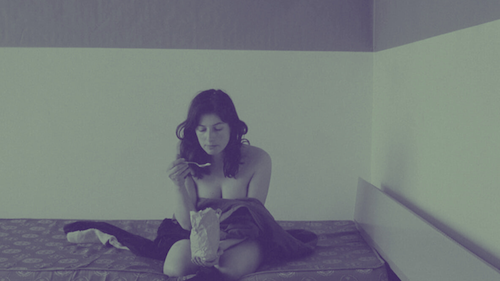
4. Je tu il elle
Akerman's debut narrative feature film has made its rounds as a revered arthouse film by today's standards. Rightfully so: Je tu il elle is an early exploration of what character relations in a film could look like between each other, with the viewer, and with the film itself; Akerman discretely converses with herself as a director, a screenwriter, and an actor in this cinematic equivalent of rejuvenation and liberation. To watch Je tu il elle is to see someone closed off and aching to open up to the world; when she does so, she holds nothing back. Akerman found the freedom of artistic self within postmodern filmmaking and knew how to pool together all of her inner conflicts and desires in this magnificent preliminary effort in avant-garde cinema.

3. News from Home
The inner voice we hear when we read messages becomes the soundtrack to our existence for a temporary moment. Akerman's News from Home manages to depict this sensation, as we see long, uninterrupted shots of minimalism from Akerman's vantage point in New York while she reads her mother's letters out loud. We are concretely in Akerman's mind as she daydreams away; she lets her mother's words permeate her thoughts and what she looks at still feels so far away despite her literally showing her surroundings. What is home? Is it where you were born? Where you are told to live? Where you are currently planted? What you yearn for? Where you wish you could be? When you battle depression, home might not feel anywhere. With a film like News from Home, Akerman is trying to find peace and belonging and allowing us to know our similar concerns are shared.
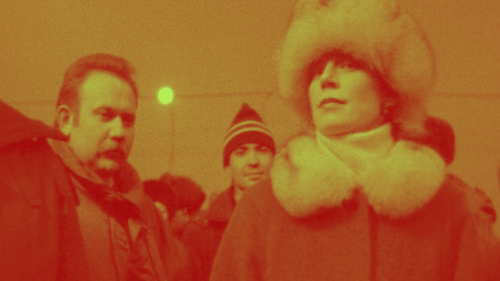
2. D’Est
The concept of a city symphony film is to turn the sights of a location and render them masterful for the audience to indulge in. Akerman's D'Est is almost a reverse version of such an idea: one where Akerman visits various locations affected by moments in history (from the Second World War, to the fall of the Soviet empire). This is a film that lingers on its subjects — from barren landscapes, to the inhabitants of these echo chambers of provenance — to the point that directness becomes abstractness: why do we watch this solitary shot for so long? What is Akerman hoping we will find in each of these living snapshots? If we have unearthed a reason rather quickly, is there more for us to discover? Sometimes, it is the alienation and the search that are the reason: Akerman wrestles the certainty of history versus the pondering of the present. D'Est is like many such experiments that Akerman attempted throughout her career, but she yielded the best results here: a purgatory where past, present, and future are all frozen in a standstill that allows you to value how Akerman was able to view and cinematically package life for the rest of us to understand her perspective.
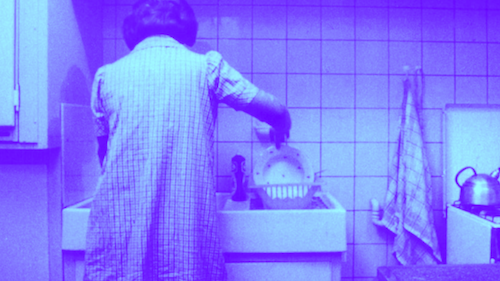
1. Jeanne Dielman, 23 Quai du Commerce, 1080 Bruxelles
From a virtually unknown experimental epic to what is likely being shown in every university film course now, we have arrived at the one film that could be ranked first: Jeanne Dielman, 23 Quai du Commerce, 1080 Bruxelles. The film has garnered some unfortunate notoriety once it topped Sight & Sound's list of the greatest films of all time in 2022, and I believe that the film does not deserve the negativity it has received. Consider an album like The Caretaker's Everywhere at the End of Time the greatest on a list by, say, Time Magazine, and you'll have everyday people questioning why a six-and-a-half experiment of crushing ambient noise could be considered anything but abrasive and impossible. Such a ranking would contradictorily encourage readers to not consider The Caretaker's methods of audibly depicting what the mind of someone suffering from dementia is experiencing (as their brain slowly drifts into a state of neurological cacophony). Such was the case for Jeanne Dielman, where many people who are not privy to avant-garde or art films were now taking on a three-and-a-half hour juggernaut of rule-breaking, difficult cinema. In the way that such an hour shouldn't besmirch an album as exceptional as Everywhere at the End of Time, Sight & Sound's bold choice should not take a film as courageous, forward-thinking, and inventive as Jeanne Dielman and now render it "pretentious."
Having been aware of this film many years before Sight & Sound declared it the best film ever made, like the many of us who have loved Akerman's vision when this zeitgeist didn't exist yet, I saw a film that left me wondering why more directors weren't utilizing the screen in the same way Akerman was. Her prototypical take on what would be known as long cinema was meant to be a confrontational exhibition of the female experience in a patriarchal society. The place many call home would become a prison. The kitchen would feel like a factory. Joys are sterile. Days are so long that they bleed into each other. Existence is unfathomably heavy. The titular Jeanne Dielman goes about her daily routines for three cycles in this film, and we watch most of her chores carried out without jumping ahead in time, cutting away, or any other form of softening the blow. If it takes twenty minutes to make a meal, we watch the entire process in silence and without distraction. If it is a nightmare for you to watch, imagine having to live this every single day of your life.
Jeanne Dielman's routines feel repetitive to the point of having a mesmerizing, rhythmic pattern to them; while others may watch the film and see an agonizing chore of a motion picture, I — and other fans — see something oddly spellbinding within this undertaking, as if the film runs so slowly and for so long that, in a weird sense, time speeds up instead. There is no quickness, but there is also no lethargy. This is a cinematic plane where time simply does not apply anymore. Akerman similarly breaks the concept of setting, leaving poor Jeanne Dielman in this solitary confinement of a domicile. We feel like we are in the room with her, long enough to the point that we may do as the protagonist might while going stir crazy: counting tiles, trying to find nicks or blemishes in the surrounding furniture, or trying to time the subtle flickering of the light. We also begin to scrutinize Jeanne Dielman's handling of her tasks. At first, this feels like we are hypocritically judging her like a higher power scoffing at the work of this lonely, depressed mother who has no purpose of existence outside of serving others.
Then, we start to see small cracks in her routines. Akerman's film lulls us so much that our brain begins to feel "off" when there is a disruption in the orthodoxy of Jeanne Dielman's ways. Is it us? Are we watching the film too heavily to the point that we are seeing things that are not happening? Or is Jeanne Dielman herself losing her sense of reality? These cracks become more and more apparent; such an enigmatic effect could not be achieved with a trimmed-down film, since Akerman's experiment — to have us feel constrained, stir crazy, and alone (despite being there beside Jeanne Dielman) — needs this hefty duration in order to work. By the very end of Jeanne Dielman, after hours of patience, there is a blink-and-you'll-miss-it twist that confirms much of the film's ethos; that Jeanne Dielman needed to break out of what has been deemed her normalcy; that the film itself was as much a prison for her as her house and life were; that Akerman understands the banality of life within a shroud of misogyny. How can a woman live if they are tethered, bogged down, and controlled? How can a woman create art if they are never provided the means to do so; if they are forever being limited on behalf of the men who do not want to listen to them?
In creating Jeanne Dielman, Akerman speaks on behalf of the countless women who have been the central character and Akerman herself: prevented from thriving as to force them to continue to serve men. Akerman shatters the cinematic rulebook with a film that has still not been matched in terms of its filmic identity (although Jeane Dielman's recent popularity might finally change that). Akerman breaks the mold for societal norms, patriarchal expectancies, and cinematic conformities. I cannot emphasize how brave it is to even attempt a film like Jeanne Dielman; then, there is the undeniability of how clever and talented Akerman is to even pull this experiment off, let alone so well. I am sure that some of you may highly disagree, since there are many film fans who have voiced their disapproval of Sight & Sound's selection ever since it was revealed. You are always welcome to like or dislike a film regardless of what others say. However, I do think that this detrimental stigma — that a film like Jeanne Dielman is a waste of time — is incredibly harmful, especially when the film is this masterful. You are allowed to find the film dull, boring, or not for you. I also don't think you are meant to "enjoy" it, if that is what you are looking for. Whatever you do, try not to feel like this is a waste of time because of how important and daring this achievement is. To me, Akerman's Jeanne Dielman is punishingly magnificent. It is thought provoking to the point of changing how I view society, life, and film; it is as monumental as all great art is. What some may deem a waste of time is a cinematic opportunity I will be eternally grateful for, and it is all thanks to Chantal Akerman's courage and brilliance.


Andreas Babiolakis has a Masters degree in Film and Photography Preservation and Collections Management from Toronto Metropolitan University, as well as a Bachelors degree in Cinema Studies from York University. His favourite times of year are the Criterion Collection flash sales and the annual Toronto International Film Festival.