
Filmography Worship: Ranking Every Ava DuVernay Film
Written by Andreas Babiolakis
Filmography Worship is a series where we review every single feature of filmmakers who have made our Wall of Directors (and other greats)
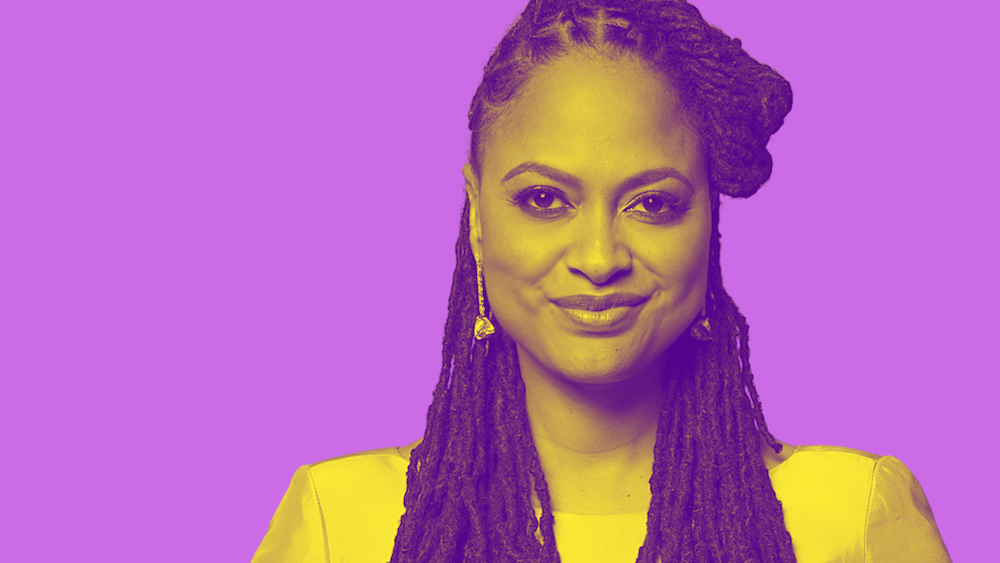
It is never too late to pursue one's passion. Ava DuVernay was already in her thirties when she wanted to make motion pictures, inspired by her initial career path as a video journalist. Since her short film Saturday Night Life in 2006, DuVernay has sought out stories of the Black experience that both prioritize making persons of colour read as fully-realized characters on screen (minorities used stereotypically as plot devices is an issue Hollywood still suffers from) and tackling major political concerns via her narrative and documentary feature films. Her impact has led to the "DuVernay test," coined by various journalists as a means of determining if motion pictures have properly utilized POC characters as more than methods to serve Caucasian characters in their own stories (as in "does this film pass the DuVernay test?"). Right now, DuVernay is the kind of director who is quietly etching her name in the annals of cinematic history; she may not explicitly be a journalist anymore, but she has continued to bring awareness to lesser-known sociopolitical conflicts while also enriching Black stories and culture via her films. Two of her documentary films -- Compton in C Minor and August 28: A Day in the Life of a People -- are difficult to come across at this point in time, but I will gladly go through all of the feature-length efforts that are available (which is the majority of everything else she has released). Here are the feature films of Ava DuVernay ranked from worst to best.
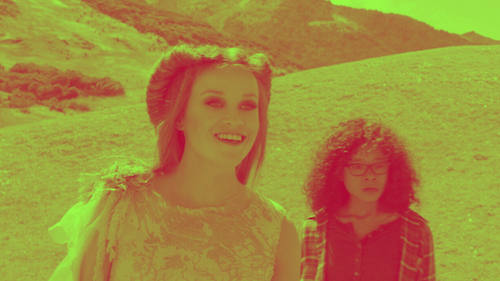
8. A Wrinkle in Time
I appreciate A Wrinkle in Time's importance more than the end result; as the first film with a budget over one-hundred-million dollars to be directed by an African-American woman, this felt like a step in the right direction. I will not hold the film's flaws as proof that such a decision shouldn't have happened because that would be asinine. Instead, I will look at it as an adaptation of the Madeleine L'Engle novel that got overly ambitious and lost who the audience was. The end result is something dreadfully boring, frequently clunky, and tonally inept. I feel like DuVernay is more than capable of tackling an ambitious project in the future, but maybe this effort to take on way too much via a beloved source material was not the project that she should have tried tackling. This is the only film DuVernay has made that I'd consider bad to any degree, but I also feel like it is borderline unwatchable.
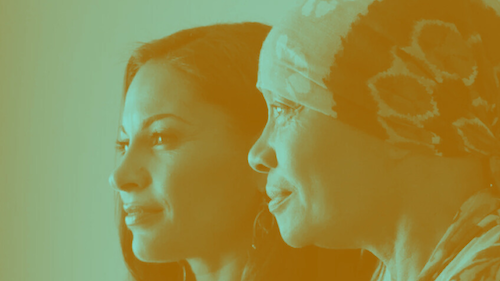
7. I Will Follow
We are in the clear, and everything else from this point on is at least somewhat worthwhile to essential viewing. DuVernay's debut feature film is the indie gem, I Will Follow: an exercise in clever story structure, exposition, and character development. DuVernay uses the premise of an impactful artist who has taken a step back as a means of the story coming to her (and, as a result, us). As our protagonist grieves, she is tended to by those with something to say; I know from my experience with grief that we cannot form strong thoughts or decisions in that mindset, but it is those around us who remind us who we are — and teach us more than we initially knew about ourselves — that help us find solidarity once more. You can tell a lot about a director not by what they can do with a lot of resources but, rather, what they can accomplish with very little; I Will Follow is a sign that DuVernay can make magic out of almost anything.
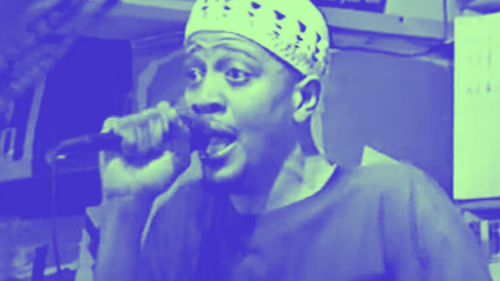
6. This Is the Life
A documentary like This Is the Life might not mean too much nowadays when one looks at hip hop, but I can imagine it meant a great deal back in 2008 when the music genre was vilified and blamed for societal concerns. DuVernay's documentary about the Good Life Cafe and its emcees — through the Figures of Speech group — is a constructive, feel-good look at poetry and music being used as methods of catharsis and artistry. DuVernay's documentary is a bit bare bones so its subjects — including DuVernay herself — can seize this opportunity to dispel many of the awful stereotypes circling rap music and its purpose. This is a film for hip hop enthusiasts for sure, but I think naysayers can benefit from this eye-opening experience.
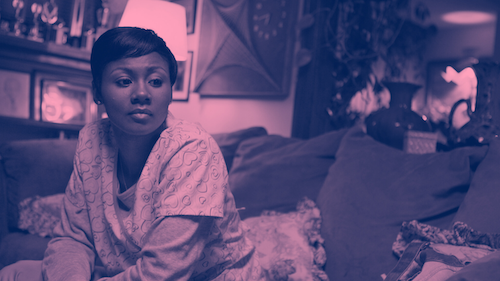
5. Middle of Nowhere
DuVernay's indie breakthrough film, Middle of Nowhere, is an engaging character study of a dedicated nurse and her incarcerated husband she is trying to help earn an early parole. We have a bit of a cinematic fable used as a means of depicting self-sacrifice in the name of unreciprocated devotion: an allegory for how often we try to help others before we tend to ourselves. DuVernay crafts a saddening look at deception and the pursuit of greatness in ourselves; in others; in ourselves by virtue of others. It is the kind of film that exposes clear evidence that a filmmaker knows how to make the most of a bare concept because they know what makes a story's characters come to life; no excessive budgets or convoluted story is needed, here.
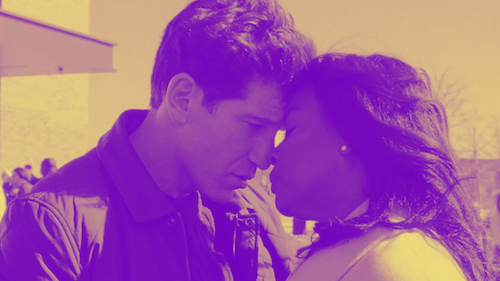
4. Origin
Origin's origins — so to speak — are a bit peculiar. It was promoted and hyped up before the 2023 Academy Award nominees were declared (before it was even available to watch for most viewers), and as soon as the film came out (and didn't pick up any nominations), it disappeared into the atmosphere. DuVernay's Origin is a solid sociopolitical lesson that deserves to be discussed again: this time in the proper light. DuVernay sees her journalistic duty and past in Isabel Wilkerson, whose essay Caste: The Origins of Our Discontents serves as the purpose of this film; Wilkerson is played by Aujanue Ellis-Taylor in this journalistic drama about the unearthing of the caste system — a type of social stratification that was used to divide many Americans and instill systemic imbalances and polarization between walks of life (here, DuVernay's film details racial segragation). DuVernay takes a calm yet fierce approach to the topic, allowing us to feel like we are discovering this information at the same time as Wilkerson does; the fact that this side of American history is not discussed more is sure to infuriate you.
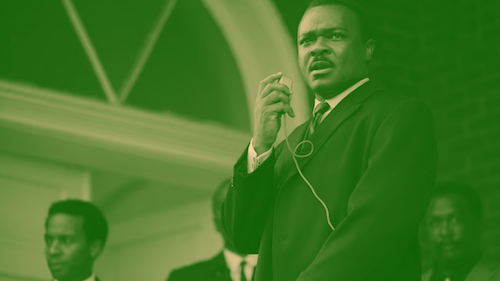
3. Selma
A director doesn't have to completely change the rule book in order to deliver a biographical picture that isn't vapid. An example of a historical drama that adheres to the popular standards of Hollywood filmmaking that still feels worthwhile, powerful, and educational is DuVernay's Selma: about Martin Luther King and the march from Selma to Montgomery in 1965 as a demonstration for Black Americans to exercise their constitutional right to vote. DuVernay doesn't get sidetracked by all of the details of King's life and keeps the film centred on the events leading up to and after this march; in that same breath, DuVernay details King's importance, efforts, and personal life enough so that the fullest picture can be depicted. Star David Oyelowo's performance as King remains one of the biggest oversights in Oscars history: a lack of a nomination for acting this stellar feels criminal. Selma delivers the facts, emotion, and importance surrounding this moment in American history without getting sidetracked, overly ambitious, or — the opposite — lazy: this is a film for all walks of life to understand and feel without any excuses.
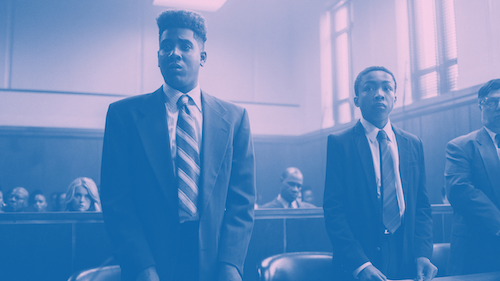
2. When They See Us
It feels a bit like cheating to include the miniseries When They See Us here, but I do view it as a four-hour-long film split into parts; I also haven't included any other television projects DuVernay has worked on, because she only worked on select episodes of these other series, whereas When They See Us is clearly a DuVernay-helmed concept through and through. Besides, it would be criminal to not discuss this sensational miniseries when bringing up DuVernay in any light. A thorough and meticulous study of the Central park jogger case of 1989, DuVernay provides us many perspectives of five falsely-accused men of colour, how such allegations came to be, and the aftermath of these events. DuVernay's exposition gets into loaded biases, the skewed justice system, and the many things wrong with how matters are handled — as per the evidence of her enthralling, unnerving miniseries.
1. 13th
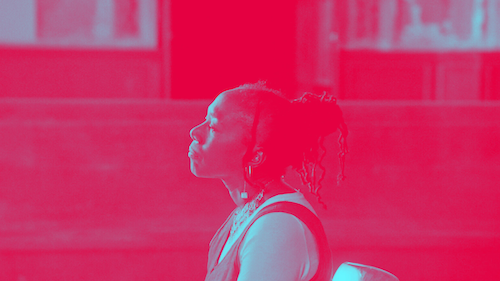
As strong as the best of DuVernay's works are, the film of hers that has stayed with me the most ever since I saw it is her punishing documentary, 13th: an appalling look at how the Thirteenth Amendment to the United States Constitution — the abolishment of slavery, unless it is used as a means of punishment for a crime — has been misused and how the American system is corrupted in ways to ensure that slavery can exist in other forms (including the penal system). Now, over the course of time, such a topic has often been discussed enough that this bigoted plot cannot be a complete surprise for anyone who doesn't live under a rock, but the lengths that DuVernay's documentary goes to prove the extent of such corruption is what is sure to make you feel ill, livid, and mortified. Documentaries are typically hypotheses and essays first and foremost and motion pictures second; DuVernay's film is a PhD-level thesis on the many ways that politics are tampered with against persons of colour.
As a film and how it is constructed, DuVernay's 13th is equally as well-crafted as the arguments that she makes. Instead of settling for a sit-down, talking heads exploration of injustice, DuVernay makes a film that is impossible to ignore or shrug off: a pummeling, fat-free accusation for one-hundred minutes that not only never eases up its entire runtime but — shockingly — gets more damning the further it goes. Even though DuVernay has expressed real stories and talking points via narrative films like Selma and Origin, I believe that she was so appalled by the misuse of the Constitution and the generations of abuse encouraged by such a loophole that she couldn't dance around this matter with movie magic and theatrical acting. This time, DuVernay had to set the record straight, and it resulted in 13th: her angriest, most revelatory film to date. I consider this to be one of the best documentaries of the twenty-tens and a mandatory watch for everyone in order to understand the plethora of ways that a system can fail its people and actively work against them.


Andreas Babiolakis has a Masters degree in Film and Photography Preservation and Collections Management from Toronto Metropolitan University, as well as a Bachelors degree in Cinema Studies from York University. His favourite times of year are the Criterion Collection flash sales and the annual Toronto International Film Festival.