
Filmography Worship: Ranking Every Djibril Diop Mambéty Film
Written by Andreas Babiolakis
Filmography Worship is a series where we review every single feature of filmmakers that have made our Wall of Directors

Sometimes, cinematic greatness is defined not by having many released projects but, rather, a few films that are of such strong quality that they withstand the test of time. Such is the case with the quiet-yet-profound legacy of Senegalese filmmaker Djibril Diop Mambéty who only had seven films to his name (including short films). A student of theatre and acting first and foremost, Mambéty used film as a means of expression (after being expelled from the Sorana National Theater for being deemed "undisciplined"), even if through non-linear, fragmented, heavily-allegorical sequences and concepts. His films possess a keen awareness of African culture and societal disadvantages via near-psychedelic visions — as if brought on by delirium or plagued consciences. He also has a heavy reliance on repetitive, audible motifs to purposefully bring you out of the film, like his works have a call-and-response relationship between what is happening versus what we actually see. Not many filmmakers can elicit such a reaction with their projects, but Mambéty was almost entirely aware of how to make postmodern films with such unorthodox chemistry.
Mambéty died in 1998 at the young age of fifty-three after battling lung cancer. He accomplished a lot in his lifetime, from his clear cinematic influence to the poetry and music he constructed. He is also the uncle of director and actor Mati Diop: a terrific artist in her own right responsible for Atlantics and Dahomey. All things considered, Mambéty is undeniably one of the most inspirational and impactful artists in contemporary film culture who I wish we had more time with. Nonetheless, we have two feature films, three featurettes (so to speak), and two shorts to enjoy: a career that, while brief, doesn't have a false note within it. While only one of his films is as widely celebrated as it is (more on that exactly where you'd expect it in this article, I assume), I implore you to check out everything that this late and brilliant mind left behind. I hope the list below encourages you to seek out most — if not all — of these extraordinary titles. Here are the films of Djibril Diop Mambéty ranked from worst to best.
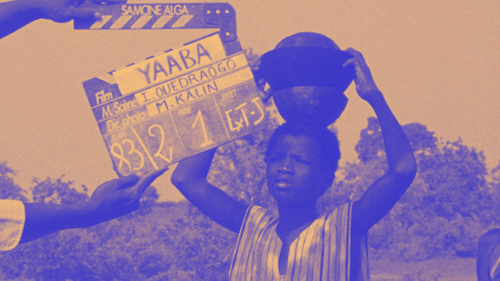
7. Parlons Grand-mère
It is easy to rank Parlons Grand-mere last not because I think it is a bad film (I quite enjoyed it), but, rather, because it it feels more like a half-hour, cinematic aside than anything else. Shot in conjunction with director Idrissa Ouedraogo's film Yaaba, Mambéty aimed to use Ouedraogo's shoot as a means of conveying the challenges and threats of producing motion pictures in Burkina Faso. Mambéty's documentary short is a love letter to film and to Africa while also acknowledging the dark side of both passions of his; if anything, a film like Parlons Grand-mere is an answer as to why Mambéty did not chase more cinematic conquests after Touki Bouki: he was always only wanting to make films when he felt as though his efforts were required. With this touching, funny, yet uncompromised short, Mambéty delivers something truly profound: when you are a visionary, even your afterthoughts are rich.

6. Contras’city
Mambéty's debut film is the pseudo-documentary short Contras'city: created after he was expelled from the Sorano National Theater for being unrefined and not disciplined in the ways that the company would have preferred. He found determination in proving this assessment and decision wrong when creating this short film about the city of Dakar via a conversation — of sorts — between Mambéty and a French woman (Inge Hirschintz) as a means of bridging African and European cinematic and cultural sensibilities together. The end result is an early attempt at the hybridity that Mambéty would become synonymous with: a blurring of cultures, perspectives, styles, and storylines into arthouse expositions that only film could explore. Contras'city is quite a startling debut for someone who was new to the medium and had something to prove — and prove, it did: that Mambéty was disciplined in his own way.

5. Badou Boy
The first feature film — so to speak — by Mambéty is Badou Boy: a character study that is not even an hour long. Maybe an answer to his documentary short Contras'city, Badou Boy was another satirical look at the city of Dakar, Senegal. This time, the film is a little more focused (somewhat) by having us follow a street urchin committing misdeeds as a means of surviving. I also see this as an act of rebellion by Mambéty who was previously deemed unfit and improper enough to stay within the Sorano National Theater; Mambéty saw himself in this unfortunate protagonist, and his helplessness spills off the screen. By channeling his frustrations, passions, and the overwhelming influence of European and American cinema on African culture, Mambéty made Badou Boy: a convergence of separate concerns in a hip, infectious analysis of desperate people in even-more desperate times and circumstances.

4. Le Franc
The first part of the planned Tales of Ordinary People trilogy (which was left incomplete once Mambéty passed away), Le Franc was a clear indication of where the Senegalese auteur wanted to go with his craft. This film is ruled by fate: a busker purchasing a lottery ticket as a means of hopefully getting his congoma instrument back after it was seized from his landlady; he hides the ticket in a safe place; the ticket actually wins; he cannot get a hold of his winning ticket. This feels indicative of a hard life: one that many find it nearly impossible to escape. With Le Franc, the odds are both for and against our protagonist at literally the exact same time: with freedom and joy so close yet so far away. Mambéty encapsulates the sick, nearly comedic tragedy of being hopeful for a better life when so much has been constructed to obstruct those who are down.

3. La Petite Vendeuse de Soleil
The very last film Mambéty produced before passing away (he was two-thirds of the way through completing a planned trilogy of featurettes intended to follow ordinary citizens of Senegal), Le Petite Vendeuse de Soleil is a bit of a fable like Le Franc but I find it more nuanced and thorough than its predecessor. Focusing on a homeless, paraplegic girl, La Petite Vendeuse de Soleil features non-professional actors in the style of Italian neorealist pictures as a means of conveying the authentic states-of-mind of life on the street. The protagonist is the sole girl trying to sell newspapers as a means of getting by, but the boys within the same space do not want her to succeed. Le Petite Vendeuse de Soleil is a clever, saddening, powerful look at perseverance and feminist allegiance via this minimalist-yet-finely-crafted metaphor. While I can only help but wonder what would have come next had Mambéty not passed away, his filmography ends on quite the high note.

2. Hyènes
Easily Mambéty's longest film at an hour and fifty minutes in length (which is quite short, really), Hyenes is as large-scaled as he ever got. This adaptation of Friedrich Durrenmatt's The Visit replaces Switzerland with Senegal. It follows a now-wealthy geriatric woman who returns to her Senegalese village of Colobane with the proposition to murderr a local shopkeeper there. Instead of wanting to benefit the villagers with the kindness of her own heart, she has forgotten her roots and difficult upbringing; capitalism has corroded her mind and heart to the point of hypocrisy. Hyenes is a complicated tale on morality and the price one can pay when in search of financial fortune; Mambéty's beautifully crafted film is proof that richness comes from self-fulfillment, not economic wealth. Hyenes is an anti-commercial, anti-colonialist statement by someone who could have sold out decades before but instead always stayed true to himself.
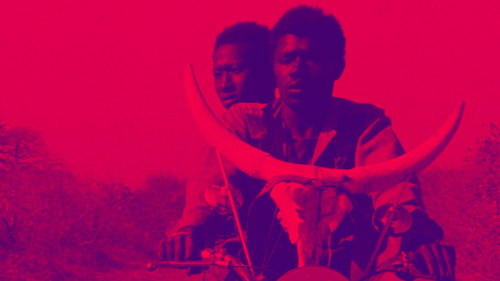
1. Touki Bouki
It only makes sense that Touki Bouki is placed first; while it is the only Mambéty film that many cinephiles know, his entire filmography is sublime. Now, I still believe that Touki Bouti is his magnum opus and it is easy to see why. Feeding off of the hunger and rage that early Mambéty films possessed (since he had that chip on his shoulder to silence the naysaying from the start of his career) while also possessing the refined eye that his later films would eventually exhibit, Touki Bouki is a bit of a unique film: one that is as gritty and daring as anything a newbie would make while also being as polished, wise, and layered as the work of a master. Almost like the Senegalese answer to the New Hollywood movement over in the United States, Touki Bouki is a counterculture slice of avant-garde expressionism that honestly feels unlike anything else of its time. We follow two young protagonists: one is a cowherd who is stuck in the slaughterhouse for the foreseeable future, and his romantic partner who is a university student who is aspiring for a better future. Together, they strive to save money to start a life in Paris, France. If Hyenes is the cautionary tale of what happens when one separates themself from their motherland and culture, then Touki Bouki is the curse of even trying to have such ambitions in the first place.
The use of a slaughterhouse encourages Touki Bouki's bleakness. Here, there is no movie magic or special effects: there is simply the authentic spillage of cattle blood that combats the glorification of violence in western cinema, the self-sabotage of the working-class life, and the self-loathing of an existence where there is nothing better than being driven to death merely to keep afloat. Touki Bouki becomes a fragmented series of hallucinations driven by both overworked exhaustion and ambitious dreaming to the point that this is a full-on assault on conventional cinema as we know it (if those Americans could question what film could be, why couldn't Africans as well). Desie, dread, and reality merge together in this not-so-fairy tale of destiny, particularly in its harrowing conclusion that is certain to leave you wondering what fate truly is: is it what we carve for ourselves, or is it what we cannot control by any means? Postmodern, psychedelic, gripping, shocking, and impossible to ignore, Touki Bouki is one of the greatest films of African cinema and a masterwork by the great Djibril Diop Mambéty.


Andreas Babiolakis has a Masters degree in Film and Photography Preservation and Collections Management from Toronto Metropolitan University, as well as a Bachelors degree in Cinema Studies from York University. His favourite times of year are the Criterion Collection flash sales and the annual Toronto International Film Festival.