Filmography Worship: Ranking Every Alejandro Jodorowsky Film
Written by Andreas Babiolakis
Filmography Worship is a series where we review every single feature of filmmakers that have made our Wall of Directors
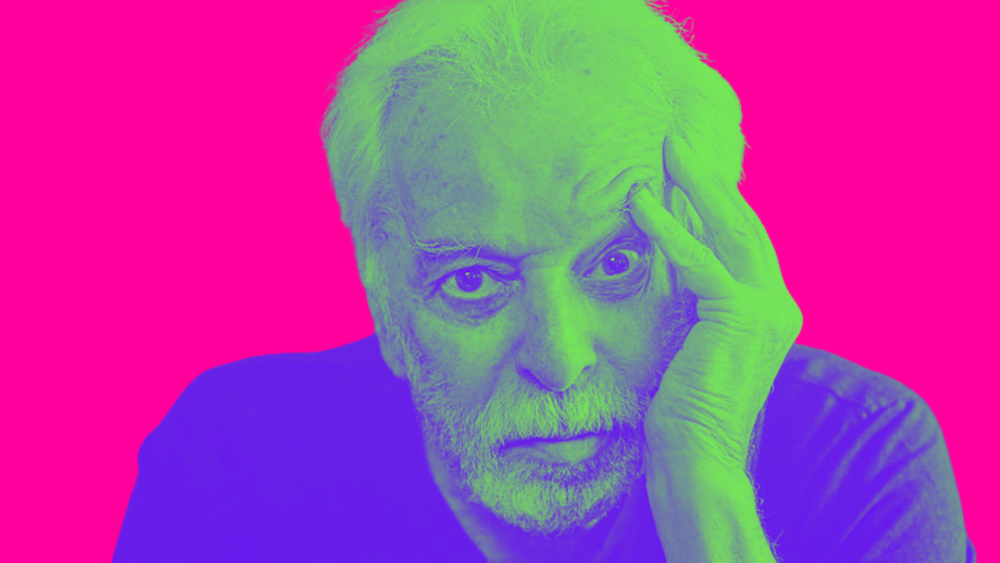
One of cinema's most controversial provocateurs is Alejandro Jodorowsky Prullansky (known to most simply as Alejandro Jodorowsky). The benchmark of avant-garde cult cinema — with fans ranging from Beatles John Lennon and George Harrison, and shock rocker Marilyn Manson, to your average acid enthusiast back in college — Jodorowsky has made intense, shocking, challenging, darkly-comedic, psychedelic works for decades; at nearly a century old, it's astonishing that the Franco-Chilean auteur is not intending on slowing down at all (he is reportedly wanting to work on The Son of El Topo after years of discussing such a title). His career started back in the fifties when Jodorowsky dropped out of university to pursue theatre and being a mime (as well as a clown at the circus). This mime work would lead to his short film, La cravate, in 1957, which he also starred in (he would appear in a number of his own films). His first feature length film, Fando y Lis, came out eleven years later. It was instantly taboo. The rest was history.
The years after came two of Jodorowsky’s biggest films: El Topo and The Holy Mountain. Needless to say, his reputation was rocky. Jodorowsky would often fabricate details of his life and shoots in his interviews, including insinuating that he sexually assaulted (nay, raped) a female co-star on set during El Topo (which has since been proven to be a lie as a means of staging a poorly-thought publicity stunt). He reveled in being this controversial, uncontrollable figure perhaps due to his background in the circus and other forms of performance art: he strived to be this kooky showman that welcomed you into the festival of the occult, the unorthodox, and the excruciating. He was then slated to direct an adaptation of Frank Herbert's Dune; this was a notorious project that never came to fruition, and it has resulted in two great films (the fascinating documentary Jodorowsky's Dune, and Ridley Scott's masterful Alien -- many of the creatives attached to Dune migrated over to Alien, including Swiss artist H. R. Giger who was responsible for much of the artistic and production designing for Scott's film). Once Dune failed, Jodorowsky pivoted and wanted to make a children's film, Tusk; his version was never shown, and the one riddled with studio involvement set his career back significantly.
It was a few years later when Jodorowsky released Santa Sangre: a far more sentimental film than his other adult works, and a sign of something a little more graceful — albeit just as weird — than what Jodorowsky was known for. The remainder of his career has been full of hits and misses, but all of these titles were far more revealing about Jodorowsky as a person than the purposefully-hostile works he kickstarted his career with. By the time he got to 2011's The Dance of Reality, Jodorowsky was literally telling his own story (although in his own unconventional way), with members of his family (including sons Adan and Cristobal) appearing in this heart-wrenching, fable-esque autobiography — Jodorowsky frequently featured members of his family in his films. Now, Jodorowsky is more transparent than he's ever been while still releasing uncompromising works late into his life. Not all of his ten experiments were successful, but it is safe to say that he was always explicitly himself. Here are the works of Alejandro Jodorowsky ranked from worst to best.
10. Tusk
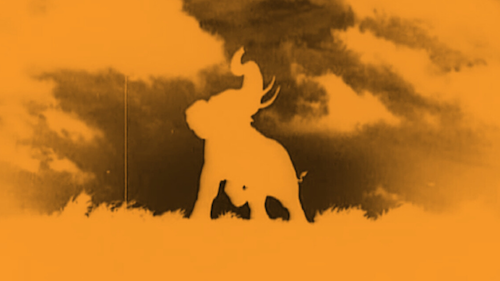
We'll never know how good or bad Tusk truly is because the proper cut of the film has yet to see the light of day. This family film about a young girl and her Indian elephant (both born on the same day) is kind of remarkable because I always find it interesting to see how an artistic mind tries to connect to younger audiences; this film is unique enough to stick with you. I'd argue it's even kind of beautiful. In that same breath, it's easily Jodorowsky's worst film; the only existing cut is way too long and drawn out at two hours in length, Jodorowsky's brand of humour comes off as borderline buffoonish here, and Tusk is also just kind of a mess. Still, I see that there is something extraordinary here, but the Tusk that we do have just isn't it; I understand why Jodorowsky has fought for his intended version to see the light.
9. The Rainbow Thief
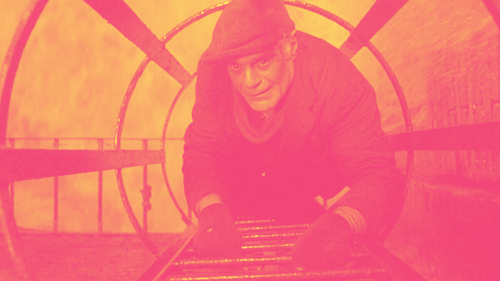
Even though it is better than Tusk, the official version of The Rainbow Thief was basically dead on arrival for me. A hallucinogenic fantasy film that reunites Peter O'Toole and Omar Shariff (of Lawrence of Arabia fame), The Rainbow Thief is meant to be this phantasmagoric excursion that details why rainbows exist (and that there is more to the theory of the pot of gold at the end of them than just leprechauns). Unfortunately, The Rainbow Thief is quite an eyesore. It aims to be fun but is sloppy. When it wants to tug at your heartstrings, it is simply sappy. This is a film that feels artificial in almost every way. However, unlike Tusk, it at least feels like the intended, realized story that Jodorowsky wanted to put out; it just isn't a very good one, even if its stars shine (O'Toole and Shariff would be good in a film about compulsively farting penguins, to be fair).
8. Psychomagic: a Healing Art
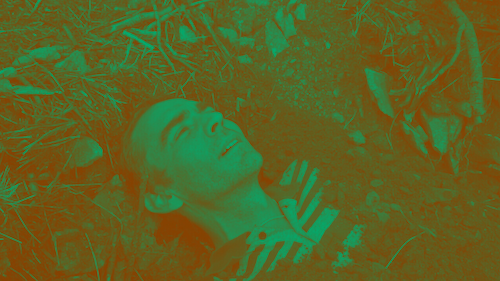
Jodorowsky's sole documentary is Psychomagic: a Healing Art. This is intended to be a performance art piece on who he is after ninety years on Earth while also a retrospective look at his entire career; should this wind up being his final release, it is quite fitting in that way. Even so, Psychomagic is the kind of film that would be off-putting to most people, as Jodorowsky and company undergo a series of unconventional exercises in the name of pursuing healing art (then again, can art hurt us even more if we do not utilize it correctly?). What helps this documentary move along is Jodorowsky's lust for life: he is the spark that this admittedly wobbly documentary needs to have purpose in each and every bonkers sequence. Then again, if the purpose of the film is to have us questioning the ethics of art overall, maybe that's a decent artistic statement in and of itself.
7. La cravate
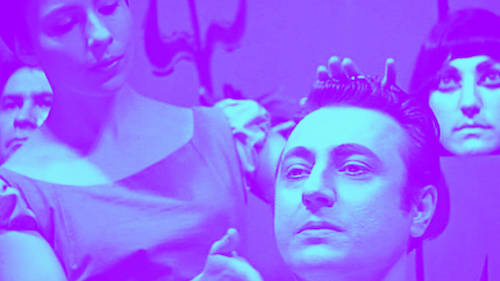
Jodorowsky's first film is his short La cravate, or The Severed Heads. This twenty-minute experiment utilizes Jodorowsky's expertise in miming while granting us a surreal, off-putting depiction of a struggling seller and her collection of, well, severed heads. I wouldn't call this short film sensational, but it is at least partially special when you consider how many signs of Jodorowsky's eventual style wind up in this preliminary go; what's even more astounding is that we have access to this short at all when it was deemed long lost for decades. Even here, despite his chaos, we see a young Jodorowsky who loved what he did and the art that he made and that is the important factor in why his antagonistically difficult films resonate so frequently with cinephiles; these films mean the world to Jodorowsky and always have.
6. Endless Poetry
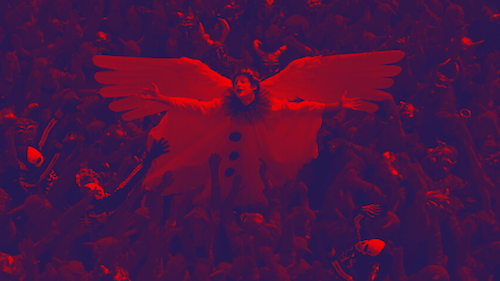
After the success of The Dance of Reality came this sister film (of sorts): Endless Poetry. Another autobiographical work, this second attempt is meant to be the expulsion of Jodorowsky's childhood traumas that carried on into his teen years and early days of adulthood. While not quite as effective as The Dance of Reality (which feels more grounded in its experimentalism), Endless Poetry is more or less the strong qualities of the previous film extended during this victory lap. I feel like Jodorowsky saw his previous success as cart blanche to get a little wild again (since, to be fair, he certainly did not hold himself back in The Dance of Reality), so Endless Poetry is a little bit more carried away, but this is still a stunning film that sees an older man looking back on his life and finding meaning in the parts of his upbringing that once felt like chaotic miasmas of nothingness.
5. Fando y Lis
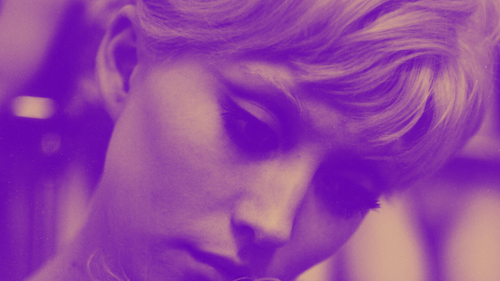
Jodorowsky's feature length debut is Fando y Lis: a journey to Tar featuring the title characters; Fando wants to travel there to help cure Lis of her paralysis. The film was derided when it first came out due to its confrontational and shocking nature, but the same can be said for many of Jodorowsky's pictures; if El Topo can be reassessed, why not the critically underrated Fando y Lis? On this journey, we come across a series of vignettes that detail a perverse and punishing world in the eyes of a surreal satirist; the world has given up on all of us long ago, and yet we strive. Is Jodorowsky a sadist for featuring these stories, or does he view his film as a haven that protects them from the outside? I think Fando y Lis deserves its flowers, even if it remains a fairly punishing film today.
4. The Dance of Reality
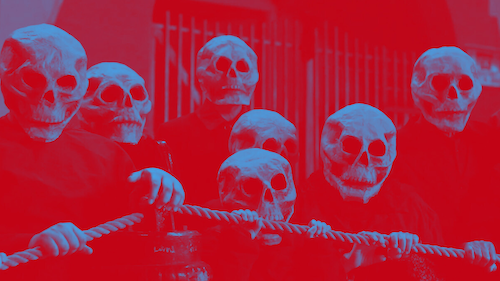
While Endless Poetry is great, The Dance of Reality is magnificent. Jodorowsky revisits his youth in Chile with trepidation, wisdom, and large doses of fantasy. While going as far as he's ever gone before with his audacious, shocking filmmaking, Jodorowsky handles his childhood with a sense of wonder; as if he has finally figured out why it all felt difficult to understand back then. His version of his story is equal parts hilarious, horrifying, and jaw-dropping as he renders his life a circus-like spectacle that never ceases its procession. This film partially explains Jodorowsky as a complicated human being and artist while adding even more questions (because who is Jodorowsky without a fog of mysticism surrounding him?), and it is the kind of motion picture that will encourage you to rethink what a memoir can be. There's nothing like a master looking back on their life with the vision necessary to make their findings worthwhile to viewers; in that sense especially, The Dance of Reality is remarkable.
3. The Holy Mountain
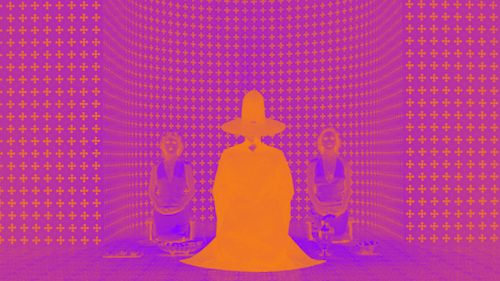
know I will get some flack for not having The Holy Mountain placed first, but I hope you understand that third out of ten is still really high (I consider the top three films here to be almost equal in quality). This cult classic takes all of the religions of the world and recompiles them into the psychotic realm known as the Holy Mountain: a reassembled Tower of Babel, if you will. As faith brings our venturing characters back to the source of where it all began to seek enlightenment (within a deliriously destroyed world), Jodorowsky's quest film becomes one of the strangest brain-melters in all of cinema (hence the film's acclaim and notoriety); Jodorowsky's pilgrimage gets so insane to the point of cackle levels of hilarity. I still think that The Holy Mountain is a terrific film especially because of how different it is (to the degree where you may second guess what was in that coffee you had earlier). Every cinephile owes it to themselves to try The Holy Mountain at least once; you may get a glimpse of filmic Mecca in doing so.
2. Santa Sangre
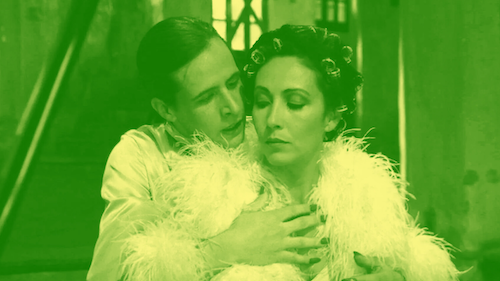
Jodorowsky's return-to-form in 1989 is Santa Sangre: an exquisite look at familial tragedy. What feels a little bit like Jodorowsky's first go at making at least a semi-autobiographical picture, Santa Sangre features an insane circus artist who reunites with his mother; she is armless, and he is to act as her arms. She forces him to conduct ritualistic murders, and he tries not to comply (but fails). What a gorgeous, tragic look at psychosis, domestic torture, and depression. While so many other adult fairy tales feel like they stem from some sort of pool of resources (with the same kinds of themes, beings, and concepts), Santa Sangre is a lone fable that feels intrinsically singular; the most I can say is that this feels like the kind of film Tim Burton has been pining to make his entire career (albeit far darker). Jodorowsky is willing to plunge into the depths below with zero regard for marketability; he achieves an even stronger connection to his audience as a result, as we all find catharsis in this heartbreaking look at madness and despair.
1. El Topo
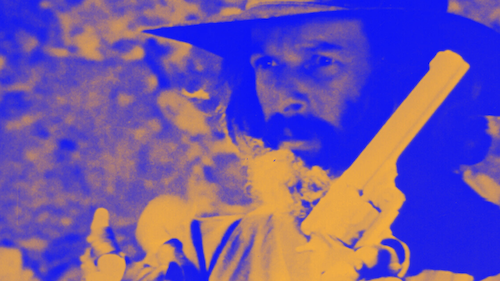
Western films often depict the lone ranger: an isolated soul traversing the hot plains of life by themself, venturing forth into the unknown and ready to take on any challenge. Jodorowsky's answer to the wild west (and, I suppose, the spaghetti western) is El Topo: perhaps the craziest western you will ever see (and one of the greatest films of the genre). This viciously revisionist take is tongue-and-cheek to the point that you may rip a hole in the side of your face. Jodorowsky plays our title character, with his son Brontis as, well, El Topo's son. They go through many phases of life together on the back of a horse, with El Topo dressed fully in black like he is the angel of death; isn't it interesting that many lone rangers view themselves as heroes when, here, Jodorowsky embraces the sin that these protagonists boast? Does El Topo not bring dread to anywhere he goes?
Dangerous, mesmerizing, confounding, and hilarious, El Topo is such a peculiar watch where you aren't sure how to react at any given moment for two hours. The film isn't as crazy as The Holy Mountain or as artistically rich as Santa Sangre, but it is its own variant of mind-boggling cinema. To watch El Topo is to see the Hollywood western set on fire and forced to put itself out. We see the carnage, the calamity, the anticipation, and the grief. We spot the ridiculousness of idolization while feeling tethered to a character as if they were our own father committing these awful acts and partaking in these insane visions. Every image comes from a dream (or nightmare), as if we have been out in the desert for so long that we have envisioned a mirage of brutality or nirvana at any given time (sometimes with both together). I think that the top four or five of Alejandro Jodorowsky's films are very close together in quality, but I give El Topo the slight edge because of how well I believe it stands on its own two feet as a statement on the richness and hideousness of filmmaking politics.


Andreas Babiolakis has a Masters degree in Film and Photography Preservation and Collections Management from Toronto Metropolitan University, as well as a Bachelors degree in Cinema Studies from York University. His favourite times of year are the Criterion Collection flash sales and the annual Toronto International Film Festival.