
Filmography Worship: Ranking Every Alfonso Cuarón Film
Written by Andreas Babiolakis
Filmography Worship is a series where we review every single feature of filmmakers that have made our Wall of Directors

Arthouse classics. Mainstream breakthroughs. The best film in a popular franchise. A family film staple. Technical mastery. Artistic brilliance. An international titan. A Hollywood mainstay. These all seem like arbitrary labels, but not only do they define the body of work of one individual filmmaker, the revered Alfonso Cuarón, they describe a career that is only made up of eight films (nine if you include a miniseries that is essentially one long film cut up into parts, which I will not exclude below). Now that is a sign of quality over quantity, and if you do not believe me, perhaps his four Academy Awards (two for directing, one for film editing, and one for cinematography) and many other accolades will prove my point; I'd also highlight him as one of the best filmmakers to win an Oscar without earning Best Picture within the twenty-first century (and he has done so twice, along with the equally-fantastic Ang Lee).
Cuarón studied film at the Centro Universitario de Estudios Cinematograficos in Mexico (his motherland); an institution he was quickly expelled from because he shot a film in English instead of Spanish (which was deemed a major infraction). While studying, he met close friends like director Carlos Marcovich and future collaborator Emmanuel Lubezki (who I have gone on record to describe as the greatest cinematographer of all time, and I will do so again and again with zero qualms). Despite these connections, Cuarón feared that his expulsion killed any chance that he had in the film industry. He persevered by transitioning to Mexican television, where he started as a technician before becoming a director on the small screen. His talent was impossible to ignore, and it didn't take long for his debut feature film, Sólo con tu pareja, to take off; he cowrote the film with his brother, Carlos. They found funding from the Instituto Mexicano de Cinematografia after that year's deadline had already passed since one project was cancelled, allowing the Cuaróns to swoop in to that vacant spot; between Alfonso Cuarón's expulsion and this miraculously timed cancellation, the director was clearly no stranger to circumstance.
Cuarón shifted quickly towards an accessible approach with A Little Princess and a romanticized adaptation of Great Expectations that followed shortly; when the latter film stumbled, Cuarón returned to his Mexican roots with a major international breakthrough in the form of Y tu mamá también. Somehow, after such a racy and erotic film, it was then that Cuarón signed on to make a Harry Potter film. What could have been an excuse to properly sell out was instead a lesson on how a franchise film could be tackled, and Prisoner of Azkaban proved to be a precedent that still feels barely matched, unfortunately. Instead of doubling down on commercial properties, Cuarón seemingly tried to reinvent what the Hollywood blockbuster could look like in the new millennium with two science fiction staples: the post-apocalyptic nightmare Children of Men, and the survival thriller Gravity.
After years of success, Cuarón has returned to his roots once more in multiple ways. He released Roma as another instant classic in Mexican cinema, and — the latest project when this article was released — the miniseries Disclaimer saw a full-circle moment with Cuarón being reunited with the small screen. Despite the apparently firm grasp on the film industry, much of Cuarón's success feels effortless, as if to say that a majority of his successes stem from inherent talent and an endless passion. He would continue to work with Lubezki on a majority of his films; with Roma, Cuarón proved that he could keep up with one of the greats by shooting his own film with that same sense of ease. On the topic of Cuarón's peers, he is famously a part of a trio of directors from Mexico — including Alejandro G. Iñárritu and Guillermo del Toro — known as the Three Amigos; they also happen to be friends who have championed one another during the twenty-first century (they also make up five of the ten Best Director Oscar wins of the 2010s; an astonishing achievement).
Regarding the Three Amigos, Iñárritu speaks the most to my taste in film, and del Toro reminds me of the magic that got me into cinema in the first place. Then, there is Cuarón, who I think is the best of both worlds: a master of his craft with the utmost consistency. If del Toro makes cinema as it once was (via nostalgia, whimsy, and a fixation on the genre films of the past) and Iñárritu makes films of the present (a fixation on realism, theory, and cynicism that matches the concerns and emotions of contemporary viewers), then Cuarón is the depicter of the future; he is a director who shows what films can be, how franchise entries can be tackled, how to best push cinematographic technology, and how to break the conventions of film while also not posing as its antithesis but, rather, its accomplice that can usher the medium into new eras and phases. By being expelled from film school, Cuarón created his own rules; it has led to a sensational career with a mostly breathtaking body of work. Here are the films of Alfonso Cuarón ranked from worst to best.

9. Great Expectations
While it may prove difficult to assemble the rest of this list, there is only one certain factor: that Great Expectations is Cuarón's worst film. Even Cuarón and Lubezki have written off the adaptation of Charles Dickens' iconic text, and it is easy to see why. Sure, Cuarón's signature knack for eroticism and Lubezki's lush, naturalistic lighting are all there, but Great Expectations is nothing more than a common romantic drama of its time: a dull, simplified look at obsession and yearning that doesn't reinvent the wheel at all (outside of modernizing the source material and relocating it to New York City); these minor changes don't help Great Expectations feel any better, but they do make it feel unique, I suppose. This is literally the only film that Cuarón made that doesn't quite work, and I implore you to start anywhere else but here (unless you want to get the wrong idea of what his films can be like, of course). Great Expectations isn't the weakest film ever made (there's a certain milieu to the film that it benefits from, and this dreaminess does carry much of the runtime), but it definitely is Cuarón's low point, seeing as it is his only brush with mediocrity.

8. Sólo con tu pareja
Cuarón's debut feature film, Sólo con tu pareja, feels quite rebellious; as if he pictured himself to be a wild child of Mexican cinema. While merely matching the eccentricity and imagination of the Mexican wave of nineties and aughts cinema, Sólo con tu pareja reminds me a bit of another Latin master: Pedro Almodovar. This kooky comedy feels equal parts dangerous and delirious, mirroring Almodovar's affinity for genre bending and fixation with taboo themes and concepts. That isn't to say that Cuarón was trying to create an homage with his preliminary film, but he was clearly already in the right headspace with what kinds of stories he wished to tell (yes, even black comedies that incorporate the bleak topics that Sólo con tu pareja revels in). I'd recommend this film for major Cuarón fans since I do think newcomers should start with other staples, but Sólo con tu pareja is a terrific slice of Mexican cinema that is only ranked this low because Cuarón boasts a sensational filmography that is full of only hits.

7. Disclaimer
It feels like cheating to include a miniseries on this list, but Cuarón has gone on record to proclaim Disclaimer as a long film released in an applicable format. When I watched it all in one fell swoop, it functioned as a nearly seven-hour affair. Despite the seemingly lukewarm response that Disclaimer has, I truly believe that this will be better appreciated as time goes on. This triptych of voices (our first-person perspective, the duality of characters and their secondary glances, and the third party outlier voice in the form of an unreliable voice-over narration) renders Disclaimer a labyrinth of authenticity. Watching it once will suffice enough, but the true spectacle comes from revisiting Disclaimer in full to see where the truth lies in plain sight (and how you, the viewer, were thrown around and toyed with). Disclaimer is as audacious as Cuarón has ever been; while the director usually receives praise upon the release of his projects, I think Disclaimer will get its flowers one day.

6. Harry Potter and the Prisoner of Azkaban
If you are a massive Harry Potter fan first and foremost, I think that there are a series of answers for what is the best film in the series. If you are a hardcore cinephile, the answer could only be Prisoner of Azkaban (at least for most). Cuarón's dark, cinematic, and ethereal filmmaking take this entry in the massive coming-of-age franchise a standout moment of artistry; despite how strongly Cuarón tends to his own visions here, he still conforms to the expectations and tone of the Harry Potter series that his film fits in nicely. This is a magnificent exercise in how an auteur can effectively make a sequel film to an established property while sticking to his own principles. The end result should have been a game changer; instead, seeing as there are so many soulless franchise films that have been churned out since, Cuarón's Prisoner of Azkaban remains on an island of very few likeminded motion pictures.
5. A Little Princess
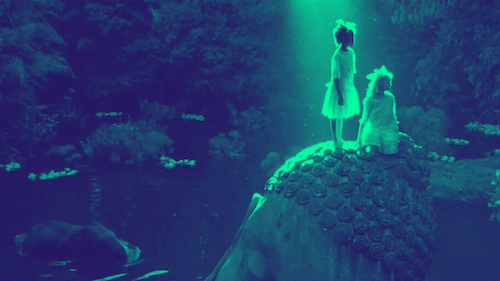
Technically, this was my very first Cuarón experience. I was a child watching family films (as most youths do, I suppose), and even when I was around six years old, I could tell that A Little Princess felt different. Maybe I couldn't pinpoint the gorgeous lighting by one Lubezki before I could run through my multiplication tables, but I sensed that this adaptation of Frances Hodgson Burnett's novel had a certain spark to it that felt genuine, warm, and beautiful. Revisiting this nurtured family film as an adult has only made me even happier. To know that this was Cuarón's sophomore film and his English language debut tells me that he really wanted to revisit this cherished property and tell the story in his own way; to see that he crafted A Little Princess with such cadence, authenticity, and joy is such a humbling experience; how many other directors would have shrugged such an opportunity off or not tried their best? Here, Cuarón proves with the kind of project that most won't even consider undertaking that he was meant to make motion pictures.
4. Gravity
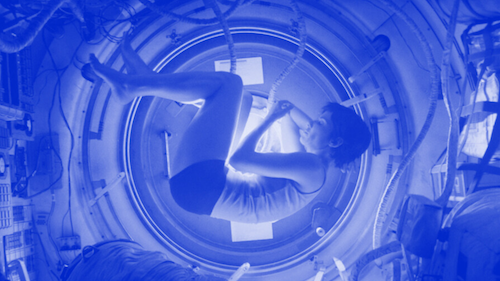
When released, Gravity was impossible to ignore. This real-time look at an astronaut stuck stranded in space was deemed an impenetrable masterpiece. It didn't take long for this science fiction thriller to be crowned an overrated pile of slop by naysayers. I think it's been enough time that we can see Gravity for what it truly is: an excellent film as a technical spectacle, acting exposition, and artistic achievement that isn't quite the greatest film ever made (but it's a damn good one). Away from all of the noise, Gravity — yes, even with its scientific implausibility (I don't grade films based on minute accuracy) — is a quest to return home in more ways than one. When it first came out, it felt like the must-see event as it dominated the big screen. Outside of this year, Gravity feels a lot more intrinsic: like a cry for help from within. The small cast (mainly just Sandra Bullock at her very best) leads me to believe that this was Cuarón evoking a minimalist stage production in a way that could only be done on the big screen; this vulnerability and intimacy certainly works against the massive backdrop of the swirling stars within the Solar System.

3. Y tu mamá también
Certainly not due to quality-based reasons, but most directors who attempted to make a film like Y tu mamá también may have experienced instant career suicide. How does someone tackle such a sexual film with the utmost sense of candidness and the barest of souls? How do they do so this well? A film this radical and unorthodox shouldn't possess this much control, mastery, and wisdom, and yet Y tu mamá también does. It is disguised as a coming-of-age road romp when it is really a reflection on the past with old, weary, and concerned eyes; how did this happen; why did it all end here? Many films that act this careless truly are made by amateurs; Cuarón's carefree front waltzes with his actual severity, creating an ebb and flow of splendorous addiction and damning regret. These were meant to be the salad days; they have defined us, for better and for worse. Cuarón understands the true weight of our years of self discovery in Y tu mamá también: a film that is as exquisite as it is confrontational.
2. Children of Men
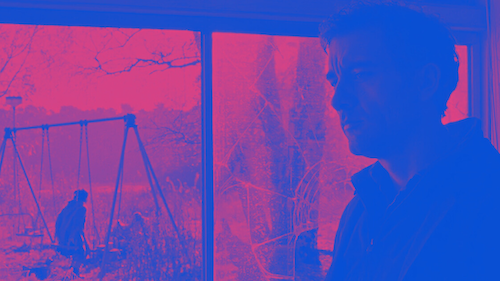
While dystopian pictures are always meant to be cautionary tales, many get caught up with trying to be fun escapes from reality; they can lose their own points, in my opinion. Then, there is Children of Men: an apocalyptic drama that understands the responsibility of depicting a potentially harrowing future for humanity (one where the majority of humans can no longer bear children, so humanity is both dying and turning in on itself). Cuarón doesn't forego the excitement that such science fiction films can possess in Children of Men; if anything, he delivers one of the most thrilling films of the new millennium (that one-shot sequence in the car is a masterpiece of filmmaking in and of itself). In that same breath, Cuarón doesn't sacrifice the tragedy of such a reality, with haunting images that will remain in your head when you face the hostile climate of today; is this what is in store for us? I find Children of Men especially vital when you consider how many similar films misappropriate what the death of all would mean, and how complicated a potential cure would be in a world as difficult as ours. Due to its careful practices and ambitious displays, Children of Men remains a sci-fi masterpiece.

1. Roma
Rarely do I watch a new film in a theatre and know that — right there and then — I have witnessed one of the greatest motion pictures in the history of cinema. Such was the privilege I had when I watched Cuarón's semi autobiographical opus, Roma, at the Toronto International Film Festival; to know that this is a Netflix title and that most viewers have not seen this film on the big screen breaks my heart. This film is as visceral as cinema gets; with glacial cameras, bursts of natural lighting, a focus on non professional actors speaking histories of truth, and a lack of a concrete plot, Roma does make us feel like spirits coasting amongst the living during a political shift in the Colonia Roma neighbourhood. We follow a Mixtec maid and the infrastructure of her life, from her daily schedule to the overarching events that define this tumultuous time in her existence. Cuarón turns an everyday person into the ultimate cinema superstar; we find brilliance in her mundanity and ourselves in her tribulations.
Cuarón looks back at seventies Mexico with both rose coloured glasses (his stomping grounds are shot with rich black-and-white cinematography) and severity. He recognizes that the world he grew up with is not the same as it truly was; he captures both the perception and the reality within the same frame at all times. Roma conveys its emotional and sociopolitical talking points with such a crushing magnitude that we recognize the perseverance in someone who may never be acknowledged for the true magnificence of their existence. With the prose of Ingmar Bergman, the visual eye of Federico Fellini, and the technical fixation of Christopher Nolan, Cuarón delivers an all-timer film that reminds us that it is a blessing to be alive but also a struggle to keep on going; we must never give up. Roma is an unflinching film that soaks in all of the beauty and tragedy of the human experience, and it is Alfonso Cuarón's masterpiece.


Andreas Babiolakis has a Masters degree in Film and Photography Preservation and Collections Management from Ryerson University, as well as a Bachelors degree in Cinema Studies from York University. His favourite times of year are the Criterion Collection flash sales and the annual Toronto International Film Festival.