
Filmography Worship: Ranking Every Safdie Brothers Film
Written by Andreas Babiolakis
Filmography Worship is a series where we review every single feature of filmmakers who have made our Wall of Directors (and other greats)

The Safdie brothers have been instrumental in the independent film scene for the past twenty years. Josh and Benny have slowly inched their way in the industry as directors with an all-hands-on-deck approach, seeing as the two of them have experience writing, producing, and even editing feature films and shorts (Josh has also shot films before). Not only that, but they have also acted (primarily Benny); it might be strange to view both filmmakers as non-professional actors considering their oeuvre, but that's exactly what they once were when they began. In the same way that they are excellent at getting the most out of themselves, they have made a name for themselves by casting many non-actors in major parts; from basketball players (Kevin Garnett, George Gervin), musicians (The Weeknd, Tyler, the Creator, Necro), and personalities (Julia Fox, Kevin O'Leary), to other creative choices (a recovering heroin addict playing her past experiences on the big screen, or a professional MMA athlete detailing their career). Their choices are rooted in cinéma vérité and Italian Neorealism as a means of capturing pure, authentic portrayals of struggle and stress.
The Safdies work alongside likeminded collaborators: whose who are capable of making the most out of very little, like director and frequent screenwriter and editor Ronald Bronstein (who also starred in their film Daddy Longlegs), and producer Daniel Lopatin (also known as Oneohtrix Point Never) who has scored a number of their works. Together, the Safdies and their cohorts keep telling stories about those whose backs are against the wall. They usually utilize New York City as a backdrop to enhance the chaos and panic of what transpires after just one bad choice (and the collapse of all around a protagonist as they fight to keep afloat). Together, it was clear that the Safdies could tap into the raw energy that indie films could expose when the right director came along. However, once the Safdies decided to go their separate ways, it became clear who was responsible for what. Benny was clearly into the gritty documentary feel that made us feel like flies on the wall of uncomfortable circumstances, while Josh was the fan of going all-out with non-actor casts and the intensity of downward spirals. Their separation is bittersweet, but at least they both have enough promise and experience that we now have two filmographies to follow. I will include all of their feature films here; maybe I will include their dozens of short films in the future as well. Here are the feature films of the Safdie brothers ranked from worst to best.

8. The Pleasure of Being Robbed
Josh Safdie's debut feels exactly like that. We follow a kleptomaniac, and that's basically it. For seventy minutes (at least the runtime is merciful), we watch someone who cannot stop stealing find her comeuppance and then continue to rob some more. What could have been a decent short film (and, even then, the concept is so simple and obvious that we don't get much out of it) winds up being a grating exercise in seeing how stretched thin a talking point can be (that people cannot easily shake off their vices, especially those of rough upbringings and lesser means). Both Safdies would touch upon this very theme in every other film since and with far more complexity, nuance, and purpose. With The Pleasure of Being Robbed, it is just far too archaic to seem interesting; at least this topic would be revisited and with far better results.

7. The Smashing Machine
Benny's first solo feature film, The Smashing Machine, is an attempt to get back to the cinéma vérité feel of the Safdie brothers films before the Good Time era, and it is a noble effort given the many directions he could have gone now that he is a household name. You can sense a real effort to remain a part of this realm, even bringing a blockbuster staple like Dwayne Johnson into the documentary-esque world created by Benny to tell the story of former MMA fighter Mark Kerr. The problem is a documentary already exists on this subject (of the same name, even), and much of The Smashing Machine is a carbon copy depiction of what has already been shown. Perhaps an exercise in the transferal of truth within film (even then, this feels like an over-justification), The Smashing Machine comes off as a choppy, unvarnished look at superstardom that underwhelms when it should wow us. I still look forward to what Benny can provide next, but The Smashing Machine wasn't what he's capable of and I'm certain of it.
6. Daddy Longlegs
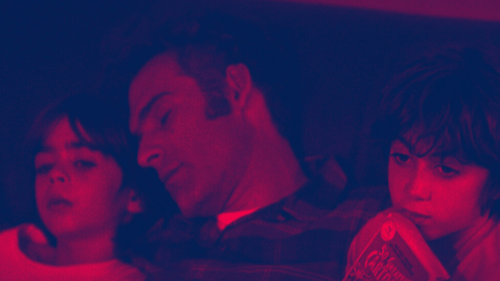
The first feature film collaboration by both Josh and Benny Safdie is Daddy Longlegs, starring filmmaker and screenwriter Ronald Bronstein (who has worked with the Safdies on multiple occasions). A single dad (Bronstein) finds it difficult to take care of his children and carry on the rest of his responsibilities, and Daddy Longlegs shows this as if we are a documentary crew following this poor soul around during his daily routines. I appreciate this film more as the clear starting point of a number of Safdie mainstays, like the feeling of control being lost, the upfront depictions of New York City, and the brutal speed of life and the inability to keep up. I feel like both Safdies have improved upon this formula since Daddy Longlegs, but this is a good one for diehards of the duo to watch to at least see a preliminary attempt.

5. Lenny Cooke
What is more heartbreaking than the characters the Safdies have created whose lives do not wind up as they planned? Watching a documentary about a real person with a similar trajectory. Once the most coveted high school basketball prospect (even above LeBron James and Carmelo Anthony), Lenny Cooke's life and career did not wind up as they were once promised, and the no-nonsense documentary named after him is one that sheds light on how it easy it is for promised fortune to slip away. We sit with him and his family during multiple draft nights, see how much work he has put into achieving his dreams, and watch as it all effortlessly dissipates. Cooke is essentially one in a million, and we see an athlete of this calibre give their passion everything they have and it still didn't matter; we then notice that almost everyone on Earth has a similar story. We are maybe not as promising as Cooke once was, but he is now one of us, and I don't know which part of this sentiment is more tragic.

4. Heaven Knows What
I feel like the Safdie brothers had two breakthrough feature films. The first is Heaven Knows What: a crushing depiction of Arielle Holmes' real life struggles with heroin addiction. Holmes wrote the novel this film is based on, and she also stars as herself (essentially), creating a hyper real, devastating look at a number of her experiences. While not at the same speed as the better-known Safdie brothers titles, Heaven Knows What is just as intense (perhaps even more, given the context here). At times, this film feels like a fully-fledged documentary (and, in ways, it kind of is that, given Holmes' involvement). This is an eye-opening look at a topic that is often romanticized or not given the proper treatment in film via a perspective that is impossible to ignore here; the industry was subsequently put on notice that there were two filmmaking brothers who were not messing around.
3. Good Time
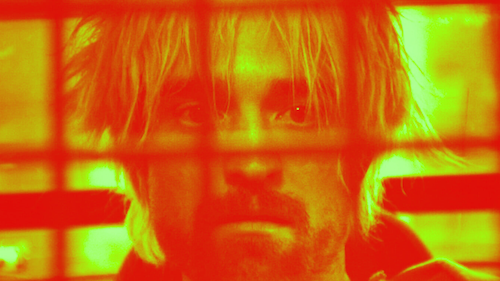
The second breakthrough film, I would argue, is Good Time. This feature is what introduced many fans to the Safdies while taking their style and elevating it to level ten. Robert Pattinson's strongest performance to date is captured here via a desperate criminal whose autistic brother (played by Benny Safdie) is arrested for a robbery gone wrong. This is the first Safdie film to truly utilize the one-bad-thing-after-another domino effect that they have now done multiple times (the rest are being covered shortly on this list), and it was a great formula when handled the first time here. We truly get the sense that this master plan not only failed, all is getting worse as the film progresses. This is insight into a troubled life that, fortunately, most of us will never experience.
2. Marty Supreme
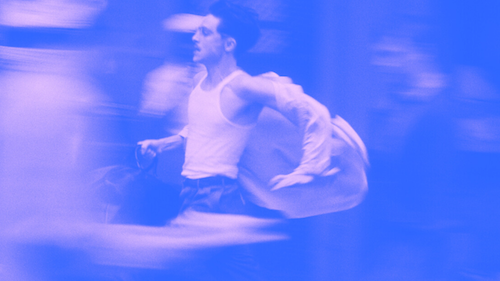
The first solo Josh Safdie film since The Pleasure of Being Robbed is the far better Marty Supreme: the third film to feel like a string of misfortunes that places a knot in your throat and an Energizer Bunny in your chest. What sets this film apart from Good Time and Uncut Gems is that we follow the titular Marty who is chasing his dreams of being a pro athlete (a table tennis champion); his arc has a bit more optimism than completely depressing returns, so there is that. We do see how much Marty's choices effect those around him (from loved ones to antagonists), and when the lead character loses control of his destiny, that's when Marty Supreme feels its most explosive. Even though this is the third go-around with a similar pace, tone, and makeup, Marty Supreme is not pure misery with its results; it flirts with the idea that there may be some hope after it all, and — like an athlete chasing a high — it is this promise that leads us viewers to being potentially as delusional as Marty is.
1. Uncut Gems
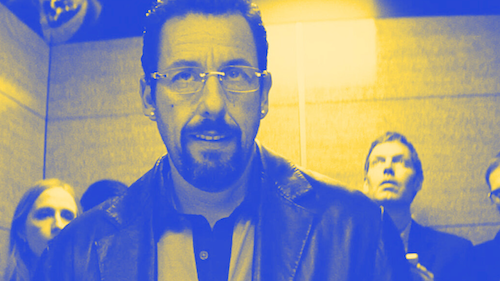
The second of the painfully-exhilarating films is the one that is marginally the strongest: Uncut Gems. When you follow a criminal whose plans fall through, you'll panic while seeing where this will go. When you watch a budding athlete throw it all away to try and win it all, there is a series of ebbs and flows that come with this plot. However, when you see a gambling addict not be able to give up his obsession while he and his family are in severe danger, I cannot describe the immensity of the weight that each of his choices carry. When you watch Howard Ratner start the film off in a tough place, Uncut Gems is already a rough watch. When you see how progressively bad his situation gets time and time again, there aren't many films that can mirror the excruciating tenseness of this situation to the point that you feel like you are a part of this debacle. I believe that was precisely the point.
As Howard stumbles across New York City to try and figure out how to fix his predicament, we see so many sides of the city as if it is an amalgamation of the many walks of life both Safdie brothers have come across; somehow, Howard's situation feels even worse than what could potentially be the case for everyone he passes (believe me, not many characters in all of cinema have placed themselves in worse positions than Howard). Adam Sandler delivers a breathtaking performance as Howard, making the jeweler a tragic character whose circumstances are so brutal and self-inflicted that there is a hidden sense of comedy within the depression. Uncut Gems is more than just the boldest Safdie brothers film to date: it is also their most entertaining (as weird as that is to say), given the high that comes off from the film, its breakneck editing, dark himour, and many against-type performances; in a sense, it effectively makes us feel the rush that Howard has and, for moments, we understand his risky passion. We are complicit. We are empathetic. Uncut Gems is the greatest film the Safdie brothers have made, but there is still tough competition (and, I am sure, many promising projects to come).


Andreas Babiolakis has a Masters degree in Film and Photography Preservation and Collections Management from Ryerson University, as well as a Bachelors degree in Cinema Studies from York University. His favourite times of year are the Criterion Collection flash sales and the annual Toronto International Film Festival.