
The Smashing Machine
Written by Gabe Kanter
Warning: This review is for The Smashing Machine, which is a film presented at the 2025 Toronto International Film Festival. There may be slight spoilers present. Reader discretion is advised.
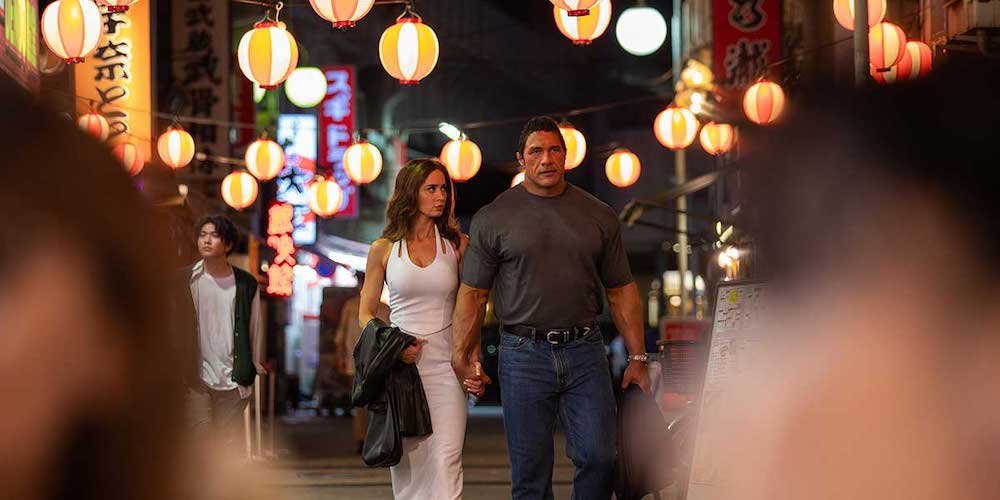
Image courtesy of the Toronto International film Festival.


The split of the Safdie brothers is officially upon us. Seeing the film Uncut Gems for the first time in a sold-out Ryerson Theatre during the 2019 Toronto International Film Festival still remains one of the greatest movie theater experiences of my life. You could feel the anxiety in the crowd slowly building with every second and from that night on, I’ve rewatched that film at least once per year and enjoyed it more and more with every watch. There are so many details to appreciate in most Safdie films with their signature style of authenticity, anxiety, frantic editing and pulsating scores. Not only with Uncut Gems, but practically everything in their filmography that preceded it, is loaded with new things to notice and appreciate with every watch. Since 2019, I’ve followed any Safdie news and project very closely so when the news broke in early 2024 that things were changing and they wouldn’t be collaborating as directors in the near future, I wasn’t quite sure how to feel.
I saw many fans expressing disappointment but the more I sat with it, the more I came away feeling cautiously optimistic (it also made sense given that Benny has a successful acting career on the side while Josh isn’t an actor at all, their career goals are clearly different at this stage). This Safdie split-up news also came shortly after the release of the 2023 Showtime series The Curse, created, written and directed by both Benny Safdie and Nathan Fielder, a collaboration I never saw coming and a masterful project that Josh Safdie had practically zero involvement in. If the brothers want to pursue other projects and split up, let’s see what else they come up with! (seriously please check out The Curse if you haven’t seen it, one of the most original and creative works I’ve seen in the past decade).
That brings us to the film The Smashing Machine, the solo directorial debut of Benny Safdie, and a film that I attended the North American Premiere of at the Princess of Wales Theatre in Toronto. The film stars Dwayne “The Rock” Johnson as real-life MMA fighter Mark Kerr and Emily Blunt as his then girlfriend Dawn Staples. The signature Safdie style of gritty realism is all over this movie but sadly, this is the first time I’ve walked away feeling underwhelmed by a film of theirs. I know it’s quite a cliché phrase at this point, but for me this film is a prime example of “style over substance”. Benny does a fine job with the directing as this is certainly a well-made film with good acting and it has that Safdie-esque authenticity to it, but this story and these characters came across as fairly dull to me for practically the entire runtime.
The film only focuses on three years in Mark Kerr’s life, from 1997 to 2000, and covers his jump from the UFC to Japan’s Pride Fighting Championships, with the majority of the film taking place in Japan and focusing on the decline of his career. While I found the narrative and characters to be repetitive and uninteresting (more details to come), I’ll start off with one of the strengths of the film which is its leading man. Now is he Oscar worthy? I wouldn’t go that far but the performance from Dwayne Johnson is quite good in this film and what surprised me the most is that it’s compelling in a very subdued and gentle way. Throughout the film, not only is Mark trying to control his substance abuse issues, and his constantly fluctuating emotions, but he is also very focused on putting on a “nice guy” act to counteract his intimidating physical stature, which leads to some very interesting moments.
One lighthearted scene early on, between Mark and an elderly woman while they are in the waiting room at the doctor’s office was particularly memorable to me and stood out as a sequence where Johnson really breathes a lot of life into the character. There is another moment between Mark and a Japanese doctor where he is asking for something stronger than Advil as a painkiller and is unsuccessful, and his ability to maintain the “nice guy” act is constantly fluctuating as he gets angrier and angrier while trying to contain himself and remain calm, and you are unsure if it is going to lead to an outburst or not. It’s in these smaller moments where the performance really shined for me and Johnson is fun to watch throughout the entirety of the film. Unfortunately, the quality of the writing just does not match the quality of the acting in this film, as Johnson doesn’t have a very rich narrative to work with.
The film starts out with a professional fight of Mark Kerr’s and shortly after this fight we quickly realize he is already addicted to painkillers, he’s already with his girlfriend Dawn and he’s already hooked on he thrill of winning, and we never end up exploring how he ended up here in the first place. The movie also over-explains and repeats story beats about how he can’t deal with losing, how much he craves those cheers from the crowd and how he struggles to accept that he is on the decline. These are struggles and themes that on the surface may seem intriguing, but the film never really goes anywhere with them. By the end of the film, we are basically in the same spot where we started and, as a result, I did not find his character arc particularly interesting.
Then there are the supporting characters, Mark’s girlfriend Dawn Staples (Emily Blunt) and his fellow MMA fighter and friend Mark Coleman (played by real-life MMA fighter Ryan Bader) who end up delivering mixed results. Dawn tends to drift in and out of the narrative and only shows up when the story needs her to cause problems for Mark, making the structure of the film feel disjointed. We get big, loud argument scenes between Mark and Dawn that are well acted but then she basically disappears for long stretches and we never get a sense of who this character is or where she comes from. Emily Blunt does what she can but the loud, unsatisfied spouse of the athlete who is hyper focused on their career is a character we’ve all seen a dozen times before. The more compelling supporting character ends up being Mark Coleman, who is also competing in the very same Pride Fighting Championships in Japan that Kerr is in and the bond between the two friends feels very natural.
Ryan Bader gives a great performance as Mark Coleman and is at the center of what I found to be the strongest scene in the film when he confronts Kerr in the hospital about his substance abuse problems. The film alludes to a big showdown between the two friends to come later on but because of it being based on real events, it never ends up happening which makes the final act of the film pale in comparison to other sports drama films (The Wrestler by Darren Aronofsky comes to mind as a film that has a lot of similar themes but the character writing and narrative is stronger in every way than it is here, but, to be fair, that film is mostly fictional and not a full on biopic).
The score of the film composed by Nala Sinephro is also worth mentioning as in Safdie fashion, the music is very noticeable throughout, especially during the fighting scenes where I found it particularly effective. This “jazzy” score breathes a lot of life into the film and is engaging to listen to but it’s not enough to save the fight scenes as a whole, as they came across as quite ordinary to me. Although the gritty realism is there, these scenes end up relying heavily on the announcers of each fight who we never see and only hear, to give us large exposition dumps about Mark’s fighting career, another example of disappointing writing as the film relies on these announcers to fill in dramatic gaps that were never shown.
That brings us to another frustration of mine, the very end of the film where we jump to the present day to see the real-life Mark Kerr shopping for groceries and going about his day while title cards appear. These title cards tell us that Mark was not recognized enough during his time, and that nowadays the super famous UFC fighters that many know the names of and who are making tons of money, owe a lot to Mark and his efforts, which paved the way for the UFC to become what it is today. These title cards were baffling to me because none of this was ever explored in the movie itself, and now the ending is claiming that these were the themes all along?
For anyone who is not familiar with Mark Kerr, the UFC or MMA (myself included), how were we supposed to understand this when the film totally fails to deliver on these themes until these title cards appear at the end to tell you that this was the point all along? These themes were even reiterated by Benny Safdie during the Q&A where the real Mark Kerr was on stage as Safdie continued to talk about the impact he had on the sport and his misrecognition which made me think that perhaps the only reason he wanted to make this movie was to honour Mark Kerr, an athlete he admired, rather than to actually tell a compelling story with depth and pathos (something he has regularly done in the past).
It may be a cynical train of thought but I also question the necessity of this project, especially when there is already a documentary that exists about Mark Kerr from 2002 (with the exact same title as this movie) that supposedly goes even more in-depth on his life and his impact on MMA and the UFC. Safdie even went as far as to recreate specific scenes and moments from the documentary in this, which leads me to wonder what was the purpose of this film other than to give Dwayne Johnson a shot at some acting awards? Yes he is good in this film but other than that, I really don’t see the point and this project comes across as increasingly empty to me the more I reflect on it.
Overall, The Smashing Machine is just fine. It’s carried by its acting, gritty realism and Safdie-esque technical prowess but it never really amounts to much in the end. My biggest frustration comes from the fact that it never takes any big risks, something that the Safdie’s have regularly done with their past work. I am curious how Josh Safdie’s upcoming film, Marty Supreme, will fare in comparison to this one as it may also result in a safe and underwhelming sports film but of course I’ll reserve judgement until I see it. As for Benny, the directing skills are still there in this one, as is his strength for giving actors a chance to shine, but unfortunately the quality of writing and choice of subject matter just wasn’t good enough for me this time around.


Gabe Kanter has a Bachelor's degree in Film and Media from Queen’s University and currently works for “Blue Ant Media”, an international streamer, production studio and rights-management company based in Toronto. He is an avid consumer of film and television and is the host and creator of the podcast “TV Sessions”, made for diehard fans of prestige dramas. TIFF is one of his favourite times of the year.