
Filmography Worship: Ranking Every Federico Fellini Film
Written by Andreas Babiolakis
Filmography Worship is a series where we review every single feature of filmmakers that have made our Wall of Directors

When you think of Italian cinematic masters, chances are your brain goes directly to Federico Fellini; this is no small feat, given how rich in quality Italian films have been over the course of history. Still, Fellini is often the go-to name in all of Italian cinema due to his overwhelming influence on the medium. You can say that his stylish, nearly surreal visuals shaped how films could appear, that his introspective stories revealed how the inner thoughts of a troubled soul could be portrayed on the big screen, and how his uncanny ability to blend fantasy themes with real vulnerability has been referenced by other directors ever since. Or, you could point out a single film, 8½, and see how many directors have made their own version of this film (a self-referential look at writer's block, a tough-love letter to cinema and/or entertainment, and an existential crisis). We have David Lynch's Mulholland Drive, Charlie Kaufman's Synecdoche, New York, Bob Fosse's All That Jazz, and Woody Allen's Stardust Memories, just to name a few out of many, many examples.
What makes Fellini so inspirational is perhaps his extension of the Italian Neorealist movement from the forties; to me, it feels like Fellini took the depressing tales of hardship and refined them into introspective odysseys for these protagonists. Their situations — no matter who we were following or what their social class is — always came off as magnificent journeys that could only take place within another reality. Fellini's brand of fantastical storytelling also wasn't so farfetched to the point of clear psychedelia; his films felt real enough that you somehow bought into the more dream-like or unnatural elements as if they simply had to exist. In doing so, Fellini's films take us all across Italy in many capacities; from the high life splendour of Rome to a rural town on the Adriatic coast. By focusing on as many aspects of Italy as possible, Fellini turns his homeland into a history lesson, a sociopolitical conversation, and an illusionary vision; in other words, Fellini renders Italy spectacular with his films. It's no wonder why people think of this auteur when they think of that nation's cinema; Italy is as indebted to Fellini as Fellini is to Italy.
In the same way that Fellini viewed Italy as a land of larger-than-life people, Fellini viewed himself as a celebrity director (to be fair, he did have a big breakthrough during two key shifts in the film industry; when directors took creative control over producers; when international cinema was first making a splash globally). Both his anxieties and flexes are on full display in a majority of his films, but he also infuses numerous other personal traits in his works. For instance, many things deemed autobiographical can be found in his motion pictures, although he has at least partially confessed to many of these stories being conjured up (he may have seen these hardships in others while growing up all over Italy). He also featured his long time wife and collaborator, the sensational Giulietta Masina, in a number of his films (some amongst his very best titles). Fellini and Masina conceived twice, but both times ended tragically (the first a miscarriage, and the second child died from brain inflammation after being alive for just eleven days); in a weird way, their films together almost feel like a new form of a family (they never tried to have children again).
Fellini's films infuse culture, religion (mainly Catholicism), fashion, despair, luxury, poverty, hysteria, and devastation into a tapestry of wonder. Despite being so connected with Italy, Fellini's glorious imagination had widespread appeal; he remains the most awarded director in the Best International Feature Film category at the Academy Awards, with a staggering four wins; he also is one of the most nominated directors and screenwriters in all of international cinema (including his work for Roberto Rossellini's Rome, Open City, toward the start of Fellini's career). While not every film Fellini made was golden (you'll find a couple of duds below), the highs of his career are as good as they are painted out to be (if not better); it's easy to see why Fellini is regarded as one of the greatest and most influential directors of all time. Since Fellini regarded his short films as important parts of his oeuvre (the half in the title 8½ represents Fellini's short films as "halves", as he saw this feature film as his latest after seven-and-a-half previous efforts), I will be including all short or segment films that Fellini directed here as well. It's time to take a journey into a colourful, lavish, breathtaking realm. Here are the films of Federico Fellini ranked from worst to best.

24. The Voice of the Moon
Fellini's last film, The Voice of the Moon, didn't age well the moment it dropped. Fellini's knack for high-life hilarity and fashionable absurdity did not translate well at the crack of dawn of the nineties, and not many directors knew how to dial back star Roberto Benigni and utilize him well (including Fellini; here, Benigni is up to his usual theatrics; take from that what you will). While not a complete dumpster fire of a film, it is certainly underwhelming and messy to the point that you cannot ignore its flaws (even underneath the eye-catching imagery). Leave this one for massive Fellini aficionados.

23. City of Women
There are two types of male feminism: those who actually understand feminism, and those who think they do. Fellini has always had female-dominant films either with strong characters or a flirt with eroticism, and City of Women triples down as what is likely meant to be his most erotic motion picture. The problem is that it isn't very good, and, furthermore, it is so backwards with its representation of women that it comes off as incredibly clueless (even though I know that this particular filmmaker is more than capable in handling female characters, typically). Even if this is meant to be an extension of the relationship comedies of Italy's past, 1980 was way too late to release a film as insipidly sexist and comedically stale as City of Women.
22. Marriage Agency
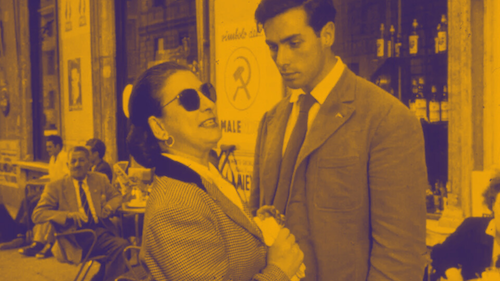
Fellini's segment in Love in the City is only so-so (but, then again, the entire film feels half-baked as an anthology of six different efforts by notable Italian directors that doesn't really work as a cohesive project). Marriage Agency is maybe Fellini's answer to screwball semantics with a silly premise (a journalist researching marriage agencies) and even quirkier outcomes. This does feel a bit like a throwaway moment for Fellini who was trying something unserious for once, but that doesn't really excuse it from being rather pointless; I haven't ranked it dead last because it is at least so short that you can quickly forget about it minutes after watching it.
21. Fellini’s Casanova
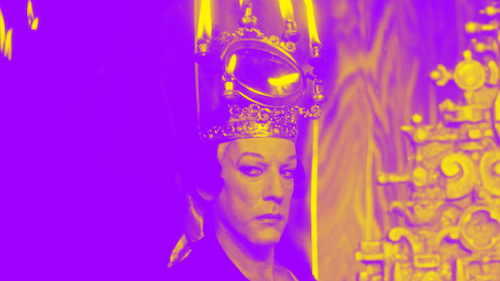
Ambitious to a fault, Fellini's Casanova is a multi-national, multi-linguistic affair starring Donald Sutherland as Giacomo Casanova in all of his macho glory. I cannot fault a director for aiming high (and, believe me, Fellini almost always did), but Casanova is perhaps the only time that the auteur felt overly ambitious to the point of self-detriment. Even so, there is much to take away here, from the self-reflection of an artist wondering what his purpose in life is (even after all of those accolades), to an artistic wonderland full of rich costumes and cinematography; will that be enough to liven up the overly-long runtime or shape up the less purposeful moments?
20. Fellini: A Director's Notebook
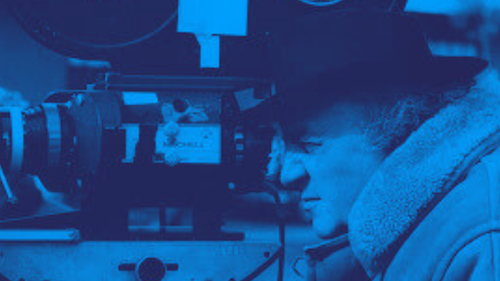
What is a standard made-for-television documentary about Fellini's thought processes and filmmaking practices, A Director's Notebook will mean very little to newcomers but likely a great deal to fans of the filmmaker. There isn't too much here that will illuminate what isn't already inferred by Fellini's films (they always possess a sense of authorship within them), but the comedic, meta, and borderline fictional elements of this documentary do stir up a bit of intrigue in what could have been a bare-bones, boring affair. There is also a look at the permanently-shelved production of The Voyage of G. Mastorna that adds a bit of purpose in watching this documentary, as well as a behind-the-scenes look at Satyricon (but, really, you can just watch and enjoy Satyricon as-is).

19. I Clowns
Obviously do not watch I Clowns if you suffer from coulrophobia, seeing as this is a mockumentary about the life of the circus profession. I feel like Fellini was hoping to tap into the multiple faces of clowns (from the painted-on grin to the hurt within) while also covering the shift in the importance of this artform from when Fellini was a child (and loved circus clowns) to the then-present (when society wasn't seeing much of a need for clowns). While a bit shaky with its approach, I Clowns still feels so dear to Fellini that what could have been a ridiculous film winds up being a somewhat amusing and tender affair.

18. Le Tentazioni del Dottor Antonio
One of the four segments of the Boccaccio '70 anthology film (a quadrant of stories meant to evoke a then-contemporary rendition of poet Giovanni Boccaccio's takes on love and eros), Fellini's Le Tentazioni del Dottor Antonio is an interesting look at a changing Rome and the shifting expectations of what morality looks like. On paper, this is a clash between yesteryear and today, but what I find instead is a culmination of Fellini's conquests — to depict his youth in Italy while expressing his concerns as an adult human being — within a shorter story. It's actually a little remarkable what Fellini is able to accomplish with a brief idea and heaps of passion and inspiration.

17. Orchestra Rehearsal
Similar to I Clowns, Orchestra Rehearsal is intended to come off as a documentary while Fellini injects fictional satire into the mix. What is meant to be a fable that mocks the squabbling of Italian politicians (and how interference and a lack of cohesion lead to the inability to ever get anything done), this statement by Fellini is a little simplistic (yet effective) with what it wants to depict (I don't think seventy minutes does the film any favours with this mission; it was originally intended to be a TV film, after all). Still, it's different to see Fellini be so direct with political commentary, and Orchestra Rehearsal is whimsically upfront with Fellini's pent-up frustration.
16. Intervista
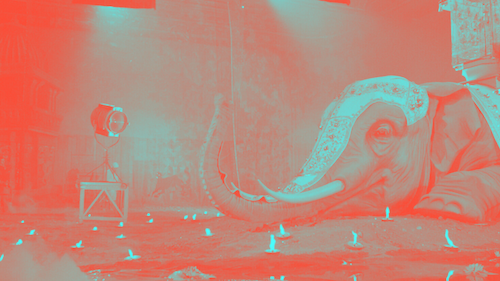
Not the first time Fellini has made a film about or inspired by himself (what a shock, right?), the auteur's penultimate effort, Intervista, is a unique look at self-reflection by a master in his later years. A "documentary" about Fellini's work and life is tweaked by the director's fleeting imagination, instead becoming a narrative excursion that breaks fourth walls and turns the film set into a meta playground. The illusion of filmmaking and the nostalgia of the many years once lived blend together into a whirlpool of memory and thought in this fascinating rendition of what an autobiographical film can be. In ways, this felt much more purposeful as Fellini's swan song (instead, it was followed by the director's weakest feature film).
15. And the Ship Sails On
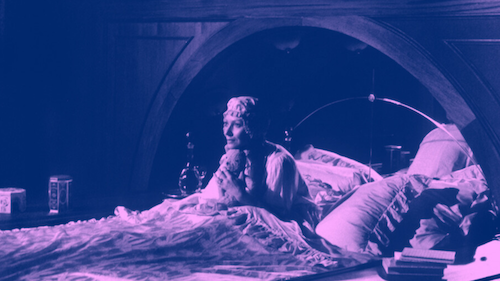
On top of and within a cruise ship, the Glora N., sits the entirety of Italy in a consolidated, metaphorical infrastructure in Fellini's And the Ship Sails On. As an adored opera singer passes away and the community mourns collectively, we get the gist of what it means for a whole nation to feel the sting of a loss; additionally, we see all the inner-workings of each sub-community functioning independently and unitedly. Fellini's basic-yet-clever allegory (not to mention a smartly disguised anthology film in a way that feels holistic and amalgamated) feels easy enough that anyone can attempt it, but And the Ship Sails On is refined, emphatic, and soulful enough to prove that only the greatest should dare flirt with perceived simplicity; the accomplishment of this film is quite understated in Fellini's filmography.
14. Ginger and Fred
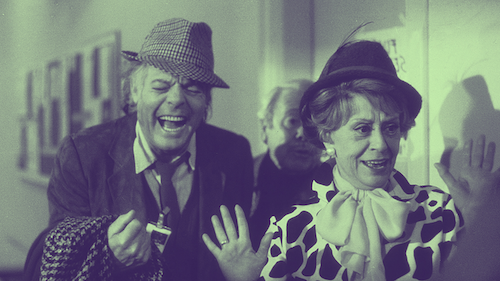
Ah, yes. The iconic pair of Ginger Rogers and Fred Astaire, who were the greatest duo to ever grace the musical genre. Fellini's love letter to these legends is, appropriately, Ginger and Fred, and yet they are depicted by impersonators Amelia and Pippo here (played by Fellini mainstays Giulietta Masina and Marcello Mastroianni, respectively). Once we connect with these elder entertainers going back for a final hurrah after years of retirement, what transpires is a funny, beautiful, and touching observation of identity versus legacy. All the while, shenanigans ensue and this flurry of faces and situations captures the rush of being in the entertainment industry; the ride never changed all of these years. I feel like Ginger and Fred remains one of Fellini's most underrated works.

13. Variety Lights
After writing over a dozen screenplays, Fellini's directorial debut is this collaboration with Alberto Lattuada, and the film does feel like Fellini trying to get his feet wet. Even so, Variety Lights is quite something. It feels quite linked to the Italian Neorealist movement (this film did come out in 1951, after all, shortly after the peak years of the wave) with its depictions of society and the cycling tribulations within it; there's that preliminary hint of Fellini's style here in the form of hypnotic eroticism and bombastic spirits within an even larger setting. While it was always clear that Fellini was meant to write films, Variety Lights was a sign that he was also born to direct motion pictures.

12. The White Sheik
Fellini's purpose was certified by The White Sheik; if Variety Lights was a preliminary go-around and a co-directed effort, then The White Sheik proved that Fellini certainly belonged in the director's chair (it is his first solo effort). Within this parable of two newlyweds separated on their honeymoon is a lust for life, a rush of culture, and an exhilarating resonance that likens celebrity worship with a search for meaning in a mundane life. The film is so clear and methodical with its antics that it comes off as a kinetic sprawl instead of what it actually is: a precise screwball romance that spotlights the imperfections and brilliance of being alive and in love.

11. Toby Dammit
While the rest of the anthology film, Spirits of the Dead, doesn't compare, Fellini's greatest short film is found within it. Toby Dammit is quite something. The title character/actor is played magnificently by Terence Stamp, who is losing everything he knows and loves to alcoholism. What transpires is a monologue of regret and a blurred line between art and sorrow. This is as emotional as Fellini films get, and Toby Dammit is transfixing with its devastating lows and the decimation of a beautiful thing; an artist lost to vice; a soul lost to pressure; an icon lost in the speed of time. Even though it is so short and a part of another fuller film, consider Toby Dammit an essential watch in Fellini's career.
10. Il bidone
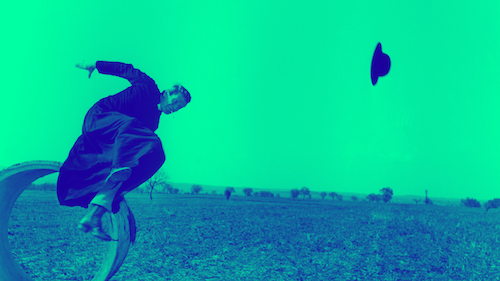
Sure, Fellini got in touch with his signature style early on, but I always get fascinated by initial works by directors during stages of experimentation. When you think of Fellini, do you consider the crime film genre? Well, that's what Il bidone gets you: a trio of swindlers and their various forms of comeuppance and personal dilemmas. Fellini takes the criminal underworld and crafts a society that almost suggests that people should behave badly in order to get by; Fellini's beautiful framing of Italy makes the deviancy within it heartbreaking. I'm happy with the majority of Fellini's output and what kinds of films he chose to make, but I also am glad that he tackled crime cinema at least once with the under-seen Il bidone.

9. Roma
Two of Fellini's films prove to be polarizing: Satyricon (more on that soon) and Roma. What some see as pretentious, others may view as magnificent. I'm a part of the latter party and respect both films in high regard. Roma likens Fellini's move from Rimini to Rome as a mythological journey that transcends time, space, and reality. What can come off as a nonsensical blur of ideas reads as the speed and panic of life to me: an impossibility to pry apart memories, dreams, and thoughts within a rampant mind. How many of us remember our pasts in great detail? Fellini coasts with evocative vibes and sensations instead, creating a massive, intricate, endless rendition of yearning in Roma.
8. Juliet of the Spirits
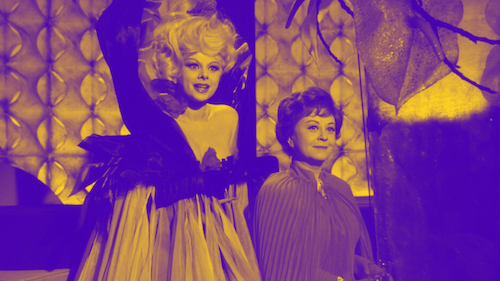
While Fellini typically dabbled with fantasy elements, he dove head-first into the genre with Juliet of the Spirits: a jaw-dropping fever dream within the fractured psyche of an aching woman who is seeking the wherewithal to finally leave her awful husband. Fellini's first feature film to be shot in colour, Juliet of the Spirits is such a lush and hypnagogic exercise in trying to find comfort, solace, and meaning in the rampant flurry of harsh emotions. Many directors have taken a stab at making adult fairy tales with mature themes and images; Juliet of the Spirits is a sensational success at taking jaded people and providing them a new realm of possibility and wonder.
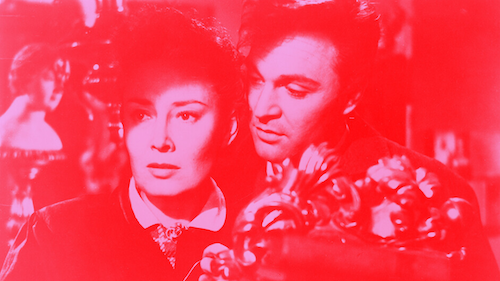
7. I vitelloni
Where did our lives go? Fellini takes the different pathways and outcomes of a handful of young men and finds a complete portrait of aging in Italy within their experiences. What could have been a collection of juvenile discoveries and reflections is instead a glorious mural of growing up, getting into trouble, and wandering around before wondering about the road ahead. While many films try to solve all questions, films like I vitelloni revel in the unknown: the idea that we can only grapple with what we have right now and the rest remains foggy; Fellini finds warmth in endlessness, and I vitelloni is magical and influential as a result.

6. Fellini Satyricon
Satyricon will certainly have its naysayers, but I think that this is an insanely great motion picture. A series of vignettes set against the backdrop of Rome as a mythical and mysterious world, Satyricon reads like a novel of short stories that all bleed together to create a flowing river of psychedelic metaphors. In a sense, Satyricon to me is Fellini's love letter to Rome and its provenance while stating what it feels like to live there in the auteur's phantasmagoric way. What we don't get in narrative satisfaction or historical accuracy we get in interpretive apparitions. Even if you do not fully understand Satyricon, to breathe it is quite the cinematic experience; it is pure postmodern poetry.
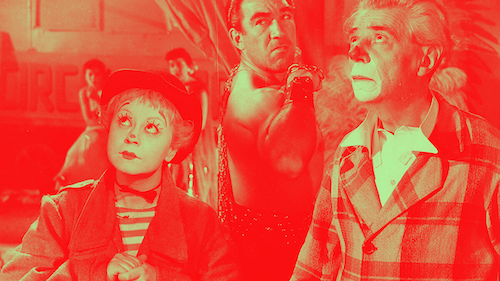
5. La Strada
Fellini's answer to Tennessee Williams, La Strada takes the concept of an abusive relationship and renders it a fable about a girl sold into a traveling circus with a brutish, aggressive strong man. The path they travel is the course of life. The performer backdrop is a depiction of existence as a spectacle. Anthony Quinn spars with — yet compliments — Giuiletta Masina effortlessly in this toxic, visceral drama; one full of regret and agony. Fellini was already making great films at the start of his career, but La Strada was a clear breakthrough that took a promising director into the halls of the greats from early on; he took the Italian Neorealist movement and made something meant to exist within it (instead, he created a timeless symbol of guilt and despair).

4. Amarcord
Fellini was working with vignettes quite late into his career, seeing as Amarcord was released around twenty years into his tenure. He was still fascinated with the idea of compiling all of these elements of life and Italy into short stories and fuller pictures. With Amarcord, he was having a bit of fun with this colourful dramedy about the quirky walks of life who surround us; what is their story; what makes them tick? Like a less serious Ulysses (of sorts) — and told via young eyes instead of an adult with regrets -- Amarcord doesn't aim to answer all of life's mysteries, but it does pose them as mysteries: to exist is to understand that we are just tiny specks in the grand scheme of things, and that we can only confront so much (Fellini turns this into a touching, memorable adventure).

3. Nights of Cabiria
If La Strada was Fellini's breakthrough feature film (regarding his place in the history of the medium), then Nights of Cabiria is what elevated him so high that he became one of the untouchable giants of cinema. This dramedy about loneliness and heartbreak shown in the form of an aimless sex worker (played by Fellini's wife, Giuiletta Masina, who delivers one of the greatest performances of all time) leaves us trekking through the streets of Italy; we see many people who are in search of a better life and we cannot help them all (h*ll, the film can barely help Cabiria and it's named after her). Nights of Cabiria is a reminder that all will be okay even when it doesn't feel like it will be; then again, it could just be the best means of consoling shattered people even though there is no light for the bleak in sight. Nights of Cabiria may be Fellini at his most honest and direct: life can be miserable. He also makes everyday sufferers like Cabiria superstars, even if for two hours (you're seen by us, even if not by your peers, Cabiria).

2. La Dolce Vita
Even though it is synonymous with Fellini at this point, the first film of his to truly embody his fashionable, surreal, aesthetic style was La Dolce Vita: what was meant to be an otherworldly deviation from the norm — as a means of depicting Italy as a series of Godly, folkloric masterworks — became the prognostication of the future of film. We follow a tabloid journalist through numerous events; in these instances, film is more descriptive than text or still photographs. We get entwined in the lives of the rich and famous, while Fellini tosses a handful of inexplicable occurrences to truly sell the magnificence of what is transpiring (from the giant floating statue of Jesus Christ, to the sea creature that winds up on the beach and is never resolved). In the way the journalist is, we are clearly outliers when experiencing the high life, and yet La Dolce Vita allows us to have a taste of the unknown (with the truly fantastical images, even the wealthiest watchers won't have experienced everything already); it is a one-night party that you will never forget, and a festival where everyone from every class is equal and in awe.
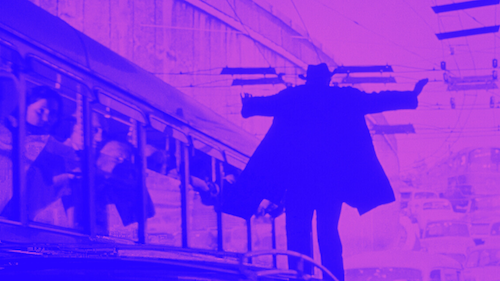
1. 8½
Fellini was struggling to come up with a new film when he decided to put his frustrations into writing. Thus, he came up with 8½: the ultimate cinematic representation of writer's block. He expels his — or character Guido Anselmi's — inner demons onto the big screen: self-resentment combating with narcissism, loneliness being "resolved" by cheating on his wife with multitudes of women, and dreams being more colourful than his reality to make up for his stifled imagination. Of course, Fellini is not protagonist Guida (a struggling director) through and through, but Fellini takes his creative void and turns it into something truly Fellini: a complex taste of the celebrity life while feeling like the most worthless person on Earth. 8½'s approach to solving creative blocks was so cathartic that it became one of the most mimicked and referenced films of all time; Fellini couldn't have been that distraught.
As 8½ progresses and we explore Guido's anxieties and deeply-rooted fears, we get into the mind of an artist in only the way an artist could be portrayed: with impossible imagery (where some of Guido's dreams are matched by his reality, especially that spellbinding "curtain-call" final sequence. The film does feel like Fellini challenging himself to come up with something substantial and profound at his lowest level of inspiration, and the amount of digging into his own soul and heart is clearly on display here (a minor component many imitators of this film never realized was necessary). If we do not pity the rich and famous artist who cannot proceed with their craft, we must know that most of these artists hate themselves even more. Fellini does not ask for our sympathy but for our understanding, and it is hard to not get the picture with 8½: one of the cleverest solutions to being stumped in the history of storytelling. If art is meant to expose the soul of the artist, this film is a complete devotion to one’s craft (even if it consumes them whole). How can a film be more representative of both the beauty and brutal vulnerability of art than 8½? It is also one of the great films of the sixties, of Italian cinema, and of all time, and, on that note, Federico Fellini's masterpiece.


Andreas Babiolakis has a Masters degree in Film and Photography Preservation and Collections Management from Toronto Metropolitan University, as well as a Bachelors degree in Cinema Studies from York University. His favourite times of year are the Criterion Collection flash sales and the annual Toronto International Film Festival.