
Filmography Worship: Ranking Every Bob Fosse Film
Written by Andreas Babiolakis
Filmography Worship is a series where we review every single feature of filmmakers who have made our Wall of Directors (and other greats)
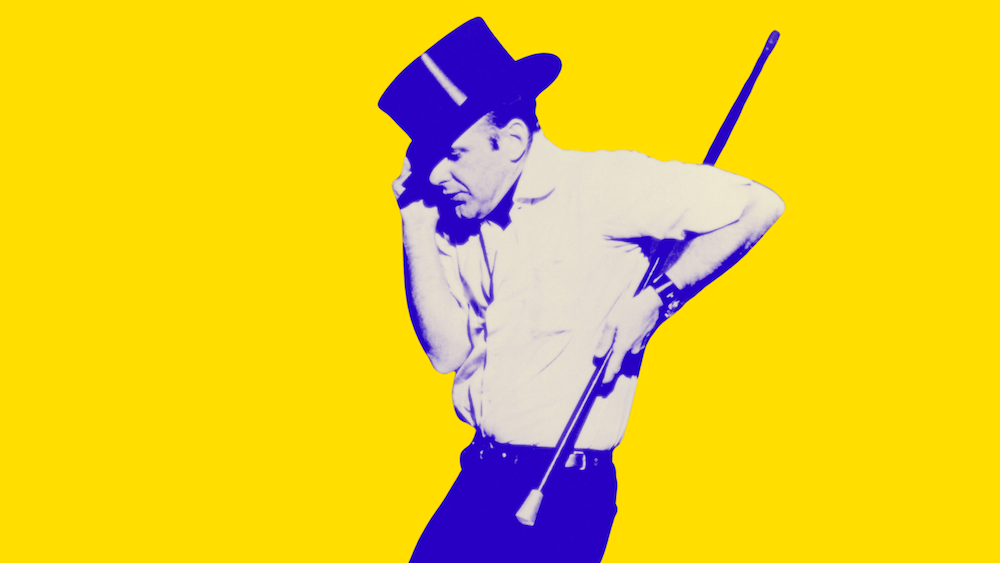
When you think of musicals, you may imagine glitz, glamour, and feel-good escapism. Not every musical film falls under these definitions, but enough do that the genre has maintained a bit of a stigma by naysayers for decades. Directors who specialize in the genre, including Vincente Minnelli (Meet Me in St. Louis, An American in Paris), Stanley Donen (Singin' in the Rain, Funny Face), and John M. Chu (Wicked, In the Heights) — amongst many others — have reputations consisting of colourful sets and costumes, bombastic numbers, and a sense that we have had Broadway teleported onto the big screen. We are in the bright lights, basking in the luminance of showbiz. Then we look at one of the greatest directors to specialize in the musical genre, one Bob Fosse, and see a completely different side of the entertainment industry: one of realistic colours, existential concerns, and the impossibility of outrunning one's demons. When you watch a Fosse film, you are brought to the baren stage to see the blood, sweat, and tears that spill, not pretend that all is effortless and magical. Music can help us feel seen, not cure us of all ailments.
Fosse started off as an actor partaking in stage productions before becoming a director and choreographer. His Broadway and theatre career is quite extensive, with twenty Tony Award nominations (and nine wins) under his belt for iconic hits like Chicago (adapted by Rob Marshall for the big screen) and Redhead. Even though he was already prolific on stage, Fosse turned to directing feature films and ultimately being a workaholic. At first, he took what he knew on stage and brought it to cinema in the form of Sweet Charity. However, in the height of the New Hollywood movement, Fosse went with the current and used his platform to make motion pictures that questioned what musicals, biographical pictures, or cinema as a spectacle could be (I'd argue that even Sweet Charity showed that Fosse was heading in this direction if the rest of the industry wasn't).
His film career is far smaller, with five cinematic releases (and one television concert film, of which I will be including here because six films is really not a bother to go through when all of them are great). However, his trophy cabinet speaks for itself. Only focusing on what he got as a film director, Fosse has an Academy Award for Best Director (above Francis Ford Coppola for The Godfather, no less), three Emmys (all for his concert film, Liza with a Z), a Palme d'Or, and a slew of nominations (including the Golden Bear at Berlin for Star 80). Underneath his illustrious-yet-brief career is a personal life that was similarly as intense. Fosse struggled with substance abuse — which began when he tried treating his epilepsy. He also had numerous relationships, mainly with dancer and actor Gwen Verdon whom he was married to; Fosse's compulsive cheating proved to challenge his relationship with Verdon.
Some might point you towards articles, biographies, or the Ryan Murphy miniseries Fosse v. Verdon to get some insights into Fosse's private life, but Fosse himself put his biggest shames and fears on full display in the exhilarating film All That Jazz: the ultimate New Hollywood musical that even the biggest haters of showtunes may be compelled by. In that very film, Fosse paints himself in a dark light: one of many addictions, vices, and self-destructive tendencies with the high possibility of running himself into the ground and dying from exhaustion. Fosse knew himself a little too well, dying of a heart attack in 1987 at the young-enough age of sixty while celebrating Sweet Charity's migration onto the stage (it ended where it all began).
Even though there aren't many films to discuss here, I think Fosse has one of the most consistent careers of any director of both the New Hollywood movement and the musical landscape (both kinds of directors are usually known for trying many things with some failures in the mix; Fosse held himself back while delivering every time). Some titles are not as popular as some others, and some of these films even received lukewarm reviews upon their release, but I believe that audiences maybe weren't ready for Fosse's depiction of the film industry: one of both love and hate (which has been matched by many directors ever since); sure, two of his films did insanely well during the awards season, but I'd argue that — like all of his films — Fosse's works have only gotten better with time; his worst come off as great motion pictures now, and his best are untouchable. You cannot go wrong with any of the following films that bare their soul in an industry and within genres — musicals or biopics — that are usually synonymous with sanitization; Fosse dared to go where many before and after refused. Here are the films of Bob Fosse ranked from worst (or least good) to best.

6. Sweet Charity
Even though it seems obvious that a film had to come in last despite the quality of Fosse's career, I still feel like placing Sweet Charity in the lowest spot makes the most sense. It's his most conventional film, which isn't necessarily a bad thing in general but it does hinder what could have been with this dramedy-musical's concept of loneliness, fate, and yearning. I see Sweet Charity as Fosse dipping his toe in the pool of the New Hollywood movement to see what he could achieve. With a stellar performance by star Shirley MacLaine (one of the acting greats), we connect with an everyday person and aspire for more together; Sweet Charity grants us brief reprieve while acknowledging that life goes on and much of what we dream for is delivered by sheer luck or privelege. Fosse would go on to deliver similar sentiments with greater results in his career, but I wouldn't brush off Sweet Charity either way; this does feel like the bridge between the Golden and New ages of Hollywood musicals that set the course for what would transpire.

5. Star 80
Fosse's final film is not just the swansong of his directing career: to me, it feels like one of the last dregs of the New Hollywood movement. While the wave of American cinema was petering out, here was Fosse delivering a savage, dangerous look at stardom through the true-crime guise of Playboy model Dorothy Stratten's murder by husband Paul Snider. At the forefront is a chilling and mortifying performance by Eric Roberts (who has maybe never been better) as Paul; Fosse makes the film cut between time periods to show a clear linearity between Paul's driven past and his violent end of his life (both driven by obsession). While depicting a tragic turn of events, Fosse is also commenting on the perversions and neglect of the entertainment industry — a machine that is energized by the poor souls it chews up and then spits back out. Maybe critics back then were tired of the ways of New Hollywood, but any fans of the movement owe it to themselves to not miss out on a film as raw and intense as Star 80.

4. Liza with a Z
Liza Minnelli was the ultimate child of the Hollywood musical (with Judy Garland and Vincente Minnelli as parents, it would be impossible for her to not be a prodigy). Fosse would connect with her to work on Cabaret (a breakthrough feature for them both, more on that soon); after Cabaret had wrapped up production, Fosse and Minnelli went to the small screen to create Liza with a Z: one of the great concert films. Fosse doesn't have anything to say about the industry here, as to not hog the spotlight from Minnelli who comes off as an absolute titan of showbiz in this film. Instead, Fosse uses his expertise as a capturer of movement, creativity, and ideas to allow Minnelli's radiating personality and charm come off as a series of works of art via spellbinding numbers. Liza with a Z almost feels like Fosse's way of proving that he could play by the rules while blowing his peers out of the water with a showstopping film full of showstopping numbers. This film is only fifty minutes, but I could have had fifty hours of this glorious magic.

3. Lenny
After Fosse won Best Director for Cabaret (at the time, the film was the most successful Academy Award winner to not win Best Picture; take from that what you will), many may have imagined that the director would have loosened up and appreciated his stature and fortune. If anything, he went in harder with Lenny: a biographical picture of the comedian who always dared to work blue, Lenny Bruce. Played by New Hollywood affiliate Dustin Hoffman (in one of his great performances), Bruce is shown flaws and all in this ruthless take on imperfect people in an even less-perfect world. I believe Fosse saw a commonality between himself and Bruce: two artists in industries seen as purveyors of hope and optimism who wanted to share their hardship with the understanding masses (not everyone was ready for these wake up calls). It takes a daring director to capture this bold comedian, and Fosse was clearly right for the job with the candid tidal wave of existentialism known as Lenny.

2. Cabaret
Anyone who decries Fosse as an undeserving winner who stole the Best Director Oscar away from Francis Ford Coppola (for The Godfather) has clearly not seen Cabaret. This expertly directed film — and an adaptation of Joe Masteroff's 1966 play — is a sensational blend of musical numbers and horrific realities. Set in Weimer Republic era Berlin, we follow a struggling entertainer (played by Liza Minnelli in an Oscar-winning role) and other lost souls — we, like some of the characters, find solace in the Kit Kat Klub (narration — of sorts — is provided by Joel Grey acting as the master of ceremonies: a marvelous portrayal of what such a character on stage would be like on the big screen). As the film progresses, the rise of the Nazi party proliferates around our central story; the haunting final image abruptly reminds us that entertainment can only distract us for so long before we re-enter our complicated and cynical world. All of Cabaret feels like a tug-of-war between aspirations and reality: two realms Fosse proved to be an expert of.

1. All That Jazz
Death was on the minds of Fosse and producer/writer Robert Alan Aurthur when they worked on All That Jazz together; as previously discussed, Fosse foretold his own death that would happen eight years after this film, whereas Aurthur passed away a year before the release of All That Jazz. Both understood the importance of the final song in a lavish musical and how it is meant to usher audiences out of the "life" of this production. As if both anticipated that this would be their final hurrah (it was Fosse's penultimate film, as Star 80 was released four years later), they go in guns blazing and fully aware of their fears, pains, and guilt. All That Jazz is a semi-autobiographical acknowledgement by Fosse that he was addicted to his work, to pain killers, to sex, and to self-sabotage. Roy Scheider delivers an all-time performance as Joe Gideon (essentially Bob Fosse) whose near-death experiences (with Jessica Lange as the angel of death and all) almost seem more fantastical and exquisite than his everyday life (even with the musical productions he pulls off).
All That Jazz is a ticking time bomb. It is Fosse admitting that he is full of vices and imperfections, and that there is no way to be absolved of his sins; all he can do is try his best to cleanse himself of his blemishes. The New Hollywood movement promoted the concept of anti-heroes; how gutsy is it to have a director elect themself as such a character? With All That Jazz, Fosse tells us that his passion is all that he has; it is all that he lives for. He will die under the spotlight not out of egotism but out of despair. He shatters the wall between illusion and actuality; between showtime and rehearsal; between those he is affecting around him and the internal corrosion his mind and heart are processing. This commitment, ambition, vulnerability, and honesty gives us one of the greatest New Hollywood staples, maybe the best musical film of all time (if not, it at least has a spot on the Mount Rushmore of the genre), and a generational motion picture that exemplifies one's existential crisis and an audience who connects and revels in it; it is also Bob Fosse's magnum opus.


Andreas Babiolakis has a Masters degree in Film and Photography Preservation and Collections Management from Toronto Metropolitan University, as well as a Bachelors degree in Cinema Studies from York University. His favourite times of year are the Criterion Collection flash sales and the annual Toronto International Film Festival.