
Filmography Worship: Ranking Every Jean-Luc Godard Film
Written by Andreas Babiolakis
Filmography Worship is a series where we review every single feature of filmmakers that have made our Wall of Directors

Arguably the most well-known former critic of Cahiers du Cinéma to become a part of the French New Wave movement is Swiss-French legend, Jean-Luc Godard: a titan of experimental cinema. He spent his entire career challenging what film could be, particularly antagonizing conventional French films with his jarring vision and opinions. Oddly enough, Godard — apparent with his reviews and editorials — was more fond of literature and philosophy than cinema itself, which explains a lot about how he makes his films; through a postmodern conversation between the film itself (usually as an object, as opposed to an immersive story) and its viewer. Seeing as he had little ties to film as a passion, he inadvertently became one of the most unique members of the French New Wave. Take a look at his feature film debut, Breathless. Its choppy editing style — especially during its iconic time-jumping montage — was because Godard hastily lopped parts of a lengthier driving scene out and spliced what was left together; Breathless is now considered an inspiration for film editors because of its unabashed style. Seeing as Godard didn't have an emotional attachment to film like many other directors do, Breathless' editing was a happy accident; you can find many similar examples throughout his career.
Godard started off hot with a highly prolific sixties run (I'd argue he is one of the best directors of that decade, if not the very best, seeing as he released so many fantastic films in such a short period of time). Godard kept finding new ways to deliver cinematic ideas and concepts in his own avant-garde way; he was one of the very few directors to get away with such experimental risks and somehow be known by the masses as a result. After the sixties, Godard wasn't easing up on his workload, but his success rate became a little weaker. For the rest of his lengthy, sixty-year career, Godard would be hit-or-miss with his output, with some magnificent releases that push even the most hardcore cinephiles out of their comfort zones, alongside a number of films that simply do not work (and are, quite frankly, unbearable). I've always considered Godard my favourite French New Wave member, but I have learned that he is far from the most consistent; I do appreciate even his worst works for trying, but he certainly released some misfires.
I should also note that Godard did more than just narrative films. Some of his greatest experiments are of a documentary or film essay nature, including the incredibly audacious, ten-year long project, Histoire(s) du cinema: a masterwork of postmodernism that will break the cinematic language in ways that will forbid you from ever understanding film in a simplistic way ever again. I wouldn't go as far as saying Godard was anti-cinema, but he did approach the medium both as an expert and an outsider, forcing us to recontextualize what a motion picture could even be. Even his largest haters cannot deny that he is one of the best directors when it comes to getting you to take a step back and rethink what filmmaking is, how it works, and how audiences respond to it. Call him a professor, a philosopher, or a contrarian. He certainly was effective either way.
Godard also had many short films, which I won't be covering because nearly fifty films feels like enough titles to go through on this list. When he was 91 years old, Godard — living in Switzerland at the time — partook in the legal assisted suicide program, determining that he was tired and did not want to keep making films; in a way, it seems like he didn't want to live without films, either. There's something oddly beautiful about Godard working until the very end and knowing when it was time to conclude his story in more ways than one; of course, his death was shocking and he will forever be missed, but he somehow went on a truly Godardian note, if you will. I'm not sure if I have interpreted all of his films in the ways that he would have intended, but I will surely try my best in his memory. Here are the films of Jean-Luc Godard ranked from worst to best.

46. Wind from the East
A collaborative effort by the Dziga Vertov group (including Godard, Jean-Pierre Gorin, and Gerard Martin), Wind from the East is meant to be a major filmmaking statement on the impact of film on society and culture, using the tropes of westerns as a basis. Instead, Wind from the East is a well-intentioned migraine that can be summarized in one sentence (see above) and completely skipped otherwise.

45. Struggle in Italy
What is meant to be a depiction of the ongoing political struggles in Italy becomes quite a bore (yes, even at only sixty minutes long). Godard gets caught in the midst of trying to say something with Struggle in Italy more than he succeeds with actually getting his point across (such can be the case when one churns out provocative films so frequently).

44. Letter to Jane
Likely the most nauseating film Godard ever made, Godard's collaboration with Jean-Pierre Gorin, Letter to Jane, is meant to be an analysis on the infamous photograph of star Jane Fonda when she visited Vietnam (Fonda had just worked with Godard on Tout va bien that same year). What is meant to be a take on the sentiment that every image contains a thousand words instead becomes a pandering, misogynistic, hateful act of patronization (and, to be honest, pretension).

43. Vladimir et Rosa
Another Dziga Vertov Group experiment, Vladimir et Rosa takes the trial of the Chicago Eight and makes it a backdrop for a statement on how to make political statements not through what is said on screen but how a film is made. Both Godard and Gorin take on the roles of Vladimir Lenin and Karl Rosa, which comes off as a holier-than-thou ego, especially when the film itself winds up being not much more than a neat idea on paper but a frustrating execution (Godard never truly had bad ideas, outside of maybe Letter to Jane, but not every experiment succeeded).

42. Detective
In order to get financing for the far-better Hail Mary, Godard directed what can only be described as one of his more "commercial" efforts with Detective (even so, I wouldn't pretend that this is a mainstream film). I like the idea of the Swiss-French director's version of what a pedestrian film could be more than I like the end result; Detective is still far too intellectually inclined to work as a film for the masses (the clunkiness of the characters who theorize too much in a film that begs for them not to just doesn't work).

41. Joy of Learning
The title of this film feels a bit like its mission statement: the passion of re-educating oneself and how films can be read and understood. Having said that, Joy of Learning is stripped down and didactic to the point of being nearly soulless and, as a result, difficult to connect with as a film or as an object; you may get to thinking about the filmmaking process with how rudimentary this film is, but you may not care to think much about Joy of Learning itself.

40. Keep Your Right Up
Godard got a little daring in the eighties with a handful of films he made as an effort to be entertaining. Keep Your Right Up is a comedy (of sorts: it is a blend of a behind-the-scenes look at an album being recorded and whatever the hell else Godard felt like putting in), but a surrealist and academic effort that gets in its own way because it appears to try too hard and think too much about what is transpiring. There is a message there about belonging and finding harmony within the noise, but Godard cannot do that himself here.

39. Les Enfants jouent à la Russie
Godard was making a film about Russia and the cold war with Les Enfants jouent à la Russie, but — in Godardian fashion — the Swiss-French director went all-in on pulling in references and ideologies from many sources, including works of classic Russian literature. His means to create a basis of Russia's culture and — to an extent — mythology render this depiction of a new era a little interesting, but it's clear that Godard is almost self-referential with his frustration during this process; acceptance doesn't usually absolve a troubled film.

38. Film Socialisme
By the 2010s, Godard was in his most extreme form with highly postmodern efforts that would scare off any newcomers. A few of these experiments were highly successful (more on those later). Film Socialisme is not one of those films. There are three intended movements to focus on here, but none of them have much to say outside of being empty concepts of stirring studies, resulting in a film that feels more like a mish-mash of starting points rather than a cohesive avant garde project.
37. Number Two
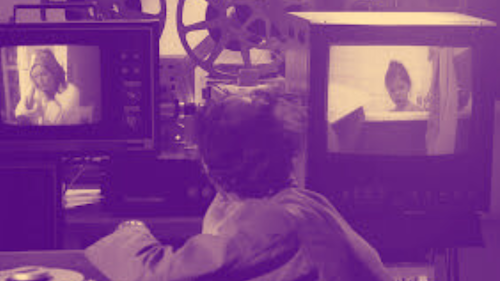
Contrary to a number of other lower-ranked films on this list, I think that Number Two is quite a strong gamble by Godard in the sense that it is a series of parallels (two images on screen at once, the film is split in halves, we have dueling cultures and commentaries, et cetera); I'd also state that the quality of Godard's films is higher than the previous rankings by quite a bit. I rank Number Two quite low because of how disturbed the film is; I have a strong stomach and don't find the film overly offensive or anything, but I do think that Godard acts with such intrinsic malice and disgust with this film that parts of it ruin what could have been a powerful vision.
36. How’s it Going
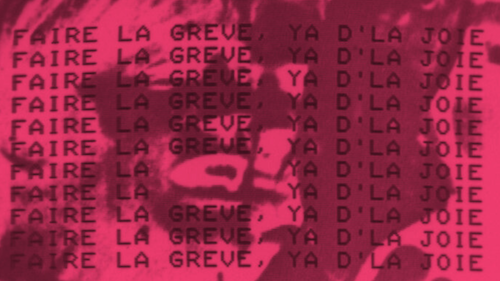
I am a sucker for films about journalism when done well, and Godard — teamed up with his wife, Anne-Marie Mieville — ultimately creates the antithesis of how film can convey political ideas and the journalistic industry with How's it Going. The result is a frigid but curious projection of the relaying of information and opinion (something that Godard was clearly no stranger to, but it's intriguing to see him acknowledge it in such a way here). The film is a bit stale and lethargic, but the hypothesis is personal enough to kind of work for me.

35. King Lear
Almost like the experimental parallel to Tom Green's Freddy Got Fingered, Godard's King Lear is far more interesting as a postmodern object — what would a Shakespearean adaptation look like if one of film's avant garde masters wanted to blindside a studio — than it is an end result. This disjointed, furiously-challenging affair is so out there (from Godard playing a farting fool, to the casting of eighties starlet Molly Ringwald; there is clearly no specific audience for this film) that it is actually astonishing. However, a glorious act of rebellion doesn't make King Lear a rewarding watch; even just discussing and acknowledging its existence means that it is successful (you don't have to even see it, in this case, but you may wind up being one of the members of this work's cult following).

34. For Ever Mozart
Godard rarely worked with emotion outside of some of his greatest triumphs; Contempt; Vivre sa vie; to an extent, even Histoire(s) du cinema. An overlooked attempt at sombre and emotionally resonating filmmaking by Godard is For Ever Mozart: a series of observations about the need for art in a hostile world. Of course, Godard feels the need to wring out as much intellectual "truth" out of this film as possible, to the point that For Ever Mozart can come off as a little flawed, but this is otherwise a spiritually open (somewhat) affair by a typically closed-off artist (outside of his philosophies, of course).

33. Oh Woe Is Me
Art can maximalize a sensation, and Godard likens a failed relationship to a tapestry of impossibility in Oh Woe is Me. By now, Godard was beyond just rewriting the cinematic language: he was in another realm. Of course, not everyone has caught up, and a film like Oh Woe is Me can come off as densely nonsensical if it isn't given the proper time of day. Underneath the surreal mysticism is a fight to make sense of it all from the artist himself: a quest to understand the chemical, nearly supernatural human responses (like love and agony) that many filmmakers simplify.

32. Passion
Most directors who have a film like Federico Fellini's 8 1/2 turn out one of their more daring and creative projects. With Godard (forever going against the grain), a film about an artistic block winds up being quite a mainstream effort. Passion may appear to be playing by the rules when it comes to the creation and conveyance of art in cinema, but, even then, Godard is fully exposing himself as a puppeteer in control of the emotional and literate heartstrings of his audience (and, I suppose, is implying that all conventional directors are guilty of the same).

31. Soft and Hard
Godard had a few films made with his wife, Anne-Marie Mieville, but what separates those films from Soft and Hard is that this film is actually about them. For fifty minutes, we partake in their conversation about the art of making motion pictures, and I would argue that this is the most direct Godard has ever been with this craft. I admire how penetrable his thoughts are here when Godard is usually pressuring his audience to reach a new echelon of academia; getting to know Godard as a human being — and even partaking in his daily routine — is actually quite rewarding.

30. Tout va bien
By the early seventies, the concept of international cinema being receivable by other countries was no longer a foreign concept. With Tout va bien, Godard — and Gorin — use the French and Italian studio system (with a Western appeal in the choice to cast star Jane Fonda) to highlight the distress of the May 1968 protests throughout France. Using his podium to discuss an artist's responsibility during crises (but how this can also be a double-edged sword), Godard and Gorin use Tout va bien to detail the imperfect objective (while delivering a flawed but effective feature).

29. British Sounds
Time can be a tricky friend. When British Sounds came out, Godard and Jean-Henri Roger's documentary was likely seen as more revelatory. The capturing of a car assembly line with parallels to communist ideologies, unionization, and capitalist dreams (not to mention Beatlemania) likely hit with more gusto. Today, a film like British Sounds can come off as a bit on-the-nose; at least the documentary is well assembled enough that it is fascinating to watch (it's also a brisk fifty-minute affair).

28. First Name: Carmen
When singular directors win prestigious festival awards, it can be for a preliminary film or a breakthrough that is seen as a sign of what filmmaking can be in the future (see Robert Altman's M*A*S*H, or David Lynch's Wild at Heart). Godard's 1983 rendition of the opera Carmen, titled First Name: Carmen, stands out as a blend of crime cinema, experimental theory, and a philosophical hypothesis for what an adaptation can be in the art of filmmaking. When Venice awarded this film the Golden Lion, it was maybe because they felt that Godard had returned; the film is highly indicative of the tone and style of his early works, so the celebration feels warranted.

27. Hail Mary
Godard — the master of unconventional and rule-breaking cinema — could be deemed blasphemous? What a shock! His modernization of the story of the Virgin Mary and her miraculous conception of Jesus Christ (known as Hail Mary, here) was reviled when it was first released, but I'd like to think that we have more media literacy nowadays. Godard pushes us to question widely accepted concepts — be they biblical lore or contemporary sociopolitical themes — before we blindly accept what we are being told; he does so with a kaleidoscope of theory and imagery that remains one of his most controversial exercises.

26. Germany Year 90 Nine Zero
Who would have thought that Godard would have released a sequel of any capacity? The protagonist of his masterful noir film Alphaville, Lemmy Caution, returns — this time in Berlin, Germany after the Berlin Wall was torn down; perhaps Godard is using the concept of discovery within mystery as a means of going through the nation's history to track down its provenance. As a method of showing how a country historically and culturally got to this place, I feel like Godard uses Germany Year 90 Nine Zero to try and create a cinematic future of where we can go (maybe why he brought back his science-fiction character); we never really quite got to this place, but Godard's efforts are appreciated nonetheless.
25. New Wave
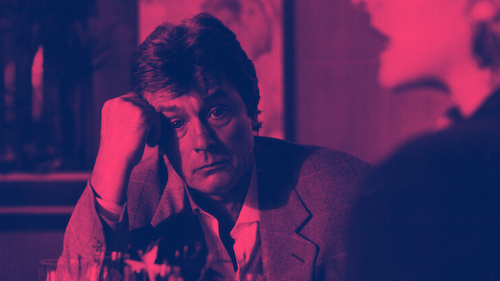
By the time Godard released New Wave (or Nouvelle Vague) in 1990, the French New Wave was old news. Bringing back numerous players in France's cinematic culture (like star Alain Delon), Godard seems to make an effort to try and revisit the style that was once deemed revolutionary; I do believe that the idea is stronger than the end result, but New Wave is still quite a good film on its own merits (but you'd still be better off going back to the sixties for prime examples of what the New Wave can offer; leave this film for the Godard aficionados).
24. Two or Three Things I Know About Her
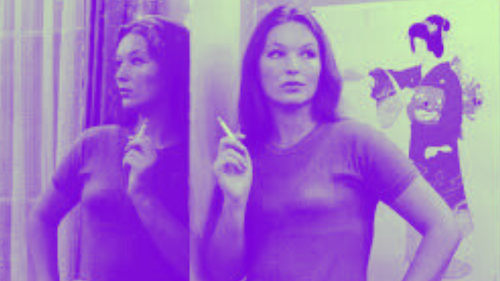
The complexity of internal dialogue is on full display in Two or Three Things I Know About Her, as we follow the day in the life of protagonist mom and wife Juliette. Godard's New Wave film (and an underseen one at that) is a magnification of existentialism and disengagement that exemplifies the hypocrisy of cinematic escapism (something that feels anti Hollywood, but, then again, even Americans were leaning that way during the birth of the New Hollywood movement).

23. One Plus One (Sympathy for the Devil)
The concept of a concert or music film was on the rise during the late sixties, and Godard — of course — obliterates what this kind of motion picture could be before it was even fully appreciated as a means of innovation. Sympathy for the Devil takes a recording session with the Rolling Stones and turns it into a fever dream of comparison and political intrigue. This film won't be for the faint of heart (or those who simply want to hear Mick Jagger, Keith Richards and company shoot the breeze), but those who go in with a Godardian appreciation will find a sublime antithesis of expectation.

22. Notre musique
Everyone has a different perception of an afterlife; oftentimes, we hear religious-based theories like heaven, hell, and purgatory. Godard's Notre musique takes these planes of the afterlife and likens them to political conflicts, colonialism, and other forms of distress. This director — usually known for abrasion — conveys a harmonious triptych, showcasing a mastery of filmmaking to make daring points in the kinds of ways only Godard knew how; this didn't always work, but with Notre musique, Godard feels like he really nailed it.
21. In Praise of Love
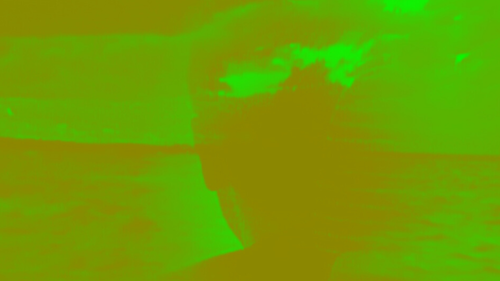
Godard questions the existence of adoration in In Praise of Love, and his conquest is one of his more abstract findings (which, considering this is Godard, says a lot). With major chronological fragmentation, Godard's first film of the twenty-first century is as jumbled as his films ever got (to me, this speaks on the flow of time and the theory that all things — like the concept of love — exist at the same time but we experience it linearly). It may appear hostile on its surface, but digging deeply into In Praise of Love reveals a recontextualization of the romantic genre in a way that obfuscates our clear-cut definition of an actually confusing and blended experience.

20. Made in USA
If you thought The Big Lebowski was as out-there as a loose adaptation of Howard Hawks' The Big Sleep could get, you're dead wrong. Godard's Made in U.S.A. is more than just a comedic crime caper: it is an assault on American filmmaking. Taking jabs at how American films are made while evoking Godard's twisted sense of humour at the same time, this cheeky and meta experience is as intense as sixties Godard got; it possesses his signature sheen during this era, thus making even the film's most unorthodox moments come off with pure style.

19. Here and Elsewhere
Here and Elsewhere might be the most important film in Godard's career when it comes to the evolution of his craft; he worked on this documentary with regular collaborators Gorin and Mieville. While trying to document Palestinian militants for a film commissioned by the Arab League (the film was cancelled after many of the participants were murdered during Black September), Godard resorted to creative endeavors to try and make his film work (including the assembly of contrasting images and sounds). The end result was a eureka moment for Godard: a foray into the ambitious — and exacting — visual essays that would define much of Godard's second phase of his career.
18. The Carabineers
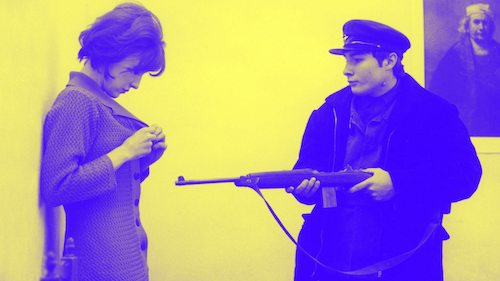
War films are a paradox because so much effort is made into making the choreography, special effects, and performances strong (it comes off as a glorification as opposed to a caution). Godard's The Carabineers is as ugly as war itself: a stripped-down, relentless march towards purpose before it is prematurely terminated. Arguably the first Godard film to lose audiences (the kind who gladly signed up for films like Breathless and Le Petit Soldat), The Carabineers was a warning shot by Godard: he was meant to be uncompromising (even when he was starting to be "figured out").

17. A Married Woman
It was clearly a topic of conversation before the French New Wave got around to it, but the concept of the love triangle seemed prevalent with the likes of Agnes Varda, Francois Truffaut, and Eric Rohmer. One of Godard's answers to this trope, A Married Woman, is another unique take on a tired tale; this time, Godard likens the "fantasy" of a woman being stuck between two men with the superficiality of commercialism and misogyny. He punishes filmmakers who rely on conventions by essentially calling these continued expectations perversions; with A Married Woman, Godard delivers a sensational subversion.

16. Every Man for Himself
Before Godard went "mainstream" (whatever that means by his standards), his return to narrative filmmaking — at least; of sorts — was Every Man for Himself (a confrontation of the erotic genre). One of the handful of films Godard made about sex work (with the kind of vicious honesty that only Godard could provide), Every Man for Himself is a depiction of a nihilistic world that does not care who inhabits it. Godard considered this film a rebirth, considering that he was working with a sizeable budget and had the ability to try something new; Godard's version of "selling out" was to create a wakeup call to all that we are all caught in the same web of lies.

15. The Image Book
I'll never forget the massive line up for The Image Book at the Toronto International Film Festival; without context, it was as if the recent iteration of the cinematic spectacle like Gone With the Wind was in town. In actuality, it was a Godard film essay stuffed with hyper-political sentiments, juxtaposed cacophony, and mind-melting discoveries; I've always likened Godard's avant garde essay films to Captain Beefheart's Trout Mask Replica in the sense that there is a creation of refreshing and untapped genius within the blatant anarchy and heterodoxy. Knowing that this would be Godard's final feature film before his death, this screening of The Image Book felt like both a sendoff to an icon and a projection of how far into the future Godard was with his films (let's see how long it'll take to catch up).
14. JLG/JLG – Self-Portrait in December
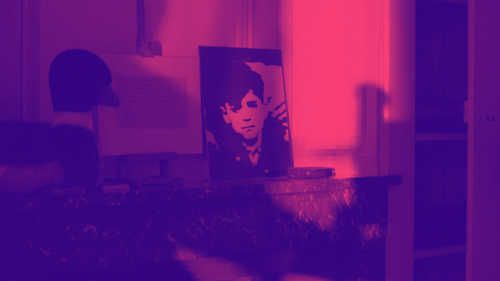
Godard looked at himself through his work, but not as directly as he did in this autobiographical documentary where he questions his place in cinematic history (this is as vulnerable as Godard ever got). Here, the curtain is lifted and there is no separation between this extreme filmmaker and the audience he frequently tested; instead, he is a critic looking at a filmmaker; an audience looking at a body of work; a human being looking back on legacy. It's a rare time where a Godard film can be considered intrinsically exquisite.

13. Une femme est une femme
What replaced Le petit soldat as Godard's second film is Une femme est une femme: a far more conventional effort (his take on a Hollywood musical, which, of course, is not nearly as traditional as anyone else's attempts would be). An engaging love triangle that takes the hardship of life and love and turns these tribulations into a lively spectacle, Une femme est une femme is a sublime daydream of a film; it also happens to be one of Godard's most uplifting and optimistic films (at least tonally), so take from that what you will — I suppose he didn't work exclusively via cynicism.

12. Le petit soldat
Godard's second-directed film was held back for years due to censorship (it might have something to do with its upfront look at the Algerian War and the act of torture as a means of revealing truth, but what do I know). Le petit soldat compares a relationship and interrogation tactics together, as well as likening them to the responsibility of a director who aims to convey a message but may possibly smother and suffocate his audience. This film is a great entry in the early period of Godard's life, but reflecting on how it was actually his sophomore effort reminds you of how gifted he was from the jump.
11. La Chinoise
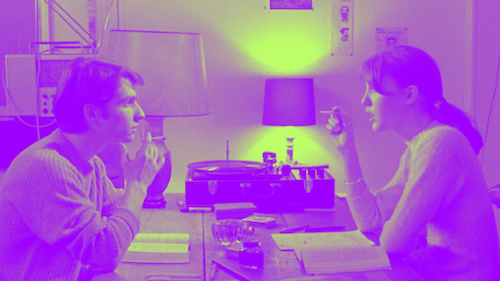
You may have noticed that Godard's films often test the waters of communist theologies like Marxism (what a shock). La Chinoise is this exploration on full display, with a radical story of French students and their attachment to Maoism as a form of rebellion; this film eerily predates the 1968 student protests in France. Even though I have ranked it so low (Godard did make many great feature films), La Chinoise remains one of the most underrated works of his prime; it is as memorable and singular as all of the highly mentioned films associated with Godard and the French New Wave.

10. Goodbye to Language
When people think of the great 3D films during the craze of Pandora, they think of (obviously) Avatar, Hugo, The Life of Pi, and the like. Then, there's Godard's mind-melting, eye-boggling answer, Goodbye to Language: the only film to dare to properly challenge what could transpire with the use of 3D glasses and stereoscopic technology. The entire experiment is phenomenal and the best stand-alone film of Godard's most abrasive style, but the shining moment is when one image splits into two, leaving the viewer to see a pair of separate shots (depending on which eye they were to close and which to keep open). It was a rare moment where Godard wasn't just testing how we interpret films; he was changing how we literally see them, even if for a moment.

9. Alphaville
Godard's answer to films noir is Alphaville: a vision from another reality. While other noir works take place in the underbellies of familiar cities — as to alert us to how much goes on in the shadows of society -- Alphaville transports us to another planet, dimension, and mindset: one that feels like a conjured up nightmare of every noir story amalgamated. A trope of noir is to place you in the mind of the narrator; with Alphaville, our minds get infiltrated with this transmission of chilling lovelessness. As a major noir fan myself, there aren't many films like Alphaville (what can only be seen as a prototype of what neo-noir can be).

8. Week-end
Road films are meant to place the viewer in multiple destinations and allow them to feel as though they are traversing the globe. Godard transports us into the depths of a disturbed mind with Week-end: a road trip from hell. As we follow a married couple who are on the way to murder the wife's parents for inheritance riches, we descend into a reality that simply cannot exist: one of twisted images and orchestrations. Of course, we can state that Godard has truly taken us to a place we've never been before (even if it is the darkest corridors of our mind).

7. Masculin feminin
Possibly in response to all of the sex romp films of the sixties (particularly the boom that emanated from the United Kingdom), Masculin feminin is a curious look at exploration by a slew of lost souls looking for something more. Godard's film winds up throwing up its hands in response to what constitutes as true love and attraction; as it does this, Masculin feminin details its dilemmas via some of Godard's most fascinating cinematographical compositions, so at least you can feel the intended magic between partners within the depths of your heart and soul.
6. Bande a part
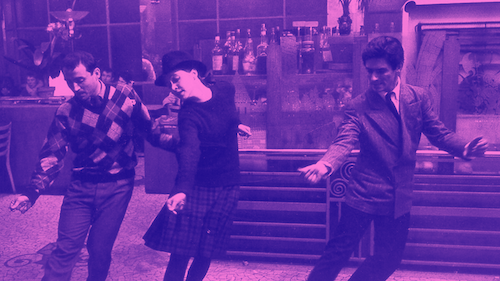
Godard was always pegged as a cinematic instigator, but a time where he seemed to be five moves ahead with intentionally being a shit disturber was with Bande a part: a tale of mischief told with the utmost amount of mischievousness. Bordering on the line of being cartoonish at times, Bande a part is still grounded with its electricity and defiance, resulting in a badass film that plays by its own rules; oddly enough, this can also be seen as one of Godard's more conventional films (perhaps it is the self-awareness here that is appealing, especially the iconic dance sequence that could have lasted for hours).

5. Pierrot le Fou
If Bande a part was cheeky with its defiance, then Pierrot le Fou was downright braggadocios with its refusal to play nice. What starts off as an excursion from society between two malfeasants becomes an act of debauchery against the cinematic medium itself, down to Anna Karina (a frequent collaborator with Godard) literally cutting a section of the film in half. What transpires are acts of desperate devotion by our protagonist, Pierrot, but also by Godard himself with our audience: with a bombastic finale, we see a filmmaker starve to attract the attention of his stirring audience (at least I feel like Godard is feigning this desire for attention that most other filmmakers crave).

4. Histoire(s) du cinéma
Godard's greatest achievement objectively is Histoire(s) du cinéma: a project that took ten years to start and finish. This video essay is more than just a love letter to the art and history of cinema: it is the ultimate test as to what a film can be. With over five hours of experimentation (from juxtaposed images and sounds to drastic cutaways), Histoire(s) du cinéma is a crash course lesson on the medium by breaking it down into fundamental parts and reassembling how these elements can cut back together. This is also a brilliant way to convey how a documentary can be produced: how could an audience be enlightened about filmmaking more than by seeing a motion picture in such a postmodern perspective — one that sees the very medium you are learning about in its disparate parts all at once?

3. Vivre sa vie
Godard's third film, Vivre sa vie, is one of film's great tragedies. We follow the brutal life of one Nana (played by Anna Karina, in what can only be described as the greatest performance in a Godard film by quite some margin) through twelve chapters that get progressively more gut-wrenching, resulting in a devastating final image that you will never forget. Most Godard films leave you thinking once you finish watching them with the propensity for your mind to race with ideas, opinions, and concerns. With Vivre sa vie, Godard has you speechless and unable to come up with anything outside of depressed astonishment.

2. Contempt
Rarely would I call a Godard film beautiful in the conventional sense, and even Contempt isn't quite that, but words cannot describe how magnificent-yet-harrowing this drama is. While Godard usually broke the rules of filmmaking to test the waters, here he uses his powers for good, rendering Contempt a saddening look at separation and the unforgiving art of making motion pictures. The two concepts converge with a jaw-dropping final image of decimation that is heartbreaking but shot as if it were a masterful painting (this may be Godard's ultimate betrayal, and yet proof that he is one of the finest directors of all time).

1. Breathless
Something feels cheap about picking a director's debut film as their ultimate achievement, especially when they have made nearly fifty feature films and dozens of noteworthy titles. However, how could I not pick Breathless? I do want to make it clear that this wasn't a clear frontrunner, and that I think very highly of a number of Godard's works (I seriously consider Contempt as close of a runner-up as is possible, and even on a different day may pick that film as the ultimate Godard film). However, Breathless achieves all of the best qualities of a Godard film — the experimentation, the style, the devastation, the audacity, the passion — and provides all of the above with a kind of effortlessness that feels next to impossible to achieve deliberately.
What propels Breathless as well is how low budget it is; how it was constructed by the efforts of passion and cinephilia. When you think back to your days as an aspiring filmmaker, you think of the rush you have when making and piecing together a film with your friends. Breathless feels like that high exemplified. With other films, Godard was criticizing and analyzing the cinematic arts with a certain profoundness or scrutiny. One of the only times he felt like he was in the trenches was with Breathless: the ultimate statement on filmmaking told by someone at the bottom and with grime on their hands due to their efforts. The end result is otherworldly: a film that exists in our reality yet feels like it is a vision conjured up by external forces. This is how Hollywood is translated in a mind as intricate and theoretical as Godard's. This is what a visceral film by a critic with nothing to lose looks like. With that in mind, I feel like I have to go with Breathless -- one of the great films of the sixties and the ultimate French New Wave title — as Jean-Luc Godard's masterpiece.


Andreas Babiolakis has a Masters degree in Film and Photography Preservation and Collections Management from Ryerson University, as well as a Bachelors degree in Cinema Studies from York University. His favourite times of year are the Criterion Collection flash sales and the annual Toronto International Film Festival.