
All of a Sudden
Written by Andreas Babiolakis
Warning: This review is for All of a Sudden, which is a film presented at the 2026 Toronto International Film Festival. There may be slight spoilers present. Reader discretion is advised.
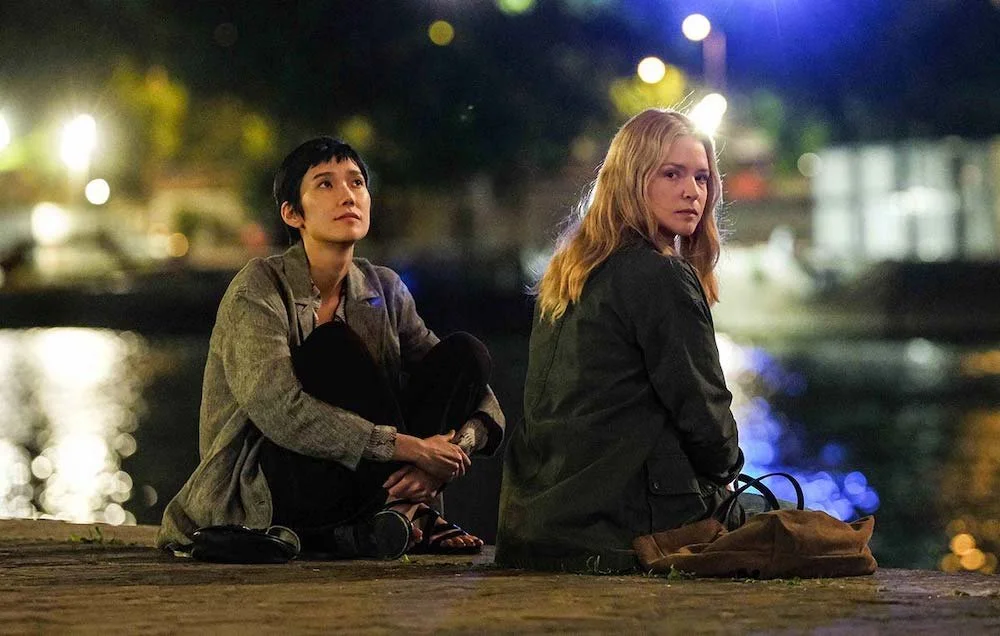
Image courtesy of the Toronto International film Festival.



One of the perennial directors working today has to be Ryusuke Hamaguchi, who is responsible for some of the best films of the twenty-first century. These include Drive My Car and Evil Does Not Exist. Now, we can add another title to this prestigious list of Japanese modern day behemoths: All of a Sudden. A highlight of 2026 cinema, Hamaguchi’s latest film not only continues the auteur’s streak of cinematic excellence, it provides a three-and-a-half hour safe space for lost souls and broken hearts. Sure, you will weep (the entire audience of my screening did), but Hamaguchi never rubs your nose in the misery of his scenarios or characters. Instead, he aims to find truth and comfort within the unfortunate. The duality of the pacing of his films is unmatched; how can a director whose works feel so glacial also zip by us (All of a Sudden did not feel like it was well over three hours)? That is the control of an artist who understands the contrasting speeds of life better than most; it feels (and essentially is) endless, and yet it concludes before you are ready for it to wrap up. This is the same fate for the film: you do not check your watch because it feels too long — you check your watch and wonder how it is already finished. I could have been lost in All of a Sudden for days, but that is also its primary initiative: to remind us of the beauty of being alive.
At the forefront are a part of stunning performances, representing the yin and yang between the curse of mortality and the freedom of expression. We first follow Marie-Lou Fontaine (Virginie Efira — who is essentially a Belgian-French answer to Carey Mulligan), who is a director for a retirement home that treats geriatrics who are burdened with dementia, Alzheimer’s, and other neurological afflictions. She is surrounded by death and deterioration on a frequent basis. After some troubling days at work (between some concerns surrounding patients, and inner-company politics), Marie-Lou feels trapped, burned out, and unfulfilled. While traveling on a train, she comes across a developmentally disabled Japanese man who she rescues and waits with until his caregiver finds him; that caregiver is actor Gorō Kiyomiya (Kyōzō Nagatsuka), and he is joined by the other lead actor of the film, Tao Okamoto (known affectionately and simply as Tao) — who plays a theatre director named Mari Morisaki. Mari and Marie-Lou (their similar names being not coincidental) strike up an instant connection, and the extent of their relationship is never made completely clear; is this strictly platonic, or is there at least a hint of romance between these two spirits? What is blatant is the undeniable chemistry between Efira and Tao, whose love for one another spills off of the screen like a tidal wave — they are as excellent individually as they are together (think Adèle Exarchopoulos and Léa Seydoux in Blue is the Warmest Colour, minus the heaps of sexual intimacy and vulnerability).
Needless to say, there’s a reason why both actors won the Best Actress award together at this year’s Cannes Film Festival. What are the odds that you would find an actor who is fluent in French, Japanese, and English for a role? What about twice? The minimal casting required for All of a Sudden is still miraculous. Characters Marie-Lou and Mari will swap languages depending on the circumstance, conversing in each other’s mother tongue before exploring a back-and-forth mixture of the two. In one of Mari’s stage productions (her first action in the film is inviting Marie-Lou to this very play), Marie-Lou provides a compliment to Mari in Japanese — a language that no one else in the Parisian audience understands. Mari uses this opportunity to confess that she has terminal cancer in her bones, and she has anywhere from three weeks to three months to live; she is revealing this information directly to Marie-Lou, but also inadvertently to the rest of the crowd despite them not understanding what she has said. We now understand the urgency Mari had in inviting Marie-Lou to her play.
Even though we know what is to come, the second act of All of a Sudden is an excursion into the night with both women who are learning more about each other (and, thus, themselves); think Richard Linklater’s Before Trilogy. In that same breath, a common sentiment that is brought up is how little Marie-Lou knows about Mari, and vice versa; is there even enough time to fully explore another being? What transpires more than the discovery of personal provenance is what each woman can offer to the world (separately and unified). Mari has her experimental art that challenges the notions of form and audience participation. She provides musical instruments to her audience so that they can join in on the artistry of her shows; we see a performance where each instrument is briefly played or banged before sound ceases to exist, indicating the uncertainty that her audience has in taking part. Meanwhile, Marie-Lou is trying to offer a style of therapy for her patients that encourages them to be more physical and walk more, despite the risks that may take place. Together, they find a middle ground involving a bodily and artistic healing centre, involving the massaging of the feet of another (since they carry us every day and are barely tended to, and their ability to be connected to many parts of our body). A major theme in All of a Sudden is the act of walking until we cannot no more — literally or metaphorically.
To prove the likemindedness of our leads, Hamaguchi has a nearly twenty-minute (or so it felt) deviation smack dab in the middle of his film — a lecture on the damage of late-stage capitalism (it wouldn’t be a Hamaguchi film without at least one political comment). As Mari draws her thoughts on a white board and Marie-Lou contributes her own musings, we get what starts off as a bit of a funny rant about capitalism. It slowly transforms into an arresting, nearly-philosophical exploration of the irreparable damage caused by corruption, and insight into how the world operates with complete honesty. For the rest of the film (and, perhaps, your life), you will recall Hamaguchi’s teachings on the “outside,” how capitalism leeches onto new ideas all of the time in order to stay afloat, and — the biggest realization of them all — how easily we surrender our lives to capitalism, forgetting how little we have left in the grand scheme of things. For instance, we spend a chunk of All of a Sudden’s runtime to this very topic; Hamaguchi makes sure to keep this point where it is before refusing to be eaten alive by the very concept that he fears (the film, and its audience, are all grateful for this sacrifice and the ability for Hamaguchi to move on).
As one can expect, Mari’s condition gets instantly worse; she did warn us, after all. However, what won’t be as predictable is how Hamaguchi handles such a crisis. In the same way that he explores different types of love without blatant kissing, sex, or intimacy, he explores tragedy without feeling the need to show the suffering and agony of a human being. If anything, this makes the emotional punches land even harder. When we are only aware of the most poetic and happy side of our characters, it agonizes us knowing that there is sadness and misfortune in their lives. Mari gets progressively ill as All of a Sudden marches forth, but we do not see her at her lowest; we see her flourishing. She becomes a bit of an artistic influence at the retirement home that Marie-Lou works at, bringing her actor’s stage show to the lawn of a crowd of mentally unwell patients. Without saying too much about one of the most magical moments of cinema in 2026, there is something about hearing all of the instruments cease to fade out, amidst the accidental chaos and the tender resolution — this is a refusal to die, and a token of how Mari’s influence on the world will ensures that she never disappears for good. We cannot escape mortality, but we can make sure that we can positively help others even after we pass.
Hamaguchi uses title cues written on a white board throughout the film — from the date being written, to a leap in time marked (“two weeks later”), to a blank board that says nothing yet tells us everything. All of All of a Sudden is constructed with this same level of care and precision. Everything from mementos to the way that the sun shines through the foliage of a tree is utilized repeatedly, carefully, and lovingly. There are many films that can change your day, there are far fewer films that can affect how you feel about cinema. There are only a handful of works that can stick with you for your entire life because of their ability to shape how you view your existence on Earth, and All of a Sudden is such a picture. Hamaguchi is no stranger to covering grief — with All of a Sudden, he explores what it means to grieve someone while they are still alive, and how to celebrate them once they are gone. In the extensive runtime of his film, things can take a while to gestate, or they can happen at a drop of a hat. Are we prepared for the good and the bad when they happen?
We become adults and lose our childhood innocence.
We go through tribulations.
We find work.
We lose our jobs.
We find love.
We divorce.
We find love again.
We give birth.
We grow old.
We move in to a new place.
We move past a dark time.
We move on from people.
We die.
All of a sudden.
It is our legacy that is long lasting, not us or our experiences. We have the chance to determine what that looks like. The only joy that can come out of death is being able to celebrate the dearly departed, and grief is the process of trying to figure out how to keep loving when the source of your love is no more. In losing another, we lose that part of ourselves. In that same breath, we can ensure that the departed don’t have to be gone forever as long as we can keep their spirit going. Some things are instant — others are constant. Life is both, and Ryusuke Hamaguchi understands that better than anyone with All of a Sudden.


Andreas Babiolakis has a Masters degree in Film and Photography Preservation and Collections Management from Toronto Metropolitan University, as well as a Bachelors degree in Cinema Studies from York University. His favourite times of year are the Criterion Collection flash sales and the annual Toronto International Film Festival.