
Filmography Worship: Ranking Every Lars von Trier Film
Written by Andreas Babiolakis
Filmography Worship is a series where we review every single feature of filmmakers that have made our Wall of Directors

There are two sides to the coin of Danish auteur Lars von Trier. There is the side of a cinematic master with a firm grasp on the medium down to its fundamentals. A major name in the Dogme 95 movement which he co-created with Thomas Vinterberg, Trier sought to make filmmaking a visceral and intrinsically nuanced medium once more — free of frills, spectacle, and marketability. The Dogme 95 manifesto included rules like shooting strictly on location, the lack of non-diegetic sound, the omittance of filters and effects, and the lack of a credit for the director (so that the film could speak for itself). Trier used these early stages to make films that were punishing yet real, intense yet freeing, artistic yet cursed. Even though he would forgo the general sense of the Dogme 95 movement rather quickly, his films always test the medium and its boundaries quite a bit — from their technical formula to their controversial subject matter (including extreme gore, twisted themes, and heightened sexuality — down to the use of unsimulated sex scenes in a number of his pictures). Trier continued to make solely intense films for the entirety of his life until his retirement in the twenty-twenties (when he developed Parkinson's disease and has since ceased to make another motion picture). Some of his works don't function as well as I would like, but I will always credit Trier trying new things; otherwise, his best films are able to take audiences to emotional and philosophical places that many other auteurs simply cannot. This is one side of the Trier coin.
The other side is the one rife with problematic toxicity: the one that has marred the reputation of someone who could have just been seen as a big risk taker (and, instead, now has many other concerns to answer for). This includes the number of times he has harassed or fully abused women on or off of his sets (most notriously, how he sexually assalted Icelandic singer Björk while shooting Dancer in the Dark); this side of Trier is appalling enough, but his controversy doesn't end there. He famously made an ill advised remark at the Cannes Film Festival while promoting Melancholia at the time, joking that he saw eye-to-eye with fascist dictator Adolf Hitler and that he may be a Nazi (Trier grew up in a Jewish household, even though he himself is not religious). His films themselves are also quite upsetting to varying degrees, from the constant agony that women experience in his works (I would argue that many films below can be triggering, just as a warning) to the abuse of animals in a few of his works (sadly, some cases are quite real, like in the instance of Manderlay). Today, I will be focusing just on the films and how I view them on their own, but I felt like it was necessary to at least discuss some of the external matters of Trier due to how difficult he has proven to be as a person. As an artist, there are times when Trier has struck gold and gotten us in touch with a side of humanistic vulnerability and desperation that didn't seem possible in the medium; I just wish that there wasn't this catch that has made his filmography difficult to stomach for some of you, and I cannot blame you for feeling this way. I will only cover the films as they are in celebration of the many great performances attached to them, unforgettable artistry that can come out, and the side of Trier that has changed cinema for the better (not for the worse). Here are the feature films of Lars von Trier ranked from worst to best.
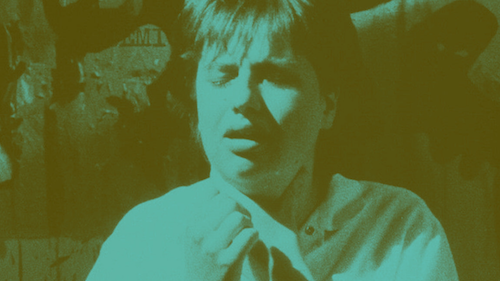
14. Epidemic
I don't really want to place Epidemic last because it has such a fascinating experiment at its core (a meta picture about the shooting of Trier's debut, The Element of Crime, and another project from "this time" that begins to get reflected in real life). However, this is Trier's worst film, plain and simple. Epidemic could have been an intellectual depiction of an artist's craft and their relationship to the masses, but instead it feels like a picture with events for the sake of having events. I don't think Trier exhibited enough control and wisdom when making Epidemic back in 1987 for the film to reach its full potential; instead, it feels like a picture made by a rising director who wants to cry from the rooftops "Look what I can do!" as opposed to showing us his supposed mastery. He would be able to do so soon enough after this film, but this is a sign of a rocky start by a daring director.
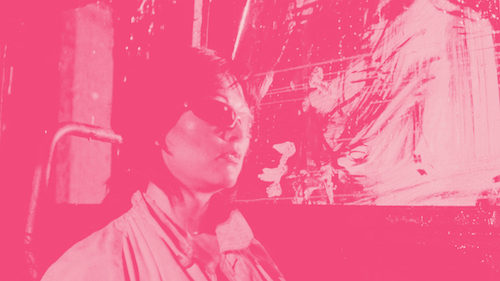
13. The Element of Crime
Trier's career did not start off on the right foot by any means. The Element of Crime is meant to place you in the mind of an awful person (here, it's that of a serial killer) by following a detective who undergoes a questionable method (of trying to empathize with monsters) to find a prevailing murderer. One of Trier's worst habits is forcing a story to have certain plot points in order to shoehorn in his most controversial ideas; while he has been guilty of such throughout his career, it feels incredibly obvious from even this early on that Trier will do anything to get certain taboos to take place in his film. Unlike better Trier efforts, The Element of Crime does not have other things going for it to distract you from the general tastelessness and try-hard edginess that this debut is crushed by.
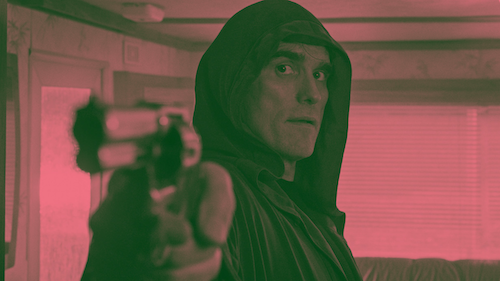
12. The House That Jack Built
If Trier's final film winds up being The House That Jack Built, then his career will conclude on quite a whimper. This picture — about a serial killer's gloating and his provenance as a calculated psychopath — is indicative of the Trier pictures that feel indulgent and provocative to a fault. What are we really learning in a film like this that couldn't be surmised by another stronger film about broken minds (especially in only one or two sentiments, whereas The House That Jack Built insists that it needs two-and-a-half hours to tell us what we could already ascertain). I will admit that Matt Dilon adds some life to this cold and lifeless character, but this feels like one of those times when Trier has made a film just to anger audiences; I get it, but I don't have to like it.

11. Nymphomaniac
I am going to combine both Nymphomaniac films together, since they are meant to be seen as one motion picture. This is such a weird one, folks. When I first saw the edited versions in theatres, I thought Trier was onto something with this ambitious, many-hour effort about a tortured woman's life as a sex addict (and the many people she comes across as acquaintances, lovers, and more). I was willing to forgive some of the more questionable elements (like how this has to be Trier's most self-indulgent picture to date, and the awkward ending full of foley sounds, a lack of picture, and a hasty resolution). I chalked up some of the kinks (heh) to this being the edited version of Nymphomaniac: the one without the unsimulated sex scenes and gratuitous amounts of nudity and fornication. Then, I did what any rational human being would do and watched the extended cut, genitals and all. I liked the project even less. What was once the study of a person's desires to an unhealthy degree wound up feeling like a hypocritical exercise — not to mention that unresolved ending which I can now confirm is one of the worst by any strong director that I have ever seen. Nymphomaniac is occasionally profound but mostly a mess that only ages worse with time (the adverse effect of most Trier pictures).

10. The Boss of It All
When most directors make surprising pictures, it's usually a film that has stepped towards being challenging or unorthodox. With Trier, of course, the only way to approach unpredictability is to make a film that is his most pedestrian. Enter The Boss of It All: a so-so comedy that does try to go the extra mile with its premise (a hired actor who pretends to be the president of a company and the lead of that office's actual boss as an experiment, so to speak). The film is maybe more memorable for what it sets out to do than what it actually accomplishes, but it is also nice to see a Trier film that isn't solely depressing or hostile for once; I wish he attempted more films of this tone and mindset because The Boss of It All is the seedling of a great film; it just feels somewhat incomplete of an idea on its own.
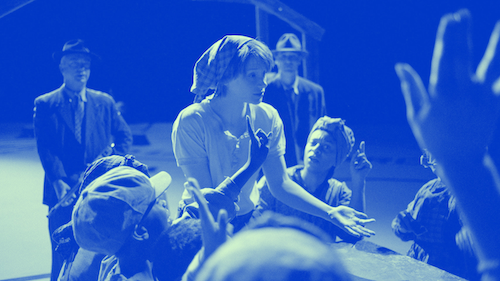
9. Manderlay
After the once-polarizing, now cherished success of Dogville (a film set on a sound stage, bereft of major props and production, and with all actors on stage at once), Trier attempted the experiment shortly after with Manderlay. The second go-around isn't quite as successful, and I think it has taken longer for cinephiles to come around to acknowledge this gripping look at a plantation that has brainwashed its community into thinking that slavery was never abolished (in the thirties). I also don't know if Trier is the absolute best person to be tackling such a subject given his constant leaning towards being dangerous over poignancy, but I will say that he does try to bring a new angle to a previously-attempted cinematic hypothesis to mixed results; there are certainly Trier films that are more frustrating and upsetting than this one, even if its initial reception insists otherwise.

8. The Idiots
For the longest time, I swore that I would never watch The Idiots: one of the most polarizing films ever made. I abhorred the premise of the film: a society of the wealthy elite who feign being mentally challenged and bring out their "inner idiot" as a freeing exercise. Seeing as I like completing filmographies whenever possible, I sucked it up and watched this title that I once declared that I would never come around to. With that now out of the way, I will admit that The Idiots is not nearly as in bad taste as I would have imagined it to be (you never know with Trier), but I still wouldn't call it a successful experiment. Shot entirely on digital and somewhat in the vein of the Dogme 95 mantra, The Idiots does feel like cinema stripped down to its barest form while people bare their souls in these fairly brutal and brutish ways. I also think that it is quite reliant on Trier's worst vice: doing whatever it takes for certain things to take place in his films. If you look at it like Trier unleashing his own "inner idiot", the film somewhat makes sense; otherwise, it is one that I find difficult to gauge and analyze in a thought that is more complete than "this film is everything and nothing at the same time."

7. Europa
Despite all of the harsh things brought up previously, this is where we reach the Trier films that actually work really well (or well enough to write home about). We start with Trier's breakthrough picture, Europa (and, I'd argue, it is his most sensitive film and by far his least deranged). More of a faithful historical insight after World War II, Europa uses the story of a new car conductor for a railway company named Zentropa (a name Trier would use to title his film company shortly after Europa premiered). Trier connects this protagonist to many walks of life to convey the state of confusion and despair after the monstrosities of the Second World War, all cloaked in a visually astonishing black-and-white sheen (considering that Trier gave up aesthetics in honour of the Dogme 95 movement shortly after, seeing this one last visual hurrah is special). Even though Trier was still figuring out how he wanted to tap into the purest hearts amidst the worst of humanity, Europa is a strong preliminary attempt that proves that, occasionally, Trier can not opt to drag his characters through hell just because he, as a director and storyteller with godly power, can.

6. Antichrist
How do you deal with extreme grief? Trier may be a shit disturber by trade, but it’s this kind of anarchistic madness that can lead to intense breakthroughs when it comes to exploring the human experience. Antichrist is a relentless, painful look at loss and exploration after a death in the family, and it takes someone like Trier — a professional buttons pusher — to take viewers to unspeakable places of grim euphoria and crushing depression. Audiences despised Antichrist when it first premiered, and I would argue that some audiences are still sensitive and offended by this viciously taboo picture. However, nowadays, viewers have learned to relish in the woes of misery, the art within atrocity, and the poignancy of the grotesque. During tumultuous times (be they heated climates or traumatic crises at home), Trier reminds us that “chaos reigns.”

5. Dancer in the Dark
I have always liked Trier’s Palme d’Or winning Dancer in the Dark, but I was a little harder on it before. On one hand, this film is amongst Trier’s most inventive. We follow a mother who is quickly losing her eyesight and is working hard in a factory in order to save up for a procedure so that her son won’t go blind like she is. The film culminates the sounds around her and makes the cacophony avant-garde music; it helps that Björk is at the forefront here to make sense of the abstract (also, she delivers one of the greatest and most heartbreaking performances of all time). However, I felt like the film was held back by Trier getting in his own way: via specific conveniences to get the aching results that he craved. It didn’t make sense to me at first. In hindsight and with enough years behind me now, I view Dancer in the Dark a little differently now; Björk’s character doesn’t surrender because Trier wants her to. It’s because she is broken beyond belief and is tired of fighting. I once viewed this as a deus ex machina; I now see it as a realistic tragedy. Dancer in the Dark might be the bleakest musical of all time.
4. The Five Obstructions
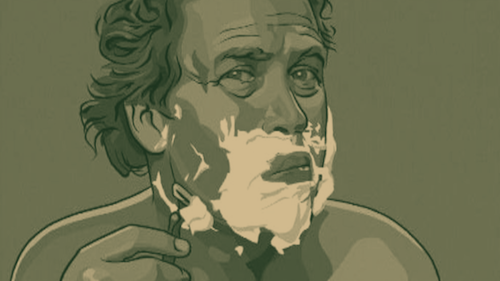
One of Trier’s most underrated efforts is the documentary experiment, The Five Obstructions. Co-directed by Jørgen Leth, the two filmmakers challenge what an adaptation can be via an exemplary process. Trier’s favourite film (at least at the time of this hypothesis) is The Perfect Human (directed by Leth himself); Trier challenges Leth to remake his own film five times. However, like the Dogme 95 movement, Leth can only remake the short film via a set of rules that obfuscate his process (including animating it one time, using limited frames in another instance, et cetera). The end result is an exploration of the filmmaking process and being creative while under duress and limitation. Additionally, Trier and Leth showcase the blessing and fickleness of memory via each vignette of The Five Obstructions.
3. Dogville
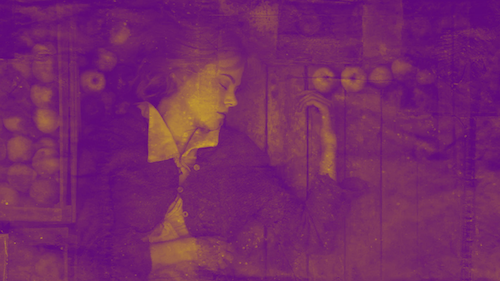
The strongest film of Trier’s that you can call truly polarizing (although its legacy is shining more and more with time) is Dogville, and I firmly believe that its initially brutal reception may be because the film is uncompromising with its vulnerability and uncomfortable honesty. The entire film is shot as though a village takes place on a massive sound stage. You don’t see any production value (sets, props, plants) outside of a couple of exceptions. Houses are sectioned off via markings on the ground. Like the most advanced drama class of all time, Trier opens up this world via nothing but its inhabitants — highly committed actors. However, this is anything but a safe space. Within this open realm is the opportunity to be backstabbed, taken advantage of, and lied to; one of Trier’s most striking sequences is an atrocious act taking place with people surrounding it, unaware of what is happening merely feet away from them (because, again, everyone is actually sectioned off in their “homes”, even if it doesn’t seem like it). Dogville is an effective depiction of how close we always are to evil, and the limitlessness of rage.
2. Melancholia
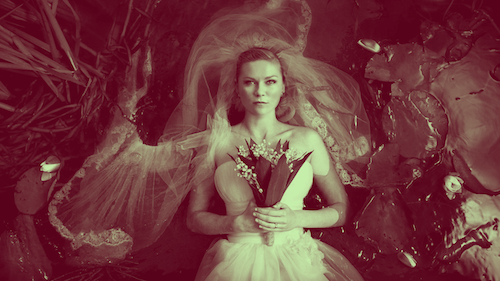
Trier occasionally shows his mature side; sure, he’s incapable of letting go of making difficult cinema completely, but it is nice to see when he is in control of the insane and pulverizing images that he comes up. Melancholia is as beautiful as his films can ever get, and only Trier could make the end of the world look like a dream come true. As an unknown planet approaches Earth and doomsday approaches, the domestic concerns and issues of a dysfunctional family may seem trivial. However, Trier is not comparing: he is correlating. Do our concerns not feel like the universe caving in on itself? This could have been a hyperbolic statement by Trier, but he somehow learned how to be delicate with heaviness this time around. Melancholia is just as uncomfortable as anything else he has made, but because of the film’s gorgeous aesthetics, empathetic tone, and brilliant performances, like the characters within this dismal situation, we can persevere. That planet is no longer the end of all things: it is the light on the other side (in the most obsidian way, of course).
1. Breaking the Waves
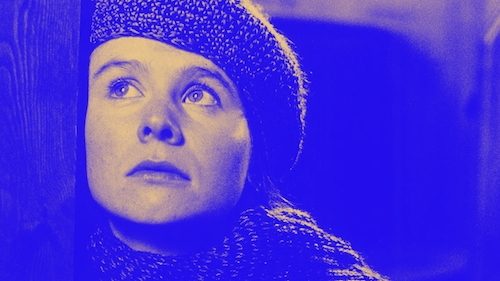
Even though I have ragged on a number of Trier’s films, I will say that picking one solitary winner was no easy feat. Considering the longevity of its legacy, its instantly recognizable brilliance, and the emotional weight that I recall far more than the treacherous road from start to finish, I will pick Breaking the Waves. One of his Dogme 95 projects (even though it broke minor rules, like — let’s be honest — most Dogme 95 projects), Breaking the Waves is just as harrowing as Trier has ever made, but the key difference that sets it apart from his other films is its undeniable golden heart; sure, this film is a part of the Golden Hearts trilogy (alongside The Idiots and Dancer in the Dark), but I feel like Trier gets so cynical with the majority of his films that they often stay within the viewing experience you just had. The most shocking thing about Breaking the Waves is its rampant faith in humanity via its naive protagonist, Bess (played courageously by Emily Watson in her breakthrough performance). I recall my first time watching this film yelling at my television, wondering how someone could blindly drag themselves through chasms of broken glass and thorns all in the name of faith. However, as a character in a near-biblical parable, she is the epitome of light within darkness, and — as difficult as it may be — you cannot give up on her. Somehow, Trier makes her impossible to turn away from, even though she goes through some of the worst pain in cinematic history.
Bess is devastated by the tribulations of life and her mental state has deteriorated over time. With her latest crisis, Bess turns to God for answers and her interpretations of the kinds of crusades and sacrifices “God” asks her to partake in are clearly not omens but, rather, delusions. However, they are true to her. With Trier’s Dogme 95 filmmaking, there is no bones about it: everything Bess conjures up is a figment of her own imagination, and the nightmare she puts herself in again and again (in the name of finally being blessed). We have hopefully never come close to her level of desperation and clueless devotion, but we have been in similar situations at times in our lives: positions where we would do anything for better times ahead. Trier makes God borderline non-existent in Breaking the Waves, so each chapter breaks our hearts further and further; how can Trier let so much happen to Bess? Since Lars von Trier fleshes out his characters so richly this time around (this is not something that he always prioritizes), every pivot feels far more effective, stomach-churning, and shocking. Everything here matters, and there is no way that your soul won’t shatter as you pray for Bess to figure things out, find true happiness, and stop killing herself ever so slowly. As difficult as this film is, Breaking the Waves is a masterclass in resilience and cinematic distress.


Andreas Babiolakis has a Masters degree in Film and Photography Preservation and Collections Management from Toronto Metropolitan University, as well as a Bachelors degree in Cinema Studies from York University. His favourite times of year are the Criterion Collection flash sales and the annual Toronto International Film Festival.