
Filmography Worship: Ranking Every Park Chan-wook Film
Written by Andreas Babiolakis
Filmography Worship is a series where we review every single feature of filmmakers that have made our Wall of Directors

Most encounters cinephiles have with the works of South Korean master Park Chan-wook are ones full of dread, repulsion, and fascination with taboo depictions of crime. It never takes long for those who continue down the path of Park's filmography for viewers to understand that there is far more going on than just the brutality on the surface. From Park's unparalleled understanding of how separate shots can correlate with one another, to his textured aesthetic style, his artistry quickly reveals itself as one of the best of our time. Then comes Park's continued wisdom in the complexity of the human experience and how people are animalistic beings at the end of the day (from our perversions to our morbid curiosities). Once you are able to see all of Park's talking points in the bigger picture, then comes his twisted forms of fun; when you start to find Park's films entertaining and even funny, you may first question him before you truly wonder and worry about yourself. That's half of the experience: learning how far humans can be taken — and, in that same breath, how far Park can take himself and us past our comfort levels.
In that respect, Park can certainly be seen as a contemporaneous, Korean answer to the sensibilities of one Alfred Hitchcock: both are cinematic auteurs who cleverly and continuously pushed boundaries and broke ground. While you can describe some of Park's works as Hitchcockian, he still has his own thumbprint that has become its own source of inspiration. Most directors try to recreate the thrills and mystery of Hitchcock’s films; Park is one of the only disciples who understands that Hitchcock’s films contain a lot of alluring intrigue (creating a connection with audiences before throwing them in for a loop). Even though he has taken on a number of genres and stories, Park is often known for his explicit gore, sexuality, and agony. However, once you dig deeper than these antagonistic and alienating exteriors, Park's films have much to offer in way of reinventing the wheel of any genre, leaving us guessing as compelling character studies, and taking our breath away via the beautiful art found within the carnage. With that in mind, I believe that anyone's order of their favourite Park works will differ and that he doesn't have a clear picture that trumps the others; I hope that you understand and accept the placements that feel truest to me. While I am not including his television series (The Sympathizer and The Little Drummer Girl), nor am I featuring his short films, I recommend checking those out as well. Here are the feature films of Park Chan-wook ranked from worst to best.
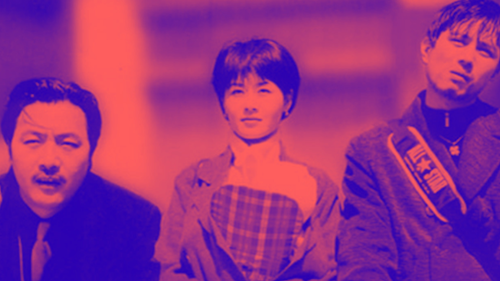
12. Trio
Park's hardest film to locate, his second feature Trio, is also his worst by far. The same director who can easily conjure up inexplicable emotions and ideas at the drop of a hat once struggled to connect and converge his storylines, as can be seen in this triptych of characters and their problems (from suicidal tendencies, to just being incredibly, intellectually slow). What comes off as a Lars Von Trier-esque dark comedy instead just feels tedious, unfunny, and — unlike anything else Park has ever attempted — a try-hard effort on all fronts. Should you go out of your way to try and find the nearly impossible Trio, it should only be because you are a Park superfan who wants to watch everything that he has to offer; otherwise, you might be best staying clear of this clunker.
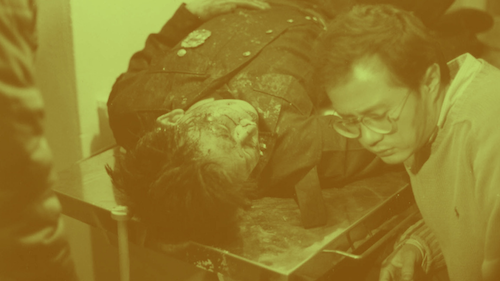
11. The Moon Is... the Sun's Dream
Not far behind Trio is the equally-unsuccessful misfire, The Moon Is... the Sun's Dream. Park's debut film (and, like Trio, one that he has since disowned for obvious reasons), The Moon Is... the Sun's Dream also feels like an idea more than a completed film. The proof of this is in its nonsensical dribble of exposition in the form of trying to tell a story about a gangster caught in a love triangle that I guarantee you won't care about. I slightly prefer this film to Trio because it at least feels a little more streamlined with what it wants to depict: romance within the underworld. However, this is another title that I would only bother with if you want to watch every Park film under the sun (when Park himself refuses to acknowledge these two films, though, is it worth even trying these).

10. Stoker
The rest of Park's filmography is vastly superior, and that graces us with quite a few standout titles that I would recommend. That includes Stoker; whereas I had no issue condemning Park's first two films straight to the bottom, I feel guilty that this gothic psychological thriller has to even sniff the same air as those other two works. Park's first English language film is his unnerving answer to the works of Alfred Hitchcock with this most blatant example. Stoker is the kind of picture that I perhaps underappreciated when I first saw it upon its release. It once felt weird for the sake of being weird, with its premise of warped infatuation and how Park's signature style of oddness didn't translate to English cinema too well (the screenplay is written by — of all people — Wentworth Miller of Prison Break fame). However, years later and having gotten older myself, I view Park and Miller's strange coming-of-age picture to be more engaging than it once was — perhaps it is me looking back and wondering how distraught by grief and isolation I — or anyone else — could have been. It manages to create such a disturbed yet philosophical family portrait; I wouldn't be surprised if it continues to be reassessed by others as the years roll by.

9. Thirst
A vampire film by Park is going to pretty much go exactly how you'd expect it to go. Thirst is quite a riot in such a skewed way; of course, Park can't simply just have vampires be blood suckers — they have to be erotic fiends as well (down to some wild fetishes). However, Park delivers more than just the kinds of kinks that might drive you up a wall. He presents a difficult dilemma between a life of faith that a priest has devoted his life to, and the crazy fantasies that have enriched his life and kept him going. Do you still answer to the protocols that got you this far, and is surrendering to these desires a sign of bad faith? Even though I think that Park has at least one stronger film when it comes to the concept of plunging into the darkest corridors of one's erotic dreams (more on that later), Thirst is a great preliminary try at such a picture.
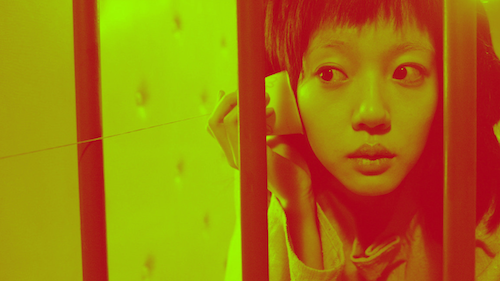
8. I’m a Cyborg, But That's OK
Someone as iconoclastic as Park is still capable of having an underrated picture. In this case, it’s the simplistic yet whimsically warped sci-fi romance, I’m a Cyborg, But That’s OK. Compared to some of Park’s other titles, this fable is far more basic in its premise. Two patients at a mental institution fall in love, with one of them believing that she is an android who needs to be tended to and fed in ways that humans cannot be fed. Although you can instantly spot the problems with such a relationship, Park finds fancifulness and empathy within the deranged (like, I'd argue, he almost always does). In that same breath, this film entertains the unhealthiness of a relationship built on a tormented pair; their hearts might be full, but their minds are clearly shattered. Park is willing to go as dark as he does light with I’m a Cyborg, But That’s OK, and I think it winds up making this lesser-discussed picture an endearing test of endurance.
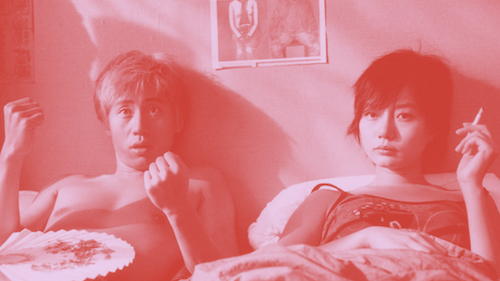
7. Sympathy for Mr. Vengeance
The first — and weakest — of Park's Vengeance Trilogy, Sympathy for Mr. Vengeance, is kind of a remarkable benchmark for the auteur's reputation then versus now. This bloody act of kinetic anarchy was once frowned upon and even panned to some degree; maybe this initial foray into the epitome of Park's haunting, psychotic visions was just too much for audiences back at the turn of the twenty-first century (we are too far gone now, and we now speak the same language). Now, Sympathy for Mr. Vengeance and its desperations and survivalist sadism are sadly too identifiable: Park has told stories about lost causes and tired people brought to the point of insanity, and — even though he has done a better job with such storylines — we can now see that Park was coming from a place of doomed compassion with Sympathy for Mr. Vengeance, not the malice and perversion that he was once accused of solely operating with.

6. Joint Security Area
Park has completely disregarded his first two films and considers Joint Security Area to be his actual debut picture. It's easy to see why when this breakthrough picture is vastly superior to The Moon Is... the Sun's Dream and Trio (and it isn't even close). While his earliest films feigned being elaborate, Joint Security Area is legitimately labyrinthian with its mystery and suspense — surrounding a pair of shootings at the border between North and South Korea. What starts off as an already fascinating premise spirals out of control in this chaotic crime caper. Park thinks bigger and with more earned intrigue with this film that put him on the map. This could have been his career zenith, but Park would only try exploring the miasma within conflict again and again to greater effect; no wonder why he would consider this his start (for the rest of us, it was only the beginning of the unorthodox brilliance to come).
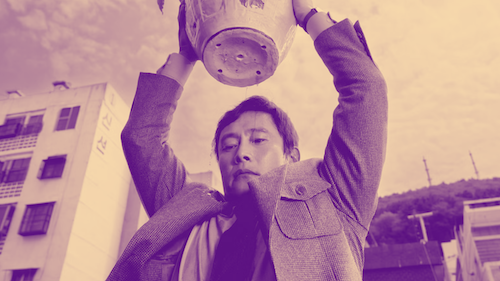
5. No Other Choice
The job market has never been worse in our lifetime; trust Park to find the humour within the misery. No Other Choice sees a husband and father resort to desperate and dangerous methods in order to be considered for a position at another job (or else he and his family lose everything). What is staged as a darkly hilarious game that our poor sob has to partake in (essentially hunting down and killing all of the higher-placed candidates in this hiring process) is the weight of a ton of bricks when it comes to the severity of such a situation; this hopelessness is quite real for millions — nay, billions — of people around the world. Park questions what things look like when you provide everyday people with zero options and they have to act on survivalist instincts (even if they are psychotic). While Park often has to come up with elaborate reasons why his protagonists turn certifiably bonkers, No Other Choice is sadly too identifiable and understandable; it is one of his more timely and empathetic pictures.

4. Lady Vengeance
The last of Park's Vengeance Trilogy is the aptly titled Lady Vengeance, and it is centred around a chilling hypothesis: if someone has the bulk of their life ruined by the false accusation of a crime they did not commit, are they awarded the opportunity to act out said crime out of revenge? Following a wrongfully incriminated protagonist who now wants to kill the real murderer who got away scot-free, Lady Vengeance follows our unfortunate martyr through a near-biblical conquest of anger and damnation — all in the name of seeking justice. While the concept is already a thought provoking one, Park — as he tends to do — goes the extra mile to make us question everything surrounding this unfortunate and bitter case: is murder ever acceptable, and, if so, in what capacity? Lady Vengeance has some of Park's strongest compassion and sympathy — and this is why its grotesquery is even more hard hitting than usual (he still doesn't hold back).
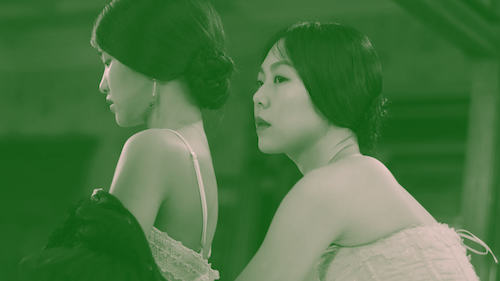
3. The Handmaiden
When filmmakers seek out their erotic picture, they often feel like kids in a candy shop (or, more appropriately, tweens discovering the internet) — they cannot help themselves and their urges and newly found obsessions. Fortunately for the never-conventional Park, who has always dabbled in the pools of the desirable, he already had an idea of how he could approach such a picture. Enter The Handmaiden: his spiciest film. What helps is that Park's period drama — set in thirties Korea, under Japanese rule — is invested in far more than just the exploration of sexuality; it analyzes cravings and secrets of many sorts (from sociopolitical, to yearning). Sure, sex is a major part of the story (and Park does not hold back with these sequences, believe me), but what he is truly chasing after is the feeling of freedom after years of seclusion, misogyny, and societal imbalance in this soul search of queerness, identity, and purpose. The Handmaiden is far more than the scratching of itches: it is the release of pent-up emotions, and the liberation of the neglected.
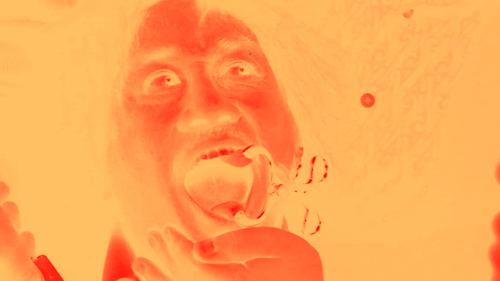
2. Oldboy
Park's most iconic film would have to be Oldboy, and I believe that there are many different relationships that one can have with the best entry in his Vengeance Trilogy. Firstly: the most popular response would have to be "what the fuck" (this is still considered one of the most disturbing and twisted films of all time for a reason). How does someone even come up with a story like this: one where a man is incarcerated and tortured for fifteen years — for no rhyme or reason (outside of being a part of an experiment against his will) — only to be randomly released into society and left with zero help? How does Park conjure up the revenge that this man seeks and what it looks like? I think those who become more familiar with Oldboy see much more within it than just its blood, guts, and jaw-dropping twists (with a final act that will forever make your stomach turn). There is grim remorse within this experiment: the extent of what someone who has lost everything is willing to go in order to reclaim their life (if that is even possible at this point). Unfortunately, we must admit that Oldboy is as scarring as it is because it is secretly empathetic of the human experience, not the contrary (which it wills you to believe); Oldboy hurts so much because Park is actually enlightened and fascinated by people, and so his examples of humanity at its very worst contrast the resilience of human beings (even those who are left with nothing).
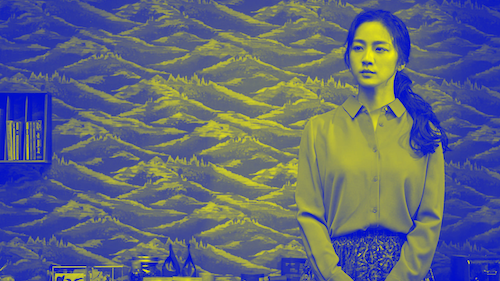
1. Decision to Leave
It might seem wrong to not place Oldboy first — and I do not want any of you proclaiming that I am operating with recency bias (I have caught this kind of accusation before, and I assure you that I am not so lazy and easily-persuaded that I have to insist that every new release is the best; let me put this nonsense to rest before it happens again). However, I have to stick to my guns on this one: I simply believe that Park's magnum opus is Decision to Leave. Exhibit A: this is the most restraint that Park has ever shown. Instead of rubbing our faces in the graphic violence and sexuality of his story like his other films would, Decision to Leave keeps things shielded from us, allowing our minds to outdo Park's gratuitousness (so we become worse than the master of cinematic shock himself). Of course, just seeing Park working differently doesn't instantly make this a better film than the rest, even though the creativity of such a choice works greatly in favour of Decision to Leave. Exhibit B: this is one of the great slow burns in recent memory. The way that this film burrows into your soul — before it impales you with its grasp — is one of my favourite experiences with a Park film; if a major part of the film is the illusion of being under one's spell, then Park manages to make his audience feel just as manipulated. Park understands what many auteurs don’t: in order to cause suspense, you have to draw your audience close enough that any twists will hurt. While his other films can push you away or keep you at arms length, Decision to Leave invites you to peer in the closest; thus, its punches hit far harder.
This neo-noir mystery (one that is less a guessing game than it is a venture forth into the nefarious fog ahead) has our detective investigating a mysterious death when he comes across the departed's widow (played by Tang Wei with one of the most stirring performances of the twenty-twenties). Even if you can predict where Decision to Leave is heading, Park refuses to let you mentally or physically check out, with a film that lures you deeper and deeper into its lore before you are just as vulnerable as anyone else who has surrendered to the darkness. This is Park operating without frills, and somehow he is still able to pull you along, toss you in the dirt, and take you for a ride that leaves you changed, blemished, and affected. As if Park was more transfixed by the ways of classic noir than the imagination of the revisionist methods of neo-noir, Decision to Leave is brooding, beguiling, and harrowing in a classical sense. If anyone ever wanted to take jabs at Park and insist that he cannot operate without tormenting his audience, a film like Decision to Leave proves them wrong instantly. Even without this purpose, Decision to Leave is simply an exquisite film that has haunted me ever since I first saw it. It is a true testament to Park Chan-wook's knack for toying with audiences unlike any of his peers. Decision to Leave is now one of my favourite mystery films in recent memory, and a picture that I believe will only fester within the minds of viewers for entire lifetimes.


Andreas Babiolakis has a Masters degree in Film and Photography Preservation and Collections Management from Toronto Metropolitan University, as well as a Bachelors degree in Cinema Studies from York University. His favourite times of year are the Criterion Collection flash sales and the annual Toronto International Film Festival.