
Filmography Worship: Ranking Every Dziga Vertov Film
Written by Andreas Babiolakis
Filmography Worship is a series where we review every single feature of filmmakers that have made our Wall of Directors

The earliest days of filmmaking weren't about taking us to new places: they were focused on bringing what we already know to motion pictures. Shorts by the likes of the Lumiere Brothers captured everyday occurrences — a train arriving at a station, workers leaving a factory, life proceeding as per usual — and made them something you can view again and again; the mundane became a spectacle. As filmmaking progressed into a narrative medium, that same sense of turning normalcy into magic was far less prominent. Then came Soviet documentarian and theorist Denis Arkadyevich Vertov, known to most as Dziga Vertov. Vertov was a writer first and foremost, but after the Bolshevik Revolution of 1917, Vertov brought his academic foresight to the weekly film series, Kino-Nedelya. His foray into using film as a conveyance of news paved the rest of his career, as he doubled down on the cinematic medium as a documentative vehicle during the silent era.
However, Vertov did more than just document the world around him in an informative sense: he turned news reels and documentaries into art. A major proponent of the city symphony genre (one where documentary films celebrate cities as aesthetic artforms via stunning cinematography, thought-provoking montage, and heightened music), Vertov was bringing things back to the origins of film: a means of showing the world as we know it. With that in mind, Vertov went one step beyond by turning his surroundings and findings into game-changing art. He wasn't just delivering messages: he was redefining how such information could be relayed. What ways could filmmaking provide commentary and declarations that differed from any other medium at the time? By focusing on the mise-en-scene and compositions of his shots, the ways in which his footage was spliced and assembled together, and many other artistic choices, Vertov was teaching audiences how cinema could be a new language. Excluding any of his lost works (since they cannot be seen and reviewed), there aren't too many films (short, long, and massive) to sift through in this brieg-yet-mighty career. Here are the films of Dziga Vertov ranked from worst to best.
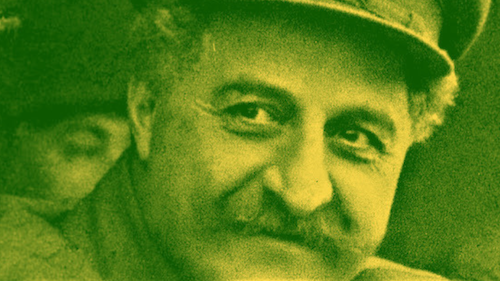
15. In Memory of Sergo Ordzhonikidze
One of Vertov's most traditional documentaries is In Memory of Sergo Ordzhonikidze: a commemoration on the passing of the Soviet, Communist figure. Working together with Yakov Bliokh, this commissioned documentary was meant to capture the grief felt after Ordzhonikidze's passing. It's inevitable for most filmmakers in the Soviet Union back then to make some sort of propaganda film, and I suppose Vertov was susceptible to this as well. Honest or loaded intentions aside, this film is just a drag that feels like an assignment bestowed upon the director, not a project he made out of love.
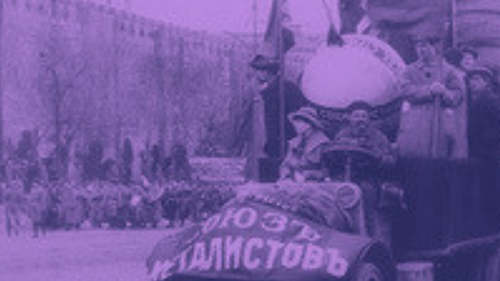
14. Kino Nedelya
Vertov's first film — as it seems — is Kino Nedelya (or Kino Week): an eight-minute collection of newsreel films that Vertov and company made during the 1910s. This feels more like a portfolio of what was already made for preservation purposes than anything else; with contemporaneous eyes, this appears to be more of a neat time capsule that we can reflect upon. However, why settle for Kino Nedelya when you can see a number of other stronger time capsules by Vertov?

13. News of the Day
From Vertov's chronological first project to his last. Between 1944 and 1954 (when he passed away from cancer), Vertov released News of the Day (or Novosti dnya): a weekly news reel series similar to how he started his career. Unlike his works of old, the News of the Day collection was far more restricted and controlled by what the state guidelines dictated, and so you can sense this lifelessness in how the existing remnants of this series feel. Sure, you're still getting a perspective from Vertov, but — in a sterile tone like this — you aren't truly getting Vertov's perspective (hence, what is the point).

12. Soviet Toys
If you only know Vertov for his documentaries, it may surprise you that he was ever affiliated with animation. Soviet Toys is the first animated film in the nations history, all the way back in 1924. Like many gimmicks from back in the day, the appeal may wear off rather quickly. This propaganda short film about a gluttonous capitalist and his endless appetite maybe didn't need to be eleven minutes long (or, let's be honest, exist at all), but I'm sure that the length had to do with the innovation and spectacle of watching these animated caricatures (which must have been mind-blowing back then). Today, this is just a footnote in Vertov's career.
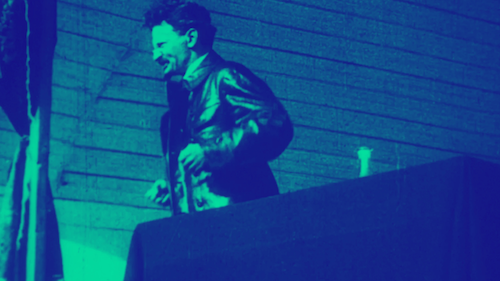
11. History of the Civil War
It's one thing to see the preliminary stages of a modern-day visionary; they've had so many blueprints laid out before them to extrapolate from. When you consider Vertov's formative years, how many other filmmakers were truly pushing the limits before him? What exposure did he have to derive from? The ambition and messiness of The History of the Civil War makes sense: this was a project by a young mind who wasn't sure where he or the medium could go. A documentary about the Russian Civil War of 1918 to 1921, Vertov's picture tries to be and accomplish everything in an hour and a half. I'd leave this one just for the biggest fans of Vertov who might appreciate seeing a Soviet mastermind trying to figure out the bigger picture to mixed results.
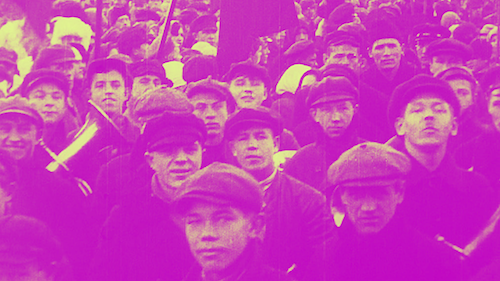
10. Stride, Soviet!
One of the films Vertov was commissioned to make by the Soviet government, Stride, Soviet! is almost a sister film to History of the Civil War (although clearly unintentionally). If Vertov was documenting the ruination of war before, he was then capturing a nation in its rebuilding phase post war: a unity that could fix what was broken and reshape what was obliterated. For an hour, Stride, Soviet! is in the middle of being a city symphony and a clear-cut documentary, so it forgoes a bit of its narrative and political substance for the kind of aesthetic beauty that Vertov would be known for; this is another feature where you can tell that Vertov was gathering his bearings, but he was getting somewhere this time.

9. Lullaby
Vertov made a film about the Russian Revolution of 1917... three times. After Anniversary of the Revolution in 1918, and The Eleventh Year in 1928, he revisited that same well once again in 1937 with Lullaby. This time, Vertov was focusing on the maternal connection within the Soviet Union — how mothers were affected by the revolution during and since. While Anniversary of the Revolution was an early attempt that feels quite bare-bones by Vertov's standards, and The Eleventh Year showed some wisdom and fine tuning applied to the similar structure, Lullaby goes one step too far with its heavy-handed, patronizing propaganda poetry. You can sense the kind of visual motifs Vertov was hoping to achieve here, but you also feel every ounce of the awkwardness and stiffness of this unhealthy devotion (this is possibly the most cultish Vertov has ever felt).
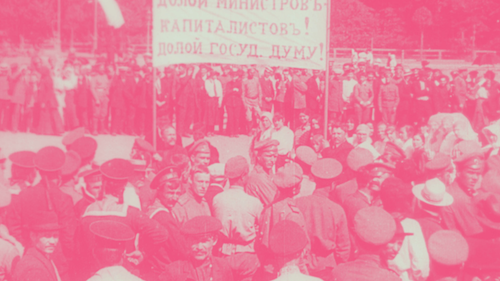
8. Anniversary of the Revolution
Vertov's first feature film back in 1918 is Anniversary of the Revolution. This feels like a leap from his news reel specialty in the sense that Vertov was no longer wanting to deliver snippets of his viewpoints: he was providing a two-hour documentative analysis of the very Russian Revolution that he endured a year earlier. While not the most ironed out picture by Vertov (and one that isn't nearly as imaginative as he would become), Anniversary of the Revolution is still quite a treat to watch in an archival sense — from the ways that passersby treat the camera as a photographic one and not a filmic one, to the political figures popping up like guest stars on a weekly television serial; it's safe to say that the film was made when the medium was still being figured out.
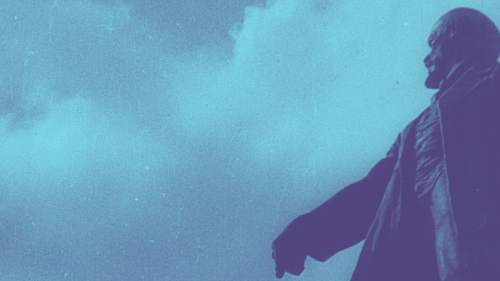
7. Three Songs About Lenin
By 1934, Vertov was becoming more sure of himself as a compiler of information into filmic form, a conveyor of opinions into artistry, and, apparently, a superfan of Vladimir Illyich Lenin. Three Songs About Lenin is quite the tribute: a triptych of vignettes about the titular songs and how they represent Lenin and his teachings... for an entire hour. Equal parts stirring and batty, this passion project is stellar as an art piece yet understandably a bit of an undertaking as a documentary nearly a century later.
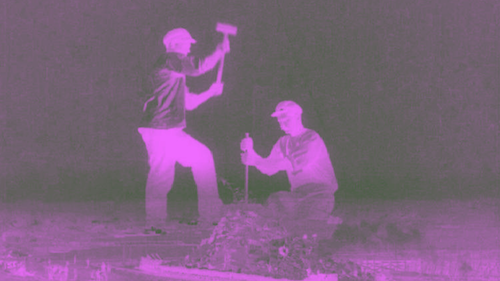
6. The Eleventh Year
Even though Vertov documented the wake of the Soviet Union after the Russian Revolution, he would revisit the subject with The Eleventh Year, well, eleven years later (naturally). Taking place in Ukraine, Vertov's documentary is a strong revisitation when you consider how much he grew as a filmmaker since Anniversary of the Revolution. Furthermore, Vertov is doing more than reassessing previous information with his refined sense of montage, mise-en-scene, and aestheticism. He is seeing what else has transpired in the years after the Revolution and spending fifty minutes contemplating on what is still to come in the next decade and onward. If there was ever a testament that some topics deserve to be rediscovered, The Eleventh Year is that punctuation mark.
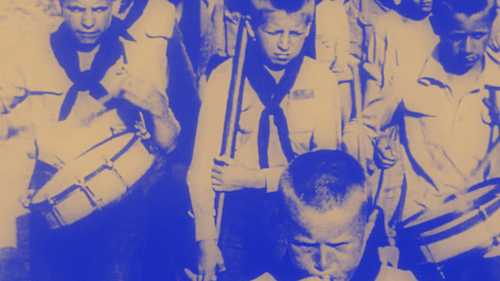
5. Kino-Eye
Instead of solely focusing on the developments and news of his surroundings, Vertov was wanting to find the essences that drove societies big and small when he made Kino-Eye in 1924. What feels like a stepping stone towards his iconic Man with a Movie Camera (more on that film much later), Kino-Eye is a showing-not-telling depiction of a small Soviet village and the many things that make it tick: all of the little joys that keep them (and us) going. While not nearly as avant-garde as Vertov would become, Kino-Eye sees enough experimentation (like showing footage in reverse) that you can call it a step in the right direction for Vertov.
4. Kino-Pravda
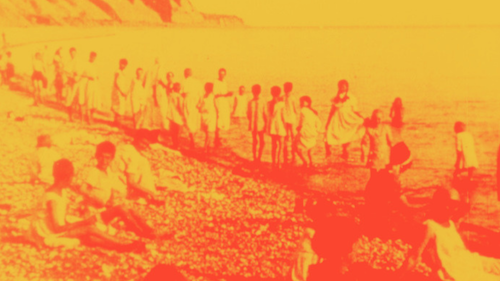
This feels a bit like cheating or being silly to include this collection as a "film", but — if I am including all of Vertov's existing works onto this list — I should include all of his early news reels that were a part of the Kino-Pravda (or Film Truth) series. On their own, these twenty-three segments are just okay: like little blips of information and with different ideas by Vertov each time. This is why I didn't feel like it would make sense to consider each segment individually; how would you rank all of these bite-sized, twenty-minute reels with all of Vertov's other films? When you connect them all together (which is a bit of an undertaking that contemporaneous audiences can undergo), you get a bit more of a postmodern film essay that lasts over six hours. In this whopper of an exercise, you will get a highly in-depth analysis of Vertov's observations and inner thoughts that push the concepts of documentary filmmaking to great new heights (back then and now).
3. Enthusiasm: The Symphony of Donbas
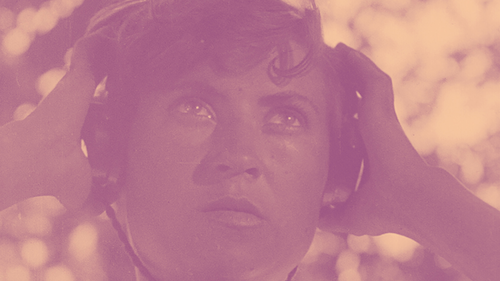
Vertov's first sound film couldn't have just ushered in the technology into the documentary space peacefully. Vertov had to go all-out with a score and soundtrack made up of mostly machine and industrial noise, creating a sonic tapestry of montage in a way that could compete with what Vertov was an expert of visually already. Enthusiasm: The Symphony of Donbas is meant to bolster Joseph Stalin's five-year plan: a manifesto of goals meant to be upheld by the Communist Party. If you are able to look past the blatant propaganda leanings, Enthusiasm: The Symphony of Donbas is a feast for the eyes and ears: a tapestry of audio-visual splendour that you can get lost in like a deep fog.
2. A Sixth Part of the World
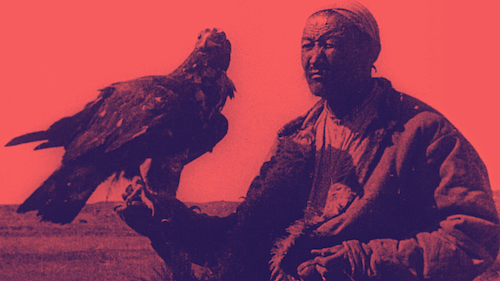
Shortly before his magnum opus (more on that shortly), Vertov was just a hair away from this stroke of genius. This foray into his prime, A Sixth Part of the World, is a travelogue of all of the different parts of the USSR that Vertov thought were worth visiting (or, in his case, turning into living paintings). Vertov put all of his energy into making his homeland and its people look like a masterpiece that had to be shared with the entire world. Now, some of this film has aged quite poorly, including the portrayal of racism in the form of minstrel shows, which I feel like should be flagged before you decide to check this film out. As a documentary on an objective level, there wasn't anything like A Sixth Part of the World at the time: Vertov not only wanted to prove that he came from an enriched and unstoppable land, but that his cinematic talents could prove that the Soviet Union only brought up excellence. Of course, as we all know, Vertov would soon best himself.

1. Man with a Movie Camera
Nothing else could have topped this list, naturally. If you are reading this right now, chances are you have already known about Vertov's greatest accomplishment, Man with a Movie Camera (one of the greatest documentaries of all time). I hope that the rest of this article has helped you discover more about Vertov's filmography. With that in mind, nothing else that Vertov made — good or lacklustre — ever came close to the perennial prestige of Man with a Movie Camera: a film that feels effortless (even at Vertov's other bests, he was clearly trying as hard as he could to make something with his film camera; here, everything comes together like a stream of consciousness to the point that it doesn't even feel crafted by a human being). The very bare-basic premise is that we follow a man and, well, his camera. We see a man standing on top of a massive camera, as if he is to operate it like a motor vehicle; he does, indeed, visit a number of places like a teleporting vagabond. All six reels serve as their own chapters (or destinations, in this case), and you are taken on one hell of a journey through time and space.
Unlike anything before or since, Vertov was letting loose as an artist, using film as his pencil and editing as his paint brush to create an other-worldly stroke of perfection. He super-imposes images on top of others, breaking the foundations of the world as we know it simply by using images he captured from the very place he vowed to reconstruct (this is how you see your city with fresh new eyes). He creates new realities by juxtaposing unrelated images together, provoking our understanding of these separate shots by granting us a new language via these disjointed — yet conjoined — sequences. Consider this: Man with a Movie Camera is equal parts an avant-garde composition and a documentary. How could that be? To me, a film like this went against normalcy and expectation for its time, yet its influence today (and how Vertov proved you could make motion pictures in a different way) has been felt in so many releases (including narrative films as well). Finally, it may go without saying but I feel like I must on a list like this: it's clear that Dziga Vertov got highly involved with propaganda filmmaking throughout his career, and I cannot stress enough how much I appreciate Man with a Movie Camera not feeling like an artificial act of patriotism; instead, its timelessness comes from its universal appeal and the auteur's ability to turn everyday life into superhuman hallucinations, as if our routine existence is actually something psychedelic and on an astral plane. This is its importance as a documentary: it is a piece of evidence that life and filmmaking can be this extraordinary if you just change your perspective.


Andreas Babiolakis has a Masters degree in Film and Photography Preservation and Collections Management from Toronto Metropolitan University, as well as a Bachelors degree in Cinema Studies from York University. His favourite times of year are the Criterion Collection flash sales and the annual Toronto International Film Festival.