
Filmography Worship: Ranking Every Spike Jonze Film
Written by Andreas Babiolakis
Filmography Worship is a series where we review every single feature of filmmakers that have made our Wall of Directors

Not many people in American filmmaking are as versatile and idiosyncratic as Adam Spiegel, who you probably know as his moniker Spike Jonze. Known for his interpersonal independent works that frequently break the mold of metaphysical filmmaking, Jonze is a master of finding both humour and heart in the unexpected. No matter how successful he frequently is, not once do his emotional efforts feel phoned in or insincere. His start is as unorthodox — yet era appropriate — as one can be in this prestigious (and occasionally pretentious) medium: he was a skateboarding photographer and videographer. A member of the iconic magazine Dirt, Jonze broke ground with the de facto skateboarding film Video Days; I won't be covering his skateboarding works here, but if you were to see any of them, this is the one to catch. Not only was he shot up into the stratosphere with this video, but skateboarding culture overall felt untouchable in the nineties thanks to the efforts of people like Jonze. As lore would have it, a number of people affiliated in the skateboarding scene naturally migrated to a certain and infamous franchise of televised and cinematic proportions: Jackass. Jonze and his fellow skateboarding community recognized that they fought through pain to find glory (think of how many failed attempts precede a successful trick), and Jackass — which he co-created with producer Jeff Tremaine and stuntman Johnny Knoxville — brought this sensibility to a whole new level of buffoonery, as our squad perform life-threatening stunts, revolting gags, and callous pranks all in the name of a laugh.
However, Jonze's cinematic eye extended past what he could capture in a documentative sense. Due to what he could capture in short bursts of time via his skateboarding videos, and his ability to add such electricity to both the visuals and the music that accompanies them, Jonze became one of the go-to music video directors of the nineties and aughts; I won't be ranking his music videos here either just because there are so many to sift through, but I think of him in an extremely high regard, and you will find that a large number of his works have made it onto my list of the greatest music videos of all time. Additionally, at a time when music videos could essentially be fully-fledged short films full of story, character, and resolution (think Daft Punk's "Da Funk," where Jonze shows a tale of an anthropomorphic dog with his boombox and a broken leg), Jonze became a major figure in the short film circuit as well with a few highly noteworthy examples. In fact, he maintained a similar approach when it came to making commercials; now, since there aren't too many and because of how similar they feel to his actual short films, these will be included in my ranking below.
Of course, Jonze is best known for his feature films, even though this is his least prolific medium (with four narrative films and a couple of documentaries, he clearly channels a majority of his energy into the plethora of aforementioned works). Just like his music videos, commercials, and even his Jackass work, Jonzes's feature length titles are an amalgamation of awkward and atypical comedy, surreal imagination, excessive heartbreak, and unthinkable levels of pain (be they physical or emotional). Just like anything else he has ever done, his feature films encourage you to think outside of the box. To me, Jonze is that kid at the back of your class in high school who would constantly draw in his notebook (and, let's be honest, on his desk as well). You knew that this kid had a lot of creativity to offer, and you only hoped to get inside of his mind to see how he thinks. If anyone has ever shared his passions with the world and the fascinating way in which his brain functions, it's the ADHD-riddled, limitless, soul-nurturing and crushing works of Jonze. Maybe one day, I will go through an extensive look at all of his skate and music videos. For now, I'll dial things down a little bit. Here are the feature and short films of Spike Jonze ranked from worst to best.

23. The Vampire Attack
Placing this "film" last feels stupid and insensitive, but, if The Vampire Attack is indeed considered a short film (and it is by most metrics and people), then it would have to be last. This is literally nothing more than playful footage between Jonze and child actor Max Records while shooting Where the Wild Things Are, where Jonze pretends to be a vampire and sneak up on his star and prank him. The film is done in less than a minute, and, if anything, it is more of a bonus feature for the affiliated feature film that you are meant to move on from in seconds (which we will be doing shortly, here). I will say that it is rather sweet to see Jonze embracing his child-like side in general, but especially with the film that the two stars here worked on, but there is really nothing more to say about this title.
22. Choose You
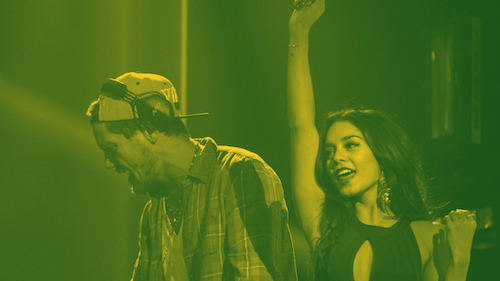
While The Vampire Attack is dead last because it feels impossible to even critique, Choose You is Jonze's worst film in the sense that it feels pointless and actually frustrating. For seven minutes, this short film for the YouTube Music Awards feels precisely like the kind of comedy you would find at such an awards show: awkward and cringe worthy. From the hokey story to the questionable final number, it is easy to never choose Choose You. I feel a little harsh considering the friendly and safe context in which this short was made, but I still do not like it no matter what its purpose is.
21. An Intimate Look Inside the Acting Process with Ice Cube
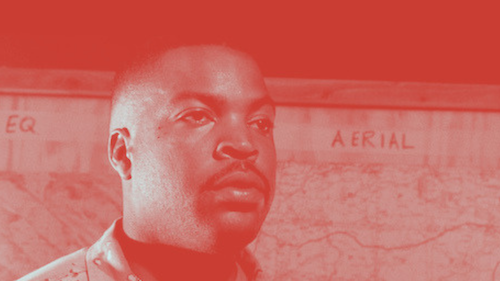
Remember that David O'Russell film Three Kings, in which Jonze appeared as an actor? Well, he made a satirical mockumentary with his co-star Ice Cube, appropriately titled An Intimate Look Inside the Acting Process with Ice Cube. With a name that is almost longer than the short film (which is essentially an extra for the Three Kings physical release), this bonus content is one of those times where I imagine the filmmaking process was more fun than the end result: a joke that we never feel truly a part of.
20. What’s Up, Fatlip?
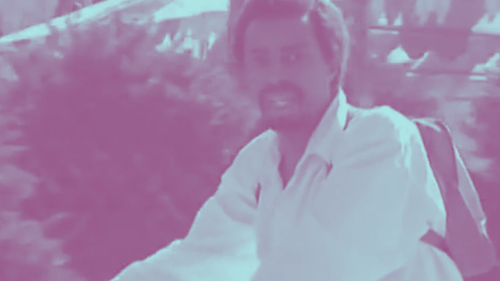
What was once a fairly personable documentary can now be seen in a new light. On one hand, What's Up, Fatlip? takes a once-prominent rapper and follows him around, dispelling the mythos surrounding him (and any other hip hop stars in the early aughts). This isn't just a hard-hitting lyricist: this is a person you can hang out with. Fatlip is no longer a big name, but Jonze's film acts nicely as a time capsule for what once was. In that same breath, much of Fatlip's problematic personality is objectionable, and that sours a documentary like this; why would I want to spend time with someone who can be this hateful and detrimental towards the LGBTQ+ community?
19. Bananas/For Papa
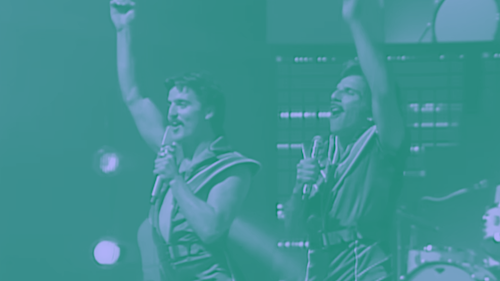
The rest of this list ranges from good to excellent. If anyone should be directing Super Bowl commercials, it's Jonze who turns the coveted spotlight being watched by millions of sports nuts into a playground of epic proportions. Pitting together comedic actor Ben Stiller with contemporary pop idol Benson Boon in a battle of showing off. As infectious as his music videos with even a bit of that Jackass flair in there (with the odd injury), this thirty-second short (or the two-minute variant, For Papa) make for a great time, further proving how much Jonze is capable of in such short time frames. It might seem stupid to rank this high enough, but this is also a lot of fun.
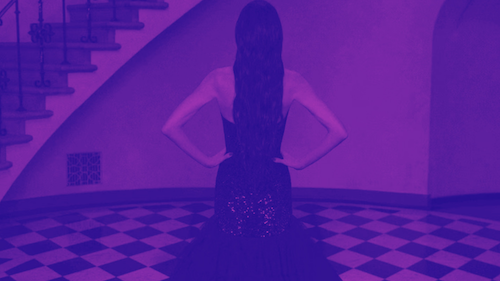
18. The Tiger
If you ever wanted to know what Jonze directing an episode of The White Lotus for an iconic fashion house — and the episode doubles as a cinematic editorial for said company — looks like, then you have oddly specific desires. Additionally, your wish shall be granted in the form of The Tiger: a half-hour short that is meant to detail a new lineup for Gucci International (while also centred around Barbara Gucci). I will say that this "commercial" is far more elevated than it needs to be; while many fashion-related pieces are intrinsically holier than the average person, Jonze brings this world of prestige and glamour down to an understandable, existential level. The film is quite decent with what it is able to accomplish.
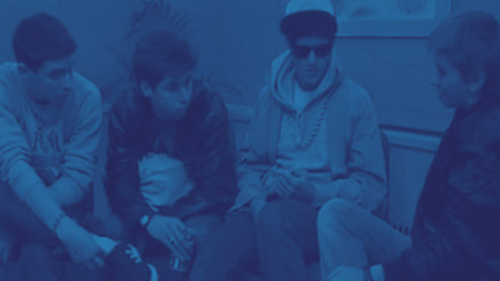
17. Ciao, L.A.
You will soon come to learn of Jonze's heavy affiliation with his fellow New York City brethren, the Beastie Boys, and Ciao, L.A. Is effectively an add on to their iconic music video "Sabotage" (also directed by Jonze). His first short film (in a narrative sense, anyway), you see a young and inspired Jonze wanting to set the world ablaze with a film that doesn't quite carry out the same feistiness and fun of its music video source material. If you want to see Jonze working with his then-partner Sofia Coppola, this could be your opportunity (or, you can opt for his iconic music video "Elektrobank" by The Chemical Brothers, which also features Coppola at her very best as an actor).

16. The Mystery of Dalarö
Another commercial that is styled as a short film, The Mystery of Dalarö is essentially the mystery of who directed such a spot. For years, this vibrant, stunning exposition was credited to one Carlos Soto: a Venezuelan auteur who doesn't exist. "Soto" was promoting the then-new Volvo S40 in a way that surpassed so many other like-minded commercials (this “documentary” about such serendipity somehow turns consumerist means into an event), and it only made sense that Jonze was the mastermind years later when this information was revealed. Leave it to Jonze to have you questioning and gripped by an automobile commercial.

15. Torrance Rises
In case it wasn't obvious, Jonze adores turning downtime into another film. This short is based on his iconic music video for Fatboy Slim's "Praise You" — featuring a stunt performance of the song by a dance troupe in the middle of a bustling city (which freezes still to watch this routine in awe. In response is Torrance Rises: a mockumentary co-directed by Lance Bangs that shows what life was like for the featured Torrance Community Dance Group after the breakout success of this video and their number. In case you wanted a trinket from the gift shop of the wholesome giddiness surrounding this music video, this additional look at an impossibly quaint and sublime blast to superstardom will melt your heart even more.
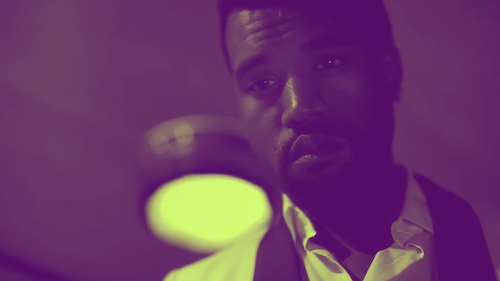
14. We Were Once a Fairytale
Back when Ye — formerly Kanye West — wasn't a complete dipshit, he and Jonze had some magical moments together, including the magnificent music video for "Flashing Lights" (I will quietly ignore the video and song titled "I Love It," which may be one of my least favourite things Jonze has ever been a part of). This short film, We Were Once a Fairytale, sees a then-somewhat-self-aware West focusing on the miasma of the wee hours of the morning — the revealing moments where ego becomes hubris and excitement becomes delirium. This maximalist experiment is a rather strong collaboration between the two battling — and complimentary — imaginations of this pair of endlessly-creative beings during their primes.
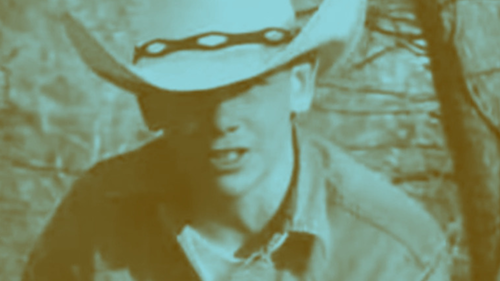
13. Amarillo by Morning
Another form of Jonze turning the hours during projects into their own miniature projects, Amarillo by Morning is a wonderfully seized opportunity. While working on a commercial, Jonze finds two teenagers who innocently — with a hint of sweet naivety — want to become cowboys. So, how could Jonze turn down the possibility of following in their shows (erm, boots)? Amarillo by Morning has Jonze seeing himself in the youth of today; where Jonze wanted to be caught up in the skateboard zeitgeist, he understands the importance of this dream in the youth of then-today. What could have been a bullyish moment is instead an opportunity for the inspired to keep on trucking, and it's kind of magical.
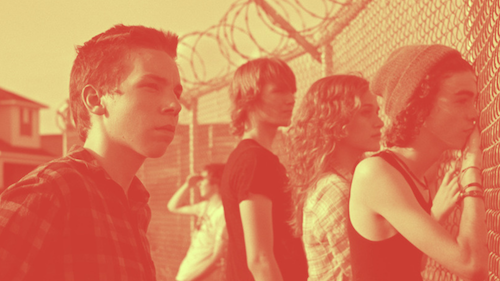
12. Scenes From the Suburbs
Back when Canadian indie outfit Arcade Fire were seemingly unstoppable, Jonze teamed up with them during their The Suburbs era to not only work on a music video, but, rather, to create a short film (which, in return, became a music video for the title track when cut up into a shorter edit). Scenes From the Suburbs is the right project for Jonze: someone who identifies as an adult looking back on his youth with yearning, but who is also capable of being a child at any point in his life. Here, Jonze replicates the ache and whimsy of nostalgia in a way that makes you feel like Arcade Fire is living out your life (one you never even experienced, and yet these memories feel like your own). If music videos prove what Jonze extrapolates from the music he hears, then Scenes From the Suburbs is a masterclass lesson in that very ability.
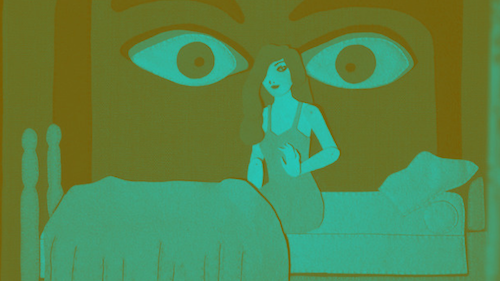
11. Mourir Auprès De Toi
Jonze teamed up with Simon Cahn to create a one-of-a-kind commercial and short film: Mourir Auprès De Toi (or To Die By Your Side). Using clutch bags, garments, fabrics, and other materials to make a stop motion opus that is equally hilarious (in a juvenile sense) and heavy, Jonze and Cahn evoke the kind of innovation that a child possesses when playing with their toys; only here, both directors have the fortitude of having lived through life, and they express their dreads and observations as such (including content that is most certainly not for kids). When so many companies are self-serious, it is nice to see a commercial as playful and off beat as this one.

10. Kenzo World
Perfume advertisements can be full of nonsensical, abstract pretensions used as means to try and convey how a particular smell would "look"; the end result is either inspired or obtuse. Jonze turns this plug for Kenzo World fragrances into a lively short film starring Margaret Qualley (at the start of her prime): what is considerably a music video (of sorts). Delivered at a time when the internet and social media age has stripped much freedom of expression out of the fears of all eyes peering at you, Jonze reestablishes a looseness and a large dose of glee: he finds liberation in not caring about who is watching. This is the kind of spark that you feel in musical films, and Jonze plants it in the vehicle that is often reserved for snobbishness and gatekeeping.
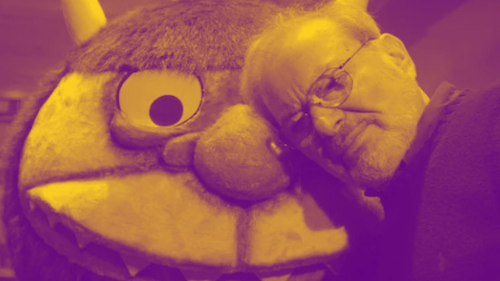
9. Tell Them Anything You Want: A Portrait of Maurice Sendak
While shooting Where the Wild Things Are, Jonze — and co-director Lance Bangs — channeled the inspirations of the creator of this film's source material: children's author Maurice Sendak. All three of these names know what it means to get in touch with your inner kid and set your shyness free; at the same time, none of these people are clueless to the severeness and harshness of the real world. Seeing this trio of visionaries connect and express the drive and influence of Sendak is quite an astonishing affair; of all of the things Jonze created while working on bigger projects, this documentary is one of his finest ideas.
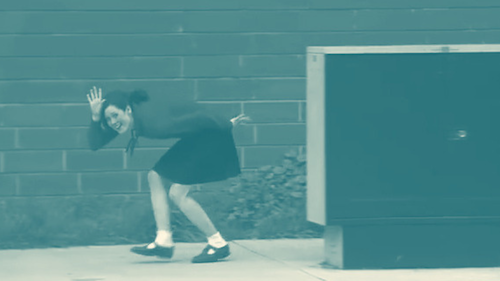
8. How They Get There
Take it from me (someone with ADHD): it is easy for my mind to wander and create bizarre hypothetical scenarios. Jonze puts this phenomenon into practice with his quirky and hilariously-tragic short film, How They Get There. Serving as a purposefully convoluted answer as to how shoes wound up on a curb, Jonze takes us back to a possibly blossoming romance between strangers who mimic one another through mime. There isn't too much to this film that you can plainly describe outside of its three-minute runtime (what you see is what you get), but Jonze's ability to make us care about two characters and feel like we have a complete story in barely any time at all is quite the achievement; why do we have so much stake in these people; why do we care so much about shoes?
7. Where the Wild Things Are
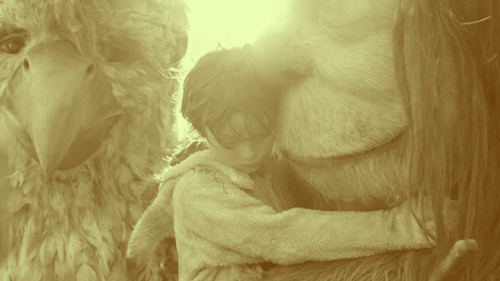
We have finally reached Jonze's narrative feature films, and we kick off with the weakest of the small group. I will use this opportunity to defend his adaptation of Where the Wild Things Are. Yes, this film is slightly cynical and grim compared to the book. Sure, the film is depressing. However, this isn't a film for the kids who could be reading the book; this is for us adults who have already experienced the breathtaking illustrations and unforgettable story. We have aged now. We can revisit the idea of such a world, but we can never lose what we know about reality. Even the happiest beings will be hit with sadness when there is much to be sad about; even through all of this, Jonze isn't losing sight of what makes us young and inspired again. It also isn't as simple as becoming a child again: you cannot shed the scars you now bear. I personally find Where the Wild Things Are quite beautiful and underrated; this is a different approach as to what an adaptation can be, and Jonze has a really good statement to make here.
6. Beastie Boys Story
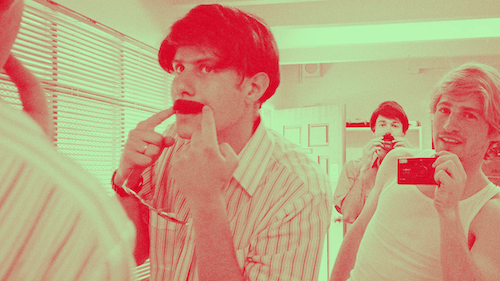
Jonze and the Beastie Boys are like two (or.... four?) peas in a pod: all of these guys are perceived as insipid by outsiders, but those who take the plunge can recognize how clever and brilliant they are as artists and prophets. Years after the tragic passing of member Adam Yauch (may he rest in peace), Jonze rejoined Michael Diamond and Adam Horovitz to recount the salad days when things were simpler (and all four goofballs were making incredible music videos together). Beastie Boys Story is a celebration and a memorial all in one, and it is a great opportunity to really get to know these artists on a deeper level.
5. Welcome Home
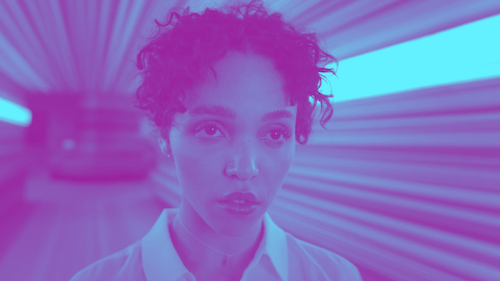
The best of Jonze's short films that double as commercials has to be what he pulled off for Apple (a brand that once invited creativity). For the Apple HomePod, Jonze teams up with dancer and singer extraordinaire FKA Twigs to deliver this mind-melting, heart-exploding piece of eye candy, where the power of music can turn a simple domicile into a wonderland of lights, sounds, and exploration. Jonze and FKA Twigs are sensational partners here, with Jonze sprinting ahead with tunnels of vibrancy (and FKA Twigs effortlessly keeping up and even opting to go ahead whenever she sees fit). This tango between those behind and in front of the camera is so damn special that it almost flummoxes me: how could this have been made to sell a product when the film is this sensational?
4. Adaptation.
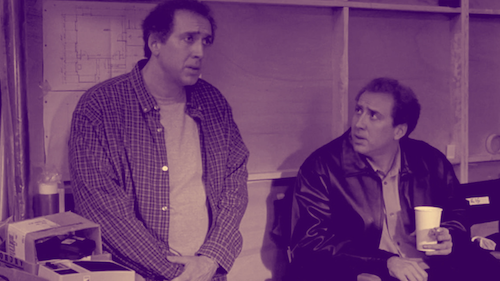
Jonze worked twice with my favourite screenwriter of all time, Charlie Kaufman. The second time, Adaptation., was a major pushing of boundaries for both filmmakers. Kaufman's screenplay is stupidly inventive: it is semiautobiographical in the sense that it depicts Kaufman struggling to adapt Susan Orlean's The Orchid Thief into a film. He fabricates this case of writer's block into a metaphysical paradox between objectivity and subjectivity, and Jonze is there to bring these bizarre visions to life. From splitting Kaufman into two (with a fictional twin brother) to easing in and out of the different "adaptations" (without giving too much away), Jonze speaks Kaufman's language with complete fluency, and the two benefit each other superbly with one of the most creative films of the twenty-first century.
3. I’m Here
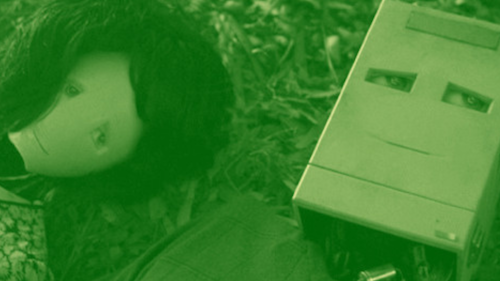
Jonze's best short film has to be I'm Here: what feels like a major precursor to his romantic drama, Her. I'm Here sees two robots connecting in a world where we have never felt so alone (despite how easy it is to make acquaintances and lovers). Released ten years after the wonder, threat, and subsiding of Y2K, I'm Here smartly confirms that much of that sense of discovery and adventure that we once had in the tech age was now long dead. Blending post-apocalyptic robot designs with modern day suburbia, Jonze dials in on the biggest existential dreads and feelings of depression that a modern day American (or citizen of the world) may be experiencing; even in robotic form, Jonze expresses that we are human after all.

2. Her
Remember when Her was first released, and the idea of a person dating his AI operating system felt insane? Over a decade later, not only was Jonze an expert on the particularities of human beings as creatures in the digital age, but he was shockingly accurate as to how connected people would be with artificial intelligence (even on a romantic level). Her is the first feature film that Jonze both directed and wrote. He learned wisely from his collaborators (especially Charlie Kaufman in the case of this film), evoking a world that is more tragic than it is inspirational; how can the information and technological era feel endless if every road drives us back to square one? How can we feel in touch with everything and everyone if we have never been lonelier? Her greatly exemplifies how far humans have come and still how much further we have to go, dialing down on all of the things that make us curious (as inventors, animals, and broken spirits hoping to feel whole again).
1. Being John Malkovich
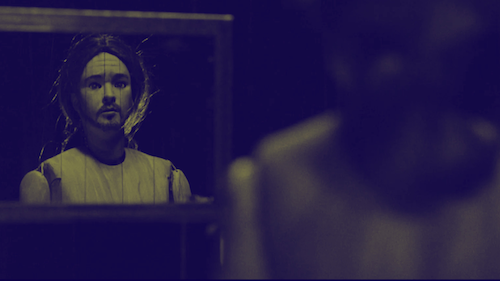
Jonze's debut feature film is quite the benchmark moment for both him and meta filmmaking. I will say that I don't think any film is by far and away Jonze's magnum opus since he is so particulate with what he turns into feature films that each work is a winner in its own way (I would say that this, Her, and Adaptation. are all neck-and-neck in quality, and Where the Wild Things Are is gorgeous and celebratory in its own, unsung right). However, I am still placing Being John Malkovich first just because of how much it speaks to me on a personal level. If Adaptation. is a Charlie Kaufman film that Jonze aided into actuality, then Being John Malkovich — another collaboration between Jonze and Kaufman's screenwriting — is more of a Jonze freak-out that Kaufman is enabling. Both men are the yin-and-yang of contemporaneous, existential filmmaking; Jonze's down beaten optimism perfectly complements Kaufman's stirring anxieties.
In Being John Malkovich, we see a puppeteer who feels unsuccessful in life and in the hot pursuit of that greener grass, be it in the form of the beautiful woman who wouldn't care if he dropped dead, or — the primary conquest — being in control of an iconic actor. John Malkovich is that A-lister (although the film treats him not as the man of the hour, but, rather, an everyday, puzzled citizen who still doesn't get the respect he deserves). Our puppeteer finds a portal into Malkovich's mind (don't ask) and is able to manipulate his host body to live vicariously through someone who has achieved much in his life. Even then, he does not feel fulfilled, nor do most people in this unorthodox tragedy. What is fulfilment if we are not at peace (or, in the case of this story, actually being fulfilled via our own doing)? Kaufman's angst is clearly present in this film, but Jonze steps up to the plate to turn these visions of depression and incompetent incompletion into fever dreams and surreal realities. Here, the sky is the limit, but that still implies that we will hit that ceiling and, thus, be let down sooner rather than later. Is there ever a reality in which we don't feel disappointment?
If Being John Malkovich is — like many of Jonze's efforts across all mediums — about not being in control of life and/or ourselves, I must point out the delightful paradox: the one where Jonze is one of the great controllers of chaos in modern visual storytelling. Either in music, stunt, or filmic form, Jonze knows how to bottle the sensation of collapsing, the boiling points of desire, the bubbling of romance, and the energy of confusion. He knows how to put labels on the inexplicable (hence why he was an early go-to decipherer of Kaufman's labyrinthian stories). He has the wherewithal to find purpose in our most cataclysmic states. With Being John Malkovich, he finds humour in sadness, meaning in disorientation, and truth in the absurd. Jonze was already taken seriously even when he was merely making skateboarding videos, so it isn't as though he had to prove something with this film. However, time as shown us that Spike Jonze used Being John Malkovich not to make a name for himself, but to make many names for all of the feelings and events that we couldn't figure out: that grey area of ambiguity which now feels full of life, even at its dreariest. He has done this time and time again, but I believe that Being John Malkovich is him operating at his very best in such a way.


Andreas Babiolakis has a Masters degree in Film and Photography Preservation and Collections Management from Toronto Metropolitan University, as well as a Bachelors degree in Cinema Studies from York University. His favourite times of year are the Criterion Collection flash sales and the annual Toronto International Film Festival.