
Filmography Worship: Ranking Every Max Ophüls Film
Written by Andreas Babiolakis
Filmography Worship is a series where we review every single feature of filmmakers that have made our Wall of Directors

Some of the most influential filmmakers don't get quite the volume of appreciation that they deserve. Sure, Maximillian Oppenheimer — known to most as Max Ophüls — has been recognized as a major name in thirties and forties cinema, but is that just because of the films he is affiliated with, or because he is actually being recognized as a major player in cinematic innovation? Like many filmmakers from his time, Ophüls started off as an actor first and foremost, and he also worked on the stage. After around two-hundred plays, he wanted to pivot to the film industry instead. Unlike many directors who wanted to recreate what they had accomplished in theatre and replicate it on the big screen, Ophüls became obsessed with what cinema could offer instead of stage productions. He saw ways to make humanistic pictures that swelled off the screen. He had many fascinating female characters that defied the rampant misogyny of the time. His biggest fixation, however, was the option to have camera movement, and he experimented with dollies, pans, and tracking shots more than most other filmmakers of his time. In an Ophüls film, the camera could be a secondary character who is alongside our protagonists. Camera movement could be an extra element of personality or tone, all created via fluid motion.
His life was not as streamlined, however. Born in Germany in 1902, Ophüls had to quickly pivot in the middle of his career when Nazism was on the rise. Ophüls was Jewish and he migrated to France in the early thirties; he would become a citizen of France in 1938. Once France was next to succumb to Adolf Hitler's regime, Ophüls fled to Switzerland, Italy, Portugal, and, finally, the United States (over the course of a few years). Having made films along the way, Ophüls would also release a few works within the Hollywood system in the forties. With him for the entire ride was wife (and actor) Hilde Wall; they were married from 1926 until his passing in 1957 from heart disease. His legacy was continued by son Marcel Ophüls who became a filmmaker in his own right; his documentary, The Sorrow and the Pity, is a masterpiece of the medium, and one that recognized the plight and honoured the perseverance of the millions of people affected by Nazi occupation and the Holocaust (including his late father). What is left is a humble but mighty filmography: one with a couple of well known classics and little treasures that are waiting to be discovered; I hope this list will assist with that. I won't be including his short films, or the projects that he was uncredited for (since it is unclear how much of these films were actually handled by Ophüls); additionally, A Man Has Been Stolen is deemed lost and impossible to find, so I will omit that one as well. Here are the feature films of Max Ophüls ranked from worst to best.
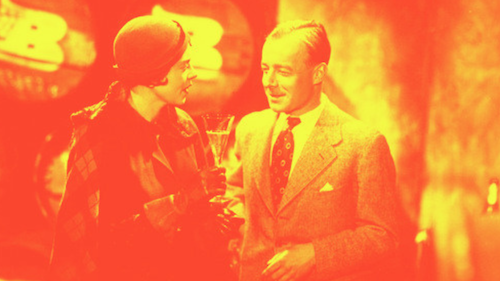
21. Lachende Erben
You know those hypothetical dilemmas that you find online? The kinds that ask if you would live in a creepy cabin for a week to win one-hundred-million dollars (and the like)? Well, Ophüls had his own version back in 1933 with Lachende Erben (or Laughing Heirs). With the frustrations towards Prohibition on the minds of many, Ophüls's film details a peculiar proposal: the opportunity to inherit a massive wine estate, if you do not drink any alcohol for one month. Ophüls's final German film before his departure aims to be a screwball comedy in the style of what Hollywood was starting to churn out, but it doesn't quite get to where it needs to be to be funny, thought-provoking (with its premise), or successful in many ways; at least I would only call Lachende Erben mediocre at its worst, because it is still a bit of an intriguing set up.
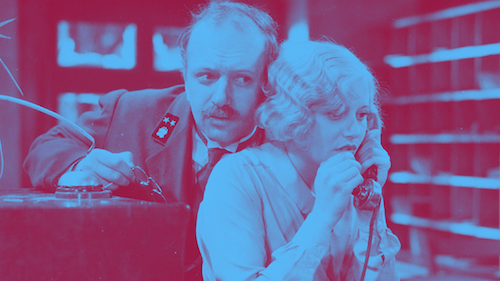
20. Die verliebte Firma
Ophüls's feature film debut, Die verliebte Firma (or The Company's in Love) is meant to be an early expression of his feminist ideology: the cast and crew of a film set who all fall in love with their production's new — and undiscovered — star. I suppose the idea is that the film is that Ophüls is commenting on the awfulness of the men surrounding this leading lady, and many can misread this as Ophüls condoning such behaviour (I feel like Ophüls's point is quite blatant here and in every film of his). However, I also think Ophüls has made better films about the female experience, the subversions of the male gaze, and the capabilities of how films can be made; I'd argue that his first feature film is at least decent.
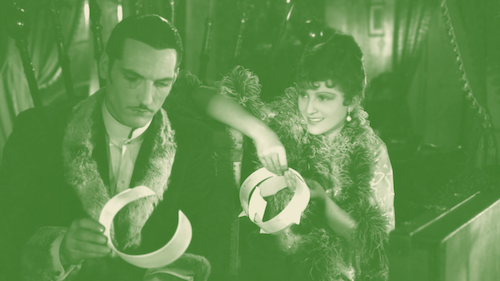
19. La Tendre Ennemie
Ah, yes: the ghosts of Annette's past. La Tendre Ennemie (or The Tender Enemy) is a fantasy-romance flick about a trio of spirits who hope to intervene and aide a woman whose mother has zero clue as to what true love is (they should know: they're affiliated with said mom). You know how a film can have a nice idea and be disappointing? This is kind of the opposite of that notion. La Tendre Ennemie is kind of a baffling concept that just reads as overly goofy, but Ophüls kind of makes it work. His aesthetic eye gets caught up in the spirituality and high-life of marriage to the point that this film at least feels like something substantial and engaging, even if its premise is a little eccentric (I also don't know if Ophüls would have been my first choice for such a story, but he makes it work well enough, even when he is operating against-type here).
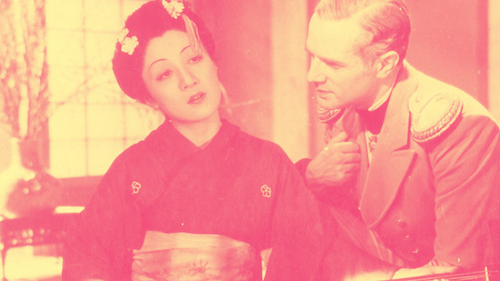
18. Yoshiwara
A naval officer, a rickshaw operator, and a sex worker walk into a bar in the red-light district of Yoshiwara in Ophüls's film (appropriately titled Yoshiwara). This love triangle is reasonably handled, making us care for all three participants for different reasons (and the walks of life they are associated with), and I feel like there is a focus on the world-building structure to capture Japan in the eighteen hundreds. However, I also feel like Ophüls's sets and scope slightly overshadow what is meant to happen in the forefront; therefore, I am left wanting a bit more from this hundred-minute affair (you can argue this is a good thing, but when a film feels empty — as opposed to you wishing it would never end — this is a slight).

17. The Exile
The second of Ophüls's American films is The Exile, but this effort feels much more like a Douglas Fairbanks affair; he did write, produce, and star in it after all. A standard Fairbanks swashbuckling romp (of sorts), The Exile is an interesting experiment on paper; what would it look like it Ophüls tackled a film with action and adventure? Ultimately, the film is not as exciting as it should be; this isn't exactly a film that makes me feel like I am flying by the seat of my pants like these kinds of works usually do. Maybe Fairbanks and Ophüls weren't the best pairing, but I cannot fault the latter for trying to fully embrace the Hollywood life (or the former for working with someone antithetical to these kinds of action pictures). At least there is a bit of a humanistic angle in a film that is otherwise kind of underwhelming.

16. Le Roman de Werther
Ophüls's adaptation of Johann Wolfgang Goethe's The Sorrows of Young Werther is faithful in its directness: the iconic tale of Herr Werther and his romantic predicament doesn't have much embellishing. However, what works in literature won't always translate well to the big screen, and Le Roman de Werther (or The Novel of Werther) kind of just exists. At only eighty minutes, it is at least brief enough that the effects of this rather monotonous picture do not render the film a massive bore. Instead, Le Roman de Werther is quite beautiful to look at and its story is marginally interesting; it just also happens to be a little dull.

15. De Mayerling à Sarajevo
It might be a bit difficult to watch a film like Sarajevo when we all know how World War I started: with the assassination of Franz Ferdinand. However, Ophüls's film is still a little fascinating because of how much backstory he provides to that fateful event in history. I do wish the film focused a bit more on Ferdinand's politics and stature as a public figure; instead, Ophüls and company go the route of the romantic drama by prioritizing his relationship with Countess Sophie Chotek (which, again, is all well and good, but when you only have an hour and a half to work with, I think a film like Sarajevo could have had a bit more to say). This is still solid as is, since Ophüls gets swept away in the idea of his film, but I just wish it was a bit more substantial as a sociopolitical stance and as a biographical picture.

14. Divine
While this rarely happened for Ophüls, Divine is one of the times when the filmmaker got wrapped up in the artistic essence of his film to the point that its rather simplistic story feels a little unattended. Following a woman's efforts to make a better life for herself in Paris (and the tumultuous events that ensue), Divine could have been a more interesting story if it didn't focus so much on the extravaganza of big-city living and the life of a chorus girl. I'd argue that Divine is still pretty good and that his perspective of such a lifestyle (the milieu of showbiz) is worth the watch alone, but Divine also promises a more nuanced and captivating film in a narrative sense; I wish we got that as well.
13. Une histoire d'amour
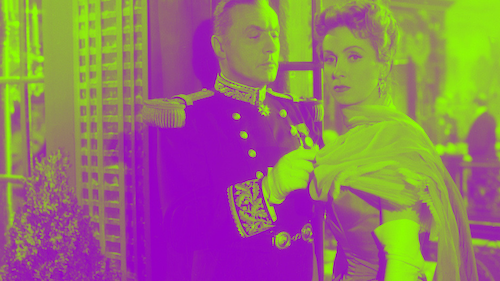
As Ophüls would eventually leave Germany for good due to the rise in Nazism, he would take his talents elsewhere (mainly France). Due to the success of Liebelei, Ophüls would remake this film as a French work titled Une histoire d'amour (or Love Story). Most of the film is still quite good, but I'm not sure what is lost in translation here. Either way, this feels more like the shell of what makes Liebelei so strong: as if Ophüls was more focused on making the same film primarily in French (as opposed to retelling the story with new substance, nuance, and texture). This is a nice film to watch after visiting Liebelei, but it would make more sense to start with Ophüls's stronger work (and the one that is far more memorable to me).

12. Komedie om geld
Like many back in the thirties, Ophüls understood and felt the economic pressure of the Great Depression when making a film like Komedie om geld (or the Trouble with Money). This film details a banker's life and job being tarnished when he fumbles an assignment; however, the film chooses to find levity within tragedy by turning our expectations upside down. While I wouldn't call this a full-on satire, Ophüls's film has enough toothiness to make its statements on societal poverty and our dependency on money known. Komedie om geld is a decent attempt at balancing both serious and entertaining storytelling via a plot that will sadly forever be relevant.
11. Die verkaufte Braut
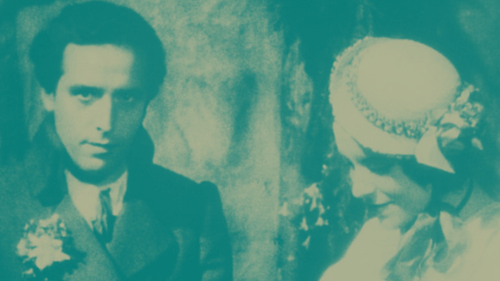
One of the lighter Ophüls efforts, Die verkaufte Braut -- or The Bartered Bride -- is a bit of a fluffy romantic comedy (much in the vein of Ernst Lubitsch) that touches upon a complicated marital situation: the daughter of the town's mayor who is promised and passed around like a hot potato (all with the hopes of good fortune). What elevates this one past being a simple rom-romp is Ophüls's affinity for technical proficiency, allowing the camerawork to add depth and movement; even then, I would argue that Die verkaufte Braut has quite an interesting story because of the director's actual care for his female characters (something many of his peers would overlook).
10. Caught
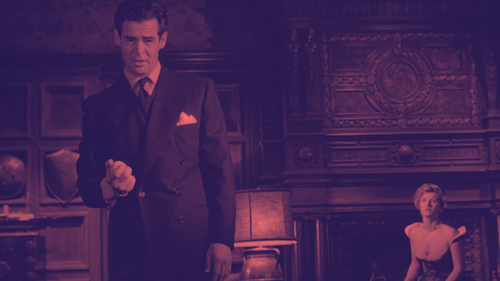
As Ophüls was climatizing to the ways of American cinema, a film like Caught sees him figuring out the ways of the noir picture. What he accomplishes in Caught is quite something: he takes the shadowy aesthetics (which he already specialized in, to be fair) and the introspective dread of films noir and applies it to a poor unfortunate soul named Leonora: someone who keeps hoping for a happier life elsewhere and by any means necessary, only to keep winding up in predicament after predicament. Even though he bumps into the Hays Code's censors a couple of times (and is likely prevented from telling the full extent of his story here), Ophüls is able to get as dark and harrowing as he possibly can in Caught.

9. Sans lendemain
Towards the end of the thirties, Ophüls released one of his heaviest films: Sans lendemain (or There's No Tomorrow). Akin to the neorealist stories that were coming out of Italy, France, and the like, Ophüls's film plants us in the company of Evelyne: a woman who once lived a life of luxury and is now a cabaret dancer in order to make ends meet and support her child. She brushes pasts with her ex who has had a much better life than her, and she is blinded by two ongoing threats: her nostalgia for better times, and her desire for comfort and peace. Released after the Great Depression, you cannot fault Evelyne for her desires, and Ophüls understands this with his fairly-weighty drama that makes the most of its eighty minutes (that feel like an eternity when you are seeing someone's life in turmoil like this).

8. La Ronde
Ophüls kicked off his final decade with one hell of a title: La Ronde. I am usually a stickler for anthology films because many have stories that stand out too much or portions that simply can not match the greater sequences (needless to say, you are almost always guaranteed to get a mixed bag). However, if someone can pull off the anthology film, it's Ophüls (more on that later on as well). One such example is La Ronde and its ability to make each of its vignettes feel like different participants on the whirling circle of life, with each tale as electrifying as the last. Ophüls returned to Europe with such vitality and inspiration when making La Ronde -- as if he wanted to tell many stories at once since he could not contain them all to himself. La Ronde is highly consistent, entertaining, and invigorating as a result.

7. The Reckless Moment
If Ophüls flirted with the idea of films noir before, by The Reckless Moment, he had nearly perfected it. He uses Elisabeth Sanxay Holding's novel, The Blank Wall, as a tabula rasa to detail a major crisis: the actions of a mother who is acting out of fear and desperation. Lucia (played by Joan Bennett) confronts the boyfriend of her teenage daughter, telling him that his dangerous ways and terrible influence make him unfit for her child. Once he winds up being dead and an investigation unfurls, all bets are off on what this means for Lucia and her family. This enthralling story about the dark unknown corridors of the criminal underworld — now open to an unsuspecting family — is one of Ophüls's finest efforts. He knows how to make a camera, a set, and the shadows of a scene loom over a character and try to break their spirit; in that same breath, Ophüls remains hopeful no matter what he tosses at his protagonists.

6. Liebelei
A major slice of Weimer-era cinema, Ophüls's Liebelei is a noteworthy adaptation of Arthur Schnitzler's play of the same name. Historical romances can be so tricky because many filmmakers get caught up in either the love affair over the events they wish to depict, or vice versa (with history washing out any depth the characters should have). Liebelei is a terrific balance between the two, as we are smack dab in the Imperial times of Austria and centred on a lieutenant's dilemma-filled past and present: his indecisive heart, which once partook in an affair with a baron's wife, now bleeds for an everyday, quiet girl. With sociopolitical uncertainty looming over our tragic story, Liebelei is a film that wears its many emotions on its sleeves; you will be floored.

5. Lola Montès
Ophüls ended his career on quite a high note with Lola Montès: a highly bittersweet picture that scrutinizes on the sensation of yearning for yesteryear (something that feels like a tough pill to swallow for any entertainer; Ophüls included). Centred on the titular character — one who used to be a coveted icon who has now been reduced to the humiliating role of a circus act — Ophüls's swansong is hyper familiar with the cost of fame, the sourness of downfalls, and the inevitable fate of being cast out of the limelight. No matter Lola's attempts to reclaim her former glory (or to simply have a better life at all), her cinematic prison forbids her from enjoying the fruits of her former labours. This being Ophüls's final film is darkly ironic, seeing as it can only remind me of the iconic Neil Young lyric: it is better to burn out than to fade away.

4. Le Plaisir
As I have said time and time again, anthology films usually rub me the wrong way. Why have a handful of weaker films by a director when I can have one great film by the same artist? These films can be a recipe for disaster, especially when they force me to compare the stories that are presented to me in one package. However, Ophüls is one of the only directors to successfully — and greatly — crack the code with Le Plaisir: one of the finest anthology films you may ever stumble across. With a triptych of the different ways that human beings find pleasure, Le Plaisir manages to use its anthological nature to make each story bounce off one another to create the overarching depiction of human nature and desire. In this instance, it actually pays Le Plaisir to have a trio of shorts because they benefit one another while being consistently great on their own.

3. La signora di tutti
Ophüls's strongest film of the thirties — his most prolific period — is La signora di tutti (or Everybody's Woman). Released during a time where misogyny was rampant on the big screen, seeing someone like Ophüls stand up for women to this degree leaves me nonplussed — and within such a terrific film to boot. Much of La signora di tutti is based on the acts of blaming and shaming: our protagonist is a student and object for desire when it comes to her lust-filled (and married) professor. After shooting down his advances, he commits suicide. Of course, society cannot deem this teacher insane or unwell, but it is she, the student, who is targeted for the actions of another. Ophüls never loses sight of his message in this shocking, alluring picture that feels quite daring for its time: who else — especially a male director — was making pictures that dared to call out society and the damage of the male gaze back in the thirties?

2. The Earrings of Madame de...
Ophüls become iconic for his camera movement, but his most fluid film he ever made is The Earrings of Madame de...: a glorious exercise in narrative linearity, cause-and-effect escalation, and the spotlighting of the aftermaths and/or consequences of actions. Our protagonist countess has to sell the titular earrings in order to pay off her debts; they were a wedding gift from her husband. Naturally, he is suspicious and hurt when he learns that his wife has "misplaced" her prized jewelry. Investigating their whereabouts, The Earrings of Madame de... turns into a whole different animal when dark secret after dark secret gets revealed, and misunderstandings follow other misunderstandings. The end result is proof that it could have been any item that would have triggered this fallout: this marriage was broken from the start. Ophüls contradicts this downward spiral with framing and movement that feels almost surreal: he captures that indescribable feeling on your worst days where everything escapes your grasp and all of these terrible events are colliding into one another like shifting tectonic plates (and yet we still try to stand). We never do find out the last name of our leads, but, then again, it's not like our husband and wife truly knew each other, anyway.
1. Letter from an Unknown Woman
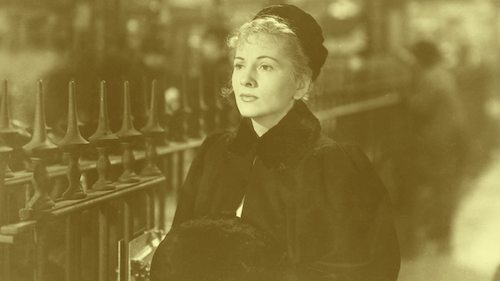
The cinematic romance is a genre that continuously forces the perceptions of a filmmaker onto its audience: this is what love looks like, and you must agree in order to feel the full effect of these depictions. However, some directors have cracked the code by finding universal themes in unorthodox ways, like Wong Kar-wai finding chemistry within restraint in In the Mood for Love, or Sofia Coppola finding coexistence within an existentialist limbo in Love in Translation. For Ophüls, his answer is Letter from an Unknown Woman. In Ophüls's magnum opus, we see a musician who is revisited by a past loved one in the form of a letter. He cannot remember who she is or how he would be connected to her, and so he is left to his own devices to recreate their history together. Ophüls recognizes that many stories of romance are left to the storyteller, but with a film like Letter from an Unknown Woman, this fact is more blatant than ever. Furthermore, how could our lead leave such an impression on another, and yet he cannot recall who she is whatsoever?
However, his memory slowly trickles in, and droplets turn into a tumultuous flood of reminiscing: this woman did have an impact on his life after all. With her story slowly coming into focus at the forefront of this mysterious picture, Ophüls details a forgotten life and the weight that such a lost legacy can carry: how can someone this crucial be lost in the sands of time? Well, a film like this ensures that she isn't. As we keep listening to this letter, we allow a forgotten life to now bear a spirit once more; this is especially true when you consider its final act revelation — one of haunting importance. Just like falling in love is inevitable, so is our mortality, and Letter from an Unknown Woman faces this fate as well. If we are to know what it is like to lose love, we understand the experience of having lost in general; what does it mean to live when we have lost all that has made us worth staying alive? Letter from an Unknown Woman is a sensational melodrama by Max Ophüls made when he had his brief tenure in Hollywood: this cosmopolitan auteur proved that he understood American cinema better than most of the active participants in Hollywood at the time. His wisdom and artistry results in one of the great romantic dramas in film history.


Andreas Babiolakis has a Masters degree in Film and Photography Preservation and Collections Management from Toronto Metropolitan University, as well as a Bachelors degree in Cinema Studies from York University. His favourite times of year are the Criterion Collection flash sales and the annual Toronto International Film Festival.