
Filmography Worship: Ranking Every Apichatpong Weerasethakul Film
Written by Andreas Babiolakis
Filmography Worship is a series where we review every single feature of filmmakers that have made our Wall of Directors

When you think of the greats in the Thai film industry, the slow cinema movement, and queer motion pictures of the twenty-first century, one name encompasses all three realms: Apichatpong Weerasethakul. You will likely fall in one of two camps when you watch his films. The first will find Weerasethakul's films glacial, abstract, and impenetrable. Then, there are those who get mesmerized by his long, static shots that feel like glimpses into a new reality. His works are mostly meditative, looming, intrinsic explorations of one's mind and spirit. Weerasethakul is no stranger to incorporating Buddhist philosophies and practices in his works (amongst other beliefs and ideologies), allowing his stories to not be barked at us or him feeling the need to hook us like we are fish and plot points are his bait. Instead, Weerasethakul's films simply exist, and we can ingest them or not. I feel like his works seep into me on a microbial level. As a non-spiritual person myself, his works feel like the epitome of what cinematic mysticism is and should be — to the point that even his strangest and heavier works can only be described as nourishment for the soul.
A major reason why Weerasethakul's films work in this way is because of his complete devotion to artistic integrity and freedom — something that was challenged by the Thai Censorship Board (which affected how he released Syndromes and a Century: instead of caving to their demands (to recut the film), Weerasethakul pulled the film from its theatrical release schedule. The Board tried to double down with a ratings system that would be operated by the government. In retaliation, Weerasethakul and his peers created the Free Thai Cinema Movement: independently run works that didn't have to adhere to the meddling and censorship of the Thai government. For what it's worth, Weerasethakul's next feature film, Uncle Boonmee Who Can Recall His Past Lives, won the Palme d'Or at the Cannes Film Festival. I — like many — am so glad that he never surrendered.
As a fan of films with lengthy, patient, unflinching shots, Weerasethakul is one of the masters. He makes films that seem to transcend time, space, history, and reality — sometimes all within the same frame. In the most complimentary way possible, his films lull me into a trance: a hypnogogic mindset where I am equal parts soothed and intrigued. His films are as hypnotic as motion pictures get. Even when he gets his most experimental or challenging, Weerasethakul's films are overflowing with serenity: an endless stillness that seeps into my everyday life. It should also come as no surprise that Weerasethakul has made many filmic installations as well — I will not be covering those or his short films, seeing as they seem to serve a vastly different purpose than his feature-length projects (however, I do recommend looking them up if you like what you have seen thus far: they make for fantastic bits of moving visual art pieces). The majority of Weerasethakul's films have left an impression on me, and I think that — outside of one outlier (which I still think is good, just atypical for him) — he has maintained a strong filmic identity that has blessed the twenty-first century with healing, provoking, uncompromised works that will either push you or console you; regardless, you will feel something. Here are the films of Apichatpong Weerasethakul ranked from worst to best.

9. The Adventure of Iron Pussy
The film that feels the least like a Weerasethakul picture might actually embody what he represents the most. That film is titled — with flavour -- The Adventures of Iron Pussy. A co-directed effort with fellow Thai filmmaker Michael Shaowanasai, this camp affair is essentially a massive middle finger to the Thai government's handling of motion pictures. In the style of the comedy, musical, and action slop that often gets championed over art, Weerasethakul and Shaowanasai's satire is a transgressive film that is as much fun as it is a scathing retort. Shaowanasai also stars in the film as the cross-dressing spy (whose name, reflected in the title, at least is pro-feminism, unlike the many awful names that have come out of the early James Bond films). Sure, I can't compare this with Weerasethakul's artsier films which are far more my speed, but The Adventures of Iron Pussy is ridiculously entertaining and a must for fans of John Waters, Jamie Babbit, Vera Drew and the like; for some of you, this may be your favourite Weerasethakul film.
8. Mekong Hotel
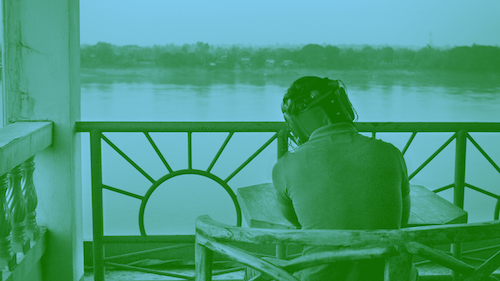
I suppose it's easy to overlook a film like Mekong Hotel when it is released after Uncle Boonmee Who Can Recall His Past Lives. I also think it is the weaker of Weerasethakul's signature-style works, but I think there is a place for it in your life. I think its biggest vice is that this feels — essentially — like one of Weerasethakul's short installations ballooned to an hour long; had it been shorter, it would have nestled in nicely with his other shorts; had it been longer, he could have added more story to create more nuance here. As it stands, this film depicts a hotel near the Mekong river; if the river represents the flow of life — or the passage of souls from the living to the afterlife — then the hotel is that purgatory in between. Weerasethakul allows both mortals and the deceased to coexist in this hotel, sharing their cathartic forms of art (mainly the healing powers of music). Mekong Hotel cherishes the long-standing legacies of meaningful art and how our craft will surpass us once we are gone, but I also adore his take on how the departed are in need of consolation and comfort, too (who is to say a soul will rest just because its host body has been laid down?).
7. Mysterious Object at Noon
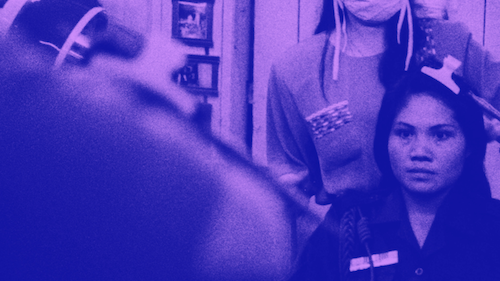
One of the definitions of documentary filmmaking is the accumulation of information from a number of people — pooling together their viewpoints to create one cohesive message. However, Weerasethakul challenges that notion with his spellbinding debut feature film, Mysterious Objects at Noon: one which sees everyday people collecting their thoughts into one continuous story. Based on the concept of the exquisite corpse game (one where people will draw their own limbs and parts to an unspecified being, thus creating a completely unique specimen on paper), Mysterious Objects at Noon is a different kind of documentary because it isn't based on revealing any kind of argument, testimony, thesis, or manifesto — and yet it is still built upon the truths of those who participated. The reality lies within their creativity, and it steers Weerasethakul down a path of inspiration and imagination that not even he was accounting for. When you consider how the mundanity of life for civilians has stripped them of their creative freedom and spirit, a film like Mysterious Objects at Noon pieces together all of the little bursts that they had left; that flame still resides in all of us, even if we don't realize it. Together, an entire burst of collective innovation comes from the voices of the people who knew not how vital their contributions were (and Weerasethakul is their conductor who made it all happen).

6. Blissfully Yours
While Mysterious Objects at Noon is Weerasethakul's feature film debut, his initial narrative effort, Blissfully Yours, was what opened the world up to his then-new style and introduced cinephiles to a tour-de-force mind that would gently come rolling in like fog over an open plain in the wee hours of the morning. This early effort is a highly inventive take on the romantic drama, featuring an illegal immigrant who wants to stay in Thailand with his girlfriend and a maternal-like figure who is in both of their lives. Our protagonist develops a vicious rash: perhaps it is the burning dread within him that he will be caught and sent back to Burma. Almost like a more peaceful approach to surrealism (countering the onslaught of images and thoughts like, say, Luis Bunuel), Weerasethakul's film eases us into the stillness of his coalescing mind. These are not vignettes or parts of a story; they are all blended ingredients of a giant bowl of sustenance and uncertainty. While Weerasethakul would perfect his lush, glacial filmmaking, Blissfully Yours is an early sign that he always knew what kind of motion pictures he wanted to make.

5. Cemetery of Splendour
Weerasethakul explores connective trauma in Cemetery of Splendour: a riveting-yet-languid experience. Following a dozen soldiers who are stricken with a narcoleptic illness, Weerasethakul's film merges awake states with the fever dreams of the subconscious and the afterlife. Even though Weerasethakul is chronicling this epidemic, Cemetery of Splendour never feels urgent or panicked. Instead, his film is almost the acceptance of such a predicament: a surrender which allows the sufferer to find peace. Whether it's the soldiers who are trapped in their sleep states, or the central nurse who is trying to help the ill, Cemetery of Splendour fixates on the concept of self-healing and the understanding of our miniature role in the bigger picture: one which cannot be controlled or changed. Weerasethakul finds harmony within misery, and a film like this one is beneficial to viewers who may need that encouragement. Everything is going to be okay. We are one with the world even if we feel as though we will be removed from or stripped of it. We will never disappear because we will always remain in the greater whole. Cemetery of Splendour is bittersweet tranquility.
4. Memoria
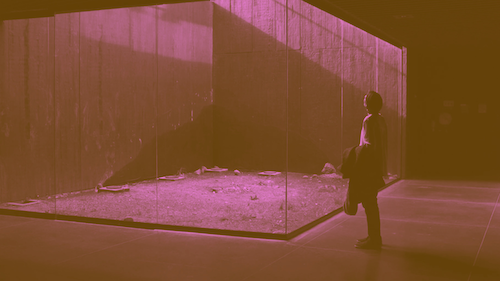
Many international filmmakers struggle to make the shift over to English-language titles. Weerasethakul cleverly made Memoria not strictly a westernized film. Taking place in Colombia, we follow the Scottish expat Jessica (Tilda Swinton, who can do no wrong) and her reoccurring phenomenon: the sound of a sonic boom that no one else can hear. Instead of playing into the tropes of schizophrenia, delirium, or psychosis, Weerasethakul makes Memoria something more interesting: a tapestry of discovery and self-reflection. What starts as a quest for Jessica to try and discover the source of this strange noise winds up being a therapeutic exercise in nostalgia and the art of reminiscing. As if that sporadic sound is a part of Jessica's ever-changing body, Memoria encourages us to accept the new normalcy that aging provides us. However, in typical Weerasethakul fashion, he has to go the extra mile with an ending that changes the whole story; Memoria winds up becoming a testament to our miniscule parts to majestic and miraculous wholes. With such an unspeakable, breathtaking final sequence, Memoria seals its concept of the brilliance of memory by providing us with its own cinematic memento — the likes of which are unforgettable.
3. Syndromes and a Century
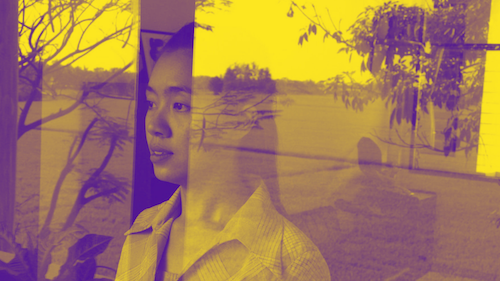
What is memory if it's not our own cerebral memento of how things once were? Syndromes and a Century is a singular love letter to Weerasethakul's parents — both of whom practiced medicine. The same story is effectively told twice: once in Thailand, and once again in Bangkok. While retaining the same characters and dialogue from the first half, the second portion sees slight shifts in what transpires — seeing as these outcomes are what are written in the stars (and in the minds of the storyteller). Then again, it is not the perspectives of both stories that are recounting things differently: it is Weerasethakul himself who is remembering two separate versions of the same truth, making Syndromes and a Century even greater. In a film like this, time doesn't go forward as much as it swirls and manifests through and upon itself, both congealing and branching outward. Syndromes and a Century is not so much about duality as it is unity within the differences and details.
2. Uncle Boonmee Who Can Recall His Past Lives
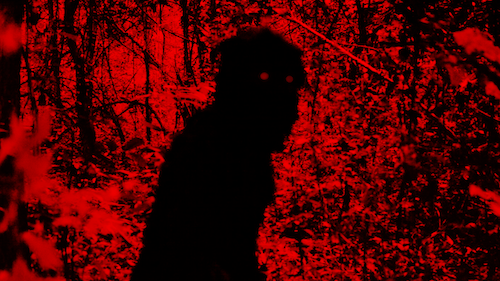
My first Weerasethakul film was Uncle Boonmee Who Can Recall His Past Lives in the middle of one of my world cinema classes. As a burned out film student, I recall — and I mean this as a sincere complement — falling asleep roughly a third of the way through, and waking up a short while afterward. The rare time I have ever fallen asleep with a film, I was bored; waking up felt like a jarring crisis where I was missing information. With this title, I slept because I was consoled and made to feel at peace. I woke up and felt like I was a part of some shared subconscious plane with Weerasethakul. His Palme d'Or winning masterwork is an exemplary look at death: one where our title character's illness does not define him when he is currently dying, dead, reborn, and so much more — all at the same time. Weerasethakul's domestic drama united the living, deceased, and those whose fates are unknown all in one ethereal conquest that simply cannot exist on Earth (and, yet, Weerasethakul makes certain that we understand that Uncle Boonmee does, in fact, take place around us — we just have to open our eyes). Having watched Uncle Boonmee many times since that first brush with it has brought me so much piece of mind while still swaddling me in its filmic blanket; while I have not slept during it since, I still feel just as nurtured and untroubled. Death comes for us all because — to Weerasethakul — we are all one and always have been; we are falling in love with existence again and again, with each time we brush past our loved ones (and ourselves) in this life, in our pasts, and in the lives to come.
1. Tropical Malady
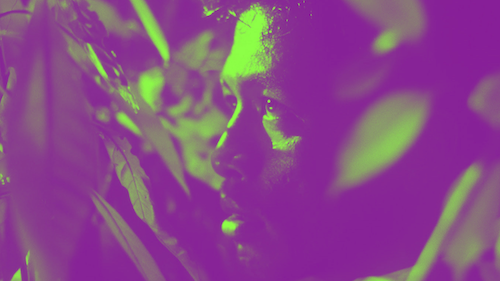
Picking just one Weerasethakul film to champion is no easy feat, when I consider the majority of his films to be arthouse staples of the twenty-first century. Settling on this title is what feels the most correct to me right now, but that could change in the future. I think Weerasethakul has been exceptional at depicting life experiences in such unusual and thought-provoking ways time and time again, but what I presently find to be his greatest experiment is Tropical Malady. Similar to Syndromes and a Century -- in the sense that this is a film about halves -- Tropical Malady encourages us to look at two short stories and how they exist in relation to one another. The first is Weerasethakul's most straightforward story thus far: two men who are in love and are falling into each other's proverbial arms time and time again — their time together is blissful, and Weerasethakul allows us to feel this serenity along with his two leads. Then, there is the starkly different second half: a parable featuring a solitary soldier on the impossible quest to hunt and slay a tiger shaman deep in the jungle. These sound like a pair of unlikely tales, but Weerasethakul assures us that there is a common ground in both stories: finding purpose in ourselves and in others.
Weerasethakul compares being in love to the primal, visceral sensations of fight-or-flight acts of desperation, and he conjoins his stories in contrasting ways. His love story finishes with a looming harbinger of a monster that is going on a murderous rampage: there is trouble in paradise. His second chapter, however, concludes with sacrifice, surrender to temptation, and a stillness within uncertainty and dread: there is now a mutual understanding during a time of tribulation. What does it look like when we lose pieces of ourselves for the ones we love? Weerasethakul picks up the fragments and renders them a part of the mosaic whole: if we are one with those we connect with, then the parts we give up will still be a part of us, if not those we love the most. As if our two stories are connecting like polar opposite lovers, Tropical Malady is a blatantly idiosyncratic film about adoration that is unlike any made before or after it. It feels like Weerasethakul is giving up a part of himself as a romantic in the first half, while serving up a slice of his subconscious existentialism by part two; together, we get the yin and yang of a fascinating auteur who was never one to fall victim to dichotomy. Apichatpong Weerasethakul is one of the most unique voices out there today — with a filmography full of quiet roars. Tropical Malady just might be his masterpiece because it is the one that has made me rethink my own existence and purpose the most.


Andreas Babiolakis has a Masters degree in Film and Photography Preservation and Collections Management from Toronto Metropolitan University, as well as a Bachelors degree in Cinema Studies from York University. His favourite times of year are the Criterion Collection flash sales and the annual Toronto International Film Festival.