
Filmography Worship: Ranking Every Chris Marker Film
Written by Andreas Babiolakis
Filmography Worship is a series where we review every single feature of filmmakers that have made our Wall of Directors

The French New Wave movement saw filmmakers who set out to change the formulas of the cinematic medium. Most of the movement’s more identifiable members, like Jean-Luc Godard, François Truffaut, and Agnès Varda (amongst many others), made pictures that felt highly unique for their time in different ways (either abrasively, like Godard, or more subliminally, like Truffaut). Then came the Left Bank group of the French New Wave (those who wrote for Cahiers du cinéma are considered part of the “Right Bank” group): a division that wanted film to feel more like literature, photography, and other mediums that were not filmic (Varda was a part of this community). This leads us to one of the great film essayists, Chris Marker, born Christian-François Bouche-Villeneuve in Paris in 1921. One of the most intellectual minds in all of cinema, Marker’s works are often documentative in nature (and, even then, he would push the boundaries as to what would constitute as a documentary). To the surprise of no one, Marker studied philosophy in his university days. He serve as a member of the French Resistance during World War II; it was during the war that he took up photojournalism and, subsequently, filmmaking once he met members of the Left Bank Movement. His first assignment was a documentary of the 1952 Helsinki Olympic Games; from that point on, Marker delivered a rather prolific output of features and shorts.
Marker would occasionally collaborate with his peers, including Alain Resnais, Varda, and even Godard; while I usually do not include co-directed efforts on these kinds of lists, I will make an exception here considering how true to Marker’s style all of these works are (including Far from Vietnam — or Loin du Vietnam — which has a staggering seven directorial contributors). Not much was known about his life otherwise. He rarely partook in interviews, and there aren’t even many photographs of him. He saw his films as the only forms of personal revelation that he needed to provide to the world, and, to be fair, he does share quite a bit of himself in these works. Outside of being a highly theoretical thinker, you can see his playful side in the minor shreds of fun (especially in his latter years); he also, clearly, had a fascination with cats that could only be rivaled by Varda. Marker passed away at the age of ninety-one, tragically on his birthday (July 29th). He has many projects that he worked on, but I will try to focus on works that can be considered films (even ones in multiple parts). In that same breath, he has quite a few lost films — like Berlin 1990 and Spectre — that I will not cover; nor will I entertain the ficticious film Le Facteur sonne toujours cheval (although, joke’s on me, I did try to look for it for at least twenty minutes before realizing my idiocy; well done, Marker). Here are the films of Chris Marker ranked from worst to best.

50. Leila Attacks
Leila Attacks is barely a film. It’s a home recording of Marker’s pet — the titular feline — hunting after a rat; the film is slightly over a minute long. Even with his silliest and least serious project (which is also one of his final films, released in 2007), Marker somehow predicted the attention spans and immediacy of the social media age; as a Letterboxd user would proclaim, I’m sure, “Marker would have loved Vine” (but let’s not pretend that he would like TikTok).
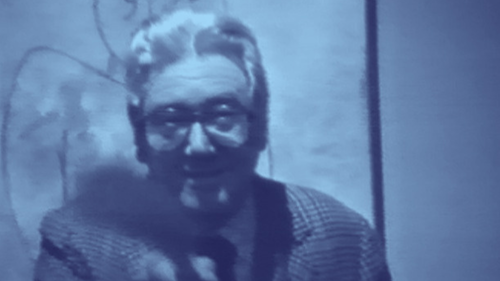
49. Matta '85
What is effectively just a cinematic, fifteen-minute tour of the works of Chilean artist Robert Matta, Marker’s film is more of a travel recording than anything else; while Marker can elevate the concept of filming an exhibit or collection, that doesn’t make Matta ‘85 remarkable in any way. This is for the biggest Marker and/or Matta obsessives and no one else.
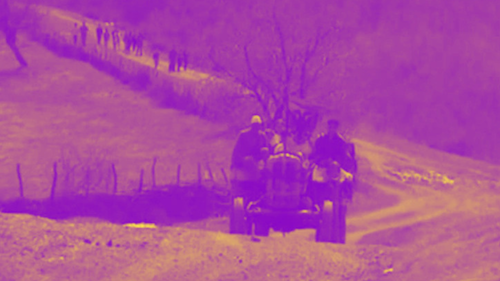
48. Un maire au Kosovo
Marker was almost always excellent at knowing what subjects would make for captivating films; consider that most of this lengthy list is worth watching as evidence of this. However, with Un maire au Kosovo — or A Mayor in Kosovo — Marker's sit down interview with Bajram Rexhepi (the Albanian mayor of Mitrovicoa) the history behind Marker's focal point is interesting enough (the film dives into Rexhepi's viewpoints of a highly stigmatized location and its politics). The film kind of drags on for half an hour and never gives us what Marker sees (which, to me, seems like historical and geopolitical fascination; instead, we get a bit of a humdrum lesson that never ignites).
47. On vous parle du Brésil: Carlos Marighela
In less than twenty minutes, Marker vows to capture the entire life and mythos surrounding Brazilian revolutionary Carlos Marighela, and this short film does its best to detail his importance during the Fifth Brazilian Republic (the military dictatorship which was still going on at the time). This film works best as a memento than anything else, and its biggest detractor is time; we know much more about this tumultuous time in Brazil's history, whereas I can imagine Marker's short film being important for spotlighting these concerns to the public back in 1970. Important yet a little too short.

46. Détour Ceausescu
In less than twenty minutes, Marker vows to capture the entire life and mythos surrounding Brazilian revolutionary Carlos Marighela, and this short film does its best to detail his importance during the Fifth Brazilian Republic (the military dictatorship which was still going on at the time). This film works best as a memento than anything else, and its biggest detractor is time; we know much more about this tumultuous time in Brazil's history, whereas I can imagine Marker's short film being important for spotlighting these concerns to the public back in 1970. Important yet a little too short.
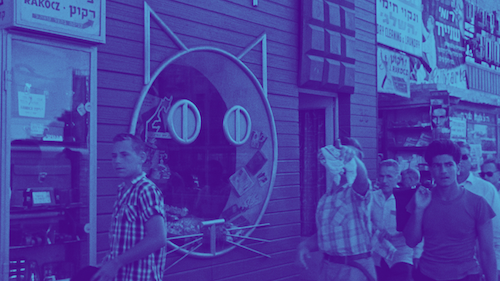
45. Description d'un combat
Marker's Description d'un combat (or Description of a Struggle) is meant to familiarize you with the many historical and cultural shifts in Isreal during its formative years. I find that he gets caught up in the aesthetic makeup of Israel for an hour without getting into the actual crux of the nation's politics (which, oddly enough, is something Marker would specialize in with a majority of his pictures). I'd argue that Description of a Struggle was already quite dated when it first came out because of Marker's more shallow look at Isreal, but it is even more so nowadays for clear reasons; this film could have been far more substantial than Marker's fleeting fancies seen here.

44. Quand le siècle a pris formes
While more of an installation than an actual film, I am including Quand le siècle a pris formes here as a "short" of sorts because of its correlation to one of his greatest accomplishments, A Grin Without a Cat. While clearly far shorter at just fifteen minutes in length (compared to the other film's four hours), this experiment — intended to be seen on twelve monitors (which a recording of the installation, seen online in various recordings, cannot do proper justice) — is as thought provoking as you would imagine it to be. However, it does feel exactly like what it is: an epilogue to one of his finest works that was meant to be experienced in person. I wouldn't bother watching this until you have seen A Grin Without a Cat, and, even then, you will likely not get the proper experience that Quand le siècle a pris formes deserves (just like I didn't).
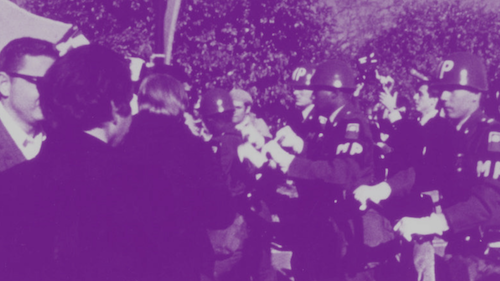
43. La Sixième face du Pentagone
Marker joined forces with Francois Reichenbach to make La Sixième face du Pentagone (or The Sixth Side of the Pentagon): a documentary short about a protest in Washington, D.C. that rebelled against the Vietnam War. A more direct approach than Marker would typically take with such a documentary, this film slightly suffers from hand-holding via narration and a lack of additional insight from the filmmakers who could clearly offer more. Having said that, this film still speaks volumes with its intense images, but I also feel like these issues have been captured in stronger ways before and after this short.

42. Junkopia
I know it's in the name of the approach, but some short films are simply too short. Junkopia sees Marker documenting a series of installations that take discarded trash and turn them into fascinating sculptures and builds. Marker joins Frank Simeone and John Chapman to turn these recycled artworks into a living — nearly breathing — exhibition that I wish wouldn't ever end; just six minutes of such informative bliss feels like an unsatisfactory tease. If Marker's Statues Also Die was a documentary about provenance, then Junkopia is a prediction of the future kinds of archeological discovery (and this film renders such findings highly bittersweet).

41. Tokyo Days
I'll get to Sans Soleil far later in this list (obviously), but Marker's fascination with Tokyo and Japan was — for the most part — highly substantial and breathtaking. Tokyo Days isn't quite as brilliant as some of his other observations, but the man knew how to turn the city into a fuzzy, celluloid daydream. A much simpler film than some of his other ruminating sessions, Tokyo Days sees Marker and actress Arielle Dombasle killing time in Tokyo for twenty filmic minutes; essentially, this is just a throwaway, moving set of Polaroid images of Marker and his plus-one having fun. Since this is Marker, of course his ephemeral works are far more thought provoking and imaginative than the average filmmaker's throwaway works.

40. Le Souvenir d'un avenir
Director Yannick Bellon wanted to commemorate his late mother, photographer Denise Bellon, and it only made sense that he worked together with Marker — the master of the cinematic slide show — to make Le Souvenir d'un avenir (or Remembrance of Things to Come). While not as seamless as some of Marker's other similar films, this tribute to France and Denise Bellon is a wide-eyed circumnavigation of her images, her motherland before and after World War II, and a life that was once established and now feels cast up in the air.
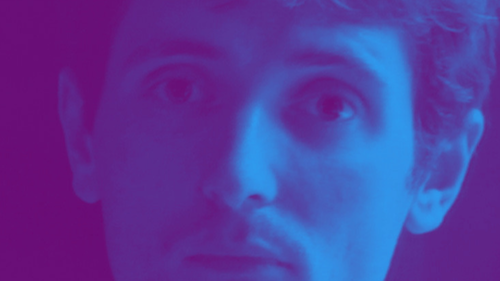
39. Casque bleu
If anyone understood the power of single images in film, it's Marker (more on that later and throughout this entire list). With Casque bleu (or Blue Helmet), Marker captures a close-up interview with a peacekeeper during the war in Bosnia and Herzegovina, and Marker allows his subject to detail the atrocities of combat by himself (with our mind filling in the majority of the blanks, outside of a couple of images that are impossible to neglect). Sometimes, all a documentarian needs to do is trust his subject, and he does just that with a film as heavy as this one.
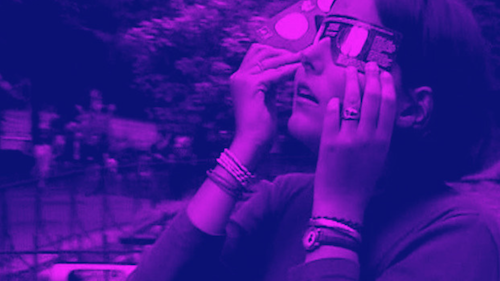
38. Eclipse
There really isn't much to Eclipse outside of watching families all across France prepare for the solar eclipse of 1999; at just eight minutes in length, how much could he capture? However, seeing as this is Marker after all, Eclipse becomes far more than just some snapshot of an event. It almost feels like a collection of responses approaching the new millennium (this was shot during the end of the twentieth century, after all). To some, an event like these is just a bunch of hoopla: Marker captures their reluctance and boredom. However, for those who continue to find reasons to live via the small things that unite us — be they eclipses or calendrical shifts — Marker sees you and has allowed his viewers to be able to as well.
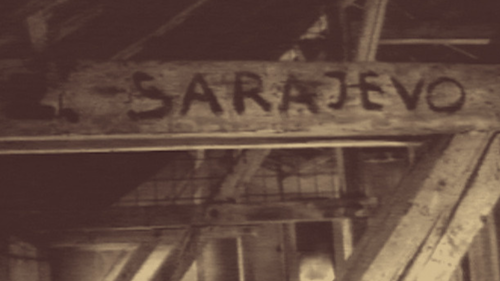
37. Prime Time in the Camps
Marker understood not just the power of the camera, but the importance of the camera operator. With a film like Prime Time in the Camps, Marker provides insight into what it means to be a grassroots, guerilla photographer deep in the trenches of tumultuous times. He follows not just the war in Yugoslavia at the time but the crews stuck in the middle of it all. If a documentary has ever made you forget that there are many people working themselves to death and placing themselves in danger to get stories out, Prime Time in the Camps is here to break that facade and remind you of the selflessness of the keepers of the truth.
36. Bestiaire
One of Marker's cinematic haikus (a trilogy of three short films that can be ingested separately or as one piece; I am choosing to lump them all together, here), Bestiaire takes a triptych of animal related images (one about a cat — what a shock — another about Marker's other fascination with owls, and finally Zoo Piece where Marker visits various animals in a zoo) and renders them life changing. On their own, each short is fine but rather simplistic. However, together, we see the trio of ways humans interact with animals: domestication, idolization (in the way Marker mythologizes the owl), and exploitation (either as amusement or as food).
35. 2084
Many had the novel by George Orwell on their minds when 1984 rolled around. However, Marker shot ahead with 2084: a mesmerizing docudrama short that sees a computer from a hundred years into the future reflecting on France's union laws from back then (the then-present for Marker and everyone else) and the "now". How much weight will contemporaneous legislature hold? Marker somehow creates a nostalgia for the present and — paradoxically — the future in a film like 2048; it's not La Jetee, but this is at least speaking a similar language for fans of the iconic short who are craving similar materials.

34. On vous parle de Paris: Maspero, les mots ont un sens
As bleak as Marker's films can be, he would also champion subjects that felt like breaths of fresh air during challenging times. One of his On vous parle de Paris titles, Maspero, les mots ont un sens (or Maspero, Words Have Meaning) centres around an electric publisher who worked with Marker on the acclaimed documentary Far From Vietnam. Here, Marker and Francois Maspero spend time together, discuss politics, and have a certain energy between the two of them that reminds us that not all discussions of the like have to be detrimental or vicious.

33. Olympia 52
Marker's debut feature film is one of the many works circling around the celebrated ceremonies and events of the Olympics. His version, Olympia 52 (based on the Helsinki Olympics) is not quite the Marker we have come to understand but, rather, a preliminary version of himself. After a bit of insight as to what kind of filmmaker he would become (via an introductory section that, in typical Marker fashion, tries to add intellectual and contextual meaning to something many take for granted in such ways), Olympia 52 then becomes the antithesis of Marker's filmmaking: an ordinary parade of the Olympic events as-is and without much directorial addition. This one is more for fans of sport documentaries (especially Olympics films); while it is far from bad, Olympia 52 is barely a Marker classic.

32. Théorie des ensembles
Who here is a fan of uncanny cinema? If so, Théorie des ensembles (or Theory of Sets) will surely delight (or discomfort) you. An animated film made entirely on HyperStudio (what was once a technical advancement, but can only be seen as primitive by today's standards), Marker's short film sees two owls (kind of) remark on the biblical take of Noah's Ark, T. S. Eliot's The Waste Land, and the concepts of set theory. On one hand, this feels like Marker tinkering around with software to see what it could be capable of (as per usual, Marker turned any experiment big and small into a new release). On the other, Theory of Sets feels like a weird dichotomy between mythology and technology, as if to insinuate that our concepts of the epic would shift in the new age; he was right.

31. Sunday in Peking
Marker was forever trying to redefine the city symphony (see Sans Soleil later on in this list), and an early example is Sunday in Peking. He had half the right idea here with this cinematic travelogue of, well, a Sunday in Beijing. The good: Marker's aesthetic eye for everyday life in the hustle-and-bustle of the city is unmatched, and his findings feel like they are fracked from the pits of your cerebellum. The bad: Marker's voice-over musings are still highly rudimentary here, and his observations come off as problematic and unvarnished (he would figure out how to better frame his thoughts and ideas later on); this is a lovely film to look at, but Marker's usually insightful philosophies feel rather thin here.
30. Stopover in Dubai
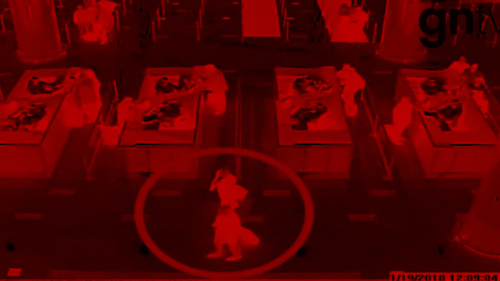
We have a few found footage documentaries made via surveillance evidence like Incident and The Perfect Neighbour, but Marker was ahead of his time when making Stopover in Dubai (one of his last films, released in 2011). Marker uses an assembly of camera captures to piece together the assassination of Hamas co-founder Mahmoud al-Mabhouh in 2010; the cutting between these clips and the frantic pace at which Marker operates makes this half-hour short feel like a spy thriller. Meanwhile, this is real life, and Marker's recreation of a pivotal moment in contemporary history questions what an adaptation can be; is this Marker's version of the truth if he uses nothing but videos of the literal event as it took place?

29. Les Astronautes
In this instance, I would call Les Astronautes less of a Marker film, seeing as this is clearly a short film by Walerian Borowczyk (but I will include it since I am featuring other collaborations that Marker partook in). In 1959, when many were speculating what astral travel would look like when the space race was about to truly heat up, Les Astronautes takes this hypothetical situation and turns it into an imaginative freak-out that is equal parts prescient and psychedelic. If this is your doorway to the works of Borowczyk, get ready for one of the most unique minds in Polish and French cinema.

28. On vous parle du Chili: ce que disait Allende
In Ce que disait Allende -- or What Allende Said -- Marker could have sat down with Chilean President Salvador Allende; instead, he films Allende's interview with left-wing philosopher Regis Debray as the two take on some seriously weighty conversations (like what would transpire if Allende was ever assassinated by his opposition). In the end, Allende alludes to the importance of solidarity of the masses (which would nullify the importance of one sole leader who shouldn't take responsibility for everything independently), something Marker has exemplified in his liberal essays time and time again.

27. Puisqu’on vous dit que c'est possible
Marker's documentary featurette, Puisqu'on vous dit ue c'est possible (or We Maintain It Is Possible), saw the French auteur stepping in to assist with a project that was meant to detail the 1973 Lip watch factory strike: one where the workers took over the factory and worked for themselves (including paying themselves with their hard-earned revenue). Marker doesn't direct this film as much as he splices together the footage captured by Roger Louis and the Scopcolor media group (who were undergoing their own union disagreements when Marker was asked to help). Marker accomplishes making these separate pieces tell a full story of resilience and economic disparity.
26. Le Train en marche
It takes a cinematic innovator to spot the beauty of new ideas in the achievements of others. Marker's Le Train en marche (or The Trail Rolls On) is a half-hour insight into Aleksandr Medvedkin's Cine-Train: a film studio on wheels that travelled through the Soviet Union to capture the agriculture and societal evolution throughout the nation. While the filmmakers on the Cine-Train were worked to the bone (they worked in many ways, from animation and photography, to the actual development of film), they were tasked with focusing on the enrichment of better lives; how crazy is that? Marker observes the observer and showcases the tragic irony of it all.
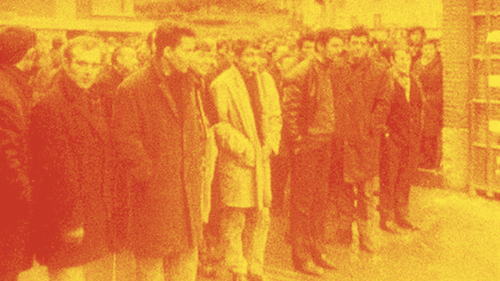
25. À bientôt, j'espère
One of Marker's numerous films about the importance of solidarity within unions, À bientôt, j'espère (or Be Seeing You) is a lean forty-five minute study on the striking workers and their various concerns (as well as the particularities of the textile plant that they work for). A collaboration with Mario Marret, Marker's documentary is a bit more straight forward by his standards, yet it still manages to have enough substance to work with thanks to the major revelations and damning insights provided by these disgruntled workers; their plights mirror those of the populace back then and today.
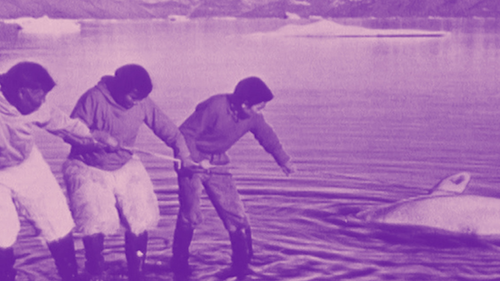
24. Vive la baleine
A co-directed effort with Mario Ruspoli, Marker's Vive la baleine (or Three Cheers for the Whale) feels a bit like his Bestiaire haiku in the sense that he covers the many different ways that humans respond to whales. The key difference is that Marker and Ruspoli convey all of these relationships in one short film. Essentially, Marker and Ruspoli understand how humans are both fascinated by the mammals while also being quick to harm them by any means (including whaling); this hypocrisy is put on full blast in a modestly-sized film that refuses to back down. Marker was rarely this blatant with his ecological viewpoints, but he clearly felt as though this was an ongoing crisis (it sadly still is) that demanded our attention.

23. Haiku
Another one of Marker's cinematic haikus (unrelated vignettes that force you to think about what you are seeing), Haiku (or Trois video-haikus) is even more thought provoking than his Bestiaire trilogy. We kick off with a look at a bridge over the Seine River, followed by a juxtaposition between actor Catherine Belkhodja and a flying owl, and concluding with a shot of a railway line. To me, these are the different ways that we encourage movement; via natural course ways, human-built structures and vehicles, or the rampant mind of a dreamer. At four minutes total, this triptych may not give you much to play with, but that's part of the puzzle: creating our own meaning to Marker's random assembly of disparate images.
22. On vous parle de Prague: le deuxième procès d'Artur London
Life imitates art, and art imitates life. Marker's documentary short, Le deuxième procès d'Artur London (or The Second Trial of Artur London) does a lot more than just provide insight into the arrest and torture of Artur London (during the Stalin purge). Marker compares and contrasts his findings to the feature film recreation The Confession by political auteur Costa-Gavras. In this waltz between fact and "fiction" (which is especially effective when based on the story of a man who was forced to admit to fabricated crimes in order to survive), Marker projects the responsibility of filmmakers, the media literacy of the public during politically heated times, and the truth within motion pictures (whatever that may mean).
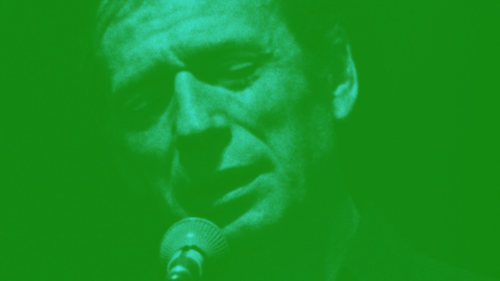
21. La Solitude du chanteur de fond
Singer Yves Montand's return to singing — for a one night charitable event — is spotlit in Marker's concert film (of sorts) La Solitude du chanteur de fond (or The loneliness of the Long Distance Singer). Montand's benefit concert (for Chilean refugees fleeing from the 1973 coup d'etat) shows how music can unite people during awful times; this is quite an interesting observation by Marker who almost exclusively used the art of filmmaking to bring awareness to political concerns or introspective concepts (anything but escapism). Nonetheless, Marker is the right filmmaker for the job here, delivering a film that is both moving and theoretical.
20. Level Five
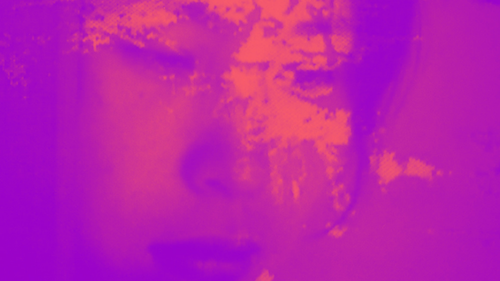
Marker was grieving the loss of his friend, a computer programmer, when making Level Five: a docudrama featuring the programmer's widow, Laura. Laura vows to finish her late husband's video game (one that reconstructs the Battle of Okinawa that provides alternative outcomes to the historical event). What transpires is a filmic, digital tapestry of memory, nostalgia, history, and the uncanny landscape of digital culture in the nineties (it wasn't far along yet to feel realistic, but the possibilities were strong enough that we were feeling something unique). Marker seemingly prophesied the sensation of doomscrolling — where all reels and images become a blurred blob of an experience in your mind — but his version, Level Five, is far more beautiful and meaningful.
19. A.K.
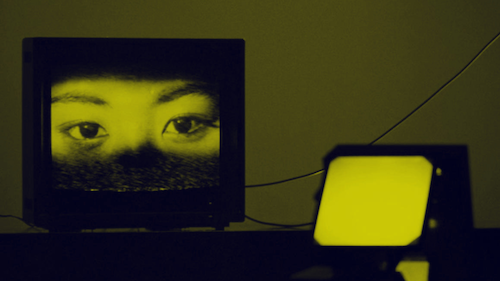
Perhaps I have some slight bias here, but Japanese titan Akira Kurosawa is on my Mount Rushmore of the greatest directors of all time. His film, Ran, is one of the greatest films I have ever seen. Even though his magnum opus was well received at the time, Marker clearly knew that this was a destined classic of the medium when he made A.K.: a documentary about the creative process of Ran. Marker's affinity for Japan shines through here, and — rather than be a behind-the-scenes look at the making of this film — he is far more concerned with Kurosawa's mindset (a major topic in cinephilia at the time, given the awful treatment he endured from the film industry for years before Kagemusha and Ran were seen as the start of his renaissance). This one is a must if you are a fan of either filmmaker; if not, there are at least countless films to explore for both masters.
18. L’Ambassade
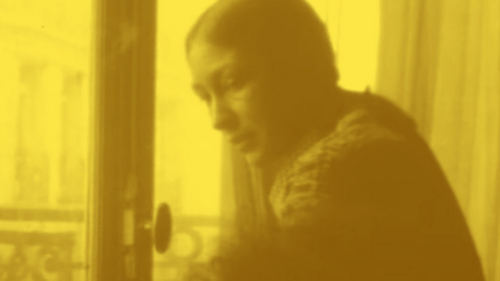
Marker's pseudo-documentary, L'Ambassade (or The Embassy) uses Super-8 filmmaking to create an unnerving, intimate environment within an unidentified embassy (kind of) where many political dissidents are seeking asylum after a military coup d'etat has been declared. In typical Marker fashion, he treats this film as a "discovered" artifact of a different time (despite the fictional aspect of L'Ambassade, the sentiments within it are true: these are the voices of the masses during hardship). Marker details the permanence of action and the universal, endless need for unity in response to the May 1968 protests in France (and all of the efforts just like it).

17. On vous parle du Brésil: Tortures
Another part of Marker's On vous parle du (or You Speak of) series, Tortures is a harrowing documentary short that follows a troupe of Brazilian revolutionaries and their act of kidnappings the U.S. ambassador (all in the name of having their demands — the release of political prisoners — fulfilled). Not that Marker was ever one to shy away from the brutality of the truth, but this is a particularly difficult film in his canon to watch. Its directive is as clear as day: to prove the extent of the monstrosities that take place under a corrupt regime. At only twenty minutes in length, this feels far longer because of its challenging nature, but it is unquestionably effective.
16. Le Mystère Koumiko
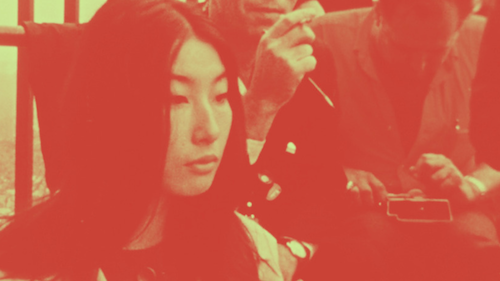
Marker already did his best to cover the Olympic games with his feature-film debut. When the 1946 Tokyo Olympics were underway, he was a whole different person. Instead, he was interested in covering Kumiko Muraoka: someone he just happened to bump into. The end result is Le Mystère Koumiko (or The Koumiko Mystery): a film where Marker appears to have met his equal when it comes to the kinds of hyper-intelligible daydreams that his films are stuffed with. Muraoka and Marker contemplate on the future of Japan during this time of celebration — where technology will take this nation (and all nations), as well as what this means regarding the cultures and identities of the world. While everyone else is rightfully caught in the moment, Marker and Muraoka are forever tethered to the unknown paths ahead.1
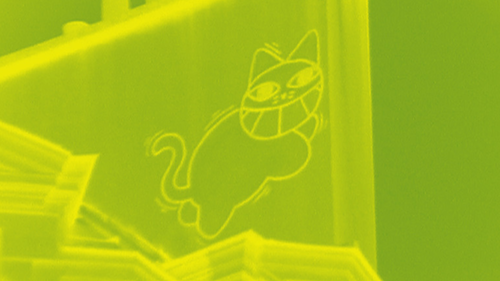
15. Chats Perchés
Who would be more captivated by the presences of cats than Marker? Chats Perchés (or The Case of the Grinning Cat) understandably sees Marker being transfixed by a mysterious yellow cat being graffiti tagged all across Paris. This golden feline acts as a dichotomous image compared to the stirring unrest post 9/11, and Marker's optimism (especially in the latter years of his life) makes for a dazzling commentary on the state of things: finding art within disaster; finding purpose in the arbitrary; finding permanence within crises; finding a yellow cat exactly when you need to; trying to find that cat — and that feeling — once again when there are no longer yellow cats to be found.

14. Mémoires pour Simone
Marker often worked with short runtimes and made the most of them. However, when it came to honouring French superstar Simone Signoret, Marker delivered an hour-long memento to acting royalty. Mémoires pour Simone is far from his most pressing, philosophical, and academic film and it is clear that Marker wanted to take a step back and just commemorate someone he idolized more than anything; he is still present with his voice over narration here, but Marker is commenting more as a fan graced by the presence of an artist than he is trying to dissect what Signoret means in the grand scheme of things. Sometimes, seeing or hearing a filmmaker share the same passion for film as you — the viewer — is more than enough, and this film is one such example.

13. ¡Cuba Sí!
In case you weren't sure of Marker's political leanings, enter ¡Cuba:Sí!: a gripping documentary about the Cuban Revolution that encompasses as much of the era as possible (from its inception down to the Bay of Pigs invasion). As can be expected, Marker's images are powerful enough (he has such a keen eye for framing political and unpretty scenarios and rendering them aesthetically rich) while his takeaways are the major selling point; the way he analyzes the Cuban Revolution for an hour is quite astounding and timeless; somehow, Marker can take a nation in the midst of divide and turmoil and find prose within it.
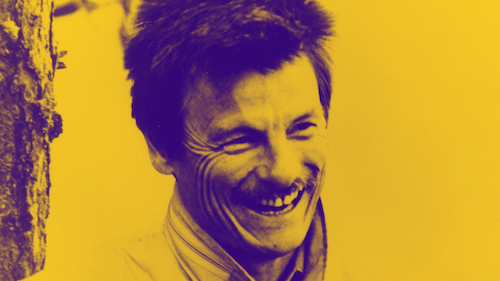
12. One Day in the Life of Andrei Arsenevich
If Marker's homage to Akira Kurosawa was quite good, then his love letter to Russian master Andrei Tarkovsky is on a whole different level. One Day in the Life of Andrei Arsenevich sees Marker following Tarkovsky working on his swansong, The Sacrifice, and Marker uses the opportunity to celebrate all of Tarkovsky's career; naturally, Marker finds intellectual takeaways from Tarkovsky's career (if there was anyone as philosophical in the cinematic landscape as Marker, it would be Tarkovsky). A study of cinematic prose, an understanding of the drive of passion, and a farewell to a friend and an idol, One Day in the Life of Andrei Arsenevich is quite a beautiful, nuanced portrait painted by Marker.
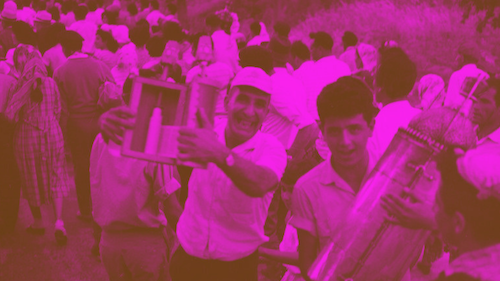
11. La Bataille des dix millions
Another Marker film about Cuba, La Bataille des dix millions (or Cuba: Battle of the 10,000,000) is a collaboration with Valerie Mayoux. Unlike ¡Cuba Sí!, which is a detailed but linear-enough depiction of the Cuban Revolution, La Bataille des dix millions is even more layered with its essayist depictions of an evolving nation (one that was struggling to figure out its identity under the guise of Fidel Castro and his mobilization campaign for the harvesting of sugar cane). It takes colourful and well-wired minds like Marker and Mayoux's to be able to have this many engaging takeaways from a subject like this, but they also operate on a whole different echelon when they can make their discoveries as riveting and palatable as they are here.

10. Loin du Vietnam
When it comes to Far From Vietnam (or Loin du Vietnam), who didn't work on this acclaimed documentary? Marker joins Jean-Luc Godard, Joris Ivens, Agnes Varda, Alain Resnais, William Klein, and Claude Lelouch to paint a multifaceted picture of a community and army in crises during the Vietnam War (as a means of discouraging the slaughter that was happening there). I include this film here despite how many people worked on it because you can tell that Marker was one of the main facilitators of this project (his thumbprint is all over this film). The end result is somewhat of a documentary anthology picture (what an anomaly that is): a series of non-fiction vignettes and ideas of what the Vietnam War means to various minds within France's cultural movement of the time. Despite how easily this could have felt like a thousand unfinished ideas, Far From Vietnam winds up feeling like a united, booming effort: a thorough collage of compassion and protest.

9. The Owl's Legacy
Accuse me of being partial, but I was transfixed by Marker's longest project — the thirteen-part film essay The Owl's Legacy. While not as directly inspired by Marker's favourite bird, this in-depth study of contemporaneous society's reliance on the ideas and philosophies of Greece is immeasurable fodder for your mind to feast on. What sounds like a boring chore on paper, The Owl's Legacy is actually as fascinating as it is educational, and Marker's wide array of knowledge leads this film (of sorts) towards a number of glowing revelations and connections between a different culture and moment in time to us in the modern day. Should five-and-a-half hours be too daunting, Marker made this project digestible by splitting it into parts, with each segment focusing on a different concept and ideology. This project is under-discussed; this is a cinematic lecture that can change how you view the world around you.

8. Le Tombeau d'Alexandre
Marker has made quite a few strong documentaries about other filmmakers, including Akira Kurosawa and Andrei Tarkovsky. However, his best happens to be about a lesser-known director: Aleksandr Medvedkin. Le Tombeau d'Alexandre (or The Last Bolshevik), cleverly named after the tomb of Alexander the Great, is a loving look at the Soviet filmmaker told with the concerns that all will be erased by the sands of time unless they are cemented via a concrete artifice; this film acts as such. Marker harkens on the early days of filmmaking (an era he often shaped his pictures on, especially the art of crosscutting and montage) and highlights Medvedkin's successes, struggles, and legacy with the same attention Marker would grant a political revolution; this film is a must for passionate film lovers.

7. Lettre de Sibérie
Marker leaps around all of Siberia in Lettre de Sibérie (or Letter from Siberia) in this spellbinding collage of vignettes — from past times and history to wildlife and bears. As Marker plays tour guide for an hour, Letter from Siberia initially appears to be a parade of separate thoughts. Once we get far enough, this documentary reveals itself as a depiction of a community that is not just blessed with its many different identities: it may be somewhat plagued by them. We witness Siberia during a transitional phase that is torn between its provenance and its potential future, and Marker likens the nostalgia for yesteryear to the pining of what may be; both nullify the present. Marker makes sure to preserve Siberia as it was back in 1957 with this sublime documentary.
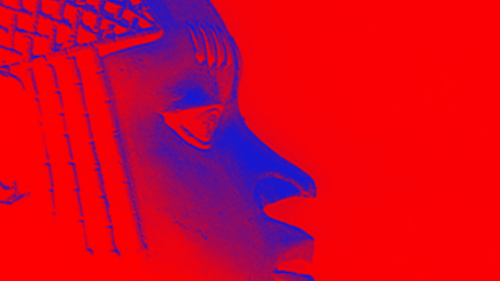
6. Statues Also Die
A collaboration with Alain Resnais and Ghislain Cloquet, Statues Also Die is such a stirring documentary short. On one hand, you have these African statues that are filmed in such a way that they have a commanding presence (everyone on board knows how to make the most of what they have). Then you have the underlining theme: how the identities of these artworks is stripped away by the bastardization of their legacies via the instilled racism in institutions like museums. While trying to preserve heritage and context, our trio of filmmakers also condemn the colonialist ways of erasing culture and history via a short film that is simply unforgettable.

5. Le Joli Mai
In art, there is always politics; likewise, there is always art in politics. Marker teamed up with Pierre Lhomme when making Le Joli Mai (or The Lovely Month of May): a three-hour meditation on what brings people joy. On the surface, this is a series of interviews and captures of the many things and ways that can benefit society. However, true to the majority of Marker's pictures, Le Joli Mai has a deeper context: this is the first time in twenty-three years that France was not at war with another nation (as a ceasefire was called with Algeria). What this turns Le Joli Mai into is a painting of hope and prosperity: a look at a future without unnecessary carnage. If spring symbolizes the growth of life and optimistic feelings towards the brighter days ahead, then Le Joli Mai prays for better times after years of darkness.

4. Si j'avais quatre dromadaires
One of Marker's greatest slideshow experiments, Si j'avais quatre dromadaires (or If I Had Four Dromedaries) effectively derives the plethora of sentiments out of still images and makes this fifty-minute exercise feel eternally plentiful. Around eighty years prior to this film, inventors were working on taking the concept of moving pictures and figuring out ways to remove any doubt that these were all individual stills, creating the immersion of cinema. Then came Marker in 1966 with this avant-garde answer: a test of strength between a viewer and both moving and still images (and their separate relationships to us, the receiver); Marker entertains the idea that, while starkly different, both mediums have a lot of common ground. While not the greatest such exercise by Marker (more on that shortly), If I Had Four Dromedaries is one of Marker's most effective and creative films that will leave you questioning any art involving imagery for the rest of your life.

3. A Grin Without a Cat
Marker filmed many shorts, but A Grin Without a Cat is easily his longest project, either at the culled three hour version (which already tells a story), or at its preliminary four hour (!) release. No stranger to covering communism in film, Marker's greatest such example is this opus of massive proportions: a scrutinization of the socialist promises for better futures and unity, versus what actually transpired (by comparing these lies to the Cheshire Cat in Lewis Carroll's Alice's Adventures in Wonderland, Marker insinuates that the belief dissipates but the lingering damage from being backstabbed remains). This film is as ambitious as Marker ever got and it shows: as if he believed that this is what the entirely of his political filmmaking led to, Marker puts everything into A Grin Without a Cat, leaving no stone unturned in this bricolage of culture, anguish, and resilience.
2. Sans Soleil
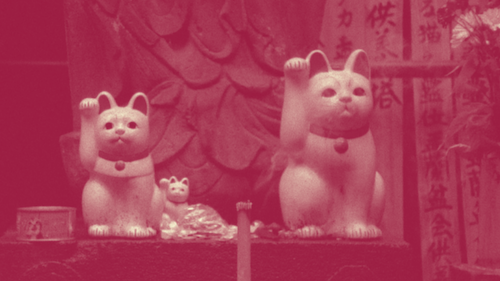
The greatest documentary Marker ever made (and one of the finest of all time) is this absolute fever dream. To watch Sans Soleil is to feel sternly rooted in the mind of someone with wanderlust: a person who cannot find belonging in just one place, one role, or one mindset. As we leap from Japan to San Francisco, from Paris to Iceland, from Guinea-Bissau to Cape Verde, Sans Soleil is, essentially, the greatest home movie ever filmed. Despite how much ground we cover with Marker and his narrating guide (whoever you may get, depending on the language you choose), so many similar ideas permeate into each vignette — as if our problems, habits, passions, and existentialism is universal. In that same breath, with the condensing of our world (via travel, technology, and more), Marker fears that we are losing our history: the sense of what brought us to these places initially. Projecting all of these concerns via a hazy, foggy collection of images that feel like they could only come from our memories, Sans Soleil is as gorgeous as such a daunting dilemma could ever be. As an effort to try and save our concepts of time, Marker uses Sans Soleil to show a world frozen in time.
1. La Jetée
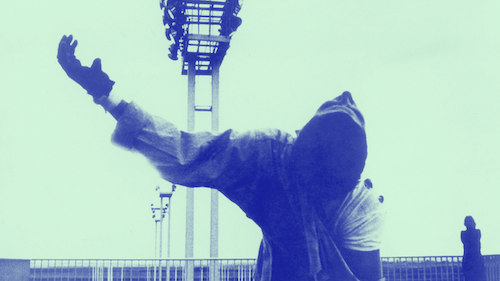
One of the best short films ever made is the science fiction parable La Jetée. If you have kept up with the entirety of this list, you will know by now that Marker was a documentary director first and foremost, and very barely worked outside of non-fiction filmmaking. It's curious and almost shocking, in hindsight, that his magnum opus is a fictional picture like this one, but, in that same breath, not only does it still feel like a film that fits in Marker's entire oeuvre, I would argue that La Jetée barely feels any different from anything Marker ever made before. Consider this: yes, La Jetée is a fictional story about time travel. However, it is also contingent to Marker's story in a myriad of ways. Firstly, it is told almost entirely in the form of still photographs (something Marker has done a handful of times throughout his career): as if we are watching a slideshow from the apocalypse as a means of trying to figure out what happened before our time. Secondly, Marker's story is still incredibly poetic, political, and prestigious to the point that it plays off like a documentary from another reality. In short, La Jetée is as instrumental to Marker telling us his version of the truths of the world as anything else he ever made.
In response to World War III (which, thankfully, has not happened yet in our lifetime, but is a possibility that Marker saw), La Jetée sees its unnamed protagonist being transported through time to try and help assist with the current state of the world. Both past and future are shown as hopefully viable means of finding resolution. During his travels, he reunites with a woman who only existed in his memory (Marker makes sure to make La Jetée feel like a convergence of recollections and experiences, blurring the line between subjective and objective storytelling), and he now has purpose beyond what has been bestowed upon him: he wants to find that same woman again. Marker turns time into more than a linear crawl or even a cyclical event: he sees time as a pool of instances, creations, deaths, and multitudes, all flowing at once; despite all of this movement, Marker freezes his images in static captures, as if each scene is all but a blip in the grand scheme of things. Philosophically boisterous and as effortlessly genius as cinema can get, La Jetée feels like a lifetime of wisdom and regret placed into just a half-hour of brilliance. Many have tried to recapture this film, including Terry Gilliam outright adapting it into 12 Monkeys (which is a fairly good film in its own right); however, Chris Marker feels borderline untouchable with what he has accomplished with La Jetée: a moving picture that rarely moves; a time travel odyssey that brings us back full circle in the most tragic way; a fictional film that is indebted to the monstrosities of reality; a science fiction drama that is almost entirely based not on projections but on memory; a short that sticks with you forever and feels anything but brief.


Andreas Babiolakis has a Masters degree in Film and Photography Preservation and Collections Management from Toronto Metropolitan University, as well as a Bachelors degree in Cinema Studies from York University. His favourite times of year are the Criterion Collection flash sales and the annual Toronto International Film Festival.