
Filmography Worship: Ranking Every Céline Sciamma Film
Written by Andreas Babiolakis
Filmography Worship is a series where we review every single feature of filmmakers that have made our Wall of Directors

Céline Sciamma is a tour-de-force name in contemporary cinema. The French auteur has already left her mark as a reliable name, even with just a few films to her name. A screenwriter first and foremost (with an interest in film criticism), Sciamma fell into the director’s chair when she wrote her film Water Lilies; even though she didn’t intend on actually directing her projects, she was clearly a natural who went on to make four other feature films and two shorts afterward. The only consistency in her films is that she details the lesbian experience in passionate, visceral, indescribable ways; otherwise, Sciamma’s projects barely resemble one another, proving her adaptability. Her written work is also quite outstanding, with a few standout titles including the wonderful animated cut My Life as a Courgette (also known in English as My Life as a Zucchini), Jacques Audiard’s underrated title Paris, 13th District, and the genre-bending, Almodóvar-esque The Balconettes. However, today I will only be focusing on the films she has directed (although I do recommend checking out more of her written work; I may include them here one day). Her films are equal parts sociopolitically stern and tonally lush: the push-and-pull of feeling alive while society condemns certain lives. I cannot wait to see what else this rich mind and soul will come up with next. Here are the directed films of Céline Sciamma ranked from worst to best.
7. This Is How a Child Becomes a Poet
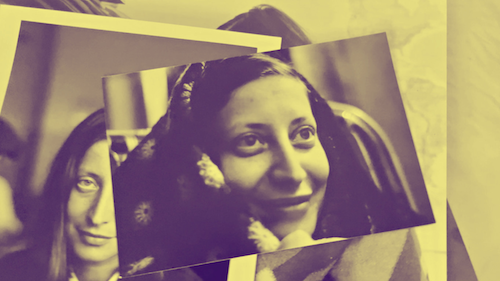
Since we must have something ranked in last place, as unfair as it feels, I’ll place the moving documentary short, This Is How a Child Becomes a Poet mainly because it is an idea and a headspace more than anything (but what an effective experiment this is). Sciamma hones in on the belongings of the late Italian poet Patrizia Cavalli (who died the year before Sciamma’s film was released), creating a new lease on the legacy of a name that deserves more recognition. Sciamma doesn’t do much outside of presenting Cavalli’s artifacts, as if her ghostly essence is with us; if much of the power from poetry stems from a reader trying to decipher the otherworldly ideas presented to them, then Sciamma accounts for the same result in a film that may leave you feeling torn for someone you may not even know; should you already be familiar with Cavalli, Sciamma delivers with a cinematic shrine for the legend. I’m only placing this last because it is fifteen minutes long and I feel like Sciamma’s other films are able to achieve even more, but This Is How a Child Becomes a Poet is certainly worth your time.

6. Pauline
Even though Pauline is around half the length of This Is How a Child Becomes a Poet — which should mean that I get even less out of it — I cannot deny how effectively Sciamma utilizes her eight-minute runtime. All we have is our protagonist, Pauline, and her relationship with us, the viewer. We have a one-sided conversation where she details her entire life: considering how so many youths of the LGBTQ+ community are told how to live, it feels cathartic for Pauline to open up to us without the misfortune of her being silenced or told that she is wrong by the same bigots who have impacted her life. Well, this is what Pauline appears to be, anyway; it’s astonishing how Sciamma is able to deliver a breathtaking twist in a film this short, as if we have witnessed a feature-length ordeal and everything has led to this sensational moment. That’s a testament to Sciamma’s capabilities as a writer: she knew every beat, expository detail, and revelation necessary to make Pauline feel much larger than its runtime.

5. Water Lilies
If I have to pick the weakest of Sciamma’s feature films, I may go with her debut film Water Lilies despite how much it offers. In short, this film features teenage girls who are questioning — and discovering — their sexuality, and Sciamma uses the allegory of synchronized swimming to detail the mystifying confusion and electricity of coming-of-age romances. I will say that, as moving as I found Water Lilies, it feels a little thin compared to Sciamma’s other directorial efforts; as if she was just skimming the surface with her take on falling in love and the lengths it takes us to (from dealing with toxic behaviours, to that apple sequence that is a completely different stomach feeling altogether). Sciamma finds splendour in butterflies — be they the aquatic stroke or the kind you find in your gut when you fall in love. As a result, it feels like Water Lilies is a curious and electric film, albeit a little flawed; Sciamma would only improve.

4. Girlhood
Two years before Barry Jenkins directed Moonlight, Sciamma released the under-seen Girlhood. Also based on the tribulations of a Black teenager’s quest for acceptance and self-discovery, Girlhood follows young Marieme and her evolution from the child of a broken and hostile home life and the struggling student of a school where she faces pressure on a regular basis, to Vic: a badass who won’t let life keep her down, Well, life won’t go down that easily, and Girlhood showcases just how heavily it pours when it rains (so says the proverb). With a smidgen of hope, Sciamma’s film tells us to never quit, even though this film — one about exploration and adaptability — drags our protagonist through hell and back. I hear this Sciamma feature film get discussed the least, and I think it’s a crying shame when Girlhood is this powerful and unforgettable of a motion picture.
3. Tomboy
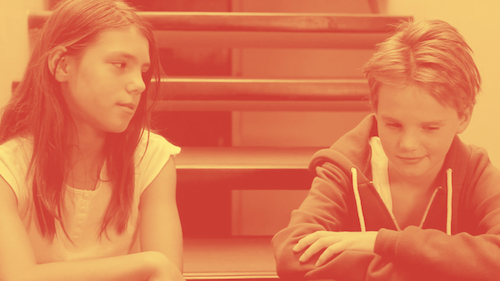
If Water Lilies was where Sciamma was finding her footing, then Tomboy saw the French auteur sprinting. Similar to her debut film, Tomboy is quite simple as a premise, but Sciamma delivers an entire lifetime of feelings and experiences in this eighty-minute breakthrough. Little Laure is at a point in their life where they know what they like (like various sports, for instance) but society is making them feel uncertain as to why or if they should like these things. Now in a new environment after their family moved, Laure meets a new girl who mistakens them for being a boy (when they were born a girl). Thus, Laure becomes Mickaël, and — once they identify as a boy — their world opens up like never before. Naturally, our lead is torn between two lives: the expected Laure known by family and friends, and the liberating Mickaël. Sciamma’s Tomboy is like a knife to the gut: a riveting, eviscerating look at identity and the pressures many youth face in societies — ones that make countless people not feel comfortable (or safe) being themselves.

2. Petite Maman
Sciamma would follow her greatest triumph, the extravagant and Earth-shattering Portrait of a Lady on Fire, with a much quainter, subdued picture called Petite Maman; however, do not mistaken this as a sign that Sciamma was any less powerful with this picture. At just seventy minutes in length, Sciamma graces us with a film that is the cinematic equivalent of the serenity caused by the wind blowing through the trees around you. Time flows in such a way: not as a linear path, but as swirling, cascading tangents that circle back around into our lives. Featuring the child Nelly who is dealing with the recent passing of her dear grandmother, Petite Maman is a gorgeous, sublime parable by Sciamma about experiencing provenance and one’s heritage in such a unique way. Nelly learns more about her roots (and, in a sense, her future) via this exquisite take on the circle of life that never gets caught up in the impossibility of its premise; instead, this is a fantasy film that actually feels magical — like we have witnessed a miracle or an otherworldly event without being told that we should be amazed (a mistake so many directors make). Considering how naturally gifted Sciamma is as a contemporary giant of storytelling, a film like Petite Maman simply amazes us based on its own merits.
1. Portrait of a Lady on Fire
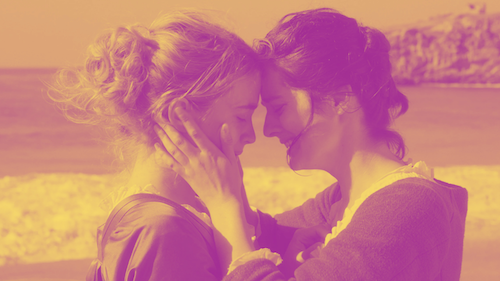
As great as Sciamma is on a regular basis, you can consider the majority of her filmography great with one film being the undeniable masterpiece: one that surpasses more than just her own resume, seeing as it is already a generational opus. One of the great moments of my life as a critic and a cinephile — without trying to gloat too much — was being able to see Portrait of a Lady on Fire early, before it showed at the Toronto Film Festival (where I had a ticket for it). I was anticipating great things with this film, but to be that dumbfounded to the point that I felt hollow inside (except for my bleeding, weighted heart waiting to burst) surpassed anything I would have expected; I also foresaw me tearing up, but the sobbing also caught me by surprise. I didn’t just feel lucky that I got to see Portrait of a Lady on Fire early; I felt beyond privileged being able to watch this film with an unassuming audience and feel everyone’s souls in the room swell and shatter at the same times that mine did. I will never forget where I was when I saw painter Marianne (played by Sciamma veteran Noémie Merlant, who stars in many of the filmmaker’s written works) fulfill a commission to craft a portrait of a bride-to-be, Héloïse (played by Sciamma’s former partner, Adèle Haenel, who stopped acting after this film in protest of the inequality and injustice found within the film industry).
Sciamma cleverly sets her film in the eighteenth-century and on a random island in the Brittany peninsula. Much of her story is based on what is unspoken: the burning feelings inside of our two protagonists (the artist and the subject); Sciamma shoots her characters with the same yearning and deeply-contained inferno. As Héloïse patiently waits in her chair as Marianne paints (in that same sentiment, Héloïse is anticipating her big day that is coming up), so much of Portrait of a Lady on Fire is withheld; the secrets our characters must confess; the desires that are being misread; the impossibility of being open and free in the eighteenth century; the opportunity being removed from society can allow. Once Sciamma’s story finally unfurls, there is not much time left for Marianne and Héloïse to celebrate each other (and, in a sense, themselves). What transpires is the agony of time having been wasted, not to mention the pain of knowing the inevitable (that this is a love that simply is not meant to be). One of the most impactful romantic dramas of the twenty-first century, Portrait of a Lady on Fire is simply beyond words to me. I love it more and more as time goes on. Like others have stated before me, I knew I was watching an instant classic when I finished this film the first time, and I was certain of it on that second viewing. In one film, Céline Sciamma delivers love, loss, and bittersweet acceptance in a way that transcends history and time. People are temporary. Art and love are forever. Portrait of a Lady on Fire depicts this longevity, and, it as a film, is indicative as such: I guarantee that many generations will adore this masterwork as much as we presently do. Like Marianne and Héloïse, I fall in love and am heartbroken by this film again and again.


Andreas Babiolakis has a Masters degree in Film and Photography Preservation and Collections Management from Toronto Metropolitan University, as well as a Bachelors degree in Cinema Studies from York University. His favourite times of year are the Criterion Collection flash sales and the annual Toronto International Film Festival.