
Filmography Worship: Ranking Every Jacques Rivette Film
Written by Andreas Babiolakis
Filmography Worship is a series where we review every single feature of filmmakers that have made our Wall of Directors

The key Cahiers du Cinéma who made up the French New Wave movement would challenge the tropes of filmmaking for good. Eric Rohmer had us question how setting could be used in motion pictures. Francois Truffaut experimented with how plot and emotion could resonate on the big screen. Jean-Luc Godard's abstract direction left us wondering what a film could even be. Then, there was Jacques Rivette, whose style might be the most blatant of all of the French New Wave directors. One such principle is very obvious: Rivette pushed the boundaries of how long a film can be, and his works ranged from two hours to thirteen (!). Furthermore, Rivette often questioned motion pictures as a metaphysical medium, inviting audiences to always be aware that they are watching something that someone else made; and yet, despite this postmodern approach, Rivette's films somehow make us a part of the experiment almost every time, with hyper-immersive works that have zero correlation with reality (and, yet, for these many hours, Rivette's films feel true to us). He was considered a bit of a mentor to the rest of the Cahiers du Cinéma team, and was deemed the only person who knew how to make a film before actually making them; most of the writers-turned-directors looked up to his expertise and philosophies.
Rivette was greatly inspired by the works of Jean Cocteau from a young age, and began making short films as early as 1948 with Aux Quatre Coins; I won't be covering his short films on this list. Rivette began writing for Cahiers du Cinéma in 1953 and was inspired to encourage other French filmmakers to take greater risks like the international directors he looked up to like Howard Hawks and Kenji Mizoguchi. While working for the magazine, Rivette began working on what would have been the first official feature-length film of the French New Wave movement, Paris Belongs to Us. Since production took so long, Rivette's feature-length debut was released some other noteworthy preliminary works like The 400 Blows (despite having started work on the film before any of the other French New Wave titans). The success of other French New Wave films allowed his peers to help Rivette (who was known for being impoverished throughout much of his life) to finish his film. He would slowly — but steadily — release his subsequent films, which only seemed to grow in duration and ambition until Out 1: Noli me tangere; he still released lengthier films since that thirteen-hour behemoth, but he never went quite that far again. In 1975, Rivette had a nervous breakdown brought on by over-exhaustion which affected his output a little bit. His films would be a little less audacious, and a few pictures that he wanted to create would have to take a backseat in the meantime (some projects would sadly never be realized). Nonetheless, he persevered, and, as a result, has one of the richest, most consistent filmographies in all of French cinema.
Rivette worked until the very end of his life, passing away from complications related to dementia at the age of eighty-seven in 2016. I feel like his career — with a number of great works throughout each era — has left its mark on the slow cinema genre, on postmodern filmmaking, and on contemporary understanding of how time and sequencing plays into the art of motion pictures. Not that art should ever be a competition (a bit of a hypocritical thing to admit on an article that ranks the films of a director, but I digress), but, as I get older, I feel like I connect with Rivette's films as a whole more than most of the other French New Wave moguls (despite having much to take away from each of them). There is something magical about how Rivette makes me connect with his glacial, impossibly long feature films: I almost never find them too long and, if anything, I feel empty once his works conclude. The relationship he creates between his audiences and his pictures is astounding, and I always leave his films feeling changed (whether it is my understanding of how films can be made, or my understanding of myself as a human being). Here's to one of the boldest filmographies of all time. Here are the films of Jacques Rivette ranked from worst to best.

20. Merry-Go-Round
What good is the mystery genre if most works solve their scenarios by their conclusion? Rivette's answer to the genre, Merry-Go-Round, is a far more unorthodox version that you can tell feels honest to him. With this film, Rivette presents an apparently simple case (a kidnapping) and obfuscates the details with unrelated footage, a labyrinth of plot points, and many other elements that make this film feel impossible to solve (that feels like Rivette's point: this is a mystery film that will forever remain a mystery). The issue is that Merry-Go-Round doesn't quite feel like a complete picture like most of Rivette's other films, and Rivette himself went on to express his displeasure with the dysfunctional production the film had and his disappointment with his end result. With repetitive ideas, half-baked executions, and other details proliferated throughout the three-hour runtime, Merry-Go-Round is unfortunately quite flawed despite how much capability and how many interesting ideas it has (I wouldn't call it a bad film, but it is far from a great one).
19. Wuthering Heights
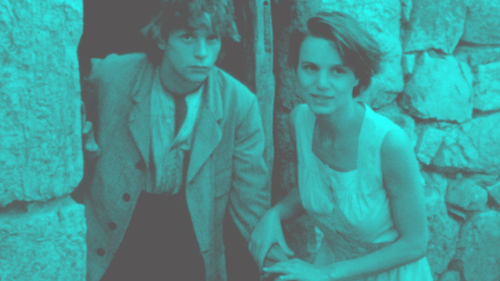
One of Rivette's attempts at making a straightforward film, his answer to Emily Bronte's Wuthering Heights — his film of the same name (also known as Hurlevent) — is almost experimental in and of itself; to see such a game-changing director operating within the confinements of normalcy is quite strange. So, is his Wuthering Heights one of the stronger adaptations? Not quite, since I feel like Rivette is able to find his perspective through breaking open his stories and characters and not by simply playing along like he does here. However, I feel like Wuthering Heights led us to some of Rivette's best late-game works that also are his version of established stories, and I am grateful for that as well. This one is more for fans of the gothic classic than Rivette aficionados since — despite some minor hints — this is a rare film of his that doesn't feel blatantly like a Rivette picture.
18. Around a Small Mountain
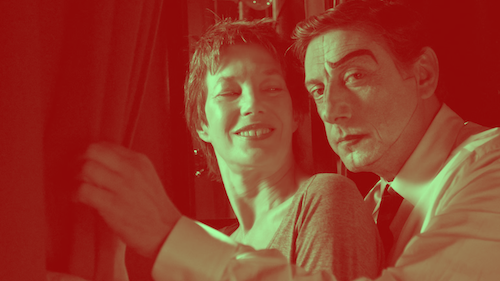
I know we have most of the list left, but I believe everything from this point on is a worthwhile Rivette film through and through. Rivette's final feature film, Around a Small Mountain, takes us to the festivities of the circus world. Acquainting us with such a realm feels like Rivette's way of acknowledging how he viewed life: as something to marvel and revel in. Towards the end of his life, a film like Around a Small Mountain hits even harder because he is making such an observation with weary, grateful, and wise eyes. Circumnavigating the relationship between a traveler and a circus owner is a sentimental mission in Rivette's swansong, and — while I feel like he has handled such a theme better in, say, Celine and Julie Go Boating — I do like his efforts to encapsulate his final thoughts on the human existence in a film that blends its mature themes and celebratory nature quite nicely.
17. Who Knows?
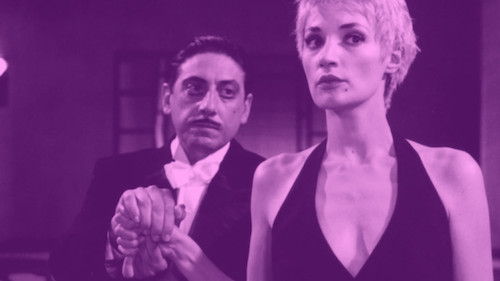
Rivette entered the new millennium with what feels like his take on what Alain Resnais was making towards of the end of his career: a new version of the French romantic comedy. The key difference is that Rivette doesn't shake off his roots with a film like Who Knows?, in the sense that this is still a two-and-a-half-hour semi-epic about a woman's conflicting romantic interests. By staging this as a play-within-a-play (within a film, so to speak), Rivette plays into the tropes of the genre by dismantling them as formulaic stepping stones — and he reconstructs his picture as a schematic of what rom-coms should be (and, in his eyes, what they can be). Since Rivette feels truthful to the genre and not antagonistic, a film like Who Knows? flourishes as a fresh take on a tried-and-tired blueprint; this is something fanciful for the brainiacs to nibble on.
16. Noroît
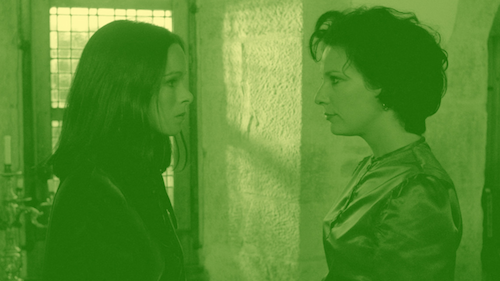
Rivette's idea of the classic adventure film is a metaphysical excursion from location to location, state of mind to state of mind, and from reality to surreality. Needless to say, it's kind of intense. A near-religious escapade about an all-girl gang of pirates and their latest victim (and all the events that ensue), Noroît is the great kind of ridiculous in cinema: the kind that makes you do a double-take of what you have just seen, while you also admit to yourself that there simply aren't films like this that exist. While other Rivette pictures slowly lure you in, Noroît keeps you at a distance for almost its entire two-and-a-half-hour runtime; if anything, you may feel like you are slowly going insane alongside the film's characters. Despite Rivette having far longer works, this might be amongst his most challenging efforts.
15. Paris Belongs to Us
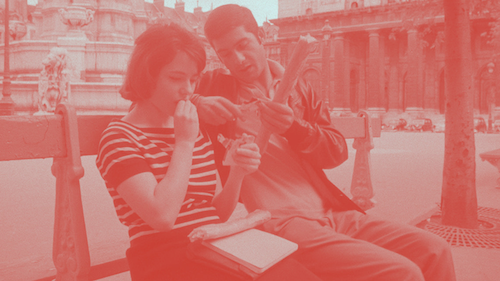
Rivette's debut feature film, Paris Belongs to Us, feels a bit more rooted in a concrete narrative than the majority of his films would ever express. It's as if he started his career off with the kind of maturity many filmmakers never figured out how to obtain, only for Rivette to learn how to have fun and shed off any expectations shortly after. Paris Belongs to Us almost feels like Rivette's answer to the film noir style: a Cold War mystery that encourages you to dive deeply into the paranoia of its protagonist's minds throughout the course of its two-and-a-half-hour runtime (this is an instance where it feels like Rivette is pushing the length of his film to tell more story, as opposed to exploring the relationship between his craft and the construct of time). This film is far more outwardly theoretical and philosophical than Rivette's more abstract works would be, but it's quite a remarkable place for a career to start (in a state where many careers would end: with such an existential and self-aware picture).
14. Duelle
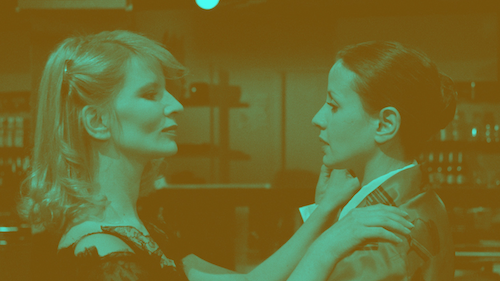
Released the same year as Noroît is the similarly-bonkers Duelle: another fantasy film that questions what the genre can even offer. This tale of a duo of neo-goddesses and their use of Paris as a backdrop for their squabble is otherworldly: as if we are watching mythical beings pass as people while being encumbered by the existential curses of the human experience. Since Rivette is far more interested in the empty spaces than the noises commonly used to attract attention, Duelle feels like something you can dwell inside of: a wonderland of intrigue and curiosity that has so many things to offer (from intellectual writing, to the myriad of tiny visual details you may stumble upon). If this is Rivette's way of showing how life is fascinating yet complicated, consider Duelle an accomplished mission.

13. The Duchess of Langeais
Rivette's penultimate film is The Duchess of Langeais: an adaptation of Honore de Balzac's novel of the same name. At this point in his career, Rivette had calmed down a little bit with how off-the-wall his films could be, but, even still, The Duchess of Langeais is at least a fascinating study of characters and class systems by the way of a director who would never shy away from confronting key sociopolitical themes (even in this more subdued way). This is a beautiful late-career move by Rivette that might sit better with traditionalists (there's still enough here to make this film pop) that you won't want to miss if you have note come across it yet; the end result is almost more aching than you would expect from Rivette, because, here, there's no experimentalism or inventive concept to hide behind.

12. Le Pont du Nord
When the French New Wave movement was all but dead, a few of its practitioners released some late-stage efforts to bring back what the era stood for. Rivette had a few efforts, but a fairly upfront example is Le Pont du Nord in 1981. A mystery-crime film starring real life mother and daughter Bulle and Pascale Ogier, Rivette takes this relationship and comments on the responsibility of one's actions and how it affects another, while comparing Paris to a gigantic game of duck-duck-goose (of sorts). When the eighties was getting sentimental and pedestrian with its cinema, Rivette would occasionally double down with works like Le Pont du Nord: a gigantic, hypothetical question as to what normalcy can even mean in life and in film.
11. Top Secret
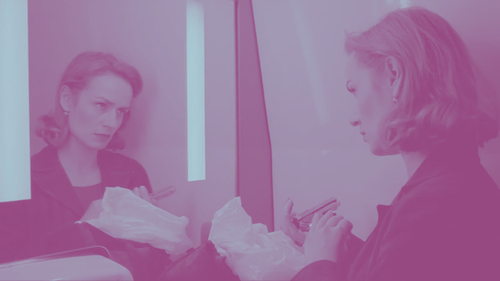
Rivette's last film of the nineties, Top Secret (or Secret Defense), is perhaps the closest he got to replicating the works of one of his biggest idols, Alfred Hitchcock. This three-hour crime thriller (one that is deeply invested in the provenance of people and their sins) questions what the genre can even represent by placing us smack-dab in the middle of a biologist's mind as she grapples with grief and the trauma that is sure to come. Instead of going from clue-to-clue in a linear, direct way, Rivette allows us to feel overwhelmed by our surroundings (as to make each revelation or extension feel like a proper breakthrough). When the nineties became obsessed with gritty, edgy thrillers, Rivette boiled the genre down to a vehicle of discovery, confusion, and despair: sometimes, it's the emptiness that truly sells the severity or danger of a situation.
10. Gang of Four
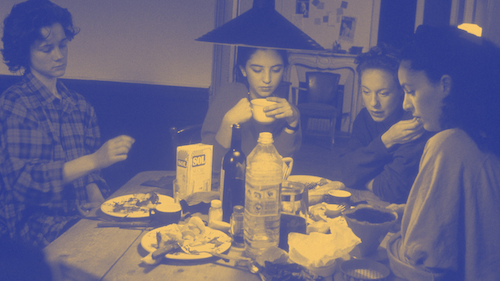
Oh, what Rivette could achieve with a simple stage (more on that a few times later on in this list). One such example is Gang of Four: a character study that pulls the rug from underneath you as you watch it. What starts off as an analysis of four aspiring actresses who share an apartment and have workshops together, their lives unfurl into their own separate dramas (reality can be stranger than fiction). Rivette questions the connection between an actor and their character in so many ways (far more than just four) with Gang of Four: a thorough look at the bridge between psyche and art, between a craft and its recipient, and between catharsis and forceful exercises (when is performance art, and when does it become a chore). We slowly feel the world disassemble around us in a film like Gang of Four; most filmmakers want their production processes to create the illusion of worlds, while Rivette loved making us feel like reality is nothing but a behind-the-scenes realm.
9. Love on the Ground
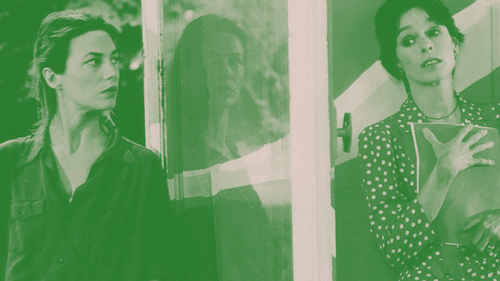
Many have tackled the narrative convention of the love triangle, but what Rivette achieves with Love on the Ground is remarkable. This waltz between a playwright and his two girlfriends (who are also actors) is already complicated from the jump; both budding stars are, essentially, vying for the same part that he has written. However, Rivette couldn't simply leave it at that, and his many layers of life and art (effectively by representing a play-within-a-play-within-a-play-wi....) will leave you wondering what is real life and what is being enacted the first time you watch Love on the Ground. Upon subsequent watches, this film's heartbreaking nature becomes far more apparent as it is clearly a representation of women being given the run-around by the same guy, and the multitudes of lives that they have thrown away to find happiness, love, and acceptance.
8. Up, Down, Fragile
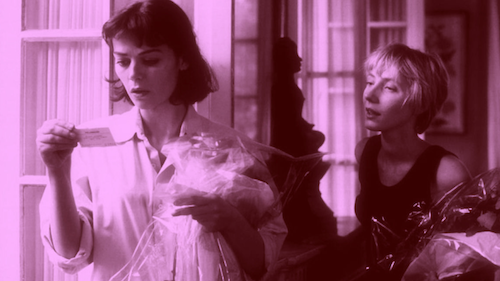
I am not the biggest fan of anthology films since one story may not carry as much weight or be as prioritized as another, but Rivette doesn't leave any stone unturned with Up, Down, Fragile: a web of three tales that are as engaging as the last. The triptych of lives are established first and foremost: we have a promising, young career woman, a criminal who is trying out a more honest life, and a vulnerable person who is trying to pick up the pieces of her life and figure out who she is. When Rivette ties these stories together with such elaborate overlap, Up, Down, Fragile becomes a major representation of the scope and scale of life in a near-Shakespearean fashion. Sensing how each person will play into the life of another participant is part of the appeal here, especially when Rivette subverts your expectations time and time again. At three hours in length, he grants every plot thread the proper dedication and substance to thrive and resonate.
7. The Story of Marie and Julien
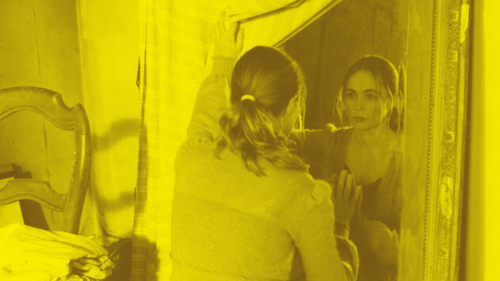
We have now reached the seven films by Rivette that I consider absolutely essential watches. The first is his best project from the current century, The Story of Marie and Julien. Just two years after David Lynch's masterpiece, Mulholland Drive, Rivette's similar-enough picture exists with familiar principals: the idea of establishing its dark, mysterious story with enough coherence to get you invested, only to turn towards a surreal, obstructed passageway that shatters your mind and what you felt you already knew. This multifaceted thriller about a clockmaker's thwarted plan to blackmail the importer of artificial, illegal goods is as good as Rivette has ever been. This lengthy exercise leads us to fester inside the minds of broken, sinful people and what happens to their spirits once they die both literally and figuratively (how are others affected by their actions). Rivette wanted to make this film around twenty-five years earlier but held off after his unfortunate nervous breakdown of the seventies; I am so glad that he was able to come around and muster making this film at some point because it is excellent.
6. The Nun
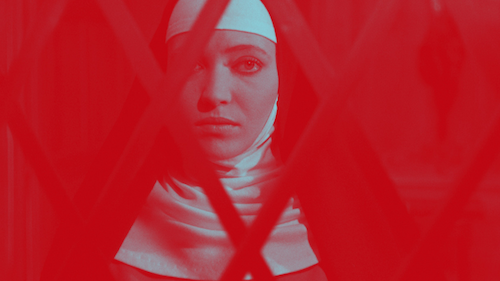
It was only Rivette's second film, The Nun, when he experimented heavily enough to the point of rubbing people the wrong way. Rivette's polarizing picture is, I suppose, not for the faint of heart — if provocative or avant-garde depictions of religion don't gel well with you. Starring the French New Wave icon Anna Karina, The Nun sees her character forced into the monastery despite her reservations (a clear allegory of the potential damnation of organized religion). She then experiences various forms of abuse: from being an erotic object of desire, and being coddled as a child, to being accused of not being committed enough (and, thus, having to endure punishment as a result). It is uncommon for a Rivette film to feel this angry or cynical, but he handles The Nun very well (even with its uncomfortable, harrowing subject matter). Even though this one is only just over two hours, The Nun will feel like one of Rivette's longer efforts simply because of its gravity and emotional distress; this is as pulverizing as Rivette ever got.
5. Joan the Maiden
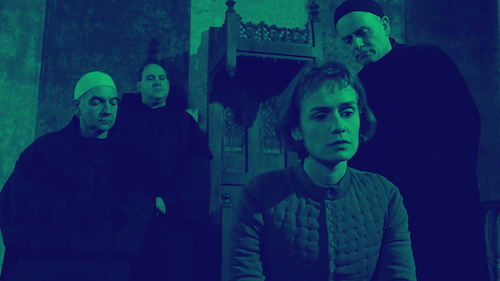
Rivette's most underrated film — of sorts — is Joan the Maiden (or Joan the Maid); what is technically two films that add up to nearly six hours altogether, I consider this one long feature film and am treating it as such on this list. One of the many films about Joan of Arc (played brilliantly by Sandrine Bonnaire), Rivette's version is simply majestic, magnificent, and mesmerizing. Chronicling much of her life — from prophet who is meant to lead France in the war, to executed martyr — Joan the Maiden is unbelievably thorough with its subject. Maybe Rivette intended on humanizing this historical figure, but I would argue that he accomplishes the opposite: he furthers her mythological stature with a film this robust, emotionally heightened, and contextually elaborate. This is a film that feels as immense as her tribulations, and, for that reason, I find Joan the Maiden joins the ranks of the works of Carl Theodor Dreyer and Robert Bresson: it is one of the greatest — and the most unsung — depictions of Joan of Arc ever put to screen.

4. L’Amour fou
Before Out 1, there was L'Amour fou (it walked so the former could run). By his third film, Rivette was already going the distance with the runtimes of his pictures, with this — a four-hour tragic epic. Rivette incorporates the rigorous lifestyle of theatre troupes with a dissolving marriage between a director and an actor; marriage is equated to the ongoing trust, effort, and trials of preparing for a long run of shows (is life outside of home the performance, then?). With the long duration, every time Rivette causes a jolt in this early masterwork, you will feel uncertain and full of dread before the next shot drenched in black-and-white fuzz (either 35mm or 16mm, depending on the sequence); this uncertainty is what a relationship can sadly devolve into depending on the partners and the circumstances they endure (or refuse to). What a stab to the heart this film is: to watch L'Amour fou is to know what true heartbreak is in cinematic form.
3. La Belle Noiseuse
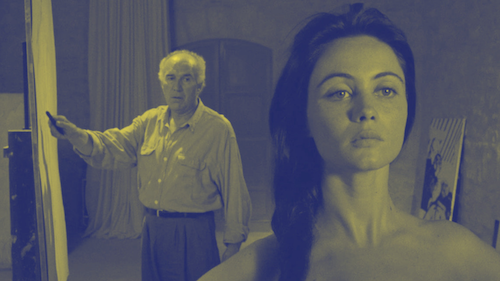
The first Rivette I ever watched was this ambitious example of what artistic cinema could be (as well as how art in film can be represented). On one hand, La Belle Noiseuse is a layered romantic drama between a painter and his muse; even then, this is an immersive, eviscerating look at the dysfunction between people who are meant to be in love. On the other, this is such a patient look at the artistic process. We literally watch every single stroke of the artist's hand as he works on his latest pieces, starts again, and hacks away at what is meant to be his masterpiece. Somehow, Rivette makes the process of painting, sketching, and the like as exciting and magnetic as a fiery action sequence. Any time we cut away from the canvas or paper, it feels like a slap in the face. If any other director attempted such a film, it could wind up being the biggest bore in all of cinema. With Rivette, however, you get something far more different: an exploration of the artistic process and the importance of getting to the final destination. One of Rivette's biggest gambles (not showing audiences the final art that we spend the whole film on) is one of his great rewards: the opportunity for audiences to create their own magnum opus in their minds.
2. Celine and Julie Go Boating
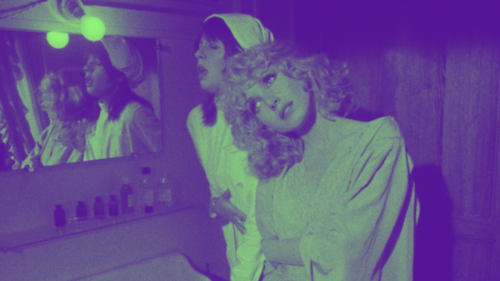
One of the most anarchistic and rebellious films of the French New Wave surprisingly came from Rivette; sure, he has long films and some avant-garde, postmodern depictions of real life, but he rarely felt like he was purposefully going against the grain. Oddly enough, a film like Celine and Julie Go Boating has now come to define his career as quite possibly his most celebrated and popular film. In short, this is the simple story about two different kinds of free thinkers and their escapades. We have magician Celine, and librarian Julie. They don't allow the confinements of real life to keep them at bay; instead, they explore many lifetimes and eras through whatever the hell Rivette feels like. This fantasy series of detours is one of the least predictable journeys in film history; not once will you be one step ahead of Rivette. He proves how limitless film is with a film like Celine and Julie Go Boating: one of the most fun examples of experimentalism in cinema. That's the truly profound thing of it all to me — just how electrifying, hilarious, and childlike a film this ludicrous is, as if Rivette has made us snobbish film connoisseurs feel like children with senses of exploration and discovery once again. When people discuss the ways that film's rules have been broken over time, rarely do they mean via a youthful essence and passion for imagination like Rivette exhibits with Celine and Julie Go Boating.
1. Out 1: Don't Touch Me
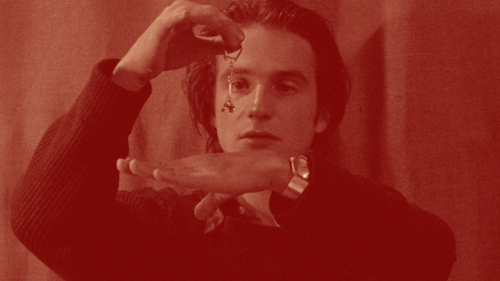
Picking Rivette's greatest film was no easy feat, and I was quite torn between Celine and Julie Go Boating and this picture. Ultimately, I settled on Out 1: Noli Me Tangere, which has been a film I have only seen once (which is understandable, given its insane runtime) and yet I think about it almost every single day of my life. Similar to a few works Rivette has worked on, Out 1 compares life with the theatrical stage, but his methodical, laboured process here is on a whole different level than simply saying that people are putting on an act as they live their habitual existences. Out 1 is far more detailed; it would have to be at thirteen hours in length. There are many sides to this film's nature. There is the heightened, lengthened capturing of the rehearsals of a couple of theatre troupes (and I do mean that you watch nearly the entirety of their exercises and practices). Then, there are a series of subplots, including a busker who feigns being deaf while performing, and a member of a secret society that the former spends most of the film's runtime trying to unearth. Are both halves of the same coin exercises in trying to get to the bottom of truths and, thus, understand both art and society with greater clarity?
Rivette treats the artistic process as this monumental, earth-shattering event. In doing so, he breaks down his own film with a prolonged, flattened look at archaic principles. His film is comprised of performances, sets, and dialogue, and that couldn't be more true than in the scenes where you, essentially, watch Rivette work with the barest of basics. At first, you may feel put off: why are we watching what feels line an incomplete motion picture? As Out 1 progresses, you will be lulled into this fake world that Rivette has created for you. In that same breath, you are additionally hunting for a new reality via this conspiratorial subplot, mirroring the rehearsals that enlighten us about how easy it is to become fixated on a potentially fabricated possibility. All of Out 1 is an existential freak-out: the possibility that there is more for life to offer. Jacques Rivette's greatest maneuver happens right at the end of this massive undertaking; in a thirteen-hour film with many long sequences, he tosses in a quick cut before the final credits — one that you will kick yourself over if you blink and miss it (as if to say how easy it is to miss out on some things in life). Do not watch the shortened version Out 1: Spectre, even if it will be easier to work your day around. If you have either option, you must figure out how to watch Out 1: Noli Me Tangere (even with its eight parts individually). I guarantee that you have never experienced anything like it, and it only grows stronger in my mind as one of the great cinematic experiments and risks in the entire history of the medium; rarely do films feel this rewarding and envigorating.


Andreas Babiolakis has a Masters degree in Film and Photography Preservation and Collections Management from Toronto Metropolitan University, as well as a Bachelors degree in Cinema Studies from York University. His favourite times of year are the Criterion Collection flash sales and the annual Toronto International Film Festival.