
Filmography Worship: Ranking Every Sidney Lumet Film
Written by Andreas Babiolakis
Filmography Worship is a series where we review every single feature of filmmakers that have made our Wall of Directors

New York City in the fifties, sixties, and seventies was home to different kinds of entertainment. You have Broadway and the world-famous theatre scene. Then, you have one of the epicentres of the New Hollywood movement: an era that welcomed daring and uninhibited American filmmaking in response to the dissolving of the infamous Hays Code. On the topic of film, you also had one of the key locations for the rise of the independent cinema circuit. Sidney Arthur Lumet encompassed all of the above as one of the great minds to dominate the Big Apple. Starting off with directing Off-Broadway productions, Lumet earned a one-way ticket to the small screen as a prominent television director, working on various iconic shows like Playhouse 90, Studio One, and Kraft Television Theatre. Due to the tight schedules and budgetary restraints of these series and their filmic episodes, Lumet developed the skills necessary to make large ideas come to life with little money and with no time to spare. His ability to turn plays into televised films leaked into his now-lauded cinematic career; his first — and most famous — project is his adaptation of 12 Angry Men. This was just the start.
Lumet was incredibly prolific throughout his career, never slowing down his cinematic output; he had over forty feature films over the course of six decades. The majority of his works focus on New York City as a backdrop, the grit-and-grime of city life, the punishing miasma of living a guilty and sin-filled life, and authoritative figures misusing their powers. These themes resulted in a number of now-celebrated crime thrillers and legal dramas. Due to his speedy turnover rate and narrative concepts, Lumet's films are often upfront and abrasive: two things that were crucial for the New Hollywood movement. His career was so long, that it inspired said movement, existed during it, survived the death of New Hollywood, and helped usher in the more contemporary films that vowed to bring such a movement back. Lumet worked until the last years of his life, passing away in 2011 from lymphoma at the age of eighty-six. What he has left behind is an illustrious-yet-harrowing career of intense character portraits, desparate stories, and paradoxically scathing love letters to New York City and America. Lumet experimented quite a bit, and you will find below that not all of his ideas worked (in fact, quite a few films did not do a thing for me); however, his highs were nearly unreachable, and those dozen-or-so films are the ones I am forever grateful for. I will focus only on his theatrically released feature films for this ranking. Here are the works of Sidney Lumet ranked from worst to best.

44. Gloria
Lumet's worst film is a remake of a work by another major name of seventies Hollywood: John Cassavetes. Cassavetes' Gloria turns his wife, Gena Rowlands, into an everyday superhero in his classic film. Lumet's take, however, does not contain that spark or focus necessary to make Gloria feel like controlled chaos (and Sharon Stone cannot hold a candle to Rowlands here); instead, his last film of the century made it abundantly clear that we were entering a new age, and one where we may have to leave excessive cinema behind.

43. Lovin’ Molly
During Lumet's prime in the seventies, it is absolutely baffling that he would even be capable of thinking about making a film like Lovin' Molly, let alone release it. This is a love triangle between the titular Molly and two bone-headed farmers where you are meant to get caught up in the chemistry that is stirred up; instead, you might be caught taking a nap during a film this dull, this vapid, and this pointless. When a film makes you question how you have spent your time, it is the cardinal sin of cinema.

42. A Stranger Among Us
Does A Stranger Among Us —starring Melanie Griffith as an intense copper who goes undercover in a Hasidic community to try and investigate a crime — sound appealing on paper? No? Well, it somehow fumbles even your lowest expectations, with an execution so messy that forensics experts may have to investigate the scene to figure out what the fuck happened (no one knows; not even a seemingly confused Lumet).
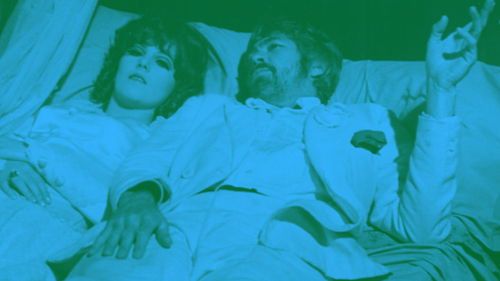
41. Last of the Mobile Hot Shots
What could go wrong when you mix Lumet, Tennessee Williams, Gore Vidal, James Coburn, James Wong Howe, and Quincy Jones? Well, you might get Last of the Mobile Hot Shots: a New Hollywood-era mess that tries everything and winds up feeling peculiar, strange, and frustrating. This love triangle film is one where you may not care if all three players wind up with nobody at all; at least it sticks out as such a baffling concoction that it may pique your interest (sadly, it shouldn't).

40. Family Business
Remember that phase where it was hip to make mobster comedy pictures? I'm not sure why we tried to force these out so much, but a bad by-products of this wave (one of the many) is Family Business: a crime caper with Sean Connery, Dustin Hoffman, and Matthew Broderick. What is meant to be part-family-drama and part-screwy-comedy just feels annoying, like a fly zipping around your face for two hours (and you bafflingly paid to see it, too).

39. That Kind of Woman
You'd think that kicking a career off with 12 Angry Men would be a highly promising start; we know now that it was. However, by Lumet's third film, That Kind of Woman, back then it may have felt dire, as though this new titan was already running out of steam and ideas. When a film about romantic decisions and a difficult life in World War II, staring Sophia Loren, no less (someone who has excelled in films of both themes), comes off as uninspired and drab, you know you have a flop on your hands; That Kind of Woman vows to be introspective and thought provoking, but it is too shallow to get there.
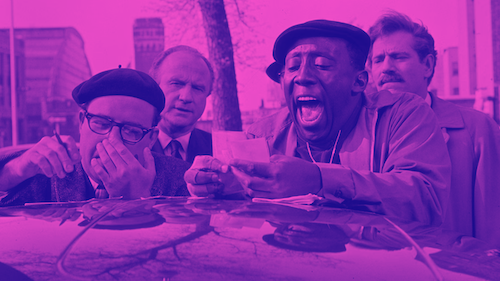
38. Bye Bye Braverman
Lumet's Bye Bye Braverman sees four acquaintances traveling to commemorate a departed friend; on the way to the funeral, a few hiccups thwart their travel. What partially feels like a Waiting for Godot-type play and a screwball comedy in one, Bye Bye Braverman feels like it could have been equally hilarious, interesting, and emotional; instead, it never really hits on any of those fronts and comes off as an unfunny writing exercise instead (you won't be enlightened in any way).

37. Just Tell Me What You Want
During a time where people were trying to make Ali MacGraw happen, Lumet's Just Tell Me What You Want dropped during a time where the fate of New Hollywood was not as much up in the air as it was seconds away from crash landing against the ground. One of the numerous Lumet films about love, Just Tell Me What You Want may mean to feel empowering, fun, and whimsical. What we get is something that almost feels buffoonish as a film, which collides with MacGraw's best efforts to be a dynamic, comedic lead (but she only plays the part and never truly becomes it, so she comes off as false and dull instead).
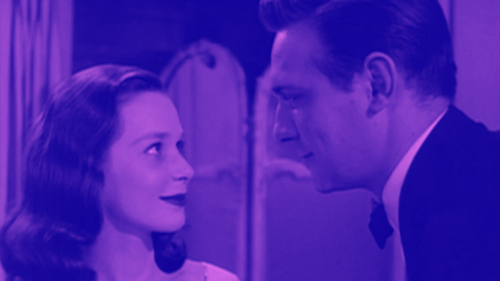
36. Stage Struck
Let's look at the good. Lumet would continue working with Henry Fonda after the amazing breakthrough debut, 12 Angry Men. He would start branching out with what kinds of pictures he made. That's all I've got. The bad is that Stage Struck is quite a drop in quality after 12 Angry Men set the bar way too high. This adaptation of the thirties classic Morning Glory does not feel as raw and humanistic as Lumet's first film; rather, it comes off as stagey, overzealous, and artificial.

35. The Morning After
Despite an Oscar-nominated performance for Jane Fonda (a welcome one, anyway), The Morning After is meant to be a thriller that moves you; it succumbs under the pressure it sets for itself and it crawls along instead. As we follow an incriminated former actress and her attempts to recollect what happened one unfortunate night, The Morning After encourages audiences to try to piece together clues themselves; the film is such a drag and so lifeless that the audience may piece together their plans after watching The Morning After instead.

34. The Appointment
One of Lumet's most difficult films to find (it was essentially buried, and you can see why), his take on the works of Michaelangelo Antonioni or Federico Fellini, The Appointment, never gets remotely near the existential and philosophical mindsets that are required to pull off this kind of an arthouse film. Starring Omar Sharif who is trying his best, The Appointment — about a lawyer who is suspicious that his wife is actually a sought-after escort — is at least an attempt at trying something new by Lumet, but what good is such an exercise when the film is this questionable, not confident, and shoddy?

33. Garbo Talks
I think hearing what Lumet has to say about celebrity culture — the worshiping of entertainers as idols — is at least partially fascinating in a film like Garbo Talks: one where a dying wish — to meet the legendary Great Garbo — speaks volumes. However, I think the film is too invested in the search for Garbo (in a quirky sort of way) than it is about the relationship between an icon and her fan; was the dying woman's perception of Garbo met, exceeded, or wrong (in both positive and negative ways)? We never find out the full extent of this exchange or what it could have been in this disappointing end result.

32. Critical Care
Despite a committed performance by James Spader (then again, when is he not on?), Critical Care flat-lines as a boring family dramedy about domestic relations and a sick father (Spader's own dad had just passed away before the production of this film, and he puts in as much of his own truth as he can into this by-the-numbers affair). It's clear that Lumet has some misses, but usually he is trying something different; with Critical Care, it's as if this auteur is trying to play ball with the rest of the nineties comedy-drama films, and nothing sets its apart from them.

31. Guilty as Sin
A film like Guilty as Sin bothers me because you can sense that there is maybe a stronger film that could have emerged here. Rebecca De Mornay is quite good as a criminal lawyer, but Don Johnson as her red-flagged client is terrific. Unfortunately, a good cast can only get you so far when a legal thriller like this plays it so typically, with enough safeness to guarantee that a film that is meant to make you feel in danger comes off like a child-proofed room instead. What fun is a guessing game like Guilty as Sin when all signs point towards the legal drama's most obvious and overused conventions?
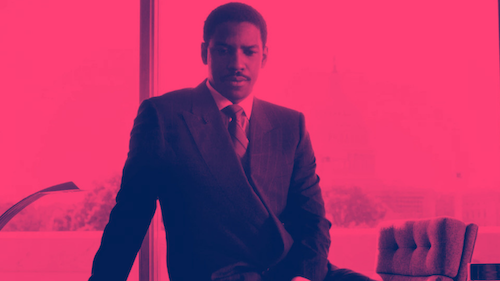
30. Power
What I'm sure is meant to feel like the revelation of the corruption within local politics, Power, comes off as a convoluted display of entitlement. In the same way that our lead character, Peter St. John (I cannot tell if I think this name is flashy or pretentious), becomes the very monster he once set out to destroy (a power-driven behemoth), Power becomes an indulgent, self-serious cautionary tale: the kind that feel incessantly heavy-handed. You can watch a myriad of films with the same message that feel neither hypocritical or obvious like Power does.
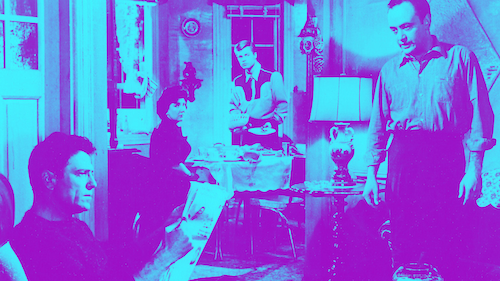
29. A View from the Bridge
While some of Lumet's weaker films suffer from handling too little, A View from the Bridge may be a title that struggles from trying to take on too much. With a whole web of romantic encounters (including one that can be described as incestuous ... ugh), A View from the Bridge is an effort to blend neorealism with the dramatic unveilings of the Broadway stage; this Lumet film gets sidetracked by the many things it hopes to accomplish, but there may be glimpses of something there that you may cling on to (even if the entirety of the project comes off as tonally and narratively confused).
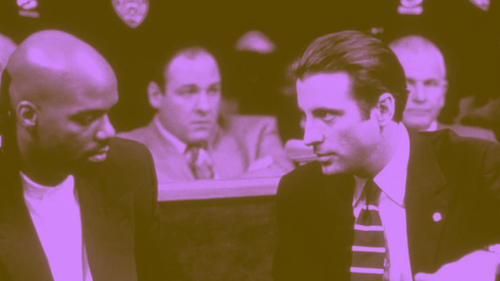
28. Night Falls on Manhattan
If I had a nickel for every time Andy Garcia hoisted up a nineties effort by a New Hollywood mainstay and made the film go from bland to "pretty good," I'd have two nickels but it's weird that it has happened twice (the other, clearly, being Francis Ford Coppola's The Godfather Part III). Here, Garcia takes Lumet's Night Falls on Manhattan and elevates it from a run-of-the-mill New York City crime drama to at least a character study of sorts; this film isn't too bad, but when Lumet's best crime films are masterpieces, you're much better off just going straight to the good stuff.

27. The Fugitive Kind
The pairing of Lumet and Marlon Brando seems like a dream on paper (especially with a Meade-Roberts-and-Tennessee-Williams-penned screenplay that reads a little bit like a Jack Kerouac road tale). The Fugitive Kind comes off as a little aimless (I know travel and road films are meant to feel a little meandering, but not when it is clear that no one — not even the director — knows where they are going). Brando tries his best to add a bit of substance to a film that feels like it is a series of ideas and barely any little purpose; it's only fun to be lost in something if at least one person knows how to bring us back out (Brando attempts to leave the trail of bread crumbs).

26. Child's Play
What may have felt like another Lumet dud from the early days of his career feels somewhat watchable in retrospect; Child's Play is at least mediocre and not outright awful. Lumet's psychological drama flirts with the idea of the unknown and the metaphysical — in this analysis of the dysfunctional inner-workings of an all-boys' school. What feels like Lumet is setting up for a discourse on societal politics and the mental health epidemic instead turns into a typical mystery that runs out of things to say (and, thus, it must hastily wrap up at exactly one-hundred minutes); is the journey worth it, then?
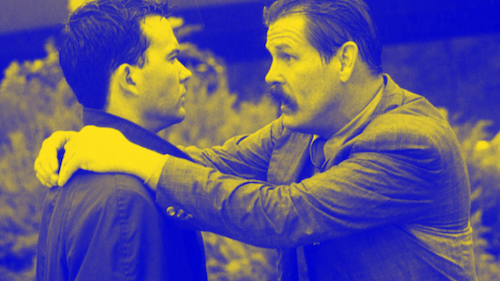
25. Q&A
Lumet's first film of the nineties is a film that feels like it was another day in the office for the American auteur. Q&A is an okay look at corruption within the police force and the ripple effect of the consequence of one's actions. What should be an intense watch just feels wordy and belaboured. Despite having some fairly good performances (particularly from lead Nick Nolte), Q&A loves the idea of festering on information and revelation, so much so that none of the beats feel warranted or impactful; if your idea of a crime film is something you watch but not feel, this will oddly be your fix (but who would want that).
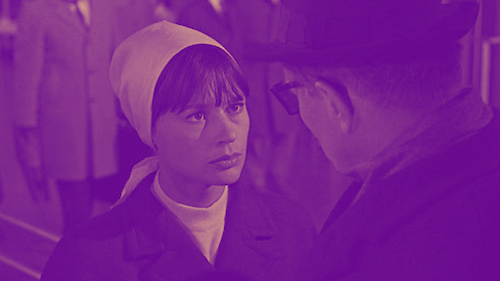
24. The Deadly Affair
Lumet's efforts to combat the rising silliness of British espionage films at the time is The Deadly Affair: an extreme example of over-correction to the point of feeling a bit too dry, serious, and stuffy. The film tries to emphasize the complications of such operations and how many moves each participant is ahead of the other (seemingly), but The Deadly Affair also never feels engaging (realism does not always mean organic, and a film like this is a blatant example of it). If you like spy thrillers, this film may scratch that itch for you, but The Deadly Affair may sound like someone who is yapping a lot to the point that you just want the story to end: sometimes, the key to telling a good story is to say less.

23. The Sea Gull
Lumet's attempt at a multi-narrative web is this adaptation of Anton Chekhov's play of the same name. The Sea Gull vows to have everything in the lives of common Russians, from bittersweet relationships to the cycles of life. I'm sure that this story would translate better on stage (as it was intended), because it only partially succeeds on the big screen — thanks, in part, to some strong performances by the likes of James Mason, Vanessa Redgrave, and David Warner. I can't say that Lumet and company didn't try to contain all of the multitudes here since the film is well over two hours, but their version of The Sea Gull feels too big to wind up just being decent.

22. Daniel
Things are turning for the better (somewhat) on this list. Fresh off of his Oscar win for Ordinary People, Timothy Hutton leads this Lumet drama with the same oomph. Like one of the handful of Lumet titles that feels very Costa-Gavras in nature, Daniel sees our protagonist try to learn the truth of why his parents were executed once they were deemed informants for the Soviet Union. Daniel (played by Hutton) feels like he is cut from the same cloth of resilience, and I wish the film had the same amount of drive and passion that its characters are meant to boast; Daniel comes off as a little thin and sprawled-out, but it is far from the worst watch.
21. The Wiz
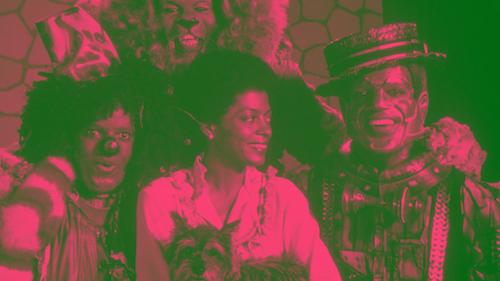
Anyone who stated that Lumet was the wrong choice to adapt the Broadway classic, The Wiz, to the big screen is talking out of their ass. While I admit that I might not like this musical as much as its biggest fans do, The Wiz is still a considerable undertaking. The original play takes The Wizard of Oz and adjusts it to portray and discuss race relations in the United States; Lumet's film furthers this initiative with an all-Black cast of icons (including Diana Ross and Michael Jackson). Lumet puts everything into his version — from phenomenal sets and costumes, to the underlining grit that such a film requires to maintain its commentary. Having said that, a minor gripe is that many songs just keep going, and the film itself does feel overlong as well; if The Wiz was tighter in a few ways, I think it would be sublime.

20. Deathtrap
I find that Lumet's takes on psychology are far more interesting when he goes about things his way: within the confines of hysteria, calamity, and with the hindsight of guilt when it is far too late to go back after one has committed their actions. Needless to say, he tries his best with a film like Deathtrap that feels Hitchcockian (like Rope), but he isn't really within his wheelhouse, here. Nonetheless, this elaborate look at an unfurling crime of pure mastery is at least a lot of fun, and you can tell that Lumet and company (including Michael Caine in the lead) are not taking this look at calculated evil too seriously; in all honesty, neither should you or me. Besides, most Lumet films are so depressing and heavy; it'll be nice to still see his stance on criminal minds from such a darkly playful vantage point.

19. The Anderson Tapes
What is more interesting than watching a criminal trying to stay two moves ahead of everyone else? Those who have the upper hand on the criminal. The Anderson Tapes sees Sean Connery as a thief who is planning his next move, having learned nothing after being imprisoned for a decade. However, his every move is being traced and recorded. The Anderson Tapes has such a great premise that it is a bit of a shame that the film never feels quite as electrifying or unnerving as it should; instead, it comes off as a fairly good exercise in paranoia and surveillance.

18. Find Me Guilty
Lumet's penultimate film was a sign that there was still some gas left in the tank for the New Hollywood legend. Find Me Guilty is empowered by its adaptation of the real transcripts of gangster Jackie DiNorscio's actual trial — in which he represented himself in court. Playing DiNorscio is none other than Vin Diesel himself: an actor who I typically cannot stand but find him in rare, compelling form here. Lumet, Diesel, and company lean into the eccentricities of this trial, acknowledging how ridiculous it can be; in that same breath, no one forgets the severity of what's really going on here. The end result is Lumet's take on how truth is often stranger than fiction.

17. The Group
While most of Lumet's films involve people who have already lived full lives and are caught at a moral crossroads, The Group is an attempt to conduct such a study before the journey of life has been undertaken. A bit of an audacious project by Lumet (at two-and-a-half hours, firstly), The Group follows eight different women throughout the years — starting during the Great Depression, and heading through World War II. The tapestry of their outcomes and individual tales makes for an interesting observation of the united whole of shared experiences. The Group is as biting as it is campy, and it's odd that Lumet didn't ever dare make another film like this one; it's flawed but at least beguilling.

16. Equus
The classic tale of Equus (by Peter Shaffer) seems like it should be directed by someone who deals with theological and intellectual films more than Lumet does, but the New Hollywood icon gives this adaptation a fighting chance with fairly good results. Rendering the philosophical angle of Shaffer's play into something more psychological and visceral, Lumet dares to step outside of his comfort zone for something that's intrinsically artistic and punishing in a way that is far different than his crime or legal works: this is a cavernous, introspective conquest.
15. Murder on the Orient Express
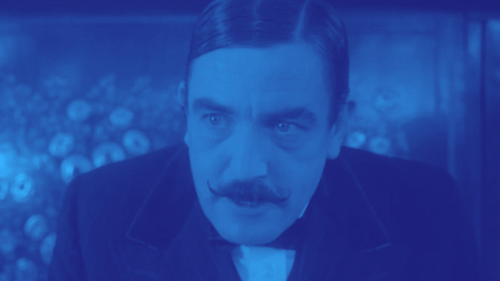
I don't think I fully appreciated what Lumet adapting Agata Christie's Murder on the Orient Express means. When I first saw it many years ago, I took it at face value: it's Lumet's version of the whodunnit while on the titular, moving train. However, with more knowledge of Lumet's filmography and his signature style, I understand this more as a master of crime and legal cinema taking the reigns of the mystery genre, emphasizing the sinful side of inner motives, and making an all-star cast work at the top of their game not as genre caricatures but as complicated people instead. This is a semi-stellar effort by Lumet when you think about it, and I wish more filmmakers took such liberties with these well-established genres; a whodunnit was always meant to echo the weight of crime thrillers like this one does.
14. The Offence
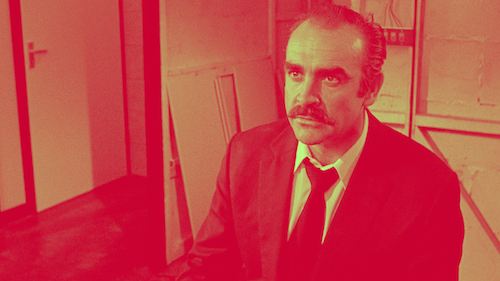
Do not prepare any tomatoes, but I am not the hugest fan of Sean Connery as an actor. I think he can over-cook his performances sometimes. However, he worked with Lumet a few times, and one of his best performances stems from such a collaboration. In The Offence, Lumet knows how to make Connery's detective character feel like a human who is pushed to the end of his limits and psyche during a heated interrogation (and its aftermath). When Lumet is focused, he is so effective at placing us in a purgatory of morality, without any clear signs of what is good or sinful in sight; a film like The Offence is a stirring study of composure in something as grueling and testing as a job in law enforcement.

13. Running on Empty
Lumet was excellent at telling the stories of those who have thrown their entire lives away (or, at least, they have the power to throw away the lives of others if they are lawyers, cops, or the like). Running on Empty has two coalescing storylines: there's the couple who have been on the run for years and have yet to be caught, and their son who has his whole life ahead of him as a musical prodigy in school — the son is played magnificently by River Phoenix in an Oscar-nominated performance that enforces what a tragedy it was losing him so soon. As the son's future is blossoming (with the threat of being thwarted by his parents' sins), the past of our criminals cannot be ignored anymore in this unique take on the coming-of-age drama: one that feels meticulous and commanding.

12. The Pawnbroker
I am convinced that Rod Steiger should not have won his Oscar for In the Heat of the Night (that should have maybe gone to his co-star, Sidney Poitier); in actuality, Steiger deserved his Academy Award for Lumet's The Pawnbroker with this immeasurable transformation into the Holocaust survivor who spearheads this tragic tale. Lumet's film is an astonishing-yet-bleak look at bigotry and hopelessness that would have been great via its own merits (its pulpy, dark cinematography, its brooding pacing, its risky storytelling), but having Steiger at the forefront for this one is a whole different story; Steiger adds layers of reality, damage, and pathos in one of the great performances of the sixties.

11. The Hill
Now that we are nearing the top of this list, I must admit something. For as many rough, boring, or even atrocious films Lumet has in his filmography, he had more than just classics to balance them out: discovering Lumet's unsung or under-appreciated titles has been a real treat for me. One such experience was with The Hill: Lumet's answer to a film like The Bridge on the River Kwai. Circling around five POWs during World War II, The Hill introduces a crushing exercise of torture — a massive hill that prisoners are forced to climb again and again. Featuring another strong Sean Connery performance under Lumet's guidance (not all of Connery's jobs are controlled like this), The Hill is a great film about the limits (or lack thereof) of the human psyche, body, and spirit.
10. Serpico
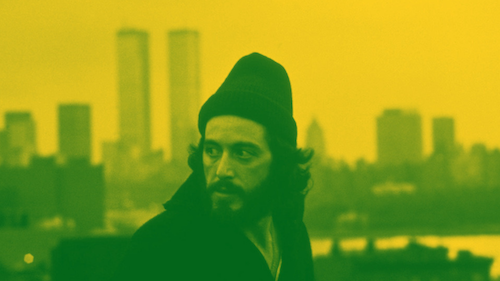
You know Lumet's top ten is loaded when a film like Serpico barely stays within it. One of the two major Al-Pacino-starring vehicles of Lumet's career (more on another one later), this one tells the story of officer Frank Serpico revealing the depths of corruption within the police force (to the extent that those who are meant to uphold the law begin to turn it against our lead). Pacino is sensational as Serpico, as you could not ask for a more intriguing policeman to follow during the early seventies. Pacino's Serpico makes you feel badass alongside him, protected by the dangers that Lumet throw his way, and sympathetic for his alienated, embrittled fate in the hands of mass hysteria politics.
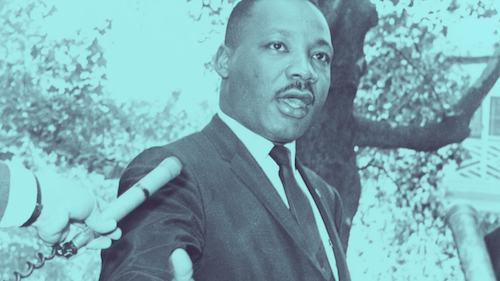
9. King: A Filmed Record…. Montgomery to Memphis
Lumet went uncredited for this documentary about one Reverend Dr. Martin Luther King Jr, and — while it isn't a secret that he directed such a picture — it is at least a little sad that he isn't more affiliated with this sensational study (he co-directed the film with Joseph L. Mankiewicz). A thorough, committed look at King's legacy as a major figure in the United States, King: A Filmed Record.... Montgomery to Memphis surpasses the average knowledge base of this icon even by today's access and standards (you can only imagine its magnitude back in 1970). Despite the fierce competition, there may not be a better film about the civil rights legend than this one that spends three hours combing through as many details about his life as it can — so as to let his legacy forever reign.

8. Prince of the City
Lumet's hit-or-miss ratio is so strange because his flops are clearly bad for whatever reason; then you have his successes that almost seem like there was no real reason for these misfires to exist. Despite the handful of substandard cop flicks that Lumet released, Prince of the City is so expertly concocted that it feels like it can come from a guy who can only make great cop dramas (this one just happens to be his best). With a career-high from Treat Williams as detective Daniel Ciello, Prince of the City is a near neo noir that revels in the darkness of New York City and the impossibility to outrun all demons. This purposefully-stressful watch feels like a novel that you are zipping through to see how it ends; has Lumet not taught us time and time again that most things do not have graceful endings? In the case of Prince of the City, you dread whatever conclusion will come your way.
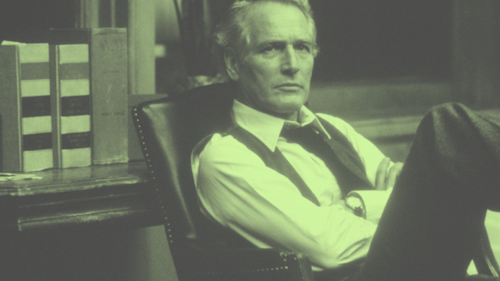
7. The Verdict
Many legal dramas reflect on a case with whatever provided information we are graced with; we work with what we have. The Verdict is far more layered. This could have been a simple case that was to be settled out of court, but these kinds of films have taught us time and time again that they are meant to have us rethink the moral consciousness of ourselves and others. Frank Galvin (Paul Newman) hopes that bringing a case to trial will not only better serve his clients who deserve justice — he aims to absolve himself of his addiction and sins as well. This risky play with many potential consequences is indicative of someone who is accustomed to playing with fire, and part of you will question what in the hell he was even thinking of when he enforced the trial; the other part of you will root for him in hopes that he has not ruined many lives via this maneuver (his own included). The Verdict places much weight on the repercussions of any choice in the courtroom, and it remains one of the great legal dramas for that reason (amongst many).

6. Fail Safe
I am absolutely baffled. How has no one talked about Fail Safe more? There's the argument that Dr. Strangelove came out the same year and is the better film about accidental nuclear warfare — in that same breath, it is alleged that Columbia Pictures purchases the film just to bury it. However, this is the twenty-first century, and a film that is this masterful being so criminally under-discussed is a travesty to me. This domino effect caused by one mistake that can lead to the end of humanity and the planet is completely sickening and horrifying; with Gerald Hirschfeld's obsidian cinematography, you either feel like you are left in the dark, or that you are staring death in the face. I'd love to relish in the casting choice of having Henry Fonda play the President of the United States, but so much of Fail Safe is tense, alarming, and shocking that I never get the chance to enjoy it as much as I am eviscerated by it. Don't let the lack of discussion fool you; this one is a must.
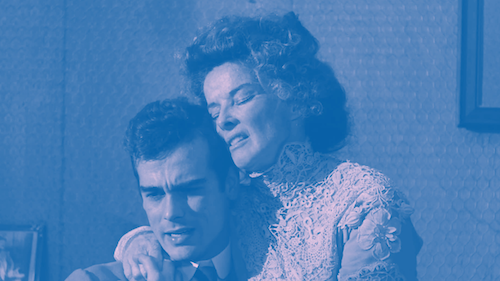
5. Long Day's Journey into Night
It is a tall order to match Eugene O'Neill's magnum opus, but Lumet comes awfully close with his adaptation of Long Day's Journey into Night. A family is on the brink of dismantlement when all that encourages the worst of each member is the uncomfortable silence of a foggy evening at their vacation home. When confessions start spilling, tempers begin to over boil and all are out in the open of the crossfire. There are a number of great performances from Katherine Hepburn to Jason Robards, but I want to make a special note of Dean Stockwell's soul-crushing work that made him feel like the next James Dean; if only he was as revered. Long Day's Journey into Night is one of the best examples of a film that feels like it takes place on the very stage it was meant to steer us away from; when a film is this dynamic, vulnerable, and captivating, feeling like we, too, may be hit by the shrapnel is quite something.
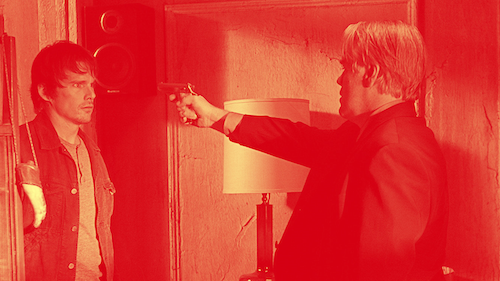
4. Before the Devil Knows You're Dead
Lumet's career ended as strongly as it began: from 12 Angry Men to Before the Devil Knows You're Dead. Lumet's career was so long that it acted as a prototype for the New Hollywood wave that was to come, he would see the death of the movement, and then finally see the seedlings of the movement's influence transpire again in the aughts. His final contribution is this mesmerizing look at a family that is driven by evil, with a per-meditated crime falling apart after things don't go as planned. Philip Seymour Hoffman and Ethan Hawke are exquisite under Lumet's purview in this chaotic dance between the past and present, with differing vantage points and memories providing us more information as to how fucked everyone is; there is no escaping hell once you're there. I know he didn't have a perfect career, but to release a film like Before the Devil Knows You're Dead at the end of one's life is evidence of Lumet's mastery of American crime cinema; he still had it, and, contrary to the handful of lower-ranked films on this list, Lumet clearly always had it.
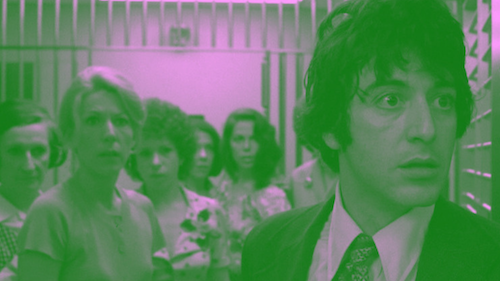
3. Dog Day Afternoon
Lumet's best film to be based on a real incident is Dog Day Afternoon. Firstly, Lumet's experience with working with Broadway and films that feel attached to the stage makes this thriller feel claustrophobic: we can never leave the Brooklyn bank once we arrive there — we fester with the characters we are locked-in with. Then, there's Lumet's brilliant capabilities of making us understand the extent of motivations even via the glance of a sole character. Here, with one of Al Pacino's greatest performances, we can sense the confidence that was once driving this robbery, and we will understand how quickly everything derails into complete calamity and devastation with no positive end in sight for anyone. If a film like 12 Angry Men was meant to make you understand the severity of the judicial process, Dog Day Afternoon is just as methodical and invested with helping you squeaky-clean viewers feel the punishing gravity of one's fate once they undertake actions with no possible rectifications. Where do we go from here? Dog Day Afternoon is the cinematic equivalent of knowing what it feels like to throw it all away.
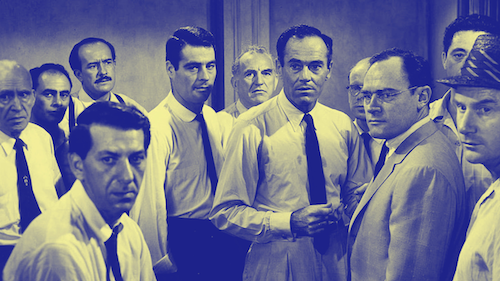
2. 12 Angry Men
Starting off with a film as good as 12 Angry Men is almost a curse. I am glad that most of Lumet's career isn't measured up against it as it very well could be, but he has released a number of great films that I am glad have been cherished over time. Even so, what a picture. 12 Angry Men was so ahead of its time that this film from the late fifties continues to be one of the most celebrated titles of all time: there are people who refuse to watch older films who love this one. How could you not? Lumet's adaptation — the greatest one for 12 Angry Men by far — places us within the company of its jurors without the reprieve of ever leaving their sights. They are to determine if a troubled youth is guilty, with most agreeing that he is (until Henry Fonda's juror makes a big case against this verdict). For the remainder of the film, the jurors turn one-by-one in this deconstruction of the legal drama: one that understands the nature of the courtroom game inside and out. With compelling arguments, performances, and cinematography, you will feel as sweaty and humid as our twelve characters who slowly learn the power of their decision with the moisture on their furrowed brows. Whatever they decide is permanent for the accused and for their souls; Lumet's 12 Angry Men will forever stand the test of time as a result.

1. Network
I hope you do not find it blasphemous to place any film above 12 Angry Men, but hear me out. As much as I adore that film, I love Network slightly more. When I think of the height of the New Hollywood movement, this perfect satire comes to mind. Featuring one of the greatest screenplays ever written by Paddy Chayesfky (one that is famous for its countless, riveting monologues), Network is an astonishing commentary on the state of things. When it first came out, Lumet's film was deemed too immature or even silly when it came to its discourse on the United States; in hindsight, Network was maybe too kind. However, its prophetic nature is now impossible to deny, and you can chalk this up to Chayefsky's ming-boggling screenplay. I think Lumet deserves some credit as well: for his ability to showcase the worst qualities of people in power, and echo our frustrations with those who determine the fates of everyone else. Together, both storytellers conjure up one of the best cinematic satires that first feels hilarious until the turning point where you realize that things are hitting a little too close to home; we are truly as ridiculous as this film is, now.
Things kick off with the grim-yet-simple premise of news anchor Howard Beale for the UBS Evening News. He is tired of his life and his job, and he has threatened to commit suicide. This threat — said on live TV — first gets him fired because of how easily it would disturb those watching at home (to me, this acts like a commentary on the Hays Code and the censorship of so many films and the fabricated intentions behind such actions). However, UBS then goes in the opposite direction: bring Beale back for ratings (if what I suggested earlier is true, then this move is one that lambasts those who misunderstand the New Hollywood movement as an excess of violence and cynicism, seeing as it's the same people with zero media literacy who encourage censorship to begin with). This stunt gets crazier once Beale's awful mental state sees him getting more delirious and unwell, to the point that he becomes an accidental television messiah for the masses; I do not even need to begin to elaborate on this one.
Outside of Beale's predicament, there are many other predictions that Network has made, from the monopolization of the nation, to the reality television falsities that drive the public into capitalist whirlpools. It foretells the downfall of humanity: all in the name of something as frivilous, arbritrary, and self-indulgent as network ratings. Network is as ferocious as it is depressing, and its entertaining side is present mostly within its first watch — one where you can be swept away by the presence of big talkers, dynamic personalities, and booming statements (performed by an all-star cast of Peter Finch, Faye Dunaway, Robert DuVall, William Holden, and many more). Then you realize that most of these characters are like the politicians, reality stars, or celebrities who suckered you into idolizing them: they are manipulative demons who have tricked you once again. Every subsequent watch of Network is more devastating and terrifying than the last: you see the film for its truth, its ignored warnings, and its theoretical genius. My only complaint about Sidney Lumet's masterpiece is its iconic slogan: "I'm mad as hell, and I'm not going to take it anymore." As predicted in the film, this line has just been parroted and not enforced. We have taken a lot. Way too much. It only gets worse. Network warned us of all of it, and we refused to listen. We continue to let it come true. I'm mad as hell. How much more are we going to take?


Andreas Babiolakis has a Masters degree in Film and Photography Preservation and Collections Management from Toronto Metropolitan University, as well as a Bachelors degree in Cinema Studies from York University. His favourite times of year are the Criterion Collection flash sales and the annual Toronto International Film Festival.