
Filmography Worship: Ranking Every David Lean Film
Written by Andreas Babiolakis
Filmography Worship is a series where we review every single feature of filmmakers that have made our Wall of Directors

Many directors have left an impression on me; this is abundantly clear when I have spent countless hours devoting time to my Filmography Worship series — where I go through all of the filmmakers I consider the best, and rank as many of their films as I can. I don’t think I will ever run out of great directors to study (hence why I have to cap myself). However, if there was ever a Mount Rushmore of filmmakers who I consider the objective best, you may find Sir David Lean on it. That isn’t to say that I consider his body of work to be the strongest (although you can certainly make that case; I don’t think he has a single dud, even at his weakest), but if you look at his filmmaking talent, I honestly do not think that most directors would ever come close to what he has been able to accomplish. These include incredible sequences (the takeover of Aqaba in Lawrence of Arabia may be one of the best directed sequences I have ever seen), inventive techniques (like implementing breathtaking jumpcuts in all of his epics; Lawrence of Arabia is often discussed in this way, but Doctor Zhivago is almost as impressive), and getting the most out of his actors in ways that feel modern, not from the Golden Age of Hollywood (sure, you can say that he has worked with massive names like Peter O’Toole, Alec Guinness, Katharine Hepburn, Omar Sharif, and the like, but let me remind you that some of their career best performances come from Lean films).
When Lean was a child, he was gifted an Eastman Kodak Brownie box camera by his uncle; the obsession began. After spending most of his time at the local cinema, he went to Gaumont Studios and worked his way up; from an assistant, to an assistant director, to editor (this is where he would develop his eye for fascinating editing choices); he would edit a few major films, including 49th Parallel by the Archers, and the 1938 version of Pygmalion. His first film as a major director was the propaganda film, In Which We Serve in 1942; this was a co-directed effort with Noël Coward. This was not the end of this partnership, as Lean would adapt a handful of Coward’s plays into feature films: This Happy Breed, Blithe Spirit, and the incomparable Brief Encounter. Lean would adapt two iconic Charles Dickens works next — Great Expectations and Oliver Twist; these are two of the most revered Dickens adaptations of all time. After so many adaptations, it was time for Lean to stretch and experiment a little bit. He hopped from the romantic drama The Passionate Friends to noir film Madeleine, from action aviation picture The Sound Barrier, to rom-com Hobson’s Choice. Summertime was the last film of this period that felt a bit like a culmination of all that he learned from these previous films: how to showcase a relationship, spotlight breathtaking architecture and nature, and make films that feel artistically massive. It was time for Lean’s next chapter.
What Lean is most known for by many cinephiles is his ability to make incredible epics. Starting with The Bridge on the River Kwai, Lean was working bigger and with more ambition than ever before, with a trio of masterpieces (following The Bridge on the River Kwai was Lawrence of Arabia and Doctor Zhivago); the former two films won Best Picture and Best Director (alongside a slew of other accolades), and Doctor Zhivago was also an awards season darling in its own way. Trying to continue this hot streak, Lean went bigger than ever before with Ryan’s Daughter: a romantic drama that did not go according to plan. Considered bloated and pretentious back in 1970, a now-notorious encounter with Lean and some major names at the National Society of Film Critics (including Time’s Richard Shickel and The New Yorker’s Pauline Kael); the critics proceeded to rip Lean to shreds for hours — so much so that Lean almost quit directing completely. With a series of abandoned projects, the only feature-length effort that transpired was his adaptation of E. M. Forster’s A Passage to India in 1984. He would pass away in 1991 at the age of eighty-three.
Lean doesn’t have as many films as you would assume with seventeen to his name (one being a television documentary featurette). Even at his lowest, I don’t think any of these films are outright bad; maybe slightly flawed at worst. Yes, this includes the polarizing Ryan’s Daughter, which I can admit is too long and maybe a little aimless, but it is also too gorgeous and moving to completely dismiss (the passage of time has been kinder to this film than its then-contemporaneous critics). Even though Lean is one of the most consistent directors of all time, I still found ranking his films quite effortless for the most part; I suppose I knew what each classic meant to me as a budding — and now obsessive — cinephile. I can imagine that everyone’s list would look quite different since Lean doesn’t have one sole opus, and I hope that you enjoy and understand my choices. Here are the films of David Lean ranked from worst (or, in this case, least good) to best.

17. Lost and Found: The Story of Cook's Anchor
Lean was hoping to make a film in Tahiti when his property master, Eddie Fowlie, comes across an anchor who allegedly belonged to Royal Navy officer Captain James Cook. Seeing as Lean hadn’t made a film in years at this point, a documentary featurette about this discovery — Lost and Found: The Story of Cook’s Anchor — seemed like the logical next step. This is easily Lean’s weakest film because it is almost incomparable to anything else he made. However, that is not to say that this is a bad film. Lost and Found is driven by so much enthusiasm and glee that it feels like you are a part of this expedition as well; if you find the riddling off of information dull or dry, at least this film is a lean forty-minute runtime as to not overstay its welcome. Besides, how can a film be dull when an artifact of this magnitude is stumbled upon, scrutinized, and then rescued? The reenactments in this film only add to its playfulness. I wouldn’t start here with your Lean marathon, but Lost and Found may be nice to pick up on the way out of completing the rest of his filmography.

16. The Sound Barrier
On one hand, The Sound Barrier is certainly a weaker Lean film. It feels oddly typical for a Lean motion picture, with its focus on the airplane genre (which was quite popular around this time) and the characters’ storylines take a backseat for the spectacle. However, what a spectacle The Sound Barrier proves to be, with some incredible high-flying stunt work and effects to make you take a step back and remember that this is, without question, a Lean film; it just happens to be amongst his thinnest and least memorable. It is certainly worth checking out if you want to see everything Lean has to offer, but you can also do a lot better than this film that amounts to being only fairly good.
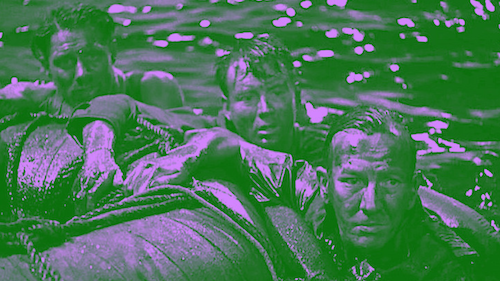
15. In Which We Serve
Lean’s debut film was a collaboration with Noël Coward. Essentially a propaganda film, I am glad this film exists despite its one-sidedness and narrative slimness. First of all, this was a clear launch point for Lean, and with Coward by his side, Lean was provided the platform to explore and experiment behind the camera. Even this debut is quite stunning at times, with striking cinematography and some emphatic sequences that are clearly the seedlings for the Lean we would all grow to discover and love; he wasn't epic yet, but he was certainly itching to tell large stories and have complicated sequences. Even in such a loaded environment, Lean used In Which We Serve as a bit of a sandbox to gather his bearings; if you want to see him putting all of his ducks in a row on screen, this film will act as a bit of a sneak peak at a young Lean’s developmental phase (at least it is better in this way than it is a film on its own).

14. Madeleine
Lean’s biggest cinematic regret was not Ryan’s Daughter, but, rather, one of his transitional works, Madeleine: a rather forgotten noir film about secret romances and deadly crimes. A request by his then-wife, Ann Todd (who stars as the title character), this ambiguous crime film based on a real murder at least nails the atmosphere of such a deranged and mysterious situation; Lean’s efforts to blend a historical tragedy with the film noir style is commendable enough, and I wish this was an experiment that was done more often. However, you can also feel that there wasn’t much spirit in this film: as if Lean and company were just glossing over the notes of this story and hoping that they had enough substance to work with. Even so, I am happy that the film sticks to its guns and leaves itself open ended for the audience to decide whether or not Madeleine was guilty; even with the true story to derive from, I am sure many other directors would have tried to tie a bow on this one nonetheless, and Madeleine at least has enough guts to not surrender to comfort.
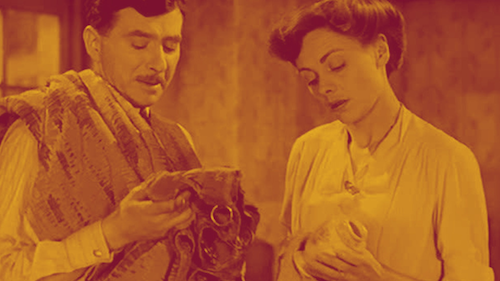
13. This Happy Breed
Lean’s first feature film as a solo director is an extension of his previous collaboration with Noël Coward; it is an adaptation of Coward’s play, This Happy Breed. A generational look at a family throughout some major moments in British history (from World War I to World War II), This Happy Breed aims to be a larger film than it is; I still think that This Happy Breed is a mild success because of how strong its stars are (including Celia Johnson, who would deliver her best work with Lean in another little film called Brief Encounter) and how well Lean was able to extract huge emotions and sensations from off the screen right off the bat. You can tell that Lean was meant to make gigantic films, and This Happy Breed is like a caterpillar waiting to burst out of its cocoon; at the end of the day, it is still a cocoon and not the butterfly we are waiting for.

12. A Passage to India
We have now reached the essential Lean titles, and twelve out of seventeen is a sign of excellent, consistent quality throughout an entire career. Lean’s final film feels like an attempt to return back to what he accomplished during the height of his career, and A Passage to India is a noble attempt. Sure, this is not The Bridger on the River Kwai, but at least this adaptation of E. M. Forster’s iconic novel is cut from the same cloth. As majestically massive as he ever was, Lean doesn’t miss a beat when it comes to elaborate choreography, intricate maximalism, and powerful visual prose. However, his restricted punches when it comes to the novel’s colonialist themes and scathing commentary on the British (and Alec Guinness playing a Hindu professor in 1984 is far less excusable than Alec Guinness playing the Arab Prince Faisal in Lawrence of Arabia twenty years earlier). Unlike some of Lean’s other epics, A Passage to India asks you to be a little patient; should you be, I believe it does pay off as a swansong that is indicative of a larger-than-life director and his brilliant past.

11. Blithe Spirit
Today may be the day where you learn that Lean directed a supernatural comedy featuring séances and the ghost of one’s dead wife, and that film is his adaptation of Noël Coward’s Blithe Spirit. Of course, the film goes further than simply being a kooky caper. It is an early example of a near-satirical commentary of the upper class (not quite eat-the-rich levels, but close enough to even be able to make such a comparison) and an actually funny film about regret and past mistakes (Lean was almost always seen as so self-serious, so seeing just one film dismantle all of those notions is quite neat). If you want to know what Lean looks like when he is being fun (rare, I know), then Blithe Spirit may introduce you to a side of the prestigious director that you never knew existed (this would make for a great Halloween screening, even).

10. Ryan’s Daughter
Surprise: I don’t hate Ryan’s Daughter. The artistry is exceptional. The lead performances are honest. The vibe of overwhelming passion and heartbreak are undeniable. Sure, the film is quite excessive, especially since its story is quite simplistic compared to the other titanic Lean films (here, we are tethered to a married villager having an affair with a British officer who is visiting Ireland… for nearly three-and-a-half hours). However, what may have come off as meandering and hyperbolic back in 1970 — to me — feels like your average grandiose art film nowadays; with so many slow-cinema masterworks since (which Ryan’s Daughter may feel swift next to), this despised Lean film now fits right in with the aesthetic, glacial, visceral art that is now accepted and loved. I don’t expect everyone to love Ryan’s Daughter, from its length to its pacing to John Mills’ peculiar Academy Award winning performance (it’s a little insensitive, to say the least). However, I could not shake off this flawed-yet-gorgeous film; view it as Lean’s version of Heaven’s Gate, if you will (a once-maligned film that was too ahead of its time and destroyed the career of the auteur who made it).

9. The Passionate Friends
It was at this point that Lean was starting to try new things on the big screen (after adapting the works of Coward and Dickens a handful of times). You can tell that he was figuring himself out with The Passionate Friends because it feels like one of his more rudimentary films story-wise (essentially, it is a romantic drama that circles around a love triangle and the affair that ensues). From how well the film is shot to its strong lead performances (particularly Ann Todd), The Passionate Friends is at least a strong-enough watch (it also zips by at ninety minutes), and watching Lean set up a new stage in his life was always going to be exciting. However, seeing that this is Lean — someone who always went the extra mile — this complicated love triangle becomes a burning core that radiates off of the screen. The inner-guilt and bursting feelings match the deep shadows and fierce, pointed lighting. The simplistic story is not left as such, and Lean makes each and every word and pivot count. If you ever feel like Lean films are always trying to do too much (I could never, but I digress), The Passionate Friends is one excellent example of what he could do with very little (his crowning achievement of such is Brief Encounter, but you are allowed to have more than one film that succeeds in such a way).
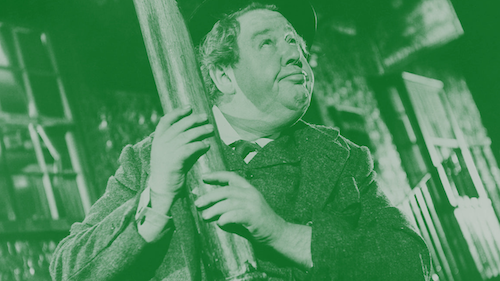
8. Hobson’s Choice
Think of Lean’s comedy, Hobson’s Choice, as a lighter, more fun version of William Shakespeare’s King Lear, in the sense that Henry Hobson has three daughters and expresses his dissatisfaction with them when they want to move on with their adult lives. Who else but one Charles Laughton can play Hobson with such grumpiness and charm all within the same package? While this feels like anything but a Lean film, Hobson’s Choice boasts so much heart and fun without ever losing sight of how to tell a compelling story with some more serious twists and turns (mainly in the form of Hobson refusing to give up his daughters, but also not knowing how to take care of himself; how can he then oversee his children when he can’t even protect himself?). This is a rather underrated Lean, should you ever want to know what that can even look like (when he is one of the most celebrated directors of all time).

7. Oliver Twist
Look, I admire Charles Dickens’s story for Oliver Twist, but I find that many adaptations can get carried away, become insipid and frustrating, or make me not care about an orphan (which is saying a lot). However, Lean’s version is one of the finer ones you will find: it is a version that knows how to feel honest and earned with its emotions (without any guilt tripping), knows when to wrap things up, and how to find the heart of Dickens’s story underneath the heaps of lavish sets, costumes, and sequences. Of course, one cannot forget the biggest elephant in the room — Fagin’s highly-questionable and arguably antisemitic prosthetic makeup work (despite Alec Guinness’s captivating performance). What helps propel Lean’s version, however, is how dark and serious his take on Oliver Twist is; yes, we love to embrace the joys that arrive at the end of this classic tale, but Lean understands that we can only understand jubilation if we witness devastation.

6. Summertime
Now, I know that I championed Ryan’s Daughter quite a bit, but, to me, Summertime is what that film tried to accomplish but with far more restraint, artistry, grace, and oomph. If Brief Encounter is an accidental romance that was could never be, Summertime feels like the destination paradise version of the tragic tale. This far-brighter film sees Katherine Hepburn at the forefront, as she vacates to Venice in hopes of a better life, the possibility of finding a partner, and the discovery of who the real her is after many years of her mundane, disappointing normalcy. Lean makes sure that when her character, Jane, falls in love with Venice, Renato (Rossano Brazzi), and life again, we feel every single bit of her glee; with sublime photography, sweeping emotions, and spark of new life. Ultimately, we also experience the deepest wounds that heartbreak and disappointment inflict in this monumental romantic classic.
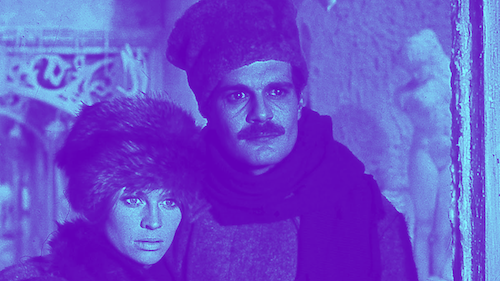
5. Doctor Zhivago
While Doctor Zhivago was starting to showcase signs of what would wind up happening tenfold with Ryan’s Daughter — according to the naysayers (the possibility of being overlong, getting lost in the size of a project) — in the same way that I am here to defend Ryan’s Daughter, I will also stick up for this romantic epic. It might not be as nuanced and layered as Lawrence of Arabia or The Bridge on the River Kwai, but what it does have is a pair of leads that possess multitudes of history, life, and magnificence in them. There’s Omar Sharif with a career-best performance as Yuri Zhivago; alongside him is a powerful Julie Christie on the rise (starring as Lara Antipova). With a number of eras in Russian history used as the backdrop of this cursed-yet-fateful romance (including World War I and the October Revolution), Lean understands how to actually incorporate these moments in time with the main story (something many romantic epics attempt and fail to properly implement). By Doctor Zhivago’s frigid and snowy final act, we see lovers frozen in time like recovered artifacts or anecdotes in a history book; Lean’s monumental film acts in the same vein when it comes to the permanence of true love. Its shocking final turn is a question: is fate as cruel as it is rewarding?
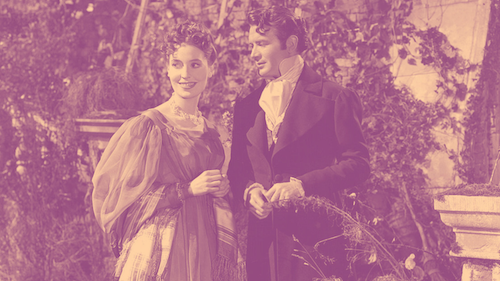
4. Great Expectations
The stronger of Lean’s two Charles Dickens adaptations is this visceral take on Great Expectations: the iconic tale of Pip and the potential to have a new lease on life. One of my favourite takeaways is the highly-lauded black-and-white cinematography, but I feel like it goes beyond just being visually attractive: the film almost feels ghostly. To me, the film feels like a haunting memory of yesteryear: a nostalgic, bittersweet look at this cherished coming-of-age tale, from the impressionable early years of Pip’s life to his adult years (and the impact of the salad days that we got to watch). This film feels like Lean’s first stab at a complicated screenplay as an exercise to see how big he can make his stories; the end result is one of the rare films to truly understand Dickens’s ability to both prepare children for the harshness of the real world whilst making adults feel young again and with the gift of hindsight.
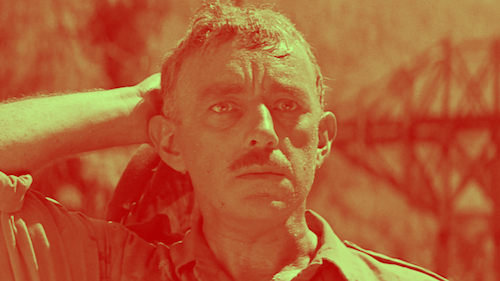
3. The Bridge on the River Kwai
While I did say that it was relatively easy for me to rank Lean’s filmography, my heart does break having to place either of the following three films third or second; even so, I know in my heart what the order is. The third-best masterpiece in Lean’s career is The Bridge on the River Kwai: his first Best Picture winner, and one of the great war films ever made. We find ourselves trapped at a POW camp in Burma, as the captured British soldiers are forced by their Japanese captors to build them a bridge that will help them during wartime. This epic eases from an act of resistance to a subdued sense of sympathy and understanding; when The Bridge on the River Kwai catches you in its trap, it tosses in its coalescing subplot — an outside team’s plan to blow up the bridge. When both the constructors and destroyers are on the same side, and their plans are about to collide, who do you root for? Sir Alec Guinness’s career-high performance concludes with one of the great realizations in film history: an awakening, and then the cursed line itself, “What have I done?” The Bridge on the River Kwai pretends to play ball with the war epics of its time before transforming into something completely different: an onslaught of obliteration, agony, and regret.

2. Brief Encounter
Sandwiched in between two of the largest films ever made is Brief Encounter: a romantic drama with a small cast, a slimmer budget, and only ninety minutes to shine. Yet it stands just as tall and feels just as large as the behemoths that surround it. Lean’s big breakthrough picture — about a love that was meant to be but simply cannot be — is one of the great romance films ever made, mainly because it knows that with an abundance of love usually comes the worst emotional pains. Following housewife Laura (the sensational Celia Johnson) bumps into a stranger, Doctor Alec (the equally-enthralling Trevor Howard), and they develop a friendship that slowly unfurls into feelings for one another. The problem is that the two of them are married and have families who depend on them, yet they turn that titular brief encounter into more forced meetups; their dates together digs into the time that they once spent with their loved ones. Which life are they meant to pursue? One of cinema’s largest heartbreaking pictures, Brief Encounter is to know that loss comes from knowing what you once had; our characters stand to lose in many unfortunate ways.

1. Lawrence of Arabia
When you fall in love with film, it becomes increasingly difficult for you to know what that initial, awe-inspiring moment was: the one where you knew that this was the artform that you wanted to devote all of your passive time to. These moments can even make you want to join the industry. To come across such an experience again during your journey as a cinephile can feel impossible when you have seen so much. For me, I knew what it felt like to adore motion pictures when I first watched Lean’s magnum opus, Lawrence of Arabia, as an audacious, wide-eyed teenager; for some reason, a nearly four-hour war epic seemed like the way I wanted to spend my evening after high school one day. For its entire runtime, I was hypnotized by the heat that rose off of the blistering sand, the sky being so blue that it had to be water (and yet our characters were still dehydrated), and the swarm of extras that felt impossible to manage (we have been spoiled with the use of CGI effects in this day and age). There was scorching emptiness as far as the eye could see, carnage staining the grains of sand that once glistened, and hours of one of the grandest, exemplary films I have ever seen.
And then, there was Peter O’Toole.
Possibly the strongest shift in character development in all of cinema (at least one of the greatest examples) is O’Toole’s turn as T. E. Lawrence. His breakthrough performance starts off in an almost silly fashion: he is a clumsy army officer and cartographer who has no sense of danger. He bumbles about, and you fear for this man’s life. He is tasked with suicide missions; well, the joke is on his superiors, as Lawrence became the face and name of a movement. Now, Lawrence of Arabia is far more than just a look at Lawrence’s rise as a militarily, political figure. It examines the moments where he started to turn with the power bestowed upon him, as well as when he could no longer perform miracles with the snapping of his fingers. The film acknowledges what a controversial and polarizing figure this was from right off the bat, and it also leaves you alone with your own devices to make your own opinion. O’Toole matches all of Lawrence’s shifts — from good-looking goofball, to commanding leader; from blue eyes that can charm you from a mile away, to a broken thousand-yard stare of trauma and grief; from the certainty of a confident man to the confusion as to why we are still destroying all that surrounds us. O’Toole grants us one of the greatest performances to ever grace the big screen.
Around him is a cast of titans: Omar Sharif, Alec Guinness, Anthony Quinn — the list goes on. The film acts as a parade of incredible sequences and choices. To highlight them all would take an eternity (or at least triple the length of the film itself, and that is already quite a long period of time). I cannot ever fully explain the extent of each cut, shot, line of dialogue, twitch of an actor’s eye, or sound effect, but I do know that this is one of the most precisely constructed efforts. For most of my life, this film felt insurmountable: how could a film be better made than this? As a motion picture, it is one of my favourites. On the discussion of best-directed films, Lawrence of Arabia has very few equals; one of the only ones that come to mind is Akira Kurosawa’s masterpiece, Ran. No one came close to being able to make a film like Lawrence of Arabia when it first came out, and we have headed so far in the opposite direction with computer-generated shortcuts, condensed and contained shoots, and many other things that were not used in this impossible film. This is one of the motion pictures that made me have a larger understanding and passion for cinema when I first watched it. This relationship only deepens with each watch. I will forever be grateful to Sir David Lean for Lawrence of Arabia: a picture that made me understand what films could be, should be, and — sadly — will never be again.


Andreas Babiolakis has a Masters degree in Film and Photography Preservation and Collections Management from Toronto Metropolitan University, as well as a Bachelors degree in Cinema Studies from York University. His favourite times of year are the Criterion Collection flash sales and the annual Toronto International Film Festival.