
Filmography Worship: Ranking Every Frank Capra Film
Written by Andreas Babiolakis
Filmography Worship is a series where we review every single feature of filmmakers that have made our Wall of Directors

Before Steven Spielberg, there was Francesco Rosario Capra — known to all as Frank Capra. Capra helped establish what that Hollywood atmosphere and tone was while the industry was reconfiguring itself (after its transition from the silent era to talking pictures). When you consider that homely feeling, optimistic spark, and sugary sheen of hope that many directors abuse in Hollywood, chances are the bulk of their ideas came from someone like Capra. The key difference is that Capra was actually riding off of the electricity of his performers and crew; surprisingly, much of Capra's films ran on improvisation and off-the-cuff suggestions, and Capra aimed to steer away from the focus on technicality and innovation that many filmmakers were implementing at this time. For the most part, his sense of connectivity and chemistry was organic, while many imitators could not recreate Capra's tone with all the resources and money in the world because they forget how natural this was for Capra. During his prime, Capra was making underdog stories about lower class citizens figuring their lives out: an important image to uphold during the Great Depression and the Second World War.
Capra knew a thing or two about perseverance, hence these calls to action in his films. As a child, his family migrated from Bisacquino, Italy, to the United States via steamship. The two-week trip over was an eye-opening experience for the five-year-old Capra, who shared the tiny vessel with countless other immigrants. Resources were scarce. There was no opportunity to wash up. He not only saw the struggle in others: he was living it himself. His family would live in an Italian ghetto, with each family member doing odd jobs to survive. Capra himself wound up serving as a second lieutenant for America in World War I after college; he caught the Spanish flu and was discharged. He struggled for years trying to find steady work and became depressed when nothing turned up. After living in flophouses, almost dying of a burst appendix, and doing everything under the sun to stay afloat (from gambling, to selling books, oil, and anything else), things were looking dire for Capra.
After reading about an upcoming film studio in the local papers, Capra called and lied about his experience within the motion picture industry. He was offered seventy-five dollars (around fifteen-hundred dollars in 2026). He directed the short, Fultah Fisher's Boarding House, in two days. Despite the small scale of the project, this was that open door to opportunity that Capra desperately needed. This led to Capra becoming a steady writer for the likes of Hal Roach and Harry Langdon before getting the opportunity to make his own feature films, including for Columbia Pictures. Capra's adaptability — by any means necessary — made him an asset during the shift from silent films to sound pictures, since many American directors floundered during this pivot; meanwhile, Capra was a hard-working, prolific machine. He directed seven silent films in 1928 alone (!), and his sound era was incredibly steady (with fifteen films throughout the thirties). He lived his own rags-to-riches story, going from a man having to fib his credentials just to find work to becoming a three-time Oscar winner for Best Director in a three-year span (with two of those films, It Happened One Night and You Can't Take It with You, going on to win Best Picture as well; the third film he won for is Mr. Deeds Goes to Town).
Despite all of this, Capra quit making Hollywood pictures to serve in World War II despite not being forced to enlist. When he would return to making motion pictures, he devoted the remainder of his career during this war to make his Why We Fight series of documentary films; while he explicitly emphasized that these were not meant to be propaganda films, these seven works were still meant to encourage viewers to serve their nation during the biggest war of their lifetimes. I won't be covering this series here simply because they feel so different from Capra's other works and there are enough of them to shake up the flow of what I feel like is a steady list, but I may cover these films in their own article in the future. He only released one narrative film during this time: Arsenic and Old Lace, which was filmed in 1941 and screened in 1944. After the war, Capra tried returning to filmmaking but he wasn't in the same level of dominance that he once was. It's a Wonderful Life is considered a classic now, but when it was first released in 1946, it was considered quite a dud (outside of Capra being nominated for Best Director once more). His career was somewhat all over the place after that, and he even indulged in producing, writing, and/or directing educational documentaries (the couple he directed I will be including below, since there aren't many). He felt that his brief retirement from Hollywood made him out of touch with the progressions within the industry, and that he could not keep up with the star-making shifts and demand that he did not see eye-to-eye with (despite working with some titans like Jimmy Stewart, Cary Grant, Clark Gable, and Claudette Colbert).
He would pass away at the age of ninety-four in 1991, after having a heart attack in his sleep. He lived a full, varied, and chaotic life. His legacy as one of the most influential directors in the history of Hollywood is undeniable. Having gone through his existing filmography of films (again, outside of the Why We Fight series), I once saw a career of high-highs and middling lows. However, with context, we can see something else: Capra's own underdog story. I won't pretend that Capra's earliest films are all golden, or that he was always on top of his game with every release; I do think that his established classics are the majority of the films that are must-watches. However, knowing how much he suffered and how hard he worked to get to these places makes this edition of Filmography Worship feel a little special; so what if a handful of these films did not work out for me when you know what came behind them? I will still be objective with each title since I am not a judge on America's Got Talent who will dismiss the quality (or lack thereof) of something because of its backstory; however, I hope that these introductory paragraphs have at least established Capra's lore and the importance of these films as artifacts of his journey. I won't be covering any of the unfortunately lost films in Capra's canon either, but we still have nearly forty titles to get through at least. Here are the existing, non-war films of Frank Capra ranked from worst to best.
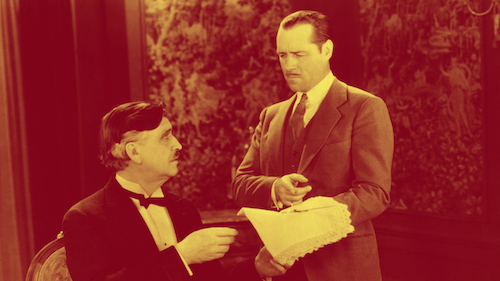
39. The Donovan Affair
I will say that the first two entries on this list feel unfair for different reasons; these are films that feel wrong to place beneath Capra's actual worst films, but I feel like I must place them last. The first is The Donovan Affair, and I don't even know if it actually is the worst film here. The problem is that there is no sound in this film, and I do not mean that this is one of Capra's silent pictures: this is a full-on talkie whose soundtracks have not survived. This is a murder mystery that you can watch in 2026 without any dialogue, musical cues, or any audible accompaniment; the difference between this and Capra's earliest films is that The Donovan Affair is meant to be heard, and literally half the film is now missing as a result. The end result winds up being a bit painful, but I can imagine that getting to hear what we need to hear (and filling in that missing information) would obviously aid The Donovan Affair significantly.
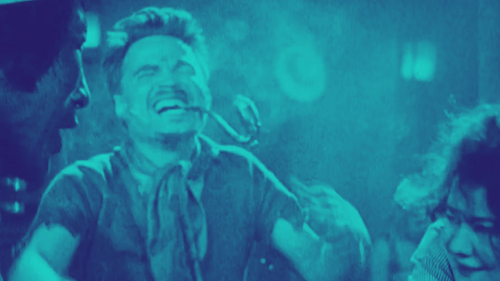
38. Fultah Fisher's Boarding House
The second film that feels unfair to place this low is Fultah Fisher's Boarding House. This is Capra's first official film (outside of some other work while he was doing odd jobs, like the lost documentary La Visita Dell'Incrociatore Italiano Libya a San Francisco). He threw everything into this twelve-minute film — one that is meant to honour the Rudyard Kipling poem of the same name. While the inspiration within the film is immense, there's just so much going on and very little to take away from this film, outside of the fact that Capra would do whatever it took to get steady work. Now a feature on the Criterion Collection's release of It Happened One Night, this short is a nice memento to see where Capra came from and not much more.

37. Rain or Shine
We have now reached the films that I feel a little more comfortable ranking low. Here's Rain or Shine: a film that was meant to be a musical that was changed at the last second (many musicals were not translating well to the big screen during the earliest days of sound pictures). As a result, Rain or Shine still possesses the recording issues of preliminary talkies (sound cutting in and out, people being inaudible at times, and background noise overtaking the foreground, amongst other issues) while coming off as overly talky (there is some fast riffing in a screwball kind of way that somewhat works, but Rain or Shine otherwise comes off as a bit annoying).
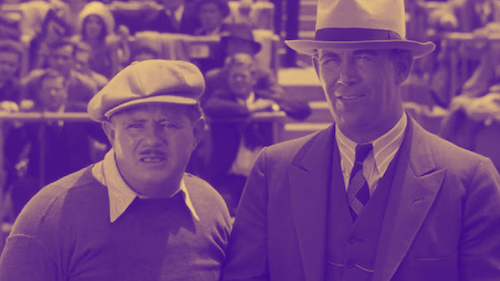
36. Flight
Capra had a few similar films back in the late twenties. To me, Flight feels like a talkie remake of Submarine, except for the fact that Capra took actors Jack Holt and Ralph Graves from under the sea and tossed them up into the air. The premise is almost exactly the same as well: two men who are quarreling over a girl. Outside of some interesting plane sequences, Flight is quite a bore, especially when it's a worse version of Submarine (which isn't exactly a masterpiece, either).

35. Rendezvous In Space
Capra's final film is a twenty-minute-long documentary about the space race from America's side. You can argue that this is somewhat a propaganda film because of how it frames the United States' perspective, but I'd prefer to view it with an optimistic lens: as an innocent hypothetical that is fun to look back on many decades later (especially after many instances of space travel); what did Capra's documentary get right? Outside of being an interesting time capsule and the end of a Capra completionist's pilgrimage, Rendezvous in Space is kind of unremarkable in this day and age.

34. Long Pants
I will say that focusing on one sole period of time in cinematic history has introduced me to things that seem peculiar by today's standards. One such fixation that I have seen in the works of Ernst Lubitsch, John Ford, and Capra is the idea that only kids wore shorts and real adults — and men — wear proper trousers. Here's a film about that titled Long Pants (appropriately). Despite being a film about maturity (and — gasp — our protagonist finally being able to wear his first pair of longs, and all the responsibilities he now possesses), Long Pants feels all over the place tonally that leaps from screwball comedy to straight-up horror elements. Part of me thinks Long Pants is entertaining in its near-insanity, but that also doesn't make it a strong film.

33. So This Is Love?
While Capra's classic thirties works have a hint — or a tonne — of screwball elements, it's interesting to see him attack a full-on comedy of the like in his early days. So This Is Love? is, essentially, a silly comedy flick about a dress designer who wants to appear to be more manly in the eyes of a girl he fancies, and so he signs up and trains to be a boxer; of course, this works out as well as you would expect it. Equal parts harmless (thus unimpressionable, here) and dated, So This Is Love? is clearly meant to be a parade of guffaws, but I don't think you will take away much from this film (especially when there are greater boxing films, boxing comedies, and silent boxing comedies from around the same time; look no further than the likes of Charlie Chaplin, Buster Keaton, and Harold Lloyd).
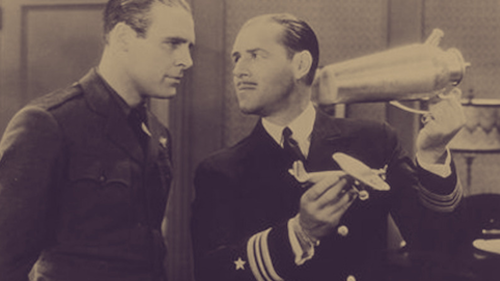
32. Dirigible
Dirigible was an opportunity for Capra to show Columbia Pictures what he was made of by going all-out. This romantic epic is similar to Flight and Submarine in the sense that it sees two men trying to fight for the affection of one woman; Dirigible is at least a little difference in the sense that a conundrum arises out of the stubbornness of the men (and their race to the South Pole); does the dirigible pilot go save the husband of Helen who is now stranded, or does he overtake as Helen's new husband? Unfortunately, this neat idea is bogged down with cliched execution and a bit of a sluggish pacing.
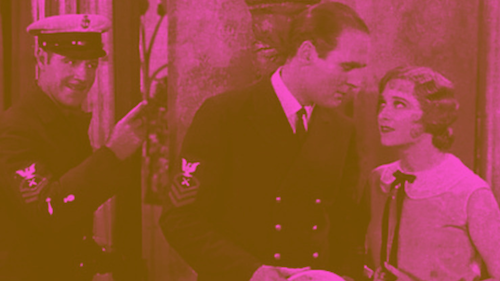
31. Submarine
It feels a bit silly to go over this premise yet again, seeing how similar Submarine is to Flight and Dirigible (but more to the former). Two sailors are fighting over the same girl. That's pretty much it. However, Submarine is marginally better due to a couple of factors. Firstly, the hybrid use of sound synchronization in what is not a complete talkie here is at least a bit more interesting than the major recording issues of the earliest sound pictures; Submarine feels a bit inventive with its sound design. Then, there is the rescue mission that usurps the tired plot of the first half, making Submarine feel like it leads to something slightly substantial.

30. That Certain Thing
While not nearly as good as what we have come to expect from Capra, That Certain Thing feels like it is cut from the same cloth as a number of his classics. Circling around a poor girl's attempts to marry rich and her new father-in-law's refusal to give her any of his fortune (and the humbler living to follow for our newlyweds), That Certain Thing portrays the qualms of classicism quite effectively. I will say that the ideas are a bit rudimentary in this silent film, and that Capra would become better at allowing more of a hysteria to happen in such circumstances, but That Certain Thing is not too shabby as an early attempt to try and figure out the oddities of being separated by wealth.

29. Here Comes the Groom
What's more sentimental than your average Capra film? A Capra film with Bing Crosby in it. Here Comes the Groom is a musical rom-com about a foreign correspondent who has to make his former fiancée fall in love with him again (should he fail, he risks losing his five adopted children, who will go back to the orphanage). I know Capra films can feel light and fluffy, but Here Comes the Groom is a lamb: it is so giddy to the point of feeling almost kooky. It's kind of endearing in a messy way as a result; if you like your coffee with two milk and thirteen sugars, Here Comes the Groom may be for you.
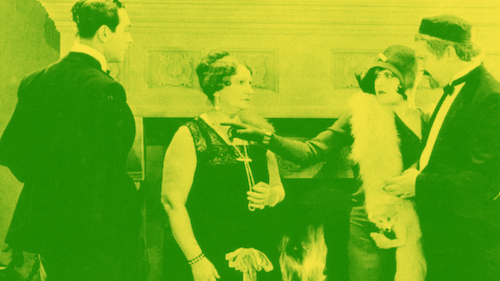
28. The Younger Generation
Capra's first talkie (of sorts), The Younger Generation, is very much the product of a man who was trying to figure it all out. One of his many social-climbing tales, this yarn about an immigrant family and their selfish, clout-chasing son is typical of the kinds of films that Capra would make again and again (but better). A decent look at understanding what matters most in life, The Younger Generation is all about focusing on the right thing; this feels somewhat contradicted by the film bouncing back and forth between being silent and its handful of sound sequences (Capra was a huge fan of The Jazz Singer, after all).

27. A Hole in the Head
One of Capra's last films is also his first in colour (yeah, it's very strange to see a Capra film that is not black-and-white, to be honest). A Hole in the Head stars Fran Sinatra as a single parent of a tween son; who is the mature grown up between the two of them is anybody's guess. Unlike many other Capra films where we watch someone work their way up, Sinatra's character is busy throwing it all away right from the jump; his hotel is failing, and he cannot stop chasing after women after the passing of his wife. Considering that this is a late-stage Capra film with two characters who could have been irritating beyond believe, A Hole in the Head thankfully does not feel like one (I'd go as far as to say that this film is decent).

26. Broadway Bill
Any film that is released in between It Happened One Night and Mr. Deeds Goes to Town will look subpar, I suppose, but Broadway Bill was unsatisfactory enough that even Capra was displeased with the final result (he would take another stab at it and remake it as Riding High in 1950). Was Broadway Bill really that bad? I suppose the protagonist throwing everything away to take care of his race horse can be a bit frustrating, and the film may get carried away with its romantic subplot a little bit, but Broadway Bill is no less commendable than the other middling Capra films that we have covered so far; however, it is a bit of a no brainer to start with Riding High in this case.
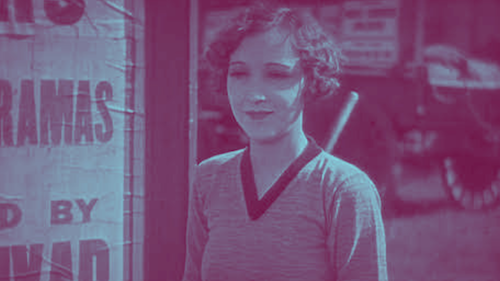
25. The Matinee Idol
Ah, a tale of two legacies. On one hand, The Matinee Idol was a major turning point for Capra, this dramedy about a comedian on the lam and the troupe he joins (with the ringleader he falls in love with) is classic Capra in every sense; from the silly highs and the emotional lows, and the focus on success amidst hardship. Then, there is how we can see the film now. The prevalent theme of black-face is highly bothersome, and the other problematic bits (some are sexist, some are homophobic — basically, expect it, and The Matinee Idol likely has it) are enough to permanently stain what this film has going for it. You can argue that this was a different time, but that doesn't make me — a thirty-six-year-old in 2026 — have to like it; furthermore, the extent of all of the above would probably feel like too much even back then (I've seen quite a few silent films by now, so believe me when I say that The Matinee Idol gets carried away with this sort of nonsense).

24. The Bitter Tea of General Yen
So, here's the good. The Bitter Tea of General Yen is meant to be a progressive look at love, featuring an interracial relationship between the title character and Megan (played by Barbara Stanwyck). It is a bittersweet romantic drama that has some artistic merit and earned emotional pathos. Now, the bad. Between the use of yellow-face (the general is played not by a Chinese actor — or an Asian actor at all — but, rather, the "male Garbo" himself Nils Asther) and the problematic will-they-won't-they romance that ensues between the two characters (mainly because interracial love is still seen as "wrong"), The Bitter Tea of General Yen is partially marred by today's standards.

23. The Strange Case of the Cosmic Rays
One of Capra's late-stage educational documentaries, The Strange Case of the Cosmic Rays feels a bit more abstract than the other films in this series (which appeared to be strictly for children). I suppose it isn't easy to convey the concept of radiation to children — even with the puppets and animation. Compared to the other two similar edutainment films, The Strange Case of the Cosmic Rays is somewhat weaker as a result, but it certainly is cut from the same cloth (should you have an obsession with nostalgia and the kinds of works they would show in school back in the day).
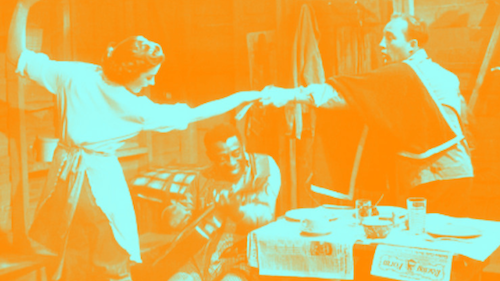
22. Riding High
After the underwhelming release of Buffalo Bill, Capra wanted to revisit the film and released Riding High as a result (this one also stars Bing Crosby). Instead of feeling like a kitschy rom-com about a guy who doesn't know what he has in life, Riding High feels more true to Capra's lore: our horse trainer is pressured by his lack of success and relies on his race horse to help turn things around for him. In a weird way, both films have similar plots, characters, and even shots to the point that they are nearly identical, yet let the disparity between Buffalo Bill and Riding High prove what a film with heart and soul looks like versus one without either; that will make both films feel like night and day.
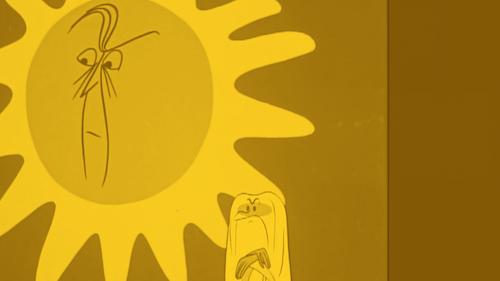
21. Our Mr. Sun
If you are five years old, interested in retro films (for some reason), and want to learn about the sun solely through the teachings of a filmmaking legend, then Our Mr. Sun is the film that you've been craving. Featuring animations and explanations on how the sun operates (although I feel like we have learned a lot more about the solar system's lone star since), Our Mr. Sun is a neat, fun, and whimsical school lesson. However, like any of Capra's other educational works, that's pretty much all that it offers.

20. The Strong Man
One of a couple of Capra's films to star vaudevillian comedian Harry Langdon, The Strong Man is the best and most popular of these collaborations; this also happens to be Capra's feature-length debut. Langdon stars as a soldier in World War I who falls in love with a pen pal named Mary Brown: a blind woman who lives in the United States. Langdon's character searches everywhere for her with hope and a sense of naivete. The film is cute, whimsical, and slightly smarmy; almost like a Forrest Gump from 1926. If silent comedy is your speed, The Strong Man may deliver.

19. Hemo the Magnificent
This summer: the same Italian-American master who directed such films as Our Mr. Sun, Rendezvous in Space, and The Strange Case of the Cosmic Rays returns with his greatest educational film for children: Hemo the Magnificent. This hour-long special enlightens us on the circulatory system and how blood works. Why is it red? How does the heart work as a pump? If you want to see Capra's classroom masterpiece (which, jokes aside, doesn't compare to his best feature films either way), this is the one.
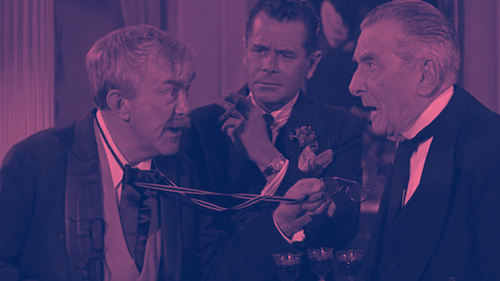
18. Pocketful of Miracles
Capra's final theatrical film, Pocketful of Miracles, is unlike the tale of Broadway Bill and Riding High. Those other two films saw an infuriated Capra revisiting a project that didn't go his way and making it better. For whatever reason — perhaps to use then-modern technology to enhance the film — Capra decided to remake one of his finest efforts: Lady for a Day. Pocketful of Miracles comes up a bit short of the original film, but it is still quite good via its own merits. The Pygmalion-esque tale of taking a woman from off the street and making her presentable at an upper class function remains; this time, it's in colour. I will agree with Capra's intentions that Pocketful of Miracles works nicely as a sixties drama, with the right cast (including major names like Bette Davis, Peter Falk, Glenn Ford, and Hope Lange) and stronger camera equipment and capabilities. However, it still only has a portion of the power that Lady for a Day possesses.

17. The Way of the Strong
During Capra's insanely prolific 1928 stint, he was trying everything he could to make a proper motion picture. He gets somewhat close with The Way of the Strong: a story of struggling souls of different walks of life (a gangster with a dark past connecting with a blind, impoverished musician). Capra's film has us understanding the difficulty of facing the consequences of our actions, even if they are meant to be pure or helpful — especially when the karmic tides turn. Capra's personal experiences add to the film's takes on desperation in the name of searching for a better life, and The Way of the Strong winds up being a fairly decent entry from Capra's silent era as a result (even though he would be known for much more hopeful and light films about class struggles, this is a notable early entry for Capra because of its seriousness on such a subject).

16. Forbidden
Pre-Code films can simply mean any motion picture that was released before the Hays Code. Then, there are works that exemplify what Hollywood could get away with before the censorship nonsense took over the industry. A close example of Capra's that fits the latter description (films that almost feel defiant of the censorship that was to come) is Forbidden (and, no surprise here, it stars Barbara Stanwyck, who is both a staple of Capra's filmography and the pre-Code era). This complicated web of deception — all in the name of saving face in a judgmental and hostile world — is actually quite thorough for a Capra film; Stanwyck's Lulu is pretending to be the nanny of a baby she bore, while the politician she loves is actually married (something Lulu doesn't condone). If you think that's a lot, Forbidden gets even crazier; this is one of Capra's most narratively interesting works, and certainly an underrated title of his.

15. Platinum Blonde
Another pre-Code staple by Capra is Platinum Blonde, but instead of starring his usual suspect in Barbara Stanwyck, this film features one Jean Harlow instead. Like she was in real life, Harlow's character, Anne, is an it-girl who is succeeding at life financially and vows to always get her way. When she hastily marries a reporter, they each suggest that the other should change their behaviour. A blatant lesson on knowing what is important in life, Platinum Blonde is a bit on the nose with what it aims to say, but this is a film that is overall just fine, mainly thanks to Harlow and co-star Robert Williams (as well as Loretta Young); much of the film's reputation is tragically linked to the early deaths of both Williams and Harlow, making Platinum Blonde one of the only ways you can see their talents.

14. State of the Union
Calling all superfans of the Tracy-Hepburn partnership! One of the ten-thousand that exists is Capra's State of the Union: a political drama that takes Capra's underdog themes and exemplifies them via a series of probably revelations. Featuring an everyday man's quest to become the Republican candidate to run for the title of President of the United States, Capra's film may be less toothy than some other examples of its time period (like the far-stronger, Best-Picture winner, All the King's Men), but this is still a fairly strong look at all that such a dream entails, and the ripple effects that occur should someone try to take on such a tall order. Besides, when have Spencer Tracy and Katherine Hepburn ever led you astray?

13. The Power of the Press
Now, maybe it's because I am a sucker for journalism films, but I think The Power of the Press is a little underrated. This thrilling drama about an aspiring reporter (played by Douglas Fairbanks Jr.) sees his hopes and dreams get entangled with a woman (Jobyna Ralston) fleeing a crime scene that she looks highly guilty within (however, did she actually commit the crime?). Of the filmmakers from this transitional period in Hollywood, I don't think Capra's silent films shine as brightly as his thirties period. However, one of his strongest silent works is this one here: a twisty, turning trail of breadcrumbs and red herrings that is not like his well-known classics (that may precisely be why you should watch it; it's great and atypical).

12. Ladies of Leisure
Capra was still figuring it out with a few films released each year at the start of his career, and 1930 was no different with the far-worse Rain or Shine released in the same year as Ladies of Leisure. Now, Ladies of Leisure — and its similar themes to many other Capra titles (a lower-class person trying to be accepted by high society) — may feel familiar by now, but you can tell that Capra was finding out how the pieces can fall into place with this one; from a strong performance by Barbara Stanwyck (then again, aren't they all strong performances when she's the star?) to an ending that dares to get dark (that wasn't always the case with Capra), Ladies of Leisure is — to me — a sign that things were shaping up for Capra during the shift to talking pictures.

11. Lost Horizon
Capra made many films about fishes out of water, but these usually meant lower-class citizens who are trying to live via better means. A film like Lost Horizon dabbles with this theme, but in such a starkly different and unique way. Following a plane crash that once housed a diplomat and a group of everyday people (who are now stranged in the Himalayas), Lost Horizon grants both walks of life — the privileged, and the working-class — with the opportunity to reside in Shangri-La; all while the world around them is preparing to go to war again. Possibly Capra's most visually stunning film, and an interesting departure that never fully loses sight of what makes Capra a great sentimentalist, Lost Horizon is a different kind of Capra character study: one that dips into the hypotheticals of the unknown and pushes the boundaries of what we may dream about (or, in that same breath, our biggest psychological dreads).

10. American Madness
While so many other films by Capra urge viewers to pick up their socks, overcome their tribulations, and seize the day, he willingly got quite heavy with the sentiment "when it rains, it pours" when making the film American Madness. In short, the day goes horribly wrong for banker Thomas (played by the head of the iconic Huston family, Walter Huston); from the spark of a small — yet serious — accusation, all the way to multiple life-shifting revelations, American Madness does not ease up with its calamitous nature. Ultimately, there is still a glimmer of hope within it all, seeing as Capra is not a sadist (and the year was 1932), but this pummeling pre-Code film is a Capra title that I think more people should know about.
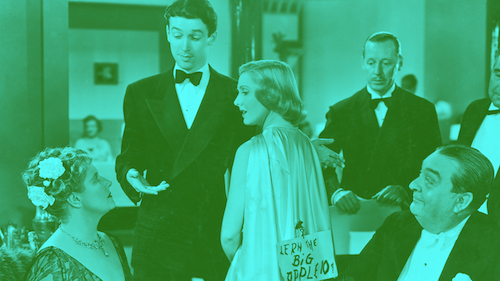
9. You Can't Take It with You
The lesser-known of Capra's two Best Picture winners, You Can't Take It with You, feels similar to so many other Capra films on paper: a poor girl falls in love with a rich man, and his arrogant family does not take kindly to her. We've seen this just about thirty times on this list by now. However, You Can't Take It with You goes the extra mile with its concept. The rich family is cartoonishly snobbish, and the poorer family is somehow even more batshit in this screwball comedy. However, Capra never gets too carried away, because he remembers the heart that connects all of the characters together in this clash of classes: when we die, we all go to the same place (and, in reference to the film's title, you cannot take your fortune with you). You Can't Take It with You is a major delight and a great, silly time for anyone who likes Capra's timeless classics; this one seems to be stuck a bit in the past, but it's still a hoot.
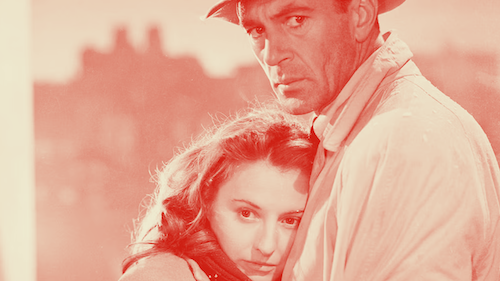
8. Meet John Doe
When a sociopolitical movement kicks off, should you follow the words of a well-known figure? It depends on who is doing the talking. However, what if said movement is in response to the words of a random nobody who has accidentally become the face (of sorts) of a wave? Meet John Doe follows a journalist's peculiar experiment — to take a homeless busker and turn him into the "John Doe" who threatened to commit suicide — and what transpires. Unlike similar experiments like Network, Ace in the Hole, or Nightcrawler (where cultural shifts transpire unexpectedly and as the result of unconventional, unintended means), Meet John Doe is certainly more chipper despite its mature side; nonetheless, Capra is able to tap into the uncontrollable nature of hysteria in this biting dramedy.
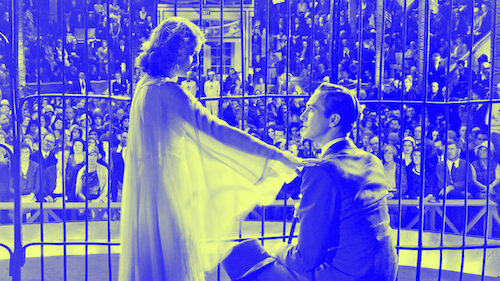
7. The Miracle Woman
Even though it seems obvious (maybe since It's a Wonderful Life is his biggest film), Capra did not make many films that were heavily about religion. One other such example is The Miracle Woman: perhaps his greatest collaboration with star Barbara Stanwyck. Here, Stanwyck stars as the daughter of a minister, who denounces her faith and Christianity when said father passes away; she partners up with a con man and starts faking the ability to perform miracles out of spite and bitterness. Of course, this is a Capra film, and so changes of heart are possible (and inevitable), but The Miracle Woman is great at pointing out what true faith is during hardship; I would argue that this is a compelling film even for non-religious viewers, seeing as the film acts as a metaphor for perseverance and inner strength.

6. Mr. Deeds Goes to Town
What happens when someone of minor means winds up inheriting extreme wealth? Do they change as a human being instantly? In the case of Mr. Deeds Goes to Town, not quite. Capra's comedy sees Longfellow Deeds (played by Capra regular, Gary Cooper) having a massive stroke of luck, moving to the Big Apple, and kick starting a new life (all while trying to keep the hounds at bay). Earning twenty-million dollars out of thin air is no picnic, mind you, and the film acknowledges the difficulties and responsibilities attached to such a fortune (or, in some cases, misfortune). A film like Mr. Deeds Goes to Town reminds you to be careful what you wish for (all while making you laugh along the way).
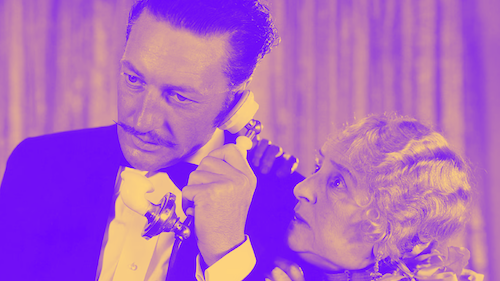
5. Lady for a Day
Despite being another Capra dramedy (so there is certainly tons of levity, here), Lady for a Day might be his most emotional watch for me. We circle around Apple Annie: a geriatric, neglected apple seller who is estranged from her daughter; that very daughter, who has grown up in Spain, is traveling to New York City with her wealthy fiancé. Similar to Pygmalion, Lady for a Day sees an impoverished, unrefined woman get a massive makeover and, thus, the opportunity for a better life. Unlike Pygmalion or its offshoots (like the musical My Fair Lady), Lady for a Day is heavily consequential: where Annie's fortunes can turn sour just as quickly as they have apparently turned sweet. It might be obvious to point out how beautiful It's a Wonderful Life is, but the other Capra tear jerker that deserves love is this one here; Lady for a Day is magnificent. Maybe don't watch Capra's remake, Pocketful of Miracles, before this stronger earlier effort.

4. Arsenic and Old Lace
I love comedy films, but that doesn't mean that they necessarily make me laugh out loud; a good comedy can be well written and boast excellent characters — I don't dismiss it if I don't do more than chuckle while watching it (however, if a film is painfully unfunny, that's a different story). With all of that in mind, Capra's funniest film is easily Arsenic and Old Lace: to the point that I think it is undeniably one of the most hilarious films of the Golden Age of Hollywood. A surprisingly grim and bleak film by Capra, things start off like a typical screwball (with Cary Grant at the forefront, no less). Then it becomes a bit of a murder caper; okay, that's not unheard of, I suppose, but it's still the extra mile. Well, Arsenic and Old Lace blasts past the next kilomile once it becomes a near-horror laugh fest. This film is ridiculous in all of the best ways, and I still cannot believe that the Capra — known for being a softy — was capable of making a film this darkly infectious.
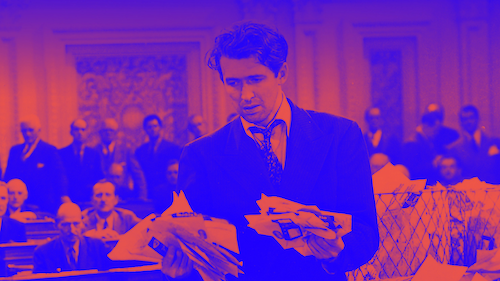
3. Mr. Smith Goes to Washington
The end of Capra's magnificent thirties period was as triumphant as it began for our beloved filmmaker, and a film like Mr. Smith Goes to Washington felt like the future of his career; sadly, we didn't get too much else afterward from Capra (outside of a certain masterwork; more on that shortly), but this political dramedy feels like a culmination of everything Capra stood for, studied, and replicated well on the big screen. We have — once again — an everyday guy (in this case, he must be played by James Stewart) who becomes a United States senator and uses his platform to keep fighting for the little guy (which he still feels like one). Typically, a film this optimistic of a corrupt society might feel delusional, but with Capra and Stewart working this well together, Mr. Smith Goes to Washington is a cinematic triumph that will make even the darkest hearts soar; somehow, this film never comes off as sugary or naive, and it has been healing souls for generations.
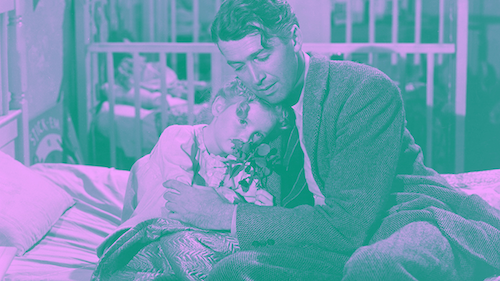
2. It’s a Wonderful Life
It's interesting that It's a Wonderful Life became the de-facto Christmas film when you consider how much of the film is not actually centred around the holiday. What makes it so is the film's themes of gratitude, the presence of angels surrounding the now-iconic George Bailey (Jimmy Stewart, of course) in is time of need (as he contemplates suicide), and the recognition of one's fortunes during a time of gift giving and receiving. Naturally, moments of the film take place on Christmas Eve and Christmas Day, but It's a Wonderful Life is a far-fuller experience when it comes to depicting George (who is beautifully written to represent any viewer who finds themselves within him) and those he interacts with. So many other holiday films shoehorn the same ideas and stories, all while trying to sell you on the concept of the holiday. Capra's cherished classic is willing to get serious, go dark, and recognize the lows as well as the highs, which renders its celebrations and highlights exquisite and beautiful. A film like this coming from a man who had the tough times that Capra has been through makes it even more meaningful; it's a wonderful life, indeed.

1. It Happened One Night
It feels borderline criminal to place anything over It's a Wonderful Life, but, as much as I love that film and recognize it as the staple that it is, I have to stick to my guns and celebrate my favourite Capra title: It Happened One Night. Released merely months before the Hays Code changed Hollywood for a whole generation, it almost feels like Capra could smell the stench of censorship from a mile away when making this farewell to the pre-Code days of freedom. Now, by today's standards, It Happened One Night is about as taboo as a grandmother who learned her newest naughty word, but you can still recognize that it is quite edgy for its time (and, since the Hays Code sent the industry back to the stone age in ways, the film is slightly ahead of its time as well). The industry celebrated this last call, and the film won the "big five" Oscars (Best Picture, Director, Actor, Actress, and one of the two screenplay awards; in this case, it was for Best Adapted Screenplay); the only two other films to accomplish this are One Flew Over the Cuckoo's Nest, and The Silence of the Lambs. This sweep is even more remarkable when you consider what a wild west the Oscars were in the thirties: back when a film could win Best Picture and virtually nothing else (Grand Hotel), and so many other unusual wins by today's standards would take place. This film dominated Hollywood.
However, that is all an objective description, and it should not colour my opinion of the film. As a fan of screwball comedies, I simply love this one, and it has earned its reputation for many decades. While most Capra films have one person hoping to have a change of scenery, this film has two such souls colliding: a news reporter who wants to make something of himself (Clark Gable), and a wealthy socialite who wants to live a free life without expectation or limitation (Claudette Colbert). In ways, they both feel like metaphors for the way that Hollywood was heading: the practical limitations that would come from such restrictions, and the artistic integrity that would now be housed like a pet in a cage. They cross paths without knowing fully who the other is; through a trail of developments, they slowly start figuring each other out (while also falling in love as two oddball spirits). While this film does not get as screwy as your typical comedy of this nature, It Happened One Night feels more interested in being humanistic despite its cartoonish exterior: these are quirky characters for sure, but you believe them and connect with them nonetheless (Gable and Colbert are sublime in this way).
Yes, you can consider this another feel-good effort by Capra, but It Happened One Night is willing to get a little dirty and mature in order to relay its points about murky identities, questionable motives, and the authenticity of one's relationship to another (does everything have to be loaded?). Many films have bitten off of Capra's entire catalogue, but one major offense is how frequently romantic comedies and heartwarming flicks try to eat all of It Happened One Night and regurgitate it beyond repair. What makes this film work is because it was created by serious people who happen to know how to have fun (and what makes the world turn); in short, we may be watching a film about various forms of delusion, but those who made the film were not delusional. Frank Capra and company were cognizant of the Great Depression and the major ways the country was changing. They were aware of what could — and inevitably did — happen when Hollywood was being monitored and heavily doctored all in the name of censorship. They knew that film itself was evolving once it got comfortable in the preliminary years of sound. There's a reason why the team behind It Happened One Night won the big five: everyone was firing on all cylinders when they made one of the great rom-coms of all time.


Andreas Babiolakis has a Masters degree in Film and Photography Preservation and Collections Management from Toronto Metropolitan University, as well as a Bachelors degree in Cinema Studies from York University. His favourite times of year are the Criterion Collection flash sales and the annual Toronto International Film Festival.