
Filmography Worship: Ranking Every Josef von Sternberg Film
Written by Andreas Babiolakis
Filmography Worship is a series where we review every single feature of filmmakers that have made our Wall of Directors
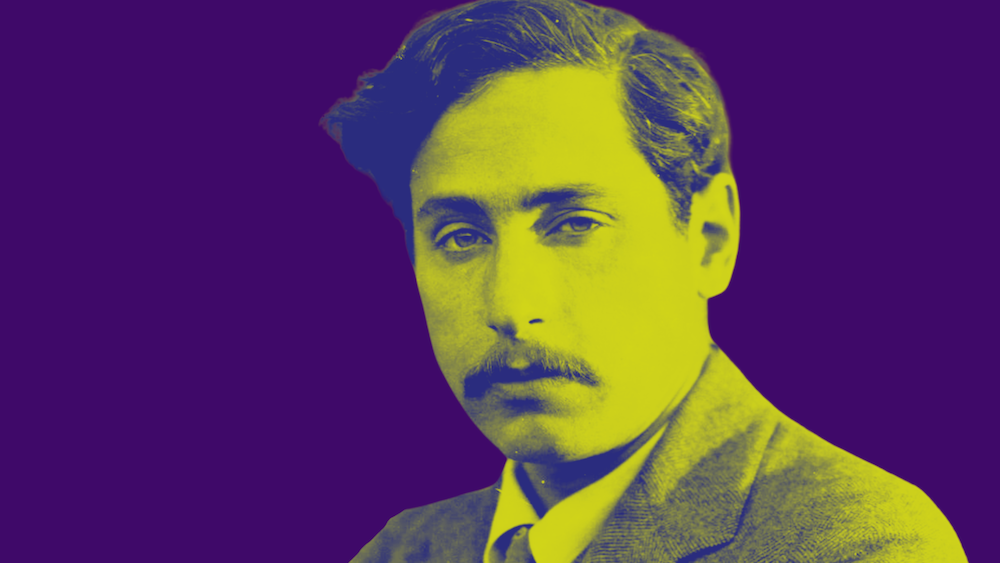
When one thinks of Hollywood, they usually consider stars who are born and raised in America living the silver-screen dream. However, one of the biggest influences during Hollywood's early years of development is Josef von Sternberg: an Austrian-born auteur whose career is remarkable. Born Jonas Sternberg, he was introduced to the United States at the very young age of seven when his family moved there for the opportunity to find work and grow; Sternberg and his family would move to Vienna when he was ten for similar reasons. When his parents separated (his mother was constantly abused by his father), he and his mom fled to Queens, New York, where he would remain (he was fourteen at the time). To get by, Sternberg did whatever it took, working a series of odd jobs. Eventually, he worked for the World Film Company at the age of seventeen, where he cleaned film stock and served as a projectionist in the evenings. He would be promoted to the role of intertitle writer and montage editor before serving for the U.S. Army in World War I. When he returned, he would serve as an apprentice under a number of silent cinema filmmakers — even returning to and traveling all over Europe — until he was ready to make his own motion pictures.
Throughout his career, Sternberg hopped from studio to studio, and he worked under most of the heavy hitters of the — and all — time, including Paramount, Metro-Goldwyn-Mayer, United Artists, and Columbia Pictures. Sternberg quickly found himself working with some of the biggest names of the silent age, including Charlie Chaplin with what I can only consider one of the most intriguing lost films I have ever heard of: A Woman of the Sea (producer Chaplin destroyed the film to serve as a tax writeoff; what a damn shame). Sternberg's silent era was brief yet excellent for the most part, and he proved to be a rising name in the American film industry. However, the innovation of sound film was on the horizon, and many directors and stars did not transition nicely into the new age; as you can ascertain, Sternberg did not flounder, and he migrated into the era of talkies almost effortlessly.
After working with the likes of Marie Pickford, Emil Jannings, and George Bancroft, the thirties saw Sternberg teaming up with his most iconic collaborator: German megastar Marlene Dietrich. Both of their European-American connections brought something new to Hollywood during its formative years: a certain artistic eye and flair. There was Sternberg, who became iconic for his spellbinding mise-en-scene, dynamic camera movement, and chiaroscuro contrast lighting (if you are as much of a sucker of shadowy cinema as I am, Sternberg is one of the masters of darkly-lit cinema). Then, there is Dietrich with her mysterious presence, undeniable grace, and compelling acting. When Hollywood was wondering about the possibilities of the sound era (and of cinema as a whole), Sternberg and Dietrich gave the industry an aesthetic mysticism that was present in their handful of films together (many, of which, would wind up being amongst Sternberg's greatest works).
Sternberg’s childhood chapters in both Europe and America made him understand how best to bridge his works with audiences from all around the world, making classics that defied compartmentalization. Unfortunately, the extent of Sternberg's recognition happened generations after his reign; while his films were certainly influential, and a number were even given nominations or accolades for various awards (including Oscars), he would wind up being glossed over by the very industry he helped shape multiple times. He was far less prolific in the forties and fifties and struggled to get many projects that he could see eye-to-eye on. Projects were abandoned. Sternberg was prevented from having complete control. He even directed a propaganda short (more on that very shortly). His thirties period is truly remarkable; what transpired was the thanks that he got. He deserved far more than to be rendered redundant by Hollywood. He would teach in his later years before passing away from cardiac arrest in 1969 at the age of seventy-five.
His efforts have only grown in stature over the years, and his influence on many filmmakers and aesthetics now feels certain and indisputable. To me, when the industry was chasing innovation after innovation, Sternberg was one of the very few names who focused on making film feel like art. He would get the best performances out of a number of his stars by encouraging them to not fall victim to the egotism of the size of the screen (but, rather, to play to the smallness of the camera's lens). His films felt like pulpy novels that came to life via vivid imagery and mesmerizing characters. Even at his worst, Sternberg was someone to marvel, but his highs made him one of the greats of his time (and in all of cinematic history). I will not be including any of his lost films, or the titles which Sternberg allegedly helped co-direct without credit, since his involvement is unclear. Here are the films of Josef von Sternberg ranked from worst to best.
21. The Town
It's a crying shame that Sternberg only made two films in the forties, and one — easily his weakest title — is The Town: a twelve-minute propaganda short about a small town in Indiana, shot during World War II. Outside of the fact that this was a commissioned effort by the government, this short documentary benefits almost no one. Nothing about it feels enticing to go to Madison, Indiana. It is too bare and skint on information to feel educational, enlightening, or invigorating. Worst of all, there is barely any of Sternberg's presence here outside of his name being attached to the film. It almost feels silly to even include a film like The Town on a list like this, but Sternberg's existing filmography is so slim that it only make sense to include what we do have. There is next to no reason to watch this unless you want to see every Sternberg film available (and, even then, it barely feels like anything).
20. Sergeant Madden
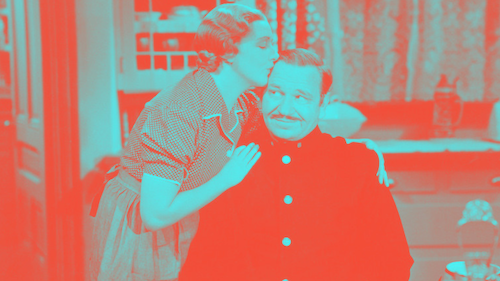
Now that we are back with the real Sternberg filmography, we have twenty existing films that are all worthwhile in a few ways, even when Sternberg wasn't at his best (again, neglecting any lost titles). Sergeant Madden sadly has a similar problem affiliated with it that The Town has: it barely feels like a Sternberg title. Even so, at eighty minutes, there's at least more to work with here, instantly making it stronger than The Town. A tale of good-cop-bad-cop (with these titles reflecting an officer and his son who chooses to follow in his father's footsteps), Sergeant Madden doesn't quite figure out its take on ethics (or, at least, the film doesn't possess enough nuance to be compelling in such a way). Even though Sternberg had two stints with MGM (this being his second), you can see why each partnership was so brief; he clearly did not have the control needed to make a film like Sergeant Madden count.
19. Macao
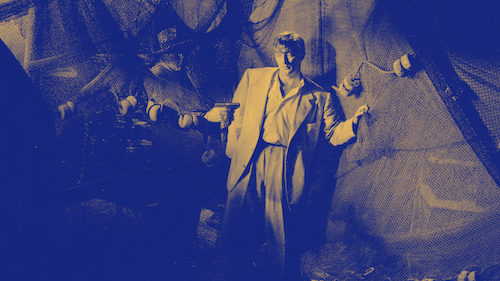
After a brief hiatus, Sternberg returned with Macao: a bit of a derivative affair for him (with some co-direction work by other Hollywood figures at the time, including Nicholas Ray who re-directed certain sequences that were deemed mediocre). Sternberg would express regrets working on this film later in his life, declaring that this was to fulfill a contractual obligation with RKO Pictures, where every move he made was thwarted by an executive or additional hire. The end result is a film by Sternberg and starring icons like Robert Mitchum and Jane Russell that is a bit of a bore; outside of some nicely directed sequences and the occasional highlight, Macao feels like the idea of a Sternberg title more than anything else. How he wasn't left alone to utilize his own devices after all he did for Hollywood is devastating and frustrating to me.
18. Jet Pilot
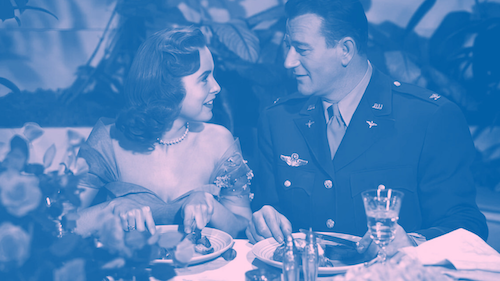
Sternberg's last film is two streams of thought for me. On one hand, Jet Pilot is so staunchly Hollywood with its story — from a major John Wayne character played by, well, obviously John Wayne, to an insane plot about a Cold War spy (Janet Leigh) who lures Wayne's pilot character in a way that almost feels like a Loony Tunes sketch. Then, there are the incredible flying sequences (courtesy of Howard Hughes's obsession with planes, and Sternberg's direction) that feel riveting. It's too bad that the story is almost comedically insane and maddening, because Jet Pilot is such a spectacle to watch if you ignore how asinine its story is.
17. The King Steps Out
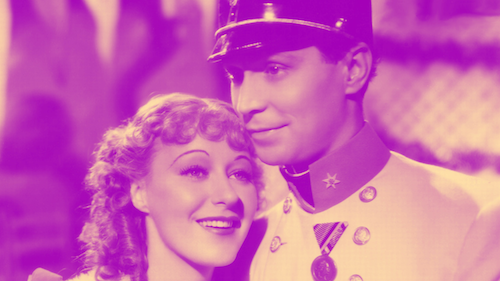
And now for something completely different. Sternberg was trying something new towards the end of his prime with 1936's The King Steps Out. A musical comedy, this narrative about an Emperor's two potential suitors (a pair of sisters with starkly different personalities) is meant to feel like a fun and bombastic time. Instead, it comes off as a bit suffocating. Sternberg's typically-immersive sets now feel like an inundation on your senses in such a loud and chaotic environment. The tunes themselves are not the best, and what is meant to be playful acting can come off as frustrating. I do think that some of the production and costume design is neat in this operetta, and there is clearly something substantial here that promises to be a better film (how The King Steps Out almost feels like a storybook that has come to life), but this end result is subpar.
16. An American Tragedy
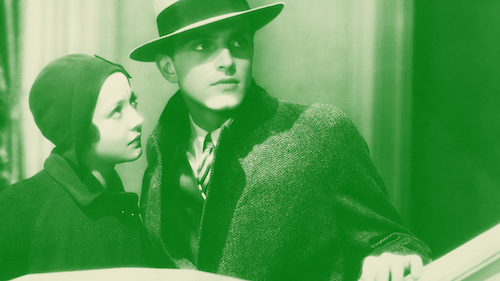
Sternberg's adaptation of Theodore Dreiser's iconic work, An American Tragedy, does not go as far as you'd think such a film could — and should — go. Circling around an opportunist who is trying to work his way up in society, the film is meant to be a cautionary tale about how ambition can turn into corruption (and corruption into sin). Even though the film has its moments (like its pivotal climax), An American Tragedy does not make you care enough about its protagonist, Clyde Griffiths, enough for you to be led into the darkness that envelops him. Instead, we watch from afar and judge; I believe a film like this is meant to make you feel carried away and sympathetic with someone who loses touch with reality (all in the name of having a better life).
15. Thunderbolt
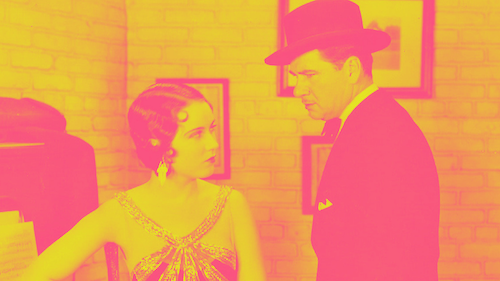
Sternberg's first sound film is far less rocky than the numerous other attempts that came out around the same time, but Thunderbolt is still a bit of a weaker effort by him. While still a solid film overall, Thunderbolt feels like it is cut from the same cloth as Underworld: a considerably stronger film. Following a convicted criminal named Thunderbolt (what else, I suppose) who stands to lose his girlfriend to the man in his neighbouring cell (it happens), Thunderbolt aims to be a bit of a genre bender — down to the use of music to jazz up scenes (Thunderbolt is not a full-on musical, but it certainly flirts with the idea a bit). Thunderbolt is a series of ideas squashed into one film, and I think it is a solid film that still feels unvarnished; this could have been stronger had it appeared further down the line when Sternberg was more familiar with how to make sound pictures.
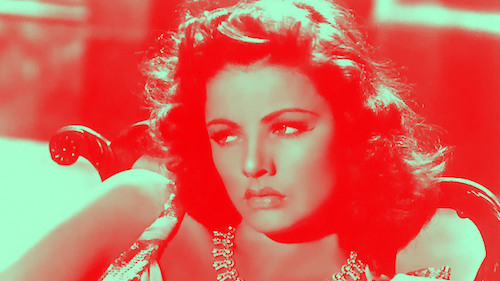
14. The Shanghai Gesture
Sternberg's final Hollywood effort, The Shanghai Gesture (no relation to Shanghai Express) is his only feature-length film of the forties. What is effectively a sendoff to a massive time in his life, The Shanghai Gesture doesn't feel like a farewell since it is clear that Sternberg wanted to keep making motion pictures (if only the industry didn't turn its back on him). Following a dragon lady and her gambling house that is threatened with foreclosure, The Shanghai Gesture effectively places you in the mindset and environment necessary to suck you in and remain glued to what is happening. However, the characters are a little under-written or cookie cutter to the point of pushing you away just a little bit. I think this one is worth giving a shot because of its milieu, even though The Shanghai Gesture may feel narratively thin compared to its aesthetic depth.
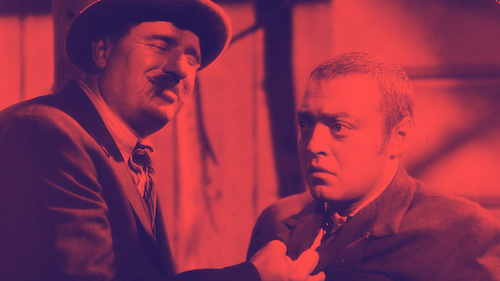
13. Crime and Punishment
Sternberg's adaptation of Fyodor Dostoevsky's Crime and Punishment is worthy of being watched just based on the fact that it exists (what a draw). However, this isn't quite as magnificent as you would be led to believe. Sternberg himself said that he was obligated to make the film and that his soul and complete integrity were not a part of the filmmaking process. While I do not fully agree with Sternberg on the quality of his film, I can see how disassociated he is with Crime and Punishment: this feels more like a traditional Hollywood picture, but a fairly decent one at that. With a solid Peter Lorre performance at the forefront and Sternberg at least completing his task with raw talent alone (even if his full soul wasn't connected to this project), this version of Crime and Punishment is not too shabby (even if it doesn't feel very much like a Sternberg picture at all).
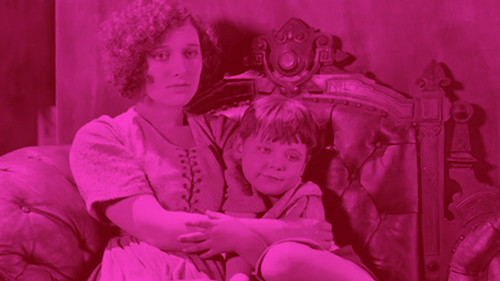
12. The Salvation Hunters
From this point on in the list, we have reached all of the Sternberg films I would recommend. To kick off this part of the list, we look at the way he started his career with The Salvation Hunters. A stirring first stab at filmmaking, The Salvation Hunters is a look at desperate people of all walks of life hoping for a better future. The story is a bit limited, but Sternberg frames the world around our protagonists as if every step they take is towards a living art piece. This debut doesn't feel completely typical because of Sternberg's early eye as a budding auteur, as well as his focus on how to make the emotions of his characters radiate off the screen. I would argue that it is a noble start to a career that would eventually become more hypnotic as Sternberg got wiser and stronger as a director.

11. The Devil is a Woman
The last time Sternberg and Marlene Dietrich worked together was on The Devil is a Woman: this happens to be their weakest effort (but still a damn fine one nonetheless). In it, Dietrich plays a succubus of sorts: a siren who feeds on the love of her victims, only to toss them away when they no longer prove to be useful. This leads us to the divide between friends: one who has been forever changed by our femme fatale, and the other who vows to not fall into the same trap (oh, but how our hearts do operate against our wishes). The imagery and symbolism are a bit more obvious than other Sternberg titles, but this is still a near-surreal look at deception and the games our hearts play on us that any Sternberg fan should watch.
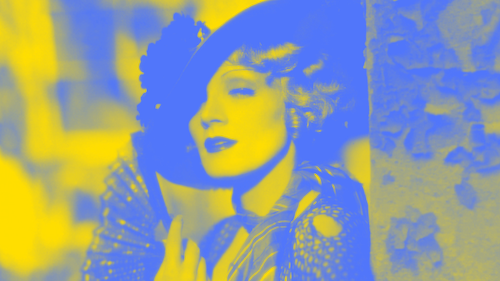
10. Blonde Venus
Only in Blonde Venus was the Sternberg-Dietrich partnership usurped by the Dietrich-Grant pairing (the charisma between Marlene Dietrich and Cary Grant is so strong that you could swear that it is tingling on your eyeballs). Sternberg's answer to what one goes through when they fall on hard times (a highly fitting topic given, you know, The Great Depression), Blonde Venus acquaints us with Dietrich's cabaret act who does whatever it takes to support her ailing husband. With an original story written by Dietrich herself, Blonde Venus is quite an emotional effort that takes the roller coaster rushes of the melodrama genre and places you within swirling conversations and situations, all while swarming us with some of Sternberg's greatest visuals of his entire career (it doesn't get dreamier than this).

9. Anatahan
One of my favourite things as a cinephile is discovering films that feel so atypical for the directors who made them, as if they decided to embody another kind of director for a short term. We have a few examples from the early days of filmmaking. Jean Renoir released The River. Charlie Chaplin released A Woman of Paris. For Sternberg, I consider Anatahan such a pleasant departure from his usual style (without feeling compromised like, say, Sergeant Madden). A Japanese film about sailors who wind up stranded on the titular island, Anatahan is a highly spiritual, artistic, and visceral project by Sternberg — as if he was trying to break out of the Hollywood system once and for all (the very system that would bite him again and again). What a shocking, intense, jaw-dropping film that many forget is even a part of Sternberg's repertoire; even though Jet Pilot was his final film, Anatahan truly feels like Sternberg's official send off.
8. Underworld
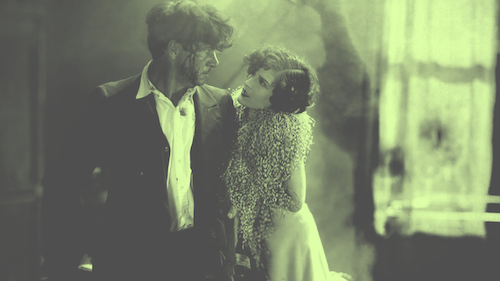
Often pegged as one of the first great gangster films, Sternberg's Underworld also acts like a prototypical film noir. We have the fallen protagonist: an alcoholic lawyer who is brought back on to his feet by a mobster kingpin who introduces the former to a world of sin. Then, there is the boss's girlfriend, who is not quite a femme fatale yet she and the lawyer fall for one another (trying to win over a kingpin's plus-one? That will surely go over well). If Underworld was a straight forward crime film where the bad guys get punished and the good guys win, it would still be a strong effort because of Sternberg's smoky aesthetics and alluring characters. However, the fact that Sternberg and company opt for a climax with dizzying outcomes and a crippling ambiguity make Underworld a silent film staple: this is a film — and a director — who were not afraid to get their hands dirty to tell a gripping story correctly.
7. Dishonored
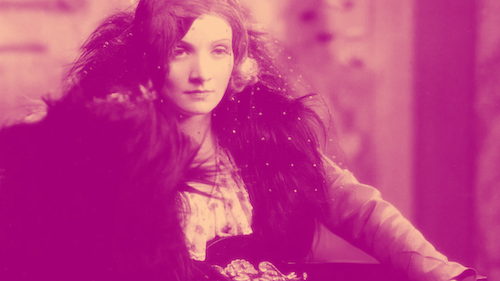
When you need someone to play a spy who can seduxe just about anyone, was there any greater option for Sternberg than Marlene Dietrich? Dishonored places Dietrich in the shoes of an agent who doubles as the role of a prototypical femme fatale. Her mission: to allure the Russian forces and bring back intel to the Austrians. While others may bring up James Bond films or Mission Impossible, to me this is the definition of cool espionage cinema, especially because Dishonored actually knows and respects the stakes of playing with fire; there might not be anything more badass than Dietrich applying lipstick in the film's explosive climax (without giving too much away). Now, that is intense. To watch Dishonored is to understand what it means to truly flirt with darkness.

6. The Docks of New York
Some of the most depressing films can prove to be life affirming. Sternberg's The Docks of New York links us to two different kinds of broken lives: a man with existential dread regarding what is to come next, and a woman who wishes to end it all. While The Docks of New York could have kept things minimal between these two characters once the lady is rescued from her dark choice, Sternberg's film instead allows more to unfurl between the two (and in their individual lives as well); we may as well see what transpires for both souls. In Sternberg's semi-fable, The Docks of New York presents us with a dilemma at its final act: do we better the lives of others while worsening ours? Do we find fulfillment in such a sacrifice? The Docks of New York is a stunning look at love and loss in the silent age.
5. Morocco
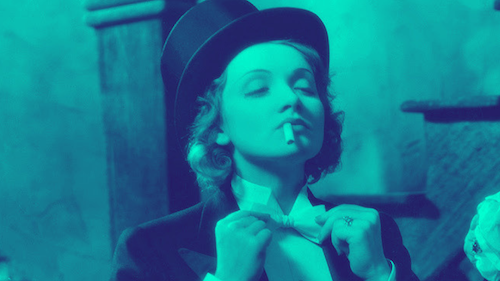
While far from his first talking picture, Sternberg's Morocco almost feels like his final farewell to the silent age — via a picture that is still deeply rooted in the late twenties but can overcome the need for intertitles and piano accompaniment. Featuring Marlene Dietrich's sole Oscar nominated performance (this feels wrong and stupid to me), Morocco is a complicated romantic drama that pits her with Gary Cooper in the middle of Mogador and within the French Foreign Legion's troop. While invested in war time politics, Morocco is more of a visual premonition of yesteryear than anything else: a hazy memory that almost feels like a dream. The feelings between Dietrich, Cooper, and whoever else gets caught up in their web of confusion ooze around you and trap you as well. Like the recollection of both good times and bad with whoever is about to get caught in the crossfire, Morocco is the vibe of the romantic, historical epic exemplified.
4. Shanghai Express
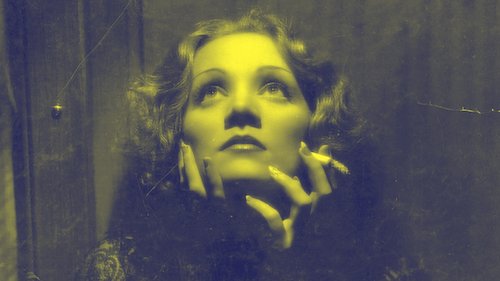
The concept of trains being used as allegories in film is a frequent one, and a strong example is Sternberg's adaptation of Harry Hervey's Sky Over China, known as Shanghai Express. During the Chinese Civil War, a train heading to Shanghai is full of interesting passengers (least of all, Marlene Dietrich as Shanghai Lily, formerly Madeline). Whether the train is running full speed or stopping for breaks, Shanghai Express is forever compelling, with heightened tensions, crippling chemistry, and hidden motives; it forever astounds me how much is accomplished in a brisk eighty-minute runtime here. Never has a dark, dingy caboose ever looked as breathtaking as Sternberg's aesthetic whirlwind here, where the typically dull and monotonous action of traveling via rail is now a foggy, shadowy limbo of fascinating souls who are all searching for purpose.
3. The Scarlet Empress
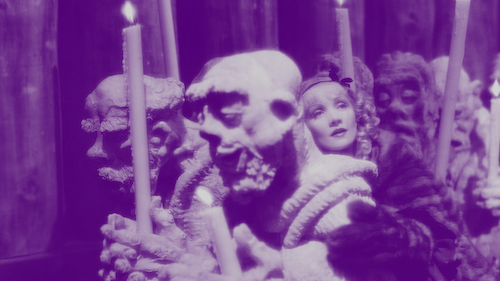
During the Great Depression, Sternberg went all-in on the artistic richness and embellishments of The Scarlet Empress: one of his greatest Hollywood triumphs. Even though his collaboration with Marlene Dietrich, Blonde Venus, did not succeed when it was first released (how could a film that good not be liked?), it's as if he refused to listen to the noise when they worked together again on a film that is even more visually arresting and meticulously crafted. His take on the rise of Catherine the Great's stature (one with many artistic liberties) is aesthetically ruthless, gothically mystifying, and akin to the anachronistic wonderlands that twenty-first century auteurs like Sofia Coppola and Pablo Larrain would encourage. Meanwhile, Sternberg was way ahead of his time and exploring the capabilities of what cinema could achieve with historical legacies; you can copy text-book accounts of these figures, or you can turn them into intergalactic megastars.
2. The Last Command
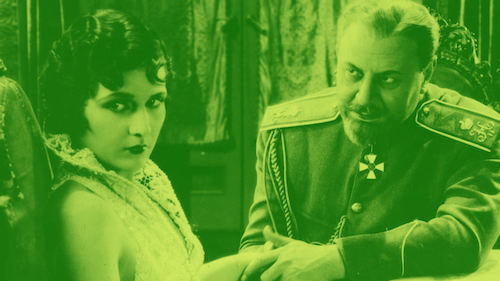
Silent cinema is not for everyone, especially because the majority of us have enjoyed cinema with dialogue, music, and foley art. To get someone to look back at films that are missing half of what we have come to expect from the medium is a tall order. While I think there are silent films that are better (not many, mind you), I believe Sternberg's The Last Command might be the most transferable film of that era to the modern age. Outside of the fact that there isn't any recorded sound, The Last Command was shot as though Sternberg traveled to at least the fifties, came back, and tried to implement his technical and artistic findings in this inventive film. Blurring the lines between politics and filmmaking (via a Russian general who winds up on the set of a new motion picture, who then recounts his reign and decline that led him to this place), The Last Command toes the line between satire and epic with such ease. Emil Jannings delivers one of the greatest silent film performances as our former general, who brings both delusional confidence and painful hubris to a role that could have just been a caricature. The Last Command is so ahead of its time, it is almost ridiculous (this is the guy that Hollywood stiffed again and again).
1. The Blue Angel
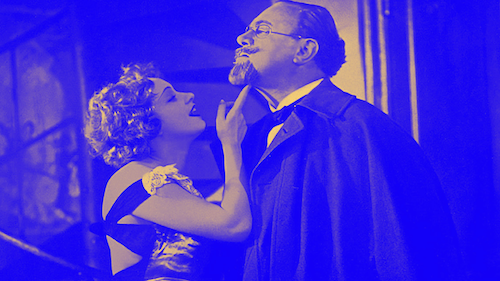
Picking between this and The Last Command was no easy feat, but I ultimately selected The Blue Angel as Sternberg's crowning achievement simply because it has everything I have come to love about Sternberg's filmmaking. You have two sides of this same coin; the German version that boasted how Sternberg foresaw the future of cinema, and the English version that was meant to keep up with the expectations of Hollywood at the time. While Sternberg would quickly learn how to make excellent Hollywood pictures, the superior version of The Blue Angel is clearly the German one that still feels underrated by today's circles. Sure, The Blue Angel is loved, but this film is nearly inexplicable with what Sternberg accomplishes in this downward spiral of lust, self-loathing, and delirium. We find two of Sternberg's greatest hires, with Emil Jannings playing a by-the-book professor who yearns for more in life, and — once again — Marlene Dietrich as cabaret performer Lola Lola who may have been brought in from another planet. Our professor, Immanuel, projects his desires onto her, as if he has been dreaming of her his entire life (which he feels as though he has thrown away up until now), and he will do anything to be hers. Naturally, like a few other Sternberg pictures, Lola Lola is not on the same page as Immanuel; she is trying to get by and progress in society. Yet, Immanuel believes that there is nothing else worthwhile in life than this stranger he is now convinced is the one for him.
Shot like a nighttime play, The Blue Angel feels almost theatrical with its representation of addiction. However, the film also places you in the mind of Immanuel securely enough that you may feel like the room is spinning and that you will soon hit concrete; you, too, are slowly going mad. I cannot emphasize how deranged and psychologically tangled The Blue Angel becomes, to the point that it almost eats itself alive; this is precisely what you'd want from a film that is as damning as it is satirical. To see a film this cynical and playful at the same time is such a treat, as if Sternberg had a vision that he could not shake off and he let it consume him. This is what it feels like to let obsession take a hold of you: you can see the severity of things and feel unable to prevent what transpires, all while you are blockaded in the conjured hypotheticals and events of your own mind. By The Blue Angel's end, it is all far too late; the life that was given up in search for something more has been neglected to the point of death. You simply cannot go back once bridges have been burned. As amusing as it is tragic, The Blue Angel is an exquisite genre-bending projection of the future of cinema as predicted by Josef von Sternberg: a man who knew that there was more to life — and Hollywood — than this; if only Hollywood allowed him to continue to explore and create as he once did in his prime.


Andreas Babiolakis has a Masters degree in Film and Photography Preservation and Collections Management from Toronto Metropolitan University, as well as a Bachelors degree in Cinema Studies from York University. His favourite times of year are the Criterion Collection flash sales and the annual Toronto International Film Festival.