
Filmography Worship: Ranking Every Nicholas Ray Film
Written by Andreas Babiolakis
Filmography Worship is a series where we review every single feature of filmmakers that have made our Wall of Directors

The career of Raymond Nicholas Kienzle Jr. is highly interesting. Better known as Nicholas Ray, a vast majority of his career acted as this bridge between the Golden Age of Hollywood and whatever would transpire. Despite not actually taking part in the movements that his works would inspire (from the French New Wave, to the New Hollywood era), Ray's films did a lot of the heavy lifting. These include a slew of revisionist or unorthodox takes on commonplace genres (and, believe me, Ray dabbled in pretty much every style of American film at the time). I'm talking about a film noir that was bursting with colour, a western that felt more like a melodrama, or an adventure film that shoves you in the arctic (instead of, say, the jungle or desert like most other adventure films would). Much of these spins came from Ray butting heads with producers and the studio system: Ray was even dismissed from a couple of films he finished a majority of (I will still include those below). This push from Ray was important for the future of Hollywood and American cinema: one that was under the Hays Code spell for decades. Art was being sanitized and was rendered monotonous; people like Ray helped stop this.
The height of Ray's career was quite short — from 1948 to 1963. This fifteen-year span saw Ray reaching commercial highs via Rebel Without a Cause and major woes; due to his refusal to conform and the studio system rejecting his methods and style, Ray was effectively forced out of a job for the majority of the rest of his life. He had three feature films after his prime: one (We Can't Go Home Again) was unfinished, and another (Lightning Over Water) was a documentary he co-directed with Wim Wenders (the film covers Ray's last days alive, as he was struggling with cancer). Ray was only sixty-seven when he passed away from lung cancer in 1979. As influential and important as Ray's career was for American cinema, you may find that his filmography goes through various extremes: extremely high highs, some well-intentioned lows, and a few so-so efforts that I respect but cannot fully connect with (but maybe you will). This is one of those cases where the impact of a filmmaker screams louder than the actual body of work itself; having said that, Ray has released some undeniable classics and opuses that any cinephile should have in their collection. I also applaud Ray for trying to break the mold with almost every film, outside of rare exceptions. Here are the films of Nicholas Ray ranked from worst to best.
22. A Woman's Secret
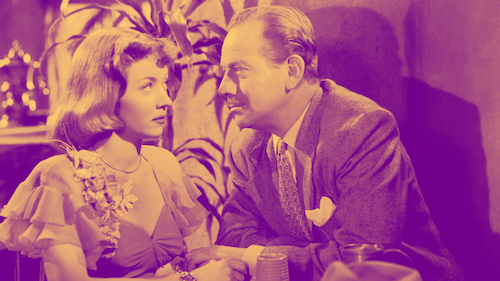
You will find that Ray's filmography is consistently full of highs and lows. Case and point: he kicked off his career with one of the great debuts of all time (They Live by Night), and he was only three films in when he released what I consider to be his worst film: A Woman's Secret. While not an outright awful film, A Woman's Secret is still Ray's weakest because it is a flat-out rudimentary take on the mystery genre with confused, miscalculated steps to make a daring mystery film with sharp twists and subversions. Instead, this tale of the peculiarities surrounding two singers (one who loses her voice, and another who has been shot) feels like ten thousand ideas shoved into eighty minutes, with very little resolution. It's refreshing to play against expectations, but not when you have no idea what the end game should be.

21. Born to Be Bad
Perhaps the weakest of Ray's noir films, Born to Be Bad is an attempt to connect the brooding, gloomy ways of the style with the emphasis of the Hollywood melodrama. Firstly, the blend does not work as well as other noir or neo-noir films have before or after; here, everything feels stylized but shallow. Secondly, its premise is one that is done a disservice during the days where Hollywood was controlled by the Hays Code (something like Baby Face has a very similar narrative -- about a woman doing whatever it takes to get her way -- and excels as a pre-Code middle finger to the establishment; Born to Be Bad feels far safer). The end result is a nice vehicle for Joan Fontaine, and not much else in this forgettable film.
20. Flying Leathernecks
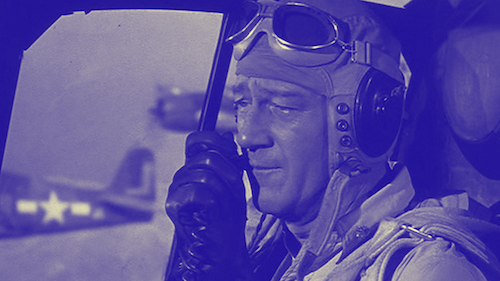
While not quite his worst film, Flying Leathernecks feels like Ray's most disappointing film and the reason is simple: it feels like a betrayal of his principals. Here's a director who continuously contended with the Hollywood system via a slew of films that revised or challenged what American studio films can be. Then, there's this World War II film with John Wayne at the forefront that checks off all of the boxes of the like-minded works of its time. Clearly a favour for producer Howard Hughes, this film feels like a technical spectacle with very little soul; what good is an action flick that gets no reaction out of you despite its repeated screams to be liked? If you will watch any war film under the sun, then Flying Leathernecks will likely be your next fix. However, in the span of war cinema and Ray's career, you can certainly do a lot better and witness works that are more honest and meaningful than this one.

19. Hot Blood
One of the trickiest genres to subvert is the musical genre. If you try to go against the grain with this genre, you can either create something thought provoking (All That Jazz), rooted in the blemishes of reality (Topsy-Turvy), or challenging to the point of making you question what the genre actually is (Dancer in the Dark). Or, there's the last outcome: you wind up not making a good musical. Hot Blood is not a good musical. The songs are off -- but not in the way that feels inventive. The story is somehow pedestrian despite its unique premise for its time (a guy gets conned into being married to a gypsy via arrangement). I would argue that the numbers make for decent sequences (even if the songs themselves aren't special), but Hot Blood is kind of a hot mess.
18. Wind Across the Everglades
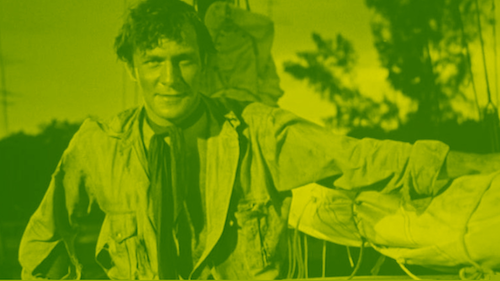
Considering how at-odds Ray was with producers while making Wind Across the Everglades (so much so that Ray was fired before the film was finished, leaving screenwriter Budd Schulberg to finish on Ray's behalf), this film not being a complete disaster is kind of a remarkable achievement. Even though the tumultuous production has a bigger reputation than the film itself, Wind Across the Everglades is decent, but it is a clear tug-of-war story. We have Ray's ambitious aesthetics and sets clashing with what appears to be large portions of the film gashed out in the editing room (a film that feels this massive usually feels stunted when it is only ninety minutes). Is the film watchable? Sure, but you will also be wondering what could have been the entire time.
17. The True Story of Jesse James
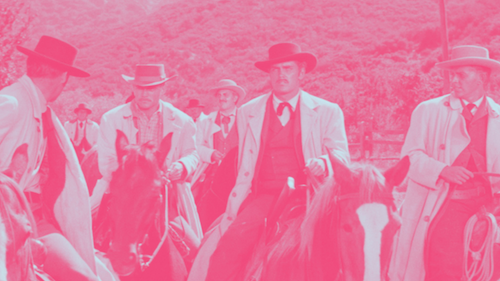
Who isn't captivated by the insane lore and myths surrounding one historical outlaw, Jesse James? Ray gives the backstory of this infamous figure the biographical picture treatment in The True Story of Jesse James; the name is a bit of a stretch because Ray attempts to capture eighteen years of James' life in just ninety minutes. The majority of the film is curiously told in flashback, which I suppose is a method used to make the film feel more personal and through the mouths of those who have lived these experiences. However, I still feel like the film feels driven by the milieu of James and other famous outlaws more than it gets into his spirit (or, at the very least, places itself in his shoes). Do you want to hear someone spin yet another yarn, or do you want to feel like you are witnessing the life of a well-known name? Jesse James strives for the latter but settles for the former.
16. Knock on Any Door
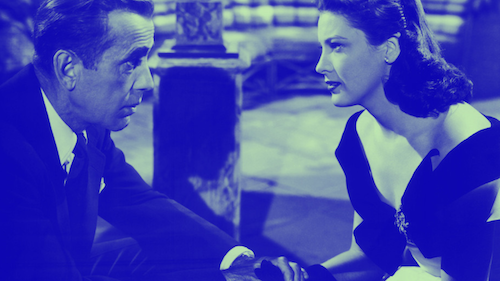
Ray had a massive undertaking after the brilliance of his debut film, They Live By Night. He seemingly tries to bring the atmosphere of noir films into the legal drama with Knock on Any Door, bringing Humphrey Bogart into the courtroom. I suppose the idea is that the world can turn good people into sinners because of how broken it is, and Knock on Any Door is meant to dip into the minds of its characters (the moral and the unethical), but I don’t know if it truly succeeds with this notion; if anything, this attempt to make a different kind of legal drama winds up feeling as commonplace as you can get (at the end of the day, all legal dramas are about people either doing good or bad things, and a film like this one needed more complicated and layered characters and plot points). Still, there’s a great central performance by Bogart here to keep us interested for the entire runtime.
15. 55 Days at Peking
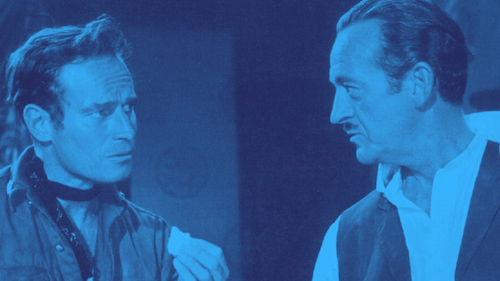
Towards the end of his career, Ray went all-out with his take on the war epic with 55 Days at Peking. One of the projects that Ray did not complete (here, he became ill; he also almost died from cardiac arrest while producing), 55 Days at Peking is an insanely massive production that sadly runs around in circles. With a convoluted narrative that does not compare to the intricate sets, insane effects (destruction for days), and scope of a film that Ray threw everything into. Furthermore, the art of subversion is to already be an expert at what you are subverting. I'm not sure if this historical epic about the 1900 Boxer Rebellion in Peking is something Ray would excel with since it is so far removed from most projects he has ever taken on.

14. The Savage Innocents
Some films defy description, for better or for worse. The Savage Innocents is a part of both camps. This adventure film replaces the wild west with the Arctic, and the lone ranger with an Inuk hunter; this protagonist is played by Anthony Quinn who is one of the most versatile actors of all time, but this is still a problematic choice by today’s standards. Even back then, this is a peculiar choice simply based on the fact that The Savage Innocents is meant to be a stance against colonialism and racism (and yet this casting choice perpetuates that which it rejects). Nonetheless, this is a fairly riveting ride, with a new take on what a western can look like (while not explicitly a western, this is clearly a western in new clothes); with the vicious climate afoot, this is a realm where one’s backdrop and the people surrounding it are all at odds with you. When our lead saves the life of a white cop, will the cop turn on his saviour in favour of the way things are? With some compelling ideas and sequences, The Savage Innocents is quite good, and yet it remains flawed overall.
13. Run for Cover
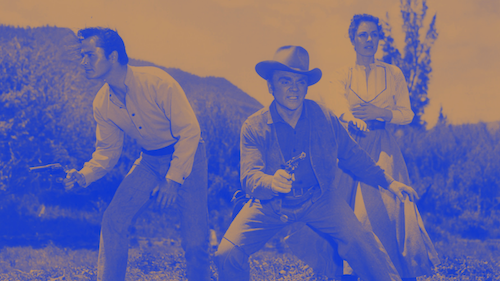
During Ray's western run, he made a film that feels indicative of the genre but also quite a decent slice of what makes American westerns so likeable. That film is Run for Cover, which arrived at a time when many fathers were introducing their sons to the genre via Hollywood films or the earliest days of television. Fittingly, Run for Cover features an older cowboy (played wonderfully by James Cagney) showing the ropes for a younger prodigy; the two of them are elected to be sheriff and deputy in a small town. Showing both sides of the genre -- the danger and the heart -- Run for Cover feels less like an effort by Ray to question the genre than it is a love letter; sometimes, it pays to play ball.

12. Lightning Over Water
Oh, what a crushing film. Lightning Over Water is a collaborative effort between Ray and German New Wave titan Wim Wenders, but really this is a story of two separate projects that converge into one. Ray's goal is to direct one last film before he dies; he is slowly dying of cancer and wants to have a final cinematic say. Wenders initially wishes to help; when it becomes evident that Ray will not be able to finish his film, Wenders instead grants him his final film in a different way. The end result is Lightning Over Water: a meta experiment that depicts Ray as both the subject and the artist. For better or for worse, Ray and Wenders are both auteurs who tried new things everytime; they spoke the same language. In this joint effort, the mission was accomplished for both: we have a legacy-shifting swansong, and a tribute to a departed friend.

11. Bitter Victory
With Bitter Victory, Ray heads back to the war genre but with a frequently-used ingredient: romance. Following two officers in the Second World War, the common ground between the two is a lover. Major David Brand's wife, Jane, was once in a relationship with Captain Jim Leith. This becomes a test of Jane's heart and who it belongs to; given how Bitter Victory ends, I feel like she may have had a similar fate no matter what happens to whom. Ray's film focuses on the weight of lives lost and the traumas that remain when survivors arrive back to base (or home). While not an effort that challenges the war drama, Ray's Bitter Victory captures the emotional resonance of the genre in spades (Ray always did have a knack for getting us to feel the grief, guilt, and/or distress of his characters, and Bitter Victory is an excellent example of this).

10. King of Kings
Even though much about religion is contingent with tradition, you may find that the most daring and atypical directors are the ones who turn out some of the stronger religious epics. Ray may not seem like the right person to be making a film about Jesus Christ, but King of Kings would prove you wrong. With Jeffrey Hunter (of The Searchers fame) as Christ, it’s as if Ray wanted to turn the most iconic — and tragic — chapters of the New Testament into a tale of the Messiah as a lone figure, with Jerusalem as His wild west. While the story is what you have heard time and time again when it comes to the crucifixion and resurrection of Christ, King of Kings has Ray’s sense of style, melodrama, and flair at the forefront; Ray’s version will certainly leap off the screen more than your run-of-the-mill Easter film. I don’t think it quite compares with the strongest examples of this story (Pier Paolo Passolini’s The Gospel According to St. Matthew, or Martin Scorsese’s The Last Temptation of Christ, as examples), but Ray’s attempt is still massive, aesthetic, and ambitious enough for the film to matter.
9. Party Girl
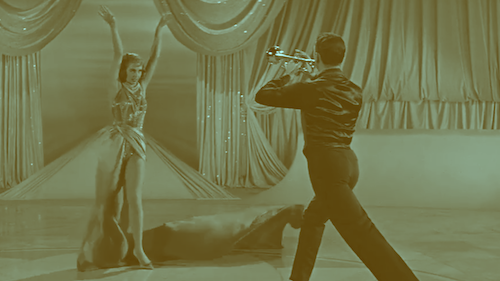
Ray has made a number of classic — and askew — noir films, but when the style was all but dead, he came out with his largest noir subversion ever: Party Girl. Shot in Metrocolor and for CinemaScope (need I remind you that this is a film noir), this story about a lawyer and the mobsters he has defended in court tries to become something else: a chorus girl tale. However, danger strikes when our protagonist’s newest love interest starts to get threatened by the mafia boss who has hired her for his latest party. Has our lawyer stayed in the underworld for too long? While not exactly Le Samourai (when it comes to the desire to leave a life of evil, only to seemingly be unable to), Party Girl is quite a romp; a rare noir film that you can call a hoot or silly fun. While it threatens to be almost ridiculous at times, Party Girl is an early example of a genre bender that I feel like succeeds; it is equal parts playful and dangerous (all while being so vibrant in its aesthetics).
8. On Dangerous Ground
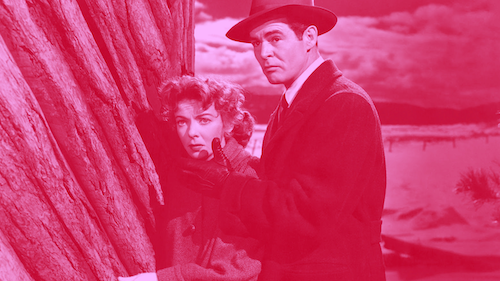
Can you be a responsible member of law enforcement if you cannot control your emotions? The noir style is one that scrutinizes how complicated people respond under pressure or while in danger. Ray’s On Dangerous Ground is a sterling analysis of self-reflection; is one’s inner demons defined by their environment, or by themselves? Our cop, played by Robert Ryan, is reassigned to the countryside after he proves to be unpredictable and explosive. There, he comes across a blind woman (played by acting and filmmaking legend, Ida Lupino) wile in the middle of a case (the search for a murderer). Ray’s film teeters on the edge of being a traditional noir film, but its character designs, setting, and progression all prove that there would one day be a place for the neo-noir style (and the idea that a noir tale can be told anywhere and in many ways): On Dangerous Ground is traditional yet unique enough to reinvigorate the film noir when it was slowly on its way out.

7. We Can't Go Home Again
Even though I have ranked this rather low, I have huge admiration for Ray and his penultimate film (technically, his last passion project), We Can't Go Home Again. Name another filmmaker who started off within the Hollywood system who wound up making a film as experimental, unorthodox, and challenging as this? Almost like Ray's answer to a Jean-Luc Godard project (this even predates his Histoire(s) du Cinema experiment), We Can't Go Home Anymore sees Ray as himself deconstructing the history and theory of cinema to his class; this lecture turns into an exposition of film formats (from 16mm to video signals) and ideas. While the film was never fully completed (Ray was still tinkering with the film when he passed away), something as audacious as We Can't Go Home Again may be the ultimate Hollywood subversion: you cannot get less Hollywood than this.

6. The Lusty Men
Do not be put off by a name as silly as The Lusty Men, for this is one of Ray’s greatest achievements. If anything, this film is meant to attack the notion of the big, macho, Hollywood leading man on the massive screen; here, we see Robert Mitchum as a retired bull rider who is tasked with showing the ropes to an up-and-comer, much to the chagrin of the latter’s wife. As if being a rodeo champion is an addiction for our protagonist — Mitchum’s turn as Jeff — The Lusty Men feeds us a taste of the exhilaration that stems from such an activity; we get the sense of both the thrills and the spills. What I appreciate the most is that The Lusty Men does not back down with its concept — that we often chase our own vices via self-destructive means. By its bitter end, you will know what crushing dreams, the dismantling of conventions, and the reshaping of an old genre (the classic western) looks like in Ray’s underrated gem of a film.
5. Bigger Than Life
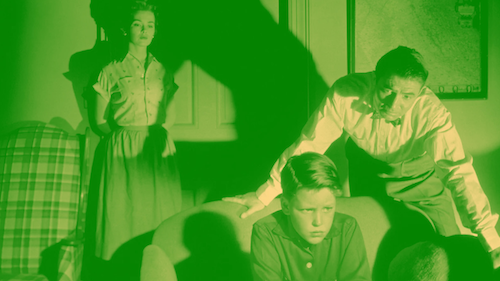
Many American filmmakers have ripped apart the concepts of the nuclear family and the American dream, but Ray was gutsy enough to do so while he was living in the middle of these moments in time. Bigger Than Life is a wallop of a commentary on existential concerns, then-modern living, and living up to expectations. Our everyday man with two jobs, Ed, starts taking cortisone to combat his biological and psychological ailments (including periodic blackouts) caused by his over-exertion; his medicine proves to be counterintuitive in ways once he goes from the patriarch of his family to their biggest threat. A borderline horror film that rests nicely in the hyperboles of melodrama, Bigger Than Life could have gone overboard and felt ludicrous, but Ray somehow manages to make this risky film contain enough truth and sympathy so that it reads well (even when it gets to its most psychotic state of mind). What good is the American dream when it leads to the most nightmarish version of yourself? Can we not achieve inner-peace and fulfillment in non-capitalistic and self-detrimental ways?

4. Rebel Without a Cause
Unquestionably the most popular film Ray ever made is the iconoclastic Rebel Without a Cause. Is all of that praise warranted? In the same way J. D. Salinger’s The Catcher in the Rye made many youths feel seen (or adults recognize how out of line they may have been in their salad days — and understand why they were acting out), Rebel Without a Cause put a face on teenage frustration and angst; that face was the tragic star James Dean, who passed away before he even truly took off. As Dean’s character Jim tries to start a new life away from his debauchery past, we learn that nothing will change if the source of Jim’s problems continue to persist (including the pressures from living in a suburban society, his toxic relationship with his father, and the uncertainty of what will happen later in his life). Ray’s visual style is cemented here in a film that embraced Technicolor (look no further than Jim’s crimson jacket) as much as it celebrated exaggerated storytelling — all in the name of pent-up rage and anxiety.

3. They Live by Night
Ray had a career of many twists and turns — as if his highs would be unpredictable and could drop at any time. Case in point: one of his best films is his debut feature film. They Live by Night is one of the great experiments in the classic noir style. Instead of the constant narrative shifts and instances of guesswork that all the other calculated, complicated noir films would utilize, They Live by Night slows things down to a crawl. It’s blatantly a relationship film — between a fugitive and his saviour — but even the quiet moments are swirling in doubt and anxiety. The union between our two leads — Keechie and Bowie — is the epicenter of They Live by Night, as we feel the weight of their love for one another. It is in these wee hours of the morning (and their twilight bonding) when They Live by Night pulls the rug from under us and reminds us that one cannot outrun their darkness forever; it is then that Ray’s gamble pays off the most, as you feel the entirety of the loss in a crime film like this. Ray let us know in They Live by Night that everything happens when it seems as though nothing is happening; getting to know characters is as revelatory as plot development.

2. Johnny Guitar
Some melodramatic statements reveal their brilliance over time, as opposed to straight away (like Rebel Without a Cause was an instant sensation). An example of a film that only grew over time is Johnny Guitar: a film that was a blatant rewrite of the western-genre playbook. That much was true right off the bat, from a female protagonist (Joan Crawford as the badass Vienna) to a different aesthetic approach (while other westerns embraced colour to exemplify the heat of the environment or the rays of the sun, Ray turned Johnny Guitar into a bright, near-psychedelic fever dream). Where the magnificence of Johnny Guitar has been revealed over time is how it was not antagonistic of the western genre; it was prophetic. It saw a future of revisionist takes that dared to trod off the beaten path, show different kinds of gunslingers, and find new depths of emotions and love that may have been seen as too sappy for such a “macho” genre. From countless films, to video games (including Fallout: New Vegas and the use of this film’s stirring theme song), Johnny Guitar set the tone for western stories for generations.

1. In a Lonely Place
Ray was a master of subversion, but his masterpiece was not much of a subversion at all. If anything, it is more of an introspective look at what makes a style tick. In a Lonely Place doesn’t do much to change films noir: it simply hoped to understand what makes them work. Ray takes a mogul of the style, Humphrey Bogart, and makes him look deep into his own psyche and dissect what he finds. Bogart plays a struggling and short-fused screenwriter who is struggling to piece together a new story; is his character a statement on the state of films noir and their eventual decline in popularity and originality? After a woman is murdered and our protagonist, Dix, is investigated for her death, Dix finds love and comfort in the form of a new, neighbouring tenant: Laurel (Gloria Grahame). Laurel is a struggling actress who may represent the then-contemporaneous state of cinema: dreamers hoping to reach the big screen, who may only get so far with their ambitions. Together, they are diligent entertainers and lovers. Of course, the doubt starts to set in: did Dix actually commit murder? While so many other films noir leave us wondering such a thing, In a Lonely Place is more invested with how characters perceive one another. No matter how Dix is represented and/or absolved, once Laurel believes that he could be a killer, that became his number-one trait: that he may possibly murder.
Ray’s film understands the depths of darkness and cynicism in a film that festers in alienation and dread; our suspicion is as strong as the frequency in which we feed it. The biggest tragedy in In a Lonely Place is the destruction of character; how can you trust yourself if you cannot convince the love of your life? Bogart delivers what might be his greatest performance, whose work reads as potentially guilty the first time you watch In a Lonely Place yet comes off as a man who is fighting for his identity, sanity, and life on subsequent watches (despite being as cool, even in this state, as Bogart has ever been). There’s something about marrying the concepts of filmmaking (particularly the art of writing) and traditional films noir that is handled so superbly here: Ray gets us into the mind of such a pulpy character who should be able to craft a yarn, yet they are bogged with both writer’s block and the inability to dictate their own fate. Both streams deal with closure: something Dix is forever seeking, and it is his curse that he can never find such fulfillment; not in the big city; not with another; not with his accusations; not within himself. Nicholas Ray is stellar at making humanistic characters in hyper-stylized environments, making his films feel both more impressionable yet otherworldly when he was at his very best. Not only is In a Lonely Place his opus, it may just be one of the finest films noir ever made.


Andreas Babiolakis has a Masters degree in Film and Photography Preservation and Collections Management from Toronto Metropolitan University, as well as a Bachelors degree in Cinema Studies from York University. His favourite times of year are the Criterion Collection flash sales and the annual Toronto International Film Festival.