
Filmography Worship: Ranking Every Woody Allen Film
Written by Andreas Babiolakis
Filmography Worship is a series where we review every single feature of filmmakers that have made our Wall of Directors

My Filmography Worship series details all of the feature films of a celebrated director's career. I focus on any filmmaker I consider important, essential, monumental, or consistently brilliant. When taking such facets into consideration, a name like Woody Allen comes to mind. Once a standup comedian, Allen directed his first film as a replacement for Lenny Bruce in directing the dubbed experiment What's New, Tiger Lily?. Allen was not exactly a stranger to the small screen, starring in the espionage satire Casino Royale, but I do think that What's New, Tiger Lily? was his actual foray into making motion pictures. Allen quickly found his footing as a filmmaker within the New Hollywood movement, starting off with a number of spoofs and satires before expanding his scope quite a bit with films like Annie Hall, Manhattan, and Love and Death; let's not forget the artistic, highly-serious drama, Interiors. Furthermore, Allen would forgo his strictly-silly shtick for screenwriting that was profound yet paranoid, existential yet exciting, and as insightful as it was satirical. This was no longer just a comedian making films: this was a tour-de-force New York artist.
Needless to say, Allen was highly prolific. Since the seventies, he released a film almost every single year until the early twenty-twenties. He worked in the Broadway scene as well, and plays clarinet in a jazz band (a number of his films include jazz or jazz-inspired scores). He has even written a memoir, Apropos of Nothing, in 2020. In a majority of his works, Allen incorporated his neuroses, existential panics, and Jewish heritage and culture into meta monologues, star-studded walks of life, and inventive concepts that changed what the big screen could feel like. For all of these reasons, and given the high caliber of dozens of his films (excluding the bunch of films that did not work for me), I consider Allen one of the great American filmmakers: he is someone who has reconfigured the comedy, Hollywood, and independent scene for over half a century, as both a director and a screenwriter.
However, that does not mean that I endorse him as a person. Far from it. I try to separate the artist from the art whenever I review films, and that will not change here. Since I am going through the works of a person, I still feel the need to bring up important talking points of said person. It's no secret that Allen is a complicated and controversial figure. The extent of his problematic choices is murky. His ex-wife Mia Farrow's allegations — that he sexually abused their adopted daughter, Dylan Farrow — are impossible to ignore, even if he is not presently charged with anything criminally. Furthermore, his marriage to Farrow's adopted daughter, Soon-Yi Previn, is alarming to me when you consider that Allen posed as a father figure to her for most of her formative years (you can certainly ascertain that he may have groomed her when she was younger). With all of this in mind, we can deduce the following: Allen is either a monster as a person, or he is — at the very least — disturbed and concerning. My thoughts lean more toward the former. Then, if all of the above was not enough, Allen’s name has appeared enough times in the Epstein files that — while these appearances do not point to anything nefarious — his affiliation is concerning enough to me. All things considered, proven or speculated, this is a very poor and horrifying portrait of one of the American greats. Any of my reviews below are not meant to glorify or justify Allen as a person because I do not condone any of these actions, alleged or confirmed. You do not have to like or support a single film of his, or care to continue with this article. I do not and will not blame you.
All that this list is meant to do is go through the films of someone who is a strong artist but an awful person. Allen did make some of the most important and highest quality films of all time. He does have quite a few fantastic films that cinephiles should be watching if they want to see all of the great pictures out there. Sure, Allen does have a lot of dogs out there as well as well, but I will be focusing on what makes these films bad as opposed to Allen as a person while reviewing them; all of the entries below will be treated individually and separated from that who made them. You will see that that is easier said than done with some certain films, some which I even like or love (and yet I cannot pretend that they are not problematic, especially in hindsight). I do not think it is fair to punish everyone involved with these pictures because of the person whose name is the biggest on that film's billboard. I also didn't want to omit Allen entirely because the goal of my series is to cover all of the directors who I consider the greatest, and I cannot deny the talent that is present in a majority of these films. I also must never forget who is behind these films, hence my statements above. I have been greatly moved, tickled, and enlightened by his best works. I will never forgive him for what he has done. I may be going through his films below and celebrating some, but none of that erases his hideousness as a person. Anyway, we have fifty of these to get through, and quite a few of them are stinkers before we get to the good stuff. Here are the feature films of Woody Allen ranked from worst to best.
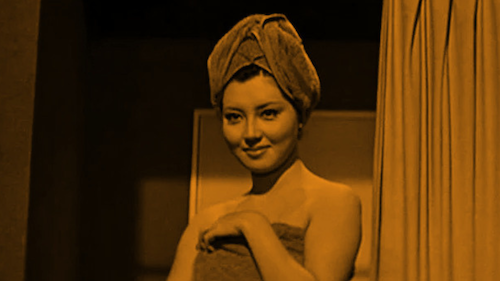
50. What’s Up, Tiger Lily?
I thought I knew what bad Allen films were when I saw the following dozen (or so) films in this list. I thought I had it all figured out. Until I saw his debut film, What's Up, Tiger Lily?: an exhausting experiment. Allen was hired to dub over the Japanese spy film, International Secret Police: Key of Keys (by Senkichi Taniguchi), which is already a spoof of the early James Bond films. Look: one of my guilty past times is dubbing over shows, films, or commercials I cannot stand. I think the practice can be hilarious. However, not a single moment in this film made me laugh. Most of the jokes are dated, problematic, or just doomed from the start; toss in the fact that the film was elongated against Allen's approval (including a performance by band The Lovin' Spoonful, for no reason), and you have a flick that is so bad that To Rome with Love looks competent by comparison.

49. To Rome with Love
Having said that, no, To Rome with Love isn't actually competent. While other Allen films may have specific elements that are worse than anything in To Rome with Love, this particular film just feels a bit like every bad trait in an Allen film dialed up to eleven. A clash of stories — and none of them are particularly interesting (no matter how hard our cast tries) -- To Rome with Love is the one time when an Allen destination film feels like nothing more than an excuse to go somewhere nice and have a studio pay for it. The intellectualism goes nowhere, the humour feels stale (even though Allen would make funnier films after, so he clearly didn't lose his knack), and much of the film leaves you wondering what it was all for. Even though other Allen films may bother me more in ways, To Rome with Love feels like his most pointless endeavour.

48. Wonder Wheel
I do like when Allen leans into his artistic side, but what a crying shame Wonder Wheel is. Shot by the legendary Vittorio Storaro, this collective of stories surrounding Coney Island is such a treat to look at (so much so that it may be one of Allen's nicest looking endeavours to date). However, paint a pile of shit gold, and it will still smell while looking nice (well, as nice as it can). Wonder Wheel feels rushed, uninspired, and almost like a filmmaker's preliminary work (not their fiftieth — or close to it). Sophomoric writing, ho-hum storylines, and lifeless characters do anything but instill wonder in you; I do not get the spark that Allen wants us to have outside of how pretty this film is.

47. A Rainy Day in New York
The turning point when Allen's career was marred by the sins of his past (to the point that the film was boycotted, and the starts instantly expressed regret for even partaking in it), A Rainy Day in New York's poor reception may have something to do with critics wanting to take part in this damnation. So, no. A Rainy Day in New York is not Allen's absolute worst film like some would lead you to believe. However, it's still not a good one. What almost feels like a squeezed-out film in the nick of time (before Allen was ostracized from the city that he became synonymous with), A Rainy Day in New York is stuffed with whimsy to the point that it will come out of your nose — and no one wants that.

46. You Will Meet a Tall Dark Stranger
Almost like a To Rome with Love, but with just an extra pinch of flavour, You Will Meet a Tall Dark Stranger just feels like an Allen film through and through, but without anything identifiable outside of its cast. To be fair, seeing stars like Josh Brolin, Antonio Banderas, Naomi Watts, and Anthony Hopkins (amongst others) doing Allen's dialogue and living in the shoes of his characters is a bit of a treat, but what good is that when this feels like the same kind of multi-character Allen romp (where people fall in and out of love in complicated ways) to the point that it doesn't make much sense to watch this film over countless other examples by Allen alone (more on those in the top twenty entries on this list).

45. Rifkin’s Festival
While not quite as bad as A Rainy Day in New York, Rifkin's Festival is still another later-career Allen film that feels like he is doing as much as he can before his time as a prominent filmmaker is up. The biggest issue is that the romantic angle feels like the same conversation Allen has had with us ten thousand times already. However, the only thing that truly goes for it is the relationship Allen has with cinema, present in a film festival that feels like a wonderland to explore in. It's too bad that Allen gets carried away with the silly minutiae of his characters and their love lives, though, preventing Rifkin's Festival from ever taking off (not that it mattered, since the Allen ship sailed long ago for many).
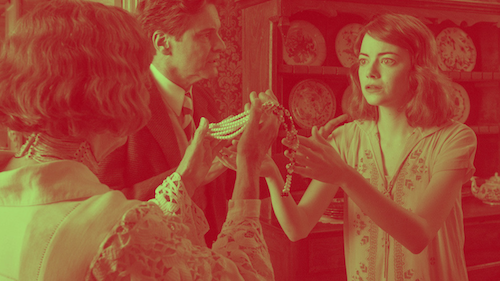
44. Magic in the Moonlight
In the twenty-tens, it felt like Allen was just tossing anything on the wall and seeing if it would work; rather than taking a year off to iron out his ideas, he just went with whatever came first (it seemed). Magic in the Moonlight is a game of wits and hearts featuring a magician and a psychic he is trying to prove is faking her capabilities. The film is meant to be screwy yet sincere, but it comes off as boring, verbal sludge that sprawls but doesn't quite go anywhere. However, I do think that Emma Stone (as the psychic) is one of the more interesting performances and characters in one of Allen's weakest eras; she isn't enough to save the film, but at least she makes it kind of watchable.

43. Anything Else
When the teen, high school rom-com was at an all-time high in the nineties and aughts, Allen wanted to try his hand at the genre with Anything Else: a film that may make you want to watch anything else. Starring some of the biggest names of that realm back then, like American Pie's Jason Biggs and it-girl Christina Ricci, Anything Else is stuck between trying to be an Allen event and a film catered to the youth of that generation; it does not please either audience with its confused tone and lack of interesting ideas (it's a major problem when a film that is only an hour and fifty minutes feels like three hours).

42. Irrational Man
When Allen makes films that mirror his real life controversies, they were either before he fully leaned into this side of himself (Manhattan) or when he was still in the heat of his prime (again, Manhattan). By the time he made Irrational Man, he simply felt like the title. He was aiding his infamy with a film about an older professor whose midlife crisis involves him dating a much younger student. The film is so bland on its own accord that it almost defies description, but toss on the notoriety of the person who made this film, and Irrational Man comes off as a flex or a "so what?" by someone who is in no position to be boasting (this is one of the rare times where I find it difficult to separate Allen from one of his films because he's clearly riffing on his own experiences, here).

41. A Midsummer Night's Sex Comedy
It might be a bit of a hot take to place A Midsummer Night's Sex Comedy so low, but I have a few reasons. First, considering that Allen is one of the biggest fans of Ingmar Bergman in cinema, this clearly feels like his answer to Smiles of a Summer Night (or the Shakespeare play of the similar name); when Allen gets in his own head, it works for many situations, but a sex romp film is not one of those things (and it does pale in comparison to these aforementioned works). Aren't these kinds of films meant to be enjoyable, provocative, and thought provoking? I think Allen's biggest competition is himself: he has clearly made many better films about complicated relationships. This one just didn't do it for me, and it comes off as false and self-consuming.

40. Scoop
Allen was interested in telling crime stories by the mid aughts, and of the two that star Scarlett Johansson (the other being Match Point), Scoop is the less successful with what it sets out to do. I think there is an interesting story about mystery and intrigue here, but Allen substitutes much of that story for the romantic angle of Scoop, which is not necessarily an issue on paper, but I feel like it loses some of its calculation in favour of lovey-dovey vibes. A film you are meant to try and solve along with its characters is not supposed to feel like it is missing important information, tones, or electricity; Scoop does.
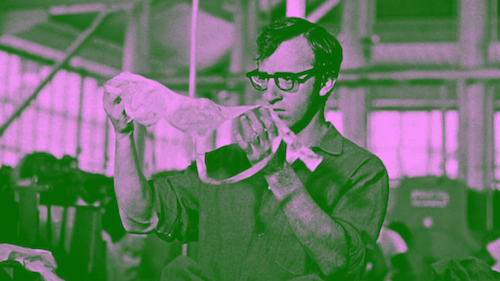
39. Take the Money and Run
Allen's first official film (I don't even know what to call What's Up, Tiger Lily?) is Take the Money and Run. Still running off of the fumes of the spoof film that kick-started his filmmaking career, Allen would reside within the parody and screwy kinds of comedies with this mockumentary about a desperate bank robber who simply cannot carry out any of his hits. While a little bit funny (given the escalating ineptitude of said individual, played by Allen himself), Take the Money and Run is still the same joke for almost ninety minutes; you can only get so far with this premise. Allen would evolve how he tells jokes on the big screen after this early example, thankfully.

38. Coup de chance
Once no one in Hollywood wanted to work with Allen anymore (it seems), due to his controversial pasts and decisions coming back to haunt him after the Me Too movement (one that was aided by his son, journalist Ronan Farrow, whom he is obviously estranged from), he made Coup de chance: an authentically French film. While a decent comedy-thriller that hearkens back to what he has achieved in a few other films, this is meant to feel like a career rejuvenation for Allen. Instead, it comes off a bit like the idea of a European Allen film more than a fully realized example: it has twists, turns, and interesting characters, but there is still an emptiness to the entire picture. Should Allen keep working strictly in Europe, I feel like there might be a better film to come than the so-so Coup de chance.
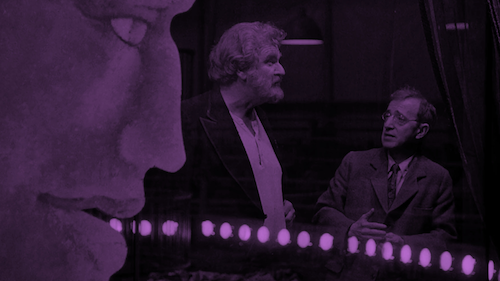
37. Shadows and Fog
While some of Allen's weakest films feel like he got complacent and did very little, Shadows and Fog feels like he is taking on too much. Trying to make a Kafka-esque story about a serial killer into a comedy, Allen is hoping to poke holes in the self-seriousness of such stories while pointing out the peculiarities of harrowing cinema. Instead, Shadows and Fog almost feels like a nagging, younger sibling who is getting in the way of a really good film that you are keen on finishing. With German Expressionist aesthetics and a brooding premise, Shadows and Fog is aching to become something far more sinister and memorable; instead, Allen tames the film and forces it to settle as an aimless misfire.
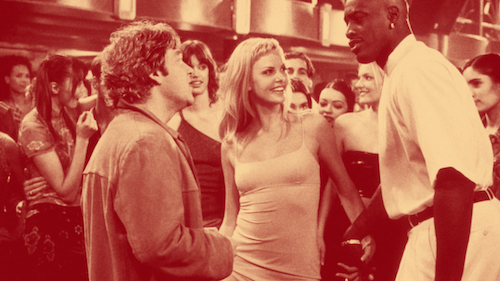
36. Celebrity
Allen's intended satire of the entertainment industry, Celebrity, is so on the nose that all of the cartilage within it has been squashed beyond repair. This confused story about celebrity life in New York City — adorned with a plethora of cameos (some welcomed, and others — like Donald Trump — not) — is maybe Allen's answer to Robert Altman's The Player, but substitute the mind-blowing crime subplot of Altman's classic with a divorced couple's main-character-energy issues. The end result is a film that wants to be more serious and artsy than it is (down to the hiring of Ingmar Bergman collaborator, Sven Nykvist, to direct the photography here). A lot is said, and many faces come and go, but there isn't much to care about here despite all the efforts.
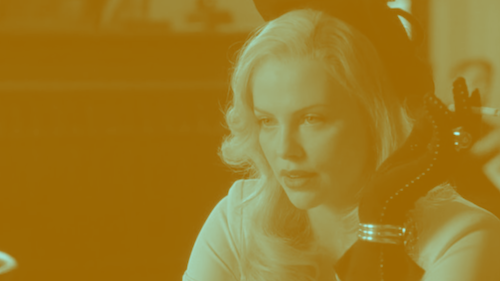
35. The Curse of the Jade Scorpion
When you reach the middle of Allen's spectrum of quality, you may come across a film that is equal parts annoying and intriguing. Such an example is The Curse of the Jade Scorpion: a very strange crime comedy with a hypnotist who mesmerizes his victims into doing evil deeds for him; in this case, it is the heisting of jewels. The story is so stupid at first, and every character feels like they came from some abandoned cartoon series from the eighties. However, the film's revelations get a little too interesting, and those same characters start to grow on you just a wee bit. Somehow, The Curse of the Jade Scorpion lulls you into thinking that it is better than it is, and that might just be it: this is a good time but not a good film.

34. Whatever Works
When Seinfeld first debuted, Jason Alexander thought his character — George Costanza — was meant to be a Woody-Allen-type of neurotic; he would learn by the third season that he was actually meant to resemble the series' co-creator, Larry David. Well, worlds were colliding when Allen cast David to basically play himself (and by himself, I mean Allen, not David Curb Your Enthusiasm style) in Whatever Works. I hope you have kept up with me, here. While Allen's film is kind of derivative of what he has done time and time again, I do appreciate David not just being David yet again; here, he is actually acting with some slight sincerity and warmth (and, sure, Whatever Works does get away with some Curb Your Enthusiasm kinds of tropes). This is still a weaker Allen film, but it kind of worked on me.

33. Small Time Crooks
There are some films where Allen's characters are more interesting than what they get up to, and a big reason why is because of how he directs his actors to play said characters. An example of this is Small Time Crooks, which is not the greatest Allen crime film by any stretch, but he makes for a great dynamic duo with his on-screen wife, Tracy Ullman. This cookie crime caper (try saying that three times fast — or don't, I don't actually care) kicks off with an intriguing premise ala Larceny, Inc., but it feels like the characters do most of the driving for us; that might be what you crave, though.

32. Café Society
With what feels like the beginning of the end for Allen, Café Society came out around the time that the MeToo movement was in full effect (and his past controversies were resurrected). I do think all of that hurt the reputation of what is otherwise a decent film about a turning point in the motion picture industry (thirties Hollywood). I won't pretend that Café Society is some unsung masterpiece or anything, but this does feel more sincere and textured than a majority of the films around this time period (and certainly post Blue Jasmine); even the central romance here feels somewhat constructed. Maybe the film only looks better than it is considering the majority of what Allen films have surrounded it, but Allen has also certainly released far worse than Café Society.

31. Hollywood Ending
One of Allen's films to draw from Federico Fellini's 8 1/2, Hollywood Ending is also one of his least-discussed titles to date — perhaps for good reason. This mediocre look at a director who is feeling the pressure of the industry to the point of being crippled by his anxiety (of course it is Allen who plays this protagonist) is a bit of an obvious metaphor. When this director tries to now direct a film while temporarily blinded by his stress (quite literally), as to appease producers, Hollywood Ending goes from a possibly clever satire to the kind of shoehorned premises and concepts that you might find a grad student concocting instead. There's actually a lot of promise here, but Hollywood Ending does not feel fully realized or properly fleshed-out enough to work to its potential (it only winds up making obvious statements, which is a big no-no for satires).

30. September
I will never fault Allen for wanting to occasionally make dark films (you may either expect or be surprised by how high Interiors ranks on this list), but I also want him to do a good job with these films. September is decent, sure, but I also wish it was a bit more mature than it is. When Allen gets grim, he usually allows his films to organically grow into the complicated stories that they possess. September, however, almost gets in its own way to the point that its drama and depression feels feigned or put-on, and that is not what I expect from a dark Allen picture. If you are as much of a fan of his serious work as I am, September is worth a try just to see him take another stab at this side of his craft, but September also feels like half a film stymied by Allen's attempts to play into what is expected of him (which renders enough of this tragic film artificial).

29. Melinda and Melinda
While many of Allen's failure films greatly bother me, I consider Melinda and Melinda a bit of a pass because it is at least inventive enough to keep my interest and not feel like a slog to finish; I just wish it was stronger than it is. Melinda and Melinda is spearheaded by a central performance by Radha Mitchell playing two sides of the same coin. Both Melindas are one and the same person, although one half is an optimistic, hopeful look at life via a comedic lens, and the other is the reveling in darkness and anguish. Allen's yin-and-yang take is an excellent one, but the film's execution feels almost half complete: as if there was more exploring to do and more of Melinda to become familiar with. I respect Melinda and Melinda more than I like it.
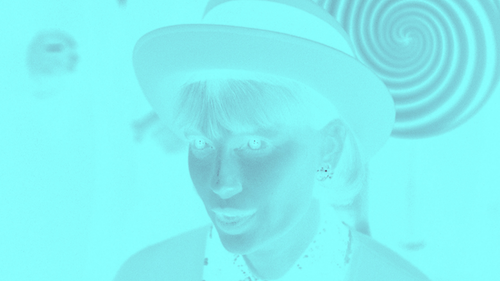
28. Alice
I find it interesting when non-fantasy directors dabble in magical realism, and Allen doesn't quite roll around in the genre as much as I would have liked him to with Alice (a fairly safe, modernized take on Lewis Carroll's Alice in Wonderland). Allen spotlights then-wife Mia Farrow as a titan of New York City who is left having to deal with the concerns of a troubled marriage and the everyday life of a Manhattanite. Allen then takes Carroll's plot points and loosely references them with twists, turns, and lots of herbs. I feel like Allen wanted to keep things at least a little rooted in reality with Alice, but this should have been the one time that he let go of such an itch; there are other films where Allen goes all-out, and they are more successful than Alice as a result. This is at least an unorthodox film by Allen’s standards, and you might be seeking that.

27. Bananas
Plenty of comedies are funny but not necessary good as stories or experiences (outside of the laughs that they provide). Bananas is such a film. It is clear that Allen was still finding his footing when he made this political romp, and I will say that it is the first Allen film of his career to actually feel like a riot (maybe appropriately, given its theme of revolution). However, as interesting as Bananas gets (especially its bait-and-switch from a rom com to a full-on war satire), I wish it at least leaned into the severity of its themes a little bit so we could feel the danger and calamity more than we do; instead, Bananas just feels like a fun mess as opposed to feisty chaos, and this is a bit of a missed opportunity. Allen was still figuring out the best ways to tell stories, here, but you might enjoy his efforts.

26. Cassandra’s Dream
Cassandra's Dream is a straight-up British crime thriller that follows in the footsteps of Match Point, because why wouldn't Allen try his hand at a genre that he nailed at least once, right? Well, Cassandra's Dream is not quite the spiritual successor that I would have liked, but it is a decent attempt that at least shows that Allen was trying. Following two struggling siblings whose desperate times call for even worse measures, Cassandra's Dream tries to get caught up in the karmic paths of their choices. Allen is able to keep up, sure, but I think he tries to go too far ahead to the point that the film somewhat drags behind. Characters are interesting but not fully realized, for instance. As a result, Cassandra's Dream feels more like the idea of a British crime film when Allen has already made one of the best of its kind of the aughts; this should have been smooth sailing. Despite Allen getting in his own way, Cassandra's Dream is at least decent because of its ambitions and efforts.
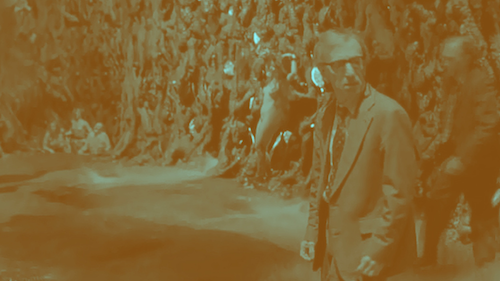
25. Deconstructing Harry
Coincidentally, we have reached the halfway point of this list, and I would argue that the quality of films from this point on are stronger. Many directors have tackled the concept of a filmmaker suffering from writer's block; if anything, Allen himself has done so more than once. The most blatant example is Deconstructing Harry: a bit of an underrated Allen title from the late nineties. He plays writer Harry Block (his name being the least funny joke of the film, I assure you), who goes on a Bergman-esque journey across a city to accept a degree (think Wild Strawberries, but far less depressing and serious). Allen turns his insecurities into life lessons in Deconstructing Harry: a film that is actually meant to deconstruct Woody (although, despite fifty efforts thus far, I don't know if he will ever figure himself out).
24. Everything You Always Wanted to Know About Sex* (*But Were Afraid to Ask)
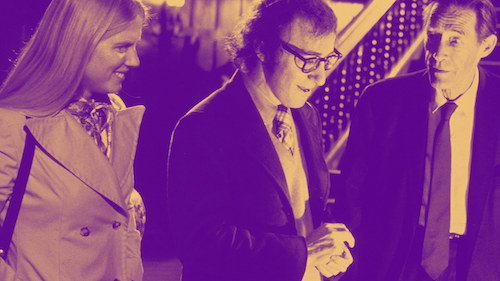
By the time Allen released Everything You Always Wanted to Know About Sex* (*But Were Afraid to Ask), he was figuring out how to make proper comedic motion pictures; while still not a slam dunk, this is at least the first good film of his career. Similar to what he did with What's Up, Tiger Lily? — but with far better results — Allen takes the existing property of David Reuben's self-help book and turns it into something farcical; the difference is that Everything You Always (et cetera) actually works when Allen satirizes it. With seven vignettes of romantic desperation, this spoof film opened audiences up to the uncomfortable side of sexual discussions during a time where New Hollywood was making such discourse permissible. While Allen would perfect these quirky and awkward conversations, this was at least a strong start.
23. Mighty Aphrodite
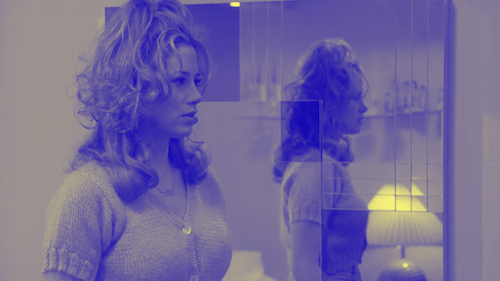
By this point in the list, we have arrived at the films that are almost excellent Allen endeavours outside of one or two points; these don’t ruin the film, but they will set them behind films that I have less to critique. First off is Mighty Aphrodite: a highly peculiar comedy featuring inner thoughts played out by a Greek chorus (dramatic much?). Lenny (Allen) goes searching for the mother of his adopted son, only to find that she is a prostitute named Leslie. Now, a major reason why Mighty Aphrodite works is because Leslie is played brilliantly by Mira Sorvino in an Oscar-winning turn — with a voice so high pitched and cartoonish that you can only assume this stems from reality (Sorvino nails this authenticity). Outside of a third act that kind of detours the picture (the film even points out that it has a deus ex machina), Mighty Aphrodite saves its biggest card for its final turn: a reminder of the fickleness and blessings of fate, often experienced at the same time.

22. Sweet and Lowdown
During the start of Sean Penn's turn from interesting actor to coveted thespian, Allen cast him as his lead in Sweet and Lowdown: a mockumentary about a jazz guitarist and his romantic life. Orchestrated to feel like an authentic documentary with interspersed interviews, Sweet and Lowdown carries out Allen's usual need for inner monologues via the creative means of having others do the talking for one individual. Sweet and Lowdown is not so much the mockery of musical pictures or documentaries but, rather, it is a quirky fixation on all of the minor oddities and cliches that audiences just cannot help but gobble up; here, Sweet and Lowdown comes off as a living tribute to all the things that bring us together (via people who may struggle to find the same connection with each other).
21. Sleeper
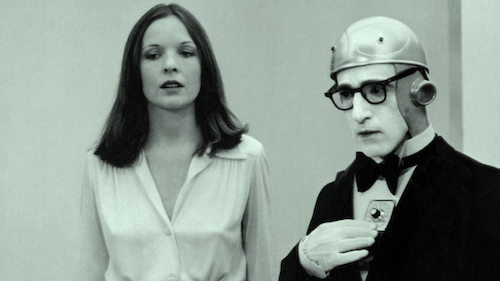
Ironic due to its name, Sleeper has gone on to be one of Allen's more underrated titles. Still during the start of his career as an important filmmaker during the New Hollywood movement, Allen was unable to fully shake off his spoof hits of his early days. However, Sleeper is so creative and insightful with its futuristic premise (our protagonist wakes up two-hundred years into the future and gets caught up in a political uprising). What Sleeper gets right that some of his earlier films do not is the ability to have meaningful viewpoints of the world we live in while maintaining its visual, verbal, and situational gags. The two flows in tandem are a permanent buzz throughout all of Sleeper: a film that is fueled purely by paranoia (and it all feels warranted this time around).

20. Manhattan Murder Mystery
If Allen were to attempt Alfred Hitchcock's Rear Window, it might look like Manhattan Murder Mystery: an everyday couple trying to investigate a death that they think leads to something nefarious. Allen and ex-partner Diane Keaton bounce off of each other very well here (this was sadly the last time they ever worked together) in a film about people biting off more than they can chew (and the dangerous hysteria that permeates as a result). Allen is great at making this larger-than-life case fumble about in the hands of people who got more than they bargained for, but Manhattan Murder Mystery's best asset is how it sticks the landing — for both the film, and the leads we are rooting for.

19. Everyone Says I Love You
The thought of Allen tackling a musical might seem like someone's version of hell, but I assure you that Everyone Says I Love You is actually splendid and sweet. Featuring a star-studded cast of actors who are not the greatest singers (but that is the point: these are the inner thoughts and vocalizations of everyday people), this complicated look at ships passing in the night and relationships either blossoming or folding is made all the more theatrical and melodramatic by the self-aware show-tunes that break up — or enhance — every scene; from sincere to hysterical, Everyone Says I Love You is a down-to-Earth musical that will remind you that butterflies in your stomach and nausea from anxiety are the same sensation.

18. Another Woman
We have the occasional Allen drama, and the notion that he is forever trapped within the walls of his mind and hounded by his inner thoughts. One of Allen's most underrated feature films, Another Woman, connects both sides of the Allen experience for a fairly moving psychological picture. Starring Gena Rowlands (one of the great actors of all time), Another Woman doesn't take a page out of the John Cassavetes playbook as much as it goes back to the Ingmar Bergman well (as Allen admittedly often did) to tell a story about inner turmoil and doubt during a mid-life crisis. Does our lead use these shifts in her life to try and find peace, or will she feel like time is perpetually running out? Another Woman is a special film that might get lost in the midst of the numerous classics made by Allen; don't let it slip away if you want to see all of his best works.

17. Love and Death
Despite my rather harsh words for two-dozen Allen films at the start of this list, this is where the essential Allen picks begin; clearly, his highs were as high as his lows were low. By the time he made Love and Death, Allen was almost at the point of being considered an artistic filmmaker (right before Annie Hall). Well, he didn't quite cross that mark just yet with this film, although he was perfecting the cinematic comedy with a philosophical, theoretical, and psychological vision of neuroses throughout history. Largely hyperbolic and playfully cynical, Love and Death feels like a Loony Tunes take on the works of Fyodor Dostoevsky: while the many talking points here are rooted in reality and history, this film is bonkers enough to still feel like a ride. Even though he wasn't quite making mature films just yet, Love and Death was the point where Allen was undeniably a serious filmmaker.
16. Midnight in Paris
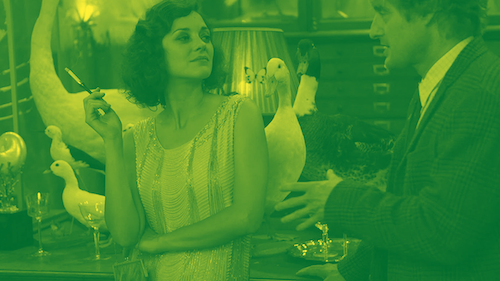
Allen let his inner thoughts take the wheel in the majority of his films. What would happen if these monologues were spoken by icons from the 1920s? Midnight in Paris sees a screenwriter taking excursions to Paris during the roaring twenties (just because) and conversing with some of the most brilliant minds and eyes of all time (like painter Salvador Dali and authors F. Scott and Zelda Fitzgerald, to name a few). What could have been a hokey, nostalgic retreat winds up being an enchanting, melancholy introspection of self via a healthy dose of magical realism. While this is not Allen's last great film (more on that later), Midnight in Paris might be the last time he felt this captivated by the inner spirits that move us (and not solely the pain that breaks us).

15. Husbands and Wives
One of the many Allen films that feel indebted to the works of Ingmar Bergman, Husbands and Wives is Allen's answer to Scenes From a Marriage. While being only two-hours long (as opposed to Bergman's seven), Husbands and Wives still encapsulates the highs and lows of marriage through pure devastation — via two partners wandering off in different directions and off the path of devotion. Similar to Scenes From a Marriage, things kick off with a happy couple finding out that their friends are separating; this jump starts the scrutiny of our central couple's relationship, and a downward spiral of existential depravity. Even though these turning points are obvious to us as outsiders looking in, Husbands and Wives does a strong job of showing people who wind up in places they least expected before they have even realized what has happened to them.
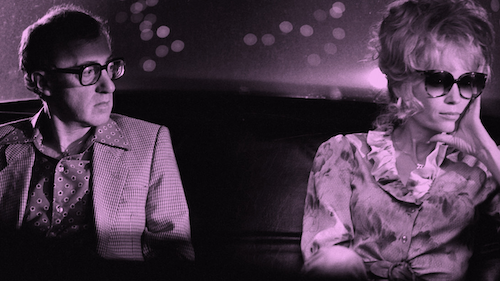
14. Broadway Danny Rose
A number of Allen's films feel like his worst nightmares coming to life. Such is the case with Broadway Danny Rose, as he plays a talent agent who winds up entangled with the criminal underworld with no viable ways of escaping. While quite a vicious film that never loses its darkness or spunk, Broadway Danny Rose is also still an Allen comedy through and through. It constantly feels like it is flying by the seat of its own pants, and we are going along for the ride. With Allen's then-common use of black-and-white photography (he had a phase), Broadway Danny Rose not only feels like a testimony from yesteryear but also a shadowy self-reflection: we acknowledge the severity and truth of each situation while also chuckling at all of the shit that hits the fan.
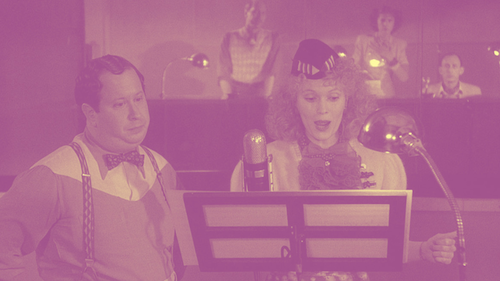
13. Radio Days
Allen takes us back to the glory days of radio with this touching, bittersweet look at a time that depended heavily on the audible medium (as opposed to film or television). The memories of our narrator blend with his visions of the kinds of people he would hear about in Radio Days, resulting in a blended tapestry of sentimentality. Sure, Radio Days is as funny and tongue-in-cheek as any of Allen's strongest works, but what gives it the extra oomph is how emotionally enrapturing this film can be at times; Allen captures the pin drop silence of breaking news hitting the airways and breaking the hearts of those who are listening in. Allen understands the power that radio once had on households, and seamlessly converges the goings-on of a traditionally complicated family with the chatter and static that used to inform, entertain, comfort, and unite us in our living rooms.
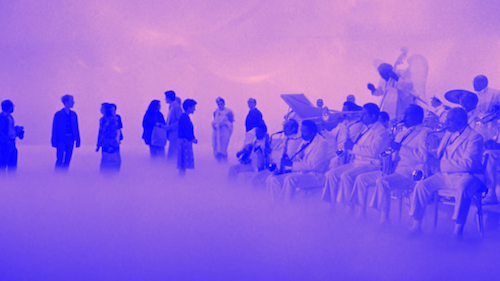
12. Stardust Memories
One of Allen's most meaningful films is this blatant homage to Federico Fellini's 8 1/2; while not the only time that Allen referenced it, it's clearly his best stab at it. The major difference is that Fellini was showing someone who could not make another production since he was suffering from a lack of creativity; Allen's film is a bit more tender (despite being sillier) in the sense that it is a filmmaker looking back on his life and career. Of course, Allen cannot forget 8 1/2's Rolodex of women who played an important part in the life of a tortured artist, and Stardust Memories is a bittersweet look at failed connections, self-destruction, and yearning; why is it that we always wind up looking back? Due to our past choices, do we no longer trust ourselves with what is to come?
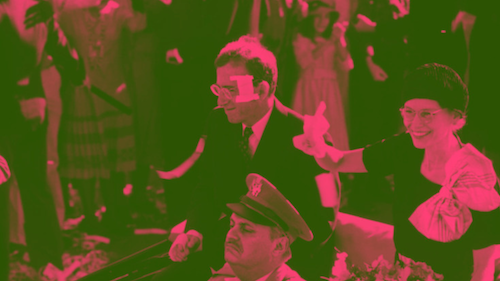
11. Zelig
Not many of Allen's comedies — or any comedies, for that matter — are as inventive as Zelig. Where do you go after a film where a person — Leonard Zelig — is literally a human chameleon who can turn into anyone he assimilates with? That could have been an interesting film on its own, but Allen goes one step further to have this character start to self-implode once his angst takes over (and his super-ability wavers). Allen goes even further by turning this into a pseudo-documentary, with artificial found footage and all. Suddenly, this becomes a satirical piece on conformity, the pressures of living in a society, and the inner-thoughts of a neurotic man winning the one-sided battle. This would be a top film in many other filmographies; the fact that this is outside of Allen's top ten is proof of how strong his works are when he's at his artistic best.

10. Vicky Cristina Barcelona
Anyone's top ten ranking of Allen's films will look different, and I hope you are okay with my selections. We kick off this highly-competitive top ten with the magnificent Vicky Cristina Barcelona. What begins as an excursion to Spain carried out by two young graduate friends turns into a pseudo-French-New-Wave hypothesis. A highly strange love triangle (or square, or even pentagon, at times), Vicky Cristina Barcelona welcomes us into the house of complicated people: a supposed free spirit with inner demons, and his explosive ex-wife (played brilliantly via an Oscar-winning turn by Penelope Cruz). What appears to be an excellent dramedy at first threatens to be something far more severe by its turn; Allen wisely knows when to back out of the territory of melodrama before the film gets ridiculous. Instead, Vicky Cristina Barcelona flirts with a dangerous life in the same way that it aspires to find meaning and belonging: via an existential vessel in paradise.

9. Bullets Over Broadway
When Allen films intend to get violent, they make no mistake of what the stakes truly are. Case in point: Bullets Over Broadway. A mobster film about the big stage, the underworld and the bright lights collide when a playwright gets caught up with gangsters and the ultimate ask: for a powerful person's plus-one to star in the next big hit. The big problem is that this girlfriend is atrocious at acting (fortunately, Jennifer Tilly — who plays this "thespian" — is far more talented). What starts off as a bit of a goofy experiment on how far this production will get before it's curtains (in more ways than one) turns into a bleakly hilarious affair with fatal consequences — all in the name of "the show must go on." Is all of what transpires in Bullets Over Broadway worth it? From the casualties to the agony? Hey, that's showbiz, baby.

8. Match Point
Allen has a signature style, but a film like Match Point almost frustrates me because you can see how well he excels when he decides to operate outside of it. What starts off as a romantic drama between a retired tennis pro and the woman he is seeing on the side (he is married, after all) turns into a legitimately shocking crime thriller that hits all of the right notes (and manages to exceed the genre's conventions, given Allen's character treatment here). By the cataclysmic ending shot of paralyzing ambiguity, you'll know that you are looking at a new lease on life (but at what cost). What good is evading the law if you have incriminated yourself and are within your own prison? We let the possible outcomes fester in our minds once Match Point is concluded: an effective thriller that leaves us begging for justice to be served (sadly, that is often not the case in the real world). When you see the tidal wave of mediocrity that followed this film (ignoring the occasional great project, mind you), I wish Allen took more risks like Match Point.

7. Manhattan
Admittedly, Manhattan is a trickier film to discuss nowadays given how much we know about Allen and our understanding of how his life imitated his art (or vice versa). Trying to distance his actions from this film, Manhattan is a phenomenal film; I have placed it where I believe it belongs objectively. Allen's first foray into black-and-white photography, he also merges his two different, newly-found kinds of artistic pictures (his highbrow comedies ala Annie Hall, and his existential dramas ala Interiors) into this cinematic midlife crisis. The writing is sensational, and the aesthetics are even stronger. In my eyes, there is no denying that Manhattan is incredibly well made. However, on a list of this nature — one that does look at who made these films — I have admittedly found it hard to ever return to a film like Manhattan after I learned more about Allen in the past ten years. I acknowledge both the film's integrity and the artist's lack thereof.

6. Blue Jasmine
Even though Allen's twenty-tens have been mostly abysmal, he had a couple of good films to take note of. Then, there is the exquisite Blue Jasmine. As if we transported back to the seventies or eighties, this slice of Allen's heyday has everything you'd want in a classic of his. From stirring characters — and the even-greater actors who play them — to the use of the city as both a haven and a burden (New York City is swapped with San Francisco, here), Jasmine's story is a depressing one that becomes a living Broadway play on the streets of reality. As we are — essentially — watching someone from wealthier means slowly turn into a homeless woman with zero hope, Allen's Blue Jasmine gives us a heart-shredding look at people who cannot help themselves despite the efforts of all around them. I imagine Allen saw someone on the streets of New York City (or maybe, more fittingly, San Francisco) and wrote a screenplay trying to figure out what one of their stories may be. Elevating this film furthermore is an iconic performance by Cate Blanchett as Jasmine: one that I think is a staple of the twenty-tens that is equal parts enchanting, devastating, and challenging.

5. Interiors
You may be stunned to see how highly I have ranked Interiors, but this is a masterful film to me. Perhaps it is the Ingmar Bergman obsessive in me that loves this fragile, heavy drama so much; it is the closest Allen ever got to representing his favourite filmmaker. Or, there's the other reality: Allen made a drama that exceeds even most of his classic comedies. Unlike some other tragedies, Allen doesn't ease into the worst of it right away; it simply starts off with a family being divided by the already-depressing act of divorce. Interiors wastes no time setting off its chain reaction of anguish and devastation. Allen also saves its uncharacteristically peaceful moment for last: the acceptance that we go through crises, and yet we keep going — like the sand that rests after the ocean's waves perpetually crash into the shore. Had this film been directed by anyone else, I feel like it would garner even more attention and respect. Then again, perhaps because it is an Allen film, maybe that has been a selling point for some. Let me assure you: this film is not a gimmick. It is near-perfect. While an unusual by his standards, Interiors is — to me — a must in Allen's filmography and of seventies cinema.
4. Crimes and Misdemeanors
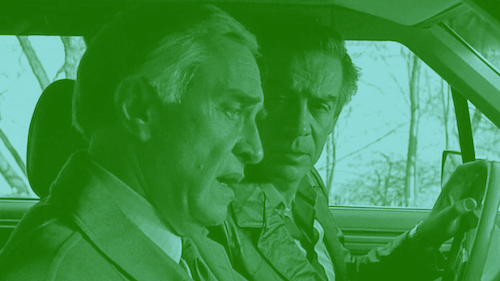
While not Allen's darkest film overall (its comedic tones somewhat negate the full extent of bleakness, here), Crimes and Misdemeanors still contains some of Allen's most cynical and ominous writing. The film follows two different kinds of evils in society: the already-bad indulgence of obsession, and the kind that go beyond points of no return and change — or even end — lives. While questioning what the point of life even is, Crimes and Misdemeanors provides us examples of how to appreciate what we've got: by not being the subjects the film investigates. Still, the film's characters are not explicitly terrible people: these are tangible figures who allow their inner demons to ruin their lives and character. If there was a film that blended the heaviest and lightest qualities of Allen’s writing and philosophies, it would be this favourite for many. In closing, there is a call-to-action to replace those voices of monstrosity with love and warmth at the film's ending sequence; I wish the real Allen followed his own advice.
3. The Purple Rose of Cairo
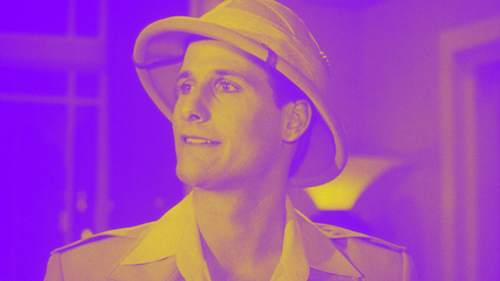
I think any ranking of Allen's greatest films will have an anomaly that speaks on behalf of the person who concocted said list. For me, that film is The Purple Rose of Cairo. While a highly-celebrated film in its own right, some of you may find me mad for placing it so high. For me, this is Allen's funniest film, with Jeff Daniels delivering one of the best comedic characters of all time (when he leaps off the screen as character Tom Baxter, his endearing naivety and confusion of the real world has me in stitches). Placing us in New Jersey during the Great Depression, Allen reminds us of the escapist capabilities of cinema for many lonely or suffering people (you may agree, since you are a cinephile on a fellow film lover's article). Allen then shakes things up by having a character from a film join the real world to pursue the love of his life — a woman who has seen his film countless times. The Purple Rose of Cairo questions the merits of film as a comfort medium during times of duress while also adding other complicated matters (when we love actors, do we love who they are, or do we adore our perception of them). For some of us, film is all we have; The Purple Rose of Cairo acknowledges, respects, and challenges that.
2. Annie Hall
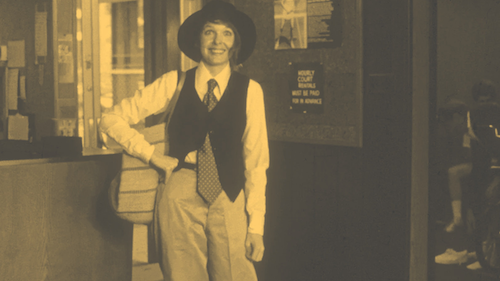
Allen's Best-Picture-winning film, Annie Hall, is undeniably a masterwork in comedy at this point. Breaking down the romantic comedy to its bare essentials and re-constructing it as a meta experiment on personal neuroses, Annie Hall is a film that is so one-sided with its perspective on a failed relationship that it winds up becoming an unbiased affair; we see what problems Annie had with Alvy just by spending time with him. Then again, we also sympathize with Alvy, whose breakup is so heavy on his heart and soul that it feels like his universe is crashing down. Diane Keaton's turn as Annie will make you see what Alvy saw in her: a quirky, free-spirited woman whose authenticity, talent, and personality made her impossible to forget. Annie Hall's experimental excursions (like its animated sequence, or the repeated breaking of the fourth wall) shattered the conventions of what a rom-com could look like; I still don't feel like Annie Hall has been matched in that way. On a side note, in the same way Marshall McLuhan skewers a man for not understanding his work, I wonder — if Allen would ever even stumble upon this article, let alone go past that scathing opening of mine — would feel the same way about me: that I have misinterpreted his works. All I know is what these works mean to me especially because I try to separate them from Allen, and Annie Hall remains universal with its notions on love and heartbreak.
1. Hannah and Her Sisters
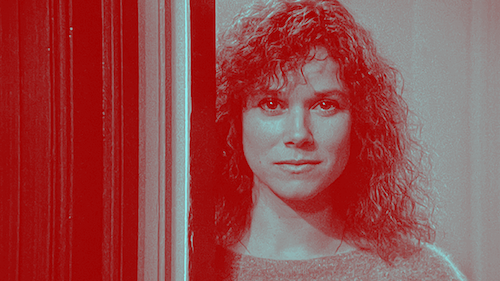
Even though Allen has over two dozen films that I think are worth watching (out of fifty films, that's not too bad), his magnum opus was never up for discussion in my mind; not at the time that I compiled this list, or for twenty-odd years preceding this point in my life. What might be the quintessential dramedy in my life — next to Billy Wilder's The Apartment — is Hannah and Her Sisters. The film title insinuates that we follow Hannah, but we barely do — if anything, she feels almost like the tether point of this complicated domestic triangle. The film follows her two sisters and their complicated lives. There's Lee (who I would argue is the protagonist) who commits an affair with Hannah's husband, Elliot; the opening image of the film is an arresting shot of Lee (from Elliot’s perspective) that is one of the most effective tactics to make you feel a character’s feelings for another in any motion picture. Then, there is Holly: a woman who struggles to get her life together and presents as envious of the successes of her siblings (despite their own challenges and regrets). Like the late bloomer that she is, the bulk of Holly's story is saved for the end of the film; she manages to catch up and be happy. This trio of women are played by Mia Farrow, Barbara Hershey, and Diane Wiest in career-best performances: they are a trio of brilliance together, individually, and when paired with other characters. Despite how many characters are involved here, this film had to be named after them.
Furthermore, there appears to be a completely unrelated subplot featuring Hannah's ex-husband, Mickey, who has a health scare and then is unsure of how to live the rest of his life once he is in the clear. This story line feels like Allen's method of inserting the inner-thoughts of the director working on a film like Hannah and Her Sisters (seeing as Mickey is played by Allen), but it winds up becoming a test of fate by the film's end; these are connections that would not have existed if either person died at their own hand. Without overly spoiling, one of the most powerful shots of any film I have ever seen is the shattered mirror: an image out of a Andrei Tarkovsky art film smack-dab in the middle of an eighties dramedy. Despite knowing that everything was going to be okay (since the moment is relayed in hindsight), the amount of dread and fear I feel leading up to that jaw-dropping image (and the brief silence that follows, before calamity ensues) is seared into my brain; I will never forget how this sequence made me feel that first time — as if my own life was seconds away from ending, and I am grateful for the extra time I now have left.
All of the storylines circle around a trio of Thanksgiving dinners (an homage, once again, to Ingmar Bergman — this time, his Christmas-based opus, Fanny and Alexander). Each Thanksgiving brings something new: from unity to dysfunction. What could appear as a simple film of trysts and regret is a far deeper character study of years of self-hatred, boiling over in the face of family members who are often being compared to one another (either favourably to the point of envy, or critically to the point of depression). The film follows their eventual comfort with one another: not as the archetypes that they have set for each other and themselves, but as complicated beings who accept one another for who they are (and learn to forgive themselves). This is some of the most nuanced writing and direction of family members put to film. When I think of the dramedy genre, I point towards golden examples like Hannah and Her Sisters that blur the line between light and dark so perfectly that we only see the grey in between. There is no right character or villain, here. Everyone has faults, and everyone is trying their best despite their occasional surrender to darkness. By the time the butterball returns to the dining room table at yet another Thanksgiving dinner, we become thankful for each other and our own life. Despite Woody Allen having made this film, I am thankful that Hannah and Her Sisters exists: it is the kind of film that has changed my life and my perception of motion pictures again and again.


Andreas Babiolakis has a Masters degree in Film and Photography Preservation and Collections Management from Toronto Metropolitan University, as well as a Bachelors degree in Cinema Studies from York University. His favourite times of year are the Criterion Collection flash sales and the annual Toronto International Film Festival.