
Filmography Worship: Ranking Every Mira Nair Film
Written by Andreas Babiolakis
Filmography Worship is a series where we review every single feature of filmmakers that have made our Wall of Directors

Mira Nair has made the difficult transition from the director of international independent dramas to mainstream Hollywood productions. As a result, I feel like there are two types of ways that people are familiar with this Indian-American filmmaker: they either see her as one of the great South Asian directors of all time, or they recognize her period dramas and biopics. Her films usually possess the same overarching themes on family, the different class systems within society, and personal triumph through adversity (be this through overcoming economical odds, or undertaking an impossible mission like flying a plane around the world). Then again, there might be another reason why you are familiar with Nair: she happens to be Mayor Zohran Mamdani's mother. To me, she will always be the director of Salaam Bombay! and the like, but this tidbit is one I cannot get enough of.
Nair started her career off by making documentaries in the eighties; I will not be covering these because a majority of them are quite difficult to get a hold of (but I do recommend So Far From India and India Cabaret, should you ever get a chance to see them). She shifted to narrative films starting off with the harrowing look at impoverished life in what is now known as Mumbai, India, in Salaam Bombay!, for which she was nominated for Best International Feature Film at the Academy Awards. She quickly aimed to merge the cinema of her motherland with American tropes in the follow-up Mississippi Masala. The rest is history, with a career containing some magnificent titles (and some not-as-strong attempts, but at least she is always trying something new). I hope that you find a new title or two to check out, no matter which aspects of Nair's career you are more familiar with. Here are the films of Mira Nair ranked from worst to best.

12. Amelia
Nair's weakest film is sadly the first one I saw as a nineteen-year-old: Amelia. A biopic about aviator Amelia Earhart's quest to travel round the world, Amelia is far too kitschy and indebted to Hollywood cliches to feen sincere — even with a decent performance by star Hilary Swank (but, even then, the two-time Oscar winner has been far stronger than she is here). I'd be a little more forgiving if Nair brought something new to the formula like she typically does, but this is the number one instance of the director feeling like she is adhering to the expectations of studios, critics, and box-office numbers while underwhelming all three at the same time. The worst part is that Amelia isn't atrocious: it's just insanely boring, expected, and uninspired, which are all the things Nair and Earhart's legacy should never feel.

11. Kama Sutra: A Tale of Love
Amelia is an easy choice for Nair's worst film, and a major reason why is that it barely feels like it's one of her works. However, Kama Sutra: A Tale of Love is easily Nair's weakest project that has her thumbprint all over it. Nair's answer to the rise of erotic films in the nineties is this historical, spiritual conquest that has quite a bit going on aesthetically and tonally (unlike Amelia, I can at least feel this film). However, much of Kama Sutra is all style and little substance; if there is a genre of film that you are meant to feel, it's the erotic one. Kama Sutra feigns its soul with artistry you can see but a story you never truly connect with; what is a film of this nature that doesn't sit with you for even five minutes once you are done watching it?

10. The Perez Family
After the success of Mississippi Masala, Nair was clearly trying to fortify that bridge between her motherland and other places around the world — as well as that Hollywood connection that helped her previous film find its audience. The Perez Family is a decent film that explores the stories of refugees — in particular, three Cuban citizens who feign being family members in order to assimilate in the United States. I appreciate Nair's hypothesis here — especially when she gets into the different relationship dynamics between the participants of this unexpected experiment. However, the film feels quite thin, and I think this is due to Nair flexing towards the expectations of the masses as opposed to staying true to her own style.

9. The Reluctant Fundamentalist
I would argue that The Perez Family is at least a more consistent film than The Reluctant Fundamentalist, but I do appreciate Nair's more interesting choices and risks with this political thriller enough to place it slightly higher. Her focus on a Pakistani man — played tremendously, as always, by Riz Ahmed — experiencing the racism within a divided nation post 9/11 is important and interesting, but I also feel like Nair runs out of things to say in this over-two-hour affair; what could have been Nair's most serious and angriest film — as it looks at xenophobia in the United States — winds up feeling a little bloated and meandering instead.

8. Vanity Fair
Vanity Fair possesses the same issues as The Reluctant Fundamentalist: it is overlong to the point that it feels like it is spinning its wheels; this can be a little more frustrating if you are privy to how William Makepeace Thackeray's iconic novel should be told. Nair opts for quite a different story: one that is more focused on race relations in the British Empire, and softening protagonist Becky Sharp for a more lush film (rather than something calculated or razor sharp like the novel is). I will say that Nair's eye for period dramas elevates Vanity Fair a little bit, enough for me to at least appreciate the meticulous detailing of the world Nair has made (even if that same attention to flourishes is missing from a story that craves it). I do not dislike Vanity Fair as much as the average viewer, it seems, but I won't be pretending that it is a strong film, either.

7. My Own Country
On the topic of adaptations, Nair did a better job translating Abraham Verghese's My Own Country to the big screen (well, rather, the small screen, considering this is a TV movie for Showtime. One of the times that Nair worked with star Naveen Andrews (who is excellent as Verghese, providing much truth to the author's autobiography), Nair tells the story of a doctor in the midst of the eighties and the AIDS crisis; many other practitioners refuse to tend to those suffering and dying from the disease, so Verghese takes on many patients (which takes a toll on him as well). Maybe because she was making a film for television, Nair feels less inclined to play by the rules of Hollywood tropes here; I would consider My Own Country a turning point on this list where the remainder of these films are ones I'd consider good or better.

6. Hysterical Blindness
The second TV movie Nair made (this time, for HBO), Hysterical Blindness takes Laura Cahill's stage play and brings it to television sets across America. For an hour and a half, Nair directs Uma Thurman, Juliette Lewis, and acting legend Gena Rowlands in a drama about lonely women searching across the landscape for the right man to fall in love with; Hysterical Blindness boasts a particularly strong performance by Thurman. I will say that the film is upheld by what it gets right on the surface while Cahill's story reads a little thin here, but I think that Nair does so much in just an hour and a half that any narrative slimness doesn't bother me all too much; my favourite aspect of Nair's films is seeing her get into the souls of her characters no matter what the situation is, and Hysterical Blindness accomplishes this.

5. Queen of Katwe
When you look at live action, feel-good Disney films, would you ever consider any of them quite good? Queen of Katwe is similar to Hysterical Blindness in the sense that it is slightly lacking narratively, but when you have the performances that stars Lupita Nyong'o, David Oyelowo, and young Madina Nalwanga give — and that Disney budget — you get a family film that is actually kind of special. Nair conveys the prodigal brilliance of chess master Phiona Mutesi and her rough life in a slum in Uganda; not to mention Mutesi's perseverance in the face of adversity. There are enough hints of Nair at her best to make Queen of Katwe resonate more than the countless run-of-the-mill efforts that usually dominate this field, so much so that I can still remember this film quite well ten years after seeing it (which feels impossible for these kinds of Disney films, let me tell you).
4. The Namesake
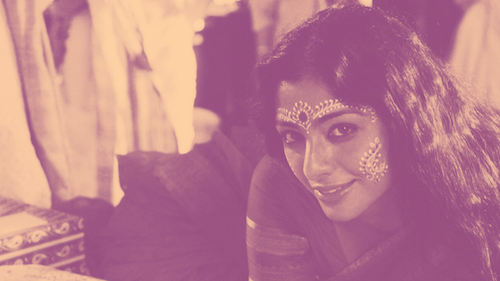
We have finally reached the essential Nair films, and we must kick things off with her most underrated title: The Namesake. Featuring an American-born citizen with Indian immigrants for parents, The Namesake displays an identity crisis that was quite real for many around the time the film was released: do we identify with the city we were born and raised in, or with the traditions and values of our family's culture? Is there a way to have both halves of our whole coexist? With a magnificent performance by star Kal Penn at the forefront (and not to mention the great Irrfan Khan's presence as well), The Namesake is a moving look at the isolation one feels when they are being pulled from all angles — when many expect a lot from you, you truly remain alone. Protagonist Gogol's predicament is handled realistically and empathetically by Nair, who doesn't sugar coat what such a dilemma can feel like (so those who are experiencing it can see themselves in Gogol and The Namesake).
3. Mississippi Masala
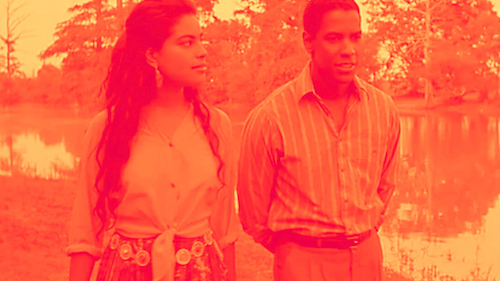
It was only Nair's second film when she was pushing herself for something remarkable with Mississippi Masala: a complicated domestic drama that toed the line between Nair's now-established style and what Hollywood may have expected of her (without ever succumbing to cliches). The film follows a family that flees Uganda once dictator Idi Amin decreed that all South Asians are to be expelled from the nation, only for said family to now struggle to assimilate in Mississippi (where they migrate to). Furthermore, the family's eldest daughter, Mina (Sarita Choudhury), has now found love with a Greenwood local: a Black man (Denzel Washington). After the racial divide back in Uganda affected Mina's family, resentment remains and Mina's new partner is not welcomed at first. Mississippi Masala is about letting hatred go, not blaming the actions of others on their race, culture, or background, and finding serenity amidst hardship. It is a beautiful film made by a director who knows how to extrapolate the heart of a suffering family in need of healing and study it.
2. Salaam Bombay!
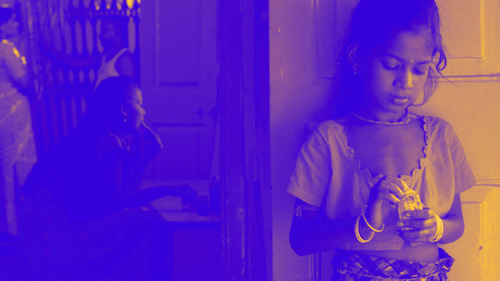
Nair kicked her career off with the sterling feature-length debut film, Salaam Bombay!. Clearly inspired by the films of Italian Neorealism and filmmaker Satyajit Ray, Nair's first offering is a grim look at the slums of India and the young lives that suffer within them. Despite how dismal things look in this film — and the squaller and danger our two child protagonists endure — Nair's vision possesses a slight sense of hope that makes audiences hang on in anticipation of better things within Salaam Bombay!: however, Nair is also not clueless as to the fickleness of reality and best represents the state of things in a film that never shies from how bad life can be for some (nay, millions). While I do wish that Nair had more films of this nature because she is clearly so strong at telling them, I'm grateful enough that a motion picture like Salaam Bombay! exists. I can understand why Nair doesn't only want to focus on depressing stories as well, but this did feel like a necessary preliminary story for her to share.
1. Monsoon Wedding
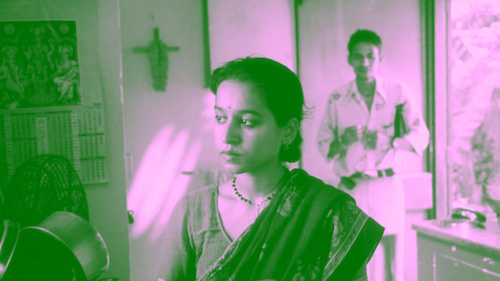
If this list has enlightened me on anything while writing it, it's that Nair has a few strengths and personal goals. She will try to incorporate the experience of being Indian in as many projects as possible; she loves focusing on family dynamics; she has hoped to make a Hollywood picture that doesn't fall victim to the cookie-cutter ways of the studio system; she has tried to find joy even in hardship. Will all of the above considered, enter Monsoon Wedding: one of the greatest dramedies and romances of all time. As an arranged marriage approaches, Nair zips into the psyches of multiple family members and affiliates as things get stressful and feet get cold. Secretly, this is a collection of intertwining vignettes that all act as snapshots of family dynamics, Indian culture, wedding shenanigans, and the differences between generations regarding tradition and expectation.
The first major takeaway I had was how effortlessly Nair blends Hindi and English dialogue — sometimes within the same sentence. At the time, this was something I was not used to seeing be executed so well; as someone who has relatives who speak Greek and may sometimes flip between languages, this choice felt true and immersive to me. That made me all the more attentive for these numerous characters and their inner dilemmas; Nair is just as delicate with how she crafts her protagonists as she is the ways in which they communicate. I honestly feel like I am caught up in the whirlwind of personal lives as the clock is winding down to this wedding while I watch Nair's greatest film. I am charmed and entertained by its highs, and I feel the sadness that cracks through in the pit of my heart. This is a dramedy that understands the ebbs and flows of life and the inexplicable complications of love, all while existing on this constant throughline that never tonally wavers; this is a constant that mirrors life for millions of people. Mira Nair has had a career of trying new things to varying results, but she truly struck gold with Monsoon Wedding: a film that only she could have made (and bless her for making it).


Andreas Babiolakis has a Masters degree in Film and Photography Preservation and Collections Management from Toronto Metropolitan University, as well as a Bachelors degree in Cinema Studies from York University. His favourite times of year are the Criterion Collection flash sales and the annual Toronto International Film Festival.