
Filmography Worship: Ranking Every Larisa Shepitko Film
Written by Andreas Babiolakis
Filmography Worship is a series where we review every single feature of filmmakers that have made our Wall of Directors

High art will always transcend time. One of my favourite rising legacies in all of film is that of Larisa Shepitko: a Ukrainian-Soviet filmmaker who was once amongst the most criminally underrated directors of all time, and who is now rightfully being celebrated (although, I'd argue, she is still not championed as much as she deserves). Maybe the intensity and isolation of her films was too much for audiences when her films first debuted (despite, you know, winning a Golden Bear at the Berlin International Film Festival), but her work is highly fitting with contemporaneous cinema and the modern day sensibilities of unnerving dread. Abandoned by her father at a young age (he divorced Shepitko's mother and continuously served as a military officer), Shepitko looked for creative avenues to express her desperation. She turned to film at a young age, joining the All-Union State Institute of Cinematography as a teenager. She studied under the legendary Alexander Dovzhenko for nearly two years before he died. She learned one valuable lesson from him before his passing: "Make every film as if it's your last." She never gave up on that mantra.
Shepitko was a natural talent who was already a magnificent director in her student years; her earliest work, The Blind Cook, is not available anywhere and will not be covered here, but every other complete film of hers will be. We can see from the short film, Living Waters, that she already knew how to make the most with her resources. Even her final submission, Heat, is so strong that it barely feels like a student film at all. While studying, she met her future husband Elem Klimov: a fellow student who also graduated and became a renown filmmaker in his own right (you may know his swansong, Come and See). Shepitko hit the ground running with a slew of mainly consistent releases over the next fifteen years. While shooting Farewell, Shepitko tragically died in a car accident while scouting for new locations. She was only forty-one. Klimov would complete Farewell on her behalf; it is unsure how much of the film was completed before Shepitko passed away, but she is often credited as the primary director enough that I have included it on this list nonetheless (I also feel her signature style and thumbprint all over this project and believe that she had completed at least a majority of the film).
Shepitko was sadly slept on for decades until two vital turning points. First, there was the internet: a resource for all resources. I believe the online cinephilic community has helped certain films — like Masaki Kobayashi's Harakiri, Kiyoshi Kurosawa's Cure, and even Klimov's Come and See — gain iconic statures well after they debuted; Shepitko's The Ascent is certainly a part of that discussion. Then, there was the Crition Collection's Eclipse release of Shepitko's films; for the uninformed, Eclipse is meant to be a spotlight for hard-to-find, underrepresented filmmakers and their works. The Ascent would become the first film to graduate from an Eclipse title to a stand alone Criterion release which not only proves but also furthers my point: The Ascent was way ahead of its time, and Criterion both noticed this and also helped cement its legacy via its treatment of the anti-war classic. However, as amazing as The Ascent is, I want this list to prove that her entire filmography is spectacular; even the lowest-ranked films are quite decent. All five of her standard feature-length films are must-watches, and could only imagine what her reputation and career would have looked like if she didn't pass away so young. With five feature films, Shepitko is one of the greatest directors of her time. I hope this article shares her brilliance with the world even more. Here are the films of Larisa Shepitko ranked from worst to best.

7. Living Water
Shepitko's "worst" film is a breathtaking city symphony short. For the most part, it is simply a documentary about what goes on around a bridge (from the ships sailing through it when raised, to the passersby surrounding it). It isn't much but it is still such a soothing experience full of beautiful camera angles and compositions. Shepitko spends ten minutes making this tranquil environment in a way that many budding directors could never accomplish so effortlessly; a film like Living Water reminds me of how many people buy expensive cameras and can not create a compelling shot if their life depended on it (meanwhile, Shepitko can take such an ordinary occurrence in the city and turn it into pure art).

6. 13 PM
Even though Living Water is quite impactful, I've ranked it last because it is so short and there isn't much to take away from it. Shepitko's wonkiest film is 13 PM (also known as In the Thirteenth Hour of the Night). This made-for-TV special is a much lighter experience than the rest of Shepitko's catalogue and is meant to be a celebration of New Year's Eve via a series of vignettes that mirror the sixties and seventies' obsession with variety show culture. While some of the film exhibits Shepitko's worst filmmaking (some moments that just do not land), the vast majority of 13 PM is actually quite fun to the point of even being moving (again, even at her "silliest", Shepitko has such a magnificent eye for aestheticism that everything here feels masterful despite the actual context). I'd reserve this one for the biggest fans of Shepitko, but this is kind of a surprising deep cut; if her two "weakest" surviving films are pretty and captivating, then she was clearly in the right field.
5. Heat
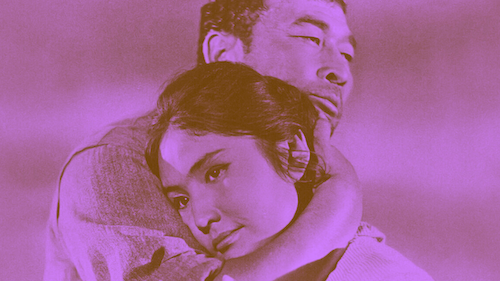
We have reached Shepitko's five theatrical feature films, as well as the films that I consider musts for any cinephile. This includes her student film, Heat, and what a stupendous student film this is. Part of the appeal is that Shepitko is looking ahead at the rest of her life via a character who is also a new school graduate; however, Shepitko is making motion pictures, while her character, Kemel, is sent to work in a village on the farm. Despite being incredibly young, Shepitko tells a mature fable of the hostilities of the real world, the double-edged-sword of self reliance, and the confusion of knowing how to behave, who to love, and what to gravitate towards in this reality we are all thrust into with little preparation. Shepitko struggled while filming due to the high temperatures (Heat is an appropriate name, here), to the point that she suffered from jaundice and worked from a stretcher as to complete the film; you wouldn't be able to tell that Heat struggled in any sort of way.

4. You and Me
Despite being called You and Me, much of Shepitko's film deals with self reflection and protagonist Pyotr's relationship with those around him, his past, his career goals, and his failures. You and Me features a scientist who abandons his life's work and those he has worked with for greener pastures as a neurosurgeon in Sweden; the film deals with this fall-out and Pyotr's return with his tale in between his legs. Shepitko films Pyotr with empathy, yet she also is aware of why the response to his return has been so cold: you cannot leave everyone behind in search of a greater future. One's future must encompass those they have brought along for the ride thus far, and to neglect them is to act selfishly. You and Me deals with petulant loneliness incredibly well, showing how quickly we can lose those relationships we have fostered and need to reconstruct.
3. Farewell
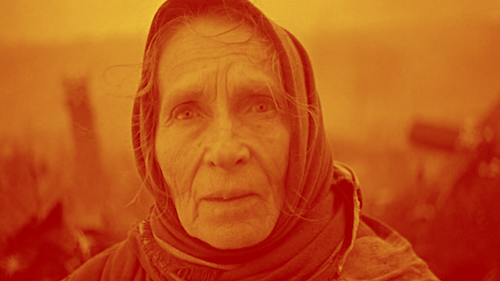
What was meant to be an adaptation of Valentin Rasputin's novel Farewell to Matyora was instead a sadly coincidentally titled Farewell by Shepitko. Dying in a car accident before its completion, Shepitko's husband, Elem Klimov, completed the film on her behalf (it feels like he tastefully tried to follow her voice and stylings throughout production as to not lose sight of what she was accomplishing). What remains is an exquisite and anxious look at the title village being threatened and the inhabitants grappling with their new reality: that they are going to lose their homes due to flooding from a nearby dam that is being built. A powerful metaphor for the destructive ways of new in the faces of tradition and ancestry, Farewell is equal parts a moving act to console the broken and a punishing stance against opposition at any cost; the ending — constructed by the powers of both Shepitko and Klimov — is one half horrifying, and the other breathtaking and hopeful. This is as complete as an unfinished film can feel.
2. Wings
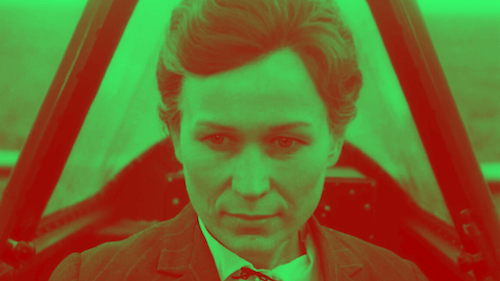
While Wings is not Shepitko's official debut since that would be Heat, it is her first feature film since graduating from the All-Russian State Institute for Cinematography and she did not miss a beat with this fantastic sophomore effort. Another sign that Shepitko was well beyond her years, this film about a former fighter pilot who has never fully integrated into society is a clear indication that — despite our many years being alive and working within a system — we may never feel fully succinct with civilization around us, and that our central identities will not apply everywhere. Of course, the film is an even stronger depiction of trauma and moving on from hardship. As our protagonist cannot shake off her past, Shepitko and Wings search for the ways that she can feel free once more; despite the drama that Shepitko has always dealt with immensely well, Wings is also her most exciting and liberating film at times; if Shepitko lived longer, I wonder if she would have tackled an epic that fuses thorough narratives and thrilling action together (all of the signs are there in Wings).

1. The Ascent
From underrated gem to a perennial opus of Soviet filmmaking, Shepitko's The Ascent is not just amazing: it is life changing. It was obvious that the film would be ranked at the top here, but I also do not want it to seem like Shepitko's career could only be defined by one jaw-dropping effort; her entire career is something to behold if you are a major cinephile. Nonetheless, The Ascent is a film that must be seen by any film fan at least once in their lifetime, and it is the biggest crying shame because it shows how monumental Shepitko was becoming as a director before passing away. Her anti-war masterwork about two Soviet partisans trying to avoid capture by German forces during World War II is nothing short of exemplary. The film is already incredible at getting us to feel tense during these nail-biting endeavours, and I would have already considered The Ascent a top notch film based on the majority of its duration; it showcases Shepitko's ability to make us feel every ounce of emotion, condition, and pain that her characters are weathering.
However, it's where Shepitko takes The Ascent that sells it as one of the strongest films ever made. She takes this on-the-run survival story and turns it into a spiritual awakening and a nearly-delirious euphoria (to the point of feeling like a tale of martyrdom). This is the psychology of a mind beyond repair: a person who is so shattered that they have found a new way to become whole. The way Shepitko was tapping into mindsets of this nature so effortlessly is something to behold. She takes us from extreme conditions and agony to the point of exaltation in a sweeping motion that only a masterful director could achieve. I know that The Ascent's reputation has grown over time, but I think it will only grow even more as one of the most beloved films ever made. It should be: Larisa Shepitko struck gold in the face of frigid death with The Ascent — one of the best films about survival and mortality ever created.


Andreas Babiolakis has a Masters degree in Film and Photography Preservation and Collections Management from Toronto Metropolitan University, as well as a Bachelors degree in Cinema Studies from York University. His favourite times of year are the Criterion Collection flash sales and the annual Toronto International Film Festival.