
Filmography Worship: Ranking Every Julie Dash Film
Written by Andreas Babiolakis
Filmography Worship is a series where we review every single feature of filmmakers that have made our Wall of Directors
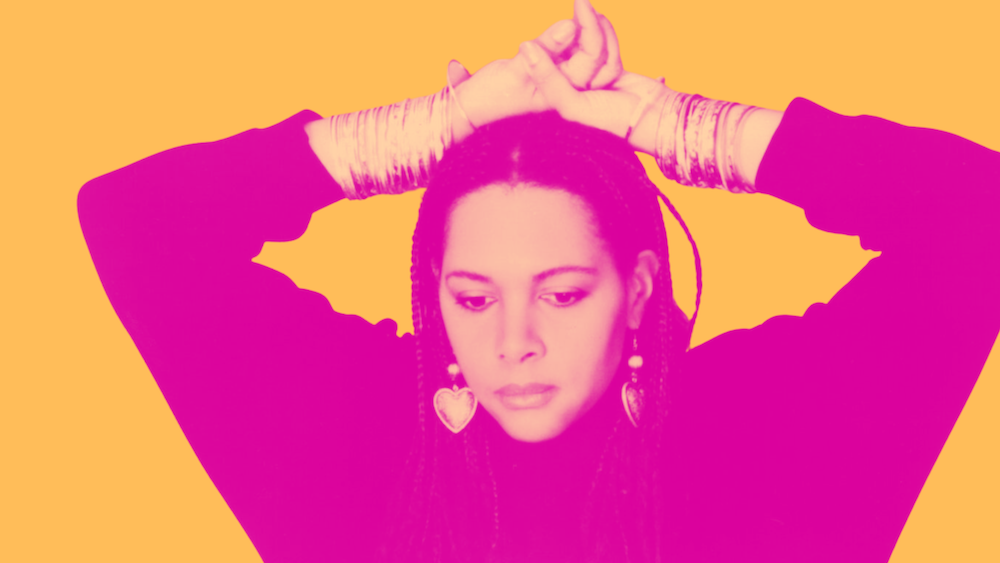
The legacy of Julie Dash is such an interesting one. She is iconic for one particular film yet has a few releases that remain slept on. In that same breath, even that central motion picture is not quite as lauded as it should be (despite the flowers that it does get). Dash has worked with short films, music videos, and made-for-television movies, and her style remains constant throughout. This feels like someone who could have been an even bigger name if she focused primarily on making period piece dramas like her greatest achievement. However, even her biggest film, Daughters of the Dust (no surprise there), didn't earn back enough for Dash to continue making likeminded pictures; even so, she has shown what she is capable of via any medium and mean. One of the UCLA classmates of the L. A. Rebellion (a group of rising Black filmmakers who wanted to bring cultural and racial authenticity to cinema), Dash has never wavered from this mandate. For decades, no matter the capacity or means, Dash has spread awareness and celebration of Black stories.
Despite the small and humble filmography, I still consider her to be one of the best filmmakers of her generation primarily because of what she is capable of even with the smallest budgets and the lack of promotional awareness; that isn't to say that I have adored everything that she has released, but I think that she has made the most with what she has in ways that would make many other directors flounder. With that in mind, I usually make a big stink about how I will be covering every film possible in a director's repertoire, but I will admit from early on that this retrospective look at Dash's career is far slimmer than I would like it to be. A number of her works — like her debut documentary, Working Models of Success, her museum installation Brothers of the Borderland, and a number of other projects — are nearly impossible to find; I suspect that they would only be viewable physically, but not via my traditional methods of working locally here (like libraries); I would likely have to seek these out via American institutions. I would like to update this list whenever I cross off another Dash title that I am missing, but, for now, I apologize and hope that what I do have is a worthwhile tribute to an underrated American filmmaker. I will also state that I won't be including her various television episodes for long-running or anthological series, but I will be covering the made-for-TV films that she directed. Here are (a few of) the works of Julie Dash ranked from worst to best.
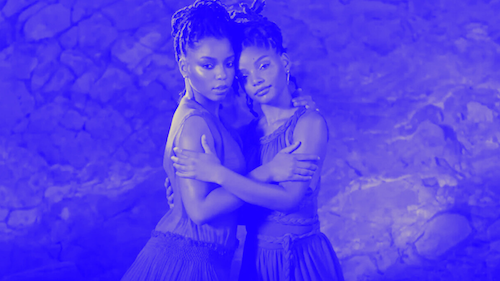
11. Why the Sun and the Moon Live in the Sky
Promotional fashion ads and short films can sometimes be one and the same when you look at works like David Lynch's Lady Blue Shanghai for Dior, or Sean Baker's Snowbird for Kenzo. Dash's work for Vogue is Why the Sun and the Moon Live in the Sky: a five-minute fashion exposition featuring sisters Chloe and Halle Bailey meant to be a cultural and historical lesson on the Nigerian folklore of the Efik people. While I think that the meditative, educational approach is a better use of this opportunity than it could have been, this "short" still isn't quite as captivating as it could have been; it still, essentially, feels like an advertisement for Vogue rather than a project that Dash directed on behalf of Vogue (see my aforementioned examples to see what can be done within these spaces). Still, Dash has something interesting enough when she could have settled for the lowest effort.
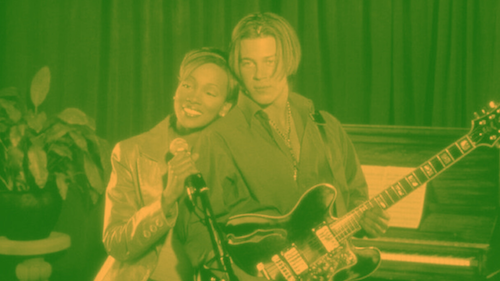
10. Love Song
While I think that Dash is astoundingly gifted at enhancing made-for-TV movies in ways that make them surpass the low expectations they usually garner, her most typical effort for such a project is Love Song: an MTV release that acts as a traditional love triangle. Dash still includes racial discourse here by having an engaged Black college student cross paths with a Caucasian guitarist; this feels a bit like a modern day Hallmark film with extra steps. Still, Dash has enough of an artistic eye that Love Song is at least a bit more memorable than your usual run-of-the-mill TV romances of that sort, and the film's lead star, R&B icon Monica, is natural enough that you may wish that she acted more frequently. While predictable, Dash's Love Song is at least enough of an elevation of this film of filmmaking that you begin to notice how lazy some made-for-TV films truly are.
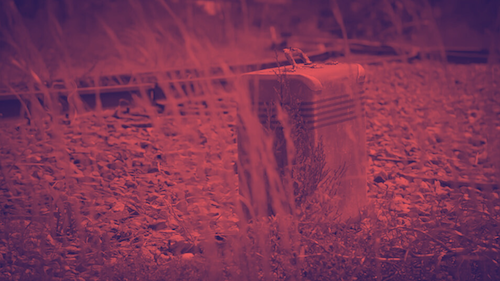
9. Standing at the Scratch Line
Dash can play ball with her made-for-TV releases, but she can also channel her most impactful and artistic visions in her short releases (of which I wish I had more coverage of on this list). One great and hard-to-find example is Standing at the Scratch Line, which feels like her answer to Chris Marker's La Jetee. Instead of using still images to convey a futuristic depiction of time travel, Dash takes us back in time with striking photography to bring us through history, traversing across the country through the "Great Migration" (African-Americans who migrated from southern U.S. up to northern states like Philadelphia). While much can be said about culture, religion, and sociopolitical concerns via these images, the film is also a little stunted at eleven minutes, and I wish it went beyond the little that we do see (which feels like enough, but it also could have been stronger).
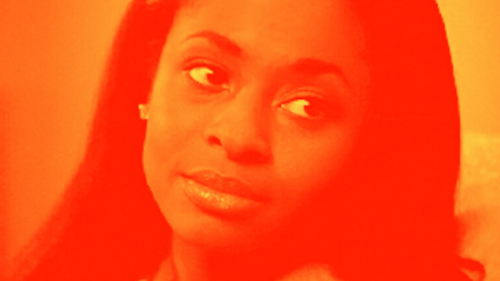
8. Incognito
Incognito is kind of Dash's most bonkers film that I have seen. It is essentially a thriller about a socialite who is hounded by a criminal and hires a suit to protect her. This is a highly sensationalized, borderline surreal take on such a genre and Incognito sees Dash pushing herself for better or for worse; what can occasionally come off as corny can also feel like a satirical trope. Much of Incognito comes off as Dash's experimentation from her handful of music videos she has worked on (from Tracy Chapman to Tony! Toni! Tone! (this film came out after her music videos were produced), and, at times, her results can feel quite interesting, compared to the safeness and dryness of so many other TV films.

7. Praise House
Different generations will have varying methods of interacting or approaching one another. Dash's Praise House infuses the director's passion for music and dance into a half-hour short film about a girl, her mother, and her grandmother. Her mother doesn't seem too interested in her creative arts, but the girl finds support from her heritage and ancestral guidance. Art is the communicator of more than just creativity: it is a vessel of history and provenance. Dash vows to do the same with her works, and Praise House is one such example that is quite beautiful.
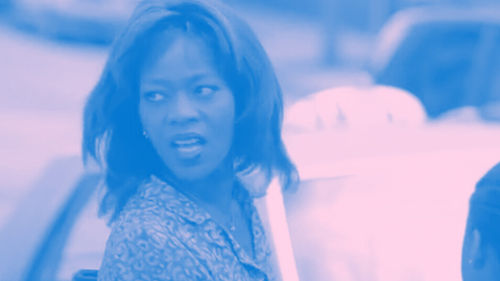
6. Funny Valentines
Another made-for-TV film that plays by some of the familiar notes of the craft, Dash's Funny Valentines subverts the romance genre enough to feel like a warranted project. Based on J. California Cooper's story of the same name, Dash's Funny Valentines takes the concept of a struggling marriage and spotlights the things and people who matter most in life. Featuring a powerhouse cast of Alfre Woodard, CCH Pounder, and Loretta Devine, Dash turns Funny Valentines into a showstopping, acting exposition via a medium which usually succumbs to satisfactory, pedestrian fare. Dash also extrapolates enough meaning and heart out of Cooper's story to make a typically forgettable experience (made-for-TV flicks) into something that is sure to stay with you forever. This is what a skilled director can do with the cards that she is dealt.
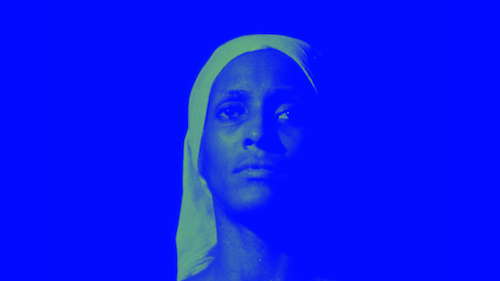
5. Diary of an African Nun
The earliest Dash effort that I could find is the short film Diary of an African Nun: a fifteen-minute exploration of the mind of the title character and her many doubts. The short analyzes this nun's devotion to her religion, her connection to her culture, and her fight against desire. Dash pairs up existential voice over prose with imagery and sounds that make half of the experience take place within your mind: you, too, will feel troubled like the central nun here. While Dash has made a name for herself on the small screen, it is artistic cinema like Diary of an African Nun that prove what she is capable of: visions of cultural, historical, thematic, aesthetic, and experimental richness.
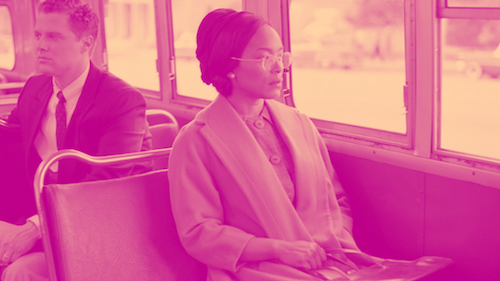
4. The Rosa Parks Story
Dash's made-for-TV biopic about Rosa Parks — aptly titled The Rosa Parks Story — is another example of the director taking what could have been a sanitary, dull project and making it count; if there is to be a film about a civil rights icon, and there is an opportunity for this film to spread awareness on television screens across the nation, that opportunity should be seized, no? Dash makes the most of the moment, casting Angela Bassett as Parks and allowing the star to shine (as she always does, let's be honest) in a vehicle that possesses more oomph, confidence, and substance than many of its peers.

3. Four Women
It's one thing to pair a visual component to a pre-existing song. It's another to conjure up the spirit of the song into a whole new mechanism and conveyance of the track's themes and story. Dash takes Nina Simone's "Four Women" in her short film of the same name and gives it further life outside of its testimonial nature. Dash pins faces to Simone's characters Aunt Sarah, Saffronia, Sweet Thing, and Peaches: the four Black women who symbolize the different forms of racism that African-Americans face in the United States and how they are scrutinized for the colour of their skin (in the cases of both versions of Four Women, the slight differences in each character elicit different forms of stereotyping and struggle). If Simone wrote the song for these different walks of life to stand proud and be heard, Dash's answer allows them to be seen and felt, as Simone's tune acts as the inner thoughts of Dash's subjects.
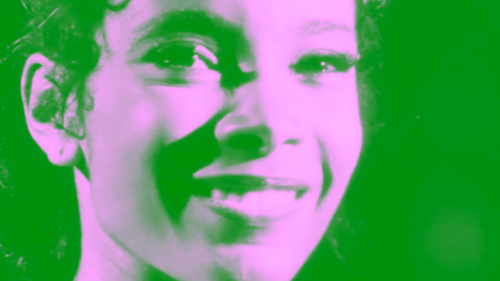
2. Illusions
As much as I hope this article has shed light on what Dash has been able to achieve within the means she has been provided, I want this entry in particular, Illusions, to prove what we are also being robbed of when someone as artistically poignant as Dash isn't supported. She has her one feature film that is only growing in its reputation (more on that shortly), and I want the same response to happen to her short film here: Illusions. A biting look at Hollywood's relationship with Black filmmakers and performers, Illusions features a white-passing Black studio executive who unveils a truth about the double standards of an industry that is entirely based on visual representation and pretenses. The film is equal parts livid and loving, and it manages to carry many sentiments in a quarter of the runtime of most films that say less. Dash's astounding short film is a hint of the kinds of feature films she could be making if any studio would sufficiently back her, but at least we have a powerful half-hour statement like Illusions that could only be made by someone as bold and well versed as Dash.
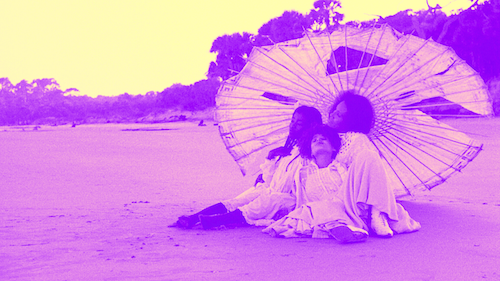
1. Daughters of the Dust
What else could have been placed first? I hope that the previous entries have inspired you to check out more of Dash's films, but the truth is that you are likely even reading this list in the first place because you have been taught or informed of the importance of Dash's magnum opus, Daughters of the Dust, either in film school, by social media virility, or Beyonce's Lemonade (amongst many other references). If Illusions was a snippet of the kinds of films Dash could be making if she had the proper support, then Daughters of the Dust is this complete realization and form of hard evidence that Dash was not only meant to be making motion pictures, she would be damn good at making them. It's a crying shame that all that we really have is Daughters of the Dust, even though — as proven by the article, here — there is much more to Dash's filmography than just one film. Even so, it feels like she was only given this one proper shot, and — even then — she was barely given it at that. Still, Daughters of the Dust is the first independent film directed by a Black woman to be shown in theatres, which is proof that not only was Dash a trailblazer, she had something important to say (and a commanding way to say it).
Based on the Gullah community of Saint Helena Island, Daughters of the Dusk is beyond a costume drama: it is a fully immersive period-piece time capsule. Dash has a lush, hazy aesthetic that makes the entire film feel like they stem from our memories (even though these are Dash's depictions of an underrepresented sector of American history). The characters speak in their authentic Gullah dialect, acting as a cultural and historical lesson that many didn't even know that they initially missed. Dash's organic, complete depiction of this multi-generational family and the women we follow within it is transient and gorgeous: like a moving, flowing mural that breaks through time and space. This is what a historical drama can look like: a breathtaking, anthropological vessel of what once was via the glorious gaze of a passionate researcher and artist in the present. I am glad that Daughters of the Dust is getting its dues years later, but the fact that this film did not act as a platform for Dash to have even bigger projects is crushing. This is beyond "what could have been": a film like Daughters of the Dusk, made by Julie Dash, is easily "what simply is, and could continue to be."


Andreas Babiolakis has a Masters degree in Film and Photography Preservation and Collections Management from Toronto Metropolitan University, as well as a Bachelors degree in Cinema Studies from York University. His favourite times of year are the Criterion Collection flash sales and the annual Toronto International Film Festival.