
The Only Living Pickpocket in New York
Written by Andreas Babiolakis
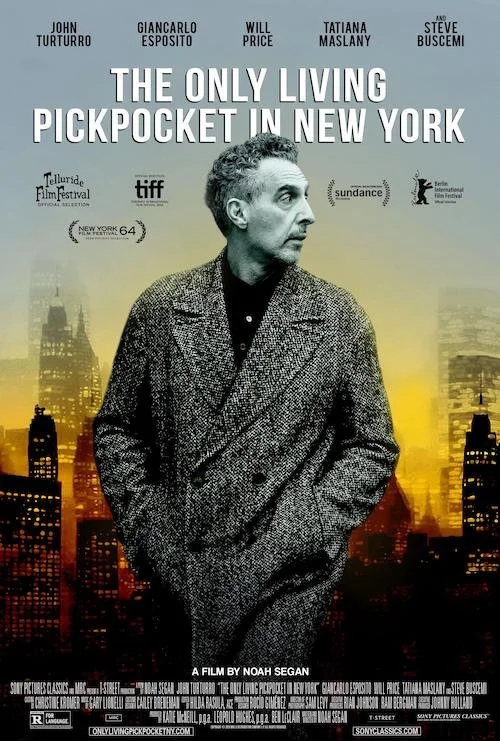


When art is all but losing its humanism in the digital age, there has been a bit of a call for humanist pictures in especially inhuman genres. Take the crime genre and what David Fincher's underrated picture, The Killer, says about the humdrum life of hyper-consumerism in an era of technological advancement (and devolution) at every turn; Fincher's film equates the capitalist onslaught of delivery apps, instant gratification, and complete isolation to the working life of a contract killer. I bring this up because I find similar common ground in Noah Segan's The Only Living Pickpocket in New York — not the political sentiments of Fincher's film, but, rather, the use of a typically gritty and hostile genre to tell a story of a lonely person at the end of their rope. Segan's film stars John Turturro — an actor who always tries his best yet he does not always pick the best projects or approaches. It is a delight to say that this is one of his finer selections — and roles — in quite some time. Turturro is Harry Lehman: an older pickpocket who has survived The Bronx for decades. He doesn't steal out of passion but out of necessity. True, some of this need is self-inflicted, and The Only Living Pickpocket in New York dips a bit into how Harry's skillset alienated him from loved ones throughout his life. However, the film also shows that — at this present moment — it is an absolute must for Harry. He has to take care of his catatonic wife (Karina Arroyave), and pickpocketing is all he knows; he'll do whatever it takes to support her.
The film kicks off with an interesting use of LCD Soundsystem's "New York, I Love You but You're Bringing Me Down" to set the scene: this is a love-it or hate-it environment, and both sentiments can come from the same person. Segan paints New York City as a gorgeous metropolis without missing a beat as to what the reality of its streets may look like once you zoom in from that photographic landscape shot. In this same opening sequence, we follow a different character before we get our first look at Harry in the background of this focal point — on a subway train, just standing nearby. Anyone who went into this film with even a slight bit of knowledge knows what is happening, but those who watch it blindly may not — such is the life of street life in the Big Apple (you either know or you don't). Yes. Harry is at work lifting whatever he can from this helpless chap. We see a master at work, deftly and swiftly getting by. However, there is also a disconnect between Harry's ways of old and the modern digital age. Most people don't carry cash anymore, and this is an early issue for Harry; meanwhile, he lays his mark by tipping anyone who helps him out with actual bills, and he makes it a point to do so (as a sign of respect, mainly). This line of thinking shows Harry's well-natured side, but it also shows his naivety which will hurt him in the near future.
The film is only ninety minutes, so there isn't much time to dillydally. We quickly see Harry's mistake when he crosses a crypto fuckboy named Dylan (Will Price) — clearly the bratty offspring of old money and a family enterprise. Harry makes his mark and leaves with some of Dylan's belongings, including a surreptitious crypto wallet. Now, Dylan is too stubborn and narcissistic to let this misdeed slide, and he gets into investigative mode with his goon friends right away. Harry is none the wiser, unfortunately. He tries to sell this random gadget to his pawn shop friend, Ben (Steve Buscemi) who sees little use for it; he recommends Harry to Frank (Kelvin Han Yee) who is running his own money-laundering operation. Harry quickly realizes that something is amiss when he finds Ben's business in pieces, and he sees the reality of the situation when he finds Dylan and company at his domicile with his poor wife. Dylan makes the situation clear: Harry will have to pay for what he has done, but he has a few hours to save the other people in his life from the same fate.
I appreciate how The Only Living Pickpocket in New York doesn't go the Safdie Brothers route of pure adrenaline and anxiety during this crisis. Instead, Harry has a moment of refusal and panic before instantly accepting his grim fate. The film acts much more as an existential character study: an observation of one's past through the eyes of a sinner who still has a heart somewhere deep down. Even the concept of time is hardly a factor in this film, seeing as Harry figures out what he has to do quickly enough and with minutes to spare. This is not a film that is meant to make you feel stressed out but, rather, reflective — on the bad things we choose to do, and why we do them. How is Harry different than Dylan? Well, Harry doesn't aim to hurt others while Dylan kind of seems to enjoy it. Both misfits want to feel something — Dylan wants power, while Harry wants to experience the bliss that he has lost in his life. Seeing Harry work to right his wrongs via additional misdemeanours is quite an art thanks to Turturro's performance; I believe that this is a man who has spent the majority of his life with palming expertise, slick hands, and the precision of a magician. While the tone of the film is a rather still and quiet one, Harry disrupting the mold via his craft is a sight to behold.
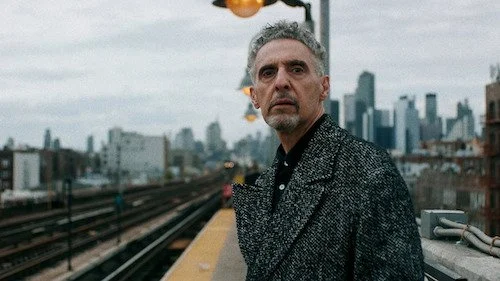
The Only Living Pickpocket in New York is a warm-yet-gripping character study of a flawed person, led by a stellar John Turturro performance.
While the film is so good at making Harry seem like a believable thief, it also undoes a bit of this work via some rather rudimentary character writing by making him seem incredibly inept in that same breath. Yes, it's clear that Harry is not hip with the ways of technology and digital currency, but The Only Living Pickpocket in New York also makes him seem completely hopeless — as if he has never even turned on a computer before. This would have made a bit more sense in the early aughts, but to have someone who knows next to nothing about electronic devices and appliances — despite clearly having pickpocketed a plethora of handheld gadgets and knickknacks in his time — in 2026 is a little unbelievable. Besides, it withholds the credit necessary for Harry to have; are we not meant to believe his exit strategies when he comes up with them? Thankfully, Turturro is so good in this role that any doubts cast by some first-draft writing are dispelled rather quickly each time they come up. Here's a rule of thumb: it's okay to make a character not good at something, but making them a complete idiot on the subject renders your story rather limited or unbelievable.
Nevertheless, Harry goes about his business to protect his wife and friends throughout the course of The Only Living Pickpocket in New York, and this includes a couple of worthwhile cameo appearances from unsung Canadian thespian Tatiana Maslany (Orphan Black) and Jamie Lee Curtis (who happens to be acting in everything everywhere all at once, as well as that film, and I am not complaining). There's also a prominent-enough appearance by Giancarlo Esposito as a cooperative detective who has crossed paths with Harry before (and Harry will need his assistance this time). A majority of these performances are short yet mighty, with a number of scene-stealing turns (Turturro allows them to shine — an underrated sign of a great actor who knows what a scene calls for, in my opinion). The only performance I had an issue with is Price's as Dylan, not because I think that Price was bad at what the role called for but because this character was written with the same heavy-handed obliviousness that Harry's technological negligence was. Dylan comes off as a Gen-Z stereotype who talks in cliches and buzz words. I wish he was given the same oomph and layers as these other characters, because we could have seen Price shine in a similar way (instead, he comes off as a pesky gnat more than anything else, and I just wanted to swat him).
Even though these minor blips prevent The Only Living Pickpocket in New York from being a terrific film, I'd argue that it is still a good one because of where it excels. Its greatest strength is how visceral it feels on such a subdued, chill level; even the acceptance of death is handled tragically yet passively, without a melodramatic bone in the film's body. The worst thing that can happen to a person is told via a clever editing technique — one where a whisper carries the weight of a scream. In a film rife with interesting visual ideas, that says a lot. I do want to give a shoutout to an inventive shot by DOP Sam Levy: one where the camera does a spin around Harry as he questions whether or not he should revisit Ben's pawn shop (the camera mimics the whiplash of a double-take and a head turn). To seal the deal, the pedestrian signal across the street turns on behind Harry's head, indicating that he has to make his choice: cross that road alone, or double back to make amends with Ben. This has to be one of my favourite shots of 2026 (it's so good that the film features it twice — and why shouldn't it). It is a clear sign in a film about the importance of one's choices in a world full of bad ones. Sure, not everything in The Only Living Pickpocket in New York works as well as they should, but should we condemn the many things it does well? Considering the film's themes of absolution and forgiveness, it's easy to look past the miniature flaws in a film that vowed to find smooth jazz in the criminal underworld (and it succeeds to great effect).


Andreas Babiolakis has a Masters degree in Film and Photography Preservation and Collections Management from Toronto Metropolitan University, as well as a Bachelors degree in Cinema Studies from York University. His favourite times of year are the Criterion Collection flash sales and the annual Toronto International Film Festival.