
Diary of a Mad Old Man
Written by Cameron Geiser
Warning: This review is for Diary of a Mad Old Man, which is a film presented at the 2026 Toronto International Film Festival. There may be slight spoilers present. Reader discretion is advised.
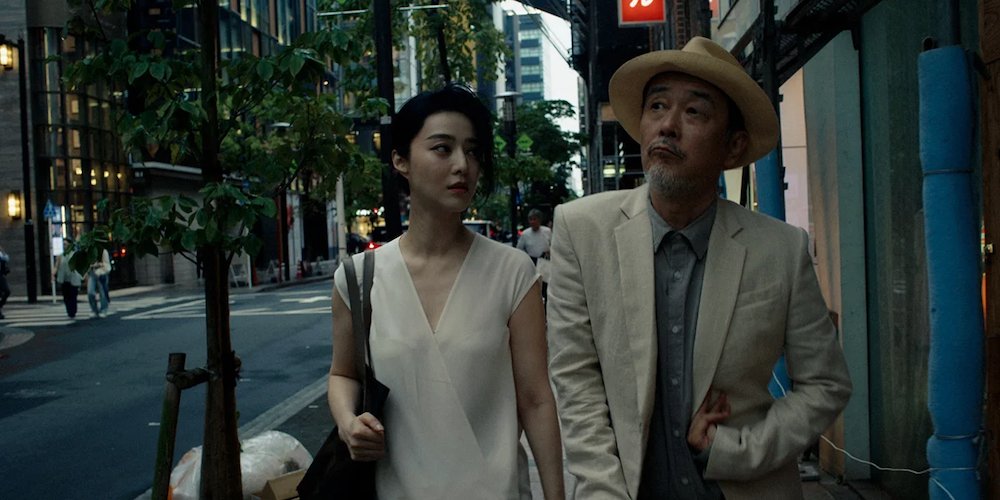
Image courtesy of the Toronto International film Festival.

I’ve seen several films from Wayne Wang over the years. I believe Chan is Missing all the way back in 2022’s Noir November was my first run in with the director, with Dim Sum: A Little Bit of Heart being another film I caught during the 2024 project This Week in Cinema. Both of those films showcased a love of the intimate family dynamic with the ability to craft fully realized characters that feel more like real people than most films. This makes Wayne Wang an ideal filmmaker for adapting this film from the 1961 book of the same name by the Japanese writer Jun'ichirō Tanizaki. Diary of a Mad Old Man has been adapted two other times, once in 1962 and again in 1987, and while I can’t speak to the other versions, Wang’s modern adaptation was simultaneously heartwarming and uproariously sensual with regard to the main character’s sexual frustration and experimentation– eliciting several loud one word exclamations from the audience in my screening.
Diary of a Mad Old Man follows Utsugi (Lily Franky), an older Japanese man that has a stroke just before his 69th birthday and how he handles living with half his body paralyzed going forward. Since then, he’s been cared for by his sister-in-law Hana (Yūki Kudō) and his Chinese daughter-in-law Susu (Fan Bingbing). As the title implies we get a lot of narration from Utsugi over the course of the film and in the introduction he lays out the central crux of his situation. While his body may now be frail and failing him, his libido has strangely gotten far more frenzied since his stroke. He muses that since he can only live with this change in his life and must accept it, he might as well indulge his wildest fantasies and fetishes while he can.
Wang films Diary of a Mad Old Man as a psychosexual chamber drama that intermittently flips from more poetic intuitions to surprisingly lustful interludes that may come as completely unexpected in some situations. The relationship that drives the film however is primarily between Utsugi and Susu. Especially once the family leaves for a summer vacation in their villa in the countryside while Susu remains to care for Utsugi. Since Wang frames the story from Utsugi’s perspective Susu’s intention and motivations are held back in a veil of mystery until later in the film, keeping her at a sensual arm’s length. The dynamic between Susu and Utsugi is never as stereotypical as you might expect, in fact the film plays with their shifting power dynamics over the course of the film, especially once they get a better more human understanding of each other.
However, once Susu’s presence is held from Utsugi he can and does become obsessed and go deep into Goblin territory. Even going so far as to aggressively interrogate his son Jokichi (Takumi Saitō) when their relationship troubles become more apparent. By the time the film’s third act rolls around things had devolved so far that it had me cackling at the sights I was seeing and thought “Wow, this crazy old man really has gone mad!”. Despite the admittedly strange places the film goes at times, the inherent humanity of Utsugi’s story comes full circle with enough charm and humility to end the film on a high note that felt earned once the credits began to roll. Diary of a Mad Old Man was an exploration of the fact that just because you age doesn’t mean you’re not capable of living a rich life, even if it gets a bit weird sometimes.


Cameron Geiser is an avid consumer of films and books about filmmakers. He'll watch any film at least once, and can usually be spotted at the annual Traverse City Film Festival in Northern Michigan. He also writes about film over at www.spacecortezwrites.com.