
Rental Family
Written by Andreas Babiolakis
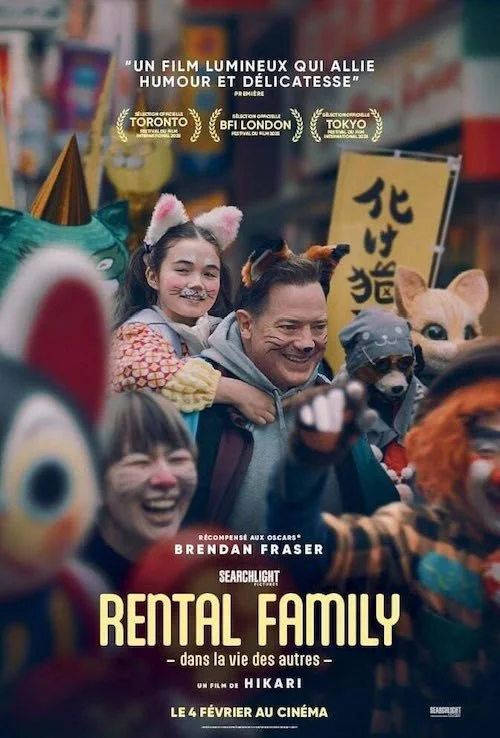


One of the pleasant surprises from 2025's Toronto International Film Festival was how delightful Rental Family is. The latest feature film by Hikari (known for 37 Seconds, and for directing episodes of the series, Beef), Rental Family takes us to Japan to highlight the concept of those who "rent" people for different purposes; say you need a plus-one for a wedding, a parental figure for a child with a father who is absent, or a buddy to play video games with. Hikari is aware that this may seem like an outrageous concept for Americans, but this is something that is respected over in Japan and she handles this perceived peculiarity with dignity and grace. How can we fault such an occupation when we all experience loneliness to varying capacities? We find ourselves in the shoes of Brendan Fraiser playing actor Phillip, who is stuck between awful gigs in order to try and survive; he has been a Japan native for years, but is still extremely isolated despite being culturally and linguistically immersed. He hires an escort who he confides with: this is Hikari's way of conveying a universally-utilized method to cure loneliness as a means of ushering us in to the concept of a rental family.
Phillip is hired to a new acting opportunity, and he quickly finds himself in the middle of a funeral for someone he doesn't know (and, even then, this is not quite the circumstance he signed up for). He is approached by the head of a rental family organization who wants to take Phillip on full time as a hire; meanwhile, Phillip is awaiting news from promising auditions for projects he really wants to be a part of. He doesn't quite fit in with the rental family concept at first, until he gets caught up in some of his most challenging roles yet, including acting as the biological father of a child who was abandoned at a young age (hired by the girl's mother to help the daughter pass the admittance process for a prestigious school), and acting as a journalist for a retired icon in the film industry while he is slowly losing his memory. Phillip learns the importance of such a job; so do we.
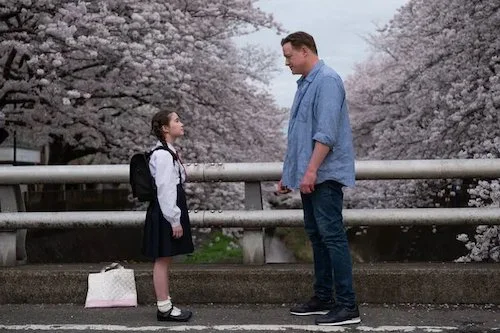
Rental Family allows its sentimentality to guide it without ever getting carried away.
While Hikari does indulge marginally in the flourishes of cinematic sentimentality, I appreciate how rooted in the ethereal Rental Family is. It's difficult not to get swept up in the beauty of Japan and how soothing it is for the mind and spirit (while also acknowledging the ebb-and-flow of steady traffic within a country that never sleeps); films like Sofia Coppola's Lost in Translation have shown this enamour before. I cannot fault Rental Family for encouraging us to fall in love with a place that is admittedly quite effortless to cherish, even for those who have not had the privilege of being able to go; Hikari allows her film to show you what you're missing. What could have been an entire course on kitsch is instead a tender, mostly-rooted emotional journey; even Fraiser, who can often be misused, may be at his absolute best here with a mainly grounded, highly captivating performance that encourages him to act from within as opposed to project his thoughts and moods. These are the performances that make me extra grateful that Fraiser is back; look at what we've been missing out on.
I feel like Rental Family could have stuck primarily with its theme of using Phillip's jobs as vignettes to piece together a larger depiction of belonging, but it does resort to your expected tribulations by its third act. I feel like the film justifies these turning points enough to make them not feel too out of left field, but I do think it could have gone the route of Wim Wenders' Perfect Days and allowed the weight of the emptiness of these scenes to do the majority of the talking. Even so, Rental Family is still far stronger than I expected it to be, with such lush storytelling to convey both the feeling of being ostracized and the finding of purpose (often within the same frame). I initially expected this film to win the People's Choice Award at TIFF (that honour went, shockingly, to Hamnet; TIFF audiences usually go for safer crowd-pleasers), and I predicted this out of misguided presumptions: I expected Rental Family to be typical and vapid. I was pleasantly wrong. Nevertheless, I am still surprised that Rental Family didn't win that award because I can see this film resonating with so many walks of life. When Hikari attended every single screening of this film at the festival (a miracle of sorts, when directors usually won't stick around for six or seven screenings throughout ten days), I saw someone who was adamant on reaching audiences. I feel like her film, Rental Family, will do just fine even without the extra — and loving — commitment.


Andreas Babiolakis has a Masters degree in Film and Photography Preservation and Collections Management from Toronto Metropolitan University, as well as a Bachelors degree in Cinema Studies from York University. His favourite times of year are the Criterion Collection flash sales and the annual Toronto International Film Festival.