
Filmography Worship: Ranking Every Béla Tarr Film
Written by Andreas Babiolakis
Filmography Worship is a series where we review every single feature of filmmakers that have made our Wall of Directors

I was already anticipating writing about the Hungarian arthouse titan, Béla Tarr, and was slated to do so January 22nd. I caught up on all of his films (both feature and short), and had his filmography ranking lined up in my seemingly never-ending parade of articles. However, once I learned of his unfortunate passing today, January 6th, 2026, I knew I had to commemorate his works instantly (especially since I was already caught up with his films). Where do I even begin with Tarr, outside of stating the obvious: he is the master of slow cinema (long and drawn out motion pictures that allow audiences to soak in the imagery). What started out as documentary-esque depictions of the working class and their daily struggles turned into elongated depictions of torment and agony within the purgatory of a doomed existence; Tarr would work on what he achieved with 1988’s Damnation time and time again, resulting in some of the greatest films of arthouse cinema. He had a number of collaborators, from novelist László Krasznahorkai to Tarr’s wife Ágnes Hranitzky (who helped co-direct and edit a few of his greatest works). Together, he wound accomplices that understood his version of a nation he loved and cried for, as if Hungary was a wounded animal he wanted to see sprint again, not wither and die.
Tarr’s films are not as directly influential on the grand scope of cinema as I would like (then again, people complain about two-hour films already being too long, so what chance do we have here), but I see his magic in the experimental and arthouse films released from the nineties onwards (like Lav Diaz, or Apichatpong Weerasethakul): works that take the concept of moving pictures and turns them back into static images with breath and life in them. They found harmony within Tarr’s brutality, but even then, Tarr’s films are so heavy because he is cognizant of what makes life beautiful and worth living (this is how he reaches the depths of depression and despair that many other filmmakers cannot even come close to). For years, I’ve seen Tarr’s films as bleak and harrowing. Since the news of his passing, I now see them as achingly extravagant; to die is to live (and to live is to die). We hurt because we know what humans are capable of via Tarr’s artistry (as well as the worst of humanity via what his films show). The world lost a giant of experimental film, but his legacy won’t go unnoticed by me. Here are the narrative films of Béla Tarr ranked from worst to best.

13. Hotel Magnezit
There isn’t much to say about a ten-minute documentary-esque short about a hostel that houses workers and the misdemeanor one military veteran commits. You get the sense that Tarr was getting comfortable behind the camera and trying to figure out what he wanted to say with his very first film (a student project, at that), but there sadly isn’t all that much there in a film by a director who usually speaks millions of words with a single (yet long) shot; who can fault someone who was learning the craft? I suppose there is something to say about the inherent vices of human beings in a film like Hotel Magnezit, but we can get that message louder and more clearly in many other films (especially Tarr’s additional offerings). This is not a terrible film by any means, but Hotel Magnezit is for the biggest Tar buffs first.
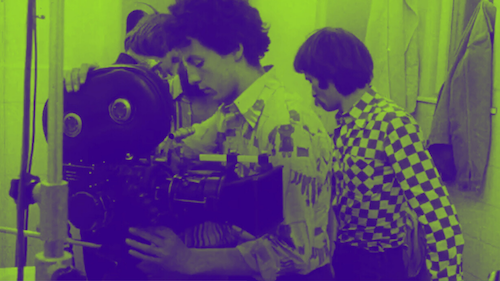
12. Cinemarxisme
Tarr’s second documentary-adjacent short, Cinemarxisme, is longer than his debut, Hotel Magnezit (this followup is half an hour) and is even more indicative of the kinds of stories that Tarr would continue to tell his entire career; this is another ambitious student film. These are the depictions of people whose lives did not turn out as they planned; subjects are shown cleansing while discussing themselves. There is a possibility that both documentary shorts by Tarr were heavily fabricated, seeing as the auteur would admit that he was keen on orchestrating films in a way he wanted them to be told even from a young age (he saw these documentary shorts more as a collage than a conveyance of truth). Cinemarxisme is a little more interesting but not by much. I will say that it is a treat that both student shorts are available since they were deemed lost for decades, so I will not be ungrateful for this opportunity to see how Tarr got his footing.
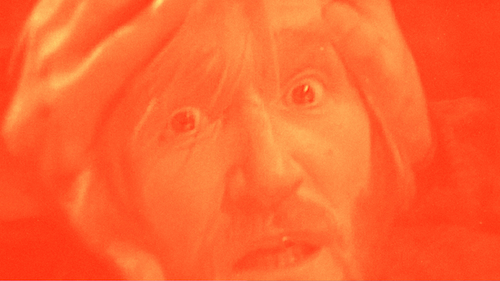
11. Macbeth
Tarr’s answer to the cinematic adaptation of a work by William Shakespeare (one of countless) is Macbeth. While there have been better versions of this very play than the made-for-television version Tarr directed in 1982, but there is one thing that sets this version apart (and it may be music to your ears): this hour-long affair is made up of only two shots. Tarr’s version takes us back to the stage without being so starkly direct with this approach (like, say, a recording of a theatrical production), allowing us to live and breathe within the confines of a theatre and/or a television screen. You won’t get much else from this take on Macbeth that you can’t find from stronger adaptations, but at least Tarr’s swing at this story has its own dismal charm.

10. The Outsider
Tarr’s second feature length film was meant to bring honesty back to the big screen via a man who cannot get his life together; is the protagonist at fault for being clueless, or is society the enemy for giving up on someone like this? We spend two hours (a brief existence, given Tarr’s average runtime) learning all about non-conformism from a director who refuses to bow down to the expectations of Hungary, and the laws of cinema (as well as his equally rebellious lead character). I think that Tarr was struggling a little bit with knowing how to make scenes long here without coming off as repetitive, but The Outsider is still a daring film for a newcomer to make; it’s proof that Tarr was always unapologetic and his vision, as a result, uncompromised.
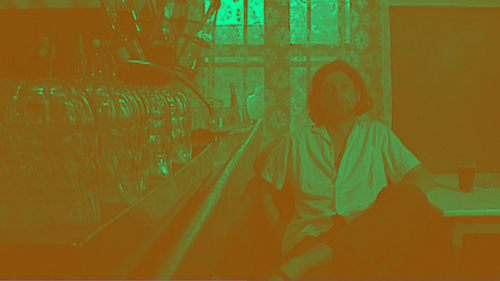
9. Journey on the Plain
The last short film I’m going to cover (I won’t be including Tarr’s segment in the anthology project, Visions of Europe) is Journey on the Plain: a half-hour excursion back to some of the locations that Tarr and company would wind up shooting at for some of his greatest achievements. With poetry being recited on top of these magnificent images, there is some heart to what Tarr is showcasing here; not everything of his is gloom (even if the poems that hang over what we see can evoke such darkness). To me, Journey on the Plain is a sign that Tarr loves Hungary; he just hates what parts of it have been reduced to. This may be as sublime as Tarr ever got.
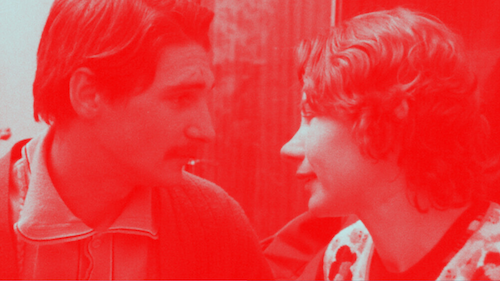
8. Family Nest
Any film from this point on is a must-watch. Tarr’s debut feature film is Family Nest. Even with some of the shakier examples listed above this title, this is one hell of a promising start for Tarr. Even though the metaphor is the tiniest bit on-the-nose (we see a family breaking apart due to conflicts of interest and differing politics within a house), seeing what Tarr accomplishes with this basic premise (and in only an hour and fifty minutes, no less) is special. A testimony against the Communist party and the rehousing that took place in Hungary, Family Nest is as harrowing as Tarr ever got (and within such a preliminary film as well). If Tarr’s early shorts felt misguided, it was clear that the director was meant to work long; a film that’s under two-hours would not even come close to what Tarr had in store for us in the future.
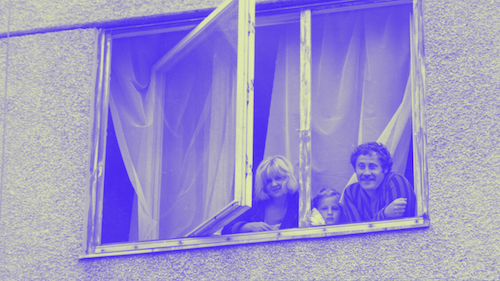
7. The Prefab People
Before Tarr surrendered to the glacial ways of his masterworks, he was still aiming to deliver a documentary-like look at everyday people in Hungary. With The Prefab People, he conjures up a story of a marriage in crisis and both parties trying to figure out where it all went wrong (the provenance of lovelessness, if you will). Similar to something you’d find by the Dardenne brothers or John Cassavetes, The Prefab People is meant to be a slice-of-life in ruin; you feel invasive but, at the same time, heard (should you have ever had a similar falling out to such a degree). It hurts enough when you watch a Tarr film that shows devastation on a large scale, but such a dialed-in form of sadness is also agonizing; like any other Tarr film, this one is a tough look at helplessness.

6. Almanac of Fall
Tarr was itching to tell a story on a larger scale when he made Almanac of Fall, seeing as he took an approach akin to what Krzysztof Kieślowski would do with his ambitious Dekalog. Almanac of Fall places us in an apartment building to see the dilemmas and concerns of all who inhabit this structure. As if he took the despair between humans from The Prefab People and wanted to explore it with far more complexity, Almanac of Fall is the layering of distress from those who feel as though they are caught in a dead end with nowhere else to go; the concept of people arrested in a purgatory state is something Tarr would perfect a decade later. This film acts as the start of that bridge between stripped-down, cinéma-verité-esque style and the gorgeous-yet-eviscerating behemoths Tarr would be known for.
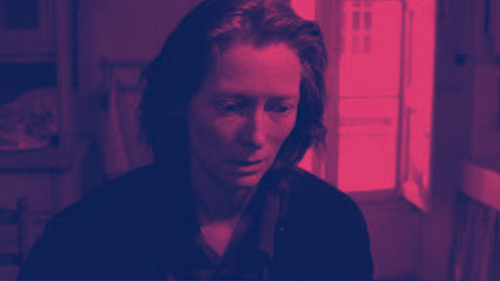
5. The Man from London
Tarr’s penultimate film may be his most underrated. There are a few things that make this film atypical by Tarr’s standards, including it being a primarily English-language affair (starring Tilda Swinton; I could only imagine what other arthouse superstars could have paired up as well with Tarr’s work) and a little more akin to a narrative-driven genre work (this could be considered Tarr’s neo-noir film, but that also sounds disrespectful to write, I suppose). As if Tarr was taking an established trope in cinema — the crime genre — and dismantling it in a way that renders a typically fast-paced archetype and turning it into a brooding search of self, The Man from London is not a film for everyone but it is a spectacular experiment that can be acknowledged even as an artifact (if not an experience; I personally find this film spellbinding).
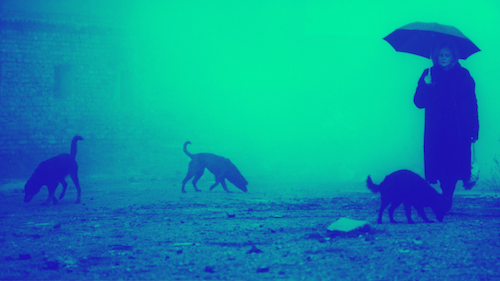
4. Damnation
We have reached the big four in Tarr’s career, and these are a quadrant of masterworks of longer cinema that operate as the height of Tarr’s capabilities. The first film to even be composed in such a way is 1988’s Damnation (surprisingly, it is only two hours, but it feels like an eternity, and I do mean this as a compliment). Here, Tarr abandons his realistic depictions of turmoil and opts instead for a world of shadows, as if Hungary takes place on a distant planet and these images are being transmitted to us across the galaxy. This look at a relationship that is not meant to be lulls you into a hypnotic state of both adoration and panic, as we are transfixed to the point of feeling like a pulsating mechanism that cannot be shut off; such is the chemistry of love and the downfall of a troubled civilization. We can never turn off the machine.
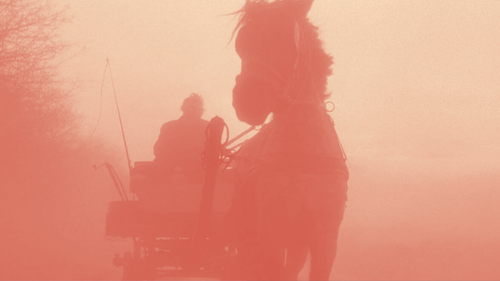
3. The Turin Horse
We have arrived at the three Tarr films most hardcore cinephiles know (they also do happen to be his very best works), and we kick off this trilogy of magnificence with what is sadly revealed to be his swansong: The Turin Horse (to be fair, Tarr did proclaim The Turin Horse his final film while working on it, but you never know if someone will change their mind). His final collaboration with wife and film editor Ágnes Hranitzky, The Turin Horse takes the philosophy of Friedrich Nietzsche and creates an allegory of how humans work themselves to death (in the form of the titular horse). Here, Hungary and its people are likened to a workhorse that is capable of injury and death, confronting us with the futility of a life that is reduced to nothing more than dedication for the benefit of others. In that same breath, the world is ending (and, yet, our characters work in the face of mortality); what else is there to do if we have no purpose, even if it is all that we have been reduced to? Tarr’s final film forces us to face the hardships of existentialism in an oddly beautiful way; we ache because we cannot watch a beautiful creature or planet die; we ache because we see ourselves in The Turin Horse.
2. Werckmeister Harmonies
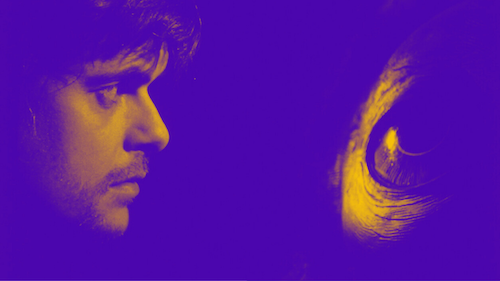
Even at two-and-a-half hours of crushing depression, Tarr’s Werckmeister Harmonies has become a fan favourite because its power is transcendent of anything that can be seen as a catch by many cinephiles. This look at a traveling circus’ arrival in a Hungarian town destroyed by “progress” is like staring at a plagued diorama of the banished: a gathering of citizens with nothing to live for (and yet they persist along). What sets this film apart from the other similarly obsidian Tarr films is that there is a hint of undeniable beauty in Werckmeister Harmonies: as if there was something for us to fight for this whole time (and yet the weight of calamity and breathless despondency keeps us immobile; we grasp towards the hope nonetheless). Werckmeister Harmonies is the ebb-and-flow of art and entertainment; we experience how stunning it could be via Tarr’s sympathetic feature film, and we see how joy can be used for malice through the circus of the damned.
1. Sátántangó
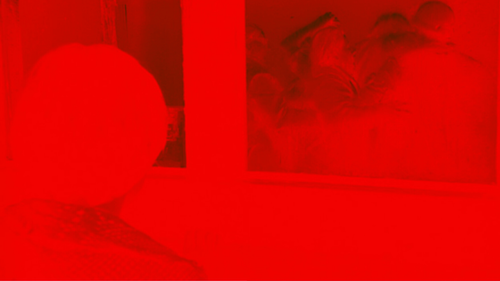
Even with Tarr’s other films in mind, I have never seen another motion picture like Sátántangó in my entire life. One of the most challenging features ever made (it is a staggering seven-and-a-half hour commitment; Tarr has insisted that it is to be watched in one sitting, if you are even able to pull this off), Sátántangó is certainly not the easiest place to start in Tarr’s filmography (Werckmeister Harmonies might be that film, if you are wondering where to begin this shadowy journey into night). However, art isn’t always about effortlessness, and to watch Sátántangó is to see the cinematic medium pushed to its limit (and us with it). I promise that I was not detached from this film for one second, let alone a minute or hour, when I watched it for the first time. I have yet to see it more than once, given its gargantuan runtime, but the vast majority of this film lingers in my mind as if they have been seared into my cerebellum; as if these apparitions dance in the darkest corridors of my mind and soul for eternity. Tarr’s other best films may change how you perceive a film; Sátántangó changes you as a human being.
With what can only be described as a Hungarian town frozen in time (as if the town is hell or limbo, and all of its inhabitants are held against their will until the end of existence), Sátántangó is strategically the average length of both the workday and how long an adult sleeps for; seven-and-a-half hours is the duration of how we grind ourselves to the bone, and how we recover so we can deteriorate ourselves further (ironically, in order to keep surviving). Whether we work or rest, we are in a state of detachment from ourselves; Sátántangó resembles this quandary of self. We fix on images of farm animals, aimless spirits, and many other forms of life being run into the ground for many minutes at a time (what can even feel like a half hour in some cases); these pauses in activity feel like cyclical forms of mesmerizing trances. We are stuck in a nightmare, but it also courses through our veins enough that we, too, may sway. I haven’t seen or felt films as horrifically beguiling as Sátántangó: a masterclass in arthouse direction, long form experimentation, and unwavering sociopolitical condemnation. To me, it is Béla Tarr’s masterpiece, and I will never forget this experience.


Andreas Babiolakis has a Masters degree in Film and Photography Preservation and Collections Management from Toronto Metropolitan University, as well as a Bachelors degree in Cinema Studies from York University. His favourite times of year are the Criterion Collection flash sales and the annual Toronto International Film Festival.