
Filmography Worship: Ranking Every Pier Paolo Pasolini Film
Written by Andreas Babiolakis
Filmography Worship is a series where we review every single feature of filmmakers that have made our Wall of Directors

It is true that cinema boasts many controversial figures, but there aren’t many names that evoke such strong opinions and reactions than Italy’s Pier Paolo Pasolini. A jack of all trades and considered a highly theoretical and philosophical figure, Pasolini was forever projecting his opinions through his works (films, plays, poems, novels, et cetera). His films began as beautiful depictions of the many different stories of the Italian working class via neorealist-esque dramas, comedies, and tragedies. Pasolini would gradually become more and more disgruntled with the Italian bourgeoisie and consumerist ways; Pasolini was a staunch Marxist himself. His films devolved from high-art cinema to scathing, satirical, taboo mockeries and criticisms. Naturally, these works were not loved upon their release, but, over time, they have become lauded works despite their confrontational and disturbing natures. The fact that one individual was capable of films this different — both exquisite and upsetting — is a testament to the complexities of Pasolini. He was openly gay, a Christian who flipped to atheism, and a devout communist. His cinematic tapestries of debauchery, hopelessness, inquiry, and neorealist artistry depict his insights quite outwardly; you won’t find much subtext in films as lavish and/or shocking as his.
Sadly, Pasolini was murdered at the age of fifty-three, in 1975; weeks before his swansong (and most disturbing film by far), Salò, or the 120 Days of Sodom; Salò was meant to be an answer to his loose Trilogy of Life by encompassing multiple films worth of death into one sickening experience. Pasolini never saw the release of his film; instead, he was found slaughtered to the point of being nearly impossible to be recognized. The circumstances surrounding his murder remain debatable; was this a hate crime due to his identity or politics, a hired hit fulfilled by the Mafia, or the final act by an extortionist? This remains a mystery and a crying shame; even with Pasolini’s challenging and provocative nature, no one deserves to have their life terminated early, let alone in such a mortifying way. I have learned that Pasolini has a mostly consistent filmography where even the low points are worth watching. I know that a number of his films are being cherished now, but I cannot emphasize how strong Pasolini was overall as a filmmaker. Maybe tread lightly through the following list, however, because you could wind up on a traditionally rich neorealist work or an absurd and offensive work of taboo. Here are the works of Pier Paolo Pasolini ranked from worst to best.
Warning: Some of Pasolini’s films are not for the faint of heart or sensitive. I’ve tried to remain as vague as possible at times with my descriptions for this reason, but please be advised about this before jumping into any of his later works blindly; I have tried to hint at which films might be the most graphic and in which ways.

17. La rabbia
While I am not including the anthological films where Pasolini essentially directed a short film that was included amongst others by other esteemed filmmakers (a common tradition in Italian cinema at the time), I am including La rabbia: a film of two halves. The second half is by the similarly theoretical and philosophical Giovannino Guareschi, but the first — by Pasolini — is a somewhat short documentary on various revolutions: the 1956 Hungarian Revolution, the Cuban Revolution, the death of Marilyn Monroe and its effect — or lack thereof — on Hollywood beauty standards, and more. Guareschi's half is weaker, thus bringing down what is an otherwise decent documentary (although, to be fair, Pasolini's portion is kind of standard for him and it wouldn't have ranked super highly by its own merits, either).
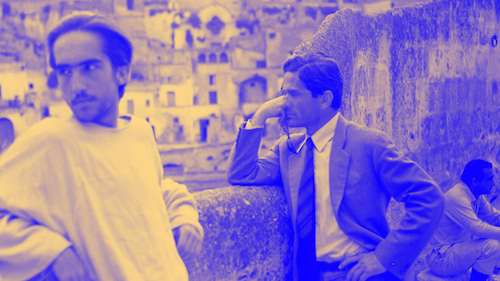
16. Location Hunting in Palestine
When Pasolini was preparing to shoot The Gospel According to St. Matthew, he came across the nation of Palestine in hopes of working there. What transpired instead is the documentary Location Hunting in Palestine. Pasolini had multiple awakenings; from the modernization of Palestine that wouldn't match his biblical vision for his film to the nation's conflict with Israel; I will leave that topic alone, but Pasolini, of course, begs to dive deeper. Location Hunting in Palestine makes the most out of a lost opportunity via a filmmaker who simply could not stop thinking, debating, or researching.
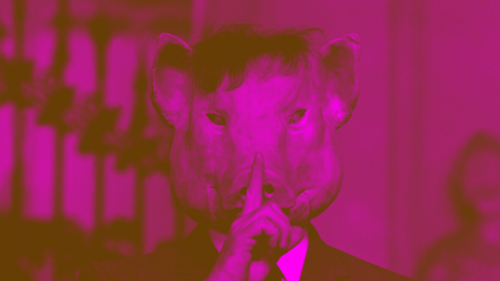
15. Pigsty
By the time Pasolini released Pigsty, he was fully committed to making brash, offensive cinema. He does so in the form of two parallel stories of societal destruction (the first half is about a wanderer in 1500s Sicily who winds up in the company of cannibals, and the second depicts a young man who is confused and lost as an individual in sixties Germany). I think Pigsty works for the most part, but it is an example of a film where Pasolini is hoping to get a response out of his audience (and not always succeed in this instance). The film is worthwhile for Pasolini buffs, but it isn't the best place to start for newbies because it is equal parts jarring and flawed.
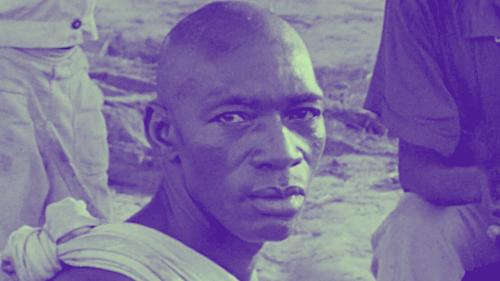
14. Notes Towards an African Orestes
If Location Hunting in Palestine was the result of Pasolini wanting to shoot The Gospel According to St. Matthew in Palestine, then Notes Towards an African Orestes is the remainder of what never was. While hoping to shoot a film in Africa (I suppose we'll never know the full extent of the project outside of what we find in this documentary; Pasolini also questioned the likelihood that he would even consider finishing the film within this documentary), Pasolini comes across various African walks of life and picks their brains. While not much came out of this project, it is interesting to see Pasolini thinking out loud in any capacity.
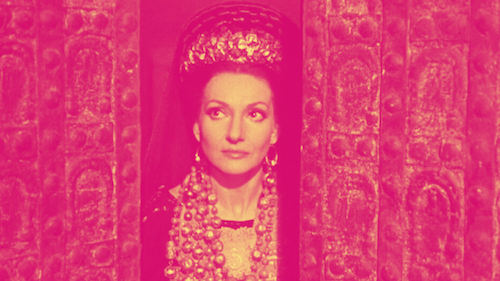
13. Medea
Years after tackling Oedipus Rex, Pasolini returned to adapt another iconic story in the form of Medea (the myth of Jason and the Argonauts is heavily referenced here as well, given that Medea is Jason's wife). By this point, Pasolini was making audacious moves (of course), and the film is as lavish, massive, and spellbinding as it could be. The film may hit a couple of false notes in its efforts to depict the high life via such vibrant cinematic displays, but it does get much correct. There is also the bold choice to cast opera singer Maria Callas as Medea (her only film role, and, curiously, one that isn't heavily based on music in any way; I wish we saw her act even more).
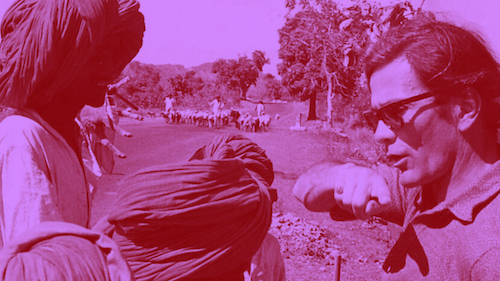
12. Appunti per un film sull'India
Would it surprise you that Pasolini directed a documentary film when he was on location trying to scout for a film project? No? Well, here Pasolini was in India hoping to make a feature film (this project, like Notes Towards an African Orestes, never came to fruition). Pasolini goes around asking local citizens about sociopolitical topics including capitalism, modernization, and culture. While the film that Pasolini desired never happened, he is able to cause quite a discussion with Appunti per un film sull'India; I think you will find with these on-site documentaries that Pasolini could be your cup of tea in this capacity (as opposed to his challenging works that aim to antagonize).
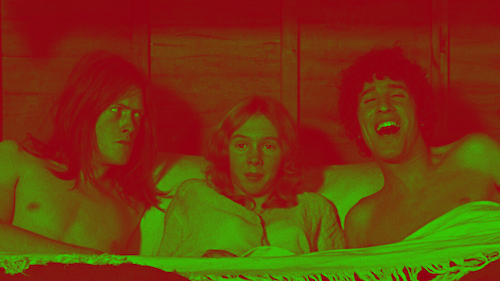
11. The Canterbury Tales
Of the Trilogy of Life films, The Canterbury Tales might be Pasolini's weakest effort (although it is still a great slice of absurdist cinema). Based on Geoffrey Chaucer's work of the same name, Pasolini finds the comedy within eight separate stories of rampant sex and debauchery. This film almost feels like Pasolini's answer to Dante's Divine Comedy but instead of all of the versions of hell one can be condemned to, Pasolini is exploring the many ways people can wind up in hell (according to super religious judges, of course). Pasolini gets a little carried away with this film that he considered lighter fare (yes, maybe by his standards), but I think Pasolini taking the piss out of something or someone is still more interesting than a mediocre filmmaker's strongest effort.
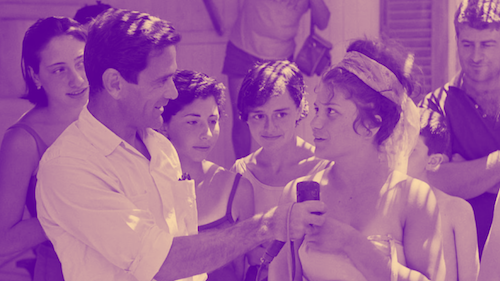
10. Love Meetings
Pasolini's greatest documentary by far — mainly because it was not in response to another film and is a fully-fledged experiment — is Love Meetings. Pasolini tours around Italy and talks to various walks of life and asks them about their thoughts on love and sex. Sure, this sounds basic on paper, but everyone's different depictions of these simple notions are what make Love Meetings quite an engaging experiment. These discussions leak into fictional depictions of love (like, say, in cinema), different cultural renditions of what sex can mean, and even the stigmas surrounding the perversions of eroticism. If you ever wanted to truly know what was going on in his mind when he made his taboo films, this documentary may help.
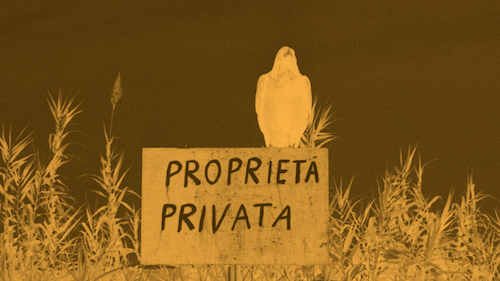
9. The Hawks and the Sparrows
The last film to star Italian legend Totò is Pasolini's The Hawks and the Sparrows: a bit of an unusual neorealist effort that takes the concept of class struggles in society and life in the form of a quest featuring a talking crow. Yes. You read that right. Pasolini's fable is unlike many of his latter works; it is far more stripped down and driven by the barest of basics within storytelling. The end result is a bit of a fairy tale (in Pasolini's twisted way, I suppose): a lesson on the endless tribulations in life and the impossibility to adhere to the expectations of others (and their politics).

8. Arabian Nights
Pasolini's penultimate film (and the last title in the unofficial Trilogy of Life, Arabian Nights is an adaptation of the Middle Eastern folklore found in One Thousand and One Nights. Like the other films of his during this time period, Pasolini likens the high life to flights of fancy (and an endless source of slapstick buffoonery and erotic perversions). Arabian Nights is a bit of an anthological effort that leaves you thinking (and possibly perplexed) at the hands of sixteen sequences, but there is a through line in the form of Nur-e-Din's quest to find the love of his life, Zumurrud. Pasolini tries to condense a myriad of different forms of love in this psychedelic fantasy romp.
7. Mamma Roma
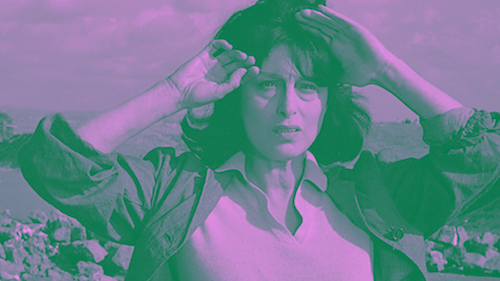
Pasolini's second film, Mamma Roma, feels like a bridge between traditional Italian neorealism and Pasolini's far-more unhinged works towards the end of his career. We follow an ex-prostitute who aspires for a better life for her and her teenage son; life doesn't care for her dreams, however, and she is quickly forced into many unfavourable positions in order to survive. Pasolini flirts with the idea of what he is able to show in a motion picture while trying to get to the heart of why existence is pain for many working or lower class citizens; he doesn't really have an answer as much as he implies that life is typically grossly unfair (and yet he makes it look like art here).
6. Teorema
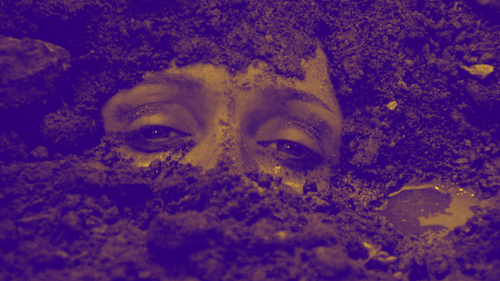
The first film where Pasolini began to truly press his luck is Teorema, and, in ways, it is easily his most challenging film (of course, I mean in a conceptual kind of way; Teorema is far less offensive and upsetting than most of his later works). Pasolini mainly worked with non-professional actors before this arthouse, experimental effort (you will find some big names like Terence Stamp and Silvana Mangano in this film about a bizarre mission: a man who wishes to attract then ditch various members of a bourgeoisie family and watch their lives flounder afterwards. This is a bit of a Buñuelian effort by Pasolini who appeared to recreate a daydream he had about upper class hell.
5. Oedipus Rex
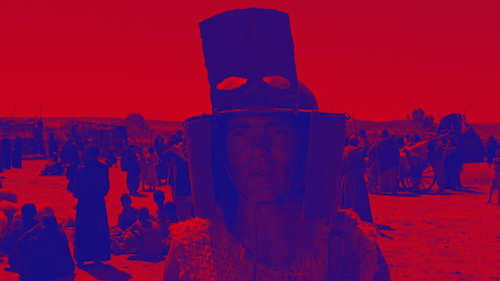
One of the most under-discussed films of the sixties has to be Pasolini's adaptation of Oedipus Rex which is a gorgeous, risky, mesmerizing effort. I know Pasolini's more bonkers films attract audiences, but if you want to see a film that is just as artistically ambitious and far more narratively sound than his years of infamy, Oedipus Rex is an excellent recreation of the Greek play. Pasolini's first film in colour proved to be a terrific opportunity for the director to truly test how much can happen on screen at any given moment; how details and empty spaces could create the strongest visual compositions; how colour can add life and spark to depressing lives.
4. The Decameron
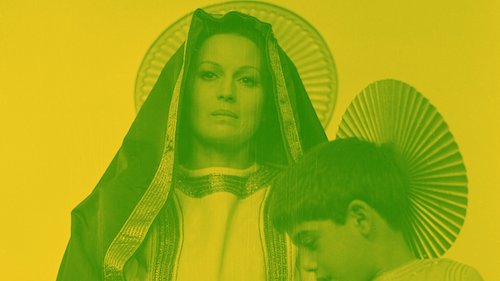
The first — and most beloved — film of the unofficial Trilogy of Life is Pasolini's adaptation of The Decameron. Like the other two films, this entry is hellbent on hyper-erotic comedy and taboo imagery. This was one of the strongest efforts by Pasolini where he took classic literature and used it as a means of creating scathing responses to the ridiculousness and hideousness of contemporary life and politics. I feel like this is one example where Pasolini went too far in a good way; he himself never crosses the line into lunacy, but he does create horrific jabs at those he opposes (there is no way his "intended audience" wouldn't feel angered or repulsed by Pasolini's findings). Life is as sick as it is tragically farcical, and The Decameron is a lot more level headed about conveying this than some of Pasolini's other efforts.
3. Accattone
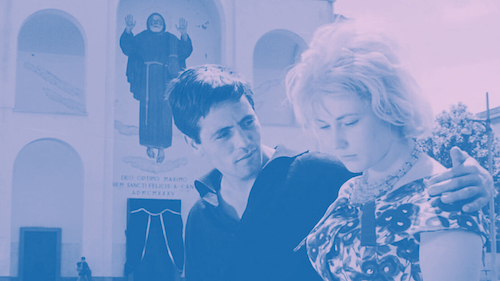
I consider this top three selection a bit of its own trilogy. Pasolini's career started as strongly as it ended. His debut feature film, Accattone, feels like the discovery that painter Pablo Picasso was capable of hyper realistic paintings in his young adult years (and yet the majority of the world knows him for his cubist experiments). Pasolini was exceptional right off the bat with this neorealist drama about a pimp and his prostitute girlfriend — the latter gets arrested. Pimp Accattone tries whatever he can in order to survive; Pasolini paints a picture of Italy that is unforgiving and impossible to stay afloat in. His maturity here is actually shocking when you consider the side of Pasolini that most cinephiles are familiar with; I implore you to watch Accattone and find a beautifully devastating film made well before Pasolini was cynical enough to the point of insanity.

2. The Gospel According to St. Matthew
Pasolini's third film, The Gospel According to St. Matthew, felt like a major leap in ambition and scope. He likens the story of Jesus Christ up until his crucifixion to the Italian neorealist genre with tremendous results: if you are a devout Christian, Christ was someone who was destroyed by society's expectations of him (the main difference here is that Christ resurrects from the dead after facing hell for real; Pasolini depicts this as well). This film feels like the turning point where Pasolini learned what he could achieve with his films in terms of visual complexity and philosophical and religious imagery. This stunning effort has resulted in what I find to be one of the greatest Christian films of all time (yes; by the man who made Salò, which, speaking of...)

1. Salò, or the 120 Days of Sodom
If Accattone was Pasolini's neorealist upbringing, and The Gospel According to St. Matthew was a sign of what the director could achieve with his allegorical imagery, then his final film, Salò, or the 120 Days of Sodom, was the product of a brainiac who was brought to the brink of anger, delirium, and spite (well, maybe he did need a film like Teorema to start to send him over the edge). As if the films within the Trilogy of Life didn't convey his disdain for political corruption and societal devolution enough, he went ahead and adapted the text of the same name by Marquis de Sade (who was a sane writer, as we all know) and brings it to forties Italy: during the time of libertines during the final days of Benito Mussollini's regime. If you do not know what this film is about, I warn you that this opinion is widely agreed upon: Salò is one of the most fucked up films ever created. The plot is simple: the libertines kidnap nine teenage boys and girls and torture them for four months. As there are four libertines and months, there are also four chapters of chapter (again, similar to Dante's levels of hell, and, believe me, Salò is indeed hell).
It might seem like I am trying to be obvious or difficult by placing such a notorious film in first place, but I do think that Salò is Pasolini's best film (although not by much; The Gospel According to St. Matthew and Accattone are almost just as good and are worth your time — perhaps even more than Salò if you don't want to have nightmares for the rest of your life). Pasolini forgoes his sick sense of humour from his Trilogy of Life films and goes all-in with his fury; many might see a revolting film of filth and controversy without any merit; I, and maybe a dozen other lunatics, see an uncompromised response to the cyclical hypocrisies of society and the doom that the future generations will face in the hands of corrupt, perverse, evil leaders. I don’t believe that this film is made to shock just for the sake of it, like many others may accuse it of. I see someone frustrated with society, fascist corruption, and the abuse of a trusting, young generation in the form of indescribable atrocities (like sexual assault, coprophilia, and murder; this is putting everything lightly, and even then you’d likely want to run for the hills).
Salò is easily one of the scariest horror films ever made, and the film progresses from fucked-up to completely unimaginable; the final "act" (double meaning intended there) is impossibly, unforgettably terrifying and nauseating (Pasolini didn't believe in a happy ending here, as long as politics favour the wicked). I'm not sure how I can sell a film this brutal to the average person, so perhaps I won't. If you do not want to see one of the more difficult and mortifying films of all time, I would suggest one thing: stay the hell away from Salò. I still think that this is Pasolini's strongest and most accomplished vision, even if it happens to be... well, this: a film so nightmarish that even top critic Roger Ebert couldn't bring himself to watch it; I might have issues and have seen it twice (although I don’t know if a third time is in the cards), so I consider one of those watches Ebert’s to spare him. You will never be the same once you watch Salò (for better or for worse): Pasolini's masterpiece, and one of the most dangerous and messed up films ever imaginable.


Andreas Babiolakis has a Masters degree in Film and Photography Preservation and Collections Management from Ryerson University, as well as a Bachelors degree in Cinema Studies from York University. His favourite times of year are the Criterion Collection flash sales and the annual Toronto International Film Festival.