
Apocalypse in the Tropics
Written by Andreas Babiolakis
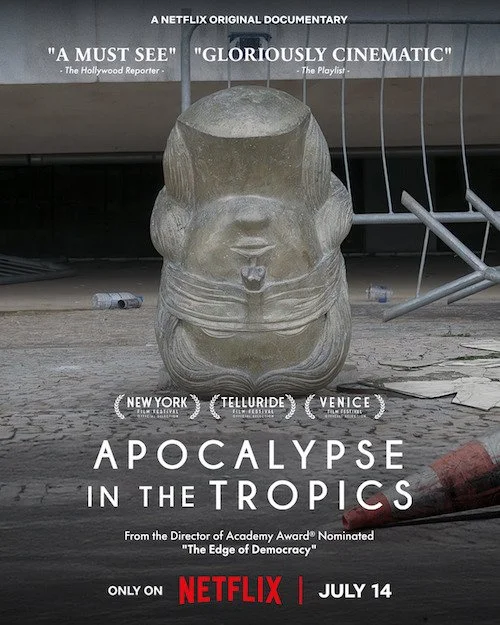


Petra Costa is back again with her depictions of a gorgeous but complicated Brazil; years after her Oscar-nominated documentary, The Edge of Democracy, this latest perspective, Apocalypse in the Tropics, is just as solid, poignant, and concerned (with Costa’s soft-spoken approach) as anything she has released before it. The Edge of Democracy detailed the various political shifts that led to Jair Bolsonaro’s presidency; Apocalypse in the Tropics is a natural followup because we are now seeing much of what has happened during his leadership. Primarily, Costa looks at the devoted evangelicals who have aligned with the far-right leanings of Bolsonaro. She looks at televangelist Silas Malafaia’s impact in this movement with major findings. The Edge of Democracy was a fairly great documentary that feels more like a look from afar: a brief history lesson on a motherland that Costa was trying to figure out. It’s as direct as a documentary can be to the point of feeling like your average experience with the medium (albeit quite a good example). With Apocalypse in the Tropics, Costa feels even more immersed by her surroundings as the current state of Brazil swirls around her; now this is Costa making a documentary that is just as good in quality and yet it feels unique (which helps it stand out ever so slightly, I’d argue). It’s the difference maker between a good documentary and an effective one.
What helps is how much Costa clashes the natural beauty of Brazil, as well as its stunning architecture, with the inner conflicts. Sure, The Edge of Democracy did the same, but here you get more than just the skinny that corruption ruins a great thing. Costa splits her documentary into chapters of a biblical nature, as if this is our latest scripture to read in order to understand the past few years in Brazil. When you are religious, you believe that a higher being is responsible for all that is around you. Here, we are looking at a cultish version of Christianity, so let’s point to God (in a less extremist way). Christians believe that God created all beings. You see how religion can help the sick have faith and push to survive, amongst many other things; in a film like Apocalypse in the Tropics, you see a world that many Christians are blessed to live in. You feel this in how the nature looks, and the exquisite art and architecture that frames Brazil as one of the prettiest countries in the world. Now when you couple that with the problematic side of organized religion — the kind that creates violent uprisings and the spread of toxic hatred — you get this chilling dichotomy; how could the same God want this, let alone demand it? The faithful are suddenly rendering all around them faithless.
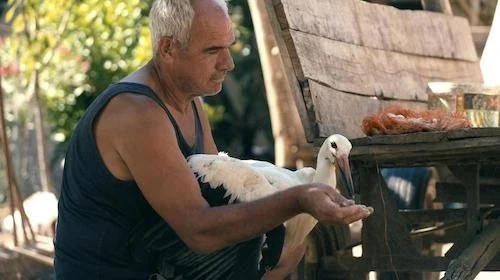
Apocalypse in the Tropics is the latest documentary by Petra Costa who continues to love her country while worry about what is happening within it.
Then Apocalypse in the Tropics digs deeper, including the damning claim that Malafaia and the hyper-evangelicals are responsible for Bolsonaro’s stature and election, down to blatant voting manipulation. It’s almost ironic that The Edge of Democracy felt like a series of fates that led to Bolsonaro’s election, but Apocalypse in the Tropics — the film that touches more on religion’s function in Brazil — shows how calculated and strategized everything is; as if there was no divine plan at all, outside of what human beings pushed to happen. That same narration that Costa delivered in her previous film (that, to be honest, I found a little cold and lifeless to the point of sounding robotic) is almost unchanged here, and yet it comes off as someone who is calmly displaying the evidence she has spent years researching; there is an extra level of subdued confidence that has turned this drone into the voice of a silent killer. In that sense, Costa doesn’t feel the need to over-stylize her film (outside of how lovingly it is shot) because the alarming corruption she dissects does enough of the heavy lifting here. While I do wish the film went a little further into the overall spread of the evangelical extremism (as to show all of the influence it has had), Apocalypse in the Tropics remains a heavy watch told patiently and calmly; it still feels like so much to take in at once. The film takes an even bigger turn once you get to the 2022 election, and Costa’s documentary serves as a reminder that there is always the opportunity for history to repeat itself (I know that a number of other nations know this all too well at this point).


Andreas Babiolakis has a Masters degree in Film and Photography Preservation and Collections Management from Toronto Metropolitan University, as well as a Bachelors degree in Cinema Studies from York University. His favourite times of year are the Criterion Collection flash sales and the annual Toronto International Film Festival.