
Good News
Written by Cameron Geiser
Warning: This review is for Good News, which is a film presented at the 2025 Toronto International Film Festival. There may be slight spoilers present. Reader discretion is advised.
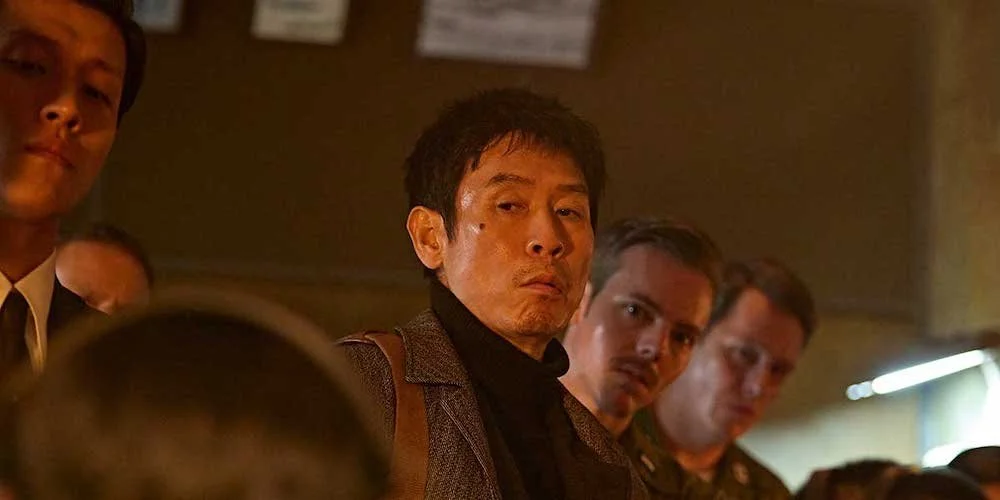
Image courtesy of the Toronto International film Festival.


Set in 1970, the story of Byun Sung-hyun's Good News begins in Japan as a terrorist group calling themselves The Red Army Faction take over a civilian flight with blades and handguns. Their demands? To be flown to Pyongyang, the capital of North Korea with the civilians and air crew so that they may work towards bringing the world into a new revolutionary period. As these violent revolutionaries come to discover, their plan has a few issues. Like the fact that the Pilots are flying a national flight and fuel necessities are a reality, they also don't have the directions or guidance from their landing position to fly across the ocean and then through South Korea. They deal with these hurdles as they come and force their way out of Japan but once in South Korean airspace, their governments and agencies step into the fray to attempt to capture the terrorists and save the hostages.
The multiple governments and intelligence agencies in play concoct increasingly ridiculous and entertainingly farcical plots to deter the terrorists despite the danger of it all. In fact that's one of the film's best tricks, maintaining the threat and high stakes tension while serving up piercing satirical comedy exposing the delightfully two-faced elitist crowd, with the power hungry antics of government officials, and their many ineptitudes. Working for the South Korean Government is a particularly skilled "Nobody" (Sul Kyung-gu), someone whose work frequently ends up on the Evening News without it ever being attributed to him. This "Nobody" is constantly pulling strings on the frontlines of this issue and entirely within the background at times too. In fact he is in charge of bringing in a young radar Specialist (Hong Kyung) with the Military to help hijack the Japanese aircraft's transmission. This young soldier gets wrapped up in the international incident far more than anyone expected, from being the intended fall guy to potential National Hero and even political scapegoat- his path was a fun one to unwind!
The US even gets in on the secret intervention with the Japanese and South Korean Governments, deploying just as much bureaucratic nonsense as everyone else in a quick scene that I highly appreciated. Aside from the International Affairs of it all Good News gives the major characters enough going on with their own motivations and internal struggles, which was to a degree that defied my expectations. From wanting to be a celebrated hero to moving on from one's past, the script does its due diligence to give all of the core characters enough spice to keep things interesting. Good News has excellent pacing too, as each successive plan to stop the anime philosophizing terrorists gets weirder and more desperate ultimately ending with a refreshing twist on the logic of the film itself. I also greatly appreciated the few surreal and abstract moments used to depict the high stakes risks of attempting to save the hostages, in fact there were many inventive shots throughout Good News that speaks to a strong visual flare with a focus on momentum. This is the first film of Byun Sung-hyun's that I have seen, and I will be seeking out his work going forward because this certainly was a case of Good News!


Cameron Geiser is an avid consumer of films and books about filmmakers. He'll watch any film at least once, and can usually be spotted at the annual Traverse City Film Festival in Northern Michigan. He also writes about film over at www.spacecortezwrites.com.