
A Big Bold Beautiful Journey
Written by Andreas Babiolakis
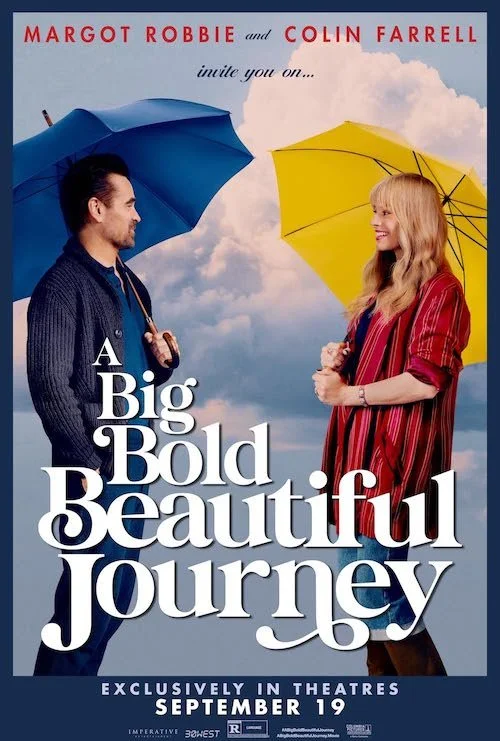


Korean-American director Kogonada is so damn good at transporting viewers to new realms of phenomena, typically within the confines of normalcy. Columbus takes the Indiana city and turns it into a natural and architectural wonderland frozen in time. After Yang takes the typical family dynamic and applies a superbly science fiction angle that recontextualizes the conversation. Even Kogonada’s contributions to Pachinko make the lineage between past and present even more prominent, if on an internalized level. If anyone is able to turn reality into something special and poetic, it should be Kogonada. Ironically, his latest film (with the wordiest title), A Big Bold Beautiful Journey, is what feels like his most stationary and uninspired work to date. Given the promise he has shown before, I am saddened by the lost potential here. Columbus takes everyday life for many natives of the title city and turns their stories into an absolute cinematic monument. A Big Bold Beautiful Journey cannot turn the provenances of everyday people into anything special, and a big reason why is this is the first time Kogonada has taken the road most frequently traveled on; try as he might to hide this fact, it is always obvious in every sequence.
We follow David (Colin Farrell) on what promises to be another droll, frustrating day (we find that he has both a parking ticket and a wheel clamp). He instantly notices a sign that promises something more to take him away from his humdrum routine. Kogonada usually allows his films to linger and exist, adding breath into each scene given how much space they have to grow. This speed is an early red flag: a sign that A Big Bold Beautiful Journey is uncharacteristically impatient. David’s concerns only continue before he decides that he wants to follow suit and partake in something new: the proposed big, bold, beautiful journey. In short, David is grieving the death of his father. Not only is he sad about this loss, but he feels unaccomplished in the eyes of his now late guardian: life couldn’t be more meaningless at this point in time, so the “journey” is a must. Once “on” it, he comes across Sarah (Margot Robbie): another lost soul in dire need of a purpose. They begin to traverse the lands of space and time together, but everything feels so quick to revel in the magic. The point of being spellbound is the path to get there, like the buildup a magician toys you with before pulling off their trick and catching you while you are at your most attentive. To just have a rabbit come out of a hat without ever showing the hat empty beforehand doesn’t feel magical at all, does it?
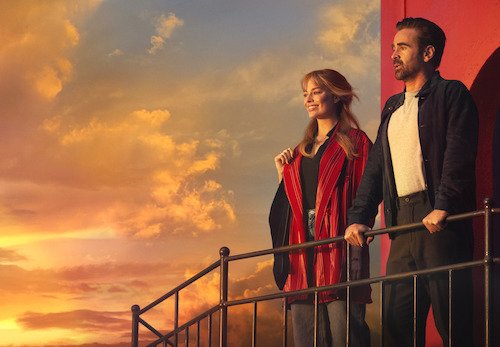
A Big Bold Beautiful Journey is nice on the eyes, but it has a lot of its intended splendour lost in translation.
Once the film begins breaking the rules of reality, it seems decent but heavily misguided. Not only does it hurry to each “destination,” it never feels awfully sure as to why these vignettes should feel special outside of how they pertain to their characters. A Big Bold Beautiful Journey feels derivative of many films that came before it, like a far, far safer Celine and Julie Go Boating, a less detailed Eternal Sunshine of the Spotless Mind, and even wobblier than The Secret Life of Walter Mitty (the 2013 one, mind you); I went in order of the most difficult of these films to the easiest, and, yet, A Big Bold Beautiful Journey feels so far and away basic by comparison that even Walter Mitty feels like a step up in many ways. It vows to take us through the mind, heart, and soul of its characters like these aforementioned films accomplish, but A Big Bold Beautiful Journey never really feels like it leaves from square one. Again, a journey has to feel like we have gone from one place to another. When the very first shot is as colourful as the film will always be, with an instant call to action without wasting any time, is this not the established reality that sets the tone for the rest of the film? What are we escaping from? What new terrain are we experiencing?
What sweetens the deal is how A Big Bold Beautiful Journey — at its core — is a romantic film: a statement that life is easier to get through with a loved one. Farrell and Robbie are charming, yes, but that was always to be expected. Together, they add an extra layer of groundedness in a film that vows to fly to the moon (but, based on how I felt watching the film, never truly does). A Big Bold Beautiful Journey does its best to add meaning to the lives of its characters as we reach checkpoints in their histories, but I never truly felt like I was there there with David and Sarah. If anything, the film has as much staying power with its proposed sentimentality and ambition as its promotional trailer does. We don’t get anything more than what we were shown, and that isn’t to say that the trailer spoils the plot of the film but, rather, the vibe of the entire film is simplistic and it never varies from its single note. I think that A Big Bold Beautiful Journey will have its fans, perhaps those who want meta cinema that isn’t too abstract, challenging, or provocative, but anyone familiar with this style of storytelling has seen what this film wants to do done before (and, typically, far better). These kinds of films are meant to change you, not just be a feast for the eyes (I will give the title the benefit of the doubt: it is a beautiful film, at least). When a film’s title has to convince you that this will be — emphatically — a journey that is big, bold, and beautiful, I will bring up one of my favourite William Shakespeare quotes: the film’s title “doth protest too much.”


Andreas Babiolakis has a Masters degree in Film and Photography Preservation and Collections Management from Toronto Metropolitan University, as well as a Bachelors degree in Cinema Studies from York University. His favourite times of year are the Criterion Collection flash sales and the annual Toronto International Film Festival.