
Filmography Worship: Ranking Every Orson Welles Film
Written by Andreas Babiolakis
Filmography Worship is a series where we review every single feature of filmmakers that have made our Wall of Directors

What hasn’t been said about Orson Welles already? He changed how cinema functioned for eternity. He has made some of the greatest works in film history; one obvious title was crowned the unanimous magnum opus of cinema for decades. He doesn’t have a single bad film in his repertoire (I’m serious; the worst film below is quite good, and even an unfinished project is quite astounding). I suppose I could focus on what makes Welles so important, and it stems from his tenacity, proven at an incredibly young age. At only ten years old, Welles knew he wanted to tell stories; he did so by crafting comics and writing poetry. Maybe this dedication was a means of escaping the difficulty of his broken home once his parents separated; Welles was four. His mother, Beatrice, died of hepatitis when Welles was nine. His eldest brother, Richard, was frequently committed because of his mental disorders and learning disabilities. His father, also named Richard, died of kidney and heart failure after years of alcoholism; Welles was fifteen. Needless to say, Welles was dealt many bad hands and was finding ways to circumnavigate his tribulations at a very young age. In ways, he matured very quickly, perhaps knowing that he was destined to have to take care of himself.
Welles would stumble between theatre, film, and radio for a number of years, striving to get his stories heard and his performances witnessed. Eventually, Welles would arrive in the spotlight, and it was all thanks to the now notorious Mercury broadcast of an adaptation of H. G. Wells’ The War of the Worlds. This radio performance was cleverly staged as a lifelike warning message by Welles, and it caused an uproar by countless listeners who were worried that planet Earth was actually in danger of an alien attack. After years of trying, Welles was noted for his commanding ability to tell a story and his booming presence that made every point count and feel real. When this breakthrough occured, Welles was already trying his best for years; The War of the Worlds was broadcast when Welles was only twenty-three (it was as though he had lived many lifetimes in the span of one’s formative years). Now, Welles was sought after, especially by Hollywood. If he wasn’t destined to be deemed a prodigy already, soon after came an audacious feat that was seemingly impossible back in the studio-driven years of the Golden Age of Hollywood. In 1941, Welles released the debut film of all debut films: Citizen Kane. He produced and directed the film, co-wrote it (with Herman J. Mankiewicz, although the degree of Welles’ involvement continues to be debated), and starred as the title character (magnate Charles Foster Kane); Welles’ performance spans over decades of Kane’s life. It’s time to check in with Welles’ age again; Citizen Kane — frequently deemed the best film of all time, and boasting a performance of the ages — was made when Welles was twenty-five.
However, Citizen Kane wasn’t quite adored when it first came out. Its then-unorthodox methods (canted camera angles, incredibly dark shadows and lighting, focus on Welles as an all-hands-on-deck auteur, and numerous other practices) didn’t sit well with everyone; even though Welles rewrote the guidebook and essentially every director has abided by these rules since, Citizen Kane strayed too far from the beaten path in the eyes of some. Welles never eased up with his style, ambitions, and creativity, forever trying to outdo himself with each and every project. Welles would frequently crown subsequent films of his his ultimate triumph; I’ve read such claims for Touch of Evil, Chimes at Midnight, and The Trial (to name a few). It wouldn’t take long for Welles’ other passions to make their way on the big screen, from numerous Shakespeare adaptations to Welles’ take on Franz Kafka’s The Trial.
Welles’ boisterous ways and signature style weren’t without turbulence, especially since Welles was operating during a time where directors usually didn’t have such control over their works. Fifty minutes of The Magnificent Ambersons was removed against Welles’ wishes, and the director’s cut of the film remains lost. Touch of Evil had a notorious production and post-production process, resulting in numerous cuts of the film and an initially rough reception. Later in his career, Welles wanted to make a major comeback with The Other Side of the Wind, but never finished due to financial and production limitations. What we have learned time and time again is that Welles’ work in any capacity is exemplary. By the time Welles died of a heart attack in 1985 (he was seventy), he had seen the fruits of his labour. Citizen Kane was cherished by French New Wave moguls of the fifties; it also found its way onto the small screen when television was introduced, so many had additional opportunities to watch and reexamine this once polarizing film. Welles’ fight for complete autonomy with his projects was major for Hollywood and could certainly be seen as a precursor to how New Hollywood directors would operate: with a quest for utmost integrity and truth of one’s own artistry. It’s certain that Welles’ impact on filmmaking will forever ring. Here are the feature films of Orson Welles ranked from worst (or least good) to best.
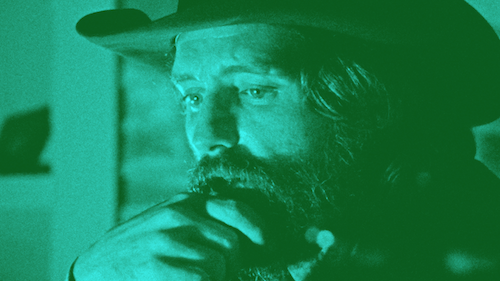
15. Hopper/Welles
This documentary may be ranked last, but Hopper/Welles is still a must for fans of the New Hollywood movement (or those who are fond of hearing filmmakers talk shop). When Hopper released Easy Rider, he was prized as a similar maverick who played by his own rules much in the way Welles was over two decades earlier. Hearing both of these fascinating minds chat (with Hopper being featured in a majority of the shots, since he was treated as the main focus) is quite illuminating (especially since there is a roughness with how both present themselves). This footage (“directed” by Welles) was found many years later and presented relatively as-is in 2020 at the Venice Film Festival. It’s debatable if this film should even be included in a list of this nature, but I’ll allow it since Welles’ name is attached as a director and I think Hopper/Welles is intriguing enough (even if, say, incomplete or archaic) to warrant some attention being tossed its way.

14. Filming Othello
Similarly to Hopper/Welles, Filming Othello is worthwhile just to hear Welles talk (and what a deep, booming voice he had). We join Welles at a moviola to revisit his acclaimed adaptation of Shakespeare’s Othello (more on that soon). As Welles ruminates on a triumph of yesteryear, you get inside the mind of a chaotic genius; hearing how Welles operated will always be a treat for any cinephile. Filming Othello was meant to be the first of an ongoing series where Welles would return to many of his greatest cinematic triumphs; seeing as Welles passed away shortly afterward, Filming Othello wound up being the last feature released in his lifetime (and Welles’ swansong for decades).

13. The Immortal Story
Welles’ last narrative film released in his lifetime feels almost uncharacteristic by his standards. The Immortal Story is extremely short at around sixty minutes and is a bit ordinary. In a weird way, it also almost feels like a full circle moment regarding Citizen Kane; here is a television film made for the medium — the small screen — which saw a resurrection of Welles’ debut masterpiece; additionally, Welles was catering to French cinema with this Jeanne Moreau-starring vehicle after French critics and filmmakers were major proponents in Citizen Kane’s reevaulation. All of this sounds more interesting than it actually is, considering that The Immortal Story — while still an engrossing film — does feel like a more small-scale and traditional film made by a man known for setting cinema on new paths; then again, Welles at his most traditional is still a treat to watch.
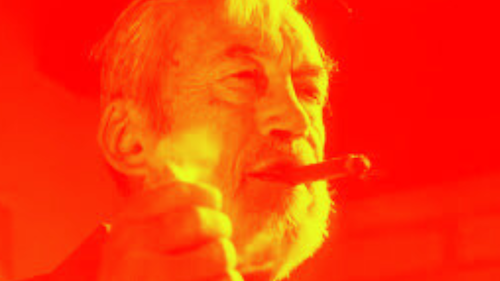
12. The Other Side of the Wind
It also feels a bit strange to include this film since Welles never finished The Other Side of the Wind, and enough of the film was made by the film’s co-star (and a director in his own right), Peter Bogdanovich. Still, this film is frequently considered Welles’ lost film that has finally been brought back to life nearly fifty years after Welles began working on it. While clearly unrefined, Bogdanovich has done a great job at reassembling The Other Side of the Wind: a vicious satire that, in typical Welles fashion, doesn’t hold any punches. Also starring fellow director John Huston, this statement on the shifts of the film industry through the eyes of a geriatric filmmaker (I assume Welles is reflecting upon himself and his peers, here) speaks volumes. Welles had a finger on the pulse of the importance of the New Hollywood movement; one could only wonder what Welles’ output would look like had he been more prolific during it. The Other Side of the Wind shouldn’t exist, and yet here it is in at least a major capacity; even like this, it is quite sensational.

11. Macbeth
I suppose the weakest of Welles’ Shakespearean projects is his take on Macbeth (it also doesn’t help that numerous filmmakers have handled this subject matter even better, from Roman Polanski to Joel Coen). Welles himself has said that he wasn’t proud of what he accomplished here, but, to be fair, this is still a good first go at making a Shakespearean film (something Welles would figure out shortly after). Macbeth is just as moody, intense, and theatrical as anything Welles made before and after; however, it is noticeably slimmer, and it’s due to Welles’ hypothesis to try and create such a film in less time (twenty-three days, to be exact). It’s neat to see what Welles could pull off with this limitation (and, if anything, it proves that he could work with anything and anyone), but I also wouldn’t tell anyone to watch this Macbeth or Welles film over numerous others unless they’ve already gone through the essentials.

10. Mr. Arkadin
This cold-war noir thriller certainly has its fans (including director Christopher Nolan), but Mr. Arkadin remains relatively underrated and underseen. It’s easy to see why the film is starting to be celebrated by contemporary audiences, mainly the murkiness of its protagonists and plot revelation (including the use of amnesia as a major element), utilizing the fragility within films noir as a means of keeping audiences on the edge of their seats. Sure, this may not be Touch of Evil, but does it have to be? Mr. Arkadin is a damn good film that doesn’t get nearly enough dues. To be fair, the insane rollout after the film was produced doesn’t help the film’s legacy; an alleged nine (!) versions exist, with the Criterion release containing a number of them (including a novelization); the 2006 release is deemed the most complete and truthful to Welles’ vision.
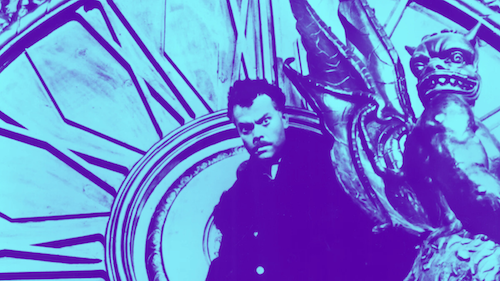
9. The Stranger
Of course The Stranger would pale in comparison to Citizen Kane and The Magnificent Ambersons (both films came before it); that doesn’t make it a bad feature. If anything, even The Stranger was striving to be much more than its peers. A World War II-based thriller, The Stranger takes the darkness of films noir and uses it with one of history’s most monstrous backdrops to conjure up a nerve-wracking affair (The Stranger was released just a year after the Second World War concluded; this can be seen as, clearly, a gutsy move); Welles even utilized documentary footage of the Holocaust to drive his points home. The end result is what feels like a precursor to Touch of Evil: a forever-anxious film that toys with its audience and knows how to carry a throbbing pulse throughout. Chalk this up as another underrated Welles cut that demands much more love than it gets.

8. The Lady from Shanghai
Films noir were always full of twists and turns, but Welles’ The Lady From Shanghai felt like an early attempt to replicate this deception artistically as well; the many uses of reflections, especially in that amazing hall of mirrors climax, is still channeled to this day by many filmmakers. What comes off as an overly ambitious film narratively is corrected by what we see and feel: an aesthetic thrill ride of Hitchcockian proportions. With the murder-for-hire plot, obfuscated visuals, and a dazzling femme fatale (played by the dazzling Rita Hayworth; she and Welles were married during the production of this film but would divorce shortly after), The Lady From Shanghai feels like an honest attempt to get into the crux of what makes up a noir film in refreshing — yet traditional — ways. There’s a reason why it is so revered within the style.

7. Othello
Macbeth may have been somewhat of a failed experiment by Welles (I still think quite highly of it despite its limitations). However, Othello was what Welles was chasing after: the ability to get into the mind of a Shakespearean protagonist, and not merely feel like we were watching a stage production. This often championed adaptation — considered a high point in Shakespearean cinema — won the Grand Prix at Cannes and rightfully so: to see such an artistic, intrinsic, and psychological rendition of a property that has been done to death will forever be riveting to watch. Of course, I feel the need to point out the dated choice of Welles playing the titular Black king, which is the sole sour point of an otherwise breathtaking and captivating feature film.

6. The Trial
Welles always adored his take on Franz Kafka’s The Trial, even if the rest of the world didn’t. I admit that I was on the same page as the masses with this one when I first watched it; I found it visually brilliant (maybe Welles’ most aesthetically sensational achievement), but I also thought it ran around in circles and also proved to be dulled a little bit. Afterward, I could not shake the film off as if it crept into my soul; what if this happened to me; did a film I didn’t think go far enough actually go too far? Upon revisitation, The Trial is spectacularly delirious; as if we are going insane while watching it. The tides have turned with the film’s reception as well, and it’s no wonder why The Trial has resonated with the same audiences who have been treated to twenty-first-century mind-melting affairs and meta works of postmodernism; once again, Welles was five moves ahead of everyone else.

5. Chimes at Midnight
The greatest Shakespearean film Welles made was not a direct adaptation of the bard’s works, but, rather, the reoccuring character of Sir John Falstaff (played here by Laurence Olivier… no, clearly, Falstaff is played by Welles). Enter Chimes at Midnight: such a unique take on what a Shakespearean film could even be. This comedy-drama is incredibly entertaining; it is somehow as silly as it gets while having the cinematography of a European arthouse film. Welles makes a strange dichotomy here between what moves us and what entertains us with a film that, quite frankly, seems impossible to exist. If most other Welles films feel copied or referenced, Chimes at Midnight almost feels untouched: as if trying to make a film this singular with its genre blending and as effortless as it appears is an impossible task. At one point in his career, Welles selected this film as his masterpiece; while I disagree, it’s easy to see why a director would be so proud of something this successfully different.

4. F for Fake
Most directors want audiences to fall under the spell of their films and believe the cinematic illusions they create for them. F for Fake is a mind boggling documentary by Welles and co-director François Reichenbach that will make audiences think twice about their own susceptibility. The film professes to be about the particularities of art forgery, but it is so much more than that; Welles created a lengthy trailer for the film which, no surprise, doesn’t have a single scene from the final product in it. As you are being told to your face about the art of deception, Welles and company lead us to a spellbinding third act: one that remains one of the ultimate rug-pulls of documentary filmmaking, and a testament of the power of cinematic storytelling. Then again, this is the same guy who made an entire nation stand still thanks to his radio production of The War of the World at a very young age; in his twilight years, Welles was still able to bamboozle audiences so easily that it’s almost humiliating for the rest of us.
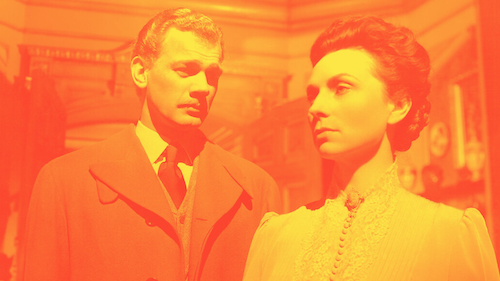
3. The Magnificent Ambersons
I am aware of how heavily altered the only watchable version of The Magnificent Ambersons is as RKO Pictures meddled with Welles’ final vision to the point of no repair. Nonetheless, even this shortened, Hollywoodized version of The Magnificent Ambersons is a masterpiece and one of the great films of the forties. As we follow the titular family through generations of financial pitfalls and tribulations, we see legacy and history get threatened by circumstance; Welles makes sure to make the central domicile — the Amberson Mansion — as elegant and majestic as possible, which, in return, almost feels spooky when you experience what is occurring within it. It’s as if we are watching what fades and what remains simultaneously; in that respect, it’s ironic watching a film that has had much of its integrity removed, and yet it stands tall as a vision of the future. The hypothetical reveal of the true version of The Magnificent Ambersons leaves me wondering: do I want to part from a film I have grown to adore and celebrate if it means I can have more? Is greed not what leads to downfalls?

2. Touch of Evil
While some directors were playing ball in the fifties, some grew restless and were heading towards the eventual shift known as the New Hollywood movement. Almost ten years before such a wave occurred, Welles was making Touch of Evil: a production so tumultuous that it never wound up existing. What was meant to be a final attempt at keeping films noir afloat (Touch of Evil was so good that it accidentally became its final hurrah) wound up being a production of tomorrow: a film with bold risks (including that iconic opening scene done in one long and winding take) and endless tension. Before New Hollywood sought to destroy the stifling code that hindered American filmmaking for decades, Touch of Evil was an onslaught on the system: a cynical, bleak, riveting motion picture that refused to abide. Both its intense production and the numerous end results have become film school 101 staples for good reason: sometimes calamity works out in the end.

1. Citizen Kane
Wow. What a shock. You should trust a critic who goes with such a basic and obvious choice like picking Citizen Kane as Welles’ greatest film. Can you blame me? When a film is borderline untouchable, where do you even go from here? Citizen Kane is a film so complex — from its blatant depictions of William Randolph Hearst’s power and corruption to the overall retort on America and Hollywood as fractured infrastructures — that it continues to be studied; how does a whipper-snapper like a young Welles even pull off something this layered and intricate? Welles uses the noir format of thinking of the past to create a tapestry of regret from a dead icon who can no longer represent themself (be it through fake news or their commanding presence). The end result is as eerie as it is sublime: a film about gain and loss that feels fluid, as if this was a real life being captured; even Welles’ perfect performance at most of the stages of Charles Foster Kane’s life blows my mind as to how convincing he is (even if the makeup is dated yet extensive, you believe Kane is on his deathbed at an old age because of how truthful Welles’ performance is).
Passion projects usually come off as pretentious, delusional, or misguided, seeing as many artists confuse fleeting thoughts with strokes of genius. Welles somehow had it all figured out when he went all-in on this damning exposition, as if he already boasted the confidence of a master. He knew that tilted camera angles could make a figure look like a titan (the opposite tilt could make that same character look timid like a mouse). He was wise to the importance of extreme closeups and obscure framing. He saw the merit in difficult dolly shots, non-linear storytelling, and so many other gambles. The very start of the film feels like a bait-and-switch, as we get a prologue of pedestrian proportions before the montage concludes and sinks us into a new kind of film; I will never forget the feeling that Welles had taken me for a ride at the start of the film (never mind the end, with its classic twist built upon the most powerful man’s lack of fulfillment). This was more than a man who was willing to try new things: this was an artist who knew what those new things had to be.
It may seem like old hat to keep harping on about Citizen Kane, since every film school, critic, column, and textbook in existence has honoured it. Sometimes, that kind of praise exists for a reason: Welles earned it. The ways of the Hollywood cinematic language were forever changed by a film that didn’t belong to a studio or a big-wig producer; it all belonged to some young dreamer named Orson Welles. This visionary was already attacking the powers that be while paving new avenues of artistic and narrative expression in ways that became vital. Even if Citizen Kane wasn’t one of the great films of all time, it is certainly one of the strongest debut statements ever made (that cannot be denied by even the saltiest naysayers who must live contrarian lives). As it stands, Citizen Kane is — and remains — one of the greatest films of all time, and it only makes sense that it is Orson Welles’ magnum opus as well. Having said all of that, it has been an absolute pleasure to discover more of this director’s films throughout my life, as learning that it didn’t all end with Citizen Kane and that Welles was an all around brilliant filmmaker felt like the opening of a portal I would never wish to see closed. If you are unfamiliar with Welles outside of Citizen Kane, I hope this list has opened your eyes to a near-perfect filmography that is begging to be discovered in full.


Andreas Babiolakis has a Masters degree in Film and Photography Preservation and Collections Management from Ryerson University, as well as a Bachelors degree in Cinema Studies from York University. His favourite times of year are the Criterion Collection flash sales and the annual Toronto International Film Festival.