
Filmography Worship: Ranking Every Robert Altman Film
Written by Andreas Babiolakis
Filmography Worship is a series where we review every single feature of filmmakers that have made our Wall of Directors

Ah, Robert Bernard Altman: the ultimate maverick auteur. One of the more prolific American directors after the Golden Age of Hollywood, Altman amassed over thirty feature films (not to mention dozens of shorts, and quite a few television releases and theatre-based projects to boot). He dabbled in a number of genres as well, never limiting himself to just one idea or style. However, he never lost sight of who he could be with each motion picture. For the most part, Altman has always showcased a style that is unmistakable. A pivotal member of the New Hollywood movement, Altman was a major force in what helped reshape a creatively stunted industry. While his peers, like Martin Scorsese, Steven Spielberg, or Sam Peckinpah, retaliated against the Hollywood Code's limitations via controversial cinematic taboos, Altman functioned differently. He wasn't just curious about subverting Hollywood expectations in terms of censorship and ethics: he wanted to get away from the tone of Hollywood films altogether.
He did so via very curious means. Hollywood films were audibly refined decades after the origin of talking pictures; Altman wanted to capture the chaos of real life by allowing actors to talk over one another and create a fog of chatter. Many directors wanted to get the perfect shot to make each sequence a Kodak moment; Altman often captured the essence of a wandering eye or a mind tuning out. Most filmmakers wanted to zero in on focal points as to make concrete statements; Altman wanted audiences to notice these choices themselves, as if they came across these peculiarities while walking down the street. Mind you, Altman wasn't solely about realism with his films as he still used cinema as a means of creative conveyance. There was also his brand of satire that remains unmatched. Satire is usually utilized as a method of scathing retort or observation, usually with cynicism infused. Altman just wanted to pick subjects apart, be they sociopolitical analyses or genre conventions. When you watch Gosford Park with the understanding that this is a satire, you may be confused because of the lack of upfront comedy present but I hope you'd be surprised by how this film is, indeed, a satire in the sense that it dismantles what a costume drama and a whodunit film could be.
Altman's career began as hectically as it ended. He served for the United States during World War II in the Air Force, completing more than fifty missions as a co-pilot of a heavy bomber. After the war, he was discharged and he found work in publicity in California. While in California, he kept himself occupied by quickly entering the film industry, first as a screenwriter. He'd move to Kansas to find further success within advertising by directing over sixty industrial films for the Calvin Company. Through these years, he used his industrial films to try and craft his style and learn how to direct motion pictures; it was with these projects that he discovered his obsession with overlapping dialogue. However, these experiments didn't quite appear in his earliest works, including his commissioned feature length debut back in 1956, The Delinquents: easily the most typical film Altman has ever made (even so, there's something intrinsically Altman about this film). Between this and a James Dean documentary that Altman co-directed, he captured the attention of the iconic Alfred Hitchcock, who hired Altman to work on his adored series, Alfred Hitchcock Presents. Altman only directed two episodes, but this helped establish the auteur on the small screen (an area he'd dominate for the rest of his life).
After many television projects, Altman would direct another feature film all the way in 1967 (eleven years after The Delinquents): the astronaut drama Countdown. However, Altman was fired mid production for his bold and unconventional choices and much of the film was changed afterward, so even then we weren't introduced to the real first Altman film. He did work on That Cold Day in the Park in 1969, but the film didn't win anyone over. It was the year of 1970 that officially placed Altman on the map with two projects (a sign that he could really hit the ground running when he was allowed to work in the ways that he wanted to). There was Brewster McCloud that was such a curious picture, but that's a film that is celebrated today; when it was first released, it left audiences confused. No, it was clearly M*A*S*H that set the world ablaze. This war satire was exactly what Altman needed: a vehicle for him to not only depict the anxiety of war via the filmmaking choices he had been keen on using for decades already (mainly the clustering dialogue), but also to showcase his experience in war and bot the severity and foolishness of sending men to die for their countries. M*A*S*H won the Palme d'Or at Cannes; while I think this is a great film, it has been bested by Altman since. I feel like this film won the Palme because, at the time, there was nothing like it. Altman allowed us to see into the future.
What transpired were dozens of feature films. Some were successes; others were failures. Altman was always experimenting within his style, no matter what genre he was tackling (westerns, music-based fare, neo-noir, psychological dramas, screwball comedies, you name it). Enough of Altman's career is sensational for me to believe that he is one of the greats in American history, even if there are a handful of films I'd only recommend to Altman completionists. He kept on directing until the very end as well, completing his swansong, A Prairie Home Companion, and earning an honorary Academy Award for his importance in filmmaking before dying from leukemia in the same year (2006); he was a constant force even when ill and nearing the end. He left much for us to appreciate. He has a slew of films that have inspired many directors, including Paul Thomas Anderson (who Altman picked as his successor should he have passed away during the production of A Prairie Home Companion). He helped bring life to many stars (including Shelley Duvall, Elliott Gould, and Lily Tomlin) in his all-star casts (it was apparently a wonder to act in his films, because Altman provided actors free reign to improvise and let loose). We have many films to explore, and I am pleased to say that his best works go beyond just his most well known titles (spoiler alert: M*A*S*H didn't even make the top ten here; a testament to how great Altman was overall). Here are the works of Robert Altman ranked from worst to best.

36. Beyond Therapy
1987 was a double-whammy of awful for Altman, kicking off with his absolute worst film, Beyond Therapy: an intended observation of what would happen when therapists accidentally see their patients out in public. Unfunny, meandering, and frankly annoying, Beyond Therapy is a film that is, quite frankly, beyond repair.

35. O.C. and Stiggs
Then, there is O.C. and Stiggs, which is meant to be a subversion of the teenage comedy film of the eighties and feels far, far more irritating than even the most pedestrian of these kinds of works. I at least appreciate Altman trying his hand at something new with this film (hence why it is an atom above Beyond Therapy), but that doesn't make this a good film (it's borderline unwatchable at times).

34. The Delinquents
Altman's first film was commissioned by a local Kansas City entrepreneur to make a film about juvenile delinquency. There are hints of Altman's style in The Delinquents, from the naturalistic dialogue to the sensation that the audience is an observer of the affairs of others, but this is otherwise a very hokey film that possesses everything wrong with exploitation films that are meant to carry educational messages; Altman had to start somewhere.

33. Countdown
His second film didn't fare much better. Countdown is mainly flawed because of how much was changed after Altman left the production. A film about America's rush to beat Russia during the space race feels, unsurprisingly, rushed: like a half-baked depiction of a miraculous feat. Altman's films are usually thorough, so one can only imagine how much meddling took place before and after Altman's departure; at least we have two very early performances by Robert Duvall and James Caan to look forward to, here.

32. HealtH
Altman was almost always good at containing the expanding chaos of his films and the many characters within them. Then, there is HealtH: a self-indulgent satire about American politics within the confines of a health-food convention full of idiotic characters and even stupider conversations. This is an instance where Altman appears to have forgotten how to dial things down or keep his pot from boiling over and it shows; this is a rare time where Altman just feels overwhelming.

31. A Perfect Couple
A Perfect Couple is more small scale than many other Altman films, but that doesn't prevent it from still feeling like too much. In this case, there are too many ideas and not enough of them feel fully realized for this rom-com to feel properly assembled. It may not be annoying like some of Altman's other worsts, but it does come off as a bit confusing (not narratively but, rather, tonally; how is this film meant to feel; who is this even meant for). You get the sense that Altman was itching to go all-out with A Perfect Couple and was unable to keep things simple.

30. Prêt-à-Porter
Here's a film that is actually quite thrilling in passing. Prêt-à-Porter exhibits all of the mainstays of an Altman classic (naturalistic conversations and cinematography, a star-studded cast) and takes place during Paris Fashion Week; a satire about the superficiality of high fashion? Sign me up! However, when you really pay attention during this film, you can start to see the cracks in the film. The comedy just isn't interesting. The commentary on fashion has been done before. Not everyone in the cast knows how to best approach this project. What could have been a riveting satire of an industry that thinks far too highly of itself comes off as playful jabbing for over two hours; it's a bit of a drag.
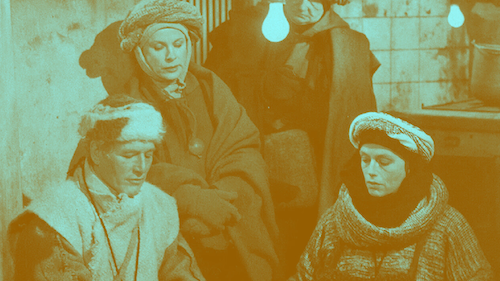
29. Quintet
I love when set-in-their-ways directors try something different, so an apocalyptic drama like Quintet is admirable at least a little bit in its efforts. Unfortunately, that doesn't prevent this Paul Newman vehicle from feeling like a complete bore that saunters about and doesn't say too much outside of its surface-level depictions of humanity caving in on itself during an ice age. At least worse Altman films have some sort of tenacity (albeit too much); Quintet is a chore to watch.

28. Kansas City
Altman's films always have an attention to detail; this precision can be found even in his worst films. Kansas City is a breathtaking achievement in recreating prohibition-era Kansas City (of course), from the jazzy score down to the meticulously reconstructed setting. The problem is that Kansas City feels over long (even at under two hours) and drawn out to the point of taking this crime drama down to the pace of a car with all four tires slashed. At this point, I'd start recommending films for the biggest Altman obsessives and Kansas City would be one of them; it isn't a disaster, but it is definitely not as good as it should have been.

27. The James Dean Story
Altman's second film was a co-directed effort with George W. George. A standard documentary rushed out due to the tragic passing of its titular star (as a means of consoling a devastated nation while the fire was hot, I suppose), The James Dean Story is as bare basics as documentaries get. You won't see much Altman magic here, but you do get a mediocre documentary that tries its best to depict the devastation surrounding who was supposed to be a future megastar (and, in ways, achieved that expectation). I'd suggest watching this only if you love Dean or want to finish watching every Altman-related film, because there are more resources based on Dean's life and passing that are reliable, and there's barely a hint that Altman even worked on this.
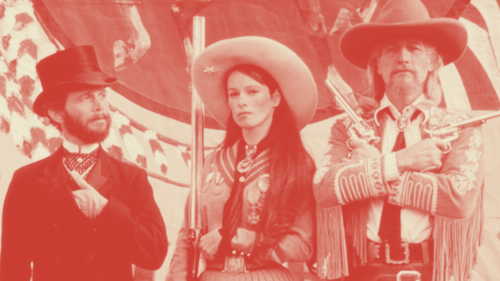
26. Buffalo Bill and the Indians, or Sitting Bull's History Lesson
While Altman has tackled the western genre before this point, Buffalo Bill and the Indians feels like a more head-on satire of the genre (and, to be fair, his worst go at such an attempt). While as aimless as it is overlong, there is something at least a little graspable here regarding Altman's views on the hypocritical heroism found within American history; it could have been depicted in a far better way, of course. The film maybe shines in brief moments but otherwise feels like a lengthy ordeal instead of a captivating affair.

25. That Cold Day in the Park
Altman's first film felt like a bit of a step in the right direction for the auteur, but he was still rough around the edges. That Cold Day in the Park is a visual and aesthetic treat but Altman wasn't able to properly figure out how he wanted to deliver the existential, psychological quandaries present. I do believe that the slow burn here is worth the wait, though, and, while That Cold Day in the Park is far from a slam dunk, there are signs of a director figuring himself out; something he would fulfil just one film later than this one.

24. Popeye
I know this film is ranked low enough for my statement to not make sense, but I feel like Popeye is at least partially misunderstood. I think it is excellent as an object. Here is Altman's take on a franchise film done in his typically satirical and naturalistic way, and in that way the film is a revelation. Why do franchise films have to conform to the same bombastic and macho nonsense that has been the mold for decades? Here, it feels like we are following the titular sailor around; that Altman sheen is quite something here. Then again, Popeye is still a bit of a misfire with some moments that feel like they are simply too much to bear; as a film, Popeye can be a little headache inducing. Even so, the effort is commendable and I, oddly enough, respect Popeye because it shows what can be done (but not necessarily how it should be done).

23. Fool for Love
Altman narrows things down in Fool for Love so that his usually large-scaled efforts could now reside in the minds of its characters. It doesn't really do its job well, but we do have the presences of stars like Sam Shepard, Kim Basinger, and Harry Dean Stanton to work off of; some credit should go to Altman for these intriguing performances because the filmmaker was certainly an actor's director who knew how to get the best work out of his stars (even in films that are as mediocre as this one).

22. Dr. T & the Women
The first film Altman made for the twenty-first century is the highly strange Dr. T & the Women: a film that stars Richard Gere as a gynecologist (because, why not). What is meant to be a romp and a character study of this specialist winds up being a sillier take on, say, Federico Fellini's 8 1/2 (well, at least the subplot about the many women who frequent a protagonist's life, I suppose). I wouldn't call this a great film but, compared to many of the weaker Altman films, at least this one is cohesive enough to simply call it a middling one.

21. A Wedding
What happens when there is a wedding involving a fortunate estate and a mere truck driver's daughter is marrying into this prestigious family? Calamity, of course. What works best for chaos? A huge cast and unhinged talking. A Wedding feels like a match made in heaven for Altman, but the film remains only so-so: a slightly comedic, effective, and engaging affair that may not stack up with his greatest works (but it at least matches what is expected from his style and caliber, even if slightly).

20. The Gingerbread Man
While a better film than its name implies (I don't know if I've ever been frothing at the mouth to go see a legal drama called The Gingerbread Man), this is a relatively by-the-numbers thriller that gets elevated by Altman's style. What could have been a droll, dreary film is now instead full of at least hints of personality; the kinds of flourishes that separate everyday people apart, the aesthetics of nature that hang over your head on a particularly rough day, and the oddities that can only be found within difficulty. As a result of Altman's oomph, The Gingerbread Man is actually okay.

19. Come Back to the Five and Dime, Jimmy Dean, Jimmy Dean
We are now entering the portion of this list where every film from this point on is worth watching, even if on a whim. As if Altman was destined to return to one of his earlier films (that James Dean documentary), this dramedy about honouring the twentieth anniversary of the actor's death, known affectionately as Come Back to the Five and Dime, Jimmy Dean, Jimmy Dean, is a lovely adaptation of a Broadway play whose entire cast commit to the film version as well (including the likes of Sandy Denis, Cher, Kathy Bates, and Karen Black). Introspective and emphatic, this well-acted film shows what unites all of us, be it the grieving over an icon or the peculiarities that we thought were only akin to ourselves.

18. Images
Altman dabbled in horror, too, and the end result, the psychologically strenuous Images, is quite something. While this feels more like a starting point of what could have been an illustrious career in the genre (thankfully, Altman didn't limit himself to just one), Images is still worthwhile because Altman makes each and every moment count to the point that you may feel it in your bones. Shots linger. Hallucinations trespass. Emotions run high. If you thought that Altman was naturalistic just by what we can observe of the world around us, he was also able to capture the flurry of thoughts of a plagued mind; I am glad that this film is getting its dues now (after a lukewarm reception upon its release).

17. Streamers
M*A*S*H wasn't Altman's only war film. There's also the more serious Streamers that feels like a dialed-down Broadway play found within a heated discussion with soldiers waiting to be shipped out to Vietnam. When men are being sent to kill others in the name of their country, they are seen as defenders of their nation. However, our four characters begin to learn about the nation that they are supposed to defend, including the intolerances that still run rampant in society. Not the easiest watch in Altman's filmography, Streamers is able to nail the extremities of wartime and the prevailing of hatred that goes unchecked by a nation in this confrontational drama that wasn't afraid of being progressive and looking ahead.

16. Vincent & Theo
One of Altman's more underseen films is this biographical epic, Vincent & Theo: an artistic odyssey surrounding Vincent van Gogh's personal tribulations alongside his doting brother, Theodore. While we are graced with the knowledge that Gogh's artwork went on to become some of the most adored in all of art history, the film tells us some information we already know: Gogh struggled mentally and financially. Vincent & Theo goes the extra mile with inviting us into Gogh's mindset and surroundings during these rough times, thanks in part to a devastating performance by Tim Roth as Gogh. Altman takes this premise and allows us to truly feel like we are beside Gogh, trying to assure him that all will be okay, and shredding our hearts when we, like Theo, cannot get through to this genius painter who never feels at peace with the world. Don't sleep on this one, folks.

15. Cookie's Fortune
Coincidentally released the year after The Gingerbread Man (heh), Cookie's Fortune is a far-better effort that involves the title geriatric's unfortunate death (and the many events that transpire afterward). Despite the somber subject matter, this is quite a fun ride by Altman: an exploration of morality and justice by using the kooky characters of a town gone rampant. There are enough turns as well to keep this comedy interesting even in a narrative sense: you ask yourself what will transpire and if all will end as it should. Altman has made crime cinema before, but with Cookie's Fortune, danger and drama become riotous amusement.

14. Brewster McCloud
Overshadowed by the success of M*A*S*H was a humble little film of an Icarusian nature called Brewster McCloud: a strange flick about the title character wanting to build himself some wings to fly. While Altman had an affinity for taking popular genres and subverting them, it was great to see him soar with his original ideas as well, including this black comedy that still doesn't feel like anything else. That's thanks in part to the ADHD nature of the film, with so much happening that it's easy to feel flustered (that's precisely the point); unlike Altman's weaker films, he is able to orchestrate the madness here unlike many others could even dream of. The end result is such a quirky, unusual film that entertains as much as it will break your heart, and I am chuffed that people are coming around to this film (maybe it was too ahead of its time).

13. The Company
Altman made so many films that at least a couple can be deemed critically underrated. Such a film is The Company: one of the great ballet films. Altman's penultimate effort successfully plants us within the hustle and bustle of a ballet troupe amid their rehearsals and recitals; Altman feels like a disciple of the Archers with how well he captures performative art here. We get to know our players as well, adding context and life to their dance-based sacrifices as to allow these numbers to now feel cathartic. This is simply a sublime film about the arts that simultaneously places you amidst ballerinas and the audience admiring them. How The Company is so slept on, I do not understand.
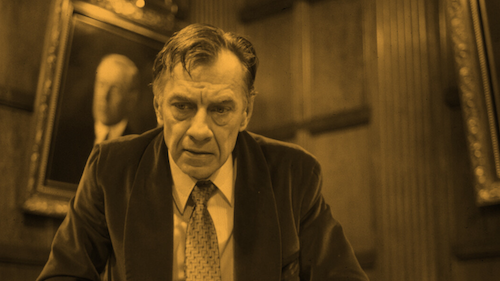
12. Secret Honor
Altman was known for his all-star casts that defied the odds. Then, we have a film like Secret Honor which spotlights literally one actor for the whole motion picture: Philip Baker Hall's ninety-minute monologue as President Richard Nixon during his darkest hour. What a commanding performance in an even larger film this is. Here, there is no other chatter to break the tension between Nixon and his own dark thoughts. We have a public figure contemplating the odds after a life of deception and the explosion of a nation after his greatest scandal. Altman is able to relay his political concerns through a self-doubting vessel of a president who understands that his days in office and on Earth are numbered; the regret and guilt is immeasurable.
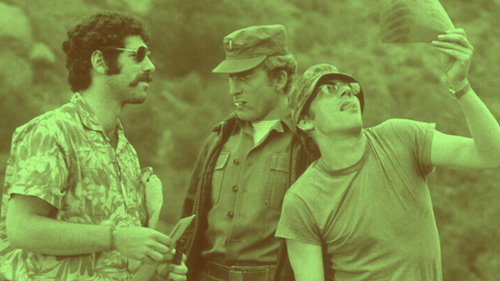
11. M*A*S*H
This is where it all started for Altman. As to not incur the wrath of many of you, I will not go deeply into how I feel like Altman has bested this film or how I prefer the television series, but I do think that M*A*S*H was a major breakthrough for Altman for many reasons. Who knew that military life could be lampooned so effectively while the gravity of war was still treated seriously? Altman appears to insert his trauma and reservations after serving in the Air Force in this genre-bending romp that set the stage for what American cinema could be. Much has happened since that I am appreciative of, but I don't know how many of these works would have existed without a film as daring and unashamed as M*A*S*H to show the possibility. This is still a great film that broke ground for Altman and the New Hollywood movement.

10. A Prairie Home Companion
Altman's final film is painstakingly exquisite. A love letter to the radio show of the same name, Altman creates a backstory for the many different voices that permeate the airwaves during one of these broadcasts; what is the story behind these folks? One last all-star session, Altman's cast — with the sense that this could or would be Altman's swansong — give this motion picture their all through comedy, drama, or musical brilliance. When we watch the performances take place, we almost block out what we see, as if the crisp sounds of the broadcast are what we are actually hearing (and the film's visuals are what we are envisioning, not what Altman is blessing us with). As sad as the whole film is in hindsight, it's always nice to see a filmmaking great go out on a high note, and A Prairie Home Companion is evidence that he was damn good at his job and that his absence is a massive void in cinema.

9. California Split
When gambling films are done well, they can be exhilarating; we can live the highs-and-lows of big moves and bigger personalities without having to worry about our own safety and finances. California Split is not a good film about gambling; it is an excellent one. We have a pair of high rollers, played by George Segal and Elliott Gould, who connect over their addictions; the choice to have two protagonists allows us to see the different outcomes of such an obsession. We have the difficult farewell, and we have the inability to quit. The severity of both are shown in California Split: a film presented as though we have stumbled upon these people out in the wild and cannot take our eyes off of them (due to either their successes or their downfalls).

8. Short Cuts
A winner of the Golden Lion from Venice International Film Festival, Short Cuts is a fascinating hypothesis. Altman has a number of films with massive casts, correct? What unifies all of these people? It cannot be chance, can it? Well, let's say that it is. Short Cuts has many storylines that weave in and out of each other that don't appear to lead up to anything as a whole (but we remain so invested by their individual courses). Then, it happens: an event towards the end of Short Cuts that unites every featured person in a highly unexpected way. In the way that all involved with tragedy are special, everyone gets reduced to a statistic. Short Cuts is an ambitious means of allowing everyone in a freak accident to matter, as if we have known them all our entire lives. Paul Thomas Anderson would recreate the success of this film with his sensational feature, Magnolia (it's a terrible thought to think that film would have never existed if Short Cuts didn't prove that it could).

7. Thieves Like Us
If Arthur Penn's Bonnie and Clyde invited us into a gang in an explosive and visceral sense, then Altman's Thieves Like Us made this integration feel more humanistic and organic (without losing any sense of the danger). Altman paints a slow-burning portrait of an America that has citizens resorting to desperate measures during hardship, as well as those who engage in crime simply because they find entertainment in misery and thrills in immorality. With a central performance by Altman veteran Selley Duvall as Keechie (perhaps her strongest acting in her whole career), we also see an outlier being invited in to the criminal circle in the same way Altman's films subsume us into realms we would otherwise know nothing about. Thieves Like Us is more than a film you watch; it's one you feel in the pits of your mind, as if it were an unearthed memory of regret.
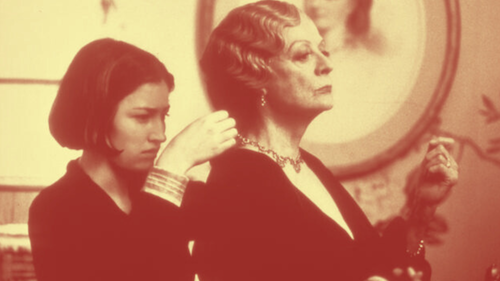
6. Gosford Park
Egads! There's been a murder! Gosford Park is such a fascinating entry in the whodunit genre because it does so much more than present a fatal case and ask us, well, who done it. If anything, it almost feels barely like a murder mystery because life seemingly exists before the reveal and it most certainly exists afterward as well. We get to know so many different walks of life in this British country house dinner party, and seeing how this murder plays out in the grand scheme of things is deliciously fascinating. Furthermore, the shocking decision that all continues even after such a tragedy is the biggest twist; the world will never stop for us, whether we get caught up in the thrill of it all, get lost in our daily routines, are stuck in a role that forbids us from ever progressing, or, simply, die. It may seem like Gosford Park is playing it safe by not being so invested in the central crime, but I beg to differ; has there ever been a whodunit as bold as Gosford Park because of how much it revels in all that surrounds the death and not just the death itself?
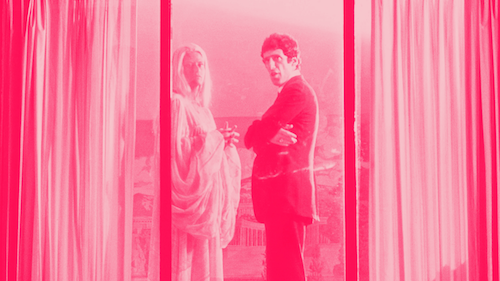
5. The Long Goodbye
Film noir felt like the mythology of the criminal underworld. Neo-noir wasn't any different: these were untouchable figures in realities most of us would never dare face. Altman's The Long Goodbye takes Raymond Chandler's novel and allows us to exist within it; at times, it almost feels like a cinema verite approach to following a gumshoe (the iconic Philip Marlowe, also of The Big Sleep fame). Due to how personal this film feels, we feel inches away from danger at any given turn; the startling backfires that transpire happen when are lulled into an accepting surrender, so we feel like we are way too close for comfort. In that same breath, the potential pretension that noir films carry is gone here as well; when a character is being clever or facetious, it feels like a person shooting the shit and not a literary archetype coming to life. The Long Goodbye dials back the style of one of the most stylized genres and instead allows us to be one with the mystery, the sacrifice, the devastation, and the gratitude for getting through the darkness.
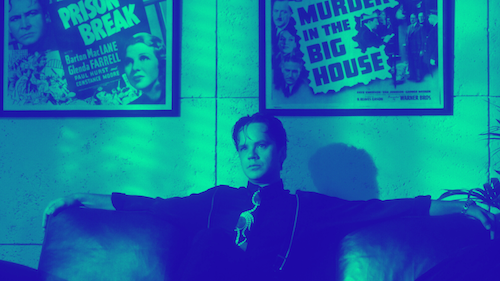
4. The Player
I adore films about filmmaking, and The Player is one hell of a love letter to cinema (as well as a furious comment on the hypocrisies of the film industry). While boasting one of the largest casts of all time (there is a furious flurry of cameo appearances, to create the sensation that you have stumbled on the Hollywood strip and are literally walking past these A-listers), there is a delirious crime that takes place and causes a shakeup. Sandwiching this event is a breathtaking opening (a long one-shot that is such a dazzling achievement to behold, showcasing the magnificence of the magic of film before we see its industry being ripped to shreds) and an equally jaw-dropping ending: the idea that, sometimes, the worst people do get those Hollywood endings that seem impossible in the movies. To watch The Player is to understand a director who knows how what all of the rules are and is just actively defying them nonetheless; it will make you love film but maybe also hate what comes with the territory.

3. 3 Women
One of the many films inspired by Ingmar Bergman's Persona, Altman never made a film like 3 Women before or after. This is a full-on psychological, avant-garde onslaught that subverts even the master of subversion. Told via lush lavenders and hints of daffodil yellow, we follow Millie's daydream that blends her reality, history, and subconscious together into a tapestry of memory and yearning. In the same way Images takes Altman's ability to create a converged tapestry of sound via the sounds of many people, 3 Women utilizes that same woven blanket but through the thoughts of a confused mind, creating a fog within one's own provenance and curiosity. The film is a stunning achievement in depicting the beauty of a person even within the confines of their own cursed, mental prison; we understand the exquisiteness of Millie even if she is incapable of understanding it herself amidst her miasmic labyrinth of a psychedelic fever dream.

2. McCabe & Mrs. Miller
By 1971, the western genre was basically dead. Who needed to see the same stories about the lone gun slinger and the wild west again and again and again? Altman understood that we were tired of repetition, not the genre, and he dared to revisit it with McCabe & Mrs. Miller, as two vice-driven spirits collide and aim to create a new life for themselves and their powers (how's that for a depiction of the upbringing of America?). As we are so comfortable in the presence of these characters (and the crooning of Leonard Cohen whose songs are proliferated throughout the motion picture), we feel at home even amidst the heaps of sin; it's at this point that we understand how wild the west can truly be, when it feels close to home and when we are at our most vulnerable. By revisiting the genre, Altman wanted to breathe new life into something the masses were quick to dismiss as stale and no longer fashionable. Even if unintended, Altman responded with one of the greatest westerns of all time.

1. Nashville
Now this is how you go big. Altman takes the concept of a five-day country and folk music festival in Nashville and creates the ultimate American experience. We become ingratiated with so many different walks of life, from musicians and patrons to those in politics (including a candidate who we never even see; yet his presence looms over the entire film). For three hours, what initially feels like an audacious task (to follow all of these various people's plot threads) becomes a seamless journey. If anything, Nashville somehow becomes a linear exercise: just one that exists vicariously through all of these characters. America is a constantly driving force that can never be stopped. In that same breath, life will never slow down either. All we can do is what we feel is important in the moment. For some, it is to create music. For some others, it is to experience those who create music. Country and folk are the songs of everyday people putting their souls on display; you see that in full effect here, even if used via deception (the "I'm Easy" song sequence remains one that brings me to tears every single time, even if I know the ruse; that is the power of art).
As long as the film is, it is its ending that feels as impactful as everything that came before it: a twist of fate that incorporates all that precede it and all that will come after. The ultimate tragedy takes place, and we are encouraged to keep on going through it all. This is as bittersweet as finales get: a gorgeous moment with the underlying atrocity that we cannot shake off. How truthful is art if it is frequently used to distract us; to sell us something; to invite us to vote certain politicians; to not allow us to truly feel? There are those who use art for good, and those for bad. Nashville depict both, as it celebrates the earnestness of true artists while spotlighting the deceivers. In that final sequence, we see a nation sing along and unite amidst hardship but, in that same breath, I can never shake off the insanity of what is being essentially brushed off. Art is both a blessing and a curse in Nashville, and not many films have ever pulled off this mentality as effectively as Robert Altman's masterpiece: a multifaceted look at how together and separated we all truly are. At the end of the day, the world may not care; as the final song states, “It don’t worry me.” When it comes to the film Nashville, however, no one can help but watch in complete awe.


Andreas Babiolakis has a Masters degree in Film and Photography Preservation and Collections Management from Toronto Metropolitan University, as well as a Bachelors degree in Cinema Studies from York University. His favourite times of year are the Criterion Collection flash sales and the annual Toronto International Film Festival.