
Filmography Worship: Ranking Every Alain Resnais Film
Written by Andreas Babiolakis
Filmography Worship is a series where we review every single feature of filmmakers that have made our Wall of Directors

Though not directly affiliated with the French New Wave movement, director Alain Resnais still feels like a major figure of this cinematic style; he is closer linked to the postmodern ways of the Left Bank movement. Nonetheless, I consider Resnais a vital figure in French cinema nonetheless, no matter what label you wish to give the auteur. Starting out as a film editor at a young age, Resnais became familiar with the practice of piecing together information to find some sort of semblance and structure. This would lead to the style of art that Resnais was first – and most – affiliated with: experimental pictures that evoke the sensation of the loss of memory, and the efforts taken to try and create a fuller picture with fragments of time; these could be through shared nostalgia, surreal recounts, or misleading recollections. This would also guide Resnais to the heavily-effective purpose for using shards of evidence to remember something in the form of the shocking short film Night and Fog (a documentary that is compiled of footage from the Holocaust as an effort to never allow viewers to forget about the monstrosities committed in concentration camps). Resnais fought in the war for France in 1945, so this was a subject he had first hand experience with. It remains one of the most powerful films of all time (short or feature).
This is the Resnais that many cinephiles know and love. I have learned that there is a whole different kind of Resnais that is not often discussed whatsoever. After completing his filmography, I have become acquainted with the far softer and conventional side of Resnais’ oeuvre: one that is comprised of romantic comedies, dramedies, and even a musical. Many directors may start off with conventional ideas and hope to experiment more with enough experience under the belt, but Resnais almost worked in reverse by getting the majority of his challenging works out of the way before aspiring to find comfort within cinema. He was pulling from other sources outside of film, including – and especially – the theatre scene during this phase of his life. I suppose you could argue that he was still experimenting even in his most mainstream era when you look at his filmography in this way.
When it comes to ranking his filmography, I believe that Resnais’ short films must be included, considering how crucial a number of them are to his status as a pivotal filmmaker. Naturally, I cannot include any of his lost short films, but I will also refrain from including any titles that are partially found. However, any works that he co-directed will be added to this list, including his collaborations with fellow master Chris Marker. While it may be obvious that Resnais’ early period greatly surpasses his later years, I still think going through his entire journey is worthwhile; if you are new to his films, I would recommend maybe starting with my top picks before exploring anything else (despite how more digestible his weaker films are; I do think it’s worth seeing Resnais at his strongest and least conventional). Here are the films of Alain Resnais ranked from worst to best.
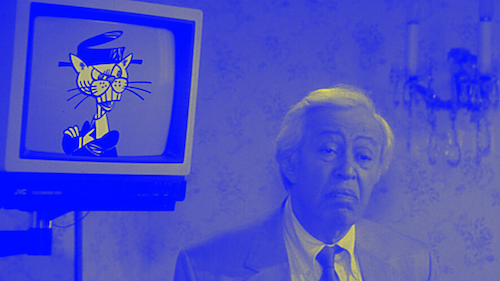
25. I Want to Go Home
I Want to Go Home might not be quite as bad as its reputation once stated, but it is still Resnais' worst film. This nutty depiction of French comedy in the form of a cartoonist -- where you essentially see his concepts "come to life," in a sense -- is a little too silly to take seriously, but not funny enough to work as a complete goof fest. As a result, its motivations feel confusing, and the end result doesn't quite make sense, no matter how hard Resnais tries; this is, simply put, a misfire (even though it has a sincerity to it).

24. Pas sur la bouche
Resnais tried to merge American and French audiences on numerous occasions (mainly during his more conventional years), and such an effort is Pas sur la bouche): a fluffy musical that apparently has its cult audience (I, sadly, am not a part of it). Even though there is some semblance to this light opera, I found it flat and typical enough that -- despite the music-based nature -- it is not memorable to me in the slightest. I'm not sure which mainstream audience or nation Resnais intended this for, but, for me, it just doesn't work as a pedestrian film (and especially not as something provocative or challenging).

23. La vie est un roman
As I always say, I am not a huge fan of anthological films unless they are done really well; the idea of having a parade of short films that stop-and-start is one that confuses me a little bit. While La vie est un roman isn't quite an anthology film, it is still a mashing of stories together into one final product. If I am iffy about these kinds of films in general even when they are decent, how should I respond when such a film is substandard? La vie est un roman is, essentially, a sillier counterpart to the far-superior Mon oncle d'Amerique: a triptych that is meant to blend three lives into one holistic study. With La vie est un roman, we get three incomplete studies that amount to very little outside of a smidgen of purpose. At least there is a fantastical element to the stories here, but what good is being fleeting when there isn't much ground work to pull from?

22. L’Amour à mort
This look at love and death (hence the name) is meant to be a genre-bending affair (as our protagonist passes away and then comes back for a mysterious second chance at life), but it instead just feels a little flimsy. You can see how much effort Resnais puts into a film that could otherwise feel like a basic affair, including a heavy focus on colour schemes (black and red, mainly) and aesthetics, but that doesn't prevent L'amour à mort from coming off as somewhat bland.

21. Cœurs
Cœurs is an ambitious affair, with so many short stories on love and heartbreak being smushed together. Having said that, the idea is greater than the execution. I want to appreciate what is going on here, but I feel like all of the stories come off as just fine or decent, holding back the experiment from ever feeling greater than "passive." It won't hurt you to watch Cœurs, but I'm not sure if it will leave much of an impression on you at all.
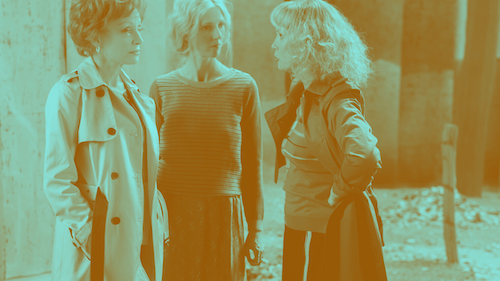
20. Aimer, boire et chanter
Resnais' last film, Aimer boire et chanter, is almost like his All That Jazz: a final hurrah that acknowledges that the filmmaker who made their film is unwell and knows that time is precious and short. Bob Fosse's film is a masterpiece, but Resnais reveals something that he was missing for quite some time in the later periods of his career: a reflection on memory and mortality. While not his strongest effort, Resnais gives Aimer boire et chanter everything he has, and -- as a fan of Resnais -- I cannot help but feel at least a little touched by this reflection.

19. Les Herbes folles
I can see why many don't like Les herbes folles: one of Resnais' last films, produced when he was an astounding eighty-seven years old. It may feel shallow and whimsical compared to Resnais' greatest efforts (then again, why wouldn't most of his latter-period works suffer that same fate?). For me, Les herbes folles is lighter, yes, but with a keen cinematic eye that only a cherished auteur could muster. This filmic wisdom makes this quirky analysis of life feel instead like an applicable artistic statement; an imperfect one, but with enough emotional and comedic notes being hit that I can hear the song Resnais was trying to compose nonetheless.

18. Vous n'avez encore rien vu
Resnais' penultimate film, Vous n'avez encore rien vu, involves the commemoration of a dead playwright; a clear sign that Resnais was looking back on his career. While his final film, Aimer, boire et chanter, tackles a similar concept, I think this previous attempt succeeds more because of how well Resnais understands the notion of how an artist's legacy will grant them a second life once they pass (and the impact art can have on the lives of millions). This leaves a bittersweet end result for me; it's sad knowing that -- clearly in his late eighties -- Resnais was aware of what was to come, but knowing he lived a full life and could release something as self-aware as this before it was too late is quite beautiful.

17. On connaît la chanson
By 1997, Resnais was clearly in the middle of his romantic-film period. As seen in the above entries, he has enough efforts that simply did not work for me. However, On connaît la chanson is an attempt that works because of how effortlessly Resnais turns everyday lovers into icons under the banner of the stars above. Driven by the power of music and adoration, On connaît la chanson is a firm understanding of what movie magic feels like. While Resnais was a master of making far more complex films early in his career, seeing him have a firm understanding of what makes feel-good films tick is quite a treat as well.

16. Stavisky…
Maybe Resnais was always destined to make conventional pictures, considering that he flirted with the idea back in 1974 with the biopic Stavisky... (about financier Alexandre Stavisky, known for the Stavisky Affair and his notorious embezzlements). The title role is played by French legend Jean-Paul Belmondo in a sensational performance, and Resnais' attempt to subvert what a historical picture can be isn't quite as daring as you may imagine; it is, however, fixated on the act of recollection as opposed to pretending to bring these characters to life via the art of sterile, cinematic reanimation (like so many biopics are guilty of). Stavisky... plays ball, but it also knows how to be personal enough to Resnais that it comes off as at least a bit more inspired than your typical historical drama.

15. Van Gogh
Van Gogh might be simplistic in design: a documentary short that is literally just the capturing of the Dutch artist's paintings. Sometimes, that's all a documentary needs to be. Resnais would do an even better job at depicting the power of fine art with another short (more on that later), but Van Gogh is more than just a visual art gallery: it's an appreciation of how the human eye works in response to something masterful. Is Resnais' camera placement and movement how we would respond to the works of Van Gogh? Does his helping hand aid or hinder our appreciation of these works? There is much to say here without much being said at all.
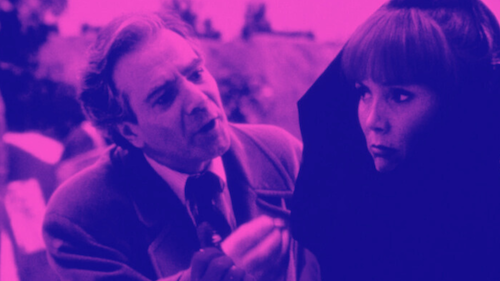
14. Smoking/No Smoking
While Resnais had an affinity for depicting memory and the act of recollection in his films, he rare touched upon the cause-and-effect scenario of what can happen (and not just what has happened). Smoking/No Smoking is such an interesting concept, with a series of short stories that intertwine with the hypothetical, surrounding characters played by our two lead stars (Sabine Azema and Pierre Arditi). As if we are accessing parallel dimensions or alternate timelines with these two souls (despite playing different roles), Smoking/No Smoking is how you find unity within separate vignettes (unlike, say, La vie est un roman), and a depiction of how, sometimes, there is an inexplicable fate that binds us.

13. Guernica
Film can just be the simple act of pairing image and sound. With Resnais' Guernica, we get the iconic painting by Pablo Picasso — as well as some additional pieces by the Spanish master — matched by poetry and music, creating a stirring version of the aerial bombing of Guernica during the Spanish Civil War. I get why it may seem redundant to explain one person's perspective on how a painting should read, but I appreciate Guernica as something else: a statement on how the reciprocation of art can be art in itself; this elevates all of our understandings of media into something quite exquisite (Resnais was always the champion of how beautiful — yet damning — memories can be).

12. Le Chant du styrène
This may seem pretentious or idiotic to some, but I am a big sucker for well-made experimental films that turn ordinary processes into something profound. Le chant du Styrène is, in a sense, nothing more than a documentary short meant to promote the use of plastics — commissioned by Pechiney. There is a concerning side to all of this (obviously), but Resnais renders the opportunity magnificent with a fixation on the art of industrialism (as if there is a technical marvel to be respected here); Resnais uses the act of filmmaking to turn a dull advertisement (of sorts) into a cinematic spectacle full of poetry and rich cinematography. Now this is the power of a strong filmmaker who has a clear passion for the medium.

11. Mélo
Memory is far more than how you piece yourself together (your identity is comprised of your history and what you recollect from your past experiences); it is also how you are remembered (how else will you continue to live once you are gone?). Mélo takes the complexity of reality — in the form of a complicated romance — and pairs it nicely with the sculpting of legacy in the name of respecting the dead. Of course, there may be dishonesty in such an act, but Resnais finds meaning in painting the best picture of a loved one. Additionally, Mélo as a film takes on a meta purpose by showing us both the actuality of events and how they may be rendered after the fact; what does this cohesive union between the two mean to us as outside viewers peering in? Mélo takes what could have been a standard romantic drama and makes something exquisite instead.

10. Toute la mémoire du monde
If memories are our personal archives of our own existences, then an archive is a treasure trove of memories. Resnais uses his documentary, Toute la mémoire du monde, as an opportunity to celebrate the importance of institutions like the Bibliotheque nationale in France: a gorgeous library that is one of the primary sources of information in the nation. Resnais represents this structure with respect and grace, turning the very idea of preservation and academia into a fountain of artistry and meaning. Toute la mémoire du monde is a different kind of a city symphony picture, and a beautiful one at that.

9. Providence
An international director's foray into English-language cinema doesn't always work out in their favour; I don't need to go into the plethora of examples that were failures. However, Resnais' Providence is a home run. This lush depiction of an author's family while he is slowly dying is a great take on how we often scramble to piece together what our life's purpose is until we are at the end of it; Providence connects together seamlessly as it continues forth, tying together history, the present, and the future in such a sublime way. Resnais' frequent concepts on time, memory, and belonging translate very nicely here.
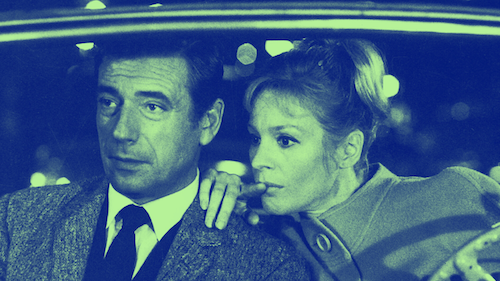
8. La guerre est finie
Even though Hiroshima mon amour was Resnais' breakthrough film and his short film, Night and Fog, also tackled what the war could do to humanity, he strangely didn't tackle the war genre as frequently as you may think. One exception is La Guerre est finie: a film about a communist in the Francoist State after the Spanish Civil War. An effort to show the futility of war in the grand scheme of things while also paint a layered picture of a nation in peril, Resnais' film is quite compelling especially given how frequently the director fixated on looking on things in hindsight; how can we move on from a past war if we continue to suffer?

7. Statues Also Die
A joint effort by Resnais and both Chris Marker and Ghislaim Cloquet, this haunting essay about colonialism in Africa and the impact made on traditional Sub-Saharan African artwork (mainly masks and sculptures) is quite the study. Filmed in such a way as though the pieces we are looking at were once alive and are now vessels of time and memory, Statues Also Die is an urgent call to artists to continue to make rebellious and true art, even — and especially — in the face of opposition. This documentary short will leave you feeling like you are in the museum of a limbo state; artifacts, like memories, will remain frozen in time if handled properly.

6. Muriel ou le Temps d'un retour
Resnais teamed up with writer Jean Cayrol once again after Night and Fog to create the underrated feature film, Muriel ou les Temps d'un retour (to be fair, it was his third film and had quite the acts to follow in the form of Hiroshima mon amour and Last Year at Marienbad). Considering how frequently Resnais made films based on nostalgia and remembrance, here he takes a war-torn society and renders it traumatized by the pasts that cannot be escaped. I'm not sure if Muriel is meant to help viewers cope with their own demons, but it at least leaves us feeling seen: the ability to remember is both a blessing and a curse in this poetically crushing feature.

5. Je t'aime, je t'aime
On the topic of another underrated Resnais film, we have Je t'aime, je t'aime: the sole time that the typically experimental director actually channeled the science fiction genre. Resnais takes the concept of time travel and does something that most other directors neglect: focus on how it would affect our minds. See, other filmmakers are more interested in how the act of time travel would affect the past, present, or future, but Resnais is more interested in how it would fragment one's mind and sense of self. Throw in the theme of mortality in there, and Je t'aime, je t'aime becomes a glorious look at our earnest yet feeble understanding of time as a construct — as well as our best efforts to contextualize what our mind archives and how our perspectives function (even against us).
4. Mon oncle d'Amérique
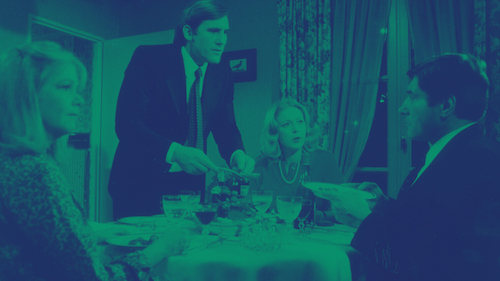
Oddly enough, Mon oncle d'Amérique was my first Resnais film; I was a late teen going through critic Richard Corliss' top films of all time list for Time magazine (rest in peace, Richard Corliss; thank you for the many fantastic recommendations). Before I had any exposure to Resnais' other films, I was ripped apart by this study of three individual people and how their lives are similar based on the commonality of human behaviour. Turning intellectual people into the kinds of studies they would partake in is such a brilliant move, rendering Mon oncle d'Amérique a peak example of academic, philosophical cinema; Resnais tries to get scientific with this study on the human brain, but he once again resorts to the fascinating realization of how impossible our minds are to figure out or portray (yet Resnais remains one of the best to even try in all of cinema).

3. Hiroshima mon amour
Resnais' breakthrough feature film is a collaboration with the cryptic writer Marguerite Duras; together, their marriage between cerebral cinema and reflective screenwriting made Hiroshima mon amour. Essentially a conversation that surpasses any conventional means (between a French actress starring in an anti-war film, and the Japanese man she is seeing who feels differently about war), Hiroshima mon amour becomes an intellectual debate matched with stirring images and equally-riveting performances (by Emmanuelle Riva and Eiji Okada). If you ever have a debate with someone for a long period of time, you can almost sense the images and feelings this film conjures up; Resnais and Duras have captured the peculiar electricity in our brains and the passionate chemistry in our hearts and perfectly replicated how both operate in Hiroshima mon amour.

2. Night and Fog
Two of the greatest documentaries deal with the horrors of the Holocaust. One is the nine-and-a-half hour opus, Shoah. Resnais' short film Night and Fog is only thirty minutes by comparison; and yet Night and Fog feels just as long. This is due to the punishing nature of what Resnais shows in his upfront, confrontational documentary that takes irreputable images to show us the hell that millions of people suffered during the Second World War. To be even more effective (if that's possible), Resnais cuts to the present throughout Night and Fog to not only create a dichotomy between the current and the past, but to remind us that what happened during the Holocaust is more than just a memory of horrific events: it is a possibility that this could happen at any time. Resnais' film was only a decade after World War II; seventy years later, we need his documentary of harsh truths more than ever as we still experience genocide and hatred of such magnitude.

1. Last Year at Marienbad
You get the idea already by the thousandth time that I have said it: Resnais was fascinated by the unpredictability and reflection of memories. While he has numerous films that have captured this ever-intriguing concept, he never beat his second feature-length attempt at showing the art of memory on the big screen. If anything, most directors couldn't top what Last Year at Marienbad accomplished. We follow a pair of strangers who, apparently, have met before; in Last Year at Marienbad, this could have been in the past, in a different lifetime, or even via an alternate reality. As we revisit the same story again and again through different perspectives, it becomes abundantly clear that Resnais is toying with the particulate nature of provenance: how could we retrace our steps if we cannot recall the order of nature of what they are?
Last Year at Marienbad is more than just an interesting film: it is a breathtaking one. The titular setting feels like a dollhouse stuck in a different dimension and with its doorways acting as portals. Our two leads, played by Delphine Seyrig and Giorgio Albertazzi, are almost like plane-wandering souls who have collided once again in this endless void. As details get murkier upon each revisit, it is clear that Last Year at Marienbad is not a film to be taken at face value. It is a journey to feel, not to decipher. Resnais frames nostalgia in a way that becomes surreal, as if our brain is affected by what our heart yearns for (even if it clouds our memories). While many other psychological films try to explain how we think, Resnais surrenders and accepts that the human mind is impossible to circumnavigate; he also admits that the brain is miraculous and gorgeous as it is, even in a bittersweet way (trauma is as potent as love). Last Year at Marienbad is one of the great cerebral art films ever made, and it remains Alain Resnais' masterpiece.


Andreas Babiolakis has a Masters degree in Film and Photography Preservation and Collections Management from Ryerson University, as well as a Bachelors degree in Cinema Studies from York University. His favourite times of year are the Criterion Collection flash sales and the annual Toronto International Film Festival.