
Filmography Worship: Ranking Every Edgar Wright Film
Written by Andreas Babiolakis
Filmography Worship is a series where we review every single feature of filmmakers who have made our Wall of Directors (and other greats)

A respectable kind of filmmaker is one who feels like they are a fellow cinephile who started making motion pictures in their backyard and was able to make it big. These include do-it-yourselfers like Robert Rodriguez and shoestring budget circumnavigators like Kevin Smith. One of my favourite examples is Britain's Edgar Wright, who was a teenager when he began making films. His independent film, A Fistful of Fingers, is a spaghetti western parody made in the mid-nineties when Wright was just twenty-one years old. While not exactly a masterpiece, this film showed enough of what we needed to see. Firstly, it actually is quite funny, so we got a sense of Wright's inherent comedy chops. Secondly, seeing as this was meant to make fun -- out of love -- of films by the likes of Sergio Leone and Sergio Corbucci, Wright mimics these Italian juggernauts by using extreme close-ups, quick cuts, a heavy emphasis on music, and other important tropes; by poking fun at these well-made films, Wright was learning how to make films well himself.
It would take almost ten years for Wright to return with what feels like his true debut film, Shaun of the Dead: a satire of the then-rising zombie genre. What sets this film apart from other parodies of the time is not just how well written and crafted Shaun of the Dead is, but also how meaningful this film feels; even when it is at its silliest, Wright makes each character matter, each plot point ring true, and even every joke has lasting power. This was more than a goofy time: this was a serious attempt at blending genres (Shaun of the Dead is a horror-comedy and is effective in both ways) and making a new kind of mainstream film. This motion picture could appeal to the masses while not necessarily playing by the conventions of pedestrian cinema.
Shaun of the Dead was just the start in more ways than one. It became the first of the loose Cornetto Three Flavours Trilogy (an obvious nod to Krzysztof Kieślowski's Three Colours Trilogy), with buddy-cop-action-spoof Hot Fuzz and science-fiction caper The World's End to follow. It also preceded a few other crowd-pleasing films, such as Scott Pilgrim vs. the World and Baby Driver. With each film, Wright was expanding what he could do as a director while maintaining the mass appeal of his projects. The music got more eclectic (Wright's personal tastes are all over his filmography). The editing got flashier. The stylish fluidity permeated his films more and more. His reign has lasted so long that we have now reached a moment where we are beginning to see a few cracks in Wright's formula; he is human after all, if it wasn't obvious from his down-to-earth and not-pretentious applicability.
I feel like everyone's list of Wright's films would look different, and I do warn you that this list may not go the way that you expect it to (at least some of it, anyway). I think that his filmography is mostly worthwhile, and even his weakest films have something to offer; I wouldn't say that any of his films aren't fun (his greatest strength). If you are looking to have a good night at home with the right kind of popcorn flick, you can almost never go wrong with discovering a Wright film (a terrible pun that the director would likely scoff at, but I can pretend that he'd find the humour in it). Enough chit chat. Let's make like one of his films and cut to the chase. Here are the films of Edgar Wright ranked from worst to best.
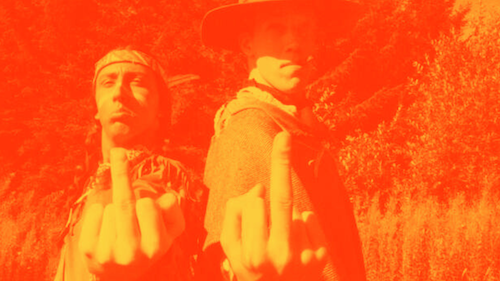
9. A Fistful of Fingers
It feels a little mean to place Wright's very first film, the independent parody film A Fistful of Fingers, at the very end of this list. I'm placing it here mainly because it is unquestionably his most shakily-made film (you can otherwise never really complain with the cleanness of how his films are produced, edited, and paced, I'd argue). Considering that this is a film made by a twenty-one-year-old, I think this film is damn good (it's leagues better than anything I could have made when I was in film school, anyhow). Enough of this spaghetti-western satire makes me laugh as well, but I suppose the other major flaw is that there isn't really much of a story (but, then again, this was made by someone who was almost a kid). For what it's worth, A Fistful of Fingers is entertaining enough, and kind of remarkable given its background. I wouldn't suggest any newcomers to Wright's filmography to start here, but it's not an issue for superfans to seek out.
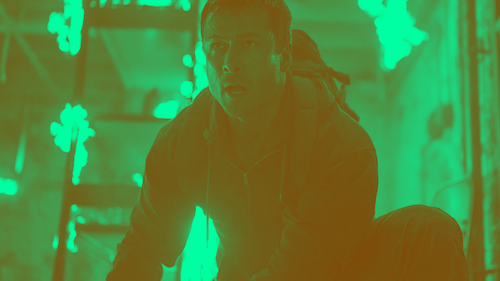
8. The Running Man
I think the most flawed Wright film -- excluding A Fistful of Fingers (which has enough reason to be blemished, given how it was made and when) -- is easily his adaptation of The Running Man: the only time I have ever felt like Wright is only as good as other run-of-the-mill action filmmakers. The film is held back by -- shockingly -- conventional tones and concepts when you know that Wright has it in him to elevate this Stephen King story into something magnificent; it just doesn't come to fruition here. Even if it doesn't reach the plateau it easily should, The Running Man is at least a bit of a ride to watch, but it's the only time that I'd call a Wright film even remotely mindless in this instance; he usually piques your lust for entertainment and your mind (at least in a minor way).

7. Last Night in Soho
I find Last Night in Soho a little frustrating because this could have actually wound up being one of Wright's greatest films. The dramatic and horror notes of this time-travel psychological thriller are quite precise. The sound mix is magnificent. The attention to detail is unreal. But then the ending of the film happens, and it is so illogical that it unravels many of the film's pro-feminist talking points, mysterious twists, and character builds as well. It's a damn shame, because I actually adore what I see in this film otherwise. I will still champion its strengths, but I cannot excuse the horrible way in which this film flubs its landing; I'd still seek out the film to see if the conclusion bugs you as much as it does me, because the rest is spellbinding and effective (perhaps why I get so mad at how it ends).

6. Scott Pilgrim vs. the World
I should be committed to adoring this film as a Torontonian. Jokes aside, I like Scott Pilgrim vs. the World quite a bit, but I can acknowledge that the film is not perfect. I will not be one of those lunatics who have a problem with the title character being such a jackass because I am not under the misapprehension that a story's protagonist has to be likeable or morally just. However, I do think that the film could have been a slam dunk if it focused more on how Scott's self-hatred and personality issues really did pit him against the entire world; perhaps an extra ten or fifteen minutes of character sculpting throughout the film would have sufficed. Otherwise, I cannot deny how much fun this film is. The dialogue and the majority of characters are a riot. The blending of manga and video game tropes is a glorious success that entertains easily amused folk like myself. The mixture of Toronto's music scene and the notion of defeating bosses in a game creates a constant energy. I understand why Scott Pilgrim vs. the World has such a cult following, even if the movement's leader has many unresolved issues.
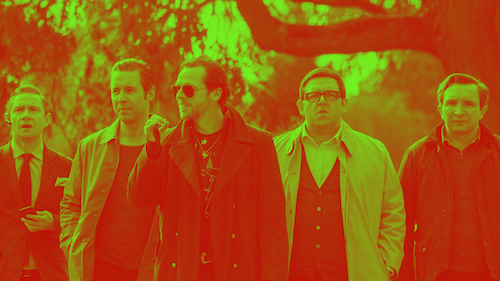
5. The World's End
The weakest Cornetto film is still a damn good time. While Shaun vs. the Dead and Hot Fuzz are much more blatant with what genres they pertain to, The World's End pulls off a great bait-and-switch storyline. We follow reunited old friends after years of divergence and deeply-rooted trauma on a bar crawl, and it takes a good amount of time before The World's End reveals itself as a kickass science fiction romp. If I were to consider this film on its own, The World's End is a strong comedy-adventure journey of self-worth and planetary danger; that is how I am ranking it on this list (as one of Wright's greater films). It only pales in comparison with the other two Cornetto films because of how replayable these other works are; I felt quite content with The World's End after just one watch, but what a smashing time that watch was.
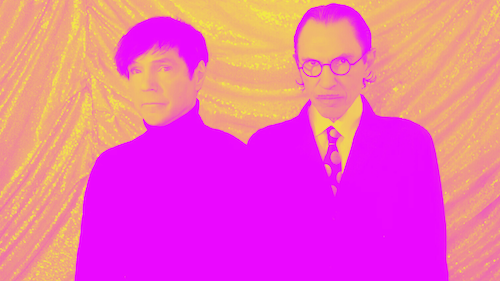
4. The Sparks Brothers
What a match made in heaven. The flamboyant glam act known as Sparks has always had a mysterious milieu to them; they evoke the theatrical, arena-rock compulsions of Queen while remaining quite underrated and underheard (as if they were of a different realm, like the underground scene). It was about time that Sparks was made known to the masses (to be fair, the urgency makes the most sense now given the rise in popularity that the Sparks brothers -- Ron and Russell Mael from California -- have had. Wright's sole documentary (and a sublime one at that) is The Sparks Brothers: a means to introduce us to the enigmatic characters behind some of glam and art rock's most whimsical and colourful albums. Wright's film avoids feeling like a traditional documentary by using his expertise of blending music and film in such a precise way; the homogenic nature of the film turns every interview and piece of footage into a terrific daydream. I'd like to see Wright make more documentaries if he's this naturally gifted at making them.

3. Shaun of the Dead
Don't crucify me. I think Shaun of the Dead is a great film. I think it is an incredible comedy film and one of my favourites of the twenty-first century. I just don't feel the need to rate it above everything else like some do, but that doesn't mean that I dislike it by any means. I think that a major flaw of zombie films is how expendable everyone is, and Wright's keenness to this issue makes Shaun of the Dead so different, especially because it is a comedy; how does a silly film like this have better written characters and story than most zombie films? Furthermore, Wright's token gift to have so many jokes hit you at once is on display with his breakthrough film here, and not once do you feel like you are suffocating from so many attempts to make you laugh (instead, there is a kinetic energy that never eases up). With the explosion of Wright's career alongside some of his favourite collaborators -- actors Simon Pegg and Nick Frost (who star in the other Cornetto films) -- Shaun of the Dead was thankfully not a one-off success: it was the beginning of something special.

2. Baby Driver
Once the Cornetto trilogy concluded for good, it was time for Wright to advance and try something new. While some of his post-trilogy efforts are earnest but flawed, he went right out of the gate with one of his best experiments. It goes without saying that Wright's constant electricity would be perfect in the action genre, but Baby Driver goes so fucking hard. As if you were watching MTV back when it only featured music videos, or listening to a playlist that takes you to different places, Baby Driver is a breathtaking exhibition of how popular tunes can enhance a film (Wright's selections here -- and how he uses them -- are to die for). We follow the title character, who is stuck in a life of crime and wants to break free of his underworld connections. Music and film are often means of escapism for many, and Baby Driver proves that with its protagonist. When the songs line up with the action sequences, we learn that we cannot escape the evils of the world (but what a bombastic time we're having in this dangerous film). Have you ever listened to a song and felt like a superhuman capable of things you'd never dream of doing? Baby Driver makes that sensation into an exhilarating film.
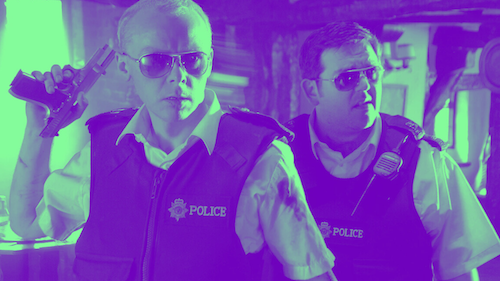
1. Hot Fuzz
I cannot think of many comedy films that I love as much as Hot Fuzz. I don't mean satires, political takes, bleak pictures, or dramedies. I mean straight-up comedy films. Hot Fuzz is hilarious in every sense of the word, with some of the smartest jokes I've ever heard (February 22nd has been cemented Hot Fuzz day for me; I will dare not spoil why if you do not know). If it were just a funny film, I would still love it. Hot Fuzz is so much more than that. It is a tongue-in-cheek homage to buddy cop pictures while being better than a vast majority of them (yeah, I said it). It is an intriguing character study of a by-the-book cop, Nicholas Angle (sorry, Angel) and the small town team that he cannot stand working with (they grow on him, and will certainly grow on you, too). It is also quite a well-composed mystery film, and I dare you to pretend that it is predictable when I know you didn't figure it out completely on your first watch (if you think the one-liners are smart, the twists are even smarter).
But, wait. We're not done yet. Hot Fuzz erupts into something it has no right being: one hell of an action film (at least during its climax). Wright proves that he has his finger on the pulse of multiple genres in such effective ways, and Hot Fuzz blends all of these ideas so effortlessly that I forget how much it is accomplishing until I am breaking them down (like I am here). I'd be more astounded by how secretly complicated Hot Fuzz is if I wasn't being floored by its thrills and on the floor with its jokes. If you have been an avid reader of Films Fatale (first off, thank you), you may think I am a stick-in-the-mud who only enjoys difficult films and grumpy directors. If you want to know what my idea of fun is, Hot Fuzz is one of my favourite films to watch if I just want to have a good time. For me, despite how much I like most of Wright's films and find entertainment in them, Hot Fuzz is easily his crowning achievement to me and one of the great comedies, perhaps of all time.


Andreas Babiolakis has a Masters degree in Film and Photography Preservation and Collections Management from Ryerson University, as well as a Bachelors degree in Cinema Studies from York University. His favourite times of year are the Criterion Collection flash sales and the annual Toronto International Film Festival.