
Filmography Worship: Ranking Every Tim Burton Film
Written by Andreas Babiolakis
Filmography Worship is a series where we review every single feature of filmmakers who have made our Wall of Directors (and other greats)

If you grew up in the eighties or nineties, chances are Timothy Walter Burton was the first auteur you came across. When you are a child or teenager, you typically aren’t seeking out the directors who make the motion pictures you watch. You just know what you like and, at most, you may be intrigued about the leading stars who appear. For most millennials, Burton’s films were a starting point for understanding what a director could bring to the big screen. His obvious style — rooted in gothic imagery that was typically skewed to be applicable, marketable, and understandable by the masses — was impossible to ignore. Even if you didn’t feel like a misfit who could identify with Burton’s films, you could recognize that what you were seeing felt different than the other films around you. Of course, Burton is far from the only director with a recognizable style that sets them apart from their peers, but his franchise pictures, remakes, and PG to PG-13 projects meant that his vision had wide exposure to younger audiences and even viewers who weren’t hardcore cinephiles who watch arthouse or challenging films. I’d argue that most of these film-loving youths would grow up to love the works of Alejandro Jodorowsky, Federico Fellini, Ingmar Bergman, and Maya Deren (and the like), but this love for stylish, unusual cinema had to start somewhere; for many, it started with Burton.
While I have grown out of Burton’s films quite a bit, I will always have respect for what he was able to accomplish within the confines of mainstream cinema. I never felt like he truly pushed the limits of what films could be, but he at least went far enough; I’d argue that if he went full-throttle with challenging the medium, he wouldn’t have been as successful — and, in that turn, as impactful — as he has been. He has always marched to the beat of his own drum: one full of blacks, purples, and blues, squiggly stripes, odd characters, and sets that are heavily inspired by the German expressionist movement. In the same way he has always abided by his style, he has almost always surrendered to his most extreme tendencies, for better (practical effects, stop motion animation, intricate costumes and settings) or for worse (silly dance sequences that don’t always land, one-liners that aren’t always necessary). Perhaps it is this goofiness that renders his works human and not so spooky and grim that he can be seen as pretentious. Maybe this is what makes audiences connect with him more than other similar directors: how he uses whimsy to keep you curious, interested, and feeling like a child again.
I have already covered his top five films in the past, so those of you who have read this list won’t be surprised that my opinions haven’t wavered. Having said that, I hadn’t ranked all of his feature films until today and felt like the mood was right during the Halloween month of October. I want to emphasize that I am only focusing on the films he directed. There are a handful of films that he produced and/or helped write that have his thumbprint all over them, including a couple of Henry Selick’s features (The Nightmare Before Christmas, James and the Giant Peach) and other efforts (Shane Acker’s 9, and James Bobin’s Alice Through the Looking Glass which is a sequel to Burton’s Alice in Wonderland). I will not be covering those. I will instead focus on the feature film that Burton directed, so please save any angry emails for someone else; this does not mean that I hate these films (they just do not fit the criteria). Let’s get back to business. Here are the films of Tim Burton ranked from worst to best.
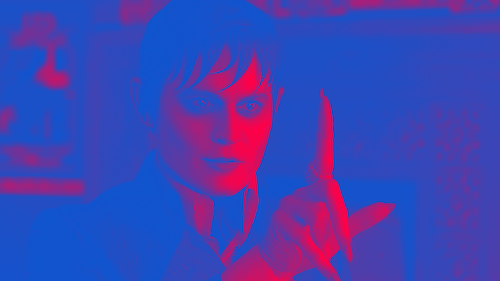
20. Dark Shadows
I cannot stand Dark Shadows. This film is indicative with all of Burton’s worst tendencies, from obnoxious pop culture references to cringey humour that I cannot stand. It’s too bad because there is clearly a focus on honouring the cult soap opera series, but I don’t think Burton and company translate the retro television show to the twenty-first century effectively at all. When a film spends two hours trying to amuse you like that irritating, smarmy kid in your class who cannot stop trying to crack jokes and you just want them to quit and they’re only making the day feel longer, there’s not much else to say. All of the visuals and production get dragged down by the frustrating stupidity of Dark Shadows, making it not a fun watch by any means.

19. Alice in Wonderland
I cannot stress enough what a letdown Alice in Wonderland is. What should have been an opportunity for Burton to run around freely and use Lewis Carroll’s iconic story as a basis of complete artistic control was instead a half-baked film that — despite being colourful, detailed, and literally based in fucking Wonderland — is a giant bore. From lousy jokes to a phoned in storyline that is far too thin to actually work or matter, Alice in Wonderland is sadly far less impressive than it looks.

18. Dumbo
By the time Burton released Dumbo, the issues between this film and Alice in Wonderland were obvious: not only was the director struggling to make these films marketable to children without hurting his ideas, he was going toe-to-toe with Disney as well (and clearly floundering). While not quite as irksome as Alice in Wonderland, Dumbo still feels stunted, incomplete, and — what I deem blasphemous for such a unique looking film — forgettable. When Burton vented his reservations with Disney after the release of Dumbo, it wasn’t a surprise when you see a film akin to how the director was feeling: like an elephant being told what to do and not being able to properly flourish within the confines of the entertainment industry. While this didn’t really hurt Burton all that much in the past, it was clear by the release of Dumbo that he was in a rough place.
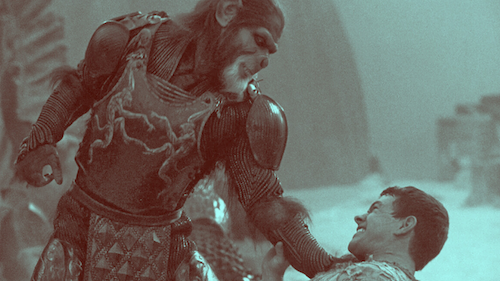
17. Planet of the Apes
While Burton’s Planet of the Apes may not be quite as bad as some will lead you to believe (it is boring, but it isn’t really a disaster), it is still a misfire. The film crawls along for much of its duration, weaving in-and-out of plot points in a way that feels flimsy and unsure of itself (a strange irony when you see how ambitious and confident it looks, especially with its magnificent makeup work). I do commend Burton for a couple of things, including a twist ending to circumnavigate one of the most iconic endings of all time (there was an effort made, and a fairly good one at that) and how much this film strays away from Burton’s usual style (he indeed tried to make something beyond himself here); these elements don’t save the film from feeling like a slog, but they’re noteworthy nonetheless.
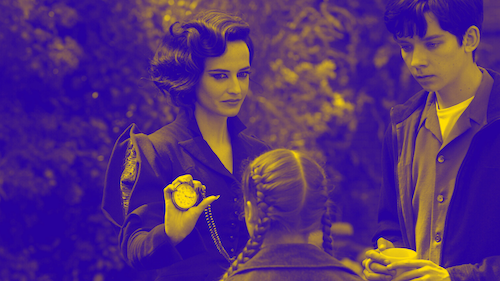
16. Miss Peregrine's Home for Peculiar Children
This film may have been Burton’s effort at tapping into the young audiences who were eating up works like Percy Jackson, Harry Potter, and The Hunger Games. The problem is that the film is trying to stuff what I can only imagine is way too much source material into a crisp two-hour-ten-minute runtime (and, even then, the film feels overlong). The end result is a barrage of information that isn’t properly conveyed, meaning that much of Miss Peregrine’s Home for Peculiar Children’s exposition will zip by you like a speeding bullet. While the world here is a comfortable one to explore and exist within, you may feel this film more than you understand (or care about) it; a child’s favourite fantasy worlds are more than just the ones that are nice to look at and read about — they have to matter to them as well.

15. Mars Attacks!
I want to clarify that Mars Attacks! is not a good film, but I think that this film is my kind of stupid. Stuffed with dated aesthetics, effects, and style, Mars Attacks! is so staunchly nineties that watching it may make you forget that you are already a quarter of the way through a new century. While Burton’s style of comedy can be depressingly unfunny at times, I think it works here — at least as a guilty pleasure — because of how unserious the film is; there is no way you can look at Mars Attacks! and see anything but an auteur with money screwing around and having a good time. You cannot take this sci-fi hysteria seriously, but, then again, maybe Burton didn’t either (even with all of the love for the original Mars Attacks! property he exhibits throughout the film).
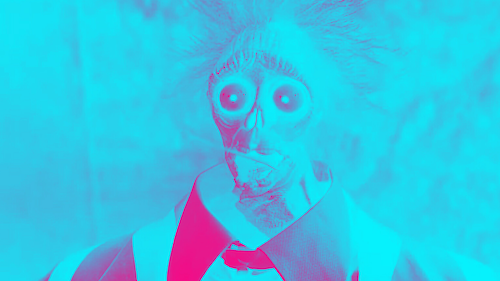
14. Beetlejuice Beetlejuice
Audiences demanded Beetlejuice Beetlejuice for decades; if only they said “Beetlejuice” one more time. The sequel to Burton’s beloved film finally arrived and — while it cannot hold a candle to the original — it wasn’t too shabby. The plot can get ahead of itself without being grounded, but there is much to like here, from the return of many actors from the original (especially Michael Keaton) to the inclusion of new Burton apostles (like Wednesday’s Jenna Ortega); all of the people present are on the same wavelength as Burton, and it shows with how much they elevate a script that isn’t all that sure with what it wants to do. The end result is a film that is actually quite fun (as expressed before, Burton can truly miss the mark when he isn’t on point in this department).
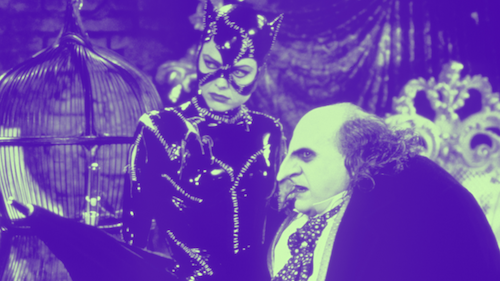
13. Batman Returns
Burton was celebrated for making the caped crusader dark in his superhero classic, Batman. However, he was criticized for being too dark with the followup Batman Returns. I have no problem with this at all; in fact, I prefer how dark this film gets. My main concern is how Batman Returns tries to accomplish a little too much (more characters, more plot points) and cannot complete this juggling act without a few stumbles, whereas I find Batman more consistent. Even so, Batman Returns is at least an effort to further elevate a franchise that Burton had already hoisted once before, and his gamble is respectable; I think Batman Returns boasts some of the director’s best imagery and ideas to date.

12. Big Eyes
I’d go on record to declare Big Eyes one of the most underrated films of recent memory if it wasn’t for one thing: the ending. Before that, we have one of Burton’s most mature efforts akin to Big Fish, driven by both compelling drama (surrounding the life of painter Margaret Keane) and sympathetic yearning. The film is lush, explorative, and enriched by passion, resentment, and isolation. The pastel colours, deeply-rooted heart, and compelling lead performances (by Amy Adams and Christoph Waltz) render Big Eyes a strong watch. That is until a climax which is so half-hearted, underdone, and flat that the film falls flat right when it is meant to soar; how could a film about the discovery of a true artist feel like it never takes off precisely when it is meant to? This disappointing ending bothers me to this day; I would love Big Eyes, otherwise.
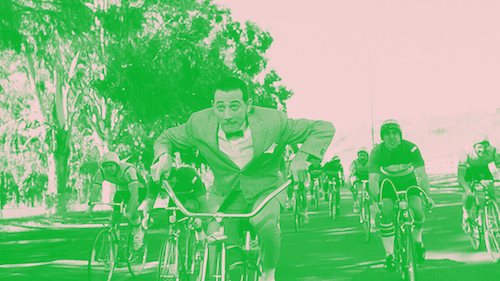
11. Pee-wee’s Big Adventure
When you really look at it — without wearing nostalgia goggles — it’s actually a miracle that the batshit-insane Pee-Wee’s Big Adventure accomplished as much as it did. Burton was granted the opportunity to take the stage hit — The Pee-Wee Herman Show — and the director went ballistic with what he could do with this property (essentially, he makes Bicycle Thieves on acid). When you observe all of the sequences in this film, you’ll see an unhinged director with a hunger for making motion pictures in such a peculiar way. While it also possesses some of Burton’s vices (the inability to know when a film is too silly), Pee-Wee’s Big Adventure is also so free-spirited that I cannot help but feel astounded by a film that is this kooky. I don’t insist that the film will win everyone over, but the fact that Pee-Wee’s Big Adventure has so many fans and has experienced such staying power is quite remarkable (let’s not forget that this film led to the series Pee-Wee’s Playhouse).

10. Sleepy Hollow
I don’t expect Burton to always act mature, given that his brand of gothic imagery is meant to be applicable and tangible, but I do appreciate when he is not only acting his own age but doing so with a film that is quite strong. Sleepy Hollow may see the director venturing into his own territory once again (rather than trying to honour its source material as authentically as possible), but I think that Burton can be as entertaining when he aims to be scary as when he wants to be amusing. The chilling atmosphere (led by cinematographer Emmanuel Lubezki’s fog-filled, haunting images) is enrapturing, and the tone of the film is quite hypnotic (when Burton isn’t winking and nudging at you, of course). The end result is a film that was maybe loved less when it was first released; I’d argue that Sleepy Hollow is maybe under-appreciated, now.
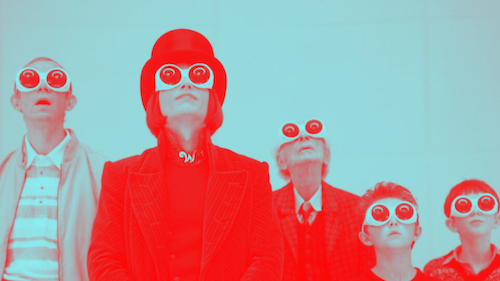
9. Charlie and the Chocolate Factory
Please do not kill me. I think Burton’s Charlie and the Chocolate Factory is the strongest adaptation of Roald Dahl’s novel. I’m not saying that Johnny Depp is better than Gene Wilder (I’m going to crown the latter as the better Willy Wonka in this case). I think that every film based on the novel thus far is only so good, but Burton’s happens to be the strongest. I feel like his balance between the origin story of Wonka himself, and the chaotic present (the delirious mishaps within the infamous, titular chocolate factory) is well done, leaving us with madness and the explanation of it. There’s also an interesting blurred line between the adult and real world and the realm of possibilities that children imagine life will be like. We find a film that is fit for all audiences and will leave all feeling wide-eyed; I can only imagine this is how Dahl would have wanted it.
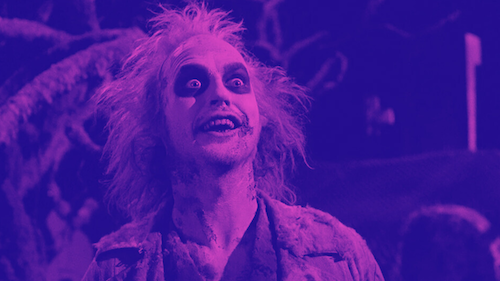
8. Beetlejuice
After the success of Pee-Wee’s Big Adventure, I would argue that Beetlejuice felt like the proper introduction to Burton’s intriguing mind. As we follow a story that includes both the living and the dead via a strange crossroads, we are presented a cast of strange characters (mainly Michael Keaton as the brilliantly loony Betelgeuse) within a house that is far more than it appears on the outside (it is a trove of insanity). Even if much of Beetlejuice doesn’t make sense or lineup, it is as refreshing now as it was back then to see a film made by a director who was creating their own boundaries and lines. The end result is a film that feels unrestrained (albeit without going too unconventional) and a generational source of entertainment and laughs.
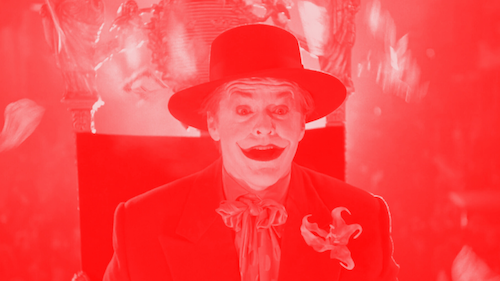
7. Batman
Burton is a dreamer in the sense that he strives to see what can become a big blockbuster hit. Nowadays, we are tried of superhero films and how similar they can all feel to the point of being reductive. Back in 1989, Burton was traversing through uncharted territory with Batman. Branding the iconic character via his own gaze, Burton makes Batman and Gotham City equal parts grim and triumphant, resulting in a world that is stylish and gritty. Featuring a magnificent performance by Jack Nicholson as the Joker, Michael Keaton working against type as both Batman and Bruce Wayne (many argue that Keaton is still the standard, and I can’t argue against them), and a soundtrack by the one and only Prince, Batman was full of gambles being made for what was once a frowned-upon concept: a film adaption of a comic book property. Cinema has been chasing that high ever since, even if to the point of huffing on empty fumes.
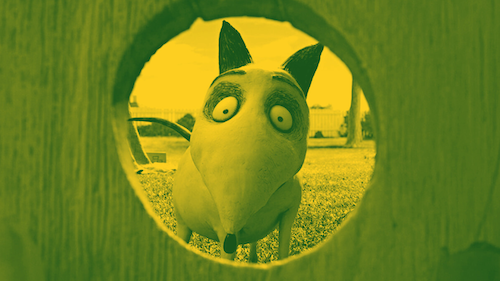
6. Frankenweenie
Burton’s most underrated film is Frankenweenie, and I am tired of the lack of love this film gets. The last great film Burton has directed, Frankenweenie is a love letter to B-movie monster films and coming-of-age dramedies in the form of a dead pooch who gets reanimated Frankenstein style (of course). Based on Burton’s 1984 short film of the same name, this animated return properly extends the original’s story to a feature length duration without ever feeling padded, empty, or vapid. I feel like the film pertains to the energy that children possess while being a little dialed in to an adult’s viewpoint of life, allowing parents to understand Frankenweenie in a completely different way than their children will. Equal parts adorable, quirky, unusual, and beautiful, Frankenweenie is a lovely film that I wish was enjoyed by more people (who maybe haven’t even given the film a chance).
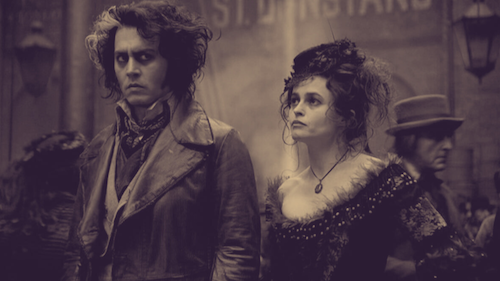
5. Sweeney Todd: The Demon Barber of Fleet Street
When I think about Burton directing a musical, I can only imagine a film that goes too far with theatrics and overzealous numbers. That is not what we get with the brooding, moody, superb adaptation of Sweeney Todd: The Demon Barber of Fleet Street. The play’s tongue-in-cheek nature contains Burton’s sense of humour so that it doesn’t go rogue, and Burton plays to the source material’s darkness with a sense of maturity that he often forgoes. Here is a motion picture that adheres to the theatre kids in high school as much as it can attract musical naysayers given its cold, serial-killer plot, with a happy (erm, unhappy) middle ground that details cruel people in an even crueler world. Despite all that could have gone wrong, Sweeney Todd is actually a refined, remarkable effort by a director who can really be this dialed in and expressive when he is focused enough.

4. Corpse Bride
Co-directed with animation guru Mike Johnson (who also worked on the Henry Selick projects The Nightmare Before Christmas and James and the Giant Peach, hence the similar aesthetic, here), Burton’s Corpse Bride is a stunning film about unconditional love and the fragility of adoration. I think audiences were initially drawn to the understandably gorgeous art style of the film: something I call “obtainable gothic” (all of the colours and style of the movement without feeling alienating or unapproachable). However, there is so much to unpack with this film from the fully fleshed-out characters (yes, even — and especially — zombie Emily) to the complicated-yet-simplified story of confused matrimony. With Corpse Bride, I feel like Burton pulls off a feat that he has been chasing since the start of his career: a timely, contemporary fairy tale.
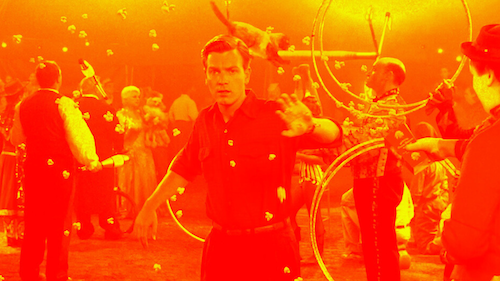
3. Big Fish
Big Fish is a bit of a polarizing film, and I think its reputation is contingent of the viewer. Do you buy into the tall tales being professed here? I don’t mean Edward Bloom’s exaggerations that are at the centre of this motion picture. I mean do you follow along with Burton’s excessive, fantastical visions? If not, Big Fish may feel like a whole pile of nothing. To me, Big Fish is a magnificent film about wanting to die with purpose and dignity: how our efforts to be remembered can obfuscate our character, working against our intentions. Do you try to leave your mark — even via make-belief — as best as you can, or do you just live and accept that you can be extraordinary within normalcy? Big Fish is exquisitely beautiful to the point that it leaves me crying every time, partially because it is one of the very few films that allow me to understand why Burton shoots films the way that he does; there’s nothing truer than how an artist conveys themself, even if there’s a detachment from reality present (maybe this is how to view the world and ourselves).

2. Edward Scissorhands
I want to preface this entry by stating that there was a time in my life when Edward Scissorhands was my absolute favourite film; I believed it was of all time for much of my teen years. I felt like the title character: a misfit clogged in the inner-workings of a muddled picture of suburbia (one that spans all decades into a homogenized backdrop). I didn’t belong, but, within Edward Scissorhands, I did; we all did. I cried at the heartbreaking romance at the forefront, and felt consoled by the explanation that Edward is why it snows (this was a fable for adults to believe and feel like children again with). I watched it compulsively, time and time again to the point that I could recite scenes verbatim. I adored the pastel-meets-cynical aesthetic, Danny Elfman’s operatic score that channeled the angels above, and this feeling of acceptance during my formative, lonely years.
When I studied film more seriously, I felt like much of Edward Scissorhands began to get demystified. I was noticing plot holes, creations that didn’t make sense, and other minor hiccups. This film that I once deemed “perfect” was beginning to fade away. I no longer cried while watching it. I’m afraid to admit that I may have felt above the film during my undergraduate years, as if it was time for me to hang out with the big league players and abandon this film with training wheels. Stumbling upon this film again as an older adult alerted me to my naivety and arrogance; why did I demand so much of it when it — and Burton — never demanded anything from his audiences? I had new appreciation for a film that was there for me during some dark times; even with my nostalgia and bias removed, I can now see the film again as a bittersweet fairy tale. Now that I have experienced love, death, and the real world, the true brilliance of the film now spills out, humbling the younger cinephile I was who thought he had it all figured out. I may not feel like Edward Scissorhands is the greatest film of all time anymore, but I am always indebted to this delightful, moving, delicate picture in the same way that it has cherished me; flaws and all.
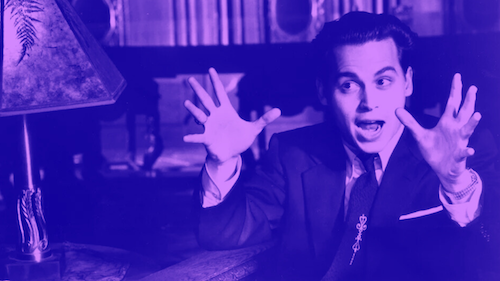
1. Ed Wood
I went into this article with the clear perspective that Ed Wood is not only Burton’s masterpiece but it is undeniably so. However, when going through all of Burton’s films one-by-one, I had a different opinion than the one I was prepared to conclude this list with. Sure, Ed Wood is Burton’s best film, but I now feel like — despite his prominence within mainstream cinema — the auteur was never one to challenge his audiences or himself; he aimed to just deliver what he felt like was the right feature film for that point in his career. The one time he ever challenged himself to such an undeniable degree is this sublime biographical picture meant to be a tribute to one of the most neglected and maligned figures in all of filmmaking: director Ed Wood. The world saw fit to decry how awful Wood’s pictures were before moving towards mocking them as ironic entertainment. Burton sees Wood for what he actually was: a passionate storyteller. Sure, Wood didn’t have the talent or budget to make good films, but he did have the drive and inspiration to try and make a difference in Hollywood. I don’t know about you, but I feel differently about Wood — and all filmmakers, positively or negatively (the latter if they are greedy or have awful intentions) — ever since I saw Burton’s film.
We follow Wood and the disasters that took place during three separate film shoots. We learn more about this infamous filmmaker as well; Burton humanizes him to the point that I cannot revisit Wood’s films without seeing this side of the director even in his worst projects. The film never mocks Wood, his cast and crew, or the misfortunes they experience. Instead, it champions them as pioneers of authentic filmmaking. It may be tricky to see how Burton and Wood are alike, given that the former was more successful with one film than the latter was their entire career. However, to Burton, they are no different from one another: they both strived to share their singular creations with the world. Burton has made a career of honouring misfits, and by finding himself in one of Hollywood’s biggest outcasts, he creates the kind of harmony that the late Wood always wanted; hopefully his soul has been brought to rest ever since. Ed Wood is hilarious, touching, invigorating, and enlightening; it is Tim Burton’s magnum opus.


Andreas Babiolakis has a Masters degree in Film and Photography Preservation and Collections Management from Ryerson University, as well as a Bachelors degree in Cinema Studies from York University. His favourite times of year are the Criterion Collection flash sales and the annual Toronto International Film Festival.