
Filmography Worship: Ranking Every Elia Kazan Film
Written by Andreas Babiolakis
Filmography Worship is a series where we review every single feature of filmmakers that have made our Wall of Directors

Elias Kazantzoglou, better known as Elia Kazan, is one of the most pivotal directors of the Golden Age of Hollywood. The Greek-American filmmaker were prescient with their social themes and progressive mindsets, as well as their ability to tap into the then-evolving shifts in acting (in ways, a number of the performances at the forefront of his films feel prototypical for the future New Hollywood movement, given their focuses on authenticity, rawness, and — occasionally — method practices that Kazan allowed his adventurous actors to explore). Kazan was able to get the most out of generational talent like Marlon Brando, James Dean, Vivien Leigh, and Andy Griffith (amongst many others). Even though Kazan's pictures adhered to the Hollywood Code (a set of rules that censored American films from featuring taboo subjects and images), his works still felt like they came from the near future: signs of what Hollywood could be with enough breathing room (and, eventually, once the Hays Code would be abolished). With two Best Picture winners under his belt (Gentleman's Agreement and On the Waterfront), it was clear that Kazan was a major name at the time; his filmography speaks for itself decades later, with a number of influential behemoths and underrated hits to sift through.
Then comes the side of Kazan that he is probably more remembered for now: the unfavourable stance he took during the McCarthy era and the Red Scare. Since Kazan identified as a Communist during the Great Depression, he was targeted years later. He used this opportunity to go on the stand and under oath to list eight former colleagues whose careers and lives were later compromised. This was once deemed a polarizing decision that split Hollywood in half (those for or against Kazan's choice), but the years have been even less kind to an act that many have since labeled selfish. I think what hurts the most is seeing a director whose films championed the voices of the neglected and the stigmatized become the kind of person that his films would judge or reprimand; then there is his iconic On the Waterfront which, as much as I adore it, will forever be tied to this moment in Hollywood history (is this his way of proclaiming that his hands were tied — does he see himself as the "bum" who threw it all away). I think everyone can agree that Kazan was in a rather difficult position during this time, but the anger comes from his willingness to not just throw other people under the bus in order to keep on living a luxurious life, but the extent in which he went with his backstabbing (as if he almost enjoyed pushing the blade deeper); his admittance to not feeling remorseful for the ripple effect of his actions kind of prove this maliciousness.
Today, despite this controversy (and the recent allegations of sexual abuse by actor Carol Drinkwater made during the MeTee movement), I want to reiterate that I am focusing solely on Kazan as a filmmaker from this point on. My opinion of him has a person has been tainted significantly since I first learned about him as a curious and excited teenage cinephile. I have also learned to separate the artist from their art, and can understand — in the same way that Orson Welles famously did in 1982 — that there are two truths to this situation: Kazan is a questionable and self-serving person, and "a very good director" (stated by Welles after his famous and justifiable rant about Kazan's acts as a "traitor"). Both his notoriety and influence remain. Regarding his nearly twenty motion pictures, you will find this interesting bridge between the Hollywood of old and the potential path that Kazan sought to take time and time again. When Kazan's films didn't work out, you could argue that he still had something in mind that was worth investigating. Those times when his films work, however, are otherworldly entries in American cinema. Here are the feature films of Elia Kazan ranked from worst to best.
19. The Sea of Grass
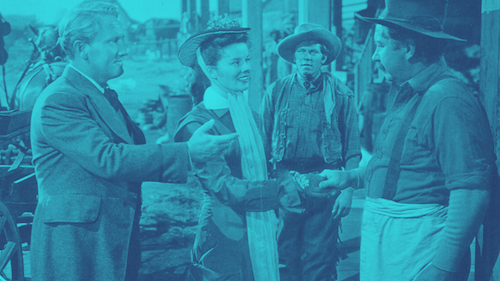
Kazan's worst film has to be the 1947 slog fest known as The Sea of Grass: a film that is so bad that Kazan himself disowned it. This romantic western has the dishonourable onus of being able to pull off the impossible: making stars and frequent collaborators Katharine Hepburn and Spencer Tracy seem like complete strangers with zero history or chemistry together. The film — unlike most of Kazan's other works — simply exists without much to say whatsoever, stewing in nothingness for two hours; I'd argue that it builds up to something non-existant, but I don't even feel like it knows how to build at all. The biggest disservice I can say is that The Sea of Grass isn't even an atrocity; it's just one of the most mediocre films made by a strong director imaginable, and that somehow makes it even less worth watching.

18. The Arrangement
Curiously, Kazan was always premeditating the New Hollywood movement, but once it arrived, it's as if he didn't know what to do. Enter The Arrangement: a hodgepodge of ideas tethered to a midlife and existential crisis (in the form of an adman who is spiraling out of control). Strangely, the director who one had one of the most skilled hands of the Golden Age feels like he is operating on a patient with a chainsaw here; The Arrangement is so sloppy that it's almost kind of remarkable (as if you feel alive watching it). I can't tell if this misstep has more to do with Kazan trying something new (to questionable effect) or a master forgetting the very foundation that he laid out generations before; I'd argue this has more to do with Kazan experimenting and not knowing the ways in which his disciples have carved a new path.
17. The Visitors
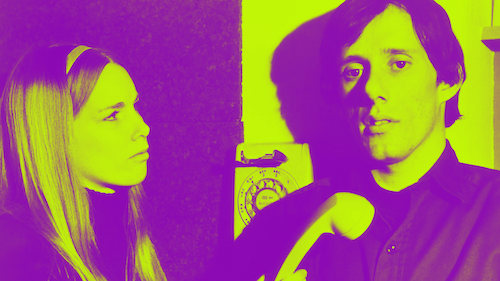
As Kazan ventured forth towards his New Hollywood era (a transition that, honestly, should have been smoother than it was), he stumbled upon The Visitors: another tough film to watch. While The Arrangement is a massive mess, The Visitors has a different issue: its act of being way too direct. It suffers from heavy-handedness (regarding sociopolitical arguments and anti-war sentiments, surrounding a seemingly everyday suburban family whose lives get shaken up). I don't mind a filmmaker trying to get a message out, but here Kazan appears to be actively shouting and pointing his finger at us (which is not something anyone would care to feel). It gets the slightest edge over The Arrangement because of its debut performance by James Woods who — in his prime — is an exemplary actor; it's too bad that he, like Kazan, would wind up with his own permanent stains on his legacy.
16. The Last Tycoon
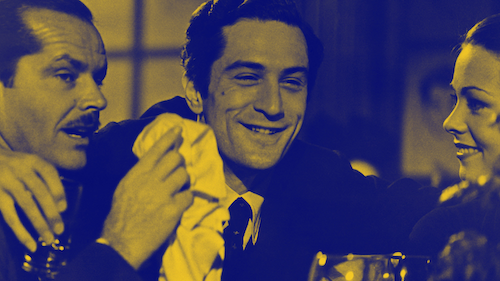
Kazan's final film tells its own story. Here is a man who was once on top of Hollywood having to resort to making a film in order to make up for lost money. His adaptation of F. Scott Fitzgerald's The Last Tycoon is made with very little passion or soul, and it shows in the lack of a cohesive, driven storyline and the film's blatant aimlessness (again, as if Kazan never figured out the rebelliousness of the New Hollywood movement — a movement that he was at least marginally responsible for inspiring). This tale of a producer burning the candle at both ends is likely meant to make you feel sympathetic for Kazan, but it's difficult to feel that way when this is the same man who was crying foul when he was living comfortably; The Last Tycoon is made out of inconvenience and not regret, and that is its biggest vice.

15. Pinky
So many progressive films of yesteryear can appear to be anything but with a modern lens. Pinky may have felt ahead of its time in 1949, but many decades later, you cannot help but feel as though it is slightly a part of the problem. A race related film about a passing light skinned Black girl whose boyfriend thinks that she is Caucasian, Pinky was meant to be a tale about acceptance and unconditional love; it is merely okay at its mission. However, we have the hindsight of knowing that many films have tackled this subject better, and how Pinky only exacerbates the problem of race relations; if this film was so concerned about how African Americans are treated, Kazan and company couldn't have actually worked with the Black community to tell their story?
14. Viva Zapata!
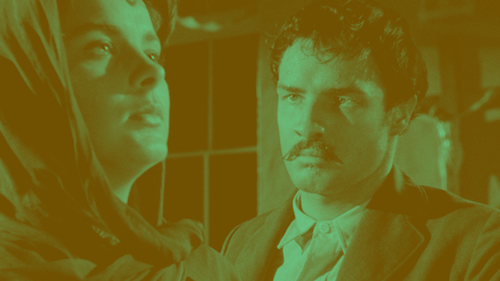
Similarly to Pinky, Viva Zapata! is another film about cultural and racial sensitivity that may have had good intentions but comes off as at least slightly — if not completely — tone deaf now. Based on the Mexican revolutionary figure Emiliano Zapata, Kazan's film casts frequent collaborator Marlon Brando as Zapata (even though he is one of the great actors of all time, Brando's approach to acting as non-white people was never particularly graceful — while whitewashed casting was never okay, Brando would lean into stereotyping almost all of the time). Toss in the fact that Viva Zapata! is far from a revolution as a motion picture, and you've got a so-so film that doesn't feel worth defending to such a large degree for obvious reasons.

13. Man on a Tightrope
Around the time that shit was hitting the fan for Kazan (regarding the Red Scare), and a year before he released his iconic On the Waterfront, he dropped Man on a Tightrope upon us: a picture about a circus troupe and their struggles during Czechoslovakia's time of the Iron Curtain. Covering Communism in the nation (or worldwide) feels a bit fresh from Kazan, and you cannot help but wonder if this feature film is meant to be his apology for having any red tendencies whatsoever in his life; it can feel heavy handed as a means of over accommodating, I feel. However, this is a fairly standard political drama, whether it succeeds in cleaning Kazan's conscience or not.

12. Panic in the Streets
Panic in the Streets of America — panic in the streets of New Orleans; I wonder to myself, "Could life ever be sane again?" Kazan's version of the plague, he wondered to himself: he hopes that people unite, but, honey pies, they're not safe there — with a gunned-down man stricken with the plague. So there's panic on the streets near the wharf; a state-wide epidemic; I wonder to myself. Kudos to Kazan. This early picture was unlike the pictures they constantly play; it said a little to me about real life (and the moral panic of people during times of crises — on the Nawlins side streets that he slipped down, and the illness spread around town). Not bad, Kazan; not bad, Kazan; not bad Kazan.
And, no, I did not use AI for this; if my tribute to The Smiths is awful, I tried my best at 8 in the morning.

11. Boomerang!
It's time to retire trying to summarize films to the tune of pre-existing songs. Let's move on. A film like Boomerang! sees Kazan trying to see how far he can go with the content of his films during a creatively stymied time in Hollywood's history (thanks to the Hays Code). While it isn't quite the success of other attempts (even the film that came out the same year by Kazan, Gentleman's Agreement), Boomerang! is a decent attempt at making a serious, gripping picture. Centred around a testy trial — where a man is blamed for the murder of a local priest — Boomerang! combines the legal back-and-forth of the courtroom drama with the looming guilt and darkness of the then-popular noir movement. The end result is a good-enough, serviceable thriller that might be your jam if you have run out of Kazan's classics to watch.
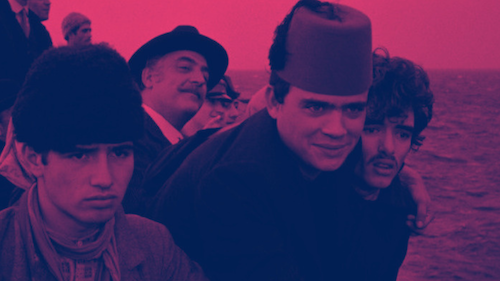
10. America America
The last good film Kazan ever made was the 1963 drama, America America. A big reason why this film succeeds so much is because of the candidness and personal connection that Kazan has here, given that it is his interpretation of his immigrant uncle's efforts to secure and make a life for himself in the United States. Instead of trying to fit in or prove something like he did with his remaining films, Kazan was still directing from his heart with America America; it might not be as refined or well-oiled as his greatest works (the film does coast a little bit at times), but you can feel every ounce of Kazan's introspective reflection throughout this uphill battle of a motion picture; even if you don't connect with this film as much as I did, you cannot deny that it is the last Kazan film to feel true to himself.
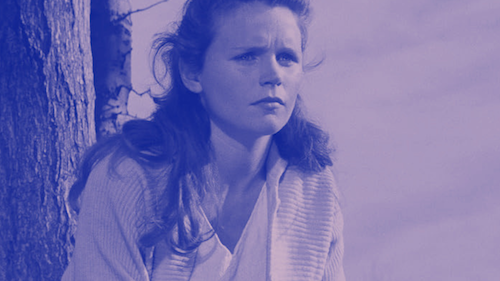
9. Wild River
Kazan wasn't one to work with poetic allegory all that frequently; any metaphors he indulged in were usually more upfront and political in nature. One exception is his 1960 effort, Wind River: a film that utilizes the act of an island flooding as a means of pressure and sociopolitical panic. Kazan uses the symbol of a river quite thoroughly and with more than one purpose in this well-acted, moving picture about a bureaucrat's efforts to build a dam, and the geriatric citizen who doesn't want to leave her lifetime home to help this project move along. Many political films will argue in favour of a particular viewpoint, but a film like Wild River gives an entire spectrum of considerations, showing Kazan operating in peak form — via revelations worth chewing on, and sensational performances that will last with you for a lifetime; this is one of Kazan's more underrated pictures.
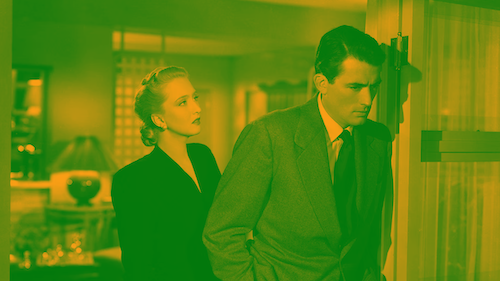
8. Gentleman’s Agreement
Kazan’s first Best Picture winner is — compared to On the Waterfront — the far lesser known Gentleman’s Agreement (unless you are an Oscars fanatic like myself); I’d argue that it deserves at least some flowers. This progressive film (and one that actually is, unlike some of Kazan’s other efforts like Pinky) stars Gregory Peck as a journalist who goes under cover as a man of Judaism for his latest article. I have always admired how the film never rushes into its premise; instead, it allows Peck’s character to come to the conclusion that he must take on such an assignment. Since the film is so gradual with its approach, Gentleman’s Agreement feels much more methodical and honest than many of the films that it inspired — sentimental cash-ins that don’t actually care about conveying such a message properly. You may scoff at the idea of awards ceremonies, but they can do the right thing in cases like this: by providing a relatively overlooked film like Gentleman’s Agreement into the backs of the minds of cinephiles and on the radars of the curious (it’s worth seeking out).

7. Baby Doll
Even though Kazan predated the New Hollywood Movement and never quite picked up steam within the wave when it finally arrived, he has a couple of films that could have fit right in (and, perhaps, could have been even edgier had they been released a decade later). Such an example is Baby Doll: one of his bleakest and most daring films. This bold, dark comedy — written by Tennessee Williams (whose A Streetcar Named Desire was adapted by Kazan) — was well ahead of its time with its taboo subject matter (a teenage bride who is taken advantage of by all of the older men in her life). Maybe it’s for the best that this film was released back in 1956, seeing as it could have gone too far and been highly uncomfortable than it already is. Instead, Kazan and Williams work with enough restraint to not make Baby Doll a fucked up endeavour; it just winds up being a thought-provoking, Hays-Code-challenging picture that feels like Kazan stepping outside of his comfort zone.
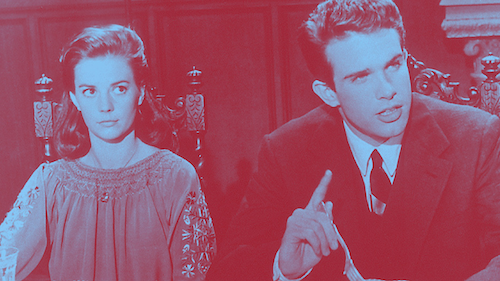
6. Splendor in the Grass
Didn’t we already go over Kazan’s worst film? What’s it now doing here in sixth? No, that was his second film, The Sea of Grass. The similarly named Splendor in the Grass came out around fifteen years later. By now, Kazan was a much more comfortable and wise director, and he was in an era when he was testing how far he — and Hollywood — were willing to go. In this picture, he works with the legend who was gone way too soon: Natalie Wood starring as a girl yearning for more and seeking love to ease her angst. A formative film about the high school experience and the tidal wave of reality that crashes into the naivety of young minds, Splendor in the Grass is a film that understands both the previous and next generations respectively; I think it’s important that Kazan recognizes the qualms and opinions of the two different walks of life — those whose entire lives are awaiting them, and those who have been through it all — and he nails his assignment here.
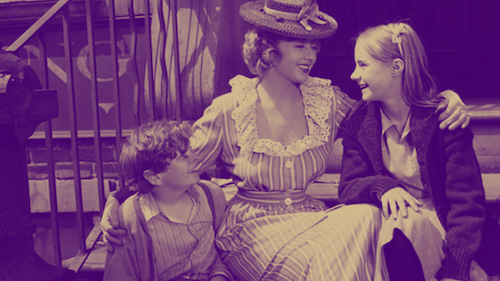
5. A Tree Grows in Brooklyn
Even though some of Kazan’s earliest films were a bit of a rocky start, his directorial debut — A Tree Grows in Brooklyn — saw the then-new filmmaker starting off on the right foot. This coming-of-age picture from 1945 laid the seeds (so to speak, and pun intended) for Kazan’s entire career. It is a standard Hollywood picture tonally, but Kazan elevates his material via a textured understanding of the American familial experience, his ability to bring out the best in his actors (star James Dunn won an Oscar for Best Supporting Actor; not too shabby for a director’s first film), and his knack for not dipping into hyperbolic or schmaltzy territory, so as to keep things prestigious and allow audiences to take these matters seriously. With a film that is moving, beautiful, and effective, it was clear that Kazan was born to make motion pictures with A Tree Grows in Brooklyn.
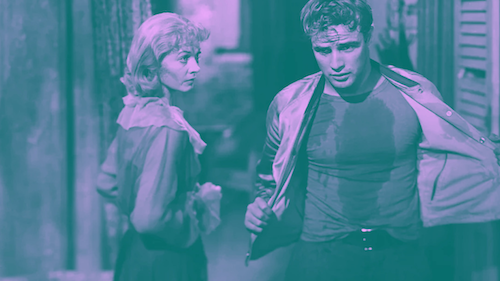
4. A Streetcar Named Desire
Easily one of Kazan’s most popular titles has to be his take — and the most beloved cinematic adaptation — of Tennessee Williams’ A Streetcar Named Desire. When I discuss Kazan being great with his actors, consider the nearly impossible feat that took place here: all four leads nominated for Academy Awards, and three (Vivien Leigh, Kim Hunter, and Karl Malden) winning in their respective categories (only lead Marlon Brando didn’t win for Best Actor; the film cleaned up the other three acting categories, which has seldom happened). You can see why the accolades were handed to this film; this film is an absolute masterclass of performance — between traditional practices (Leigh) and the future of method acting (Brando) and everything in between. This tragic, Southern Gothic story is turned into a borderline melodramatic tight rope walk by Kazan’s careful crawl; his ability to get into the darkest crevices of Williams’ story has rendered this adaptation an iconic slice of fifties cinema that is timeless.
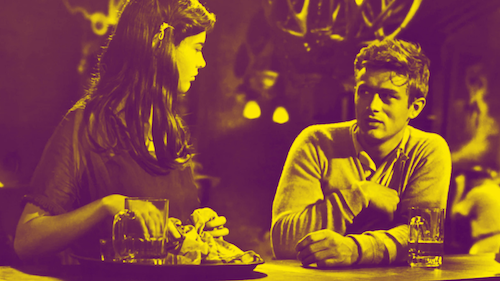
3. East of Eden
On the topic of adaptations, it feels like a futile effort to take on John Steinbeck’s novel East of Eden, and, to be fair, Kazan only somewhat does so; his film is only a portion of the novel made for the big screen (and, even so, it’s still two hours and as complete as can be). Kazan and screenwriter Paul Osborn sculpt Steinbeck’s story into a touching, magnetic depiction of a fractured family trying to glue itself back together (to mixed results). Featuring the best of James Dean’s performances (and the biggest piece of evidence that we lost a magnificent thespian way too early), East of Eden is a portfolio of Kazan’s greatest strengths — particularly his experience with making separate fragments of despair and frustration become a tapestry of feeling exiled from society (it’s kind of remarkable how Kazan’s films are so heavily American, and yet they are great at conveying what it feels like to feel as though you don’t — or no longer — belong amongst your peers for varying reasons). All in all, Kazan’s East of Eden is gorgeously distraught cinema.
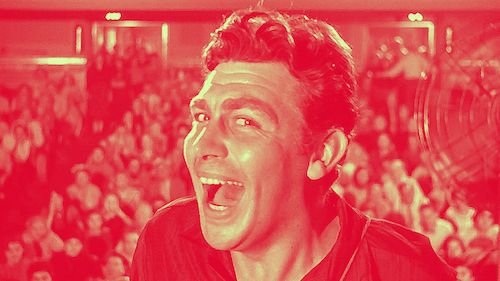
2. A Face in the Crowd
The film of Kazan’s that feels the most prophetic (as a sign of what the New Hollywood Movement could be, what filmmaking could look like, what kinds of messages audiences needed to be told via the conveyance of satirical soothsaying) is the sleeper cult classic, A Face in the Crowd. What was not beloved upon its release is now one of Kazan’s most celebrated pictures: this peculiar, dark comedy about an accidental television icon (played magnificently by Andy Griffith, working here against type). Years before Sidney Lumet’s Network (a far darker, more twisted satire, to be fair), Kazan was operating with a similar notion: how does fame destroy the innocent; how can the airwaves be used to bastardize a nation; how real is reality television (and the many definitions of what can constitute as such); what is the actuality of the curse of the media? What may have once felt like Kazan falling off during his prime now feels like a designation that he was — more than ever — predicting the future of cinema and the visual medium as a whole in a myriad of ways.
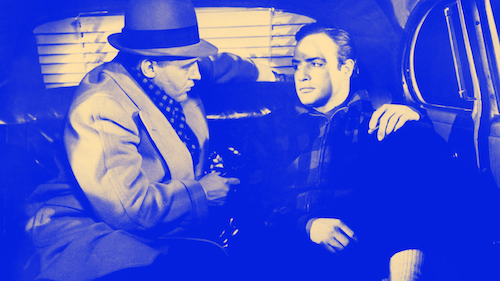
1. On the Waterfront
For me, Kazan’s greatest film is undeniable, even though I clearly think that he has a handful of great-to-brilliant pictures. His magnum opus has to be On the Waterfront: a generational and untouchable classic. I can understand the reservations of those who view this film — about a crew of longshoremen who are subservient to their tyrannical labor leaders, and the former boxer who walks among them and may be their key to justice — since parallels have been made between this Best Picture winning juggernaut and Kazan testifying against his peers during the Red Scare. However, I saw this film many times before I knew of such history; as a young cinephile who was wondering where to start with the major league titles of yesteryear, this was an early watch that placed me on the right path. Sure, I can make those same connections now as a thirty-seven-year-old film buff who has learned far more about film history over the years. Yet, I can still see this film without this correlation — as an exquisite depiction of the underdog with a slew of bad luck and the perseverance of a tiger refusing to quit. As all hell breaks loose in New York (and crime is running rampant), On the Waterfront acquaints us with these broken souls (including Marlon Brando’s prizefighter Terry Malloy, and Eva Marie Saint’s Edie Doyle whose brother was just murdered by the mob); if Hollywood was permanently fixated with showing us people who overcame their problems, then Kazan introduced us to those who never lost sight of what shattered them (which, I would argue, is far more realistic).
On the Waterfront digs deeper into the criminal underworld and exposes just how much embedded deception takes place in a society that is this skewed. Meanwhile, there is a reservation that paradoxically radiates from a character like Terry; Brando makes sure to make all of his inner thoughts visible via his gaze, but never fully understandable until he confess. He eventually does in the form of a whopper of a monologue: a realization that someone threw their entire life away so that an imbalanced system can remain as such (whose lives are we bettering when we have these sacrificial lambs). Unlike so many Hollywood films about blue-collared workers and the working and lower classes, On the Waterfront doesn’t sugar coat the lives of those who are often neglected by the wealthy; it hears them out without lying about their statures. We see the overlooked people here without ever being gaslit into thinking that the world treats them like superstars; Brando and Saint may make them so, but they also allow them to be humans — this is not a condescending affair. Due to its severity, organic nature, realism within melodrama, and actual care for its subjects (without turning them into spectacles for the masses), On the Waterfront becomes a memorable, visceral affair that will continue to win over audiences for generations. As a depiction of the strengths and flaws of the American Dream, the then-present and potential future of Hollywood, and the booming voice of a commonly unsung community, On the Waterfront is easily Elia Kazan’s greatest cinematic achievement to me.


Andreas Babiolakis has a Masters degree in Film and Photography Preservation and Collections Management from Toronto Metropolitan University, as well as a Bachelors degree in Cinema Studies from York University. His favourite times of year are the Criterion Collection flash sales and the annual Toronto International Film Festival.