
Filmography Worship: Ranking Every Derek Jarman Film
Written by Andreas Babiolakis
Filmography Worship is a series where we review every single feature of filmmakers that have made our Wall of Directors

Michael Derek Elworthy Jarman (known to most as Derek Jarman) is an absolute titan of cinema. Being one of the most well-known and respected avant-garde filmmakers already renders him as such, since it is no easy feat to be renown for unconventional and challenging works. Jarman was also one of the preliminary and leading figures of the New Queer Movement, and was always fighting for the rights of the LGBTQ+ community, even — and especially — during the AIDS crisis of the eighties. On that somber note, Jarman famously kept working and being vocal about his experience with AIDS up until his death in 1994 at the age of fifty-two, and his vulnerability and openness resulted in some of the boldest works in contemporary cinema. This is an artist who was always forefront with his visions, unapologetic with his choices, and whose style was impossible to deny. He was a firecracker of experimental filmmaking right until the very end.
Jarman started out as a set designer for the stage (you can tell by the elaborate detail in his own films) before experimenting with a Super 8 camera to make a slew of short films (which I won't be covering, given the large amount of shorts and the difficulty of finding most of them; however, I will be "somewhat" covering a few of his shorts in a way; more on that below). Around the time of his feature film debut, Sebastiane (in 1976), Jarman also started directing music videos, starting with "The Sex Pistols Number One" (obviously by The Sex Pistols); he would go on to direct music videos for artists like Marianne Faithfull, The Smiths, Pet Shop Boys, and Throbbing Gristle (the latter group would later collaborate with Jarman on one of his films). Jarman would also prove to be a great prognosticator for talent, including his frequent collaborator Tilda Swinton (who debuted in Caravaggio), as well as Sean Bean, musician Adam Ant, and the like.
A majority of his films provoked audiences to question his historical anachronisms, soak in the rebellious choices within sequences, drop their jaws at his highly artistic imagery, and embrace homoeroticism with open arms. Considering his audacious nature and his refusal to compromise his ideas, I don't feel like any of Jarman's feature-length works are bad (even the ones that I liked less than the others). There is always something to take away from his projects, and I hope you find the same value that I did. While I won't be including any of Jarman's short films, I will be covering any compilation films or featurettes: anything that is long enough to warrant being considered a feature (of some sort). It's time to dive into this rabbit hole of a curious, fascinating, and daring mind. Here are the feature films of Derek Jarman ranked from worst to best.
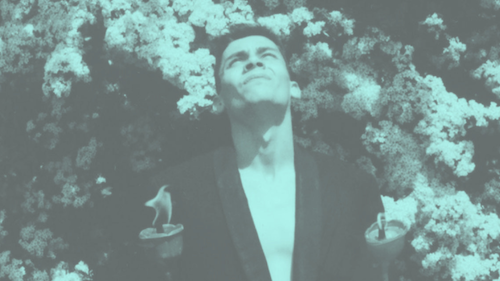
13. The Angelic Conversation
Jarman's The Angelic Conversation does feel a little bit like a meandering sequencing of ideas as opposed to one cohesive thought (despite its overall premise of searching for romance through the pits of one's mind). However, even with its slight aimlessness, I think this is quite a gorgeous and moving film that tries to put into images the indescribable feelings of love and loss, especially in a world that is highly intolerant of one's lifestyle. The Angelic Conversation is a little bit Kenneth Anger (with its relationship between images and music), and a little bit Shakespearean (with Judi Dench reading sonnets over our images); toss in the music of post-industrial legends Coil, and you have a brain-melting, heartbreaking piece of avant-garde cinema.
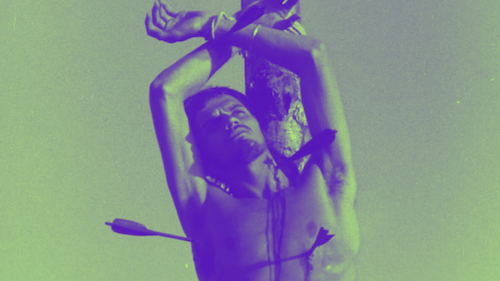
12. Sebastiane
Jarman's directorial debut (a co-directed effort including Paul Humfress), Sebastiane is as unhinged as homoerotic pictures got back in the seventies. This sword-and-sandals picture (of sorts) sees Jarman and Humfress using the macho imagery of such historical films as a landscape to traverse: with nude male bodies populating the screen like fauna or vegetation in a nature documentary. The central story with soldier Sebastiane is a tug-of-war battle between upfront queerness and the act of subduing urges and condemning those who are freely themselves. In a sense, Sebastiane details a complete spectrum of how people handle homosexuality: with understanding, or with bigoted hostility. This was one way to kick off his feature-length career: head-first and with zero regrets or apologies.
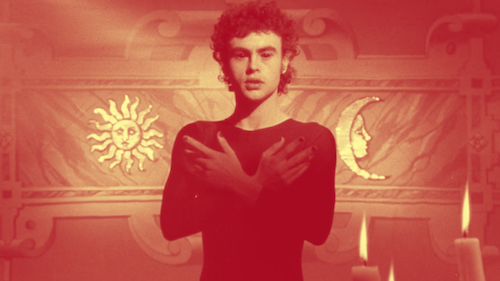
11. Jubilee
Jarman's second film, Jubilee, is as British as films could get in the seventies. This insane film about Queen Elizabeth I time traveling to then-present day Britain — and being confronted with the chaos and subcultures of the nation — is as batshit as it sounds. Featuring punk music and the scorn of many Brits who were (are) tired of tumultuous times, Jubilee is a completely rebellious picture that attempts what so many other artists wish to do: rub the noses of their subjects in their messages. Jubilee is maybe the sloppiest Jarman ever got, but this is the kind of sandbox environment where such a calamity can exist with little repercussion; even so, I feel like Jarman has made similar points with a bit more nuance and substance. Nonetheless, Jubilee is fantastically bonkers, albeit a tiny bit on-the-nose with what it is saying; at least you can't say that Jarman was holding himself back here.
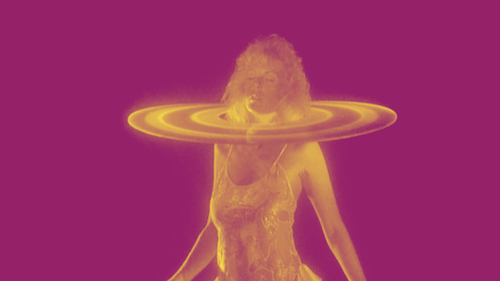
10. Glitterbug
Towards the end of his life, Jarman created what he has before: a compilation of various super 8 films that he made. However, during his last year, a film like Glitterbug hits even harder. If this film was his life flashing throughout his mind, then his farewell, Blue was his way of running towards the light. Glitterbug acts like a compendium of everything Jarman tried to capture in his many experiments; all set to the moving score by Brian Eno. In a way, I feel like these shorts on their own feel like tiny ideas by a prolific creator; however, when compiled together like this in Glitterbug, all of these shorts shine as a unified whole. Weirdly, all of these images converged together may make us learn more about the director as an artist and human being more than anything else.
9. The Tempest
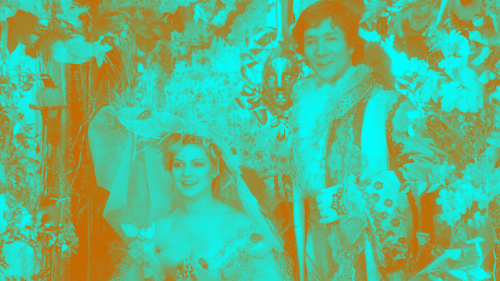
You can get your average William Shakespeare adaptation that tries to honour the late scribe through and through; these are a dime a dozen. Or, you can get into the mind of the creator of an adaptation and see how they interpret Shakespeare's texts as their own. Jarman clearly takes the latter route with his version of The Tempest: one of the most inventive looks at Shakespeare under the sun. While this isn't an aggressive act of rebellion like Jean-Luc Godard's King Lear (which challenges what an adaptation can even be), Jarman's The Tempest still feels unique enough: like a commentary on then-contemporary British sociopolitics via a tale as old as time. Jarman's visual knack for gorgeous period piece aesthetics provide grace to an adaptation that is clearly low budget and on a set (and, yet, it all comes to life via the voices of the people, overseen by their director's ability to wring life out of any shot).
8. Wittgenstein
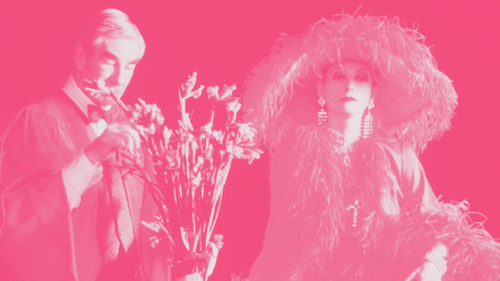
The last feature film that felt like your common Jarman project was Wittgenstein, released the same year as Blue in 1993. Here, it is another slice of history through the eyes of Jarman: this time, it's the life of philosopher Ludwig Wittgenstein told as a near-surreal, eccentric romp. What I will say is that Jarman usually got into the cruxes of his subjects quite deeply, even with his experimentation; Wittgenstein doesn't quite get as detailed or feel as lived-in as some of his stronger works. However, what Wittgenstein is is fun: while it seems like an impossible task to try and figure out Wittgenstein's infamously obtuse theories and concepts, Jarman instead frolics about in the setting of an elaborative mind (as opposed to trying to solve it); maybe it's better that Jarman kept things simple, here, because the end result is still quite a good one.
7. In the Shadow of the Sun
One of Jarman's compilation films that assembles his Super 8 works into one cohesive mosaic, In the Shadow of the Sun is possibly his most difficult film to watch. For nearly an hour, Jarman's affinity for transcendental filmmaking in more ways than one (the actual act of developing film, as well as the use of cinema as an artistic medium). With In the Shadow of the Sun, Jarman is using the loop of film reels and the sequencing of one short after another to represent the cycles of life and death, the acts of preservation and reanimation, and the flurry of images in one's wandering mind. Set to the unorthodox music of industrial pioneers Throbbing Gristle, In the Shadow of the Sun is an eerie, unsettling look at supernatural depictions of Britain: the kind that feel like Jarman somehow extrapolated the darkest images of your nightmares and plastered them on screen.
6. Edward II
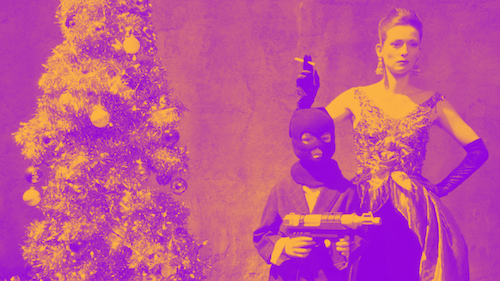
Like a Shakesperean tragedy told from the deepest trenches of your subconscious, Edward II is another Jarman historical costume drama that redefines what that can even be. Following King Edward II and his romance with Piers Gaveston, Jarman's story — like many of his — is this enthralling waltz between thorough historical contexts and his idiosyncratic visual eye that almost feels Parajanovian in nature (how many abstract, obscure, and intricate indications can we place on screen at the same time). In that same breath, I also get flashes of Alejandro Jodorowsky's stream-of-consciousness visual makeup in films like Edward II. Jarman's works like Edward II rewire what a history lesson can be: a blend of the objective and the subjective in a way that will drill itself into your soul (even if you don't understand or learn, you will live his experience).
5. War Requiem
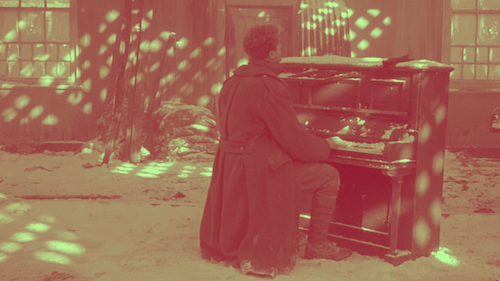
War films have been made throughout the course of film history, but seeing ones that go against the grain of the formula of such a genre will always stand out to me. Such is the case with Jarman's War Requiem which is such a unique way to depict the events of World War I. Jarman's film focuses on the art that stems from grief, including Benjamin Britten's musical piece of the same name (War Requiem); Jarman's images and sequences are meant to be a visual accompaniment (of sorts) to the kinds of thoughts conjured up by such a musical composition. The end result is like a mind wandering on the subject: a runaway train of horror, dread, and desperation that cannot be slowed down. Jarman's approach to a highly popular genre is equal parts fresh and harrowing.
4. The Garden
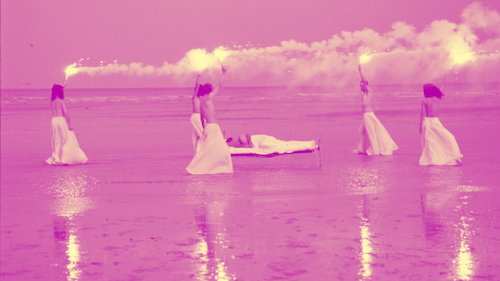
A number of Jarman films feel like his answer to the works of Federico Fellini. One such example is The Garden and how it resembles an arthouse, queer take on La Dolce Vita or Satyricon; in reality, it is an experimental take on the birth and death of Jesus Christ, redone as a gay romantic-tragedy. With a plethora of logical diversions and the breaking of sequences, The Garden is an onslaught on your mind and senses: an overwhelming depiction of parables and allegories that will forever leave you wondering what Jarman's version of these religious texts mean to him; trying to figure out a film like The Garden is half the experience, and it — like many of his works — will leave you thinking for hours. To me, this is the bastardization of the word taken as gospel versus the truths of the queer community that many are told to dismiss or neglect. Considering that barely any dialogue is spoken in this film, The Garden is an avant-garde example of showing and not telling (which purposefully obfuscates Jarman's messaging even more).
3. The Last of England
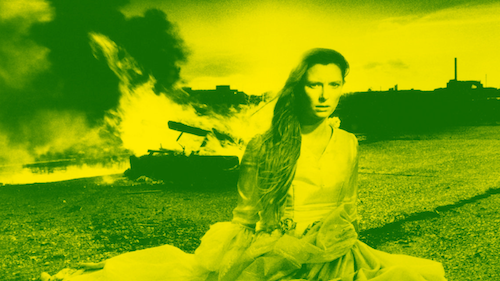
Oh, to watch a loved one die: that is how it feels when you view Jarman's The Last of England. A visual tapestry of cacophony meant to represent what life in the Margaret Thatcher era is like, The Last of England is a magnetic dichotomy. Here is a man who loves where he lives, and yet he hates what is happening to it. This apocalyptic, cinematic poem about Jarman's divided relationship with his environment is unbelievable; his ability to figure out the way to project such a bittersweet sensation via hallucinogenic — yet digestible — imagery is magnificent. Possibly Jarman's angriest film, The Last of England is exquisite rage: the kind that make you feel like you are watching a loved one be bludgeoned to death by the powers that be.
2. Caravaggio
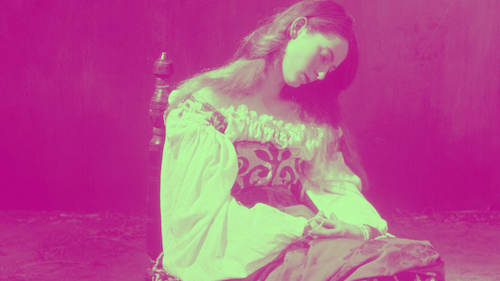
The greatest traditional film Jarman ever made is Caravaggio: a mesmerizing, gripping, anachronistic look at the life of Baroque artist Michelangelo Merisi da Caravaggio. Told with complete artistic integrity and very little historical accuracy, Caravaggio is an artist's take on art, and Jarman gives himself free reign to interpret Caravaggio's life and works in any way that he sees fit (a number of his choices are literally impossible, given when Caravaggio lived and what Jarman includes). As if Jacques Rivette combined Celine and Julie Go Boating and La Belle Noiseuse, Caravaggio zips in-and-out of reality while forever looking astonishing; if you were to pause this film at almost any given point, it would look like a Caravaggio painting (in fact, some sequences are styled after actual paintings). Another comparable filmmaker is Pier Paolo Pasolini: someone who acknowledged religion while also heavily critiquing it; here, Jarman, similarly, creates art that is so prestigious and holy yet "blasphemous" at the same time. The end result is a powerful film of the queer avant-garde scene and a reinvention of what a biographical picture can be (even in the loosest sense of the concept).

1. Blue
Yes, Caravaggio is Jarman's best film that is in his signature style. However, most would agree that his magnum opus — and his most revered and celebrated film — is his swansong, Blue. When I work on images for my Filmography Worship series, I have a blast trying to figure out what colours to soak each image with (as you can see in all of the other images above). However, Blue is the first — and likely only — time that I won't be doing any altering to the image selected for a film. Jarman made Blue when he was dying of AIDS-related complications. The film is eighty minutes in length, and all you see for the entire time is the colour blue. It is solely the shade you see above. There are no breaks, tweaks, or any forms of relief or reprieve. Jarman was going blind towards the end of his life due to his battle with AIDS; before losing the majority of his eyesight, he noted that much of what he saw looked blue (or, at least, various shades of it). As a result, his final film only shows blue and is represented entirely by sound; think of this as a reverse of silent pictures which only have visuals and some sort of audible accompaniment. Here, we hear everything, and the only viewable accompaniment is this unwavering royal blue hue.
In our ears, Jarman provides various stories: some literal, and some metaphorical. Jarman details his experience with being diagnosed with AIDS and living with the disease. Blue cuts to more abstract and poetic narration from time to time, allowing our brains to feel as though they are short-circuiting. With the immense sonic palette provided here (everything from Tibetan bells and the sounds of the streets of Britain, to harsh noises and clashes), Blue is unlike any film I have ever heard, and it is one of the greatest audible experiences in film history. Jarman's narration (as well as the help of friends of his, including Tilda Swinton, John Quentin, and Nigel Terry) is so captivating that you will latch on to every word. Once you are hooked, Blue shatters your expectations and understanding of the film via its many detours, diversions, and experiments. If you thought this film would be any less of a collage of calamity by Jarman just because you can't see anything that you hear, then you would be mistaken.
Blue is one of the most courageous films ever made. Jarman doesn't even grapple with death as much as he fully acknowledges that it is coming. He accepts his unfortunate blindness with a film that places us — somewhat — in his shoes for over an hour. He puts all of himself out there with this different kind of diary: he opens up his soul, even in a very unwonted way (if Jarman could be anachronistic with the historical figures and works he interpreted, why couldn't he be with his own life?). To watch Blue is to sit with Jarman in his final hours and feel his soul depart this world while his legacy remains (and, if anything, gets cemented with this avant-garde masterpiece). When you stare at the blue screen, at first it feels like the colour is getting blasted into your eyes. By about ten minutes in, you transfer the film into your mind. By thirty minutes, you can almost see all of the images on the blue screen. By the eightieth minute, you will be shocked that the credits are appearing; where did all that time go? Jarman wonders the same: how could life come and go so quickly; how can his adventure be cut so short so soon? In his dying hour, Derek Jarman offers up enough of himself (while he was already withering away) with a film this vulnerable, sacrificial, and daring. Blue is one of the most honest films ever made, constructed by someone who was nearing the end and who decided to face his greatest fear with open arms. There aren't many films like Blue in this world, and it is one of the most unforgettable, life-changing experiences in the entire medium.


Andreas Babiolakis has a Masters degree in Film and Photography Preservation and Collections Management from Toronto Metropolitan University, as well as a Bachelors degree in Cinema Studies from York University. His favourite times of year are the Criterion Collection flash sales and the annual Toronto International Film Festival.