
Filmography Worship: Ranking Every Nadine Labaki Film
Written by Andreas Babiolakis
Filmography Worship is a series where we review every single feature of filmmakers who have made our Wall of Directors (and other greats)

A woman of many talents, Lebanon’s Nadine Labaki is already a contemporary household name in international cinema. In such a short amount of time, Labaki has won a number of noteworthy awards, including the Cannes Film Festival jury prize, the Peoples’ Choice Award at the Toronto International Film Festival, and a nomination for an Academy Award. This is all while she is primarily an actor with a fairly steady career — and a past in producing commercials and music videos. Labaki does it all with her motion pictures, including helping co-write all three of her efforts thus far. She doesn’t have many films under her belt just yet because she is known to devote many years of research and time to each of her endeavours. Her main focus is shedding light on the culture, crises, and political discourses within Lebanon. Having grown up during the Lebanese Civil War and seeing how it could affect her loved ones and motherland, Labaki has used cinema as a means of channeling a nation’s anguish and frustration. When she is not casting herself in major or minor roles, Labaki is experimenting with non-professional actors — akin to the ways of the Italian neorealist movement of old — to share their experiences with the world. It might feel premature to consider Labaki amongst the greats of her time, but I think someone whose films are as thorough and effective as Labaki’s help justify my claim: she is one hell of a filmmaker. I’d like to see her release more films sometime soon, but at least we have this handful of powerful slices of life, snapshots of female empowerment in the Middle East, and gorgeously produced dramas that are sure to cause tears to well up in your eyes. Here are the films of Nadine Labaki ranked from worst to best.
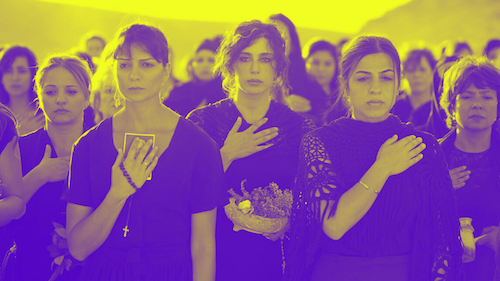
3. Where Do We Go Now?
Labaki’s Where Do We Go Now? won the Peoples’ Choice Award at the Toronto International Film Festival; if that didn’t make her an honourary Canadian, then perhaps her time in Montreal — and her actual citizenship, here — confirm her status. It’s easy to see why her film was such a sensation at TIFF that year: it effortlessly takes the complicated discussion of religious discourse and turns it into a feminist dramedy manifesto. Where Do We Go Now? is an examination of a society torn by war, beliefs, and hatred with the overbearing question of what comes next; like frightened children, we turn to our mothers when we are uncertain of what should be done. Such is the case here, and Labaki dedicates this motion picture to all maternal figures. Is this the thanks we give to those who brought us into this world: to tear this very world apart? A community is divided between its Muslim and Christian members, and Labaki’s call for unity is represented in quite a stunning and visual way: the evidence that all of us are not that different from one another, and hatred is instilled to keep us apart. While the most crowd-pleasing film in Labaki’s career thus far (hence the TIFF award, I suppose), Where Do We Go Now? is still punchy enough for its points to stick, even if Labaki has softened the blow a little bit for all audiences to understand.

2. Caramel
One of the most underrated directorial debuts of the twenty-first century is Labaki’s Caramel: an incredibly clever method of representing feminist talking points via the merging of five different storylines into one hour-and-a-half dramedy. With these converging stories are tales of misogynistic expectations in a patriarchal society, the discovery of one’s own queerness, the shaming of sexuality, and a few other crucial themes. As these characters cross paths with one another, they see each other and — in return — are also seen. Even though Labaki is not completely explicit with her sociopolitical intentions in Caramel, they are still clear; I would argue that they are especially transparent because Labaki allows these characters to feel real, as opposed to shoehorning her concepts to the point of rendering her beings conversational allegories. This is what life is like for the average women in Lebanon and, basically, pretty much everywhere else. They are burdened by expectation, by societal hypocrisy, and by one-sidedness. For Labaki to deliver this message with a film that does not feel agonizing or cynical but, rather, inspired and loving is quite the statement in and of itself: care is what helps us rip that bandaid off to overcome the initial pain.
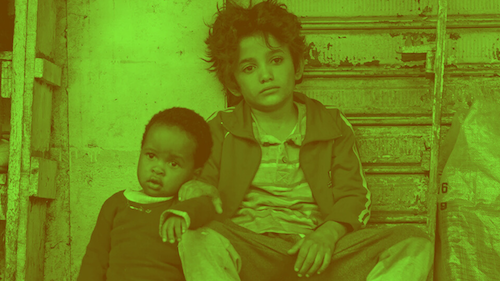
1. Capernaum
When Capernaum first came out, Labaki’s film was highly respected, garnering a Best International Feature Film nomination at the Academy Awards. It made its rounds in the awards season, and that was pretty much it. However, to see how widely spread the film has become in recent years is astonishing and indicative of how important Labaki’s message is on both national and universal levels. Predominantly located in the slums of Beirut, Capernaum acquaints us with a young child who wants to sue his parents — whom he is estranged from. His reason is because he was brought into the world against his will; this world that he speaks of is a hostile, desolate one of starvation, trauma, homelessness, and agony. Is this not the biggest travesty us adults are complicit in: damning the younger generations and forcing them to deal with our mistakes? What good is a life that is doomed from the very beginning? Capernaum is easily Labaki’s most intense film; while her other works find hope and light within hardship, there is no warmth or optimism in a film like Capernaum. How can there be when many poor souls are left with nothing?
The very concept of watching a child sue his own parents over his own existence is already one that is impossible to ignore. Labaki’s use of flashbacks justify this depressing action, showing us just how bad the world is for this little one who has had to fend for himself from the earliest possible moment he could. Two instances of clever casting choices include young Zain Al Rafeea as the film’s protagonist (what a sensational performance, here) and Labaki as that child’s lawyer (by directing the film, Labaki is pleading this case for the millions of children who are fighting this very battle worldwide, so why shouldn’t she do the same within the film as well?). As the fate of our planet feels doomed more and more each day, a film like Capernaum can only feel more prevalent: how many of us didn’t ask for the plethora of ways that our lives are ruined and even terminated? How can we guarantee the safety and comfort of the future generations when we aren’t even sure of our own futures as adults? Labaki’s take on an Italian neorealist tragedy is nothing short of tremendous, mainly because we will all identify with it on varying levels (some, sadly, far more than others). That’s not to say that everyone regrets being born — far from it — but I think the majority of us worry about the state of things and our well-being. When things look grim for all walks of life, at least there is art as healing and honest as Nadine Labaki’s Capernaum: a film that is already shaping up to be a contemporary classic of tragic cinema.


Andreas Babiolakis has a Masters degree in Film and Photography Preservation and Collections Management from Toronto Metropolitan University, as well as a Bachelors degree in Cinema Studies from York University. His favourite times of year are the Criterion Collection flash sales and the annual Toronto International Film Festival.