
Filmography Worship: Ranking Every Charles Burnett Film
Written by Andreas Babiolakis
Filmography Worship is a series where we review every single feature of filmmakers that have made our Wall of Directors

One of the lesser-known voices in film was Charles Burnett; that was the case before his influence seeped into pop culture and contemporary cinema spaces. This includes rapper Mos Def using a shot from Killer of Sheep for his album cover, The Ecstatic, and the Criterion Collection including a now-beloved release of To Sleep with Anger in their catalogue. In actuality, Burnett was instrumental in Black independent cinema as one of the first notable figures within it. Even so, I feel like maybe a couple of Burnett's films have taken off while a few of his other strong titles remain obscure or forgotten; I am hoping that this article will help spotlight some of those films. A few things inspired Burnett's career, including his time spent in Watts, Los Angeles (which helped him shape a majority of his stories, given his exposure to the community there and what their day-to-day experiences entailed — from economic struggle to class-based existentialism), as well as Burnett's desire to become an electrician when being an artist wouldn't be as affordable as he would have liked — he shifted to a writing degree at the University of California, regardless of what his future would entail (it was clearly the right choice). Between his struggle to communicate due to an early speech impediment and the fact that many of the people he grew up with were never depicted in any form of storytelling, Burnett sought to use cinema as a means of expression.
Instead of focusing on the rise of the Blaxploitation movement, Burnett found interest in neo realist works and pursued those instead; to me, his films — particularly his early works — feel akin to those of John Cassavetes, where we join the households of vulnerable people and get exposed to their secrets and vulnerabilities (all within the confines of indie filmmaking). The result is a career of films with protagonists quietly leaving it all out on the floor; Burnett usually got his points across without having to sell us on the themes of his works. I'd like to cover all of his feature films, but quite a few of his television films and documentaries are impossible to come across unless I had access to physical resources (like archives or specific libraries), so I will cover as many as I can (this includes all six of his theatrically-released motion pictures). I will happily update this list whenever possible. For now, we have a fairly strong, underrated career by a trailblazer who is finally getting his dues. Here are the films of Charles Burnett ranked from worst to best.

13. Finding Buck McHenry
While not the worst film I've ever seen, Finding Buck McHenry is easily the weakest Burnett film I've been able to watch (and, to be honest, it was amongst the hardest ones to find, so that never helps when such efforts lead to something as pedestrian as this; the mission is more memorable than the film itself). While a cutesy film about baseball and an ex professional of the early Black leagues (in the form of the titular Buck McHenry), this television film is all about hitting the obvious notes when Burnett has a career of finding untapped stories and sensations; there isn't much that separates this film from a Disney or ABC special of the nineties and aughts where you are meant to watch them once and then move on (which is a shame, because Finding Buck McHenry clearly has much to say).

12. The Wedding
Another difficult-to-locate television film (this one is a three-hour special, actually), Burnett's The Wedding is at least stronger than forgettable; it just feels a little too overlong and bloated when it could have easily been on the shorter end like a majority of Burnett's other works. Starring Halle Berry a year before her career-turning Introducing Dorothy Dandridge (she was clearly aiming to be seen as more than just a lovely face around this time), The Wedding takes Dorothy West's novel of the same name and kind of oversimplifies the class relations between the fortunate star (Berry, who does stand out here in the face of the naysayers of the time) and the poorer family she is marrying into (as well as the controversy surrounding an interracial marriage). Burnett's direction of this Oprah Winfrey-produced vehicle gets a little too self invested to the point of meandering and lethargy, sadly.

11. Relative Stranger
Seeing a film like this even exist is kind of heartbreaking: to know that someone as talented as Burnett feeling forced to take on a Hallmark-esque made-for-TV film to get by is a crying shame. Even so, Burnett does as much as he can with such a project when it comes to Relative Stranger: a family drama about regret. The film truly is a Burnett staple in the form of an afternoon TV discovery: it may have the Hollywood twinkle, the Lifetime kitsch, and the low-budget-television sheen, but this is still a Burnett character study deep down; this is enough to make a film like Relative Stranger feel somewhat decent when Burnett could have easily gotten complacent and put in what he was being given (instead, Burnett seized every opportunity as something to be grateful for).
10. Namibia: The Struggle for Liberation
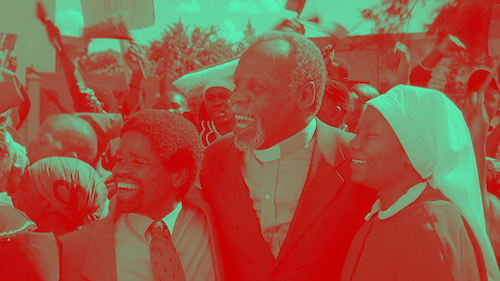
Burnett's latest theatrical film as of the publication of this article is uncharacteristically a historical epic: Namibia: The Struggle for Liberation. What was meant to be a depiction of the nation's liberation of apartheid and Samuel Nujoma's role in the South West Africa People's Organisation (SWAPO) is instead indicative of what Burnett experienced with The Wedding: a tendency to get lost in the details and get carried away with an overlong film that desperately needed trimming and refining. I will give Namibia some minor kudos because it is interesting to see what Burnett would do when he is given the opportunity to take on an ambitious project like this one, seeing as he is more of a small-scaled storyteller; I didn't get the results I had hoped for, but the film is at least minorly interesting as a study of such.

9. Nat Turner: A Troublesome Property
One of the two documentaries I could get a hold of is Nat Turner: A Troublesome Property. This depiction of the titular subject's four-day rebellion means well, given that it sheds enough light on who Turner is and what he stood for via multiple resources that the documentary pulls from. Oddly enough, this is unlike The Wedding and Namibia: The Struggle for Liberation in the sense that Nat Turner is too short (at fifty-seven minutes) and I feel like that there could have been even more information here that a quick online search couldn't surmise (then again, maybe this documentary would have sufficed in 2003 when it was first released, but it still feels a little too introductory, rather than fully-formed on its subject).
8. Nightjohn
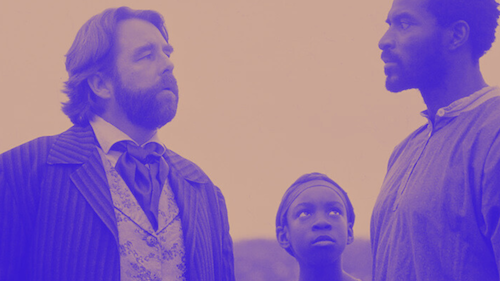
One of the Disney Channel originals Burnett directed (the fact that he has more than one hurts, considering I know what he is capable of), Nightjohn is a decent approach to Gary Paulsen's novel of the same name. A story about slavery and the power of literacy to aid those who are prevented from having an education, Nightjohn boasts some big names like Beau Bridges, Bill Cobbs, and Lorraine Toussaint. The problem is that such a meaningful story and important piece of American history feels reduced to an elementary school lesson given the reduced budget and runtime. Nightjohn is far from bad, but I also would expect more than a "decent" outcome from a film like this; I don't want to fully blame Disney since I appreciate them even wanting to release a film of this calibre and subject matter, but I wish this film was more than a watch-and-move-on afternoon special.

7. Power to Heal: Medicare and the Civil Rights Revolution
A highly-difficult documentary to seek out (it is available on OVID in the United States, but is next to impossible to find otherwise), Power to Heal: Medicare and the Civil Rights Revolution was quite worth the effort (I would consider this part of my list to be a spike in quality). Focused on the rampant racism in the healthcare system and how Medicare was first introduced to try and protect the rights of Black Americans, Power to Heal is just an hour in length whilst making the most of its runtime to deliver some lesser-known information with reliable receipts. This documentary makes me sad that I cannot get a hold of some of the other Burnett non-fiction features, since I can see what he is capable of in this space — knowing some of the subjects he tackles, like the COVID-19 lockdown in Los Angeles, I'd like to see his findings if they're as good as they are in Power to Heal.
6. Selma, Lord, Selma
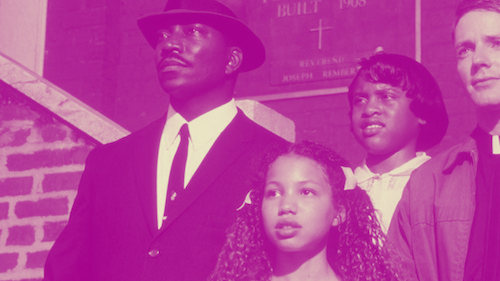
Fresh off of a star-making turn in Kasi Lemmon's Eve's Bayou, a young Jurnee Smollett stars in one of the better Burnett made-for-television feature films, Selma, Lord, Selma. Considering that this is a Disney Channel original (which I believe Burnett is far more capable than), this film had no reason being as good as it is. Clifton Powell shines as Martin Luther King, and Smollett is excellent as a young child who becomes a supporter of the civil rights movement wanting to partake in the Selma march; as you can imagine, her life is threatened during the movement. While I am not certain of the accuracy of all of the historical details here, it is invigorating to see a director make the most of a typically end-of-the-road opportunity with a film that could be beneficial for the young viewers who would be tuning in. I wouldn't call this a must-watch, but if anyone is curious to see how Burnett would fare on the small screen with such a project, you may be pleasantly surprised.
5. The Glass Shield
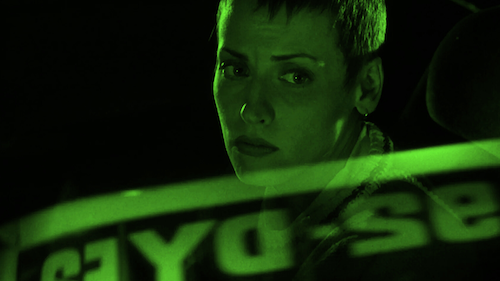
Possibly the most unexpected theatrical film of Burnett's career is the stylish, gritty crime drama, The Glass Shield: something far removed from his traditional fare, and a film more in line with the works of Kathryn Bigelow, if anything. What was once received with lukewarm hesitancy, I feel like The Glass Shield — while imperfect — resonates far more now than it once did, perhaps. Directed shortly after the Rodney King verdict in 1992, The Glass Shield's ferocity and anger is sadly even more applicable in this day and age of brutality and divide. The film might not have the character depth of Burnett's signature works as much as I would have liked, but his passion is all there in away that you don't typically see from any of his films: via aesthetic flair, some interesting choices indicative of the nineties (like a comic book opening credits sequence), and abrasion that feels confrontational; in this instance, the rage is necessary.

4. The Annihilation of Fish
From this point on, I feel like these remaining Burnett films are all fantastic and are worth the time of any cinephile. First off is the criminally underrated The Annihilation of Fish: a romantic dramedy with sublime performances by James Earl Jones and Lynn Redgrave as an interracial couple who are both suffering and in need of comfort and solace. I feel like Burnett is able to wring out so many of the hidden truths of these two aching souls in a way that makes us feel as though we have known them for our whole lives (or so we thought, before they exposed their darkest secrets, insecurities, and fears to us). Burnett doesn't get too dark with The Annihilation of Fish as he lets whimsy soothe our spirits before we fully succumb to misery; this is a film about love healing all wounds, after all. When we are not destined to be icons amidst the billions of hopefuls, all we can do is hope to be a source of comfort for the loved one we deeply care for; Burnett instills that faith in us all.
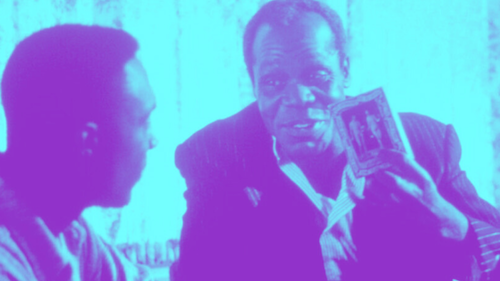
3. To Sleep with Anger
Possibly Burnett's most popular film now thanks to its rejuvenation via its inclusion in the Criterion Collection, To Sleep with Anger is the last film to possess that Burnett signature touch (the top three films here all have it). This is your signature Burnett character study of quiet lives in an overlooked community, but Burnett tries something new by tossing in Danny Glover's sensational performance as Harry into the mix: the film almost feels like Burnett's anticipation of fame and the Hollywood expectation in the form of subversion. Harry's appearance shakes up Gideon and Suzie's family dynamic; to me, this feels like the industry's desire for drama within straight forward stories. This clash between neo realism and contemporaneous melodrama makes for a spellbinding dark comedy about differing identities and opinions that I am glad is being reassessed; a number of today's sociopolitical satires and thrillers feel at least partially indebted to what Burnett accomplishes here.

2. My Brother's Wedding
If To Sleep with Anger is being recognized as a masterwork that was once quite slept on, then My Brother's Wedding is in dire need of the same respect and acknowledgement. A terrific indie film of the eighties, Burnett's stirring drama about a character's lostness in society (Pierce, played by Everett Silas) is a stirring look at existentialism in an African-American working class family. Pierce struggles with where he should devote his time: either as the designated best man at his brother's wedding (naturally), or at the funeral of a fallen friend who has struggled with a life of crime. Do we celebrate life as if there aren't any concerns that surround us, or do we dive head-first into the suffering that life has to offer whilst disregarding its joys? If you could not partake in both events — the start of a new life versus the conclusion of a life in its entirety — which would you choose? My Brother's Wedding forces us to grapple with this dilemma, and Burnett 's magnificent storytelling will stick with you forever (especially when you see what transpires for Pierce).

1. Killer of Sheep
One of the pivotal films of African-American filmmaking and of the independent cinema circuit, Burnett's Killer of Sheep is an exemplary tapestry of stories told via hazy vignettes. Even though Burnett has a few fantastic original stories in the form of My Brother's Wedding and To Sleep with Anger, he was operating on a whole different level of consciousness and awareness unlike most other directors with this layered, sculpted drama about monotonous living, a dead-end society, and the individual souls trapped within Watts, Los Angeles. Without truly boasting a concrete story in a traditional sense, Burnett paints a picture of a community instead, where the through-line is that this is literally all that there is to the lives of these citizens. If Burnett was able to break out and make a feature film, he was one of the lucky ones. Yet, here he is: still stuck in the mindset of Watts, as if he went back to tell the stories of those around him (or, rather, he was unable to truly leave Watts even in the deepest pits of his mind).
With a shoestring budget of ten-thousand dollars, Burnett pooled together all of his concerns, memories, and fears into a stream-of-consciousness depiction of a slaughterhouse worker who cannot foresee a way out of his reality. For us, Killer of Sheep is simply an eighty-minute exercise; to many others, this is their permanence personified by celluloid. Burnett's film never forces you to feel anything or take away a certain idea or message. If anything, Burnett just allows his black-and-white daydreams to just exist, fuse together, and dissipate when they must cease to exist (as to not lead us into an endless purgatory of dread). We feel something different each time we watch Killer of Sheep, but the overall sensation is an overwhelming feeling of concern for the many people we maybe didn't even know existed prior to watching this indie masterpiece. This is a collection of neorealist hallucinations that you can never shake off: as if Burnett's inner thoughts seep into your own — for life. Many directors from Barry Jenkins to David Gordon Green (and, to an extreme extent, Harmony Korine) have made their own answers to Killer of Sheep: a cinematic realm where the setting is the main character, and all of the characters within it aspects of an overarching theme of society (its inhabitants are merely cooperating with what they have). Charles Burnett's masterpiece only gets better with time, and I do not think any cinephile's life is complete without coming across this exquisite, existential endlessness.


Andreas Babiolakis has a Masters degree in Film and Photography Preservation and Collections Management from Toronto Metropolitan University, as well as a Bachelors degree in Cinema Studies from York University. His favourite times of year are the Criterion Collection flash sales and the annual Toronto International Film Festival.