
Filmography Worship: Ranking Every Jordan Peele Film
Written by Andreas Babiolakis
Filmography Worship is a series where we review every single feature of filmmakers who have made our Wall of Directors (and other greats)
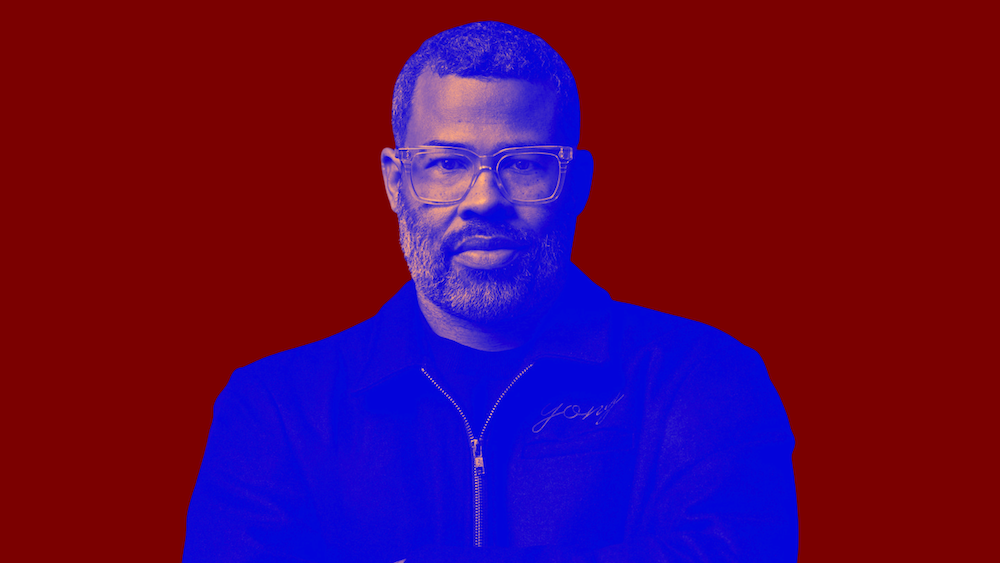
Oh, what a difference ten years makes. A decade ago, Jordan Peele was seen as a goofball: one half of the beloved sketch comedy series, Key & Peele (alongside his former partner, Keegan Michael Key). Known for his witty writing, hilarious impressions, chameleon-esque vocal capabilities, and fuzzy personality, Peele was simply a fun guy who you could take seriously to an extent: his talent was impossible to deny, but this was still, essentially, a bit of a jester in the entertainment world. Ten years later, I don't know how often this side of Peele is thought of at all. If anything, I think his reputation changed over the course of one year — nay, one film. Today, Peele is seen as a major voice in contemporary horror, suspense, and dark satire. His films depict prevalent concerns in the sociopolitical landscape, philosophies surrounding the Black experience in America, and uncanny depictions of contemporary dread. His filmography might be small (I will update this article with each new film Peele directs), but he has also become the go-to producer for many social horror projects from feature films to series (thanks to his coveted Monkey Paw Productions). These include BlacKkKlansman, Lovecraft Country, and the latest iteration of The Twilight Zone (which his films feel perfectly in line with).
So, why the career shift? Peele stated that he wanted to stop acting when he was not only offered the low-brow role of the "poop" emoji in the disastrous The Emoji Movie, but when he was also passed over for said role in favour of Sir Patrick Stewart. This felt like a rock bottom, and Peele decided to pivot (he wouldn't give up acting for good, considering that he did pop up alongside Keele as Ducky and Bunny in Toy Story 4, but he has certainly prioritized filmmaking over any form of acting). Peele hoped to expel some of the fears he had surrounding the contemporary American climate through storytelling. He saw a natural bridge between comedy and horror, from the drawing of unexpected responses from his audiences to the importance of timing and tone. The result was Get Out: an instant horror classic. The rest was history, and the changeover was smooth. I won't be covering every project Peele has written for or produced, since we have such a wide variety of quality and tone here that won't necessarily evoke what we have come to expect from Peele. I think going over his short-but-triumphant directorial filmography will suffice, especially since I believe each film already has a devoted fanbase that will call it their favourite Peele film; I apologize for my ranking in advance. Here are the films of Jordan Peele ranked from worst to best.

3. Nope
While Nope appears to be ranked far too low when many have decreed it a masterwork (I found the film to be really good but not perfect... Sorry), I think there is much to appreciate here nonetheless. Now that Peele was able to work with major fuck-you money, he was capable of making his first intended blockbuster. He created the subversion of said style of motion pictures instead. He goes all the way back to the days of Eadweard Muybridge's horse photography (Animal Locomotion) to instil the idea that this concept — that filmmaking was always an illusionary spectacle — was prevalent from the very beginning. He furthers the idea that animals (or other non-human beings) have been a part of this experience for just as long (let's not forget the horse) via a film that is equal parts a love letter and the dismantling of the traditional Hollywood epic. Nope takes the concept of the unknown, the hypnotism of movie magic, and that of which people are willing to turn a blind eye to in entertainment (animal abuse, for instance) and blends them together to make a narrative about being unable to look away from the atrocity, the wonder, the subdued, and the obvious — all at once. I understand why some would say that this is Peele's best film (even though I do not agree) because of what it accomplishes with its ambitions.
2. Us
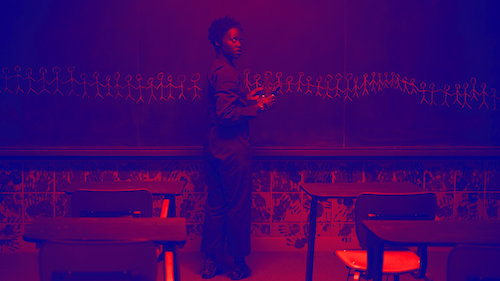
If Nope went from under-received to being adored, Us kind of had the opposite reaction. Quite a hit when it first came out, Us seems to have slipped into the realm of underrated films especially in the face of an era that is rife with commentative horror spectacles (of which Us is a sterling example). Dipping more into the genre's well than Get Out did, Us is far more visually disturbing, using the tropes of horror to depict the parallels and differences between classes; the concept of having a mirrored representation of an affluent family who have no means and desire to live a happier life is far more clever than it could have been (mirrors can be one of the most overused cliches in film unless they are handled right; Us nails the assignment). Featuring one of the strongest horror performances in recent memory by Lupita Nyong’o, Us takes the prevailing fear that we could lose everything when we are doing our best (while channeling the frustrations and endless worry of destitute citizens, of whom are usually never properly helped back to safety) and turns it into an entertaining, mortifying reality. I'm not sure if Peele will curtail to the frights and images of horror quite this blatantly again, but I am glad that he did so at least once (and this well, too).
1. Get Out
It might feel typical to have Get Out ranked first, but what else could be here? Get Out is one of those rare moments in contemporary cinema, where you remember where you first saw it, who you were with, and how you knew you stumbled upon something special that moment you left the cinema. I remember being able to predict the twist of the film fairly early on and thinking I was some genius before Poole's film humbled me; around three quarters in, it was clear that Get Out was far more than some film that was subservient to a neat twist. It was an engrossing, unforgettable horror satire of what being Black in America can feel like, even if the film was easy to "crack" (or so I thought). Upon the second watch, I noticed many of the things I didn't notice the first time (not so observant now, am I?), and the social commentary was far stronger than the twist — which was now flush with the rest of the plot points and no longer stood out — was. This is a film made by someone who understands the directive of writing a story: to tell a story. Plain and simple. Many writers get carried away by this holy grail of trying to create the biggest twist in film history. Get Out's biggest twist is that the twist barely mattered: it wouldn't have shocked many viewers who saw Get Out as a true-to-life experience of horror living in contemporary times with the glaring expectancy of bigots and society breathing down your neck. Get Out features the sunken place for brief moments. For many, this is an everyday occurrence; that is the biggest terror of Get Out.
The writing for Get Out is phenomenal. Peele takes a bare-bones approach (one key setting, a small group of solitary characters, and a meticulous premise that reveals itself further and further as the film goes on) and creates an allegory for modern times almost effortlessly. However, Peele's direction should not go unnoticed as a result. A master of shoving as many punchlines into a short sketch as possible, Peele was primed to carving so many little nuances in this existential limbo of worry. Peele's imagery, pacing, and choices help make this horror film embed itself into the core of your spirit; even if it doesn't cause you to jolt via jump scares, its fear is the kind that you cannot shake off for the rest of your life (how easy is it to lose sense of one's self in a hostile and exploitational society — at the hands of enablers and puppeteers who thrive off of the lives of those they see as lesser than). Get Out was so effective that many of its ideas and themes remain prevalent in pop culture (like the sunken place being used to depict key scenarios, or Daniel Kaluuya's Chris's frozen state being a symbol of crippling oppression). It is a staple of cinematic horror that was so outstanding that Jordan Peele was no longer the infectious comic of old: he was a new master of suspense and dread, and we needed to see more of what he could accomplish. He has not eased up ever since.


Andreas Babiolakis has a Masters degree in Film and Photography Preservation and Collections Management from Toronto Metropolitan University, as well as a Bachelors degree in Cinema Studies from York University. His favourite times of year are the Criterion Collection flash sales and the annual Toronto International Film Festival.